Community is Dead, Long Live Community

链捕手2026-05-15 tarihinde yayınlandı2026-05-15 tarihinde güncellendi

Özet

The author reflects on the transformative and often painful evolution of crypto communities. They nostalgically recall the early days of Web3, where genuine bonds formed around shared beliefs in projects like DeFi and NFTs, leading to deep friendships and passionate collaboration. However, the essay argues this authentic "community" is now largely dead. It has been corrupted by a culture of extraction, where most participants in modern Discord servers are motivated solely by financial gain—grinding for points, chasing airdrops, and immediately selling tokens. This dynamic creates a facade of engagement that vanishes after a token launch, often replaced by hostility. The author uses their project, Across Protocol, as a case study, announcing the shutdown of its Discord server because it no longer represents a true community but a toxic space dominated by mercenary actors. The piece concludes with a bittersweet farewell to the old era and a determined call to continue building with the few remaining genuine believers. The title's paradox, "Community is dead. Long live community," mourns the loss of the original ideal while expressing hope for its future revival.

Author: jamesrichardfry, Head of Marketing, Across Protocol

Compiled by: Jiahuan, ChainCatcher

I've been struggling with how to write this. Part of me wants to sugarcoat it. Dress it up in marketing speak. Frame it as something beautiful and move on.

But that wouldn't be entirely honest. If you know me, you know I wear my heart on my sleeve and I'm incapable of lying. So here it is, bluntly.

Community is dead. Of course, it wasn't always this way. That goes without saying, but I'm saying it out loud anyway.

I still miss the good old days on Clubhouse and Discord chatrooms. The times we spent hours "vibing" with people from across the internet about magic internet money, the latest NFT drop, the best staking opportunities, complaining about the money we lost, dreaming about the next great project, and actually *building*.
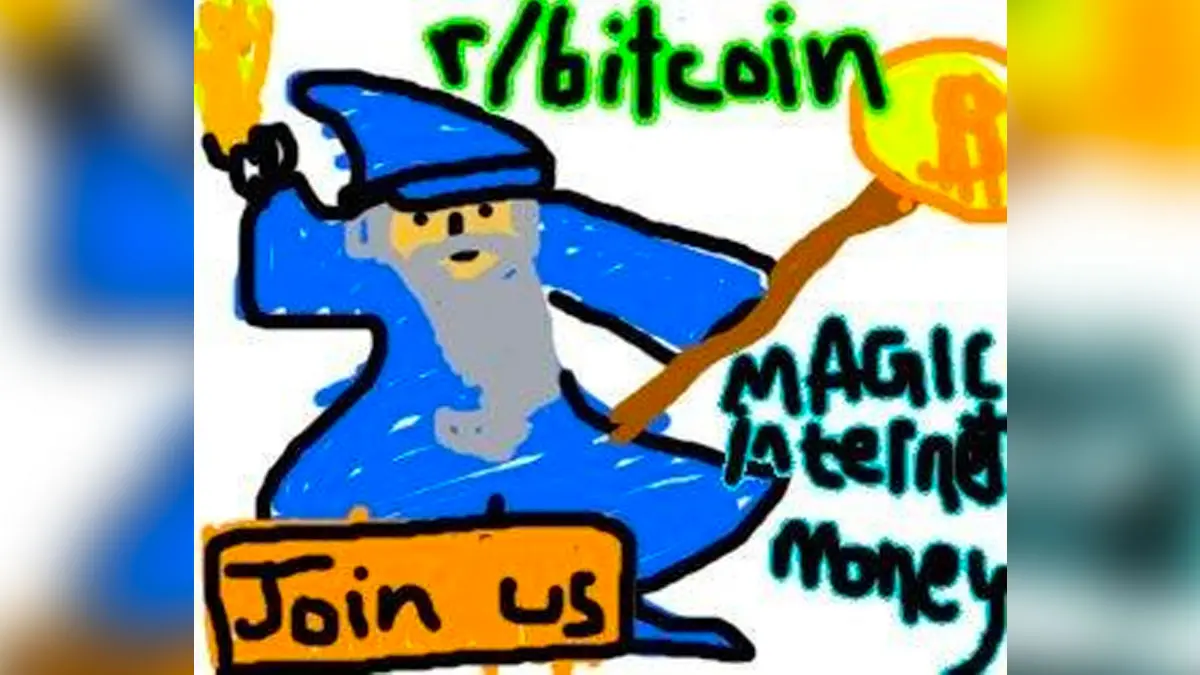
To this day, I'm still good friends with many of those people. Some have even become friends in real life. When community is good, it's good. I miss those days.

Zooming out a bit, what is community? I talked about this for way too long during a recent all-hands meeting, and I could almost hear the eyes rolling from my colleagues.

To share a bit of that epiphany with you, here's my take on community:

A community is a group of people gathered around a shared interest. In many aspects of our daily lives, we have community.

From the school you go to, the sport you play, the religion you practice, the gym you frequent, even the grocery store you shop at.

Some communities are shallow. The group of old men I see at the gym Monday through Friday is a community, but it's clearly very different from the friend circle community we intentionally spend time with.

Web3 or crypto community is no different.

We all gathered around our shared interests. DeFi summer. NFT mania. NFT winter. Cross-chain interoperability whatever. Zero-knowledge proofs whatever.

Whatever you're into, there's a group of people diving down the rabbit hole with you.

Some were there for the financial speculation. Others, from a deep belief and commitment to the early cypherpunk movement. Some crypto communities were surface-level or perfunctory.

Others were deeply profound. I mean, deeply, deeply profound. Like a religious congregation, fanatic following, belief-in-your-gut, put-your-money-where-your-mouth-is profound.

We wore the same "clothes" (PFP), spoke our own language (WAGMI), looked crazy to outsiders, and we didn't care one bit because we believed in what we were all gathering to pursue.

Early crypto community was inseparable from belief.

Not just belief, but a deep, gut-wrenching conviction that gave you the courage to get on stage and talk for hours in front of hundreds about why you believed in the founder, the project, the roadmap, and why you were the project's diamond-handed hodler.

Conviction. That's what drove the parabolic growth in the early days. Without community, crypto would be nothing.

Across, by the way, was no exception. The early days of the Across community were the golden days. The vibes were high. There was deep conviction (yes, I'm repeating that word). Excitement, energy, people genuinely caring about the project for the innovation, not for the token price.

We hired people from that community who are still with us today. And some of the early people who stuck around are still die-hard community members, riding the waves with us.

When community is good, it's good.

And then, everything changed.

Fast forward to today. I'm going to make some sweeping generalizations here. Please know that I'm not referring to "all" community members, "every" community group, and not painting with a broad brush. But if I continue to be blunt, I'm referring to most. Vast majority.

The word "community" has been bastardized by the crypto "extractors." In many ways, if you want to know why "the love of money is the root of all evil," look no further than the countless Discord "communities."

Thousands of unread messages a day. Impressive daily active users. Constant social support, until the Token Generation Event (TGE) hits. We all know the playbook.

The vibe before TGE mimics the early crypto community sentiment. Deep conviction. Gut-wrenching fire. Courage to get on stage. PFP and project tags in bios. Ride or die, diamond hands, bullish hodler.

Then, everyone changes.

You go to sleep one night, barely able to keep up with the Discord notifications.

You wake up the next morning, and it's a ghost town.

Or worse.

You find your loyal "community" coming at you with pitchforks and torches.

Over the airdrop.

You see, "community" is no longer community.

It's devolved into endless, AI-generated spam to farm points, for the hope of an airdrop, to immediately dump, then complain about the token price, and call the project a scam or rug (which, to be fair, is often true).

You know where I'm going with this long-winded rant, right?

"Community" is no longer community. You know it. You feel it. The timeline feels off. Discord servers feel off. Podcasts feel off. Twitter Spaces feel off.

Everything feels wrong, like "Con" will never be "Confucius." Everyone reading this today knows it deep down, even if you've never articulated it this clearly before.

Today's "community" is a cheap imitation of the early community that built crypto into what it is. The shared interest of these "community" members boils down to one thing. Extraction. Quick. Decisive. Extraction. It's the poison that kills what crypto could have been, and should have been.

Most of today's (again, not all) Discord "communities" consist of the dregs of the remnants.

Some are genuine loyalists and believers. (To those who have stuck with Across, we wouldn't be here without you. Thank you. You know where to find us, we'll always have a place for you.)

Some, often the majority, are there to extract from the project. I won't dwell on that here.

And finally, those who only appear to complain. Because in every bear market, these specific types of "community" members will kick you when you're down, as if the bear market hasn't affected every team member, and as if we caused the bear market to happen.

Unfortunately, the Across Discord has recently fallen into this "majority" category as well. Our "community" has become something else.

The people who recognize the incredible achievements we've made, the progress Across has pioneered for the entire industry, and who still support us, are tired of being part of this extractive "community" and have left the Discord.

The few who remain will happily move with us to Twitter and other channels. The rest are what I defined above as "community." Yes, I'm saying this with gut-wrenching fire and deep conviction.

Therefore, today, the Across Discord is moving to read-only mode.

This is the first step in our planned, full shutdown of the server.

To the community of believers still standing with us, let's keep building. We have a lot of work to do.

To Discord, thank you for hosting some of the good old days of crypto. I will cherish them forever.

Community is dead.

Long live community.

İlgili Sorular

QAccording to the author, what is the core difference between early crypto communities and today's so-called 'communities'?

AThe author argues that the core difference lies in the underlying motive. Early crypto communities were driven by a deep, shared belief and passion for the technology and vision. Today's 'communities' are primarily driven by extraction - the desire to farm points, earn airdrops, sell tokens immediately for profit, and then often turn hostile towards the project. They are characterized as cheap knock-offs of the genuine early communities.

QWhat specific action is the author announcing for the Across Protocol Discord server, and why?

AThe author announces that the Across Protocol Discord server will be set to read-only mode, which is the first step in a planned full shutdown. The reason is that their Discord has been overrun by the 'extractive' majority, driving away the genuine, loyal community members. The noise and negativity no longer serve the project's builders and true believers.

QHow does the author define a 'community' in the broader sense, beyond just web3?

AThe author defines a community as a group of people gathered around a shared interest. They provide examples from everyday life such as school, sports, religion, the gym, or even a local grocery store. The author notes that communities can be shallow (like nodding acquaintances at the gym) or deep and meaningful (like close friend groups).

QWhat positive aspects of the early 'golden era' of crypto communities does the author miss?

AThe author misses the authentic 'vibing' on platforms like Clubhouse and Discord, where people discussed crypto topics out of genuine interest, shared experiences, dreamed up new projects, and collaboratively 'built' things. These interactions were based on excitement, innovation, and a shared belief in the project's potential, not just token price. Many real friendships were formed during this time.

QWhat is the primary 'poison' that the author believes has killed the potential of what crypto communities could have been?

AThe author identifies 'extraction' as the primary poison. The current environment is dominated by individuals whose sole common interest is to quickly and decisively extract value from projects through activities like airdrop farming, followed by selling tokens and complaining. This self-serving behavior has corrupted the genuine communal spirit.

İlgili Okumalar

Standing in the Light: A Comprehensive Guide to the Optical Module and CPO Supply Chain

"Standing in the Light: Understanding the Optical Module and CPO Industry Chain" This article analyzes the critical role of optical communication technology, specifically optical modules and Co-Packaged Optics (CPO), as the "nervous system" for modern AI data centers. With exponential growth in AI computational demands (e.g., NVIDIA's Vera Rubin architecture), traditional electrical interconnects using copper cables face severe bottlenecks in bandwidth, power consumption, and signal integrity over distance. The core function of an optical module is to act as a "translator," converting electrical signals from chips into optical signals for transmission over fiber (and vice-versa). Key internal components include lasers, modulators, photodetectors, drivers, and DSP chips. The industry is currently transitioning from 800G to 1.6T modules. However, the future lies in CPO. This next-generation technology integrates the optical engine directly with the switch ASIC/XPU on the same package substrate, drastically reducing power consumption (by ~3.5x according to NVIDIA), overcoming bandwidth density limits, and minimizing signal attenuation compared to traditional pluggable modules. Key challenges for CPO include advanced packaging capacity (dominated by TSMC), thermal management, repairability, and standardization. The article details the broader technology landscape, including Near-Packaged Optics (NPO, a pragmatic intermediate step), Linear-drive Pluggable Optics (LPO), Optical I/O (OIO for chip-level integration), and Optical Circuit Switches (OCS). A comprehensive CPO industry chain is mapped, highlighting shifting power dynamics: * **Architecture Definers:** NVIDIA, Broadcom, and Marvell now hold greater influence. * **Advanced Packaging & Manufacturing:** TSMC is central; Fabrinet is a key EMS player. * **Lasers ("The Heart"):** A strategic bottleneck. EML lasers are led by Lumentum and Coherent (both receiving major NVIDIA investments). CW lasers, favored for CPO/silicon photonics, see strong Chinese players like Source Photonics and Sicoya. * **Silicon Photonics Chips:** The mainstream path for CPO engines, with key players like Broadcom, Intel, Marvell, and China's Accelink. * **Fiber Connectivity Components:** A major new, high-growth market created by CPO, including Fiber Array Units (FAU), Polarization-Maintaining Fiber (PMF), and MPO connectors. Companies like Tianfu Communication and US Conec are leaders. * **Fiber & Cable:** Experiencing a super-cycle (e.g., Corning, Yangtze Optical Fiber). * **PCB/Substrates:** Requiring advanced materials (e.g., Shengyi Tech). * **DSP & SerDes:** Functions are integrated into switch ASICs in the CPO era (e.g., Broadcom, Astera Labs). * **Optical Module Makers:** Transitioning from standalone module suppliers to providers of optical engines and NPO/LPO solutions while riding the current pluggable boom (e.g., Zhongji Innolight, Eoptolink). The investment timeline is segmented: Short-term (2026-2027) features the "last feast" for pluggable modules and CPO's initial rollout. Medium-term (2027-2029) will see CPO expand and NPO peak. Long-term (2029-2032+) involves CPO/OIO penetration into intra-rack scaling. In conclusion, optical interconnects are fundamental to AI infrastructure. The competitive landscape sees US firms leading in architecture and high-end chips, TSMC in advanced packaging, and Chinese firms holding strong positions in modules, connectivity components, CW lasers, and fiber/cable. The future belongs to companies that can navigate the technological shift from "selling shovels" (modules) to "building highways" (CPO/OIO infrastructure).

marsbit8 dk önce

Standing in the Light: A Comprehensive Guide to the Optical Module and CPO Supply Chain

marsbit8 dk önce

İşlemler

Spot
Futures
活动图片