Chainlink Founder Sergey Nazarov Identifies 3 Trends That Will Define the Cryptosphere as Hyper Token Soars

bitcoinist2026-02-10 tarihinde yayınlandı2026-02-10 tarihinde güncellendi

Özet

Chainlink co-founder Sergey Nazarov identifies three key trends shaping the crypto industry: real-world asset (RWA) tokenization, cross-chain interoperability, and high-performance infrastructure. These shifts signal a move from speculation to practical, institutional-grade applications. Bitcoin Hyper ($HYPER) emerges as a solution addressing Bitcoin’s scalability and utility limitations. By integrating the Solana Virtual Machine (SVM) as a Bitcoin Layer 2, it enables high-speed, low-cost smart contracts while leveraging Bitcoin’s security. The project has raised over $31.3M in its presale, with significant whale activity, indicating strong institutional interest. Bitcoin Hyper aims to unlock Bitcoin’s dormant capital through DeFi applications, staking rewards, and a decentralized bridge for seamless BTC transfers. This aligns with Nazarov’s vision of a verifiable, interconnected financial ecosystem.

Trusted Editorial content, reviewed by leading industry experts and seasoned editors. Ad Disclosure

Quick Facts:

  • ➡️ Chainlink’s Sergey Nazarov identifies RWA tokenization, cross-chain interoperability, and high-performance infrastructure as the three pillars of the next crypto cycle.
  • ➡️ Bitcoin Hyper addresses the liquidity gap by bringing the Solana Virtual Machine (SVM) to Bitcoin, enabling high-speed smart contracts on the world’s most secure chain.
  • ➡️ Institutional interest in Bitcoin Layer 2s is rising, evidenced by over $31M raised in the Bitcoin Hyper presale and verified whale accumulation.
  • ➡️ Whales join the race with over $1M raised across three transactions-only; FOMO is real.

The crypto market is undergoing a structural transformation that extends far beyond daily price tickers.

In recent keynotes, Chainlink co-founder Sergey Nazarov outlined three critical trends signaling the industry’s shift from speculative experimentation to critical global infrastructure.

It’s a bold claim, but his analysis suggests the next bull cycle won’t be defined by hype, it’ll be defined by the collision of traditional finance (TradFi) and decentralized protocols.

First, Nazarov points to the inevitability of Real-World Assets (RWAs) migrating on-chain. Major institutions aren’t just testing the waters anymore; they’re actively building tokenization platforms. This isn’t just about efficiency, it’s about creating a ‘verifiable web’ where asset ownership is mathematically guaranteed rather than legally promised.

Then there’s the collapse of cross-chain friction. The future isn’t a winner-take-all single chain, but an interconnected ecosystem where liquidity flows seamlessly between networks via protocols like CCIP.

The third trend is perhaps the most immediate: the demand for high-performance infrastructure capable of handling ‘internet-scale’ transactions. As DeFi matures, users are rejecting high latency and exorbitant gas fees.

This sentiment shift is driving capital away from legacy Layer 1s that refuse to scale and toward specialized execution layers. That’s exactly where new solutions are emerging to unlock the dormant capital on the world’s largest blockchain: Bitcoin Hyper ($HYPER).

$HYPER is available here.

Bitcoin Hyper Integrates SVM To Solve The Liquidity Fragmentation Crisis

While Nazarov emphasizes cross-chain standards, a glaring inefficiency remains: Bitcoin holds over 50% of the industry’s market cap but lacks the native programmability to participate in this new ‘verifiable web.’

Enter Bitcoin Hyper ($HYPER). By integrating the Solana Virtual Machine (SVM) directly as a Bitcoin Layer 2, the project introduces high-speed, low-cost transaction execution to the Bitcoin network.

The architecture here is distinct. Rather than relying on slow settlement times, Bitcoin Hyper utilizes a modular setup: Bitcoin L1 handles final settlement and security, while the SVM L2 handles real-time execution.
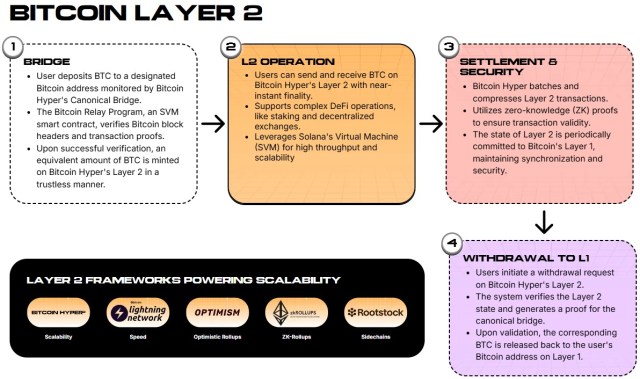
The result? A network capable of sub-second finality and negligible fees, outperforming even Solana in specific latency benchmarks. For developers, this means the ability to build high-performance DeFi applications using Rust, finally bridging the gap between Bitcoin’s liquidity and modern smart contract utility.

Smart money seems to be watching this setup. On-chain data from Etherscan indicates that two whale wallets accumulated $1M+ in recent transactions, with the largest single purchase of $500K occurring on Jan 15, 2026.

This accumulation suggests traders are betting on Layer 2s that can unlock Bitcoin’s yield-bearing potential without compromising its security.

Read more about $HYPER here.

Presale Momentum Accelerates As Capital Rotates Into Bitcoin Layer 2s

The narrative shift toward infrastructure that Nazarov predicts is already reflecting in capital flows. Investors are hunting for protocols offering immediate utility rather than vague roadmap promises.

Bitcoin Hyper ($HYPER) has tapped into this demand, raising over $31.3M in its ongoing presale. With tokens currently priced at $0.0136754, the project is drawing liquidity from traders hedging against Ethereum’s congestion and Solana’s occasional instability.
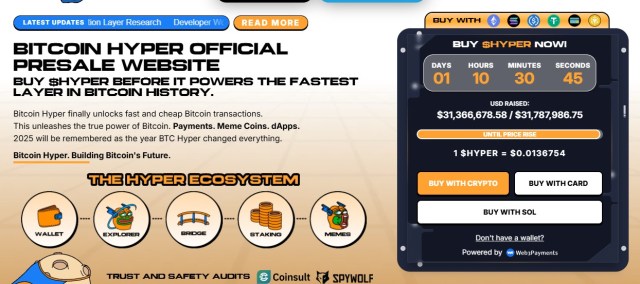
Plus, the economic model is driving interest. Bitcoin Hyper introduces a high-yield staking protocol available immediately after the Token Generation Event (TGE). Unlike traditional mining (which requires hardware), $HYPER staking rewards community participation and governance with a short 7-day vesting period for presale stakers.

It’s a setup designed for both exposure to a high-growth infrastructure token and yield generation on a Bitcoin-native layer.

The project’s Decentralized Canonical Bridge aligns with the industry’s push for interoperability. By allowing trustless transfers of $BTC into the L2 ecosystem, it enables Bitcoin to be used as collateral in lending and derivatives markets previously accessible only to $ETH or $SOL holders.

As the market moves toward the ‘verifiable web’ Nazarov describes, protocols that make Bitcoin actually usable could be positioned to capture significant value.

Buy $HYPER here.

This article is for informational purposes only and does not constitute financial advice. Cryptocurrencies are high-risk assets with significant volatility. The presale data and technical claims regarding Bitcoin Hyper are based on information provided by the project team. Always perform your own due diligence before investing.

Editorial Process for bitcoinist is centered on delivering thoroughly researched, accurate, and unbiased content. We uphold strict sourcing standards, and each page undergoes diligent review by our team of top technology experts and seasoned editors. This process ensures the integrity, relevance, and value of our content for our readers.

patrubogdan

Follow

Full Profile

Related Posts

Russian Lawmaker Predicts Bitcoin Collapse While Smart Money Rotates into Layer 2 Utility

Solana’s Low Fees Create Strong Competition for Base, BNB, and Polygon and Fuel SUBBD Token

Bitcoin Demand Plunges Per CryptoQuant, Yet Maxi Doge Endures

Crypto Markets Catch A Breather As Outflows Begin To Slow: Analysts

SUBBD Token’s Massive Projected Impact on the Content Creation Market in 2026

Government Shutdown Fears Trigger 2% Crypto Dip, But Bitcoin Hyper Remains Unshaken

İlgili Sorular

QWhat are the three critical trends identified by Chainlink's Sergey Nazarov that will define the next crypto cycle?

AThe three trends are Real-World Assets (RWA) tokenization, cross-chain interoperability, and high-performance infrastructure capable of handling internet-scale transactions.

QHow does Bitcoin Hyper ($HYPER) address the liquidity fragmentation problem on the Bitcoin network?

ABitcoin Hyper integrates the Solana Virtual Machine (SVM) as a Bitcoin Layer 2, enabling high-speed smart contracts and low-cost transactions while using Bitcoin L1 for final settlement and security.

QWhat evidence suggests institutional interest in Bitcoin Hyper's presale?

AThe project raised over $31.3 million in its presale, with on-chain data showing whale transactions including a single purchase of $500,000 on January 15, 2026.

QWhat technical advantage does Bitcoin Hyper claim over other networks?

AIt claims sub-second finality and negligible fees, outperforming even Solana in specific latency benchmarks, while maintaining Bitcoin's security through its modular architecture.

QHow does Bitcoin Hyper's staking model differ from traditional Bitcoin mining?

AIt offers a high-yield staking protocol with immediate vesting after Token Generation Event (TGE), requiring no hardware and featuring a 7-day vesting period for presale participants, unlike hardware-dependent mining.

İlgili Okumalar

380,000 Apps Exposed, 2,000+ Apps Leaked Secrets: AI Programming Turns 'Intranet' into Public Internet

Israeli cybersecurity firm RedAccess uncovered a severe data exposure trend linked to "vibe coding" or AI-powered software development tools. Their research found approximately 38,000 publicly accessible web applications built with platforms like Lovable, Base44, Netlify, and Replit. Of these, an estimated 2,000 apps exposed sensitive corporate and personal data, including medical records, financial information, internal strategic documents, and customer chat logs. In some cases, access even granted administrative privileges. The core issue stems from default privacy settings that make applications public by default, combined with a lack of built-in security controls (like authentication) in the AI-generated code. This allows employees without security expertise—"citizen developers"—to easily create and deploy applications that bypass standard corporate security reviews. The exposed apps, often indexed by search engines, are trivially discoverable. While some platform providers (Replit, Lovable, Wix/Base44) argue that security configuration is the user's responsibility and question the validity of some findings, security researchers confirm the widespread reality of such exposures. This pattern, also noted in prior studies, highlights a critical security gap as AI democratizes app creation, potentially leading to massive, unintentional data leaks.

marsbit7 dk önce

380,000 Apps Exposed, 2,000+ Apps Leaked Secrets: AI Programming Turns 'Intranet' into Public Internet

marsbit7 dk önce

Attracting Global Capital, Asia's New 'Super Cycle' Is Unfolding

Investors are turning to Asia as the next frontier for global equity growth, with a new "super cycle" unfolding across the region. Driven by the AI revolution, Asian markets, particularly South Korea, have seen significant rallies. According to Morgan Stanley analysis, the underlying drivers of Asia's industrial cycle are shifting from traditional sectors like real estate and manufacturing to massive investments in AI infrastructure, energy security and transition, and supply chain resilience. Fixed asset investment in Asia is projected to grow from around $11 trillion in 2025 to $16 trillion by 2030, with a 7% annual growth rate from 2026-2030. The AI wave is a primary catalyst, driving immense capital expenditure for chips, servers, data centers, and power systems. Asia is central to this hardware supply chain. In China, AI investment is focused on building a full-system domestic capability, with the local AI chip market potentially reaching $86 billion by 2030. Beyond AI, China's export story is expanding from EVs and batteries to robotics. The country already captures about half of new global industrial robot demand and over 90% of humanoid robot shipments. This growth phase mirrors the early stages of China's EV export boom. Simultaneously, energy security investments, spurred by AI's massive power needs, are rising, with China benefiting from its leadership in solar, batteries, and EVs. Regional defense spending is also increasing structurally, supporting demand for advanced manufacturing. The main beneficiaries are China, South Korea, and Japan, positioned in core supply chain areas. However, risks remain, including potential overcapacity, profit margin pressures from competition, persistent technological restrictions, geopolitical friction, and workforce displacement due to AI-driven automation. Market volatility is also expected to increase as investor expectations diverge on the realization of these capital investment and export themes.

marsbit8 dk önce

Attracting Global Capital, Asia's New 'Super Cycle' Is Unfolding

marsbit8 dk önce

Funding Weekly Report | 14 Public Funding Events, Kalshi Completes $10B New Funding Round at $220B Valuation Led by Coatue Management

Weekly Funding Roundup: 14 Deals and $10.49B+ in Total Funding, Led by Kalshi's $1B Round Last week (5.4-5.10) saw 14 notable funding events in the global blockchain ecosystem, raising over $10.49 billion in total. Key highlights include Kalshi, a prediction market platform, securing a $1 billion round led by Coatue Management, reaching a $22 billion valuation. The platform now boasts ~2 million MAUs and $178B in annualized trading volume. In DeFi, regulated on-chain reinsurer OnRe raised $5 million in Series A funding, and Bitcoin-backed credit protocol Saturn Credit completed a $2 million seed round. For Infrastructure & Tools, OpenTrade raised $17 million to expand its stablecoin yield infrastructure, and RWA platform Balcony secured $12.7 million to deploy its property settlement service in the US. Centralized Finance saw one deal: AI-driven trading platform Stockcoin.ai completed a seed round led by Amber Group. In the prediction market sector alongside Kalshi, AI-powered platform Elastics raised $2 million. Other notable deals include SC Ventures' strategic investment in crypto market maker GSR and Centrifuge securing a "seven-figure" investment from Coinbase to become a core RWA partner for Base. On the investor side, Haun Ventures raised a new $1 billion fund targeting crypto and AI, and Multi Investment raised ~$616 million to focus on blockchain and Web3 investments.

marsbit1 saat önce

Funding Weekly Report | 14 Public Funding Events, Kalshi Completes $10B New Funding Round at $220B Valuation Led by Coatue Management

marsbit1 saat önce

İşlemler

Spot
Futures

Popüler Makaleler

LINK Nasıl Satın Alınır

HTX.com’a hoş geldiniz! ChainLink (LINK) satın alma işlemlerini basit ve kullanışlı bir hâle getirdik. Adım adım açıkladığımız rehberimizi takip ederek kripto yolculuğunuza başlayın. 1. Adım: HTX Hesabınızı OluşturunHTX'te ücretsiz bir hesap açmak için e-posta adresinizi veya telefon numaranızı kullanın. Sorunsuzca kaydolun ve tüm özelliklerin kilidini açın. Hesabımı Aç2. Adım: Kripto Satın Al Bölümüne Gidin ve Ödeme Yönteminizi SeçinKredi/Banka Kartı: Visa veya Mastercard'ınızı kullanarak anında ChainLink (LINK) satın alın.Bakiye: Sorunsuz bir şekilde işlem yapmak için HTX hesap bakiyenizdeki fonları kullanın.Üçüncü Taraflar: Kullanımı kolaylaştırmak için Google Pay ve Apple Pay gibi popüler ödeme yöntemlerini ekledik.P2P: HTX'teki diğer kullanıcılarla doğrudan işlem yapın.Borsa Dışı (OTC): Yatırımcılar için kişiye özel hizmetler ve rekabetçi döviz kurları sunuyoruz.3. Adım: ChainLink (LINK) Varlıklarınızı SaklayınChainLink (LINK) satın aldıktan sonra HTX hesabınızda saklayın. Alternatif olarak, blok zinciri transferi yoluyla başka bir yere gönderebilir veya diğer kripto para birimlerini takas etmek için kullanabilirsiniz.4. Adım: ChainLink (LINK) Varlıklarınızla İşlem YapınHTX'in spot piyasasında ChainLink (LINK) ile kolayca işlemler yapın.Hesabınıza erişin, işlem çiftinizi seçin, işlemlerinizi gerçekleştirin ve gerçek zamanlı olarak izleyin. Hem yeni başlayanlar hem de deneyimli yatırımcılar için kullanıcı dostu bir deneyim sunuyoruz.

854 Toplam GörüntülenmeYayınlanma 2024.12.13Güncellenme 2025.03.21

LINK Nasıl Satın Alınır

Tartışmalar

HTX Topluluğuna hoş geldiniz. Burada, en son platform gelişmeleri hakkında bilgi sahibi olabilir ve profesyonel piyasa görüşlerine erişebilirsiniz. Kullanıcıların LINK (LINK) fiyatı hakkındaki görüşleri aşağıda sunulmaktadır.

活动图片