Cardano Founder Describes a Way to Boost Network Activity

cryptonews.ru2026-08-06 tarihinde yayınlandı2026-08-06 tarihinde güncellendi

Özet

Cardano founder Charles Hoskinson addressed the network's relatively low Total Value Locked (TVL), which lags far behind leaders like Ethereum and Solana. He stated Cardano can grow without directly competing with other blockchains. Hoskinson highlighted the Cardano PRIME initiative by AlphaGrowth, which aims to increase Cardano's TVL to $290 million within a year. This project has requested significant funding from the Cardano treasury, with bonuses tied to TVL growth. He also pointed to RealFi (for bringing traditional finance applications on-chain) and the Pogun Bitcoin bridge as key drivers for future TVL increases. The article notes that the top DeFi protocols on Cardano currently are Dano Finance, Minswap, and Liqwid. It also mentions the recent successful activation of the Van Rossum hard fork, designed to reduce Plutus smart contract costs and prepare for future upgrades.

Among the decentralized finance (DeFi) protocols built on the Cardano blockchain, Dano Finance leads with a TVL of $14.15 million. It is followed by Minswap with $13.18 million, and in third place is Liqwid with $12.36 million. Other participating projects in the Cardano ecosystem include WingRiders, Indigo, Slash Protocol, and Surf Lending.

Cardano lags significantly behind blockchains that utilize smart contracts. For comparison, the total value locked (TVL) in the Ethereum network currently reaches $41.32 billion, while in the Solana blockchain, it's $4.78 billion.

Amid Cardano's relatively weak TVL performance, its founder Charles Hoskinson stated that his ecosystem can expand without competing with other blockchains. He expects the Cardano PRIME initiative by the AlphaGrowth project to increase Cardano's TVL to $290 million within a year. To achieve this, AlphaGrowth has requested funding of 120 million $ADA from the Cardano treasury, with a fixed fee of 11 million $ADA and up to 29 million $ADA in bonuses — contingent on TVL growth.

Hoskinson hopes that Cardano's TVL can be boosted by RealFi, which aims to transition traditional financial applications to the blockchain, as well as by Pogun — a bridge for Bitcoin into the Cardano ecosystem. BTC holders are encouraged to use their coins in decentralized applications based on Cardano.

In July, Cardano developers successfully activated the Van Rossum hard fork on the mainnet. This update is designed to reduce the execution costs of Plutus smart contracts and prepare the blockchain for future improvements.

end-content
Trend Kriptolar

İlgili Sorular

QWhich DeFi protocol currently leads in Total Value Locked (TVL) on the Cardano blockchain according to the article?

AAccording to the article, the DeFi protocol with the highest TVL on the Cardano blockchain is Dano Finance, with a TVL of $14.15 million.

QHow much does Cardano founder Charles Hoskinson expect the Cardano PRIME initiative to increase Cardano's TVL within a year?

ACharles Hoskinson expects the Cardano PRIME initiative by AlphaGrowth to increase Cardano's TVL to $290 million within a year.

QWhat are two projects mentioned by Charles Hoskinson that he hopes will help increase Cardano's TVL?

ACharles Hoskinson hopes that RealFi, which aims to transition traditional financial applications to the blockchain, and Pogun, a bridge for Bitcoin into the Cardano ecosystem, will help increase Cardano's TVL.

QWhat was the purpose of the Van Rossem hardfork successfully activated on Cardano in July, as mentioned in the article?

AThe purpose of the Van Rossem hardfork was to reduce the execution costs of Plutus smart contracts and prepare the blockchain for future improvements.

QHow does the total TVL of Cardano compare to that of Ethereum and Solana based on the article's data?

ACardano's TVL is significantly lower. The article states Ethereum's total TVL is $41.32 billion and Solana's is $4.78 billion, while Cardano's leading protocol has only $14.15 million.

İlgili Okumalar

Google's Decade-Long AI Power Struggle Concludes, Pichai Gracefully Consolidates Control

A decade of internal AI rivalry at Google has concluded with CEO Sundar Pichai consolidating power through a masterful, bloodless reorganization. The key moves saw Demis Hassabis, DeepMind's visionary founder, step down as CEO of Google DeepMind to become Alphabet's Chief Scientist, focusing on long-term AGI. Concurrently, Google's legendary technical leader Jeff Dean departed with his team to start a new venture, in which Google invested. This restructuring marks the end of a long-standing divide between the research-focused DeepMind and the product-oriented Google Brain. Pichai's strategy, beginning with their 2023 merger under Hassabis, gradually centralized control. While Hassabis gained public acclaim for Gemini's progress and a Nobel Prize, Pichai quietly elevated Koray Kavukcuoglu, a pragmatic engineering veteran, to oversee daily operations. The catalyst was mounting pressure in 2026 as Gemini's development timelines slipped, causing stock declines. Hassabis, more passionate about pure research and his AI drug discovery company Isomorphic Labs, grew weary of the commercial grind. His graceful "promotion" effectively removed him from operational control. Pichai handled both transitions with characteristic finesse: granting Hassabis a prestigious, future-focused role to prevent a defection to rivals (as happened with former DeepMind co-founder Mustafa Suleyman), and investing in Dean's new company to keep his pioneering work within Google's orbit. The outcome is a fundamental shift: control of Google's AI future has passed from brilliant scientist-visionaries to professional managers and engineers like Kavukcuoglu and Pichai himself. It signals Pichai's bet that the AI race has entered an industrial phase won by systemic execution, organizational efficiency, and stable delivery, rather than lone genius. The era of scientists directly managing core AI is over at Google, replaced by a machine-like division of labor where the CEO decides who decides.

marsbit1 saat önce

Google's Decade-Long AI Power Struggle Concludes, Pichai Gracefully Consolidates Control

marsbit1 saat önce

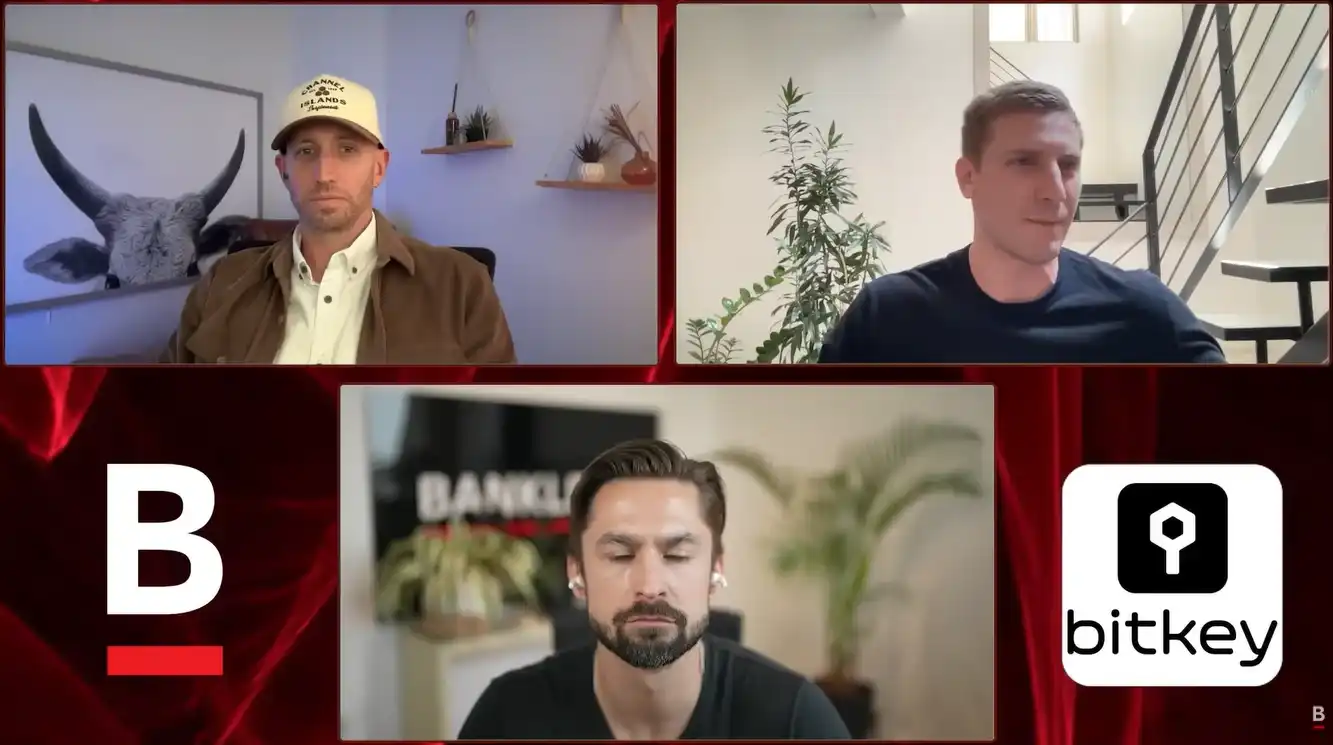
Conversation with Blockchain Capital Partners: The Next Bull Market May Be Right in Front of Us

In a recent Bankless podcast, Blockchain Capital partners Aleks Larsen and Spencer Bogart discussed the crypto market's evolution from infrastructure to applications. They noted that widespread stablecoin adoption has built significant on-chain liquidity, boosting revenues for lending and trading protocols. The partners defended the "buyback and burn" token model, explaining its current effectiveness in aligning incentives and establishing credibility with holders, despite past debates on capital efficiency. Addressing the sentiment divide in crypto, they highlighted positive catalysts like regulatory clarity and institutional entry, even during the bear market. Aleks compared the industry's current state to the 2003-2004 internet era—post-"broadband transition" with cheap block space, awaiting mainstream adoption through applications like stablecoins and prediction markets. They observed a shift from "fat protocol" to "fat application," where value now accrues more at the application layer than the base infrastructure, a sign of a maturing ecosystem. Drawing parallels to AI, they noted similarities in early hype cycles but emphasized crypto's transparent, token-driven market corrections versus AI's private market adjustments. On Real World Assets (RWA), Spencer projected stablecoin market cap to reach trillions by 2030, detailing its multiplier effect on on-chain economic activity. For stock tokenization, he outlined two approaches: permissionless but legally indirect models and compliant, direct ownership channels, suggesting they can coexist in "sidecar" models alongside pure DeFi. The conversation concluded that while the industry's ethos evolves with institutional adoption, crypto's core promise of upgrading global financial infrastructure for greater efficiency remains intact and is steadily progressing.

marsbit3 saat önce

Conversation with Blockchain Capital Partners: The Next Bull Market May Be Right in Front of Us

marsbit3 saat önce

İşlemler

Spot

Popüler Makaleler

ADA Nasıl Satın Alınır

HTX.com’a hoş geldiniz! Cardano (ADA) satın alma işlemlerini basit ve kullanışlı bir hâle getirdik. Adım adım açıkladığımız rehberimizi takip ederek kripto yolculuğunuza başlayın. 1. Adım: HTX Hesabınızı OluşturunHTX'te ücretsiz bir hesap açmak için e-posta adresinizi veya telefon numaranızı kullanın. Sorunsuzca kaydolun ve tüm özelliklerin kilidini açın. Hesabımı Aç2. Adım: Kripto Satın Al Bölümüne Gidin ve Ödeme Yönteminizi SeçinKredi/Banka Kartı: Visa veya Mastercard'ınızı kullanarak anında Cardano (ADA) satın alın.Bakiye: Sorunsuz bir şekilde işlem yapmak için HTX hesap bakiyenizdeki fonları kullanın.Üçüncü Taraflar: Kullanımı kolaylaştırmak için Google Pay ve Apple Pay gibi popüler ödeme yöntemlerini ekledik.P2P: HTX'teki diğer kullanıcılarla doğrudan işlem yapın.Borsa Dışı (OTC): Yatırımcılar için kişiye özel hizmetler ve rekabetçi döviz kurları sunuyoruz.3. Adım: Cardano (ADA) Varlıklarınızı SaklayınCardano (ADA) satın aldıktan sonra HTX hesabınızda saklayın. Alternatif olarak, blok zinciri transferi yoluyla başka bir yere gönderebilir veya diğer kripto para birimlerini takas etmek için kullanabilirsiniz.4. Adım: Cardano (ADA) Varlıklarınızla İşlem YapınHTX'in spot piyasasında Cardano (ADA) ile kolayca işlemler yapın.Hesabınıza erişin, işlem çiftinizi seçin, işlemlerinizi gerçekleştirin ve gerçek zamanlı olarak izleyin. Hem yeni başlayanlar hem de deneyimli yatırımcılar için kullanıcı dostu bir deneyim sunuyoruz.

1.6k Toplam GörüntülenmeYayınlanma 2024.12.10Güncellenme 2026.06.02

ADA Nasıl Satın Alınır

Tartışmalar

HTX Topluluğuna hoş geldiniz. Burada, en son platform gelişmeleri hakkında bilgi sahibi olabilir ve profesyonel piyasa görüşlerine erişebilirsiniz. Kullanıcıların ADA (ADA) fiyatı hakkındaki görüşleri aşağıda sunulmaktadır.

活动图片