Canada Introduces New Crypto Custody Rules to Protect Investors After QuadrigaCX Collapse

TheNewsCrypto2026-02-04 tarihinde yayınlandı2026-02-04 tarihinde güncellendi

Özet

Following the QuadrigaCX collapse in 2019, which resulted in the loss of $123 million in customer funds, Canada’s Investment Regulatory Organization (CIRO) has introduced new crypto custody rules for exchanges. The regulations aim to protect investors by enforcing stronger custody arrangements, improved internal controls, and clear separation of client assets from company funds. The framework adopts a risk-based approach, requiring higher-risk firms to meet stricter standards while allowing flexibility for lower-risk platforms. CIRO will actively update the rules as new threats emerge and has the authority to investigate misconduct and impose penalties. The move reflects Canada’s protective regulatory stance, bringing crypto custody under existing securities laws.

The Canadian Investment Regulatory Organization (CIRO) has announced that Canada has introduced new crypto custody rules for the exchanges to reduce the risk of investor losses and prevent failures, as the QuadrigaCX collapse happened in 2019.

This move immediately takes effect after the direct response to the past crypto failure, like the QuadrigaCX collapse. QuadrigaCX was one of the canada’s largest crypto exchanges. After its CEO died, it has missed about $123 million of customer funds. Investigations later found that this was caused by its poor controls, weak governance, and serious custody failures.

What CIRO’S new crypto rules do

CIRO’S Digital Asset Custody Framework used a risk-based approach, which sets clear standards for protecting investors from hacking, fraud, weak controls, and poor governance. The firms which higher risk activities should meet the stronger custody standards, and the lower-risk firms get more flexibility but still need the protections.

After the new rules, crypto platforms in Canada should use stronger custody arrangements and improve the internal controls and oversight with clear separation of customer assets from the company funds. CIRO says many platforms are already following a similar structure, and any transitions to the new rules will be handled case by case without disrupting the firms suddenly.

Canada’s approach towards crypto custody

CIRO says that it will actively monitor the new risk, and the regulators will update the new rules if they seem to have any new custody threats and repeated problems across the firms. This shows that the framework still needs to be fixed and will evolve as per the crypto market changes.

Canada has taken a protective approach towards crypto regulations and is bringing crypto custody platforms under the existing securities laws. CIRO has the authority to investigate the misconduct, impose fines, and suspend the firms, which shows a strong focus on the custody and increased attention on stablecoins.

Highlighted Crypto News:

Ethereum Eyes Frame Transactions as Hegota Headliner

TagsCanadaCryptocurrency

İlgili Sorular

QWhat event prompted Canada to introduce new crypto custody rules?

AThe collapse of QuadrigaCX in 2019, which resulted in the loss of approximately $123 million in customer funds due to poor controls, weak governance, and custody failures.

QWhich organization announced Canada's new crypto custody rules?

AThe Canadian Investment Regulatory Organization (CIRO) announced the new crypto custody rules.

QWhat is the main approach of CIRO's Digital Asset Custody Framework?

AIt uses a risk-based approach, setting clear standards for protecting investors from hacking, fraud, weak controls, and poor governance, with higher-risk firms facing stronger custody requirements.

QHow do the new rules require crypto platforms to handle customer assets?

APlatforms must use stronger custody arrangements with clear separation of customer assets from company funds and improve internal controls and oversight.

QWhat regulatory powers does CIRO have under the new framework?

ACIRO has the authority to investigate misconduct, impose fines, and suspend firms, showing a strong focus on custody and increased attention on stablecoins.

İlgili Okumalar

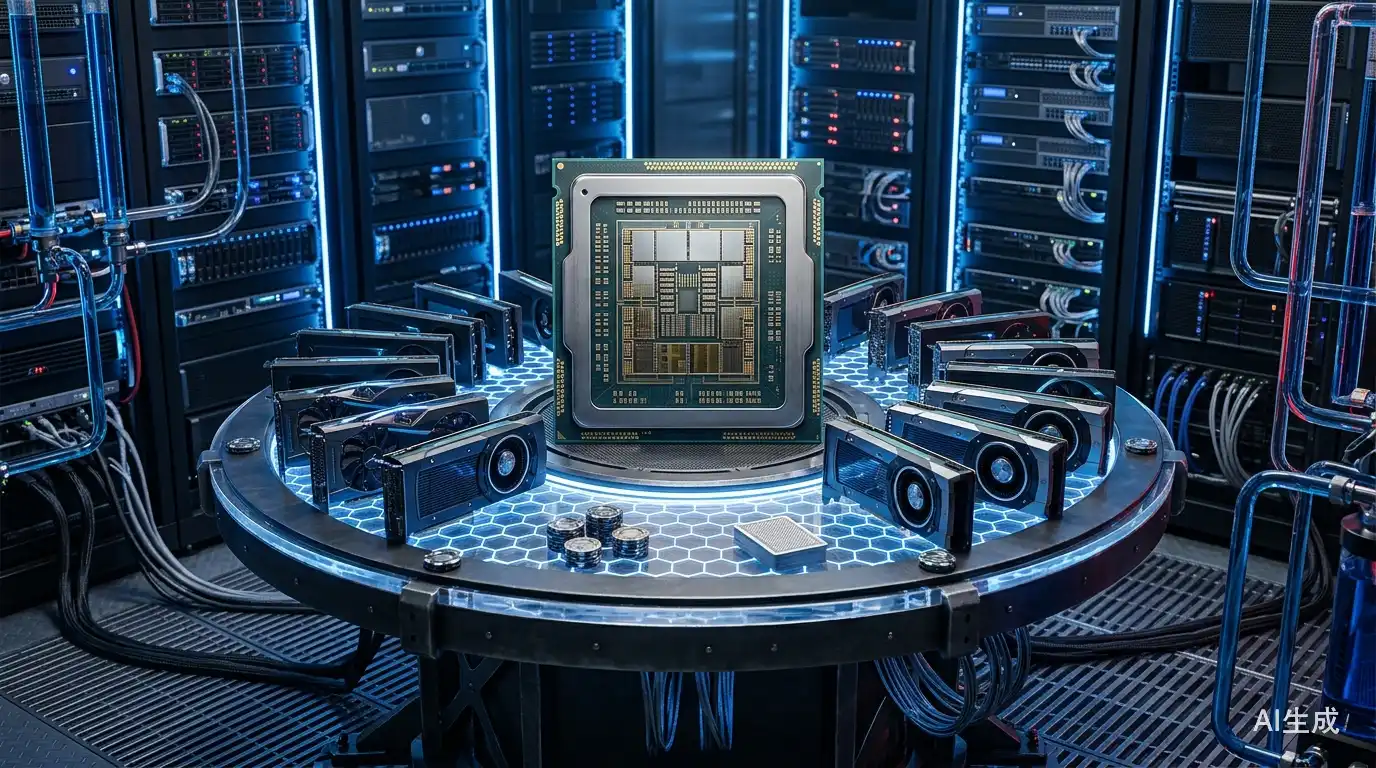
CPU Makes a Comeback to the Table, A $170 Billion "Power Seizure" Drama Begins

A new era is dawning for the server CPU (Central Processing Unit), driven by the shift from AI model training to large-scale reasoning and the rise of Agentic AI. This article explores how the CPU is reclaiming a central role in the AI data center. For years, the focus has been on the GPU (Graphics Processing Unit) for AI training. However, as AI moves to the inference and Agent phase—where tasks involve complex, multi-step reasoning, tool calls, and data management—the workload balance is flipping. Studies show CPUs now handle over 70% of the workload in Agentic AI, up from 10-30% in training. This is because Agent tasks generate massive intermediate data (KV Cache) that exceeds GPU memory, forcing it to be offloaded to the CPU's larger, more scalable memory pools. This increased importance is translating into market changes. Major players are taking note: NVIDIA launched its first standalone CPU line, Vera, based on ARM architecture and optimized for Agent performance. AMD doubled its server CPU market forecast to over $1200 billion by 2030. Analyst reports project the total server CPU market could reach $1700 billion by 2030, with AI-driven demand being a primary driver. Furthermore, the classic ratio of CPUs to GPUs in AI servers is rapidly changing, converging from 1:8 toward 1:1 for Agent deployments. This surge in demand has led to a rare industry-wide price increase of 10-15% for server CPUs from Intel and AMD, breaking a decade-long trend of "more performance for the same price." Demand is bifurcating into high-core-count CPUs for in-rack GPU support and moderate-core CPUs for standalone Agent task orchestration. In China, this global trend presents an opportunity for domestic CPU manufacturers like Hygon (海光信息) and Huawei Kunpeng, who are bolstered by both growing AI infrastructure needs and national policies promoting technological self-reliance ("xin chuang"). The maturity of their software ecosystems is also accelerating, evidenced by faster adaptation to new AI models. In conclusion, the narrative is shifting from a GPU-centric view to one where CPU-GPU synergy is critical. The CPU is no longer a peripheral component but a performance-defining bottleneck and a key growth driver in the AI hardware stack, opening a massive new market estimated in the hundreds of billions of dollars.

marsbit11 saat önce

CPU Makes a Comeback to the Table, A $170 Billion "Power Seizure" Drama Begins

marsbit11 saat önce

İşlemler

Spot
Futures
活动图片