Nobel Laureate Becomes New Employee at Anthropic

marsbit2026-06-20 tarihinde yayınlandı2026-06-20 tarihinde güncellendi

Özet

Nobel laureate and AlphaFold lead John Jumper has left Google DeepMind after nearly nine years to join AI company Anthropic. Jumper, who co-won the 2024 Nobel Prize in Chemistry for his work on the protein-structure-predicting AI, led the AlphaFold project from its early stages, revolutionizing structural biology by predicting hundreds of millions of protein structures. His departure follows closely that of Transformer co-inventor Noam Shazeer, who recently left Google for OpenAI, marking a significant talent drain for the tech giant. Analysts suggest top AI researchers are seeking environments where individual impact can more directly shape a company's trajectory. Anthropic's hiring of Jumper signals a major push into AI for life sciences. The company recently acquired biotech firm Coefficient Bio and is building wet labs, aiming to drastically accelerate drug discovery and biomedical research. This move aligns with a broader trend, as OpenAI and Google DeepMind (via Isomorphic Labs) are also heavily investing in AI-driven biology and healthcare. The stage is now set for intensified competition among AI leaders to redefine life sciences through artificial intelligence.

Nobel laureate joins Anthropic!

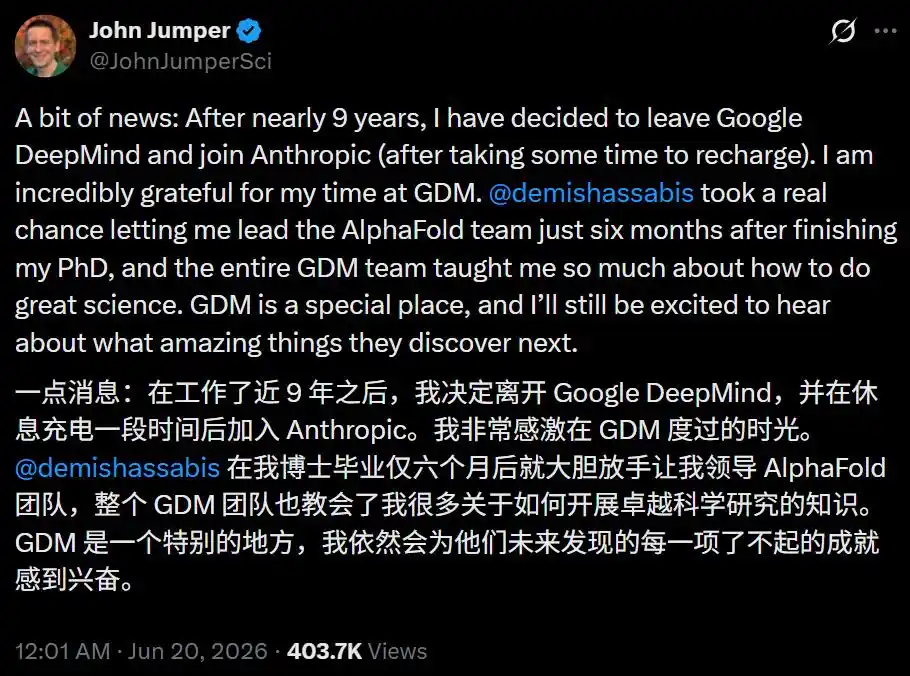
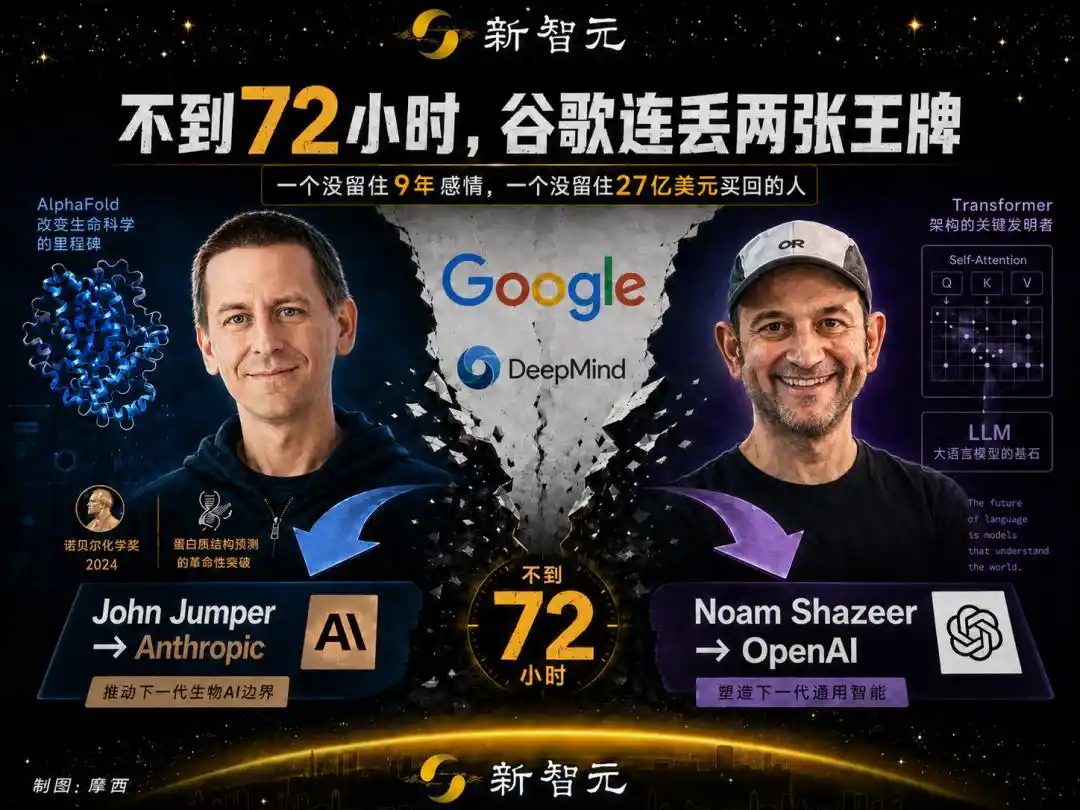
Today, AlphaFold core leader John Jumper announced: He is leaving Google DeepMind after nearly 9 years and joining Anthropic.

A Nobel laureate who rewrote structural biology with an AI model has turned and left.
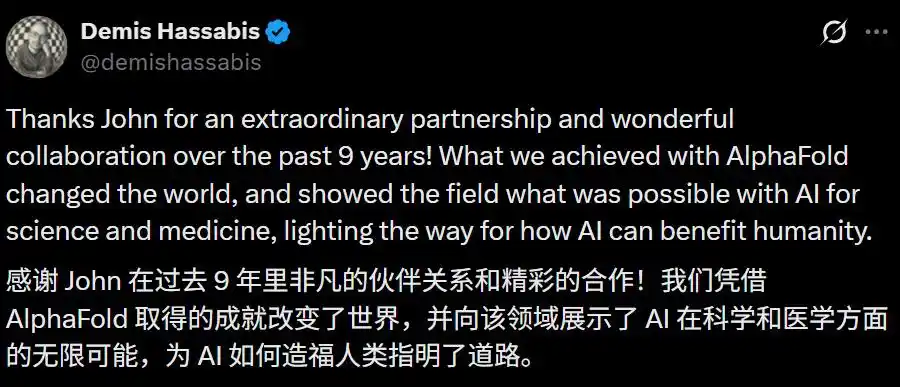
Hassabis responded quickly: "Thank you John for an incredible partnership over the past 9 years! What we achieved with AlphaFold changed the world."

Nine years of collaboration, sharing a Nobel Prize—this is probably the most amicable farewell in the tech circle.
And just two days ago, the legendary co-first author of the Transformer paper and Gemini co-lead, Noam Shazeer, announced he was leaving Google for OpenAI.

In less than 72 hours, Google lost two aces.

One couldn't be kept even after a $2.7 billion buyback, the other couldn't be kept even after 9 years of shared history.

Leading AlphaFold Directly, 6 Months After PhD Graduation

In the life sciences world, John Jumper is practically synonymous with "rewriting an entire discipline with AI."

Born in 1985 in Little Rock, Arkansas, an ordinary small town in the American South.

He earned a dual bachelor's degree in Mathematics and Physics from Vanderbilt, then went on to the University of Chicago all the way to his Ph.D., researching theoretical chemistry. Specifically, using computational methods to simulate the dynamic behavior of proteins.

Mathematics gave him intuition for modeling, physics gave him understanding of complex systems, and theoretical chemistry made him understand the protein problem itself better than any pure AI researcher.

The combination of these three fields just happens to be the rarest knowledge set needed to solve the protein folding problem.

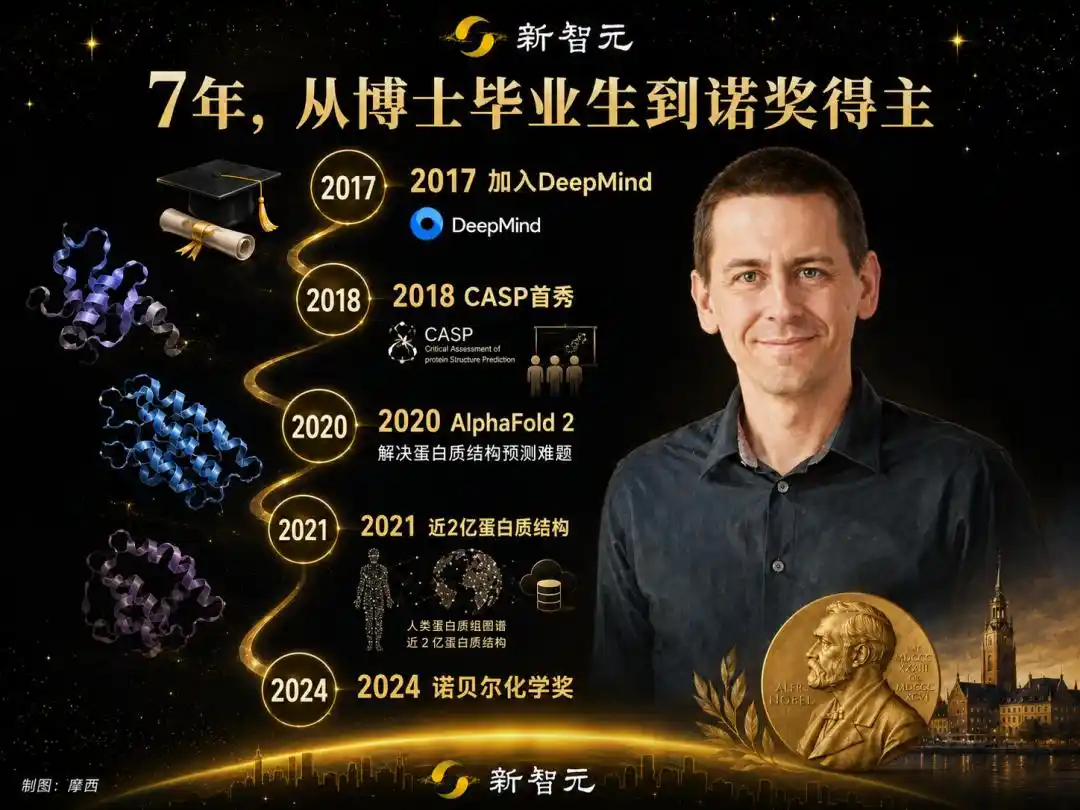
After receiving his Ph.D. in 2017, Jumper directly joined DeepMind.
Notably, at that time he had almost no deep learning experience. What stood out on his resume was not mastery of neural networks, but his understanding of protein physics.

But that's precisely what Hassabis valued.

Immediately after, he made a decision no one expected—letting this young man, who had graduated only 6 months prior and had to learn deep learning on the job, directly lead the AlphaFold team.

No transition period, no "do a few years as a researcher to build seniority."

Hassabis was betting that solving the protein folding puzzle required understanding proteins more than understanding AI. And what Jumper took on was the biggest gamble in the entire field of computational biology.

Single-handedly Scaling Biology by 1000x

What happened in the following years can only be described as "unbelievable"—

2018, AlphaFold made its debut at the protein structure prediction competition CASP, crushing traditional methods.

2020, AlphaFold 2 emerged, directly "solving" the protein folding problem that had puzzled biologists for 50 years.

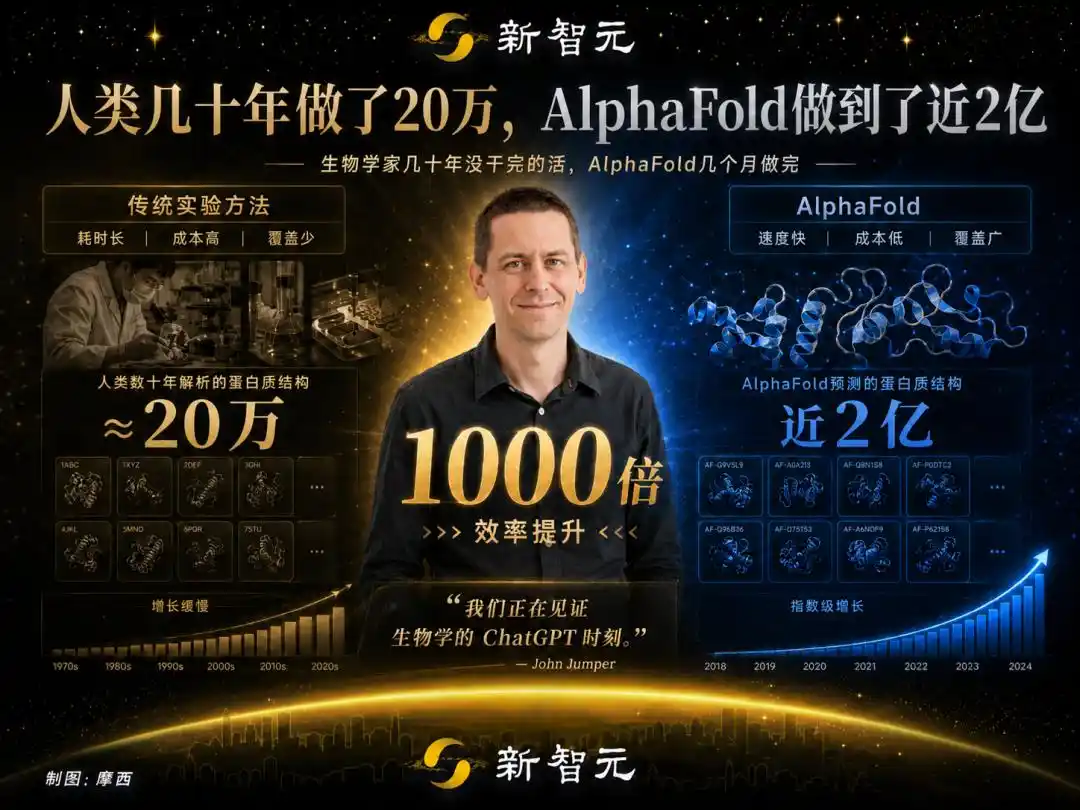
2021, Jumper's team calculated the 3D structures of nearly all 50,000+ human proteins. Ultimately, they generated structures for about 1 million species, nearly 200 million known protein structures.

Before AlphaFold, humanity spent decades using experimental methods like X-ray crystallography, cryo-electron microscopy to solve about 200,000 protein structures in total.

Jumper's team scaled that by 1000x in one go.

It's no exaggeration to say that the work biologists hadn't finished in the past hundred years, AlphaFold did in a few months.
May 2024, AlphaFold 3 was released—not just predicting proteins anymore, it can calculate interactions between DNA, RNA, small molecule drugs. Protein-ligand docking accuracy 76.4%, 1.8x improvement over previous methods.

Five months later in Stockholm, John Jumper and Demis Hassabis stood together on the Nobel Chemistry Prize podium.

That year Jumper was 39, the youngest Chemistry Nobel laureate in 70 years.

From a fresh Ph.D. graduate who had to learn deep learning on the fly, to standing under the Stockholm spotlight, it took him only 7 years.

Thus, the return on Hassabis's bet back then is probably among the highest in the history of human science.

So his departure today is not simply about Google DeepMind losing a Director.

What's Really Going on with Google?

After the news exploded, comments on X directly boiled over.

User Chubby exclaimed: "This is a huge loss for Google, and absolutely insane for Anthropic!"
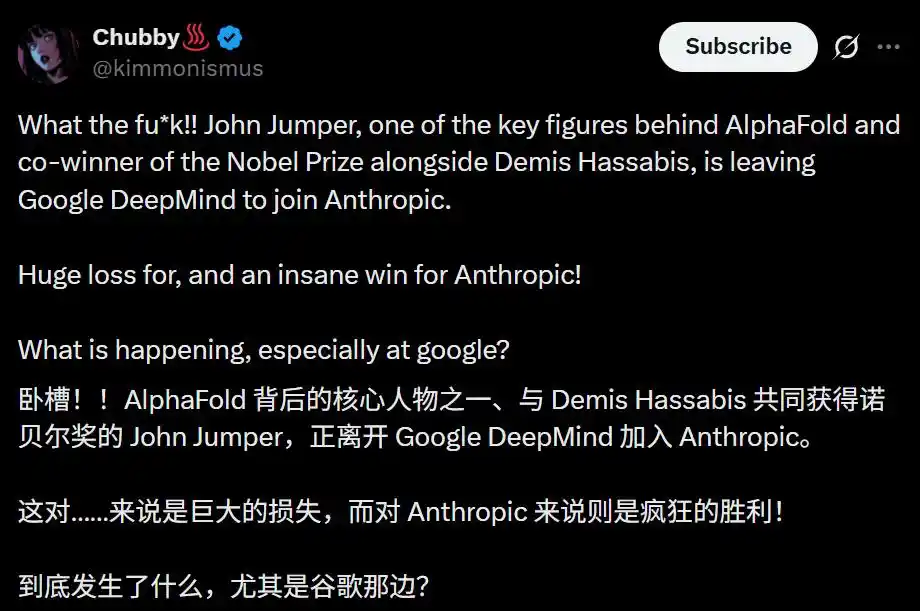
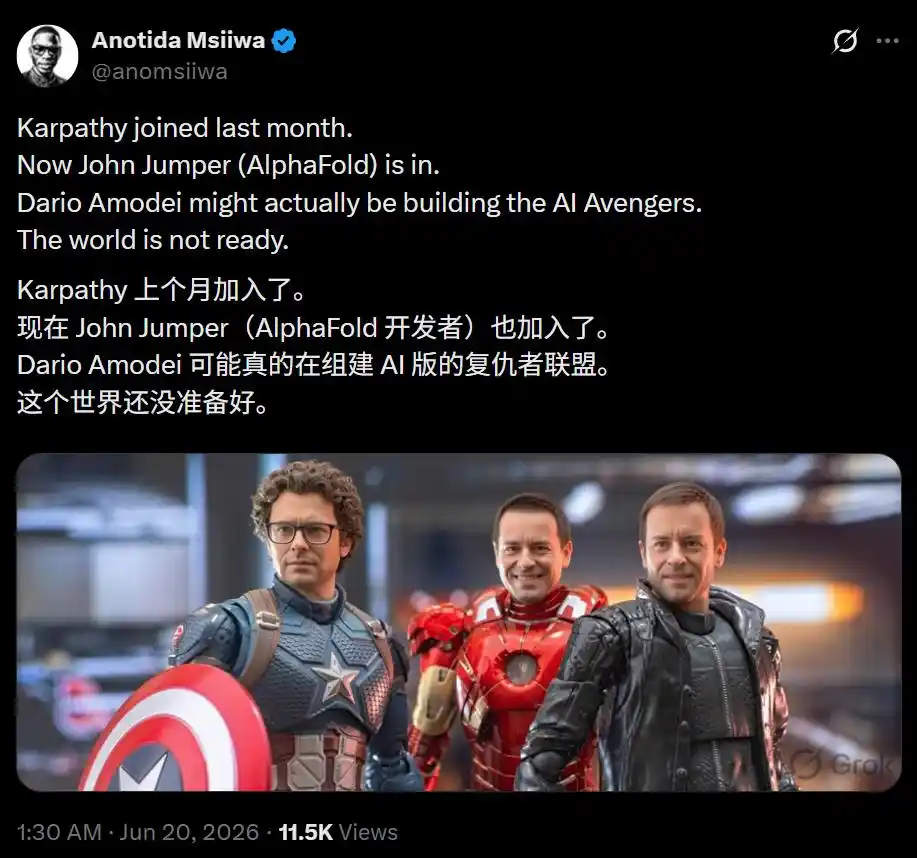
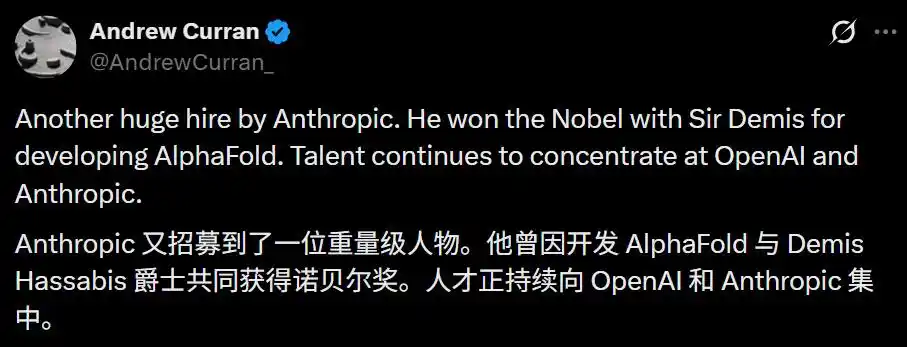
Some lamented, "Anthropic welcomes a Nobel laureate, talent is continuously concentrating towards OpenAI and Anthropic." Others outright declared: "First Karpathy, now the person behind AlphaFold, Anthropic is assembling an AI Avengers."

Logan Kilpatrick joked about expecting Jumper to "win another Nobel Prize." The tone was teasing, but on second thought, it's not really an exaggeration.

And after the shock, everyone was asking the same question—what's wrong with Google?

Jumper didn't say, Anthropic didn't say, Google didn't say.

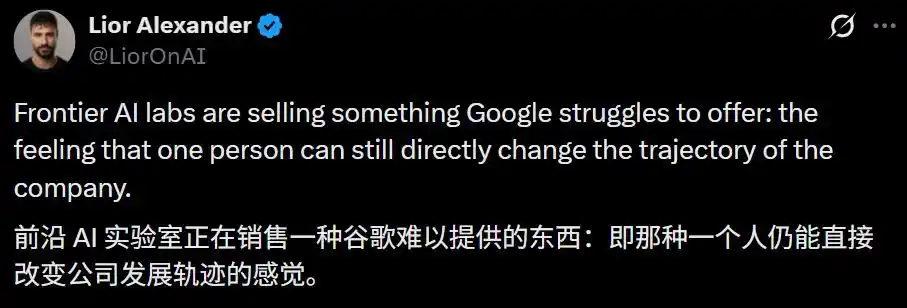
Perhaps a comment by investor Lior Alexander is the closest to an answer currently—

"Frontier AI labs are selling something Google can't offer: the feeling that one person can change a company's trajectory."
Couldn't Keep the Person Bought Back for $2.7 Billion Either

Just two days before Jumper's announcement, Noam Shazeer announced leaving Google for OpenAI, as "Head of Architecture Research."

In the 2017 foundational paper of modern AI, "Attention Is All You Need," he was one of the core authors. The multi-head attention mechanism was his design, the first usable implementation that beat SOTA was coded line by line by him.

And Google spent $2.7 billion to bring him back from Character.AI.

After returning, Shazeer became Gemini co-lead, a key figure in Google's counterattack with large models.

Result: less than two years later, he left again. Two days after that, Jumper left.

They are neither the first, nor will they be the last.
Over the past 8 years, more than 20 top researchers who authored milestone papers have left DeepMind/Brain one after another.

In 2025 alone, at least 11 executives left. DeepMind co-founder Mustafa Suleyman himself was also poached by Microsoft in a $650 million acqui-hire round.

Life Sciences, the Next Battlefield for the AI Big Three

Back to Anthropic's side. The groundwork began over two months ago.

April 3rd, Anthropic acquired biotech company Coefficient Bio for $400 million in stock. The team was less than 10 people but had already achieved top-tier results in AI-driven antibody design.

Meanwhile, Anthropic is also building its own wet lab. Last October, they launched Claude for Life Sciences to help researchers accelerate drug discovery and biological experiment design. This January, they launched Claude for Healthcare for medical institutions.

They say the goal is to compress the life science R&D cycle by 10x. And now, a Nobel-caliber protein scientist is leading this effort.

In fact, it's not just Anthropic betting on life sciences.
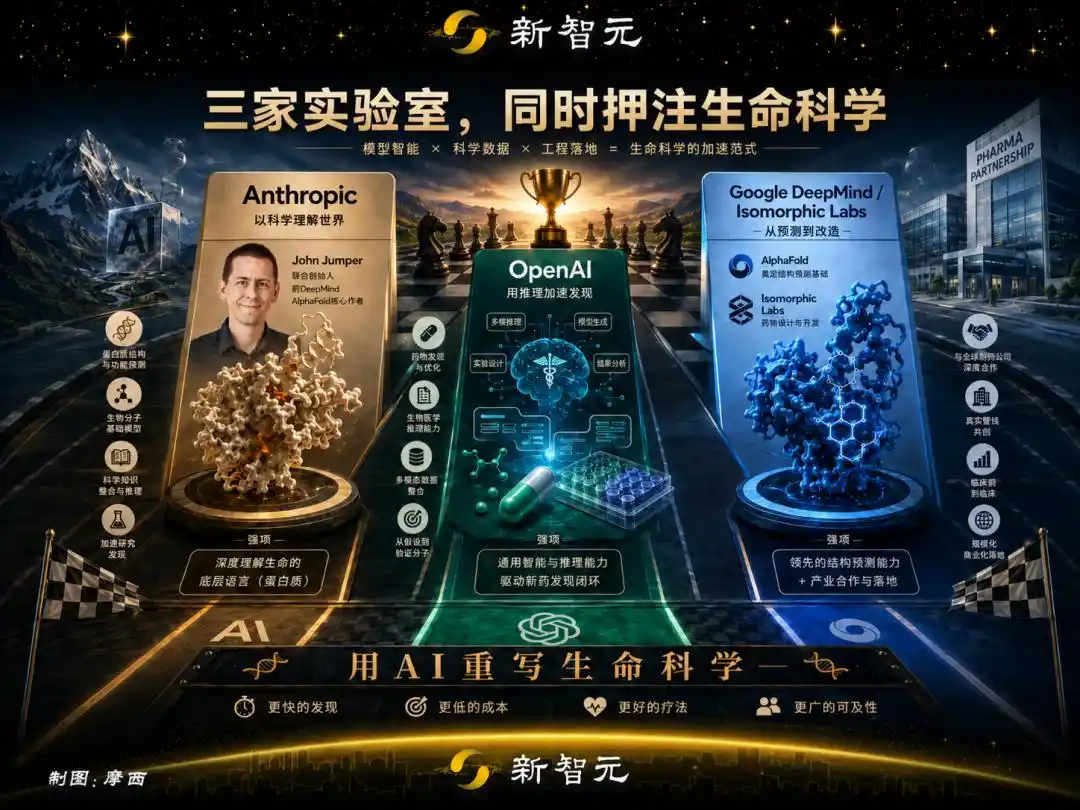
OpenAI released GPT-Rosalind in April this year, a reasoning model specifically for biomedicine, focusing on drug discovery, genomic analysis, and protein engineering. They have already partnered with top pharmaceutical companies like Amgen, Moderna, Thermo Fisher.

The OpenAI Foundation directly stated: investments in life sciences in the coming year will be no less than $1 billion. With the newly poached Shazeer overseeing architecture research, OpenAI is also making a strong move on this track.

On Google DeepMind's side, Hassabis's Isomorphic Labs raised $600 million last year, signed collaboration agreements with Eli Lilly and Novartis with total milestone values up to $3 billion. The AlphaFold technology foundation remains the industry benchmark.

Three labs simultaneously placed their bets on the same direction—rewriting life sciences with AI.

Jumper's choice is just the latest move in this grand chess game.

References:

https://x.com/JohnJumperSci/status/2068001285173834106

Editor: Moses

This article is from the WeChat public account "新智元", author: ASI启示录

Trend Kriptolar

İlgili Sorular

QWhat significant move did Nobel laureate John Jumper recently make?

ANobel laureate John Jumper recently announced that he has left Google DeepMind, where he worked for nearly nine years, to join the AI company Anthropic.

QWhat major scientific contribution is John Jumper best known for?

AJohn Jumper is best known for leading the AlphaFold team at Google DeepMind, which developed the AI system that revolutionized structural biology by solving the protein folding problem and predicting the structures of nearly 200 million proteins.

QWhy is John Jumper's departure considered a significant loss for Google?

AHis departure is a significant loss because Jumper was a key leader of the groundbreaking AlphaFold project, a recent Nobel Prize winner, and his move follows closely after another top AI researcher, Noam Shazeer, also left Google, indicating a pattern of top talent leaving for competitors.

QWhat area is Anthropic focusing on with its recent acquisitions and hires?

AAnthropic is focusing on the life sciences sector. This is evidenced by its $400 million stock acquisition of biotech company Coefficient Bio, the establishment of its own wet lab, and now the hiring of Nobel laureate John Jumper, aiming to compress life science R&D cycles.

QWhich other major AI companies are also heavily investing in the life sciences field?

AAlongside Anthropic, OpenAI and Google DeepMind are also heavily investing in life sciences. OpenAI has released GPT-Rosalind for biomedicine and pledged over $1 billion, while Google's Isomorphic Labs has secured major partnerships in drug discovery, all aiming to use AI to rewrite the field.

İlgili Okumalar

Optical Chips: Collective Capacity Expansion

The global optical chip industry is experiencing a massive wave of expansion driven by surging AI data center demand. Major players across the US, Japan, Europe, and China are aggressively investing to ramp up production capacity. In the US, Coherent is expanding its 6-inch Indium Phosphide (InP) semiconductor fab in Texas, supported by CHIPS Act funding and a $2 billion strategic investment from NVIDIA. Lumentum is building a new factory for InP optical devices, and Nokia is scaling its advanced photonic chip packaging and testing capabilities. NVIDIA's investments aim to secure future supply of critical lasers and optical interconnect products for AI infrastructure. Japan's JX Advanced Metals, a leading InP substrate supplier, plans a multi-billion yen investment to increase its capacity 7-10 times, strengthening its grip on the crucial upstream materials market. In Europe, IQE and Tower Semiconductor settled a patent dispute and signed a multi-year InP epitaxial wafer supply agreement, highlighting that next-generation silicon photonics platforms will integrate high-performance InP components. STMicroelectronics and Sivers Semiconductors are also expanding silicon photonics production and partnerships. China is rapidly building out its domestic supply chain. Dongshan Precision's subsidiary, Source Photonics, announced a $12 billion project to expand optical chip and module production. Companies like Sanan Optoelectronics and Yunnan Germanium are scaling up InP chip manufacturing and substrate production, moving towards vertical integration from materials to modules. While debate continues around the exact future architecture—whether CPO (Co-Packaged Optics), NPO, or pluggables will dominate—analysts like Morgan Stanley argue the underlying driver is unchangeable: the explosive growth in bandwidth demand. This will inevitably increase the volume of optical engines, lasers, and related content per GPU, regardless of the final technical path. The competition for "more light" in the AI era has intensified into a global, full-chain capacity race.

marsbit40 dk önce

Optical Chips: Collective Capacity Expansion

marsbit40 dk önce

Stablecoins Finally Find Real Yield: An In-Depth Look at On-Chain Reinsurance Re | A Conversation with Re Founder Karan Saroya

Stablecoin Real Yield Found: A Deep Dive into On-Chain Reinsurance with Re's Karan Saroya As stablecoin supply exceeds $170 billion, the search for sustainable, non-speculative yield intensifies. Re, an on-chain reinsurance platform, provides an answer: connecting stablecoin capital to the trillion-dollar traditional reinsurance market. Re operates as a regulated reinsurer, accepting stablecoin deposits as collateral to back US insurance companies. These insurers pay premiums, generating yield that flows back to on-chain depositors. Currently supporting 35 insurers and underwriting $500 million, Re projects scaling to over $1 billion soon. Key insights from a Bankless podcast with founder Karan Saroya and investor Avichal of Electric Capital: 1. **Uncorrelated, Real-World Yield:** Re offers stablecoin holders access to reinsurance returns (targeting 12-14%+), an asset class entirely separate from crypto or equity markets. 2. **Operational Efficiency via Smart Contracts:** Re replaces traditional, labor-intensive capital fundraising with smart contracts, allowing a ~12-person team to compete with industry giants. 3. **Regulatory Leverage:** For every $1 of collateral, regulations allow backing $5-7 in written premiums. This leverage amplifies returns from the underlying risk-free rate. 4. **DeFi Integration:** Depositors receive receipt tokens, which can be used in protocols like Morpho for "looping," potentially pushing yields to 18-20%+. 5. **The "DeFi Mullet" Model:** A compliant front-end (regulated reinsurer) paired with a decentralized back-end (smart contracts, DeFi capital markets). 6. **RE Governance Token:** Modeled on Lloyd's of London, the token governs the central capital pool's allocation, counterparty acceptance, and parameters. 7. **Real Economic Impact:** Capital funds real-world productivity (factories, clinics, businesses) via insurance, moving beyond crypto's internal loops. The discussion highlights a pivotal moment: DeFi's supply-side infrastructure is now met by real demand for productive yield, potentially kickstarting a flywheel where vast on-chain stablecoin capital seeks these real-world returns.

链捕手2 saat önce

Stablecoins Finally Find Real Yield: An In-Depth Look at On-Chain Reinsurance Re | A Conversation with Re Founder Karan Saroya

链捕手2 saat önce

1996 or 1999? Walsh's First Test is 'How to View AI'

"1996 or 1999? Wall's First Big Test Is 'How to View AI'" Federal Reserve Chairman Wall's initial challenge is not whether to raise or cut rates, but a more fundamental judgment: what kind of boom is the current AI boom? This will determine the Fed's policy path and define his legacy. Economics is split between two opposing views, according to reporter Nick Timiraos. One sees imminent productivity gains that will increase supply and cool inflation, allowing the Fed to hold steady. The other argues that while productivity benefits are distant, demand shocks are here now, and waiting for data confirmation risks missing the intervention window, forcing sharper rate hikes later. Wall has signaled a leaning toward the first view, echoing 1996-era Alan Greenspan, who embraced strong, productivity-driven growth without fear of inflation. However, Wall faces a different macro environment than Greenspan did, with tariff pressures, expanding fiscal deficits, and diminishing globalization benefits, which could force more significant inflation pressures even if AI benefits materialize. Wall's logic, expressed before taking office, is that AI-driven productivity gains won't show in official data for years. If the Fed waits for confirmation, it might mistakenly tighten policy and choke off the very growth that could suppress inflation. This argues for using forward-looking narratives over lagging data. Chicago Fed President Austan Goolsbee presents a key counter-argument. He distinguishes between expected and unexpected productivity booms. A widely anticipated boom, like the current AI wave, can cause people to spend future wealth gains in advance, overheating the economy before productivity actually rises, thus requiring preemptive rate hikes. He cites rising costs for AI data centers as evidence of such overheating. Fed Governor Christopher Waller offers a rebuttal to Goolsbee, noting the "expected spending" mechanism only works if people can borrow against future income, which many households cannot do due to borrowing constraints. Wall also faces a paradox related to his desire to reduce the Fed's use of "forward guidance" (pre-announcing policy moves). This practice was established in 1999 when Greenspan began signaling hikes to avoid market shocks. If the economy follows a less optimistic path, Wall may be forced to choose between using the guidance he wants to abolish or risking market volatility by staying silent. The ultimate question defining Wall's first major test remains: Is this 1996 or 1999?

marsbit3 saat önce

1996 or 1999? Walsh's First Test is 'How to View AI'

marsbit3 saat önce

Ethereum Q1 2026 Report: Fees Decline, Users and Transaction Volume Hit New Highs

Ethereum Q1 2026 Report: Fees Down, Users & Transactions Hit New Highs Token Terminal's Q1 2026 report on Ethereum presents a pivotal development: the network achieved record highs in monthly active users (13.2M, +85.9% YoY), total transactions (200.4M, +81.5% YoY), and throughput (25.78 TPS), while transaction fees on the mainnet plummeted by 47.9% quarter-over-quarter. This shift is attributed to the network's strategic move into a "low fees for scale" phase, exemplified by the Fusaka upgrade which increased data capacity and lowered block space costs, releasing pent-up demand (a manifestation of Jevons's Paradox). The report highlights a core narrative shift for Ethereum: from a DeFi-centric blockchain to a global financial settlement layer. It maintains a dominant position in tokenized assets, holding majority market shares among top chains in stablecoins (61.8%), tokenized funds (73.0%), and tokenized commodities (84.0%). Growth in tokenized funds (+73.1% YoY) and commodities (+325.9% YoY) was particularly strong, driven by institutions like BlackRock and JPMorgan entering the space. Contrasting these usage gains, several USD-denominated value metrics declined in Q1: fully diluted market cap fell 30.3% QoQ, total value locked (TVL) dropped 11.0%, and ecosystem transaction volume decreased 24.0%. The report interprets this as Ethereum prioritizing long-term network expansion and cementing its role as the default settlement layer for finance over short-term fee capture. The commentary from Etherealize argues that, much like the early internet, Ethereum's open, permissionless model is poised to win over closed alternatives as institutional tokenization accelerates.

marsbit4 saat önce

Ethereum Q1 2026 Report: Fees Decline, Users and Transaction Volume Hit New Highs

marsbit4 saat önce

İşlemler

Spot
Futures

Popüler Makaleler

CORE Nasıl Satın Alınır

HTX.com’a hoş geldiniz! CORE (CORE) satın alma işlemlerini basit ve kullanışlı bir hâle getirdik. Adım adım açıkladığımız rehberimizi takip ederek kripto yolculuğunuza başlayın. 1. Adım: HTX Hesabınızı OluşturunHTX'te ücretsiz bir hesap açmak için e-posta adresinizi veya telefon numaranızı kullanın. Sorunsuzca kaydolun ve tüm özelliklerin kilidini açın. Hesabımı Aç2. Adım: Kripto Satın Al Bölümüne Gidin ve Ödeme Yönteminizi SeçinKredi/Banka Kartı: Visa veya Mastercard'ınızı kullanarak anında CORE (CORE) satın alın.Bakiye: Sorunsuz bir şekilde işlem yapmak için HTX hesap bakiyenizdeki fonları kullanın.Üçüncü Taraflar: Kullanımı kolaylaştırmak için Google Pay ve Apple Pay gibi popüler ödeme yöntemlerini ekledik.P2P: HTX'teki diğer kullanıcılarla doğrudan işlem yapın.Borsa Dışı (OTC): Yatırımcılar için kişiye özel hizmetler ve rekabetçi döviz kurları sunuyoruz.3. Adım: CORE (CORE) Varlıklarınızı SaklayınCORE (CORE) satın aldıktan sonra HTX hesabınızda saklayın. Alternatif olarak, blok zinciri transferi yoluyla başka bir yere gönderebilir veya diğer kripto para birimlerini takas etmek için kullanabilirsiniz.4. Adım: CORE (CORE) Varlıklarınızla İşlem YapınHTX'in spot piyasasında CORE (CORE) ile kolayca işlemler yapın.Hesabınıza erişin, işlem çiftinizi seçin, işlemlerinizi gerçekleştirin ve gerçek zamanlı olarak izleyin. Hem yeni başlayanlar hem de deneyimli yatırımcılar için kullanıcı dostu bir deneyim sunuyoruz.

283 Toplam GörüntülenmeYayınlanma 2024.12.13Güncellenme 2026.06.02

CORE Nasıl Satın Alınır

Tartışmalar

HTX Topluluğuna hoş geldiniz. Burada, en son platform gelişmeleri hakkında bilgi sahibi olabilir ve profesyonel piyasa görüşlerine erişebilirsiniz. Kullanıcıların CORE (CORE) fiyatı hakkındaki görüşleri aşağıda sunulmaktadır.

活动图片