BlackRock XRP ETF Next? Canary CEO Eyes Late 2026

bitcoinist2026-01-30 tarihinde yayınlandı2026-01-30 tarihinde güncellendi

Özet

Canary Capital CEO Steven McClurg anticipates that BlackRock may file for a spot XRP ETF by late 2026 or 2027, driven by client demand rather than a sudden strategic shift. He notes that other major firms like Fidelity, Franklin Templeton, and Invesco are already exploring non-Bitcoin crypto ETFs, signaling a growing institutional trend. McClurg emphasizes that ETF issuers prioritize market demand, liquidity, and regulatory clarity before launching products. He also observes that institutions are increasingly interested in efficient, low-cost networks like XRP Ledger, Hedera, and Solana, while some are bypassing Ethereum due to perceptions of outdated technology. Additionally, he highlights Ripple’s potential in banking partnerships and stablecoin (RLUSD) growth, tying broader adoption to clearer regulations. At the time of reporting, XRP was trading at $1.75.

Canary Capital CEO Steven McClurg said he expects BlackRock could enter the spot XRP ETF race as soon as late 2026, framing it as a demand-led decision rather than a sudden shift in conviction from the world’s largest asset manager.

Speaking in a Jan. 27 interview with Crypto Sensei, McClurg argued that the market is already moving in that direction as more legacy ETF issuers test the perimeter of non-Bitcoin products.

BlackRock Could Join XRP ETF Race By End Of 2026

“It wouldn’t surprise me if BlackRock files for a XRP, potentially Solana ETF sometime by the end of 2026 or 2027,” he said. “I mean you’ve already got Fidelity, you’ve already got Franklin Templeton in the race there. So it’s not going to be a whole lot longer before BlackRock. Aso [...] Invesco just filed for a Solana ETF. Give it time. XRP will be there as well.”

McClurg described the ETF playbook as straightforward: issuers follow client demand and liquid market structure, then expand product shelves once the commercial case is clear. “I think it has to do with a few functions. They want to see demand. They want to see high market cap and it’ll get there eventually,” he said, suggesting that XRP’s pathway to a BlackRock filing is less about narratives and more about sustained investor pull.

That framework also matches how he says Canary thinks about filings. Asked how much product development is driven by client demand versus the firm’s own views, McClurg was blunt: “It’s highly weighted towards where we believe demand is.” He added that Canary will occasionally “take a couple of risks” on earlier-stage tokens, citing Axelar as a filing that was ultimately not launched amid weaker demand and drawdowns.

McClurg’s comments came with a wider thesis about where institutional attention is shifting. He said many pension funds and sovereign wealth investors are approaching Bitcoin as an allocation akin to gold, but that conversations around Ethereum often stall. “The conversation we’re having with Ethereum is that’s old technology, I want what’s next,” he said, adding that some institutions “just pass on Ethereum,” pointing to a view that open-source code can be replicated inside private networks.

By contrast, he said institutions are increasingly focused on networks he described as “very cheap and efficient to run,” naming XRP Ledger, Hedera, and Solana, alongside “competitors to Solana” such as Injective. The core pitch, in his telling, is operational: lower costs, higher throughput, and a clearer line from network utility to enterprise deployment.

On US bank adoption, McClurg predicted banks will partner with specific crypto protocols rather than converge on a single rail, with Ripple “first,” Hedera “second,” and Solana “a far third” in terms of being “dug into the financial system.” He also singled out Ripple’s stablecoin RLUSD as a potential breakout, saying, “I see that thing exploding” once integrated with partner rails, and even floated that RLUSD “could surpass USDC.”

McClurg tied much of the timing, ETFs included, to regulatory clarity. “I don’t really care what’s in the bill. I just want to know what I can and can’t do,” he said, referring to the Clarity Act debate. “And once I know what I can and can’t do, I can go make money [...] just tell me the rules so that I can go out and run my business and not have to look over my shoulder.”

At press time, XRP traded at $1.75.
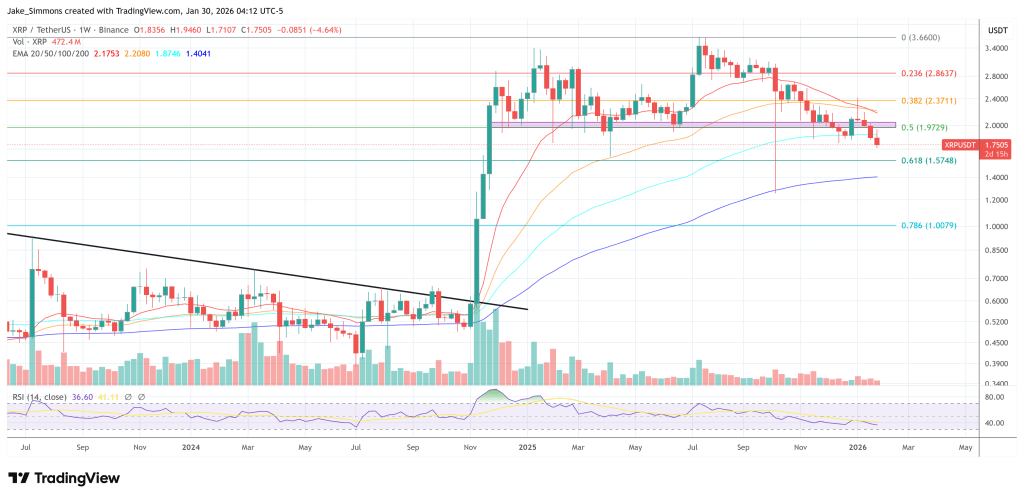
XRP falls below 100-week EMA, 1-week chart | Source: XRPUSDT on TradingView.com

İlgili Sorular

QAccording to Canary Capital CEO Steven McClurg, when does he expect BlackRock to potentially file for a spot XRP ETF?

AHe expects BlackRock could file for a spot XRP ETF as soon as late 2026 or 2027.

QWhat two key factors did McClurg say drive ETF issuers like BlackRock to launch new products?

AHe stated that issuers follow client demand and look for a liquid market structure before expanding their product shelves.

QWhich three blockchain networks did McClurg name as being increasingly focused on by institutions for being 'very cheap and efficient to run'?

AHe named the XRP Ledger, Hedera, and Solana.

QIn McClurg's view, what is the primary reason some institutional investors are passing on Ethereum?

AHe said some view Ethereum as 'old technology' and believe its open-source code can be replicated inside private networks, so they 'want what's next'.

QWhat did McClurg say is the most important thing he needs from regulators in order to operate his business effectively?

AHe said he needs regulatory clarity, stating: 'I just want to know what I can and can’t do... just tell me the rules so that I can go out and run my business and not have to look over my shoulder.'

İlgili Okumalar

From Survival to Accelerated Growth: The Journey of Zcash's Three-Year Rise as Told by the Founder of ZODL

**From Survival to Accelerated Growth: Zcash Founder Details the 3-Year Rise** Three years ago, Zcash (ZEC) was a struggling pioneer in privacy technology, with a price near $30, low shielded supply (11%), and a community mired in governance disputes. Today, ZEC trades around $600, with over 31% of its supply (~$3B) in user-controlled shielded pools. This transformation resulted from breaking key constraints. First, **governance shackles were removed**. The old model guaranteed funding to two entities (ECC and ZF) regardless of performance, creating a monopoly. In 2024, ECC rejected further direct funding, forcing a change. The NU6 upgrade ended direct funding, allocating 8% to community grants and 12% to a protocol-controlled treasury for retroactive rewards, expiring in 2028 unless renewed by overwhelming consensus. The entities also relinquished their trademark-based veto power, freeing community governance. Second, the **product focus shifted** from pure cryptography to user growth. Previously, engineering excelled at privacy tech but failed to attract users. In early 2024, the team (later ZODL) pivoted to building products users wanted, like the Zodl wallet (default privacy, hardware support, cross-asset swaps). This drove shielded supply to grow over 400% in ZEC terms, with 86.5% of recent transactions being shielded, representing real user adoption. Third, the **narrative evolved** from the limiting "privacy coin" label to "unstoppable private money." This clarified Zcash's value proposition: a Bitcoin-like monetary policy with verifiable private payments via advanced cryptography. This structural narrative—protocol (Zcash), asset (ZEC), gateway (Zodl)—enabled broader exchange listings, institutional interest, and ETF filings. Finally, **organizational constraints were broken**. In early 2026, the ECC team left its non-profit structure after disputes over control, forming Zcash Open Development Lab (ZODL). ZODL raised $25M from top VCs (Paradigm, a16z, etc.), gaining the capital and agility of a startup to scale consumer products. Current metrics show strong momentum: social discussion volume for ZEC surged 15,245% in a year, with 81% positive sentiment. The focus is now on enhancing user experience (Zodl wallet), scalability (Tachyon project targeting Visa-level throughput with 25-second blocks), and post-quantum security (quantum-recoverable wallets coming soon). Zcash is positioned to become faster, more usable, scalable, and quantum-resistant.

marsbit4 dk önce

From Survival to Accelerated Growth: The Journey of Zcash's Three-Year Rise as Told by the Founder of ZODL

marsbit4 dk önce

Five Counterparty Risk Architectures: A Settlement-Layer Methodology for Classifying TradFi Models in Crypto Exchanges

**Summary:** This companion piece reframes the five TradFi-on-crypto exchange architectures, previously classified by "architectural fingerprint," through the lens of counterparty risk. The core question is: whose balance sheet bears the loss first in a stress scenario, and has it historically done so? Each of the five models corresponds to a distinct risk holder with its own documented failure modes. * **Model 1 (Stablecoin-Settled CEX Perpetuals):** Risk is held by the stablecoin issuer (e.g., reserve composition, bank connectivity) and the CEX's own book. History includes Tether's banking disconnections (2017) and reserve misrepresentations (CFTC 2021 Order). * **Model 2 (CFD Brokers):** Risk resides on the broker's balance sheet (B-book model). Regulatory differences (e.g., ESMA's mandatory negative balance protection vs. Mauritius FSC's lack thereof) define loss allocation rules, as seen in the 2015 SNB event (Alpari UK insolvency). * **Model 3 (Off-Chain Custody & Transfer Agent Chain):** Risk lies with the off-chain custodian/platform. User asset recovery depends on Terms of Use and corporate structure, exemplified by the Celsius bankruptcy ruling (2023) where Earn Account assets were deemed property of the estate. * **Model 4 (DEX Perpetual Protocols):** No single balance sheet bears risk. Loss absorption relies on a protocol's insurance fund and Auto-Deleveraging (ADL) mechanism, as demonstrated in the GMX V1 (2022) and dYdX v3 YFI (2023) incidents. * **Model 5 (Regulated CCP - DCM-DCO-FCM):** The most institutionalized model concentrates risk in the Central Counterparty (CCP). However, history shows CCPs can employ non-standard tools under extreme stress, such as mass trade cancellation (LME Nickel, 2022) or enabling negative price settlements (CME WTI, 2020). The report argues that regulatory choices and counterparty risk structures are co-extensive, not in an upstream-downstream relationship. It concludes with five separate observation checklists (not predictions) for monitoring the structural vulnerabilities of each risk model.

marsbit21 dk önce

Five Counterparty Risk Architectures: A Settlement-Layer Methodology for Classifying TradFi Models in Crypto Exchanges

marsbit21 dk önce

İşlemler

Spot
Futures

Popüler Makaleler

XRP 2.0 Nedir

XRP 2.0: Kriptopara Manzarasında Yeni Bir Sınır XRP 2.0'a Giriş Kriptopara alanı sürekli olarak evriliyor, yeni projeler sürekli olarak dikkat ve benimseme için mücadele ediyor. Bu vaatkar girişimlerden biri, ileri düzey blok zinciri teknolojisi ve güçlü şifreleme yöntemlerini kullanmak üzere tasarlanmış yeni bir kriptopara projesi olan XRP 2.0'dır. İsim Ripple’ın XRP'si ile benzerlikler taşısa da, XRP 2.0'un bağımsız olarak çalıştığını, işlem güvenliğini, gizliliği ve ölçeklenebilirliği artırmaya odaklandığını belirtmek önemlidir. Dijital finansal alan giderek merkeziyetsiz çözümleri benimsedikçe, XRP 2.0, web3'e ve genel olarak kriptopara projelerinin genişlemesine anlamlı bir şekilde katkıda bulunmayı hedeflemektedir. XRP 2.0 Nedir? XRP 2.0'ın temelinde, güvenli ve merkeziyetsiz bir dijital para ekosistemi yaratmayı amaçlayan bir kriptopara projesidir. Temel teknolojisi, karmaşık blok zinciri prensiplerini ileri düzey şifreleme teknikleriyle entegre eder. XRP 2.0'ın ana hedefi, hızlı işlem yürütümünü sağlarken kullanıcılar için artırılmış gizlilik korumalarını öncelikli hale getirerek kendini güvenilir ve etkili bir platform olarak kurmaktır. Proje, mevcut kriptoparaların karşılaştığı birçok sınırlamanın çözümü olarak tanıtılmakta ve daha yüksek işlem hacimlerini, geliştirilmiş hız ve gizlilikle yönetebilen bir sistem önermektedir. Bu çok yönlülük, XRP 2.0'ı çeşitli dijital para birimleriyle dolu bir pazarda önemli bir rakip haline getiriyor. XRP 2.0’ın Yaratıcıları Kimdir? XRP 2.0'ın yaratıcısının kimliği 'Wilbur' olarak belirtilmiştir. Ancak, Wilbur veya ona bağlı varlıklar hakkında kapsamlı bilgiler ulaşılmaz durumdadır. Birçok kriptopara yaratıcısının anonimliği, genellikle bir derece gizlilik ve güvenliği korumayı amaçlayan endüstride yaygın bir olgudur. XRP 2.0’ın Yatırımcıları Kimlerdir? Şu anda, XRP 2.0’ı destekleyen yatırım kuruluşları veya organizasyonlarına dair spesifik bilgiler kamuya açık değildir. Kriptopara sektöründe, tanınmış yatırımcılar tarafından desteklenmek bir projenin güvenilirliğini ve başarısını önemli ölçüde etkileyebilir; ancak XRP 2.0'ın finansal destekçileri ile ilgili şeffaflık henüz sağlanmamıştır. XRP 2.0 Nasıl Çalışır? XRP 2.0, güvenli ve merkeziyetsiz işlemler sağlamak için blok zinciri teknolojisi ve gelişmiş şifreleme algoritmalarının bir kombinasyonunu kullanarak öne çıkmaktadır. Yenilikçi yapısı, kullanıcı etkileşimini artırmaya ve geleneksel kriptopara işlemlerinin ötesinde işlevselliği genişletmeye yönelik tasarlanmış benzersiz özellikler içerir. Bu özellikler arasında, XRP 2.0, metin-görüntü ve metin-ses işlevsellikleri gibi yapay zeka destekli yetenekler entegre etmektedir. Bu eklemeler, kullanıcılar için etkileşimli deneyimi artırmayı ve çeşitli sektörlerde daha geniş uygulama alanını teşvik etmeyi amaçlamaktadır. Teknolojik ilerlemeleri, kullanıcı odaklı tasarımla birleştirerek, XRP 2.0, kriptopara çözümlerini operasyonel çerçevelerine entegre etmeyi düşünen çeşitli bireyler ve işletmelerin dikkatini çekmeyi hedeflemektedir. XRP 2.0 Zaman Çizelgesi XRP 2.0'ı anlamak, şu ana kadar tanımladığı dönüm noktalarını incelemeyi gerektirir: 23 Temmuz 2023: XRP 2.0, blok zinciri alanında güvenli ve merkeziyetsiz işlem kabiliyetlerini devrim niteliğinde sunmayı hedefleyen yeni bir kriptopara projesi olarak tanıtıldı. 8 Eylül 2023: XRP20 adlı başka bir projenin lansmanı gerçekleşti, bu, XRP 2.0 ile ilgisi olmayan Ethereum blok zincirinde bir ERC-20 token'ın ortaya çıkışını işaret ediyor. 13 Kasım 2023: XRP Defteri, rippled sunucu yazılımının 2.0.0 versiyonunun yayınlanmasıyla önemli bir güncelleme aldı. Bu gelişmenin XRP 2.0 kriptopara projesi ile bağlantılı olmadığını belirtmek önemlidir. XRP 2.0 Hakkında Anahtar Noktalar XRP 2.0'ın özünü distile etmek için birkaç kritik faktör öne çıkmaktadır: Benzersiz Özellikler: AI destekli metin-görüntü ve metin-ses gibi özelliklerin eklenmesi, XRP 2.0'ın potansiyel uygulamalarını daha da çeşitlendirir. Blockchain Teknolojisi: Çerçeve, işlemler için güvenli ve merkeziyetsiz bir ortam sağlamak üzere gelişmiş blok zinciri mekanizmaları ve şifreleme protokolleri kullanır. Ölçeklenebilirlik ve Gizlilik: XRP 2.0, işlem süreçlerinde artırılmış gizlilik korumalarını ve büyüyen kullanıcı tabanını karşılamak için gerekli ölçeklenebilirliği önceliklendirir. Ripple ile İlişki Yok: Önemli olarak, adıyla birlikte hareket etmemesine rağmen, XRP 2.0’ın Ripple’ın XRP’si ile herhangi bir bağı veya iş birliği bulunmamaktadır; bu, onun kriptopara ekosistemindeki operasyonel çerçevesini ve hedeflerini belirgin bir şekilde ayırmaktadır. Sonuç XRP 2.0, kriptopara alanında güvenlik, gizlilik ve verimlilik kombinasyonu sunmayı hedefleyen iddialı bir girişimi temsil etmektedir. Karmaşık teknolojileri ve kullanıcı dostu özellikleri entegre ederek, proje kriptoparanın günümüz dijital ekonomisinde neler başarabileceğinin ufkunu genişletmeyi hedefliyor. Yaratıcısının anonimliği ve açıklanmayan yatırımcıların eksikliği bazıları için soru işaretleri oluşturabilir, ancak XRP 2.0'ın ileri düzey işlevsellikler ve merkeziyetsizlik konusundaki odaklanması, onu giderek kalabalıklaşan bir kriptopara pazarında çekici kılmaktadır. Kriptopara manzarası evrimini sürdürdükçe, XRP 2.0, güvenli ve ölçeklenebilir blok zinciri çözümlerinin genişlemesinde önemli bir oyuncu olarak ortaya çıkabilir.

160 Toplam GörüntülenmeYayınlanma 2024.04.05Güncellenme 2024.12.03

XRP 2.0 Nedir

XRP Nasıl Satın Alınır

HTX.com’a hoş geldiniz! XRP (XRP) satın alma işlemlerini basit ve kullanışlı bir hâle getirdik. Adım adım açıkladığımız rehberimizi takip ederek kripto yolculuğunuza başlayın. 1. Adım: HTX Hesabınızı OluşturunHTX'te ücretsiz bir hesap açmak için e-posta adresinizi veya telefon numaranızı kullanın. Sorunsuzca kaydolun ve tüm özelliklerin kilidini açın. Hesabımı Aç2. Adım: Kripto Satın Al Bölümüne Gidin ve Ödeme Yönteminizi SeçinKredi/Banka Kartı: Visa veya Mastercard'ınızı kullanarak anında XRP (XRP) satın alın.Bakiye: Sorunsuz bir şekilde işlem yapmak için HTX hesap bakiyenizdeki fonları kullanın.Üçüncü Taraflar: Kullanımı kolaylaştırmak için Google Pay ve Apple Pay gibi popüler ödeme yöntemlerini ekledik.P2P: HTX'teki diğer kullanıcılarla doğrudan işlem yapın.Borsa Dışı (OTC): Yatırımcılar için kişiye özel hizmetler ve rekabetçi döviz kurları sunuyoruz.3. Adım: XRP (XRP) Varlıklarınızı SaklayınXRP (XRP) satın aldıktan sonra HTX hesabınızda saklayın. Alternatif olarak, blok zinciri transferi yoluyla başka bir yere gönderebilir veya diğer kripto para birimlerini takas etmek için kullanabilirsiniz.4. Adım: XRP (XRP) Varlıklarınızla İşlem YapınHTX'in spot piyasasında XRP (XRP) ile kolayca işlemler yapın.Hesabınıza erişin, işlem çiftinizi seçin, işlemlerinizi gerçekleştirin ve gerçek zamanlı olarak izleyin. Hem yeni başlayanlar hem de deneyimli yatırımcılar için kullanıcı dostu bir deneyim sunuyoruz.

1.9k Toplam GörüntülenmeYayınlanma 2024.12.10Güncellenme 2025.03.21

XRP Nasıl Satın Alınır

Tartışmalar

HTX Topluluğuna hoş geldiniz. Burada, en son platform gelişmeleri hakkında bilgi sahibi olabilir ve profesyonel piyasa görüşlerine erişebilirsiniz. Kullanıcıların XRP (XRP) fiyatı hakkındaki görüşleri aşağıda sunulmaktadır.

活动图片














