Bitfinex Hack Mastermind Released Early From Prison, Credits 2018 Trump Law – Details

bitcoinist2026-01-03 tarihinde yayınlandı2026-01-03 tarihinde güncellendi

Özet

Ilya Lichtenstein, the mastermind behind the 2016 Bitfinex hack that stole 119,574 Bitcoin, has been released early from prison after serving 14 months of his five-year sentence. He credited his release to the First Step Act, a 2018 criminal justice reform law signed by former President Donald Trump. The stolen Bitcoin, initially worth $71 million, is now valued at nearly $11 billion. Lichtenstein expressed remorse and pledged to contribute positively to cybersecurity. His wife, Heather Morgan, who was also convicted for laundering the stolen funds and released early under the same law, celebrated their reunion. The couple used sophisticated methods to launder a portion of the stolen cryptocurrency.

The mastermind behind the Bitfinex hack, one of the most prominent cases in crypto security history, has been released early from prison after serving 14 months, under a 2018 law signed by US President Donald Trump.

Bitfinex Hack Mastermind Receives Early Release

On Friday, Ilya Lichtenstein, the mastermind behind the 2016 hack that stole over 120,000 Bitcoin (BTC) from crypto exchange Bitfinex, announced that he had been released from prison a year after receiving a five-year sentence.

On X, Lichtenstein thanked a law signed by President Trump during his first administration for his release. “Thanks to President Trump’s First Step Act, I have been released from prison early,” the post stated.

Notably, Trump signed the bipartisan First Step Act on December 21, 2018, aiming to improve criminal justice outcomes and reduce the size of the federal prison population. The law included a series of reforms, including one to establish a “risk and needs assessment system” that offers some inmates rehabilitative programming and the opportunity to be released early into home confinement.

According to CNBC, A Trump administration official stated on January 2 that the mastermind behind the Bitfinex hack “has served significant time on his sentence and is currently on home confinement consistent with statute and Bureau of Prisons policies.”

The US Department of Justice (DOJ) previously declared that Lichtenstein used advanced hacking techniques and tools to access Bitfinex’s network. He then transferred 119,574 Bitcoin to one of his crypto wallets through more than 2,000 transactions.

At the time, the stolen funds were valued at around $71 million. However, its value has increased exponentially in the past decade, being worth nearly $11 billion at current prices. During his sentencing hearing, he expressed remorse for using his talents on criminal activities “instead of a positive contribution to society.”

“I remain committed to making a positive impact in cybersecurity as soon as I can,” Lichtenstein affirmed on his Friday announcement, thanking his supporters for the help and vowing to prove “the haters” wrong.

Crypto Heist Figures Reunite Under Trump’s Law

Lichtenstein’s wife, Heather Morgan, reacted to the news online, declaring that being reunited at home with her husband after four years was “the best New Year’s present” she could get.

Morgan, a rapper known online as “Razzlekhan,” entered prison in February 2025 but was released early from prison after eight months under the First Step Act. In late October, she posted a video on X, sharing the news and thanking President Trump for her release.

“It is very good to be back, and I want to give a shout out to Papa Trump for making my 18-month sentence shorter,” she stated. However, it appears that the US President was not directly involved in the decision.

As reported by Bitcoinist, the self-titled “Crocodile of Wall Street” was sentenced to 18 months in prison on November 18, 2024, for her role in the Bitfinex heist. Despite not being involved in the hack, Morgan assisted her husband in laundering the stolen funds by using “numerous sophisticated laundering techniques” to disguise them.

Notably, they used fake identities to create online accounts, deposited the stolen Bitcoin in several darknet markets and crypto exchanges to withdraw the funds, converted BTC to other cryptocurrencies, and deposited part of the funds into crypto mixers. The couple seemingly managed to launder 21% of the total funds stolen from Bitfinex.

At the time, prosecutors argued that Morgan was “a willing participant and bears full responsibility for her actions.” Nonetheless, they noted that she was “a lower-level participant,” which resulted in her reduced sentence.
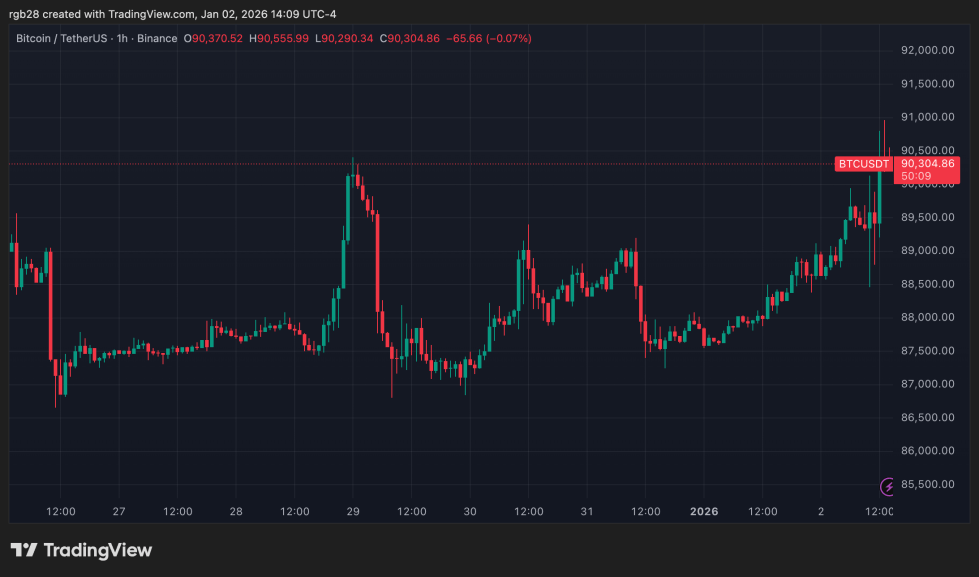
Bitcoin (BTC) trades at $90,304 in the one-week chart. Source: BTCUSDT on TradingView


İlgili Sorular

QWho was released early from prison for the Bitfinex hack and what law was credited for the release?

AIlya Lichtenstein, the mastermind behind the Bitfinex hack, was released early from prison. He credited his release to the First Step Act, a 2018 law signed by President Donald Trump.

QWhat was the value of the stolen Bitcoin at the time of the hack and what is its approximate value now?

AAt the time of the hack, the stolen 119,574 Bitcoin were valued at around $71 million. At current prices, the stolen funds are worth nearly $11 billion.

QWhat role did Heather Morgan play in the Bitfinex heist and what was her sentence?

AHeather Morgan, Ilya Lichtenstein's wife, did not participate in the hack itself but assisted in laundering the stolen funds. She was sentenced to 18 months in prison but was released early after 8 months under the First Step Act.

QWhat specific techniques did the couple use to launder the stolen Bitcoin?

AThe couple used numerous sophisticated laundering techniques, such as creating online accounts with fake identities, depositing Bitcoin into darknet markets and crypto exchanges to withdraw funds, converting BTC to other cryptocurrencies, and using crypto mixers.

QWhat was the primary goal of the First Step Act signed by President Trump?

AThe First Step Act, signed on December 21, 2018, was a bipartisan law aimed at improving criminal justice outcomes, reducing the federal prison population, and establishing a system that offers rehabilitative programming and the opportunity for early release into home confinement for some inmates.

İlgili Okumalar

SpaceX, OpenAI, Anthropic: The Three AI Giants Racing for IPO, Which One Is Worth Betting On?

SpaceX, OpenAI, and Anthropic are poised for historic IPOs within weeks, potentially raising a combined $180 billion—a sum exceeding the entire internet bubble's fundraising. The hosts of the Limitless Podcast argue this isn't just individual company financing but an unprecedented capital concentration for AI infrastructure, driven by an insatiable need for compute, data centers, power, and chips. SpaceX's IPO is notable for reportedly changing market index rules to allow faster inclusion, potentially funneling trillions in passive retirement funds into its stock, despite its unproven space-based data center business model. In contrast, Anthropic demonstrates explosive growth, with ARR reportedly hitting $45 billion and approaching profitability, fueled by strong enterprise adoption of products like Claude Code. Google's separate $80 billion raise highlights the immense capital pressure, even for giants. The discussion acknowledges bubble risks but leans optimistic. The hosts contend the massive spending is building essential physical infrastructure for the next technological era. A key bottleneck isn't capital but the real-world limits of chip manufacturing and construction speed. As long as demand for AI compute outstrips supply, this investment cycle represents a foundational build-out rather than a purely financial bubble. All three companies are seen as foundational bets on the future, with Anthropic often cited as the most immediately compelling due to its proven revenue trajectory.

marsbit2 saat önce

SpaceX, OpenAI, Anthropic: The Three AI Giants Racing for IPO, Which One Is Worth Betting On?

marsbit2 saat önce

From 'Old Guys' to 'New Favorites': How AI Is Revaluing Old Infrastructure from Dell to Nokia?

From "Vintage Tech" to "New AI Darlings": How AI Revalues Old Infrastructure One year ago, tech giants like Dell, Nokia, Cisco, and Western Data were seen as slow-growth, low-valuation stories, far from the AI spotlight dominated by players like Nvidia. Now, these legacy tech stocks are gaining market attention, sparking debate on whether this is genuine industry revaluation or a temporary narrative. As AI moves from model parameters to real-world data centers, the market is recognizing companies with proven delivery and infrastructure capabilities. This shift marks a change in the AI investment thesis: from pure model and GPU focus to the complex systems engineering required for deployment. Companies like Dell, HPE, and Corning are being revalued not for being "sexy" AI innovators, but for their decades of accumulated expertise in supply chains, enterprise delivery, and infrastructure—assets that have become critical in the AI buildout phase. The revaluation is unfolding across three key infrastructure lines: 1. **Servers & System Integration:** Dell and HPE are emerging as crucial system integrators or "general contractors" for AI data centers, translating GPU orders into complete, deployable server racks integrated with power, cooling, and networking. 2. **Networking & Connectivity:** AI's scale demands robust high-speed connections. Corning (fiber optics), Nokia (AI-RAN, 6G), and Cisco (data center switches) are gaining importance for enabling efficient data transfer within and between AI clusters. 3. **Storage:** Beyond high-speed memory (HBM/DRAM), the AI data explosion is driving demand for high-capacity hard drives (HDDs) from companies like Western Digital and Seagate to handle training data, logs, and cold storage cost-effectively. For this revaluation to be substantive and not just a narrative, three criteria are key: 1) Concrete AI-related order and revenue growth (e.g., Dell's AI server sales), 2) Upward revisions to company financial guidance, and 3) Sustainable improvements in profit quality, not just top-line revenue spikes. In essence, AI's transition to a real construction phase is re-pricing "old assets" against "new demand." The opportunity, however, is selective. Only those legacy firms that are demonstrably integrated into the capital expenditure chains of data center and enterprise AI deployment are likely to experience a true "logic re-rating" rather than just a temporary valuation bounce.

marsbit2 saat önce

From 'Old Guys' to 'New Favorites': How AI Is Revaluing Old Infrastructure from Dell to Nokia?

marsbit2 saat önce

İşlemler

Spot
Futures
活动图片