Bitcoin price surges on CPI relief – Yet BTC’s $70K barrier remains!

ambcrypto2026-02-14 tarihinde yayınlandı2026-02-14 tarihinde güncellendi

Özet

Bitcoin's price surged nearly 4% following a lower-than-expected CPI report of 2.4%, marking its strongest intraday gain in two weeks. This triggered significant short liquidations, accounting for 85% of the $267 million flushed. However, the rally appears driven more by a short squeeze than genuine buying pressure. Despite the bounce, BTC faces a major resistance zone between $70k–$75k, with approximately $150 million in sell-side liquidity. On-chain data shows funding rates remain negative, indicating persistent bearish sentiment. While ETF inflows saw a slight recovery, bulls lack the momentum to decisively break through key resistance, leaving Bitcoin vulnerable to a potential correction.

Macro signals continue to defy mainstream expectations.

This week stress-tested the market with back-to-back data drops, and from here it looks like bulls are absorbing the volatility, especially as incoming data continues to surprise analysts without driving meaningful downside.

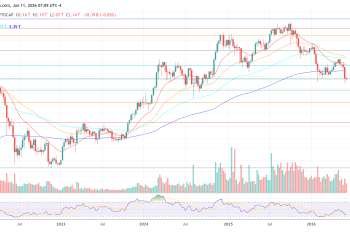
Bitcoin’s [BTC] technical setup reinforces that view. Despite the FUD, BTC continues to chop above its early February low near $59k. Naturally, the key question now: Is this resilience actually signaling a market bottom?

CPI relief sharpens the divide between bulls and bears

Lately, macro prints have been driving sharp sentiment swings in Bitcoin.

Take the latest jobs report. It came in “stronger than expected,” reinforcing the resilience of the U.S. labor market. However, that quickly reignited a clash between bulls and bears over what it means for the rate-cut path.

Then, on the 13th of February, the Bureau of Labor Statistics published the Consumer Price Index (CPI) report, which printed at 2.4%, below the expected 2.5%, quickly shifting the debate back in favor of the bulls.

The reaction was swift. Bitcoin closed the day up 3.93%, marking its strongest intraday gain in two weeks. Bears naturally took the hit, with short liquidations accounting for roughly 85% of the $267 million flushed.

That said, the real test of bullish conviction is just beginning.

Technically, bears are still leaning against a breakout, with a dense liquidity cluster building around a key price band. Unless Bitcoin clears this range “decisively,” the latest move risks being just another short squeeze.

Bitcoin bulls need conviction amid on-chain pressure

Bears continue to argue that annual inflation remains elevated.

Notably, this divergence in bull-versus-bear positioning around recent macro prints is now showing up on-chain. Bitcoin’s funding rates remain in the red, pointing to a persistent short bias despite recent price resilience.

The result? A dense short-side liquidity cluster is forming between $70k and $75k, with roughly $150 million in Bitcoin sell pressure, making this a key resistance zone bulls must clear to sustain the rally.

On-chain accumulation around Bitcoin’s current spot is increasing. BTC ETFs saw a $15 million inflow after two consecutive days of outflows, hinting at a flip, but the trend is still too weak to fuel any meaningful upside for BTC.

The bigger picture? Even with CPI relief, U.S. investors aren’t stepping in, likely pricing in a correction before committing. Taken together, this suggests bulls will need more conviction to push Bitcoin out of its current chop.

From a technical standpoint, BTC’s near‐4% rally appears fueled more by a short squeeze than genuine buying pressure. If that dynamic persists, momentum could swing back to the bears, leaving Bitcoin longs exposed to significant risk.


Final Summary

  • Bitcoin faces key resistance as short-term liquidity builds between $70k– $75k, with bulls struggling to convert the recent rally into sustained momentum.
  • The move appears driven by a short squeeze, keeping Bitcoin longs exposed to downside risk.

İlgili Sorular

QWhat was the immediate market reaction to the CPI report on February 13th?

AThe reaction was swift. Bitcoin closed the day up 3.93%, marking its strongest intraday gain in two weeks. Short liquidations accounted for roughly 85% of the $267 million flushed from the market.

QAccording to the article, what is the key technical resistance level that Bitcoin bulls need to overcome?

AThe key resistance is a dense short-side liquidity cluster forming between $70k and $75k, which represents roughly $150 million in Bitcoin sell pressure.

QWhat does the article suggest is the main driver behind Bitcoin's near-4% rally, rather than genuine buying pressure?

AThe article states that the rally appears to be fueled more by a short squeeze than by genuine buying pressure.

QHow did the latest jobs report affect the debate between Bitcoin bulls and bears?

AThe 'stronger than expected' jobs report reignited a clash between bulls and bears over what the resilient U.S. labor market means for the future path of interest rate cuts.

QWhat on-chain metric points to a persistent short bias in the market despite recent price resilience?

ABitcoin's funding rates remain in the red, which is an on-chain metric pointing to a persistent short bias.

İlgili Okumalar

Can Generative Models Finally Be Trained End-to-End? The Core Is a For Loop

This article introduces a novel training paradigm for generative models called Explorative Modeling (XM), which enables true end-to-end training. Traditionally, powerful generative models like autoregressive and diffusion models are not trained end-to-end. They are trained to predict a single small step but require iterative multi-step sampling for inference. This "exposure bias" leads to error accumulation and limits performance. The core challenge XM addresses is "mode blurring." In generative tasks, a single input (e.g., "generate a dog") corresponds to many valid outputs (multiple modes). Standard training objectives like reconstruction loss force the model to average these modes, producing unrealistic, blurry outputs. To avoid this, existing models break generation into many small, almost deterministic steps, sacrificing end-to-end training. XM tackles this by restructuring the training loop itself. Its key insight is to amplify "generative expressivity." For each training input, instead of generating one sample, the model generates K candidate outputs. Only the candidate closest to the real data is used for computing the loss and updating the model via backpropagation. This simple "best-of-K" mechanism is implemented as a short for-loop. By exploring multiple possibilities, the model learns to distribute its guesses across different modes rather than collapsing to their uninformative average. The paper demonstrates that "exploration" acts as a new, powerful scaling axis. Gains from XM increase with model size, data scale, and compute. Experiments show improvements in FID scores for image generation and significant efficiency gains, sometimes outperforming larger models without exploration. When pushed to the limit, XM enables fully single-step, end-to-end generative models. In robotics tasks, an "Explorative Policy" matched the performance of a 100-step Diffusion Policy with a single forward pass, drastically improving inference speed. While the best-of-K concept is not entirely new, the authors' contribution lies in formally understanding it as a direct method to boost generative expressivity without fragmenting the generation process. This work suggests that as models scale, enhancing exploration during training may become crucial for overcoming fundamental performance bottlenecks.

marsbit8 dk önce

Can Generative Models Finally Be Trained End-to-End? The Core Is a For Loop

marsbit8 dk önce

Annual Salary of Millions Competing for Electricians, Meta Rushes to Open Its Own Technical School

The AI boom is facing an unexpected bottleneck: a severe shortage of skilled construction workers and electricians. As tech giants like Meta, OpenAI, and Alphabet race to build massive data centers—such as OpenAI's $16 billion "Stargate" project—they are hitting a critical labor wall. The U.S. needs an estimated 130,000 more electricians, 240,000 construction workers, and 150,000 supervisors by 2030 for AI infrastructure alone, but tens of thousands of electrician jobs go unfilled each year. While AI companies offer high premiums, with electricians earning up to $280,000 annually, worker scarcity still causes massive losses—delays on a single project can cost $14.2 million per month. The complexity of building AI data centers, which require immense power (equivalent to powering hundreds of thousands of homes), sophisticated electrical systems, and advanced liquid cooling solutions, demands highly skilled technicians who are in short supply. To combat this, companies are investing heavily in training. Meta has committed $115 million to a free training school offering tuition, housing, and stipends, targeting 5,000 new workers. OpenAI is partnering with unions to secure skilled labor. These efforts are paying off, with a significant rise in Gen Z interest in trade schools over college. However, the power demands are staggering. AI data centers are driving a rapid surge in electricity consumption, projected to account for up to 12% of U.S. power use by 2028 and raising costs for consumers. Furthermore, the construction boom is project-based, leading to a potential future glut of trained workers once building peaks, which could depress wages industry-wide. The race for AI supremacy now depends as much on skilled hands as on advanced chips.

marsbit1 saat önce

Annual Salary of Millions Competing for Electricians, Meta Rushes to Open Its Own Technical School

marsbit1 saat önce

İşlemler

Spot
活动图片