All about Revolut moving $1.2B on Polygon and if that makes it faster than SWIFT

ambcrypto2026-03-28 tarihinde yayınlandı2026-03-28 tarihinde güncellendi

Özet

Digital banking giant Revolut has processed over $1.2 billion in stablecoin transfers on the Polygon network, demonstrating blockchain's growing role in mainstream finance. These transactions settled in seconds with total fees under $700, showcasing significant cost and efficiency advantages over traditional systems like SWIFT, which can take days and involve high intermediary fees. Polygon's low transaction costs—up to 426x cheaper than Ethereum—make it an attractive infrastructure for institutional payments. This milestone signals a structural shift toward blockchain-based settlements, with stablecoins enabling near-instant, low-cost, and transparent cross-border transactions.

Across the Internet and socials, there has been a heated debate between traditional finance and blockchain. However, as it stands, most investors and institutions are now accepting blockchain as an equal competitor.

Just recently, digital banking giant Revolut crossed a major milestone, processing over $1.2 billion in stablecoin transfers on the Polygon network. The figure reflects real user activity, not test flows, while highlighting how blockchain rails are quietly entering mainstream finance.

In fact, according to Polygon’s official report, these transactions settled in seconds and cost fractions of a cent, making them significantly cheaper than legacy systems.

Why are institutions choosing Polygon?

The economics behind this shift are hard to ignore. Revolut reportedly processed the entire $1.2 billion volume for less than $700 in total fees, demonstrating the scale advantage of blockchain-based settlements.

Polygon consistently offers the lowest transaction costs among major chains – Up to 426x cheaper than Ethereum and 4x cheaper than Solana in many cases.

For institutions moving large capital, this difference compounds quickly. What would cost millions in traditional infrastructure can now be executed almost instantly at near-zero cost.

Traditional cross-border transfers still lag behind

Despite decades of innovation, traditional cross-border systems remain slow and expensive. Payments routed through correspondent banking networks like SWIFT can take 1–5 business days and involve multiple intermediaries.

Fees are another major drawback. Global remittance costs average around 6.49%, with banks often charging over 14% in some corridors.

On the contrary, Polygon-based transfers eliminate intermediaries, settle in seconds, and offer 1:1 stablecoin conversions with no hidden FX spreads.

A structural shift, not a trend

Revolut’s $1.2 billion milestone is more than a headline. In fact, it’s a proof point. Institutions are no longer experimenting with blockchain; they’re deploying it at scale.

As stablecoin infrastructure matures, networks like Polygon are positioning themselves as the back end for global money movement – Faster, cheaper and increasingly invisible to the end user.

Polygon’s network token is benefiting from network adoption

On the daily chart, POL seemed to be gaining some traction at press time. This, despite the fact that the token’s prices have been consolidating over the last few weeks.

If the network keeps recording these significant gains, the altcoin’s prices could usher in a potential breakout as long as the demand zone at around $0.095 holds.
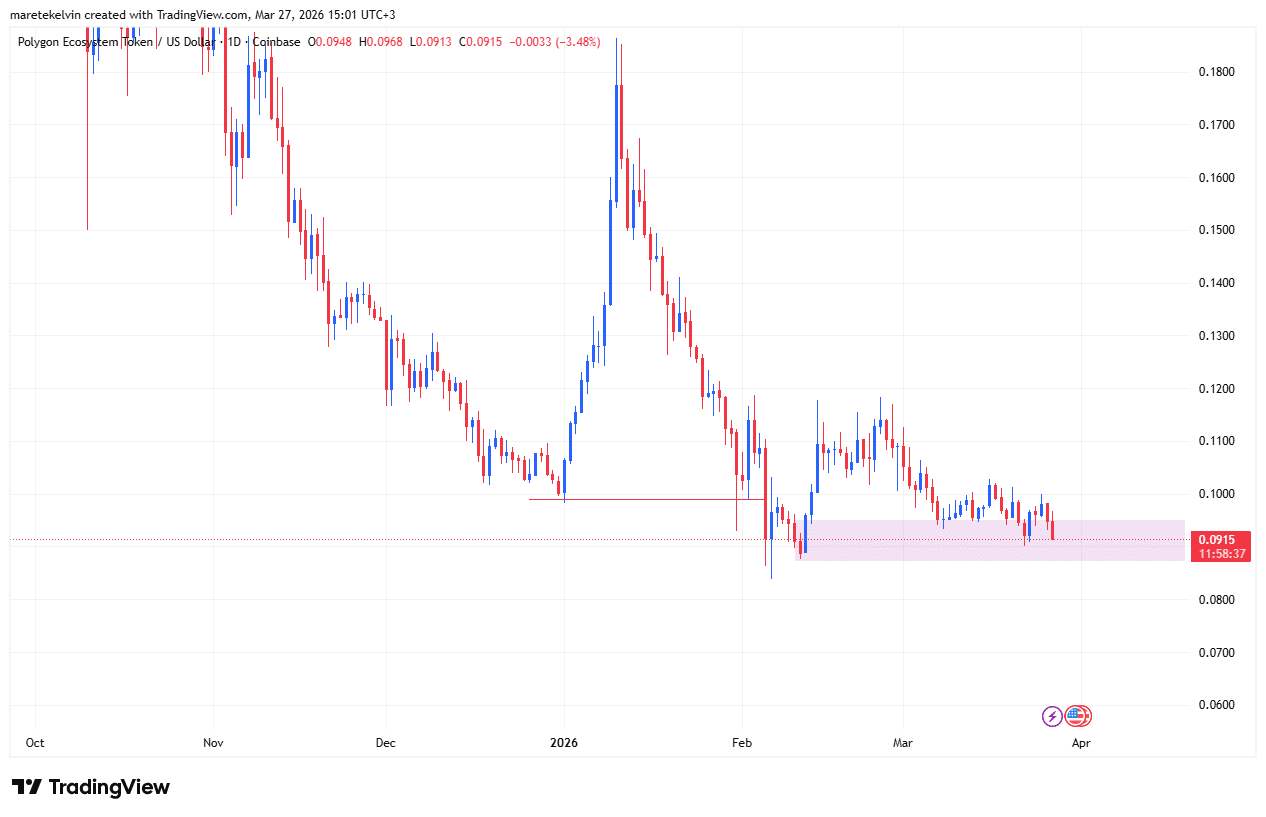
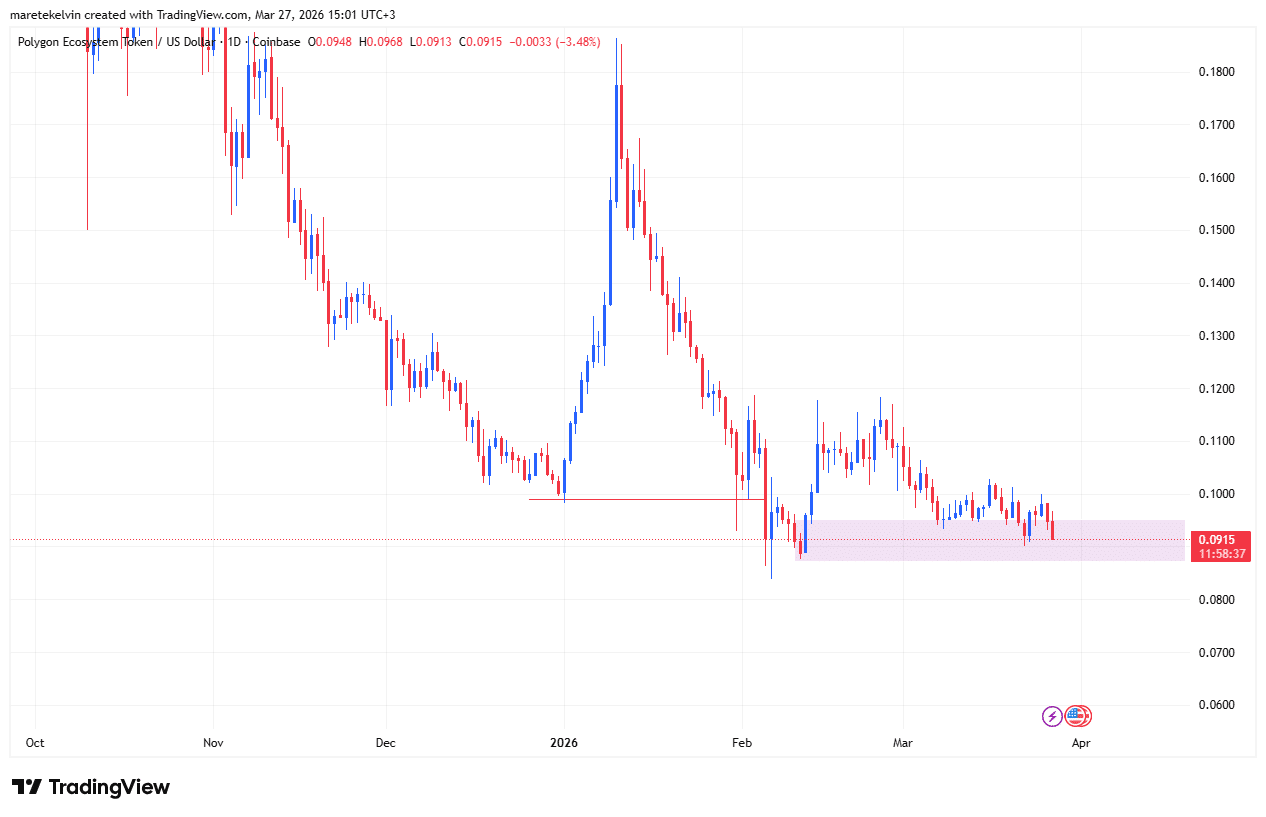
Source: TradingView

Final Summary

  • Blockchain rails like Polygon are proving significantly cheaper and faster than traditional cross-border systems at institutional scale.
  • Revolut’s $1.2B volume signals a structural shift towards stablecoin-powered global payments, rather than a temporary trend.


İlgili Sorular

QWhat major milestone did Revolut achieve on the Polygon network?

ARevolut processed over $1.2 billion in stablecoin transfers on the Polygon network, reflecting real user activity.

QHow do transaction costs on Polygon compare to traditional systems like SWIFT?

APolygon transactions cost fractions of a cent, significantly cheaper than traditional systems. For example, Revolut processed $1.2 billion for less than $700 in total fees, while traditional cross-border transfers average around 6.49% in fees.

QWhat are the advantages of using Polygon for cross-border transfers compared to traditional banking networks?

APolygon-based transfers settle in seconds, eliminate intermediaries, offer 1:1 stablecoin conversions with no hidden FX spreads, and are much cheaper than traditional systems like SWIFT, which can take 1-5 business days and involve multiple intermediaries.

QWhat does Revolut's $1.2 billion volume on Polygon indicate about institutional adoption of blockchain?

AIt signals a structural shift towards stablecoin-powered global payments, showing that institutions are no longer just experimenting with blockchain but are deploying it at scale for faster and cheaper transactions.

QHow has Polygon's network token (POL) been performing according to the article?

AAt the time of writing, POL was gaining some traction despite consolidating over the previous weeks. If network adoption continues, the token's price could potentially break out as long as the demand zone around $0.095 holds.

İlgili Okumalar

Three Consecutive Quarters of Decline: The Crypto Market is Experiencing Its Longest Ebb Since 2022

The cryptocurrency market experienced its third consecutive quarterly decline in Q2 2026, marking its longest downturn since 2022, according to a CoinGecko report. The total market capitalization fell 12.6% to $2.1 trillion, a retreat of roughly 52% from its October 2025 peak. Multiple indicators signal an orderly capital exit from the sector. For the first time since Q3 2023, the total stablecoin market cap shrank (-1.6% to $305.1B), indicating funds are leaving the ecosystem entirely, not just rotating to safer crypto assets. Trading volumes on centralized exchanges dropped 27.9%, while DeFi's Total Value Locked (TVL) plummeted 23.4%. Both Bitcoin (-14.2%) and Ethereum (-25.4%) underperformed traditional risk assets like equities in Q2, breaking from previous correlative narratives. Ethereum saw its first-ever three-quarter losing streak, with its market share falling to around 10%. A few areas saw growth. Prediction market volumes surged 48.7%, largely driven by sports betting. Hyperliquid's HYPE token entered the top 10 by market cap, and tokenized collectibles platforms grew, though primarily via gamified mechanics. Despite a ~9.8% Bitcoin rebound in July, historical trends suggest caution for August. The market, now ~49% below its 2025 high, is undergoing a measured retreat. Its recovery hinges on future Federal Reserve policy and the industry's ability to develop sustainable revenue streams beyond speculation.

marsbit8 dk önce

Three Consecutive Quarters of Decline: The Crypto Market is Experiencing Its Longest Ebb Since 2022

marsbit8 dk önce

Insurance Agent in Hong Kong Loses Over $3.3 Million Due to 'Romantic' Crypto Scam

An experienced Hong Kong insurance agent fell victim to a "romance scam" involving fake crypto investments, losing over HK$26 million (approximately US$3.3 million), according to local police. Authorities reported 25 similar cases of online romance-linked investment fraud in just one week in late July, with total losses nearing HK$70 million. The scam began when an acquaintance introduced the victim to a woman seeking insurance advice. The woman later connected him via WhatsApp to a man nicknamed "Uncle," who claimed to sell cars. Over time, "Uncle" built trust and an online romantic relationship with the victim. He then claimed to have successful investment experience and persuaded the victim to invest in cryptocurrencies, directing him to install a fake crypto investment platform app and introducing a person posing as the platform's owner to "help" manage a crypto wallet. Over roughly six months, the victim personally handed over more than HK$4 million in cash across various Hong Kong locations and transferred nearly HK$22 million to bank accounts provided by the scammers. Suspicion only arose when the fake app showed returns exceeding 800% and withdrawal attempts were blocked. Subsequently, both the "romantic partner" and the supposed expert cut off all contact. Police emphasized that even financially experienced individuals can be defrauded when scammers use emotional pressure and gradually build trust.

cryptonews.ru41 dk önce

Insurance Agent in Hong Kong Loses Over $3.3 Million Due to 'Romantic' Crypto Scam

cryptonews.ru41 dk önce

İşlemler

Spot
活动图片