Bithumb sets 2028 IPO timetable as it overhauls internal controls

cointelegraph2026-08-03 tarihinde yayınlandı2026-08-03 tarihinde güncellendi

Özet

South Korean cryptocurrency exchange Bithumb announced plans to apply for a preliminary listing review in 2027 and complete an IPO in 2028. To prepare, it has reorganized its business structure, including spinning off Bithumb Asset, to clarify responsibilities and reduce conflicts of interest. Preparations also involve upgrading internal controls and adopting the K-IFRS international accounting standard. Bithumb's IPO push aligns with a trend of South Korean crypto exchanges deepening ties with traditional finance. The announcement follows a major operational error in February, where Bithumb mistakenly credited customers with 620,000 Bitcoin instead of cash rewards, recovering 99.7% after some was sold. The exchange's preparations proceed as two related listed companies, Vidente and Bucket Studio, face ongoing audit and listing issues, having had their share trading suspended since March 2023. Bithumb noted its IPO timetable could change based on market conditions and regulatory reviews.

South Korean cryptocurrency exchange Bithumb said Monday it plans to apply for a preliminary listing review in 2027 and complete an initial public offering in 2028.

Bithumb said it has reorganized its business structure, including spinning off Bithumb Asset, to clarify responsibilities across its business units and reduce potential conflicts of interest ahead of the listing review.

The exchange said its preparations will include upgrading internal controls and shifting from domestic accounting standards to K-IFRS, the international accounting framework used by listed companies in South Korea.

Bithumb said the timetable could change depending on market conditions and the review schedules of relevant authorities.

The exchange is one of five South Korean platforms that support fiat currency trading through real-name bank accounts, offered through its partnership with KB Kookmin Bank.

Bithumb’s listing push comes as rival South Korean exchanges deepen their ties with traditional finance and technology groups. Mirae Asset Consulting took control of rival exchange Korbit on July 23, while Upbit operator Dunamu is pursuing a share-swap deal that would make it a wholly owned subsidiary of Naver Financial, subject to regulatory and shareholder approval.

Related: Kiwoom eyes Bithumb stake as Korean brokerages push into crypto: Report

Bithumb’s 620,000 BTC crediting error

In a February promotional error, Bithumb mistakenly credited customer accounts with balances totaling 620,000 Bitcoin instead of distributing 620,000 Korean won in cash rewards. Bithumb recovered 99.7% of the erroneous credits, though customers sold about 1,788 BTC before accounts were frozen.

At a Feb. 11 National Assembly parliamentary hearing, Bithumb CEO Lee Jae-won said the exchange’s process for checking the planned distribution against its actual holdings had failed and that the promotional amount had not been earmarked in a separate account.

Its IPO preparations also come as two Bithumb-linked listed companies face continuing audit and listing problems. Vidente, a major Bithumb shareholder, and Bucket Studio, which indirectly controls Vidente, have had trading in their shares suspended since March 2023 over audit and other listing issues.

According to Yonhap news agency, Bucket Studio appointed a former police official as its standing auditor in June, while Vidente plans to appoint a former National Tax Service official to the same role. South Korea’s Government Public Service Ethics Committee cleared both hires after finding no close relationship between the officials’ previous duties and their new roles.

Magazine: The 100x obsession: Fundamentals grow in importance as crypto matures

İlgili Sorular

QWhat are Bithumb's key IPO preparation steps mentioned in the article?

ABithumb plans to apply for a preliminary listing review in 2027 and complete an IPO in 2028. Its preparations include reorganizing its business structure (e.g., spinning off Bithumb Asset), upgrading internal controls, and shifting from domestic accounting standards to the K-IFRS international framework.

QWhat was the nature and outcome of the major error Bithumb made in February?

AIn a February promotional error, Bithumb mistakenly credited customer accounts with balances totaling 620,000 Bitcoin instead of 620,000 Korean won in cash rewards. The exchange recovered 99.7% of the erroneous credits, though customers sold about 1,788 BTC before accounts were frozen.

QHow is the competitive landscape for South Korean crypto exchanges evolving, according to the article?

ARival South Korean exchanges are deepening ties with traditional finance and technology groups. For example, Mirae Asset Consulting took control of Korbit, and Upbit operator Dunamu is pursuing a deal to become a wholly owned subsidiary of Naver Financial.

QWhat challenges are faced by two Bithumb-linked listed companies, Vidente and Bucket Studio?

AVidente (a major Bithumb shareholder) and Bucket Studio (which indirectly controls Vidente) have had trading in their shares suspended since March 2023 due to audit and other listing issues. Both companies have recently appointed new standing auditors, which were cleared by the relevant ethics committee.

QWhat potential factor could cause Bithumb's IPO timetable to change?

ABithumb stated that its IPO timetable (preliminary review in 2027, IPO in 2028) could change depending on market conditions and the review schedules of relevant authorities.

İlgili Okumalar

Once-Popular Web3 Enters Wave of Layoffs

The once-hot Web3 industry is experiencing a severe wave of layoffs. While many companies attribute job cuts to AI-driven restructuring, the primary reason is often financial pressure. The Web3 sector, at the intersection of tech and finance, has been hit particularly hard. Employees at major cryptocurrency exchanges report sudden, impersonal layoffs—often with system access revoked overnight—and minimal or no severance. Common tactics include setting impossible performance targets or terminating employees for minor policy violations. The working atmosphere has become toxic, marked by intense monitoring, excessive meetings, and management obsessed with control and internal politics rather than product innovation. The industry's core business model is collapsing. Exchange revenue from trading fees and listing charges has plummeted due to a decline in quality projects and retail investor exodus. Events like the massive forced liquidation on October 10th further shattered confidence. Competition from on-chain derivatives platforms and prediction markets is intensifying the downturn. As layoffs continue, displaced workers struggle to find new opportunities. Many transition to the AI sector, but face significant bias from traditional finance and even some AI firms, which view crypto industry experience with suspicion. The current downturn appears more structural than cyclical, driven by unsustainable practices, internal strife, and a failure to innovate, raising questions about the industry's future trajectory.

marsbit45 dk önce

Once-Popular Web3 Enters Wave of Layoffs

marsbit45 dk önce

Sales Drop 26% But Prices Rise? Xiaomi's Dilemma

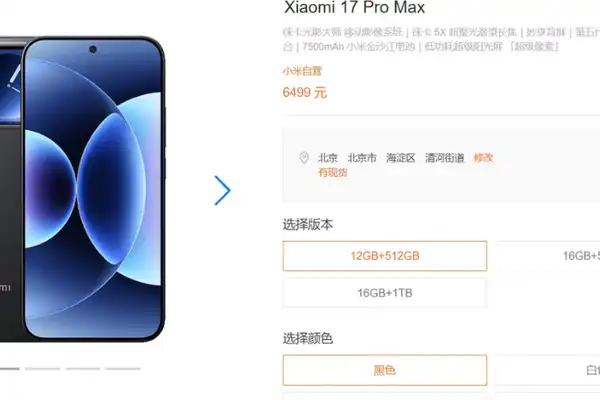
Xiaomi, facing a significant 26.3% year-on-year decline in global smartphone shipments in Q2 2026, has implemented its third price hike of the year. On August 2nd, prices were raised for nine models, including the flagship Mi 17 series (up 400-500 yuan) and Redmi K90/Turbo 5 series (up 300 yuan). This move completes a pattern where cost pressure, originating from surging memory chip prices, has climbed from entry-level to mid-range and now flagship products. The primary driver is a severe supply squeeze on consumer-grade DRAM and NAND flash memory, as major manufacturers like Samsung shift advanced capacity to more profitable HBM for AI applications. According to Xiaomi President Lu Weibing, memory prices for the same configuration have skyrocketed nearly fourfold since Q1 2025, adding roughly 1500 yuan to the cost of a mainstream 12GB+512GB phone. IDC estimates consumer memory costs have risen nearly 300% year-on-year. While the price increases hurt demand and contributed to the sales slump, Xiaomi's strategy of reducing entry-level models and upgrading its product mix also played a role. Domestically, its market share in China fell to 12% (5th place), while leaders Huawei and Apple saw shipments grow over 24%. To mitigate future risks, Xiaomi is accelerating its in-house "Surge" chip development and optimizing memory configurations across its lineup. Xiaomi is not alone; major brands like OPPO, vivo, and Apple have already raised prices in 2026, with industry insiders predicting another round of increases (200-800 yuan) in the second half. A full-scale industry-wide涨价 cycle is underway, forcing both manufacturers and consumers to recalibrate their strategies and purchasing decisions amid sustained cost pressures.

marsbit56 dk önce

Sales Drop 26% But Prices Rise? Xiaomi's Dilemma

marsbit56 dk önce

İşlemler

Spot
活动图片