After Three Days on Hotel Wi-Fi, My Crypto Wallet Was Drained

marsbit2026-01-09 tarihinde yayınlandı2026-01-09 tarihinde güncellendi

Özet

While on vacation, the author connected to an unsecured hotel Wi-Fi network without a password, only a captive portal login. After discussing cryptocurrency topics on a phone call in a shared space, an attacker nearby identified him as a crypto user with a Phantom wallet. The attacker executed a man-in-the-middle attack, injecting malicious code into a webpage the author visited. While using JupiterExchange for a swap, a fraudulent transaction approval request was triggered, disguised as a legitimate platform action. The author approved what appeared to be an authorization or session confirmation—not a direct fund transfer—granting the attacker permission to access his wallet. Days after leaving the hotel, the attacker drained his SOL, tokens, and NFTs. The author lost around $5,000 from a secondary hot wallet, emphasizing mistakes: using public Wi-Fi, discussing crypto in public, and approving transactions without thorough verification. He advises using mobile hotspots, avoiding public crypto discussions, and scrutinizing every wallet request.

Original Author:The Smart Ape

Original Compilation: Deep Tide TechFlow

A few days ago, I went with my family to a very nice hotel for the year-end holiday. One day after leaving the hotel, my wallet was completely drained. I couldn't figure out why, as I hadn't clicked on any phishing links or signed any malicious transactions.

After hours of investigation and seeking help from experts, I finally uncovered the truth. It all turned out to be due to the hotel's Wi-Fi network, a brief phone call, and a series of foolish mistakes.
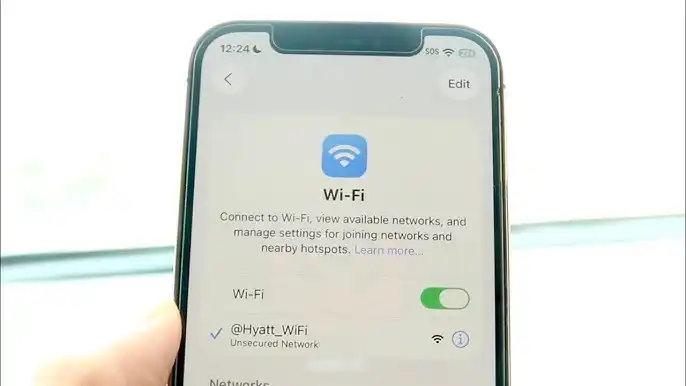
Like most cryptocurrency enthusiasts, I brought my laptop with me, thinking I could squeeze in some work while on vacation with my family. My wife repeatedly insisted that I shouldn't work during these three days—I really should have listened to her.

Like other guests, I connected to the hotel's Wi-Fi network. This network didn't require a password; it only needed to be logged into via a captive portal.

I worked as usual in the hotel without doing anything risky: I didn't create new wallets, click on strange links, or visit suspicious decentralized applications (dApps). I just checked X (Twitter), my balances, Discord, Telegram, etc.

At one point, I received a call from a crypto friend, and we chatted about market trends, Bitcoin, and other cryptocurrency-related topics. But what I didn't know was that someone nearby was eavesdropping on our conversation and realized I was involved in cryptocurrency. This was my first mistake. The other party learned from our conversation that I was using a Phantom wallet and that I was a user with significant holdings.

This made me his target.

In public Wi-Fi networks, all devices share the same network, and the visibility between devices is actually much higher than you might think. There is almost no real protection between users, which creates an opportunity for "Man-in-the-Middle Attacks." The attacker acts like a middleman, quietly inserting themselves between you and the internet, much like someone secretly reading and tampering with your mail before it reaches you.
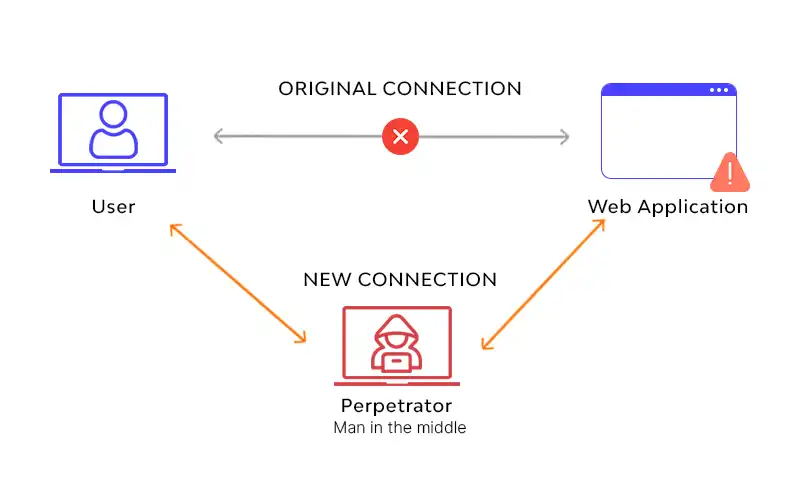
While I was browsing the web on the hotel Wi-Fi, one website appeared to load normally, but in reality, malicious code was injected behind the page. I didn't notice anything unusual at the time. If I had installed some security tools, I might have detected these issues, but unfortunately, I hadn't.

Normally, websites might request your wallet to sign certain operations. The Phantom wallet would pop up a window, and you could choose to approve or reject. Generally, you would sign without suspicion because you trust the website and the browser. However, I shouldn't have done so that day.

Just as I was performing a token swap on the @JupiterExchange platform, the malicious code triggered a wallet request that replaced my normal swap operation. I could have detected it as a malicious request by carefully checking the transaction details, but since I was already performing a swap on Jupiter, I didn't suspect anything.
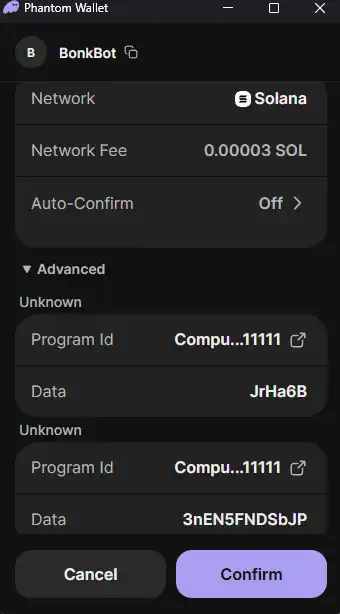
That day, I didn't sign any transaction to transfer funds; instead, I signed an authorization. This was the reason my assets were stolen days later.

The malicious code didn't directly ask me to send SOL (Solana), as that would have been too obvious. Instead, it requested me to "authorize access," "approve account," or "confirm session." In simple terms, I was actually giving another address permission to operate on my behalf.

I approved it because I mistakenly thought it was related to my operation on Jupiter. The message that popped up in the Phantom wallet at the time looked very technical, showing no amounts and no prompt for an immediate transfer.

And that was all the attacker needed. He waited patiently until I left the hotel before taking action. He transferred my SOL, withdrew my tokens, and moved my NFTs to another address.
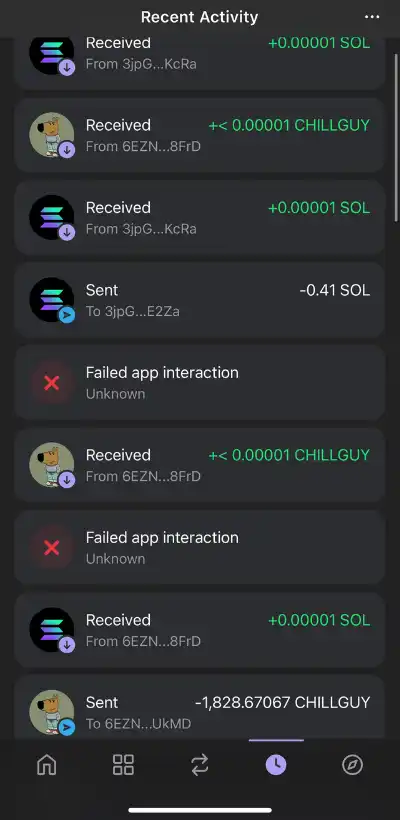
I never thought something like this would happen to me. Fortunately, this wasn't my main wallet but a hot wallet used for specific operations, not for long-term asset holding. But even so, I made many mistakes, and I believe I am primarily responsible for this.

First, I should never have connected to the hotel's public Wi-Fi. I should have used my phone's hotspot for internet access.
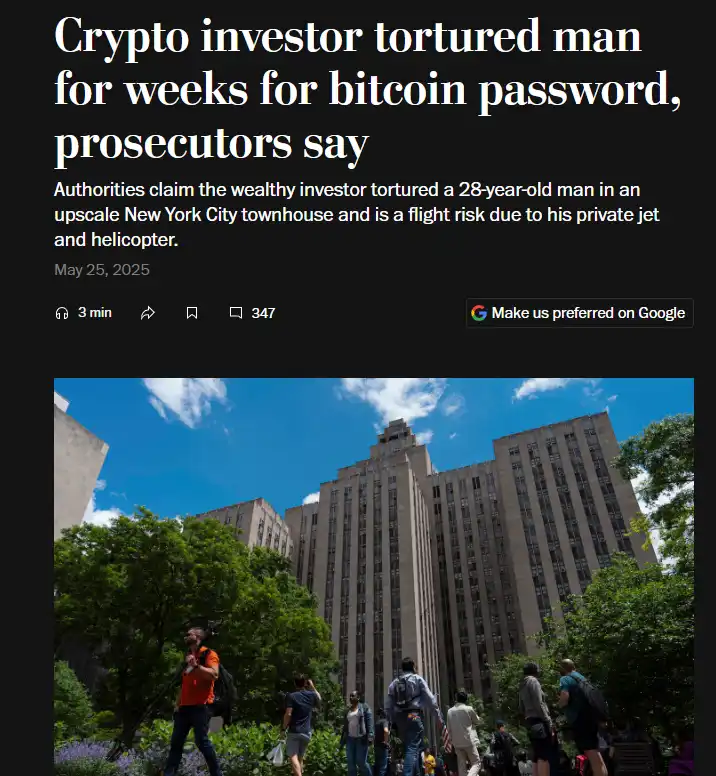
My second mistake was talking about cryptocurrency in the hotel's public area, where many people might have overheard our conversation. My father once warned me never to let others know you're involved in cryptocurrency. This time, I was lucky; some people have even faced kidnapping or worse because of their crypto assets.
Another mistake was approving the wallet request without paying full attention. Because I was sure the request came from Jupiter, I didn't analyze it carefully. In fact, every wallet request should be carefully reviewed, even on applications you trust. Requests can be intercepted and may not actually come from the app you think.

In the end, I lost about $5,000 from a secondary wallet. While it wasn't the worst-case scenario, it was still very frustrating.


İlgili Sorular

QWhat was the primary security vulnerability that led to the author's wallet being drained?

AThe author connected to the hotel's unsecured public Wi-Fi network, which allowed an attacker to perform a Man-in-the-Middle (MitM) attack, intercept and inject malicious code into web pages, and trick the author into signing a malicious transaction approval.

QHow did the attacker identify the author as a potential target for the cryptocurrency theft?

AThe attacker overheard the author's phone conversation about cryptocurrency, market trends, and Bitcoin in a public area, which revealed that the author used a Phantom wallet and was a sizable holder.

QWhat specific action did the author unknowingly approve that led to the theft days later?

AThe author approved a malicious transaction that granted authorization or permission for another address to operate on their behalf, rather than directly transferring funds. This approval was disguised as part of a normal token swap on Jupiter Exchange.

QWhat security measures does the author mention could have prevented this incident?

AThe author states they should have used a mobile hotspot instead of public Wi-Fi, avoided discussing cryptocurrency in public, and carefully inspected every wallet transaction request, even from trusted applications.

QWhat was the financial impact of the attack on the author?

AThe author lost approximately $5,000 from a secondary hot wallet used for specific operations, not their main wallet, which mitigated the severity of the loss.

İlgili Okumalar

"Water Scarcity": The Hidden Fatal Flaw of AI Infrastructure

“Water Scarcity: The Hidden Vulnerability of AI Infrastructure” In June 2026, SpaceX revised its IPO prospectus to highlight a core resource constraint alongside power and processors: water. This move signals a pivotal shift where water scarcity has transformed from an operational cost to a major, uncontrollable investment risk, directly threatening AI data center expansion. The scale of the problem is immense. U.S. data centers consumed an estimated 17 billion gallons of water for direct cooling in 2023, with indirect water use for power generation exceeding 211 billion gallons. Giants like Google alone use billions of gallons annually, with single sites consuming volumes equivalent to a medium-sized city. This water is largely “consumptive,” evaporated into the atmosphere and lost. This massive demand is colliding with scarcity. Tech companies are building “water tigers” in arid regions, sparking community protests in places like Mexico and Arizona, where data centers can legally use millions of gallons daily—enough for tens of thousands of residents. These conflicts are not about illegality, but about a mismatch between historic water allocation frameworks and new, colossal demand. The consequences are real. Community opposition, largely centered on water, has reportedly stalled or canceled $64 billion in U.S. data center projects over two years. Simultaneously, investors are pressuring companies for greater water footprint transparency, viewing it as a financial risk, not just an ESG metric. Technological solutions like air or liquid cooling involve trade-offs between water and electricity use, with final choices dictated by local constraints. The irony is stark: while industry leaders envision AI as a utility “like water,” its physical infrastructure is straining real-world water supplies. The race for AI supremacy may ultimately be governed not by the fastest chip, but by the slowest water meter.

marsbit31 dk önce

"Water Scarcity": The Hidden Fatal Flaw of AI Infrastructure

marsbit31 dk önce

Global Card Issuance Enters a Compliance-Driven Era: WasabiCard is Building the Next-Generation Payment Infrastructure

Global card issuance is entering a compliance-driven era, with WasabiCard building next-generation payment infrastructure. The platform asserts that as stablecoins increasingly enter cross-border payments, corporate settlements, and global commerce, the industry is shifting focus from "availability" and "growth-driven" models to long-term, compliant operation under global frameworks. Competition will center on sustainable compliance and global infrastructure capabilities. Stablecoins are evolving from on-chain assets into key payment tools in global business, with card issuance acting as critical infrastructure connecting digital assets to traditional payment networks like Visa and Mastercard. This expansion has revealed structural issues, including cross-regional issuance, BIN resource management, and insufficient AML and risk controls. In response, the industry is moving away from reliance on "grey efficiency" towards prioritizing compliance, risk management, and long-term operational stability. WasabiCard outlines its strategy: collaborating with licensed principals and local partners for localized operations, building robust KYC/AML systems, strictly separating commercial and consumer BIN usage, and enhancing global issuance, payment, and cross-border fund flow infrastructure. The goal is to build stable, scalable payment infrastructure amid evolving global regulations, shifting industry competition from scale to infrastructure capability. As stablecoins integrate further with global commerce, payment infrastructure will become a fundamental, embedded component of internet business. WasabiCard will continue to develop capabilities in global card issuance, stablecoin payments, cross-border fund flows, and API-driven financial workflows.

marsbit41 dk önce

Global Card Issuance Enters a Compliance-Driven Era: WasabiCard is Building the Next-Generation Payment Infrastructure

marsbit41 dk önce

Zhou Hang: How Much Is SpaceX Really Worth?

**Zhou Hang: How Much is SpaceX Really Worth?** SpaceX, arguably one of the greatest industrial companies of the past 50 years, is reportedly targeting a staggering $1.75 trillion valuation in its potential IPO. However, the author argues this figure is inflated by approximately $1.25 trillion when assessed through standard financial metrics. The analysis begins by acknowledging SpaceX's undeniable success: drastically reducing launch costs, achieving near-monopoly in commercial launches, and building the strategic Starlink network. Its achievement surpasses even Tesla's, given it disrupted a state-monopolized industry. Despite this greatness, a $1.75 trillion valuation places SpaceX above the combined market cap of Boeing, Lockheed Martin, Northrop Grumman, RTX, and General Dynamics. Projecting optimistic 2030 revenues of $50-80 billion and applying generous tech-sector multiples yields a "reasonable" valuation range of $500 billion to $1.2 trillion. The $1.25 trillion gap is attributed to three non-financial premiums: 1. **Long-term vision premium** for future Starship-enabled markets (e.g., space-based computing). 2. **Sovereign asset/strategic premium**, as SpaceX is deeply integrated into U.S. national security. 3. **Retail narrative/Musk cult premium**, driven by a heroic story and personal following. Post-IPO, three scenarios are outlined: valuation solidifying (25% probability), sideways volatility as narrative outpaces reality (50%), or a re-rating down to $800B-$1.2T if execution falters or Musk-related risks emerge (25%). The probability-weighted expected value is $1.3-1.5 trillion, suggesting negative expected returns for those buying at the IPO price. The conclusion advises investors to separate the company's excellence from its stock price. Buying at the IPO likely prices in excessive optimism. A more prudent strategy would be to wait for key milestones (e.g., Starship V3 stability) or a significant price correction before investing, or to treat an early purchase as a long-term, high-conviction hold with limited position size, not a short-term bet.

链捕手46 dk önce

Zhou Hang: How Much Is SpaceX Really Worth?

链捕手46 dk önce

İşlemler

Spot
Futures
活动图片