After Mainland's Document No. 42 Sets the Tone, What is the Best RWA Token Standard?

marsbit2026-02-09 tarihinde yayınlandı2026-02-09 tarihinde güncellendi

Özet

The People's Bank of China, along with eight other departments, issued Document No. 42 (2026), which formally recognizes Real World Asset tokenization (RWA) as a legitimate business model and outlines a compliance pathway. The document defines RWA as using encryption and distributed ledger technology to convert ownership or profit rights of assets into tokens or token-like equity or debt instruments. The article analyzes existing global RWA token standards and applications, arguing that the ideal standard should prioritize practical application and user experience over designing a perfect, all-encompassing specification upfront. It reviews several models: - **HK's ABT (2022):** An early framework highlighting benefits like fragmentation, liquidity, and transparency. - **ERC-3525 & ERC-3475:** Standards for bonds and contracts criticized for being overly complex and lacking adoption due to poor compatibility. - **Aave's aToken:** A highly successful model using a "Scaled Balance" mechanism where interest accrues and is realized during transactions, minimizing project overhead. - **Lido's stETH:** A "Rebase" model that automatically adjusts token balances daily to reflect staking rewards, offering a seamless user experience. - **Ondo & xStock (Stocks):** These platforms use a "Rebase" mechanism on Solana (via token2022 standard) where a "multiplier" adjusts to handle corporate actions like stock splits or dividends. The conclusion is that China's regulatory clarity...

Author: Shisi Jun

On February 6, 2026, the People's Bank of China, in conjunction with eight major departments, once again released [Yin Fa (2026) No. 42] document. There have been many market interpretations already. This article aims to provide a more vertical analysis by combining RWA with the current on-chain market situation.

1. How to Understand Document No. 42

In the author's view, reading the original text together with the attached document "Regulatory Guidelines on the Overseas Issuance of Asset-Backed Security Tokens for Domestic Assets" reveals a lot. The core point is that Document No. 42 devotes significant space to defining and regulating "Real World Asset Tokenization" (RWA). This amounts to the regulatory authorities formally recognizing RWA as a business model and providing a path for compliant application and filing.

There are three key pieces of information, presented here in the original text, followed by an interpretation.

First, the accurate定性 (qualification) of RWA:

"Real World Asset Tokenization refers to the use of encryption technology and distributed ledger or similar technology to convert ownership,收益权 (beneficial rights), etc., of assets into tokens or other equity/debt instruments with token characteristics, and to conduct issuance and trading activities."

With the definition established, how is it applied? The text continues:

"Exceptions are made for related business activities carried out relying on specific financial infrastructure, upon approval by the competent business authorities in accordance with laws and regulations."

So, who can participate? There are also clear process regulations for applying and utilizing RWA assets:

The domestic entity that actually controls the underlying assets needs to file with the China Securities Regulatory Commission (CSRC), submitting a filing report,全套 (complete set of) overseas issuance materials, and other documents, fully explaining the domestic filing entity information, underlying asset information, token issuance plan, and other relevant situations.

Therefore, in the author's view, combining the two, it can be said that RWA assets have been clearly separated from virtual currencies, which were previously heavily crackdown upon, and the two are not subject to the same management approach.

2. The Evolution of Global RWA Standards

Alongside the Mainland's institutional定性 (qualification), how is the current global RWA market developing? When regulatory issues are alleviated, subsequent application becomes a practical reality that must be faced.

In fact, the current market has long been in an era of a Token standard war.

This complexity has brought industry-level compatibility challenges for RWA. Let's delve into the mainstream RWA token application standards.

This article will start from HK ABT (asset-backed token) in 2022, move to ERC-3525 and ERC-3475围绕 (surrounding) bonds, then to AAVE's Atoken, stETH, and AMPL from the DeFi era, and finally to how the leading on-chain stock platforms Ondo and xStock handle the特性迁移 (characteristic migration) of stock tokenization.

2.1 HK and ABT

The Hong Kong government's "Policy Statement on the Development of Virtual Assets in Hong Kong," released on October 31, 2022,重点提及 (highlighted) asset-backed tokens (ABT).

Conventionally, tokens are divided into 4 major types, distinguished by the token's purpose and source of value.
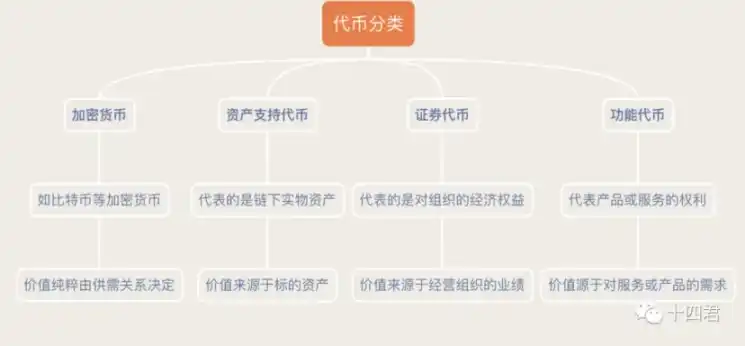
In fact, the thinking behind the Mainland document and the practices previously attempted in HK are continuous. They both必然有 (must have) physical off-chain assets or权益 (rights) as the value标的 (target).
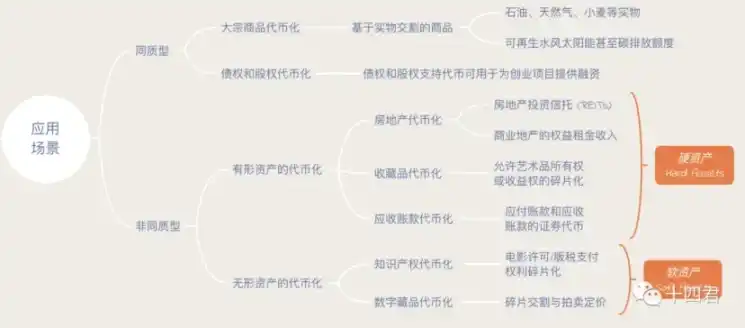
Thus, through compliant tokenization, on-chain characteristics bring enhancements to the assets:

  1. Fragmentation: Refers to dividing property rights into smaller units for sale, making them easier to trade, price, and circulate.
  2. Liquidity: Defined by the speed at which an asset can be converted into cash, with order books shared via on-chain广播 (broadcasting).
  3. Cost Efficiency: When trading based on blockchain smart contracts, the costs of these external third parties are eliminated or significantly reduced.
  4. Automation: Blockchain-based smart contracts do not require these manual interactions, providing a trustworthy technological foundation.
  5. Transparency: One of the most significant features of on-chain transactions is the immutable record-keeping.

From the audience's perspective:

  • For institutions: The splitting and conversion of large orders bring benefits in terms of fragmented liquidity efficiency and cost reduction.
  • For users: Possessing a transparent and automated trustworthy environment to ensure their rights and interests.

Currently, the most直观有应用价值的 (intuitively valuable for application) are stocks and bonds, as both can perfectly adapt to the aforementioned advantages of liquidity, automation, and fragmentation.

3. Bond Scenario Standards: ERC-3525 and ERC-3475

There was significant爆发 (explosion) around this asset type before and after HKABT, leading to industry standards like ERC-3525 and ERC-3475:

  • ERC-3525 focuses on the management of semi-fungible tokens,完善 (perfecting) the combination and splitting of assets at the numerical level,侧重 (focusing on) traditional financial assets on-chain.
  • ERC-3475 focuses on the definition of semi-fungible tokens, providing better规范 (standardization) for defining contracts with low standardization,侧重 (focusing on) traditional commercial contracts on-chain.

Objectively speaking, these two standards are not widely used. This is because they were standards first, business second, rather than being summarized from existing business practices. Hence, their actual influence has been decreasing (far less than Atoken and stEth discussed later).

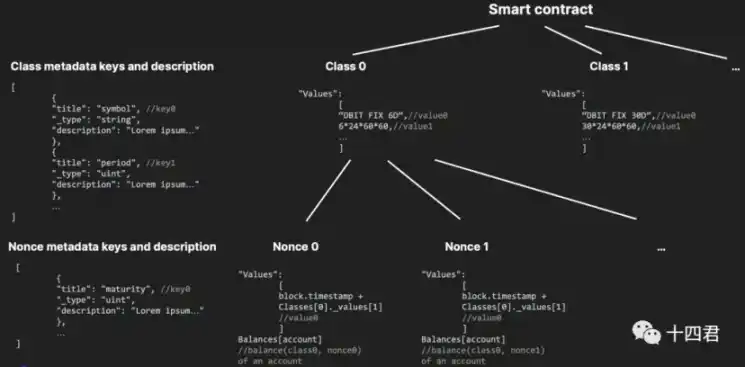
In the author's view, this is because the初衷 (original intention) of such standard designs aimed to be all-encompassing. For example, ERC-3475 (see image below) is practically a representative of包容万物 (encompassing everything), which directly led to high barriers to user understanding and high barriers to app adaptation.

Ultimately, aiming too high meant writing everything等于没写 (was equivalent to writing nothing), so it's understandable that there are few market applications.
4. Bond Scenario Applications: AToken & stEth

Compared to the "standard first, application later" type, let's look at the典范 (paradigm) of "application first, standard later".

4.1 Real-Time Compound Interest Model: Aave's Atoken

Aave is the top DeFi infrastructure in the web3 industry, dealing in on-chain asset collateralized lending for interest. The Atoken is the collateral certificate, with core functions as follows:

  1. Proof of Deposit: Holding aToken is equivalent to the user owning a corresponding amount of assets in the Aave protocol, and these assets automatically earn interest over time.
  2. Lending Mechanism: aTokens can be used to evaluate a user's deposit amount and determine their loan额度 (quota).
  3. Automatic Interest Distribution: The quantity of aTokens automatically increases according to the current deposit interest rate.
  4. Transferability and Liquidity: Users can transfer or collateralize aTokens into other protocols to obtain more收益 (yield) or use them in other DeFi products.

Looking at it this way, it can be said that each point is also the path RWA must take in the future.

Looking at its market status, it has been growing robustly, with Atoken's total assets reaching around $30 billion.
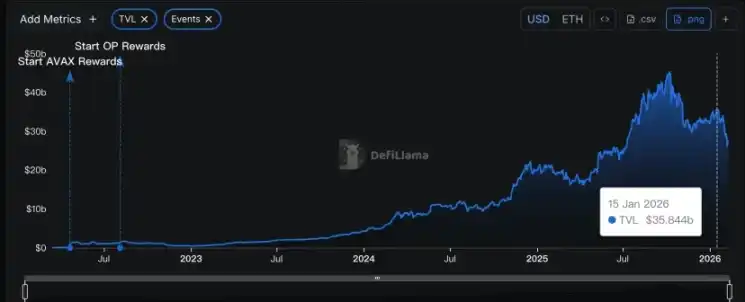
Why is Atoken so successful?

Clearly, with almost 100% growth annually, it can be called a successful典范 (paradigm).

Ultimately, because atoken is already very well-adapted to the existing market. After all, originating from Aave, they understand that adaptability is a key path for development in the blockchain market. The two standards mentioned above ultimately got stuck on adaptability; existing asset dashboards and wallets found it difficult to integrate this type of asset.

Adaptability is not a simple word because it has a key problem to solve: if on-chain assets cannot generate interest, their practical significance is greatly reduced.

But if they are to generate interest, how should this interest be given to users?

After all, everyone's质押时间 (staking time) is different, and the staking interest rates vary across periods. Different assets have different market demands, corresponding to different lending spreads.

If interest is simply transferred to users periodically, the project's cost and management complexity would significantly increase, ultimately passing the cost to the users.

Some say this is an on-chain performance issue, so they built new high-performance public chains to rival web2 server performance, but they then face the cost of user migration.

Aave's answer is to hide the interest in the user's daily transactions.

AToken essentially uses a Scaled Balance mechanism to calculate the user's actual balance:

Liquidity Index = Initial Index × (1 + Interest Rate × Time)

This logic ensures that interest is automatically calculated and accumulated during transfers (whether sending or receiving), triggering new minting events to increase supply during the transfer.

For the project side, this eliminates a dividend distribution transaction, and users see their interest不知不觉中 (unconsciously). Even if not seen, it will be calculated in the next operation, so there is no loss.

This clever design, requiring just a few lines of code, is very native-thinking.

Moreover, this line of thinking paved the way for the inheritance and evolution of subsequent on-chain asset standards like stEth, ondo, and xStock.

4.2 Rebase Model: Lido's stETH

stETH, based on the previous interest concept, further simplifies the logic of staking and withdrawal, no longer calculating based on interest + time accumulation, but rather on shares.

stETH = Amount of ETH staked by user * (Total protocol assets / Total internal shares)

You might find it strange: How can it have no interest? It's all about staking for interest. If someone stakes for 1 year and I stake for 1 day, shouldn't the share change?

This is because of Lido's daily automatic rebase mechanism. For example:

  1. Suppose I bought 1 ETH a year ago and joined a total stake of 100 ETH. My share is 1%.
  2. Lido daily obtains staking rewards from the Ethereum Beacon Chain and then performs a rebase on the protocol.
  3. Thus, when I withdraw after one year, I naturally get the 4% (assuming 4% APY).
  4. If I buy this 1% share on the last day, I am buying based on a share that has accumulated costs for nearly 364 days, approaching 104% of the original value, and can only benefit from 1 rebase.

Why design it this way?

Because making stETH's yield automatically arrive daily,无需等待 (no waiting) and无需手动领取 (no manual claiming), is its greatest convenience.

The previous Atoken required a transaction to realize the interest, whereas stETH can automatically update the balance daily, making it easy for various wallets to兼容 (be compatible).

This ultimately allows users to see the interest increase on their balance sheet, aligning with our conventional concept of saving: interest automatically arriving daily, providing peace of mind.

Comparing the two归根究底 (in the final analysis), it comes down to different scenarios.

Aave is for lending, with interest rates fluctuating greatly in real-time; high-rate periods can yield a day's worth equal to a month. Lido, with fixed income, is smooth and steady, less concerned with one day's interest, thus allowing for further optimized user experience.

Are these two suitable as Token standard methods for the RWA era?

The author believes neither is perfectly suitable, but they can be used for reference. Let's look at the final主角 (main character) of today: the on-chain stock model.

5. On-Chain Stock RWA Scenario

Although not large in the overall RWA total value (900M vs 27B), due to the characteristics of stocks, it is one of the most promising scenarios for trading liquidity and on-chain application imagination.

The main players here are: Ondo, xStock.

We can see that over the past six months, the top DEXs and wallets in the market have been investing here. Objectively speaking, the judgment of these leading platforms regarding future trends seems remarkably consistent.

  • 2025.7.1: Jupipter supports xStock trading and begins large-scale promotion.
  • 2025.9.25: Solana official launches new RWA Twitter account.
  • 2026.1.22: Jupiter partners with Ondo Finance to list 200+ types of tokenized stocks.
  • 2026.1.24: Binance Wallet supports Ondo asset trading in professional mode.
  • 2026.2.3: MetaMask launches tokenized US stocks and ETFs, stating the market is shifting on-chain.
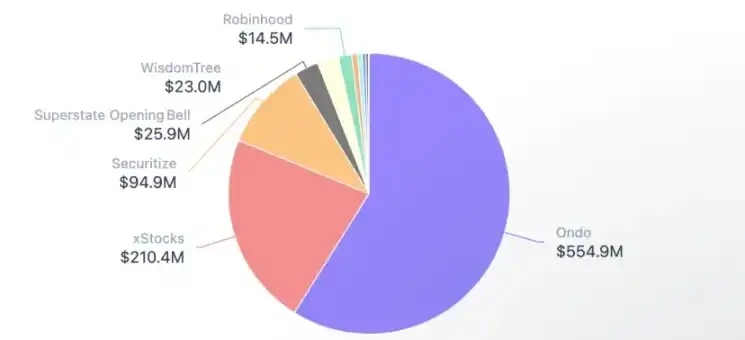
They actually use a share-based Rebase model, specifically an "On-Chain Shares + Multiplier Scaling" Rebase mechanism.

On the Solana chain, this mechanism is an extension in its mainstream token2022 standard. Each token can have a parameter called a Multiplier set by the project. The balance the user holds is called the raw amount, meaning the number of shares.

Then, the project dynamically adjusts the Multiplier parameter in the token settings during scenarios like stock splits, reverse splits, dividend distributions, etc., modifying the display amount.

This creates a divide: if users use a wallet that doesn't support this parameter, they might feel something is wrong with their assets. In supported cases, they see the UI amount, i.e., the amount displayed on the client.

6. Summary and Reflection

The preceding text,洋洋洒洒 (voluminously) over four thousand words, has reviewed the mainstream on-chain asset tokenization and real-world asset tokenization leading players and evolution paths.

Various partial reflections have been mentioned in each module. So now it's time to return to the core of the title: "Cold Thinking".

Because, looking at the extended timeline, RWA has been around for almost 10 years.

  • Early Exploration, 2016-2019: Experimental stage of asset on-chain, mainly stablecoins.
  • Initial Institutional Phase, 2020-2022: RWA entered the DeFi lending field, i.e., the Tokenised Stocks尝试 (attempted) by BN/FTX (which closed down not long after).
  • Compliance Stage, 2023 - Present: Compliance began to clarify / Some RWA assets expanded rapidly (stablecoins, US Treasuries, etc.), and new asset types and platforms gained traction.

Therefore, in the author's view, the Mainland's定性 (qualification) of RWA is objectively a positive development, but not entirely so. It could even be said to be a belated notice. Moreover, HK previously introduced a similar system, ABT, but did it develop?

Clearly, compared to the state of affairs in the other hemisphere, it hasn't flourished much. This is closely related to HK's very cautious management of licenses. Whether it's about acting boldly from the start or试探和约束 (testing and constraining) bit by bit – the latter can scare away many platform operators hoping to build.

The new system has openness, but what is opened up is not necessarily what users真正要用 (truly want to use) or what the market needs.

We can see that Aave's Atoken is very successful because it addresses the use of idle on-chain assets, allowing users to lend them out.

stETH is also great because it solves the pathway for POS (Proof of Stake) staking. Although there is a risk of Lido concentrating too much value (power), it provides stable收益 (yield) for staking. Similarly, one can read the author's article on Jito, which is another staking model.

And they all care deeply about user experience, meticulously handling compatibility and project costs bit by bit.

Therefore, issuance itself is not the goal; applying on-chain liquidity, fragmentation, transparency, and automation to the tokens is where the value lies.

It's not about defining a perfect standard first, but respecting rules and consensus, leveraging strengths step by step.

Just like common stocks: various exchanges are not 7*24 hours, but on-chain ones are.

Gold markets in various regions have their own opening hours, but on-chain does not.

This time gap is the true value (Gap) of being on-chain, as it can solve the problem of value discovery in non-trading markets. Compared to pre-market trading, it is more敏锐 (sensitive). Compared to cross-exchange price differences, it has lower磨损 (friction). Moreover, liquidity spanning the globe offers value discovery from a completely different交叉视角 (intersecting perspective). In the future, company pricing might not rely on the NYSE on-chain but rather the NYSE listing might first look at the on-chain price.

İlgili Sorular

QWhat is the core significance of China's Document No. 42 regarding RWA?

AThe core significance is that it formally recognizes Real World Asset Tokenization (RWA) as a legitimate business form, clearly defines it, and provides a compliance path for its application and filing. It separates RWA assets from strictly prohibited virtual currencies, indicating they will be managed under different frameworks.

QWhat are the key advantages of tokenizing assets on-chain as mentioned in the article?

AThe key advantages are: 1. Fractionalization: Dividing ownership into smaller, tradable units. 2. Liquidity: Faster conversion to cash with shared on-chain order books. 3. Cost-effectiveness: Reduced third-party costs via smart contracts. 4. Automation: Trustless execution through smart contracts. 5. Transparency: Immutable record-keeping on the blockchain.

QHow does Aave's aToken mechanism handle interest distribution for users?

AAave's aToken uses a Scaled Balance mechanism. A liquidity index (initial index * (1 + interest rate * time)) calculates the user's actual balance. Interest is automatically accumulated and minted during any token transfer (sending or receiving), eliminating the need for separate, costly distribution transactions by the project and ensuring users never lose their accrued interest.

QWhat is the fundamental difference between the interest mechanisms of aTokens and stETH?

AaTokens accrue interest' behind the scenes' and it is realized upon transfer transactions. In contrast, stETH uses a daily rebase mechanism where the protocol's total assets and the internal share quantity are used to calculate a user's balance, causing the token balance displayed in compatible wallets to increase automatically every day, mimicking a traditional savings account.

QAccording to the author, what is the 'true value' of on-chain RWA assets beyond mere issuance?

AThe true value lies in applying on-chain features like liquidity, fractionalization, transparency, and automation to the tokens. This creates value by enabling 24/7 global trading, lower transaction costs, and new forms of cross-border price discovery, potentially allowing on-chain markets to influence traditional exchange pricing in the future, not just mirror it.

İlgili Okumalar

Justin Sun Sues Trump Family: What $75 Million Bought Was Only a Blacklist

Justin Sun, founder of Tron, has filed a lawsuit in federal court against World Liberty Financial (WLF), alleging he was made the "primary target of a fraudulent scheme" after investing $75 million. Sun claims the investment secured him an advisor title and WLFI tokens, which were later frozen by WLF, causing "hundreds of millions in losses." The dispute began in late 2024 when Sun's investment helped revive WLF's struggling token sale, which ultimately raised $550 million. Shortly after, the SEC dropped its lawsuit against Sun following Donald Trump's inauguration. However, relations soured when Sun refused WLF's demands for additional funding. In August 2025, WLF added a "blacklist" function to its smart contract, allowing it to unilaterally freeze tokens. Sun's holdings, worth approximately $107 million, were frozen, and he was threatened with token destruction. The lawsuit highlights WLF's structure, which directs 75% of token sale profits to the Trump family, who had earned $1 billion by December 2025. WLF's CEO is Zach Witkoff, son of U.S. Middle East envoy Steve Witkoff. The project faces scrutiny for opaque operations, including a controversial loan arrangement on the Dolomite platform, co-founded by a WLF advisor. Despite Sun's history with the SEC, the case underscores centralization risks within DeFi, as WLF controls governance and holds powers to freeze assets arbitrarily. Sun's tokens remain frozen as legal proceedings begin.

marsbit7 dk önce

Justin Sun Sues Trump Family: What $75 Million Bought Was Only a Blacklist

marsbit7 dk önce

$500 to Buy OpenAI Stock: Silicon Valley's Most Respectable Liquidity Invitation

Silicon Valley's largest venture capital platform, AngelList, has launched a new fund called USVC, allowing U.S. retail investors to buy into high-profile AI companies like OpenAI, Anthropic, and xAI with a minimum investment of $500—no accredited investor status required. Promoted by AngelList co-founder Naval Ravikant, the fund is framed as an opportunity for ordinary people to access high-growth private tech investments traditionally reserved for VCs. However, critics argue it functions more like an exit vehicle for early insiders. USVC acquires shares not through primary rounds but largely via secondary transactions—purchasing stakes from early investors, VC funds, and employees looking to cash out at peak valuations. With companies like xAI heavily weighted in the portfolio, the fund effectively channels retail money into providing liquidity for insiders who entered at much lower valuations. The fund’s structure raises concerns: shares are illiquid, with no secondary market, and buybacks are limited and discretionary. The actual annual fee reaches 3.61%, far above the advertised 1% management fee. This model parallels the "low float, high fully diluted valuation" strategy seen in crypto, where early investors profit by selling to latecomers at inflated prices. The timing—alongside similar moves by platforms like Robinhood—suggests that Silicon Valley’s sudden interest in retail inclusion may be less about democratizing access and more about securing exits for insiders.

marsbit38 dk önce

$500 to Buy OpenAI Stock: Silicon Valley's Most Respectable Liquidity Invitation

marsbit38 dk önce

İşlemler

Spot
Futures

Popüler Makaleler

$S$ Nedir

SPERO'yu Anlamak: Kapsamlı Bir Genel Bakış SPERO'ya Giriş İnovasyonun manzarası gelişmeye devam ederken, web3 teknolojilerinin ve kripto para projelerinin ortaya çıkışı dijital geleceği şekillendirmede önemli bir rol oynamaktadır. Bu dinamik alanda dikkat çeken projelerden biri SPERO, $$s$$ olarak adlandırılmaktadır. Bu makale, SPERO hakkında ayrıntılı bilgi toplamak ve sunmak amacıyla, meraklılar ve yatırımcıların web3 ve kripto alanlarındaki temellerini, hedeflerini ve yeniliklerini anlamalarına yardımcı olmayı amaçlamaktadır. SPERO,$$s$$ Nedir? SPERO,$$s$$, kripto alanında merkeziyetsizlik ve blok zinciri teknolojisi ilkelerini kullanarak etkileşimi, faydayı ve finansal kapsayıcılığı teşvik eden bir ekosistem yaratmayı amaçlayan benzersiz bir projedir. Proje, kullanıcıların yenilikçi finansal çözümler ve hizmetler sunarak eşler arası etkileşimleri yeni yollarla kolaylaştırmayı hedeflemektedir. SPERO,$$s$$'nin temel amacı, bireyleri güçlendirmek ve kripto para alanındaki kullanıcı deneyimini artıran araçlar ve platformlar sağlamaktır. Bu, daha esnek işlem yöntemlerini mümkün kılmayı, topluluk odaklı girişimleri teşvik etmeyi ve merkeziyetsiz uygulamalar (dApp'ler) aracılığıyla finansal fırsatlar yaratmayı içermektedir. SPERO,$$s$$'nin temel vizyonu kapsayıcılık etrafında dönmekte olup, geleneksel finansal sistemlerdeki boşlukları kapatmayı ve blok zinciri teknolojisinin faydalarından yararlanmayı hedeflemektedir. SPERO,$$s$$'nin Yaratıcısı Kimdir? SPERO,$$s$$'nin yaratıcısının kimliği bir miktar belirsizdir, çünkü kurucusu(ları) hakkında ayrıntılı arka plan bilgisi sağlayan sınırlı kamuya açık kaynaklar bulunmaktadır. Bu şeffaflık eksikliği, projenin merkeziyetsizlik taahhüdünden kaynaklanabilir—birçok web3 projesinin paylaştığı bir etik anlayışı, bireysel tanınmanın yerine kolektif katkıları önceliklendirmektedir. Topluluk ve onun kolektif hedefleri etrafında tartışmaları merkezileştirerek, SPERO,$$s$$, belirli bireyleri öne çıkarmadan güçlendirme özünü taşımaktadır. Bu nedenle, SPERO'nun etik anlayışını ve misyonunu anlamak, tek bir yaratıcının kimliğini belirlemekten daha önemlidir. SPERO,$$s$$'nin Yatırımcıları Kimlerdir? SPERO,$$s$$, kripto sektöründe yeniliği teşvik etmeye adanmış girişim sermayedarlarından melek yatırımcılara kadar çeşitli yatırımcılar tarafından desteklenmektedir. Bu yatırımcıların odak noktası genellikle SPERO'nun misyonuyla uyumlu olup, toplumsal teknolojik ilerlemeyi, finansal kapsayıcılığı ve merkeziyetsiz yönetimi vaat eden projeleri önceliklendirmektedir. Bu yatırımcı temelleri, yalnızca yenilikçi ürünler sunan projelere değil, aynı zamanda blok zinciri topluluğuna ve ekosistemlerine olumlu katkılarda bulunan projelere de ilgi duymaktadır. Bu yatırımcıların desteği, SPERO,$$s$$'yi hızla gelişen kripto projeleri alanında dikkate değer bir rakip haline getirmektedir. SPERO,$$s$$ Nasıl Çalışır? SPERO,$$s$$, onu geleneksel kripto para projelerinden ayıran çok yönlü bir çerçeve kullanmaktadır. İşte benzersizliğini ve yeniliğini vurgulayan bazı temel özellikler: Merkeziyetsiz Yönetim: SPERO,$$s$$, kullanıcıların projenin geleceğiyle ilgili karar alma süreçlerine aktif olarak katılmalarını sağlayan merkeziyetsiz yönetim modellerini entegre etmektedir. Bu yaklaşım, topluluk üyeleri arasında sahiplik ve hesap verebilirlik duygusunu teşvik etmektedir. Token Kullanımı: SPERO,$$s$$, ekosistem içinde çeşitli işlevler sunmak üzere tasarlanmış kendi kripto para token'ını kullanmaktadır. Bu token'lar, işlemleri, ödülleri ve platformda sunulan hizmetlerin kolaylaştırılmasını sağlayarak genel etkileşimi ve faydayı artırmaktadır. Katmanlı Mimari: SPERO,$$s$$'nin teknik mimarisi, modülerlik ve ölçeklenebilirliği destekleyerek projenin evrimi sırasında ek özelliklerin ve uygulamaların sorunsuz bir şekilde entegrasyonuna olanak tanımaktadır. Bu uyum sağlama yeteneği, sürekli değişen kripto manzarasında geçerliliği sürdürmek için hayati öneme sahiptir. Topluluk Katılımı: Proje, işbirliği ve geri bildirim teşvik eden mekanizmalar kullanarak topluluk odaklı girişimlere vurgu yapmaktadır. Güçlü bir topluluk oluşturarak, SPERO,$$s$$, kullanıcı ihtiyaçlarını daha iyi karşılayabilir ve piyasa trendlerine uyum sağlayabilir. Kapsayıcılığa Odaklanma: Düşük işlem ücretleri ve kullanıcı dostu arayüzler sunarak, SPERO,$$s$$, daha önce kripto alanında yer almamış bireyler de dahil olmak üzere çeşitli bir kullanıcı tabanını çekmeyi hedeflemektedir. Bu kapsayıcılık taahhüdü, erişilebilirlik yoluyla güçlendirme misyonuyla uyumludur. SPERO,$$s$$ Zaman Çizelgesi Bir projenin tarihini anlamak, gelişim yolculuğu ve kilometre taşları hakkında kritik bilgiler sağlar. Aşağıda, SPERO,$$s$$'nin evriminde önemli olayları haritalayan önerilen bir zaman çizelgesi bulunmaktadır: Kavram Geliştirme ve Fikir Aşaması: SPERO,$$s$$'nin temelini oluşturan ilk fikirler, blok zinciri endüstrisindeki merkeziyetsizlik ve topluluk odaklılık ilkeleriyle yakından uyumlu olarak geliştirildi. Proje Beyaz Kağıdının Yayınlanması: Kavramsal aşamayı takiben, SPERO,$$s$$'nin vizyonunu, hedeflerini ve teknolojik altyapısını ayrıntılı bir şekilde açıklayan kapsamlı bir beyaz kağıt yayımlandı ve topluluk ilgisini ve geri bildirimini toplamak amacıyla sunuldu. Topluluk Oluşturma ve Erken Katılımlar: Projenin hedefleri etrafında tartışmalar yürüterek destek toplamak ve erken benimseyenler ile potansiyel yatırımcılar için bir topluluk oluşturmak amacıyla aktif iletişim çabaları gerçekleştirildi. Token Üretim Etkinliği: SPERO,$$s$$, yerel token'larını erken destekçilere dağıtmak ve ekosistem içinde başlangıç likiditesini sağlamak amacıyla bir token üretim etkinliği (TGE) gerçekleştirdi. İlk dApp'in Yayınlanması: SPERO,$$s$$ ile ilişkili ilk merkeziyetsiz uygulama (dApp) faaliyete geçti ve kullanıcıların platformun temel işlevleriyle etkileşimde bulunmalarını sağladı. Sürekli Gelişim ve Ortaklıklar: Projenin tekliflerine sürekli güncellemeler ve iyileştirmeler yapılmakta olup, blok zinciri alanındaki diğer oyuncularla stratejik ortaklıklar, SPERO,$$s$$'yi rekabetçi ve gelişen bir oyuncu haline getirmiştir. Sonuç SPERO,$$s$$, web3 ve kripto paranın finansal sistemleri devrim niteliğinde dönüştürme ve bireyleri güçlendirme potansiyelinin bir kanıtıdır. Merkeziyetsiz yönetime, topluluk katılımına ve yenilikçi tasarlanmış işlevselliğe olan bağlılığıyla, daha kapsayıcı bir finansal manzaraya doğru bir yol açmaktadır. Hızla gelişen kripto alanındaki herhangi bir yatırımda olduğu gibi, potansiyel yatırımcılar ve kullanıcılar, SPERO,$$s$$ içindeki devam eden gelişmelerle ilgili olarak kapsamlı bir araştırma yapmaları ve düşünceli bir şekilde katılmaları teşvik edilmektedir. Proje, kripto endüstrisinin yenilikçi ruhunu sergileyerek, sayısız olasılığını keşfetmeye davet etmektedir. SPERO,$$s$$'nin yolculuğu hala devam ederken, temel ilkeleri, teknoloji, finans ve birbirimizle etkileşim biçimimizi etkileyebilir.

89 Toplam GörüntülenmeYayınlanma 2024.12.17Güncellenme 2024.12.17

$S$ Nedir

AGENT S Nedir

Agent S: Web3'te Otonom Etkileşimin Geleceği Giriş Web3 ve kripto para dünyasında sürekli gelişen manzarada, yenilikler bireylerin dijital platformlarla etkileşim biçimlerini sürekli olarak yeniden tanımlıyor. Bu tür öncü projelerden biri olan Agent S, açık ajans çerçevesi aracılığıyla insan-bilgisayar etkileşimini devrim niteliğinde değiştirmeyi vaat ediyor. Otonom etkileşimlerin yolunu açarak, Agent S karmaşık görevleri basitleştirmeyi ve yapay zeka (AI) alanında dönüştürücü uygulamalar sunmayı hedefliyor. Bu detaylı inceleme, projenin karmaşıklıklarına, benzersiz özelliklerine ve kripto para alanındaki etkilerine dalacaktır. Agent S Nedir? Agent S, bilgisayar görevlerinin otomasyonunda üç temel zorluğu ele almak üzere özel olarak tasarlanmış çığır açıcı bir açık ajans çerçevesidir: Alan Spesifik Bilgi Edinimi: Çerçeve, çeşitli dış bilgi kaynaklarından ve iç deneyimlerden akıllıca öğrenir. Bu çift yönlü yaklaşım, alan spesifik bilgi açısından zengin bir veri havuzu oluşturmasını sağlar ve görev yürütmedeki performansını artırır. Uzun Görev Ufukları Üzerinde Planlama: Agent S, karmaşık görevlerin verimli bir şekilde parçalanmasını ve yürütülmesini kolaylaştıran deneyim artırımlı hiyerarşik planlama kullanır. Bu özellik, çoklu alt görevleri etkili ve verimli bir şekilde yönetme yeteneğini önemli ölçüde artırır. Dinamik, Homojen Olmayan Arayüzlerle Başlama: Proje, ajanlar ve kullanıcılar arasındaki etkileşimi geliştiren yenilikçi bir çözüm olan Ajan-Bilgisayar Arayüzü'ni (ACI) tanıtmaktadır. Çok Modlu Büyük Dil Modellerini (MLLM'ler) kullanarak, Agent S çeşitli grafik kullanıcı arayüzlerini sorunsuz bir şekilde gezinebilir ve manipüle edebilir. Bu öncü özellikler aracılığıyla, Agent S, makinelerle insan etkileşimini otomatikleştirmede karşılaşılan karmaşıklıkları ele alan sağlam bir çerçeve sunarak, AI ve ötesinde birçok uygulama için zemin hazırlıyor. Agent S'nin Yaratıcısı Kimdir? Agent S'nin kavramı temelde yenilikçi olsa da, yaratıcısı hakkında spesifik bilgiler belirsizliğini koruyor. Yaratıcı şu anda bilinmiyor, bu da projenin yeni aşamasını veya kurucu üyeleri gizli tutma stratejik tercihini vurguluyor. Anonimlikten bağımsız olarak, odak çerçevenin yetenekleri ve potansiyeli üzerinde kalıyor. Agent S'nin Yatırımcıları Kimlerdir? Agent S, kriptografik ekosistemde oldukça yeni olduğundan, yatırımcıları ve finansal destekçileri hakkında ayrıntılı bilgiler açıkça belgelenmemiştir. Projeyi destekleyen yatırım temelleri veya organizasyonları hakkında kamuya açık bilgilerdeki eksiklik, finansman yapısı ve gelişim yol haritası hakkında sorular doğuruyor. Destekleyicilerin anlaşılması, projenin sürdürülebilirliğini ve potansiyel pazar etkisini değerlendirmek için kritik öneme sahiptir. Agent S Nasıl Çalışır? Agent S'nin temelinde, çeşitli ortamlarda etkili bir şekilde çalışmasını sağlayan son teknoloji bir sistem yatmaktadır. İşleyiş modeli birkaç ana özellik etrafında inşa edilmiştir: İnsan Benzeri Bilgisayar Etkileşimi: Çerçeve, bilgisayarlarla etkileşimleri daha sezgisel hale getirmeyi amaçlayan gelişmiş AI planlaması sunar. Görev yürütmedeki insan davranışını taklit ederek, kullanıcı deneyimlerini yükseltmeyi vaat eder. Anlatı Belleği: Yüksek düzeyde deneyimlerden yararlanmak için kullanılan Agent S, görev geçmişlerini takip etmek amacıyla anlatı belleğini kullanarak karar verme süreçlerini geliştirir. Episodik Bellek: Bu özellik, kullanıcılara adım adım rehberlik sağlayarak, çerçevenin görevler gelişirken bağlamsal destek sunmasına olanak tanır. OpenACI Desteği: Yerel olarak çalışabilme yeteneği ile Agent S, kullanıcıların etkileşimleri ve iş akışları üzerinde kontrol sağlamasına olanak tanır ve Web3'ün merkeziyetsiz felsefesiyle uyumlu hale gelir. Dış API'lerle Kolay Entegrasyon: Çeşitli AI platformlarıyla uyumluluğu ve çok yönlülüğü, Agent S'nin mevcut teknolojik ekosistemlere sorunsuz bir şekilde entegre olmasını sağlar ve geliştiriciler ile organizasyonlar için cazip bir seçenek haline getirir. Bu işlevsellikler, Agent S'nin kripto alanındaki benzersiz konumuna katkıda bulunarak, karmaşık, çok aşamalı görevleri minimum insan müdahalesi ile otomatikleştirir. Proje geliştikçe, Web3'teki potansiyel uygulamaları dijital etkileşimlerin nasıl gelişeceğini yeniden tanımlayabilir. Agent S'nin Zaman Çizelgesi Agent S'nin gelişimi ve kilometre taşları, önemli olaylarını vurgulayan bir zaman çizelgesinde özetlenebilir: 27 Eylül 2024: Agent S'nin kavramı, “Bilgisayarları İnsan Gibi Kullanan Açık Bir Ajans Çerçevesi” başlıklı kapsamlı bir araştırma makalesi ile tanıtıldı ve projenin temelini sergiledi. 10 Ekim 2024: Araştırma makalesi arXiv'de kamuya açık olarak yayınlandı ve çerçevenin derinlemesine bir incelemesini ve OSWorld benchmark'ına dayalı performans değerlendirmesini sundu. 12 Ekim 2024: Agent S'nin yetenekleri ve özellikleri hakkında görsel bir içgörü sağlayan bir video sunumu yayımlandı ve potansiyel kullanıcılar ve yatırımcılarla daha fazla etkileşim sağlandı. Bu zaman çizelgesindeki işaretler, sadece Agent S'nin ilerlemesini değil, aynı zamanda şeffaflık ve topluluk katılımına olan bağlılığını da göstermektedir. Agent S Hakkında Ana Noktalar Agent S çerçevesi gelişmeye devam ederken, birkaç ana özellik öne çıkmakta ve yenilikçi doğasını ve potansiyelini vurgulamaktadır: Yenilikçi Çerçeve: İnsan etkileşimine benzer bir bilgisayar kullanımı sağlamak üzere tasarlanan Agent S, görev otomasyonuna yeni bir yaklaşım getiriyor. Otonom Etkileşim: GUI aracılığıyla bilgisayarlarla otonom olarak etkileşim kurabilme yeteneği, daha akıllı ve verimli hesaplama çözümlerine doğru bir sıçrama anlamına geliyor. Karmaşık Görev Otomasyonu: Sağlam metodolojisi ile karmaşık, çok aşamalı görevleri otomatikleştirerek süreçleri daha hızlı ve daha az hata payı ile gerçekleştirebilir. Sürekli İyileştirme: Öğrenme mekanizmaları, Agent S'nin geçmiş deneyimlerden öğrenmesini sağlar ve sürekli olarak performansını ve etkinliğini artırır. Çok Yönlülük: OSWorld ve WindowsAgentArena gibi farklı işletim ortamlarında uyumlu olması, geniş bir uygulama yelpazesine hizmet edebilmesini sağlar. Agent S, Web3 ve kripto alanında kendini konumlandırırken, etkileşim yeteneklerini artırma ve süreçleri otomatikleştirme potansiyeli, AI teknolojilerinde önemli bir ilerlemeyi temsil etmektedir. Yenilikçi çerçevesi aracılığıyla, Agent S dijital etkileşimlerin geleceğini örneklemekte ve çeşitli sektörlerde kullanıcılar için daha sorunsuz ve verimli bir deneyim vaat etmektedir. Sonuç Agent S, AI ve Web3'ün birleşiminde cesur bir sıçramayı temsil ediyor ve teknoloji ile etkileşim biçimimizi yeniden tanımlama kapasitesine sahip. Henüz erken aşamalarında olmasına rağmen, uygulama olanakları geniş ve çekici. Kritik zorlukları ele alan kapsamlı çerçevesi ile Agent S, otonom etkileşimleri dijital deneyimin ön plana çıkmasına taşımayı hedefliyor. Kripto para ve merkeziyetsizlik alanlarına daha derinlemesine girdikçe, Agent S gibi projelerin teknoloji ve insan-bilgisayar işbirliğinin geleceğini şekillendirmede önemli bir rol oynayacağı kesin.

430 Toplam GörüntülenmeYayınlanma 2025.01.14Güncellenme 2025.01.14

AGENT S Nedir

S Nasıl Satın Alınır

HTX.com’a hoş geldiniz! Sonic (S) satın alma işlemlerini basit ve kullanışlı bir hâle getirdik. Adım adım açıkladığımız rehberimizi takip ederek kripto yolculuğunuza başlayın. 1. Adım: HTX Hesabınızı OluşturunHTX'te ücretsiz bir hesap açmak için e-posta adresinizi veya telefon numaranızı kullanın. Sorunsuzca kaydolun ve tüm özelliklerin kilidini açın. Hesabımı Aç2. Adım: Kripto Satın Al Bölümüne Gidin ve Ödeme Yönteminizi SeçinKredi/Banka Kartı: Visa veya Mastercard'ınızı kullanarak anında Sonic (S) satın alın.Bakiye: Sorunsuz bir şekilde işlem yapmak için HTX hesap bakiyenizdeki fonları kullanın.Üçüncü Taraflar: Kullanımı kolaylaştırmak için Google Pay ve Apple Pay gibi popüler ödeme yöntemlerini ekledik.P2P: HTX'teki diğer kullanıcılarla doğrudan işlem yapın.Borsa Dışı (OTC): Yatırımcılar için kişiye özel hizmetler ve rekabetçi döviz kurları sunuyoruz.3. Adım: Sonic (S) Varlıklarınızı SaklayınSonic (S) satın aldıktan sonra HTX hesabınızda saklayın. Alternatif olarak, blok zinciri transferi yoluyla başka bir yere gönderebilir veya diğer kripto para birimlerini takas etmek için kullanabilirsiniz.4. Adım: Sonic (S) Varlıklarınızla İşlem YapınHTX'in spot piyasasında Sonic (S) ile kolayca işlemler yapın.Hesabınıza erişin, işlem çiftinizi seçin, işlemlerinizi gerçekleştirin ve gerçek zamanlı olarak izleyin. Hem yeni başlayanlar hem de deneyimli yatırımcılar için kullanıcı dostu bir deneyim sunuyoruz.

1.3k Toplam GörüntülenmeYayınlanma 2025.01.15Güncellenme 2025.03.21

S Nasıl Satın Alınır

Tartışmalar

HTX Topluluğuna hoş geldiniz. Burada, en son platform gelişmeleri hakkında bilgi sahibi olabilir ve profesyonel piyasa görüşlerine erişebilirsiniz. Kullanıcıların S (S) fiyatı hakkındaki görüşleri aşağıda sunulmaktadır.

活动图片