A Three Trillion Dollar Gamble and Global Diffusion: The Dual Narratives of AI in 2026

marsbit2025-12-23 tarihinde yayınlandı2025-12-23 tarihinde güncellendi

Özet

Analysis of 2026 AI trends from top institutions (a16z, Goldman Sachs, J.P. Morgan, Morgan Stanley, BlackRock) reveals two competing narratives: 1) AI infrastructure capital expenditure is projected to reach $3 trillion, with less than 20% currently deployed. Major cloud providers are heavily investing in data centers and GPUs, but J.P. Morgan cautions that near-term profit boosts will be limited to select companies. True productivity gains remain years away, indicating 2026 will still be an intensive investment phase rather than a harvest period. 2) A divergence exists in market expectations. BlackRock's "Micro is Macro" concept highlights how AI investments by a few firms already impact macro trends. The S&P 500 market-cap weighted index outperformed the equal-weight version by 8% YTD, suggesting concentrated AI benefits for tech giants. Morgan Stanley projects the S&P 500 to reach 7800, betting on continued dominance of big tech. Conversely, J.P. Morgan and Goldman Sachs anticipate AI红利global spillover, especially to emerging markets (10.9% expected returns), Europe (7.1%), and Japan (8.2%), fueled by a weaker dollar and global infrastructure upgrades. The divide centers on whether AI红利remains concentrated in U.S. tech or disperses globally.

After reviewing the 2026 trend outlook reports from five top institutions—a16z, Goldman Sachs, J.P. Morgan, Morgan Stanley, and BlackRock—two key insights have been distilled:

1) Forget the Bubble, the AI Industry is Entering an Accelerated Investment Phase

Morgan Stanley provided a staggering figure: AI infrastructure capital expenditure is projected to reach $3 trillion, with less than 20% currently deployed.

What does this mean? Hyperscale cloud providers like Amazon, Google, Meta, Microsoft, and Oracle are pouring massive investments into building data centers, purchasing GPUs, and expanding power infrastructure—but this is just the beginning.

However, J.P. Morgan offered a more cautious perspective on the actual benefits of widespread AI adoption, suggesting that it will only boost profits for some companies in the short term, helping giants optimize their earnings narrative. Achieving the transformative productivity gains from AI will take many more years.

In essence, 2026 will be another year of frenzied spending on AI, but it remains an investment phase, far from the harvest season.

2) U.S. Stock Concentration Dividends vs. Spillover to Non-U.S. Markets: Which Side Are You On?

BlackRock introduced the concept of “Micro is Macro,” arguing that the AI investments of a few companies already have macro-level impact.

Data shows that year-to-date in 2025, the equal-weighted S&P 500 has risen only 3%, while the market-cap-weighted version of top tech companies has surged 11%. This 8% gap may be attributed to the concentration of AI dividends.

On this front, Morgan Stanley is the most aggressive, setting a target of 7800 points for the S&P 500—a 14% increase from current levels—based on the sustained strengthening of the profitability of the tech giants.

However, J.P. Morgan believes that as the U.S. dollar weakens, AI dividends will spill over into global supply chains, projecting an annualized return of 10.9% for emerging markets, higher than the 6.7% for U.S. large-cap stocks. Goldman Sachs also sides with the spillover effect, giving emerging markets the same 10.9% projection and suggesting opportunities in Europe (7.1%) and Japan (8.2%).

Simply put, these are two entirely different bets: BlackRock and Morgan Stanley are betting that AI dividends will continue to be monopolized by U.S. tech giants, while J.P. Morgan and Goldman Sachs are wagering that AI is a global infrastructure upgrade, with benefits diffusing to non-U.S. markets worldwide.


İlgili Sorular

QWhat is the projected AI infrastructure capital expenditure by 2026 according to Morgan Stanley, and what does it indicate about the current deployment?

AMorgan Stanley projects AI infrastructure capital expenditure to reach $3 trillion by 2026, with current deployment at less than 20%. This indicates that major cloud providers like Amazon, Google, Meta, Microsoft, and Oracle are in the early stages of investing heavily in data centers, GPUs, and power facilities, signaling a period of accelerated investment rather than immediate returns.

QHow does J.P. Morgan assess the short-term impact of AI adoption on corporate profits?

AJ.P. Morgan believes that the large-scale adoption of AI will only provide a short-term boost to some corporate profits in the near term, primarily helping giants optimize their earnings narrative. It will take many years for AI to achieve a qualitative leap in productivity and deliver substantial returns.

QWhat is the 'Micro is Macro' concept proposed by BlackRock, and how is it reflected in the stock market performance?

ABlackRock's 'Micro is Macro' concept suggests that the AI investments of a few companies already have macro-level influence. This is reflected in the stock market where the equal-weight S&P 500 index rose only 3% year-to-date in 2025, while the market-cap-weighted version, dominated by top tech companies, rose 11%, indicating an 8% gap driven by AI concentration红利 (dividends).

QWhat are the differing views between Morgan Stanley and J.P. Morgan regarding the geographical distribution of AI红利 (dividends)?

AMorgan Stanley bets that AI红利 will continue to be monopolized by U.S. tech giants, setting an ambitious S&P 500 target of 7800 points. In contrast, J.P. Morgan believes that AI红利 will spill over to the global supply chain as the U.S. dollar weakens, forecasting a 10.9% annualized return for emerging markets, higher than the 6.7% for U.S. large-cap stocks.

QWhich institutions side with the view that AI红利 will globalize and benefit non-U.S. markets, and what are their specific forecasts?

AJ.P. Morgan and Goldman Sachs side with the view that AI红利 will globalize. J.P. Morgan forecasts a 10.9% annualized return for emerging markets, while Goldman Sachs also predicts 10.9% for emerging markets, along with 7.1% for Europe and 8.2% for Japan, anticipating that AI-driven infrastructure upgrades will benefit markets outside the U.S.

İlgili Okumalar

How to Do Research Well: Deliberately Practice the Real Skills That Matter

No one truly teaches you how to do research. You're often given a desk, a pre-selected problem, and vague instructions to "create something new." Consequently, many people reverse-engineer the job based on visible outputs—papers, posts, announcements—learning only how to *appear* like a researcher rather than how to *become* one. True research capability is built from stacking small, trainable skills, nearly all of which can be developed through deliberate practice. **Pick Your Own Problem:** Most researchers absorb problems from advisors or trends, lacking the underlying reasoning. Choosing a problem you genuinely care about, as John Schulman advises, leads to original work. Develop "taste" like a muscle: predict experiment outcomes, guess paper results from methods, and track which findings remain important over time. **Upgrade Your Inputs:** Relying on shared reading lists (arXiv hot lists, filtered group chats) leads to unoriginal conclusions. Undervalued old literature often holds crucial insights (e.g., MoE, LSTM, backpropagation). Richard Sutton's "The Bitter Lesson" or Claude Shannon's 1952 talk on creative thinking are more predictive than lengthy modern surveys. Breadth matters as much as depth: draw from neuroscience, mechanism design, hardware knowledge, and honest statistics. Read papers directly, especially appendices and limitations sections. **Write Everything Down:** As Paul Graham noted, writing exposes flaws in seemingly mature ideas. Writing is the cheapest defense against self-deception. Following Feynman's principle, Darwin programmatically wrote down facts contradicting his theory to combat memory bias. Maintain a detailed log of hypotheses, setups, predictions, results, and updated understandings. Reviewing past logs fosters essential humility.

marsbit50 dk önce

How to Do Research Well: Deliberately Practice the Real Skills That Matter

marsbit50 dk önce

Following US Ban on Fable 5, Zhipu AI's Stock Soars 47%

On June 15th, shares of Zhipu AI surged dramatically on the Hong Kong stock market, peaking at a 47.6% gain before closing 32.82% higher. This sharp increase was directly triggered by two recent industry events. On June 12th, Anthropic announced it was suspending global access to its latest flagship models, Claude Fable 5 and Claude Mythos 5, to comply with a U.S. government export control order. The next day, Zhipu AI announced it would open access to its latest open-source flagship model, GLM-5.2, under the permissive MIT license. The Anthropic incident highlighted a critical issue beyond raw model capability: the risk of sudden, unpredictable loss of access to advanced AI models, especially for developers and enterprises deeply integrated with them. This has shifted industry and market focus toward factors like stability, sustainable access, and controllability. Zhipu's move, promoting "frontier intelligence for all," positions its openly available model as a reliable and accessible alternative. The GLM-5.2 model emphasizes "Long Horizon Task" capabilities with a 1M context window, targeting complex, multi-step coding and engineering workflows where maintaining context is crucial. Analysts note this event exposes the risk of dependency on closed-source models subject to single jurisdictional controls, potentially accelerating a shift toward domestic base models and localized deployments. The market's reaction signals a new valuation dimension in AI: providers who can offer stable, long-term, and sustainably accessible AI capabilities are gaining strategic importance.

marsbit1 saat önce

Following US Ban on Fable 5, Zhipu AI's Stock Soars 47%

marsbit1 saat önce

Fully Entering the AI Era: Alipay Bets on Conversation, WeChat Holds Fast to Social

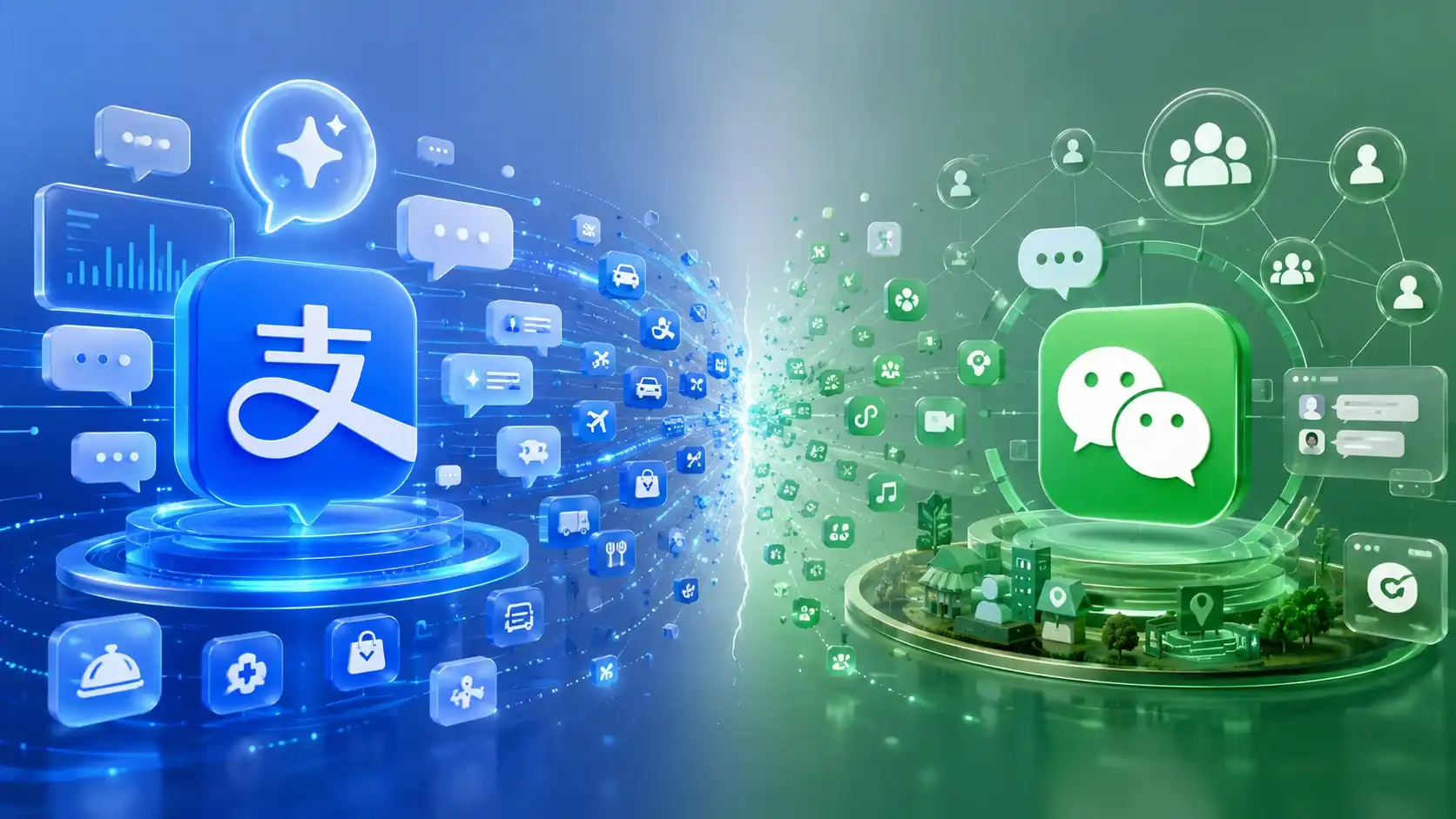
In May 2026, Alipay announced over 300 million AI payment transactions. Shortly after, WeChat opened its mini-programs for AI integration, sparking controversy by requiring developer source code access. This highlights their diverging approaches to AI integration. Alipay is testing "Project Treasure," an optional AI-native interface replacing traditional app grids with a conversational window. Users can command complex tasks (e.g., "book a ride and order coffee") handled end-to-end by AI. This shift follows an abandoned standalone AI app, focusing instead on enhancing its existing user base. For unmodified mini-programs, Alipay's AI uses "screen-reading" to simulate user interactions, bypassing the need for developer overhaul. It also introduced "Token Pay" for micro-transactions and "AI Wallets" for autonomous agent spending. WeChat, prioritizing its core social function, is taking an embedded approach. Its AI agent will operate within existing contexts like group chats and official accounts, assisting without a separate interface. To enable this, WeChat offers developers two paths: granting source code access for direct AI control ("Automatic Mode") or manually encapsulating services into standardized "Skills." Both place significant burden on developers. Key differences emerge in handling legacy services: WeChat demands developer cooperation (code or labor), while Alipay's screen-reading offers immediate, if potentially less stable, compatibility. Alipay's 3 billion AI transactions demonstrate user acceptance of AI-driven commercial actions. The divergent strategies may reshape mini-program ecosystems—Alipay passively "AI-fying" services, WeChat potentially favoring resource-rich developers—and set competing technical standards. Ultimately, the competition centers on where users entrust the command to "help me get things done."

marsbit1 saat önce

Fully Entering the AI Era: Alipay Bets on Conversation, WeChat Holds Fast to Social

marsbit1 saat önce

İşlemler

Spot
Futures

Popüler Makaleler

ATWO Nedir

I. Proje TanıtımıArena Two, hayranların gerçek zamanlı etkinlik sonuçlarında aktif, tokenleştirilmiş bir rol oynamasına olanak tanıyan merkeziyetsiz bir etkileşimli platformdur. Hayranları pasif izleyicilere indirgeyen geleneksel yayıncılık modellerinin aksine, Arena Two, hayranların doğrudan gerçek zamanlı oy kullanmalarını ve sahadaki sonuçları etkilemelerini sağlamak için blok zinciri teknolojisini kullanır.II. Token BilgileriToken adı: ATWO(Arena Two)III. İlgili BağlantılarWeb sitesi:https://arenatwo.com/Keşif araçları:https://basescan.org/token/0x499D35eBE6cEe9B2Ac35Fd003fcBbeeB9CFc7B32Twitter:https://x.com/arenatwoXNot: Proje tanıtımı, resmi proje ekibi tarafından yayınlanan veya sağlanan materyallerden gelmektedir ve yalnızca referans amaçlıdır, yatırım tavsiyesi niteliği taşımaz. HTX, ortaya çıkan doğrudan veya dolaylı kayıplardan sorumluluk kabul etmez.

274 Toplam GörüntülenmeYayınlanma 2026.05.18Güncellenme 2026.06.02

ATWO Nedir

ATWO Nasıl Satın Alınır

HTX.com’a hoş geldiniz! Arena Two (ATWO) satın alma işlemlerini basit ve kullanışlı bir hâle getirdik. Adım adım açıkladığımız rehberimizi takip ederek kripto yolculuğunuza başlayın. 1. Adım: HTX Hesabınızı OluşturunHTX'te ücretsiz bir hesap açmak için e-posta adresinizi veya telefon numaranızı kullanın. Sorunsuzca kaydolun ve tüm özelliklerin kilidini açın. Hesabımı Aç2. Adım: Kripto Satın Al Bölümüne Gidin ve Ödeme Yönteminizi SeçinKredi/Banka Kartı: Visa veya Mastercard'ınızı kullanarak anında Arena Two (ATWO) satın alın.Bakiye: Sorunsuz bir şekilde işlem yapmak için HTX hesap bakiyenizdeki fonları kullanın.Üçüncü Taraflar: Kullanımı kolaylaştırmak için Google Pay ve Apple Pay gibi popüler ödeme yöntemlerini ekledik.P2P: HTX'teki diğer kullanıcılarla doğrudan işlem yapın.Borsa Dışı (OTC): Yatırımcılar için kişiye özel hizmetler ve rekabetçi döviz kurları sunuyoruz.3. Adım: Arena Two (ATWO) Varlıklarınızı SaklayınArena Two (ATWO) satın aldıktan sonra HTX hesabınızda saklayın. Alternatif olarak, blok zinciri transferi yoluyla başka bir yere gönderebilir veya diğer kripto para birimlerini takas etmek için kullanabilirsiniz.4. Adım: Arena Two (ATWO) Varlıklarınızla İşlem YapınHTX'in spot piyasasında Arena Two (ATWO) ile kolayca işlemler yapın.Hesabınıza erişin, işlem çiftinizi seçin, işlemlerinizi gerçekleştirin ve gerçek zamanlı olarak izleyin. Hem yeni başlayanlar hem de deneyimli yatırımcılar için kullanıcı dostu bir deneyim sunuyoruz.

190 Toplam GörüntülenmeYayınlanma 2026.05.18Güncellenme 2026.06.02

ATWO Nasıl Satın Alınır

ZEST Nedir

I. Proje Tanıtımı1. Zest Protocol Nedir?Zest Protocol, kullanıcıların BTC ile getiri kazanmasına veya BTC'yi teminat göstererek varlık ödünç almasına olanak tanıyan, Stacks Layer 2 üzerinde inşa edilmiş Bitcoin yerel bir kredi protokolüdür. Protokolün akıllı sözleşmeleri Clarity dilinde yazılmıştır, tamamen zincir üzerinde çalışır ve açık kaynaklıdır; tasarımı Aave v3'ten ilham alınarak yapılmıştır. Zest, şu anda 800'den fazla BTC'nin yatırıldığı ve zirve TVL'sinin 100 milyon doları aştığı Stacks'teki en büyük DeFi protokolüdür. Mayıs 2026'da protokol, Stacks'tan Bitcoin ana ağına kredi verme yeteneklerini genişleten Bitcoin Teminat Kasaları'nı tanıttı. Bu, kullanıcıların BTC'yi Bitcoin ağından çıkarmadan stabilcoin ödünç almasına olanak tanır ve kendine ait saklama ile kredi vermeyi mümkün kılar.2. Zest Protocol Nasıl Çalışır?Zest Protocol, iki piyasadan oluşmaktadır. Stacks piyasası, kullanıcıların sBTC, STX ve USDC gibi varlıkları yatırarak getiri kazanmasına veya aşırı teminatlı krediler almasına olanak tanıyan Aave v3 üzerine inşa edilmiştir. Varsayılan maksimum LTV %50'dir (%70 sBTC için). Bitcoin piyasası, yeni başlatılan Bitcoin Teminat Kasaları aracılığıyla çalışır. Kullanıcılar, Bitcoin zincirinde kendine ait saklama kasalarında BTC'yi kilitleyerek stabilcoin ödünç alırlar. Teminat, tüm süreç boyunca Bitcoin ana ağında kalır ve kullanıcılar pozisyon tasfiye edilmedikçe saklama hakkını korur.3. Zest Protocol'ü Kim Kurdu?Tycho Onnasch (Kurucu Ortak): Oxford Üniversitesi'nden mezun. Stacks Açık İnternet Vakfı için araştırma ve hibe çalışmalarında yer aldı. Trust Machines'da eski yönetici ve Deedmob'un kurucusu. LinkedIn Profili: https://www.linkedin.com/in/tychokoonnasch/.Fernando Foy (Kurucu Ortak): Daha önce Objectif Emploi'de IT danışmanlığı yaptı. LinkedIn Profili: https://www.linkedin.com/in/fernando-foy/.Emil E. (Kurucu Ortak): Warwick Üniversitesi'nden Fizik alanında Yüksek Lisans derecesine sahiptir. Trust Machines'da eski mühendislik ortağı, Web3 projeleri için tam yığın geliştirici ve HSBC'de veri bilimcisi olarak çalıştı. LinkedIn Profili: https://www.linkedin.com/in/emil-e-49771a145/.Finansman Detayları: Mayıs 2024'te, Zest Protocol, Tim Draper liderliğindeki 3.5 milyon dolarlık bir tohum finansmanı turunun tamamlandığını duyurdu; Binance Labs, Flow Traders, Trust Machines ve diğerlerinin katılımıyla.4. $ZEST Tokenomikası$ZEST, Zest Protocol'ün yerel token'ıdır ve toplam arzı 1 milyar token ile sabit olup enflasyon mekanizması yoktur.Topluluk (27.83%): Airdrop'lar ve kullanıcı teşvikleri için kullanılır;Eko Sistem Gelişimi (24.82%): Likidite, ortaklıklar, pazarlama, borsa listelemeleri vb. için kullanılır;Yatırımcılar (22.35%): Zest Protocol'ün erken gelişimini destekleyen yatırımcı taraflarını destekler;Takım (25%): Ana katkıda bulunanlar için ayrılmıştır.Vesting Takvimi: Takım ve Yatırımcı token'ları, 1 yıllık bir kilitlenme süresine tabi olup ardından 3 yıl boyunca lineer olarak serbest bırakılacaktır.5. Anahtar Dönüm Noktalarının Zaman Çizelgesi2022: Zest Protocol resmi olarak kuruldu.Mart 2024: Güvenlik denetimi tamamlandı ve Stacks kredi piyasası ana ağda başlatıldı.Şubat 2026'da, Stacks Market V2 başlatıldı ve Risk Grupları tanıtıldı.Mayıs 2026'da, Bitcoin Teminat Kasaları tanıtıldı ve şu anda operasyonel bir ana ağ prototipi mevcuttur. Bu, kullanıcıların kendine ait saklama BTC'lerini Bitcoin L1 üzerinde teminat olarak kullanarak EVM zincirlerinde stabilcoin ödünç almalarını sağlar; köprüleme, sarma ve üçüncü taraf saklama işlemlerini sona erdirir. Bu dağıtım iki aşamaya ayrılmıştır. Aşama 1: BTC hareketini kısıtlamak için önceden imzalanmış işlemleri kullanır; Aşama 2: Doğrulama için BitVM kullanır. II. Token BilgisiToken adı: ZEST(Zest Protocol)III. İlgili BağlantılarWeb sitesi:https://www.zestprotocol.com/Keşif Araçları:https://bscscan.com/token/0x5506599c722389a60580b5213ea1da60d64754a1Twitter:https://twitter.com/ZestProtocolNot: Proje tanıtımı, resmi proje ekibi tarafından yayımlanan veya sağlanan materyallerden alınmıştır, yalnızca referans amaçlıdır ve yatırım tavsiyesi niteliği taşımaz. HTX, sonuçlanan doğrudan veya dolaylı kayıplardan sorumluluk kabul etmez.

193 Toplam GörüntülenmeYayınlanma 2026.05.19Güncellenme 2026.06.02

ZEST Nedir

Tartışmalar

HTX Topluluğuna hoş geldiniz. Burada, en son platform gelişmeleri hakkında bilgi sahibi olabilir ve profesyonel piyasa görüşlerine erişebilirsiniz. Kullanıcıların A (A) fiyatı hakkındaki görüşleri aşağıda sunulmaktadır.

活动图片