A Hidden Financial War? Iran Collects Strait Passage Fees with Stablecoins

marsbit2026-04-07 tarihinde yayınlandı2026-04-07 tarihinde güncellendi

Özet

Iran has officially institutionalized a mandatory toll system for all large tankers passing through the Strait of Hormuz, rejecting dollar-denominated payments. Instead, fees must be paid either via yuan-denominated wire transfers or in USD-pegged stablecoins via decentralized networks. The move is designed to bypass U.S. financial sanctions and traditional banking channels like SWIFT system. The Islamic Revolutionary Guard Corps (IRGC) is implementing a tiered pricing model based on geopolitical alignment: allies like China and Russia pay the lowest rates, while U.S. allies and Israel are barred entirely. Vessels must display approved flags and are escorted through the strait after payment. This marks the first time a nation has integrated cryptocurrency into strategic-level payment infrastructure at commercial scale. The mechanism could channel over $20 billion annually in stablecoins through Iranian-controlled wallets, creating a grey liquidity pool shielded by sovereign power. However, risks remain. Compliance with sanctions from the EU and UK may void insurance coverage for vessels paying the IRGC, forcing shipowners to choose between longer routes or potential financial penalties. Russia is considering a similar model for the Northern Sea Route, signaling a broader shift toward using geographic chokepoints as financial leverage in a reordered global trade system.

On April 2, Iranian Deputy Foreign Minister Gharibabadi publicly confirmed at a routine press conference in Tehran that all very large crude carriers (VLCCs) passing through the Strait of Hormuz must pay a passage fee to the Islamic Revolutionary Guard Corps (IRGC), explicitly excluding the U.S. dollar as a settlement channel. This statement formalizes rumors previously circulating in shipping circles—Iran is no longer satisfied with traditional tools of geopolitical games but is transforming its control of the strait into a financial experiment targeting dollar hegemony.

The implementation speed of the fee mechanism has exceeded market expectations.

Citing internal documents from the IRGC Navy, Bloomberg reported that the system had completed technical deployment by the end of March. This time, Iran has chosen only two methods to receive passage fees: RMB wire transfers or settlements via decentralized networks using dollar-denominated stablecoins.
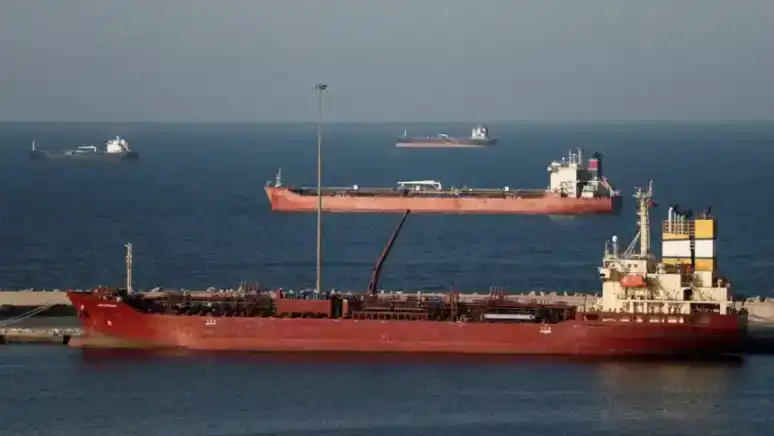
The Iranian customs department has set up a dedicated cryptocurrency exchange window on Qeshm Island to ensure funds are quickly converted into rials or transferred to overseas accounts after receipt.

This arrangement is meticulously designed.

Traditional international shipping settlements rely on the SWIFT network and correspondent banking system; any transaction involving Iran would trigger secondary sanctions from the U.S. Treasury. The combination of the RMB Cross-Border Payment System and public blockchain networks, however, constructs a parallel channel bypassing dollar surveillance.

According to statistics from London-based shipping brokerage Braemar, at least two VLCCs flying unspecified flags of convenience completed RMB payments and safely passed through the strait in late March. The Hormuz Strait Passage Management Act, passed by the Iranian Parliament's National Security Committee on March 30, further provides domestic legal backing for this mechanism.

It is worth noting that Iran has also implemented differentiated fee pricing for vessels based on their geopolitical affiliations.

Citing insider information, Bloomberg reported the oil fee standards for the Strait of Hormuz, starting at $0.5 per barrel, categorized into five tiers based on relationships with different countries.

The first tier is ally preferential rates: China and Russia, $0.5-$0.7 per barrel, with dedicated green channels; regular reporting allows free passage.

The second tier is friendly partners: countries like India and Pakistan, $0.8-$0.9 per barrel.

The third tier is neutral countries: African nations, Southeast Asia, Latin America, $1 per barrel, requiring declaration and inspection to ensure no hostile assets before release.

The fourth tier is high-risk countries: those with close ties to the U.S. but no hostile actions against Iran, such as Japan, South Korea, and many EU countries, $1.2-$1.5 per barrel, subject to full monitoring by Iran and potentially long approval queues.

The fifth tier is the U.S., Israel, and their allies: prohibited from passage.

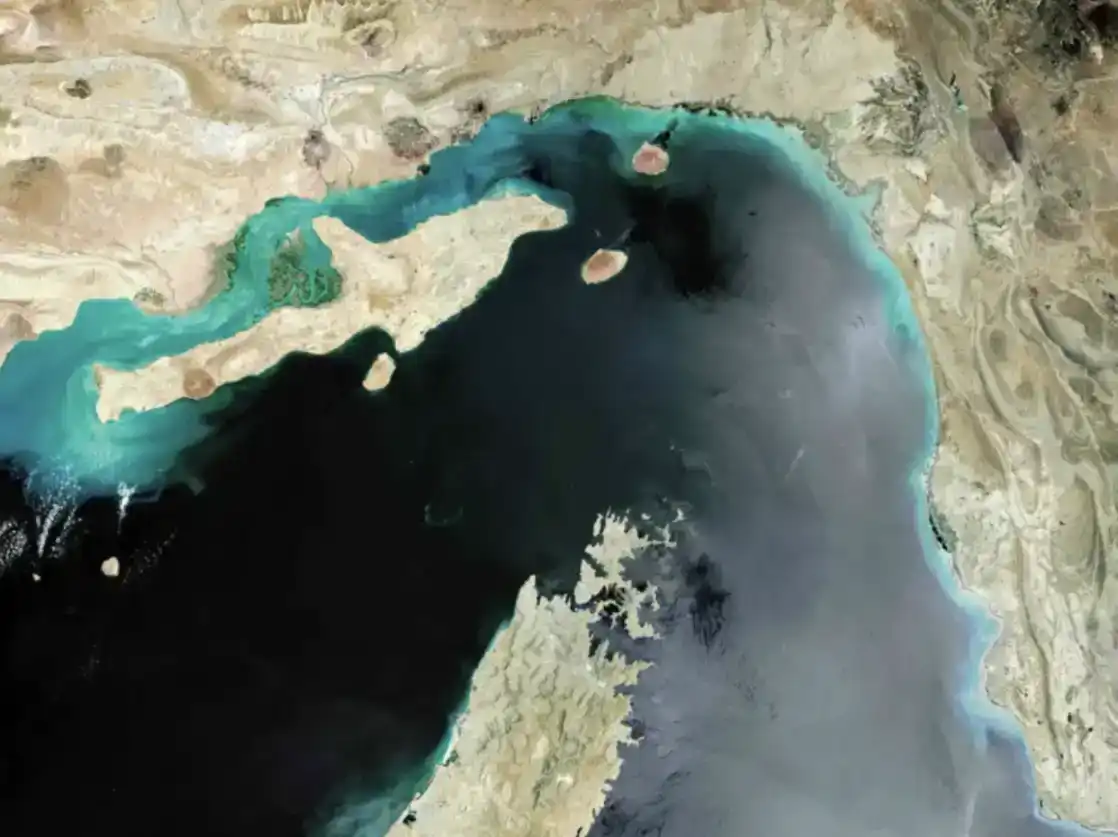
Once a VLCC pays the toll, the IRGC issues a license code and route instructions. The vessel must fly the flag of a country that has a negotiated passage agreement; in some cases, it must also formally change its registration to that country. As the vessel approaches the Strait of Hormuz, it must broadcast its passage code via VHF radio. A patrol boat will then escort it, navigating close to the coastline through a group of islands now referred to by industry insiders as the "Iranian toll station," to ensure safe passage through the strait.

This is the first time a sovereign state has incorporated stablecoins into strategic-level payment infrastructure.

Unlike El Salvador's symbolic move to adopt Bitcoin as legal tender, Iran's choice involves mandatory commercial scale. The strait handles 21% of global seaborne crude oil traffic, with dozens of vessels passing through daily.

If this mechanism continues to operate, it is estimated that over $20 billion in stablecoins will flow through Iran-controlled digital wallets annually, forming a grey liquidity pool protected by sovereign power.
The deeper impact lies in the chain reaction for shipping insurance and trade finance. The International Group of P&I Clubs (IG) has issued an internal warning, noting that payments to the IRGC may trigger compliance risks under EU and UK sanctions, potentially voiding insurance policies. This forces shipowners into a brutal trade-off between shipping economics and legal risks: diverting via the Cape of Good Hope adds 15 days of voyage and tens of thousands in fuel costs, while paying the cryptocurrency toll risks account freezes. Some commodity traders have begun attempting to reroute through Pakistani intermediaries. Islamabad recently announced permission for 20 international tankers to fly the Pakistani flag, essentially providing an offshore outsourcing channel for Iran's system.

Iran is not the only country doing this. Russia previously announced a similar fee policy for the Northern Sea Route and has publicly considered accepting cryptocurrency settlements. This digital financial logic of turning geographical hubs into 'nodes' is reshaping the payment infrastructure of global energy trade.

When merchant ships complete USDT settlements via on-chain protocols in the anchorage of Qeshm Island, it is not merely the payment of a toll but a systematic dismantling of the remnants of the Bretton Woods system.

The fragility of this experiment is equally evident. Since USDT/USDC are essentially dollar-pegged and subject to OFAC tracking, how the shadow public entity established by the IRGC can 'decentralize' and convert large-scale funds into physical assets or fiat currency (rials) is a risk point. However, as long as Iran maintains its geographical monopoly over the Strait of Hormuz, this financial war mediated by cryptocurrency will continue to rewrite the rulebook of global trade.


Trend Kriptolar

İlgili Sorular

QWhat are the two payment methods Iran accepts for the Strait of Hormuz transit fee?

AIran accepts payment via RMB wire transfer or in USD stablecoins through a decentralized network.

QHow does Iran categorize countries for its tiered pricing system for the transit fee?

AIran uses a five-tier system: Tier 1 (allies like China and Russia), Tier 2 (friendly partners like India and Pakistan), Tier 3 (neutral countries), Tier 4 (high-risk countries with close US ties), and Tier 5 (US, Israel, and allies, which are banned).

QWhat is the estimated annual value of stablecoins that could flow through Iran's system if the mechanism continues?

AIt is estimated that over $20 billion worth of stablecoins could flow through Iran-controlled digital wallets annually.

QWhat major risk do shipowners face when paying the fee in cryptocurrency according to the International Group of P&I Clubs?

AThe International Group of P&I Clubs warned that paying the fee to the IRGC could trigger EU and UK sanctions compliance risks, potentially leading to the invalidation of their insurance policies.

QBesides Iran, which other country has announced a similar toll system for a strategic waterway and considered crypto payments?

ARussia has announced a similar toll system for the Northern Sea Route and has publicly considered accepting cryptocurrency payments.

İlgili Okumalar

Beyond the Stadium: The Profitable Games Surrounding the World Cup

"Beyond the Pitch: The Profit Game Around the World Cup" The FIFA World Cup transcends being a sporting spectacle, evolving into a massive global arena for speculation and profit-seeking. The 2026 tournament has amplified this dynamic, creating a multi-layered ecosystem of financial opportunism alongside the football. **Prediction markets** have surged into the mainstream. Platforms like Polymarket and Kalshi saw trading volumes for World Cup contracts soar, attracting new users with their financial trading model and high-profile, chain-based wealth stories that overshadow traditional sports betting in terms of growth and narrative. However, **traditional sportsbooks** remain the dominant force, leveraging established user habits, legal markets, and comprehensive product offerings to handle the vast majority of speculative wagers, with projections suggesting record-breaking betting volumes. Capital markets also react. **"Concept stocks"** in countries like South Korea and Japan experience volatile price swings based on team performance and anticipated fan spending on items like chicken, beer, and viewing parties, effectively becoming a stock market reflecting fan sentiment. The **ticket resale market** has become a sophisticated arena for arbitrage. Prices fluctuate wildly based on team draws and star power, with sellers sometimes listing tickets they don't yet own in a practice akin to short-selling, while FIFA's own "Right to Buy" tokens add another layer of speculative trading. **Collectibles and merchandise** offer another avenue. Panini sticker albums, with their inherent scarcity and nostalgic value, can become high-value collectibles. Limited-edition or locally themed jerseys command significant premiums on secondary markets, and even counterfeit vendors profit from fans' desire for affordable match-day identity. The **cryptocurrency** space has seen a frenzy of speculative, unauthorized World Cup-themed meme coins on chains like Solana. These tokens, often exploiting team names and player imagery, experience extreme pump-and-dump cycles, creating stories of massive gains for a few early entrants and steep losses for many others. Finally, an entire industry thrives on **providing information and tools** to other speculators. Developers create platforms like SeatSidekick to track ticket inventory and prices, while paid Telegram groups and subscriptions sell betting tips and predictions, monetizing the widespread desire for an informational edge. In essence, the World Cup has become a compressed, global laboratory for speculation. While the games determine champions on the field, a parallel, complex network of financial transactions—spanning prediction contracts, bets, stocks, tickets, collectibles, crypto, and information services—settles its own scores in the global market.

marsbit21 dk önce

Beyond the Stadium: The Profitable Games Surrounding the World Cup

marsbit21 dk önce

How Does Codex Use a Computer? Three Entry Points and Permission Boundaries

This article explains the three primary methods for Codex to interact with a computer, each with distinct use cases, permission boundaries, and trust levels. **1. Computer Use:** This offers the broadest access, allowing Codex to visually control and interact with the graphical user interface of authorized macOS/Windows apps, system settings, and even iOS simulators. It's ideal for tasks lacking APIs or structured tools, such as operating legacy software or multi-app workflows. However, it's the slowest method and has the widest permission scope, requiring careful supervision for sensitive actions. **2. Chrome Extension:** This grants Codex access to the user's logged-in Chrome browser state, including cookies, profiles, and open tabs. It's best for tasks requiring user identity across websites like Gmail, LinkedIn, Salesforce, or internal dashboards. Its key advantage is multi-tab control for complex workflows. While more powerful for browser-based tasks than Computer Use, it carries higher sensitivity as actions are performed under the user's identity. **3. In-App Browser:** This is a browser isolated within the Codex thread, separate from the user's personal browsing data. It excels in web development and debugging scenarios—previewing local servers, testing responsive layouts, or annotating designs directly on the page. Its isolation is a strength for development but a limitation for tasks requiring login sessions. The core principle is to choose the narrowest, safest, and most structured interface for the task. Use plugins or MCPs first, resort to visual control (Computer Use) only for GUI-dependent tasks, employ the Chrome extension for identity-reliant browser work, and prefer the In-App Browser for isolated development. **Appshots** are clarified as a fourth, complementary tool for *inputting* context—capturing a screenshot of a window to point Codex to something—rather than a method for Codex to *act*. Together, this layered approach highlights a key to AI agent productization: not granting unlimited permissions, but constraining them within clear boundaries for specific tasks while preserving user oversight.

marsbit1 saat önce

How Does Codex Use a Computer? Three Entry Points and Permission Boundaries

marsbit1 saat önce

The "Iron Rule" of Chip Equipment Is Being Broken

For years, the semiconductor equipment industry followed an unwritten "iron rule": suppliers offered steep discounts for new tool introductions (Design-in) and faced consistent price pressure during repeat orders, especially during market downturns. This long-standing buyer's market dynamic is now being upended. Recently, SK Hynix's primary equipment suppliers have reportedly requested a 3-4% price *increase*, a nearly unprecedented move. This shift is driven by a severe supply-demand imbalance fueled by the AI compute boom. Securing equipment has become an urgent arms race as chipmakers' expansion speed dictates their ability to fulfill massive AI chip orders. Key areas feeling the strain include: **TCB (Thermal Compression Bonding) Equipment:** Demand is exploding, driven by the simultaneous needs of HBM4 memory stacking, AI chip Chip-on-Substrate (C2S), and logic Chiplet Chip-on-Wafer (C2W) packaging. Players like Hanmi Semiconductor, Hanwha Semitech, and ASMPT are receiving major orders. While hybrid bonding is seen as the future, TCB remains the pragmatic choice for HBM4 mass production, with its lifecycle extended by relaxed specifications and ongoing technological upgrades. **Test Equipment Bottlenecks:** Ironically, AI-driven shortages are now crippling test equipment manufacturing. Critical components like FPGAs, Driver ICs, and CPUs face severe shortages and extended lead times (up to 52 weeks for FPGAs), as AI data center and server vendors prioritize supply. This creates a paradoxical cycle: AI chip shortages drive fab expansion, which requires more test equipment, whose production is delayed because its key parts are diverted to make AI chips. The industry is entering a broad, AI-powered upcycle. SEMI forecasts global semiconductor equipment sales to hit a record $156 billion by 2027, fueled by investment in advanced logic/foundry, HBM-driven DRAM, and advanced packaging (like CoWoS). Major players like TSMC, SK Hynix, and Micron are aggressively ramping capital expenditure. In conclusion, leading equipment vendors are no longer just selling tools; they are selling the critical capability to deliver AI-era capacity. Pricing power is shifting decisively to those with indispensable technology in key process nodes like advanced logic, HBM, and advanced packaging, rewriting the industry's traditional power structure.

marsbit2 saat önce

The "Iron Rule" of Chip Equipment Is Being Broken

marsbit2 saat önce

İşlemler

Spot
Futures

Popüler Makaleler

WAR Nasıl Satın Alınır

HTX.com’a hoş geldiniz! WAR (WAR) satın alma işlemlerini basit ve kullanışlı bir hâle getirdik. Adım adım açıkladığımız rehberimizi takip ederek kripto yolculuğunuza başlayın. 1. Adım: HTX Hesabınızı OluşturunHTX'te ücretsiz bir hesap açmak için e-posta adresinizi veya telefon numaranızı kullanın. Sorunsuzca kaydolun ve tüm özelliklerin kilidini açın. Hesabımı Aç2. Adım: Kripto Satın Al Bölümüne Gidin ve Ödeme Yönteminizi SeçinKredi/Banka Kartı: Visa veya Mastercard'ınızı kullanarak anında WAR (WAR) satın alın.Bakiye: Sorunsuz bir şekilde işlem yapmak için HTX hesap bakiyenizdeki fonları kullanın.Üçüncü Taraflar: Kullanımı kolaylaştırmak için Google Pay ve Apple Pay gibi popüler ödeme yöntemlerini ekledik.P2P: HTX'teki diğer kullanıcılarla doğrudan işlem yapın.Borsa Dışı (OTC): Yatırımcılar için kişiye özel hizmetler ve rekabetçi döviz kurları sunuyoruz.3. Adım: WAR (WAR) Varlıklarınızı SaklayınWAR (WAR) satın aldıktan sonra HTX hesabınızda saklayın. Alternatif olarak, blok zinciri transferi yoluyla başka bir yere gönderebilir veya diğer kripto para birimlerini takas etmek için kullanabilirsiniz.4. Adım: WAR (WAR) Varlıklarınızla İşlem YapınHTX'in spot piyasasında WAR (WAR) ile kolayca işlemler yapın.Hesabınıza erişin, işlem çiftinizi seçin, işlemlerinizi gerçekleştirin ve gerçek zamanlı olarak izleyin. Hem yeni başlayanlar hem de deneyimli yatırımcılar için kullanıcı dostu bir deneyim sunuyoruz.

258 Toplam GörüntülenmeYayınlanma 2024.12.11Güncellenme 2026.06.02

WAR Nasıl Satın Alınır

Tartışmalar

HTX Topluluğuna hoş geldiniz. Burada, en son platform gelişmeleri hakkında bilgi sahibi olabilir ve profesyonel piyasa görüşlerine erişebilirsiniz. Kullanıcıların WAR (WAR) fiyatı hakkındaki görüşleri aşağıda sunulmaktadır.

活动图片