Agentized OS: It's Not About AI, It's About the Foundation

marsbit2026-05-27 tarihinde yayınlandı2026-05-27 tarihinde güncellendi

Özet

The Agentic OS: Beyond AI, It's About the Foundational Stack In 2026, major operating systems like Android, iOS, HarmonyOS, and Windows are entering the "Agentic" era, integrating proactive AI assistants deeply into the system layer. However, the real competition lies not in the flashy AI features showcased at events, but in the three-layer foundational stack that enables them: the system-level AI Runtime, proprietary/controllable chips, and the on-device/cloud model matrix. The AI Runtime acts as the central scheduler, managing model inference, resource allocation, and exposing capabilities to apps. Controllable chips (e.g., Apple Silicon, Google Tensor, Huawei Kirin) are crucial for deep hardware-software co-optimization, determining the efficiency and experience limits of on-device Agents. The on-device/cloud model matrix provides the "intelligence," with proprietary, chip-optimized small models (like Gemini Nano, Apple's ~3B model) handling daily tasks locally for low latency, privacy, and reliability, while cloud models tackle complex requests. Deep synergy between these three layers enables key Agent differentiators: ultra-low latency and power efficiency, genuine "on-device first" privacy, access to system-level personal context across apps, and reliable performance as a system service even offline. OS vendors with strong integration across this stack (like Apple, Google, and Huawei) build a deeper moat. Beyond this core stack, long-term competitiveness depends on ...

Article | CloudSurge AI, Author | Huang Yunhao

One. After Google I/O 2026: The Four Major End-Device OS Step into the Agent Era

On May 12, 2026, Google held the Android Show|I/O Edition press conference, an Android-focused event ahead of the I/O conference on May 19. Sameer Samat, President of the Android Ecosystem, set the tone for this conference: Android must transform from an operating system into a smart system. The concept carrying this main thread is Gemini Intelligence – a set of proactive AI capabilities at the Android system layer.
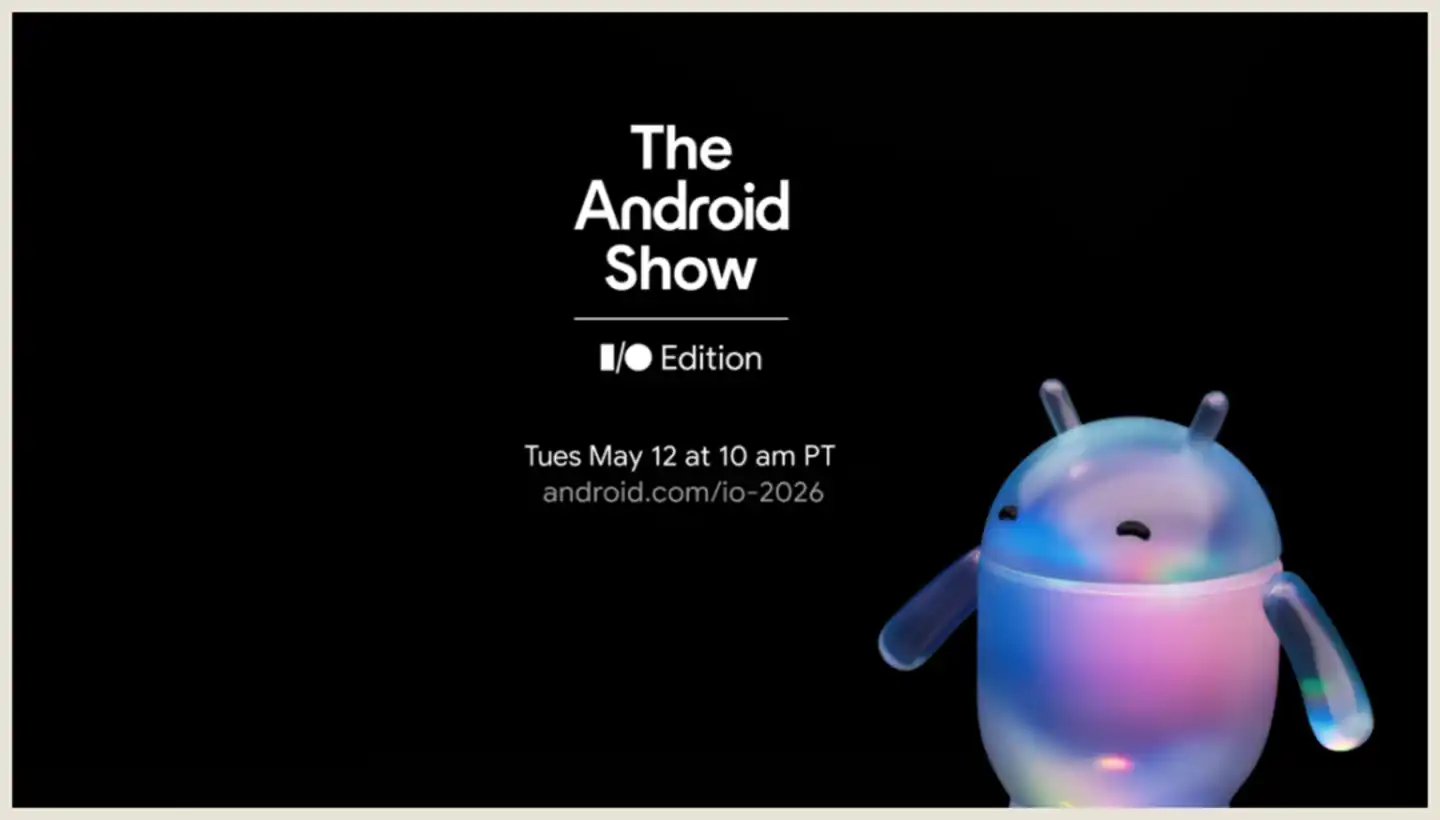
2026 Android Show|I/O Edition Press Conference Poster
Source: Android Heaadlines

Compared to last year's Gemini Nano + AICore combination, this time Google further embedded Agent capabilities for cross-App and contextual processing into the OS layer: cross-App task automation (ordering meals, shopping, placing orders), automatic form filling, webpage summarization, and custom widgets were successively written into the system-level capability list. Google also listed explicit user control, comprehensive data protection, and operational transparency as three product principles.

A week later, on May 19, in the I/O keynote speech, Google CEO Sundar Pichai started along the same line:

Welcome to the agentic Gemini era

In joining the wave of end-device OS agentization, Google was hardly an early starter.

Microsoft introduced Copilot+PC (a new category of Windows 11 devices equipped with 40+ TOPS NPUs) at Build 2024 in May 2024, embedding Agent capabilities into the OS based on three abilities: the on-device small model Phi Silica, the screen Agent capability Click to Do, and the system-level activity memory Recall.

At WWDC24 in June 2024, Apple formally announced "Apple Intelligence," which it positioned as a "personal intelligence system." Some AI-assisted features were subsequently rolled out, but the core Agent capabilities of Apple Intelligence have not yet materialized due to issues like delays in its own large model development and Siri's shortcomings.

Huawei, at HDC 2025 in June 2025, released HarmonyOS 6 and the Harmony Smart Agent Framework (HMAF), followed by the launch of the Xiaoyi Smart Agent Plaza featuring over 80 agents.

The major trend of end-device OS agentization has simultaneously emerged in mainstream operating systems like Android, iOS, HarmonyOS, and Windows.

Press conferences only showcase features; what OS vendors are truly competing over is the three-layered foundational capability underpinning the reliable operation and practical problem-solving of OS Agents: the system-level AI Runtime, controllable chips, and the end-cloud model matrix.

Two. Beyond the Press Conference: The Three-Layered Foundation Supporting OS Agents

System-Level AI Runtime: The Scheduling Hub for On-Device Intelligence

Runtime is the inference engine and system service through which on-device models run within the operating system. Downwards, it directly interfaces with the NPU and system resource scheduling; upwards, it exposes inference capabilities to all Apps via stable APIs. It turns on-device models into "shared intelligence at the OS layer": sharing model weights across Apps, uniformly scheduling computing power and memory, supporting the tool calling, guided generation, context, and permission docking required by Agents. It determines whether an OS Agent is merely a chat button within an App or a resident service on the operating system capable of performing system-level operations.

The most complete example within the Android system is Google's AICore. In December 2023, AICore went live as a system service in Android 14; in August 2025, Gemini Nano was opened to developers via ML Kit GenAI APIs. From a system service foundation to stable APIs for Apps, AICore has been polished for nearly two years.

Other OS vendors are on the same path, with different tempos. Apple opened the Foundation Models framework to developers at WWDC25. The framework comes with decorators like @Generable, tool calling, guided generation, and stateful sessions, connecting to an on-device foundation model of about 3B parameters, supplemented by private cloud computing for cloud support. Microsoft integrated the on-device AI framework Foundry on Windows and Phi Silica into Windows 11, using Windows ML as the underlying inference backend. Huawei released the Agent Framework Kit (Harmony Smart Agent Framework, HMAF) at HDC 2025, opening up the intent system and Agent collaboration protocols.
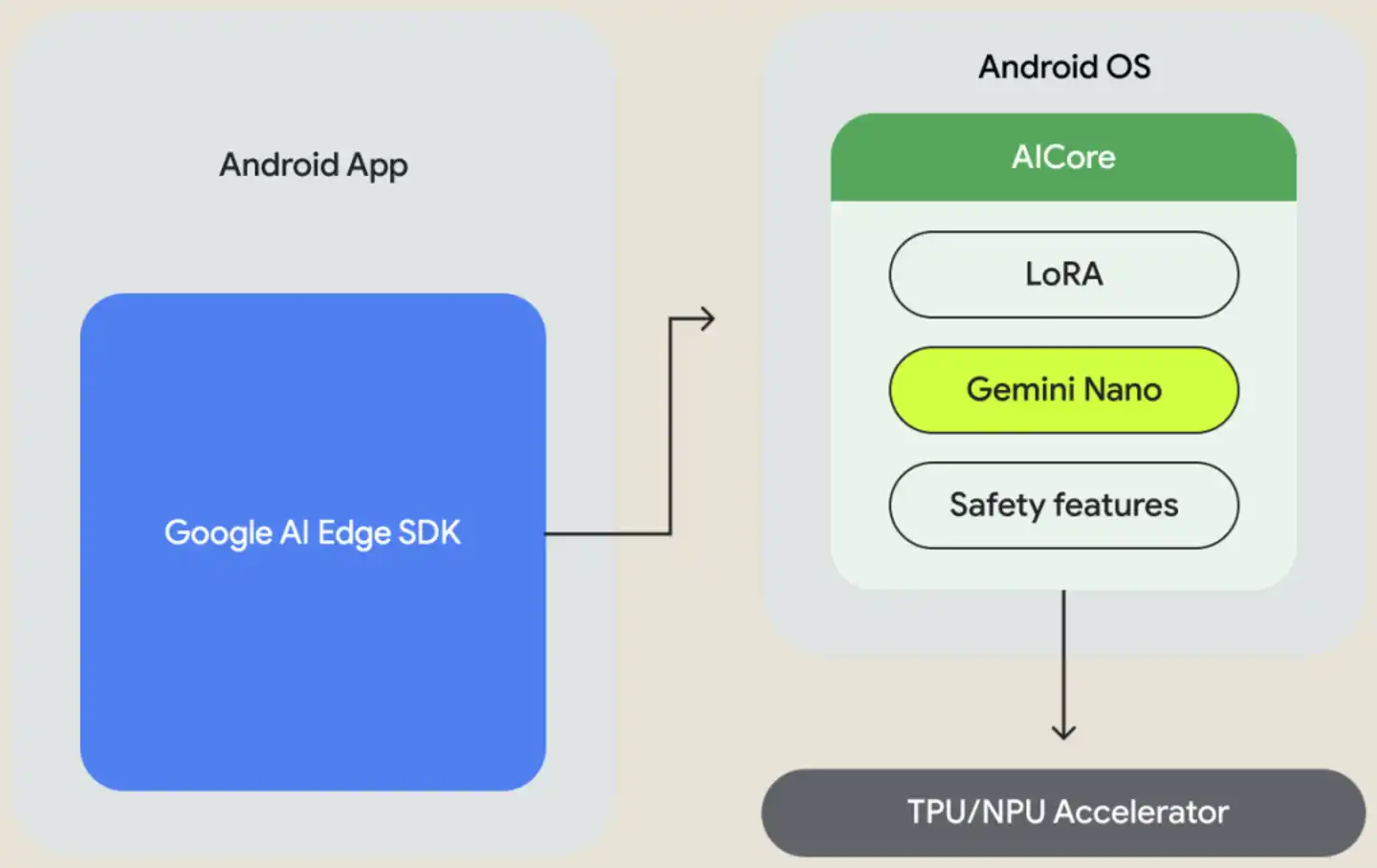
Android AICore as a system service, scheduling Gemini Nano inference on hardware accelerators
Source: Android Developers

Controllable Chips: The Fulcrum of Hardware-Software Synergy

At the Android Show|I/O Edition, Google set clear hardware thresholds for Gemini Intelligence: the full feature set debuted exclusively on a few latest flagships like the Pixel 10 series and Galaxy S26 series, with last year's models not included. This points to a simple fact: AI models are still evolving rapidly, and software continuously imposes new demands on hardware. Controllable chips are the foundation for meeting these demands, and the degree of control determines the space OS vendors have for hardware-software adaptation of end-device OS Agents.

Apple is the exemplar of the integrated hardware-software approach. iOS and macOS have evolved in tandem with the A-series and M-series chips from the start, and Core ML encapsulates the scheduling of CPU, GPU, and ANE into the framework layer. This path continues into the LLM era. Apple Machine Learning Research provided a set of actual measurements: following Core ML's optimization path to deploy Llama 3.1 8B Instruct onto an M1 Max, local decoding speed can reach about 33 tokens/s. The "Apple Intelligence Foundation Language Models" technical report also disclosed that Apple performed architecture-level optimizations like KV cache sharing and 2-bit quantization-aware training for its own chips, enabling the successful opening of the ~3B on-device foundation model to developers via the Foundation Models framework. This level of depth is only achievable when the chip is held in one's own hands – this is precisely the value of controllable chips for OS vendors: it dictates the depth of hardware-software synergy and raises the experience ceiling for end-device OS Agents.

Entering the AI era, Google is doing the same thing – pursuing its self-developed Tensor SoC path since the Pixel 6. The latest Tensor G5 boosts TPU performance by up to 60% and CPU performance by an average of 34%, landing in the Pixel 10 as the first SoC to fully run the latest-generation Gemini Nano. Of course, Tensor G5 also has weaknesses: Android Central's real-world tests show its memory configuration (RAM capacity) remains an AI performance bottleneck, and its Geekbench AI scores trail the Snapdragon 8 Elite; in Macworld's Geekbench 6 tests, G5's single-core and multi-core scores are lower than the A18 Pro's. Google is still catching up, but the synergistic path of self-developed Tensor plus on-device Gemini has taken shape.

Huawei's Kirin paired with the Da Vinci NPU and the Pangu on-device model is another controllable chip path running parallel to Apple and Google. Xiaomi, with its Xuanjue O1, is a newer entrant moving in the direction of controllable chips.

End-Cloud Model Matrix: The Source of Intelligence for Agents

The end-cloud model matrix is the source of "intelligence" for end devices: cloud models support the capability ceiling for complex tasks, while on-device models underpin the baseline for daily operation – latency, battery life, privacy, and stability all rest on the on-device side. Both ends are indispensable; the difference lies in the depth of coupling with the OS. On-device models must be embedded into the OS of every terminal device and deeply coupled with the local NPU, assuming a dual identity within the OS: downwards, they are the local inference backend for the Runtime; upwards, they are exposed as system-level APIs to Apps via the Runtime's framework and SDK.

Self-development makes sense both in the cloud and on-device, but the returns are more tangible on-device. While cloud models can be sourced externally to support the capability ceiling, the advantages of self-development mainly manifest in routing control, commercial terms, and model iteration pace. The on-device side is different. On-device models are embedded into the OS and NPU of every device; the returns on self-development are directly reflected in product performance: KV cache sharing, 2-bit quantization-aware training specifically designed for a chip generation, Per-Layer Embedding (originating from Gemma 3n, incrementally loading embedding parameters layer-by-layer from fast storage), etc. – these are only conveniently realized when the model and hardware are designed synchronously; meanwhile, the synergy tempo is no longer constrained by third-party hardware vendors.

Tensor G5's TPU computing power saw up to a 60% increase over the previous G4, but Gemini Nano's improvement on the G5 far exceeds that – according to Google official and Jon Peddie Research data compilation, local processing speed is 2.6 times that of the previous generation, energy consumption is halved, and the token window expanded from 12,000 to 32,000 (equivalent to digesting about a hundred screenshots at once). These significantly surpassing performance gains stem from the Matryoshka Transformer elastic inference architecture adopted by Gemini Nano v3, combined with synergistic optimizations with the Tensor G5 TPU.
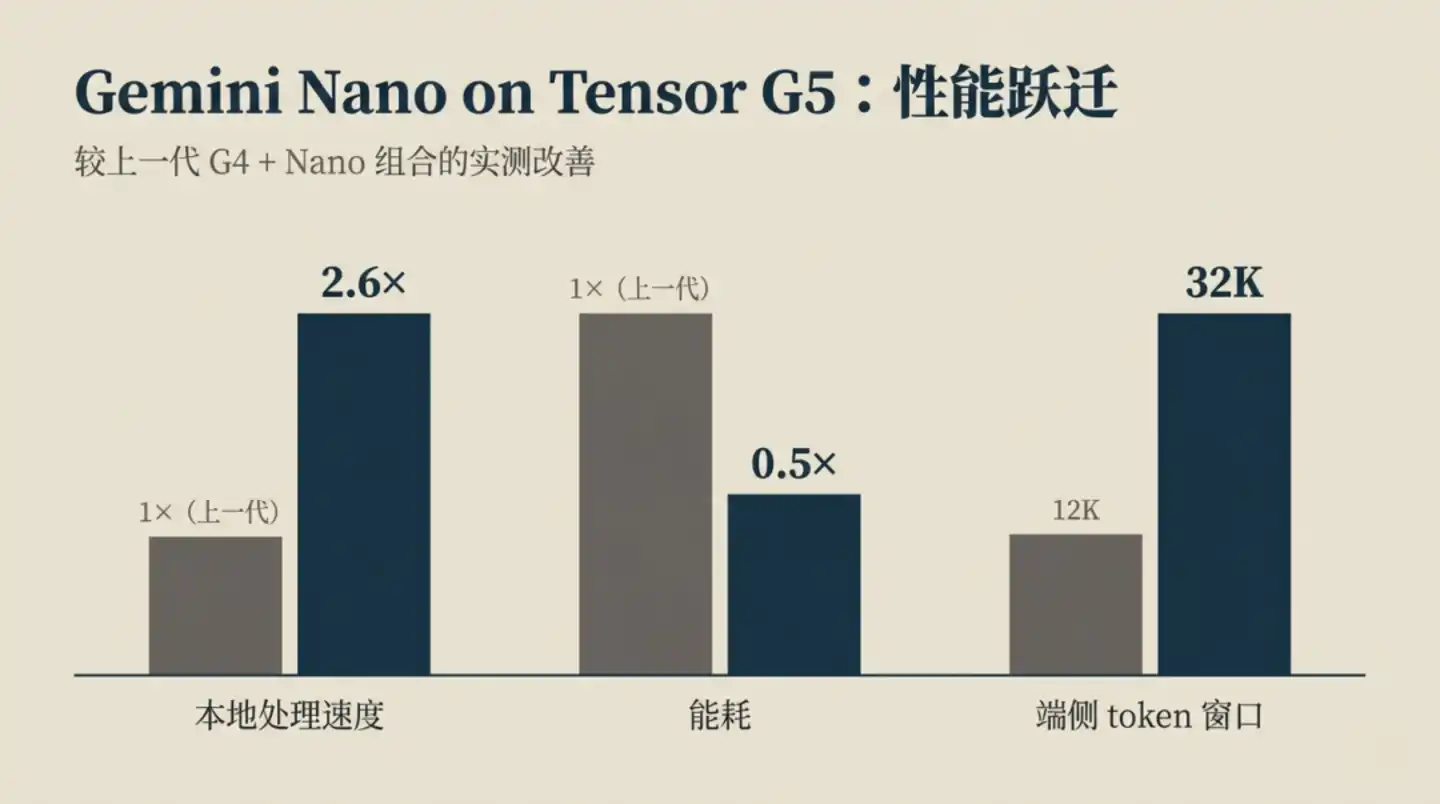
Performance Leap of Gemini Nano on Tensor G5 Compared to Previous Generation
Source: Google/Jon Peddie Research, CloudSurge AI Chart

In this layer of on-device models, the major OS vendors all hold their own cards: Google's Gemini Nano, Apple's ~3B parameter on-device foundation model, Microsoft's Phi Silica, Huawei's Pangu on-device model. Self-development is the default option for this layer.

Three. Between the Layers: Deeper Synergy, Greater Space for Differentiation

The three-layered capability foundation is coupled from bottom to top: Controllable Chip → On-Device/Cloud Models → Runtime → Agent. The controllable chip determines the achievable inference efficiency and power consumption for on-device models; on-device models determine the local intelligence schedulable by the Runtime; the Runtime determines the reliability of the Agent executing cross-App operations as a system service. The deeper the synergy among the three, the greater the product experience differentiation for OS vendors in on-device Agents, and the thicker the moat.

The more tightly the three layers interlock within the same hardware-software system, the more the product capabilities of OS Agents will exhibit differentiation that a single layer cannot achieve.

  • Response latency and power consumption. The 2.6x processing speed and halved energy consumption achieved by Gemini Nano on Tensor G5 rely on mutual adaptation of model architecture, chip design, and Runtime scheduling within the same generation of hardware-software design – improvements of this magnitude only emerge from such synergy.
  • Privacy and trust. Common tasks involving private data are handled locally by on-device models, while complex requests are passed to the cloud – this is the reasonable default posture for OS Agents regarding user data at the current stage. The three-layer coupling determines whether this "on-device first, cloud fallback" can be truly realized: deep adaptation between the NPU and on-device model is the key path for on-device models, still in development, to shoulder daily high-frequency inference; model quantization compression and KV cache sharing for the NPU; Runtime routing between on-device and cloud based on task complexity. If any of the three layers is inadequate, "on-device first" remains mere marketing talk.
  • System-level context. OS vendors reorganizing cross-App and OS-layer user data (semantic indexing, screen perception, long-term memory) into a system-level personal context for the Agent is a prerequisite for the Agent to truly "understand the user" and a core characteristic differentiating OS Agents from single App-level Agents. Implementation depends on the three-layer interlock: the Runtime holds cross-App indexing and permissions, the on-device model resides to handle understanding and inference, and the NPU provides local efficient computing power. Apple's Core Spotlight builds semantic indexes on-device, Apps expose actions and data to the system via App Intents, and Agents will obtain context through Personal Context (Apple announced this capability will come with a future software update); Android's AppFunctions follows a similar path.
  • Reliability as a system service. For an OS Agent to be invoked as a system-level service, it must remain usable in real-world scenarios like being offline, low battery, or thermal throttling. The on-device model residing on the device allows the Agent to work without a network; a highly hardware-software optimized NPU handles low-power inference; the Runtime falls back scheduling based on availability when device resources are tight (switching to lighter models or routing requests to the cloud). If any of the three layers is missing, the OS Agent cannot sustain the form of a system service and can only revert to an App-level chat button.

Apple Intelligence presents a complete synergy paradigm: Apple Silicon, the ~3B on-device foundation model, and the Foundation Models framework interlock from bottom to top, handling common scenarios on-device and transferring complex requests to private cloud computing. Google represents another form. Tensor G5, landing in the Pixel 10 as the first SoC to fully run the latest-generation Gemini Nano, is uniformly scheduled by AICore, enabling system-level Agent features like Magic Cue and Pixel Screenshots to be enabled by default without relying on the cloud. Huawei is an exemplary case of constructing three-layer synergy domestically: Kirin, Da Vinci NPU, Pangu on-device model, and HMAF – all four are self-owned, coupling from bottom to top into a complete three-layer foundation.
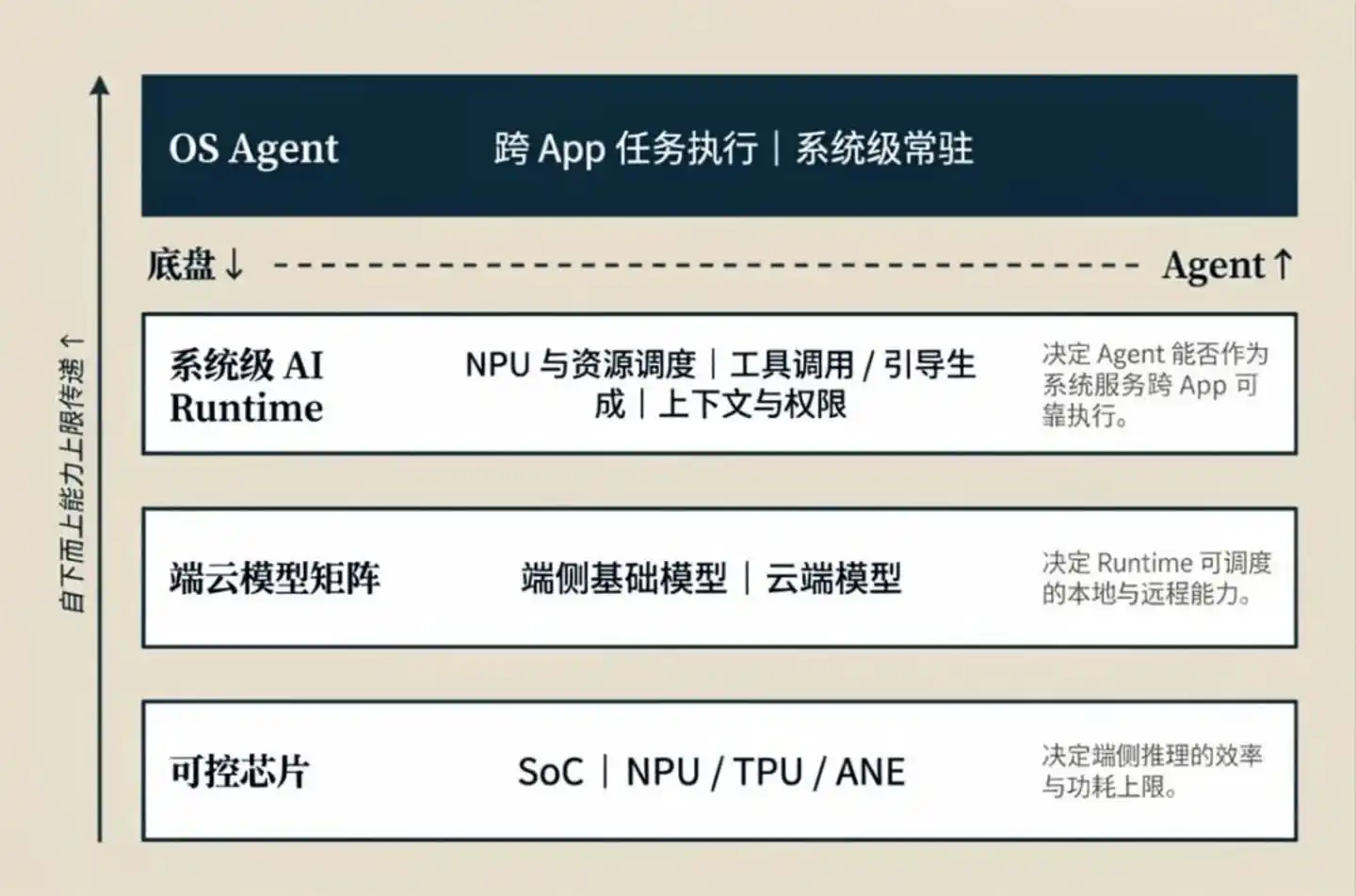
Interlocking Mechanism of the Three-Layered Foundation for End-Device OS Agents
Source: CloudSurge AI


Four.
Above the Foundation: Other Key Variables for the Long-Term Moat

The three-layer synergy builds the core of the moat. Above the foundation, numerous other variables affect product competitiveness in the OS Agent era, including Agent-App interaction capabilities, privacy protection, etc.

The interaction between OS Agents and Apps is at the forefront of the contest between OS vendors and App vendors. Currently, two paths run in parallel. One is screen recognition and automation, including Gemini Live screen sharing, Apple Visual Intelligence, Circle to Search, etc. OS Agents intervene in Apps by reading the screen and clicking buttons. This works for single tasks, but each invocation lacks structured information, making it difficult to build stable multi-step workflows. The other is API deep integration, including Google AppFunctions, Apple App Intents, Huawei Intents Kit, etc. Apps expose core actions as structured interfaces to the system, enabling stable Agent calls and the building of multi-step workflows. Whether the API path can spread depends not on OS vendors but on App vendors. Handing over core functionalities to be called by Agents means users may no longer directly open the App, with risks of brand exposure, ad slots, behavioral data, and payment portals being intercepted by the OS. This will be a core battleground for the distribution of end-user traffic.

Privacy protection is a key value proposition and bottom line for end-device systems. OS vendors hold the deepest system-level permissions and the most sensitive user data on the end-device side. Privacy is both a professional stance and a prerequisite for the long-term advancement of the aforementioned aspects. Apple has built an end-device-based privacy protection system through the integrated hardware-level security design shared between the on-device Secure Enclave independent security chip and Private Cloud Compute nodes. This product strategy has turned "Privacy. That’s Apple." into a core brand label for Apple in the global premium market, thereby winning user trust.
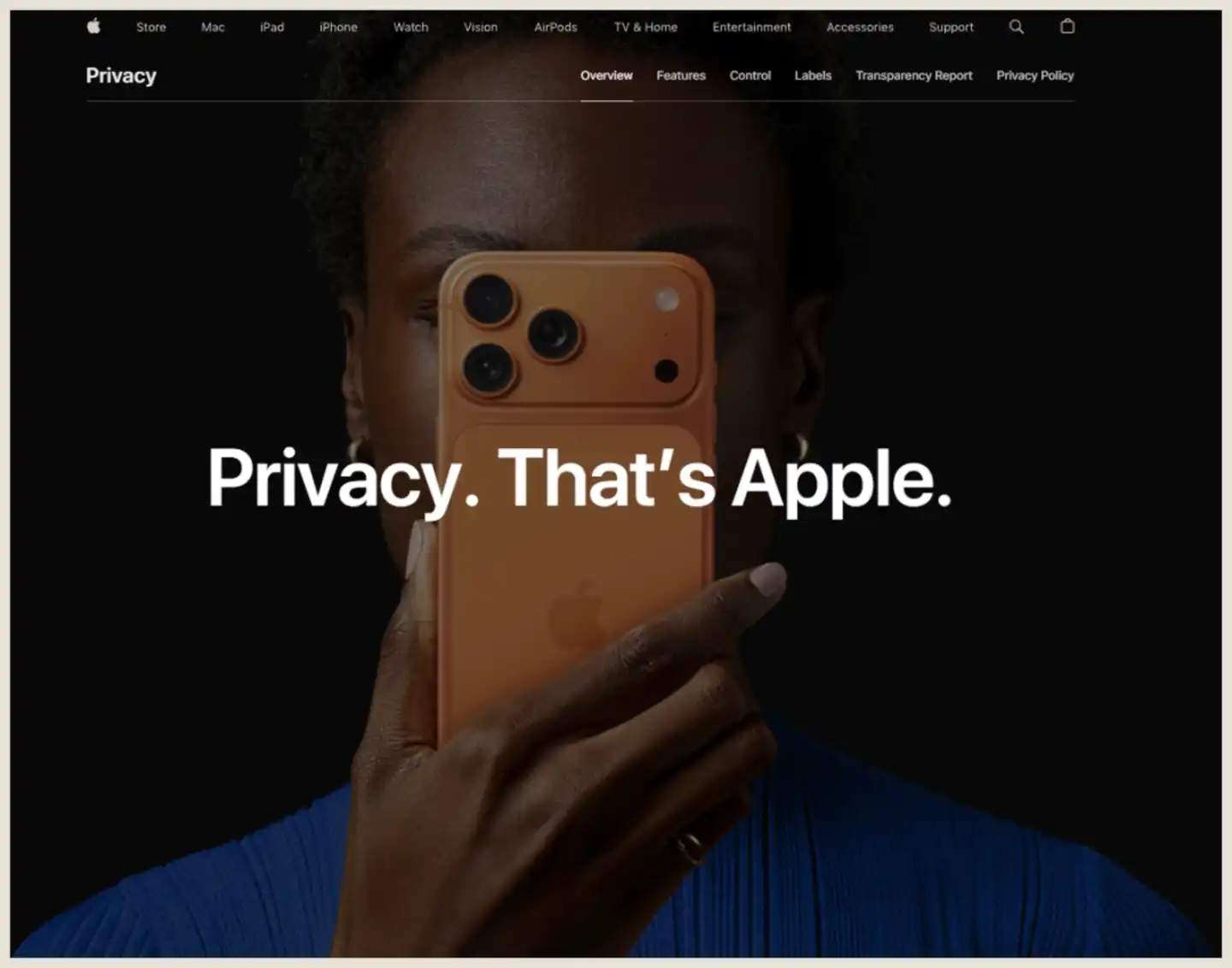
Apple's "Privacy. That’s Apple." Label
Source: Apple Website

The three-layer synergy establishes the core of the moat, and these long-term variables above the foundation influence how deeply it can be fortified.

Five. More Than Just Remaking the OS

Under the trend of end-device OS agentization, the more solid the three-layered foundation of system-level AI Runtime, controllable chips, and the end-cloud model matrix, the higher the product baseline for OS vendors in this battle and the greater their space for differentiation. OS vendors that grasp this trend will have the opportunity to drive a reset in the distribution of traffic at the end-device entry point, securing a stronger competitive position.

This trend extends beyond phones and PCs. The underlying capabilities of OS Agents are spilling over into more terminals along the multi-device ecosystems already built by each company, especially IoT. Controllable chips are moving into scenarios like automotive SoCs; Huawei has already deployed vehicle-grade Kirin chips, and Xiaomi's HyperOS is entering its own vehicle models. On-device models are being lightened for migration to new form-factor hardware like glasses; the Android XR smart glasses jointly developed by Google, Samsung, Gentle Monster, and Warby Parker are set to launch in Fall 2026. Runtime and Agent synergy is expanding to device clusters via the "Super Terminal/Distributed" frameworks already deployed by each company, e.g., Huawei's 1+8+N and Harmony Distributed Soft Bus, Xiaomi's "Human-Vehicle-Home Full Ecosystem" and HyperConnect, Apple's Continuity, and Google's Cross device SDK and Cross device services. The battle over OS Agents is far from limited to the victory or defeat on phones and PCs.

AICore has been polished for nearly two years; Apple's OS and Apple silicon series chips have been co-evolving for over a decade; Tensor has been revised all the way to G5, with the Pixel 10 finally capable of shouldering the burden of Gemini Nano v3. The outcome of this battle never lies in the one or two hours of a press conference, but in the chips, models, and Runtime honed across generations.

References:

  • Gemini Intelligence brings proactive AI to Android|Google Blog
  • I/O 2026: Welcome to the agentic Gemini era|Google Blog
  • Phi Silica, small but mighty on-device SLM|Windows Experience Blog
  • Apple Delays Siri Upgrade Indefinitely|Bloomberg
  • HarmonyOS 6 Developer Beta Launch Press Release (HDC 2025)|Huawei
  • The latest Gemini Nano with on-device ML Kit GenAI APIs|Android Developers Blog
  • Foundation Models framework documentation|Apple Developer
  • Harmony Smart Agent Framework White Paper|Huawei Developer
  • On-Device Llama 3.1 with Core ML|Apple Machine Learning Research
  • Apple Intelligence Foundation Language Models Tech Report 2025|Apple Machine Learning Research
  • Google Tensor G5: Benchmarks and everything you need to know|Android Central
  • Google’s new M5 SoC(Tensor G5 detailed - Matryoshka Transformer)|Jon Peddie Research
  • Private Cloud Compute: A new frontier for AI privacy in the cloud|Apple Security Engineering
  • Overview of AppFunctions|Android Developers
  • App Intents|Apple Developer
  • Introduction to Intents Kit (HarmonyOS)|Huawei Developer
  • The Google Pixel 10 Pro’s Tensor G5 chip is impressive—if you compare it to an iPhone 14|Macworld
  • Gemma 3n model overview|Google AI for Developers

İlgili Sorular

QWhat is the core thesis of the article regarding the evolution of operating systems (OS) into the agentic era?

AThe article argues that as major OSes (like Android, iOS, HarmonyOS, Windows) enter the 'Agent era,' the key competition is not just about showcasing flashy AI features in demos. Instead, the real differentiator and long-term moat lie in building a robust three-layer technological 'foundation' that reliably supports these OS-level Agents. This foundation consists of a system-level AI Runtime, controlled/self-developed chips, and a matrix of on-device and cloud AI models. The depth of synergy between these three layers determines the quality, privacy, and reliability of the Agent experience.

QWhat are the three key layers of the foundational 'chassis' that support a reliable OS Agent, according to the article?

A1. System-level AI Runtime: The scheduling hub and inference engine for on-device models. It interfaces directly with the NPU and system resources, providing stable APIs for apps. It enables the Agent to function as a system-level service capable of cross-app operations, rather than just an app-based chatbot. 2. Controlled Chips (SoC/ NPU): Self-developed or deeply controlled hardware (like Apple Silicon, Google Tensor, Huawei Kirin). This allows for deep software-hardware co-design and optimization, which is crucial for achieving high inference efficiency, low power consumption, and unlocking advanced Agent capabilities. 3. On-device/Cloud Model Matrix: The 'intelligence source.' On-device models handle everyday tasks with low latency and high privacy, while cloud models tackle complex requests. The article emphasizes that self-developed on-device models (like Gemini Nano, Apple's ~3B model) are critical for deep integration with the specific hardware and Runtime.

QHow does the article use Google's Gemini Nano on Tensor G5 as an example of deep layer synergy?

AThe article cites Google's Gemini Nano v3 running on the Tensor G5 chip as a prime example of performance gains from deep synergy. While the Tensor G5's TPU saw a maximum 60% performance increase over G4, Gemini Nano's on-device processing speed improved by 2.6x, and energy consumption halved. This disproportionate gain is attributed to the co-design of the model's Matryoshka Transformer architecture with the Tensor G5's TPU, showcasing how tight integration between the chip (Layer 2) and the on-device model (Layer 3), orchestrated by the Runtime (Layer 1), yields superior results that cannot be achieved by improving a single layer in isolation.

QBesides the three-layer foundation, what other long-term variables are mentioned as crucial for OS Agent competitiveness?

AThe article identifies two other key long-term variables: 1. Agent-App Interaction: How the OS Agent accesses app functionality. There's a tension between screen-reading/automation (less reliable) and deep API integration (like Google's AppFunctions, Apple's App Intents). The latter is more powerful but requires app developers to expose their core features, leading to a potential power struggle over user traffic and data. 2. Privacy Protection: This is a fundamental value and a prerequisite for user trust. The article highlights Apple's hardware-level security (Secure Enclave) and Private Cloud Compute as a benchmark, turning privacy into a core brand asset ('Privacy. That’s Apple.') that supports its competitive position in the high-end market.

QAccording to the article, the trend of Agentified OS is not limited to which devices?

AThe article explicitly states that the trend of Agentified OS and the underlying foundational capabilities are not limited to just smartphones and PCs. It is expanding to other terminals, particularly within each company's multi-device ecosystem: - IoT and Smart Homes: Through frameworks like Huawei's '1+8+N' or Xiaomi's 'Human-Vehicle-Home Full Ecosystem.' - Automotive: With controlled chips (e.g., Huawei's car-grade Kirin, Xiaomi's HyperOS) moving into vehicles. - Wearables/XR: On-device models are being adapted for lightweight hardware like smart glasses (e.g., Google's upcoming Android XR glasses). The battle for OS Agents is described as extending far beyond the胜负 (victory or defeat) in the phone and PC markets.

İlgili Okumalar

Retail Investors' 'Lead Brother' Serenity vs. Newly Minted Stock God Leopold: How Are the Two Top Hunters Mining AI's 'Physical Limits'?

The article profiles two prominent figures, Serenity and Leopold Aschenbrenner, who are gaining attention for their unconventional investment strategies focused on the physical constraints of the AI boom, moving beyond mainstream software narratives. Serenity, an anonymous online trader, advocates a "shiso leaf" theory. He targets small-cap companies with monopolies on critical, overlooked components in the AI hardware supply chain, such as specific semiconductor materials. His deep, technical analysis of bottlenecks in areas like co-packaged optics (CPO) has reportedly yielded massive returns, though his anonymity and focus on illiquid micro-cap stocks pose significant risks for followers. Leopold Aschenbrenner, a former OpenAI researcher, founded a multi-billion dollar hedge fund. His macro thesis argues that physical infrastructure—power grids, land, data centers—is the true bottleneck for AI growth, lagging far behind chip production. Consequently, his fund employs an infrastructure arbitrage strategy: heavily investing in storage and compute infrastructure companies while placing massive bearish bets (put options) against major semiconductor stocks, betting their valuations will correct as physical constraints become apparent. While their methods differ—Serenity drills into microscopic supply chain details, while Leopold takes a macroscopic, infrastructure-focused view—both share a core belief: the real power and investment alpha in the AI era lie in controlling scarce physical resources, not just software. The article concludes by noting the inherent risks in both approaches, such as liquidity issues for micro-caps and timing risks for macro bets, but suggests they signal a broader market re-evaluation of AI's foundational assets.

marsbit1 saat önce

Retail Investors' 'Lead Brother' Serenity vs. Newly Minted Stock God Leopold: How Are the Two Top Hunters Mining AI's 'Physical Limits'?

marsbit1 saat önce

Who Will Make Money in the Age of Agents?

In the Agents era of blockchain, traditional value capture theories face challenges. The "Fat Protocol" theory, dominant since 2016, suggested protocols capture most value as their tokens are essential for network use. However, the proliferation of interchangeable L1s, L2s, and modular layers has eroded protocol scarcity and pricing power. Conversely, the "Fat App" theory posits that applications capturing user relationships (like wallets and exchanges) become the primary value layer by controlling distribution and transaction flows. This aligns with the current "Great Repricing" cycle. Agents disrupt this logic. As software users, they lack brand loyalty, prioritize cost and efficiency, and switch between platforms seamlessly. This undermines the front-end UX moats that "Fat Apps" rely on. The article explores several potential futures: 1. **Headless Applications:** Current leading apps could strip their front-ends and become backend API infrastructure for Agents, preserving their role. 2. **Protocol Resurgence:** If integration becomes trivial, Agents might bypass aggregators and interact directly with protocols, reviving "Fat Protocol" dynamics. 3. **Pricing Power Collapse:** Agents' rational, frictionless routing could commoditize the entire stack, compressing margins toward cost and leaving little profit for intermediaries. 4. **Unprecedented Activity:** Agents may enable new, high-frequency, machine-to-machine economic activities, expanding the total value pie even if margins are thin. 5. **A New, Unnamed Model:** Historically, major tech shifts (like the internet's attention economy) create unforeseen business models. The Agents era may spawn entirely new ways to capture value. The most likely outcome is a coexistence where "Fat Apps" continue to serve human users valuing UX, while a separate, Agent-driven economy emerges governed by different rules—where loyalty is based on factors like liquidity, latency, and settlement guarantees rather than brand.

marsbit3 saat önce

Who Will Make Money in the Age of Agents?

marsbit3 saat önce

İşlemler

Spot
Futures

Popüler Makaleler

GROK AI Nedir

Grok AI: Web3 Döneminde Konuşma Teknolojisini Devrim Niteliğinde Yenilik Giriş Hızla gelişen yapay zeka alanında, Grok AI, ileri teknoloji ve kullanıcı etkileşimi alanlarını birleştiren dikkate değer bir proje olarak öne çıkıyor. Ünlü girişimci Elon Musk'ın liderliğindeki xAI tarafından geliştirilen Grok AI, yapay zeka ile etkileşim şeklimizi yeniden tanımlamayı hedefliyor. Web3 hareketi devam ederken, Grok AI, karmaşık sorgulara yanıt vermek için konuşma yapay zekasının gücünden yararlanmayı amaçlıyor ve kullanıcılara sadece bilgilendirici değil, aynı zamanda eğlenceli bir deneyim sunuyor. Grok AI Nedir? Grok AI, kullanıcılarla dinamik bir şekilde etkileşimde bulunmak üzere tasarlanmış sofistike bir konuşma yapay zeka sohbet botudur. Birçok geleneksel yapay zeka sisteminin aksine, Grok AI, genellikle uygunsuz veya standart yanıtların dışında kabul edilen daha geniş bir sorgu yelpazesini benimsemektedir. Projenin temel hedefleri şunlardır: Güvenilir Akıl Yürütme: Grok AI, bağlamsal anlayışa dayalı mantıklı yanıtlar sağlamak için sağduyu akıl yürütmeyi vurgular. Ölçeklenebilir Denetim: Araç yardımı entegrasyonu, kullanıcı etkileşimlerinin hem izlenmesini hem de kalite için optimize edilmesini sağlar. Resmi Doğrulama: Güvenlik en önemli önceliktir; Grok AI, çıktılarının güvenilirliğini artırmak için resmi doğrulama yöntemlerini entegre eder. Uzun Bağlam Anlayışı: AI modeli, kapsamlı konuşma geçmişini saklama ve hatırlama konusunda mükemmel bir performans sergileyerek anlamlı ve bağlamsal olarak farkında tartışmaların yapılmasını kolaylaştırır. Saldırgan Dayanıklılık: Manipüle edilmiş veya kötü niyetli girdilere karşı savunmalarını geliştirmeye odaklanarak, Grok AI kullanıcı etkileşimlerinin bütünlüğünü korumayı hedefler. Özünde, Grok AI sadece bir bilgi alma cihazı değil; dinamik diyalogu teşvik eden, etkileyici bir konuşma partneridir. Grok AI'nın Yaratıcısı Grok AI'nın arkasındaki beyin, otomotiv, uzay yolculuğu ve teknoloji gibi çeşitli alanlarda yenilikle özdeşleşen Elon Musk'tır. Yapay zeka teknolojisini faydalı yollarla geliştirmeye odaklanan xAI çatısı altında, Musk'ın vizyonu, yapay zeka etkileşimlerinin anlaşılmasını yeniden şekillendirmeyi amaçlıyor. Liderlik ve temel etik, Musk'ın teknolojik sınırları zorlamaya olan bağlılığı tarafından derinden etkilenmektedir. Grok AI'nın Yatırımcıları Grok AI'yi destekleyen yatırımcılarla ilgili spesifik detaylar sınırlı kalmakla birlikte, projenin kuluçka merkezi olan xAI'nin, esasen Elon Musk tarafından kurulduğu ve desteklendiği kamuya açık bir şekilde kabul edilmektedir. Musk'ın önceki girişimleri ve mülkleri, Grok AI'nın güvenilirliğini ve büyüme potansiyelini daha da artıran sağlam bir destek sağlar. Ancak, şu anda Grok AI'yı destekleyen ek yatırım fonları veya kuruluşlarıyla ilgili bilgiye kolayca erişim sağlanamamaktadır; bu da potansiyel gelecekteki keşif alanını işaret etmektedir. Grok AI Nasıl Çalışır? Grok AI'nın operasyonel mekanikleri, kavramsal çerçevesi kadar yenilikçidir. Proje, benzersiz işlevselliklerini kolaylaştıran birkaç son teknoloji ürünü teknolojiyi entegre eder: Sağlam Altyapı: Grok AI, konteyner orkestrasyonu için Kubernetes, performans ve güvenlik için Rust ve yüksek performanslı sayısal hesaplama için JAX kullanılarak inşa edilmiştir. Bu üçlü, sohbet botunun verimli çalışmasını, etkili bir şekilde ölçeklenmesini ve kullanıcılara zamanında hizmet vermesini sağlar. Gerçek Zamanlı Bilgi Erişimi: Grok AI'nın ayırt edici özelliklerinden biri, X platformu (önceden Twitter olarak biliniyordu) aracılığıyla gerçek zamanlı verilere erişim yeteneğidir. Bu yetenek, yapay zekaya en son bilgilere erişim sağlar ve diğer yapay zeka modellerinin gözden kaçırabileceği zamanında yanıtlar ve öneriler sunmasına olanak tanır. İki Etkileşim Modu: Grok AI, kullanıcılara “Eğlenceli Mod” ve “Normal Mod” arasında seçim yapma imkanı sunar. Eğlenceli Mod, daha eğlenceli ve mizahi bir etkileşim tarzı sağlarken, Normal Mod, kesin ve doğru yanıtlar vermeye odaklanır. Bu çok yönlülük, çeşitli kullanıcı tercihlerine hitap eden özelleştirilmiş bir deneyim sağlar. Özünde, Grok AI performansı etkileşimle birleştirerek, hem zenginleştirici hem de eğlenceli bir deneyim yaratmaktadır. Grok AI'nın Zaman Çizelgesi Grok AI'nın yolculuğu, gelişim ve dağıtım aşamalarını yansıtan önemli dönüm noktalarıyla işaretlenmiştir: İlk Geliştirme: Grok AI'nın temel aşaması, modelin ilk eğitim ve ince ayarının yapıldığı yaklaşık iki ay boyunca gerçekleşmiştir. Grok-2 Beta Yayını: Önemli bir ilerleme olarak, Grok-2 beta duyurulmuştur. Bu sürüm, sohbet etme, kodlama ve akıl yürütme yetenekleriyle donatılmış iki versiyon—Grok-2 ve Grok-2 mini—sunmuştur. Halka Açık Erişim: Beta geliştirmesinin ardından, Grok AI X platformu kullanıcılarına sunulmuştur. Telefon numarasıyla doğrulanan ve en az yedi gün aktif olan hesap sahipleri, sınırlı bir versiyona erişim sağlayarak teknolojiyi daha geniş bir kitleye ulaştırmaktadır. Bu zaman çizelgesi, Grok AI'nın kuruluşundan kamu etkileşimine kadar sistematik büyümesini kapsar ve sürekli iyileştirme ve kullanıcı etkileşimine olan bağlılığını vurgular. Grok AI'nın Ana Özellikleri Grok AI, yenilikçi kimliğine katkıda bulunan birkaç ana özelliği kapsamaktadır: Gerçek Zamanlı Bilgi Entegrasyonu: Güncel ve ilgili bilgilere erişim, Grok AI'yı birçok statik modelden ayırarak, etkileyici ve doğru bir kullanıcı deneyimi sağlar. Çeşitli Etkileşim Tarzları: Farklı etkileşim modları sunarak, Grok AI çeşitli kullanıcı tercihlerine hitap eder ve yapay zeka ile konuşurken yaratıcılığı ve kişiselleştirmeyi teşvik eder. Gelişmiş Teknolojik Altyapı: Kubernetes, Rust ve JAX kullanımı, projeye güvenilirlik ve optimal performans sağlamak için sağlam bir çerçeve sunar. Etik Tartışma Dikkati: Görüntü üreten bir işlevin dahil edilmesi, projenin yenilikçi ruhunu sergiler. Ancak, aynı zamanda tanınabilir figürlerin saygılı bir şekilde tasvir edilmesi ve telif hakkı ile ilgili etik konuları da gündeme getirir—bu, yapay zeka topluluğunda süregelen bir tartışmadır. Sonuç Konuşma yapay zekası alanında öncü bir varlık olarak Grok AI, dijital çağda dönüştürücü kullanıcı deneyimlerinin potansiyelini kapsar. xAI tarafından geliştirilen ve Elon Musk'ın vizyoner yaklaşımıyla yönlendirilen Grok AI, gerçek zamanlı bilgiyi gelişmiş etkileşim yetenekleriyle birleştirir. Yapay zekanın neler başarabileceği konusunda sınırları zorlamayı hedeflerken, etik konulara ve kullanıcı güvenliğine odaklanmayı sürdürmektedir. Grok AI, sadece teknolojik ilerlemeyi değil, aynı zamanda Web3 manzarasında yeni bir konuşma paradigmasını da temsil eder ve kullanıcılara hem yetkin bilgi hem de eğlenceli etkileşim sunma vaadinde bulunur. Proje gelişmeye devam ederken, teknolojinin, yaratıcılığın ve insan benzeri etkileşimin kesişim noktasında nelerin başarılabileceğinin bir kanıtı olarak durmaktadır.

364 Toplam GörüntülenmeYayınlanma 2024.12.26Güncellenme 2024.12.26

GROK AI Nedir

ERC AI Nedir

Euruka Tech: $erc ai ve Web3'teki Hedefleri Üzerine Bir Genel Bakış Giriş Blockchain teknolojisi ve merkeziyetsiz uygulamaların hızla gelişen manzarasında, her biri benzersiz hedefler ve metodolojilerle yeni projeler sıkça ortaya çıkmaktadır. Bu projelerden biri, kripto para ve Web3 alanında faaliyet gösteren Euruka Tech'tir. Euruka Tech'in, özellikle $erc ai token'ının ana odak noktası, merkeziyetsiz teknolojinin büyüyen yeteneklerinden yararlanmak için tasarlanmış yenilikçi çözümler sunmaktır. Bu makale, Euruka Tech'in kapsamlı bir genel görünümünü, hedeflerini, işlevselliğini, yaratıcısının kimliğini, potansiyel yatırımcılarını ve Web3'teki daha geniş bağlam içindeki önemini keşfetmeyi amaçlamaktadır. Euruka Tech, $erc ai Nedir? Euruka Tech, Web3 ortamının sunduğu araçlar ve işlevsellikleri kullanan bir proje olarak tanımlanmaktadır ve operasyonlarında yapay zekayı entegre etmeye odaklanmaktadır. Projenin çerçevesine dair spesifik detaylar biraz belirsiz olsa da, kullanıcı etkileşimini artırmayı ve kripto alanındaki süreçleri otomatikleştirmeyi amaçlamaktadır. Proje, yalnızca işlemleri kolaylaştırmakla kalmayıp, aynı zamanda yapay zeka aracılığıyla öngörücü işlevsellikleri de entegre eden merkeziyetsiz bir ekosistem yaratmayı hedeflemektedir; bu nedenle token'ının adı $erc ai'dir. Amaç, büyüyen Web3 alanında daha akıllı etkileşimleri ve verimli işlem işleme süreçlerini kolaylaştıran sezgisel bir platform sunmaktır. Euruka Tech'in Yaratıcısı Kimdir, $erc ai? Şu anda, Euruka Tech'in arkasındaki yaratıcı veya kurucu ekip hakkında bilgi verilmemiştir ve bu durum biraz belirsizdir. Bu veri eksikliği, ekibin geçmişi hakkında bilgi sahibi olmanın genellikle blockchain sektöründe güvenilirlik oluşturmak için gerekli olduğu endişelerini doğurmaktadır. Bu nedenle, somut detaylar kamuya sunulana kadar bu bilgiyi bilinmeyen olarak sınıflandırdık. Euruka Tech'in Yatırımcıları Kimlerdir, $erc ai? Benzer şekilde, Euruka Tech projesinin yatırımcıları veya destekleyen organizasyonları hakkında mevcut araştırmalarla kolayca sağlanan bir bilgi yoktur. Euruka Tech ile etkileşimde bulunmayı düşünen potansiyel paydaşlar veya kullanıcılar için kritik bir unsur, kurumsal finansal ortaklıklar veya saygın yatırım firmalarından gelen destekle sağlanan güvencedir. Yatırım ilişkileri hakkında açıklamalar olmadan, projenin finansal güvenliği veya sürdürülebilirliği hakkında kapsamlı sonuçlar çıkarmak zordur. Bulunan bilgilere paralel olarak, bu bölüm de bilinmeyen durumundadır. Euruka Tech, $erc ai Nasıl Çalışır? Euruka Tech için detaylı teknik spesifikasyonların eksik olmasına rağmen, yenilikçi hedeflerini göz önünde bulundurmak önemlidir. Proje, yapay zekanın hesaplama gücünden yararlanarak kripto para ortamında kullanıcı deneyimini otomatikleştirmeyi ve geliştirmeyi hedeflemektedir. AI'yi blockchain teknolojisiyle entegre ederek, Euruka Tech otomatik ticaret, risk değerlendirmeleri ve kişiselleştirilmiş kullanıcı arayüzleri gibi özellikler sunmayı amaçlamaktadır. Euruka Tech'in yenilikçi özü, kullanıcılar ile merkeziyetsiz ağların sunduğu geniş olanaklar arasında kesintisiz bir bağlantı yaratma hedefinde yatmaktadır. Makine öğrenimi algoritmaları ve AI kullanarak, ilk kez kullanıcı zorluklarını en aza indirmeyi ve Web3 çerçevesindeki işlem deneyimlerini düzene sokmayı amaçlamaktadır. AI ve blockchain arasındaki bu simbiyoz, $erc ai token'ının önemini vurgulamakta ve geleneksel kullanıcı arayüzleri ile merkeziyetsiz teknolojilerin gelişmiş yetenekleri arasında bir köprü işlevi görmektedir. Euruka Tech, $erc ai Zaman Çizelgesi Maalesef, Euruka Tech hakkında mevcut olan sınırlı bilgiler nedeniyle, projenin yolculuğundaki önemli gelişmeler veya kilometre taşları hakkında detaylı bir zaman çizelgesi sunamıyoruz. Genellikle bir projenin evrimini haritalamak ve büyüme eğrisini anlamak için değerli olan bu zaman çizelgesi şu anda mevcut değildir. Önemli olaylar, ortaklıklar veya işlevsel eklemeler hakkında bilgiler belirgin hale geldikçe, güncellemeler kesinlikle Euruka Tech'in kripto alanındaki görünürlüğünü artıracaktır. Diğer “Eureka” Projeleri Üzerine Açıklama Birden fazla projenin ve şirketin “Eureka” benzeri bir isimlendirmeye sahip olduğunu belirtmek önemlidir. Araştırmalar, robotlara karmaşık görevler öğretmeye odaklanan NVIDIA Research'ten bir AI ajanı gibi girişimleri, ayrıca eğitim ve müşteri hizmetleri analitiğinde kullanıcı deneyimini geliştiren Eureka Labs ve Eureka AI'yi tanımlamıştır. Ancak, bu projeler Euruka Tech'ten farklıdır ve hedefleri veya işlevleri ile karıştırılmamalıdır. Sonuç Euruka Tech, $erc ai token'ı ile birlikte, Web3 manzarasında umut verici ancak şu anda belirsiz bir oyuncuyu temsil etmektedir. Yaratıcısı ve yatırımcıları hakkında detaylar açıklanmamış olsa da, yapay zekayı blockchain teknolojisiyle birleştirme konusundaki temel hedefi ilgi odağı olmaktadır. Projenin, gelişmiş otomasyon aracılığıyla kullanıcı etkileşimini teşvik etme konusundaki benzersiz yaklaşımları, Web3 ekosistemi ilerledikçe onu farklı kılabilir. Kripto piyasası gelişmeye devam ederken, paydaşların Euruka Tech etrafındaki gelişmelere dikkat etmeleri önemlidir; belgelenmiş yeniliklerin, ortaklıkların veya tanımlanmış bir yol haritasının gelişimi, önümüzdeki dönemde önemli fırsatlar sunabilir. Şu an itibarıyla, Euruka Tech'in potansiyelini ve rekabetçi kripto manzarasındaki konumunu açığa çıkarabilecek daha somut içgörüler beklemekteyiz.

329 Toplam GörüntülenmeYayınlanma 2025.01.02Güncellenme 2025.01.02

ERC AI Nedir

DUOLINGO AI Nedir

DUOLINGO AI: Dil Öğrenimini Web3 ve AI İnovasyonu ile Entegre Etmek Teknolojinin eğitimi yeniden şekillendirdiği bir çağda, yapay zeka (AI) ve blok zinciri ağlarının entegrasyonu dil öğrenimi için yeni bir ufuk açmaktadır. DUOLINGO AI ve ona bağlı kripto para birimi $DUOLINGO AI ile tanışın. Bu proje, önde gelen dil öğrenme platformlarının eğitimsel yeteneklerini merkeziyetsiz Web3 teknolojisinin faydalarıyla birleştirmeyi hedefliyor. Bu makale, DUOLINGO AI'nın temel yönlerini, hedeflerini, teknolojik çerçevesini, tarihsel gelişimini ve gelecekteki potansiyelini incelerken, orijinal eğitim kaynağı ile bu bağımsız kripto para girişimi arasındaki netliği korumaktadır. DUOLINGO AI Genel Görünümü DUOLINGO AI'nın temelinde, öğrenicilerin dil yeterliliğinde eğitimsel kilometre taşlarına ulaşmaları için kriptografik ödüller kazanabilecekleri merkeziyetsiz bir ortam oluşturma hedefi yatmaktadır. Akıllı sözleşmeler uygulayarak, proje beceri doğrulama süreçlerini ve token tahsislerini otomatikleştirmeyi amaçlamakta, şeffaflık ve kullanıcı sahipliğini vurgulayan Web3 ilkelerine uymaktadır. Model, dil edinimindeki geleneksel yaklaşımlardan ayrılarak, token sahiplerinin kurs içeriği ve ödül dağıtımları üzerinde iyileştirmeler önermesine olanak tanıyan topluluk odaklı bir yönetişim yapısına dayanmaktadır. DUOLINGO AI'nın bazı dikkat çekici hedefleri şunlardır: Oyunlaştırılmış Öğrenme: Proje, dil yeterlilik seviyelerini temsil etmek için blok zinciri başarıları ve değiştirilemez tokenleri (NFT'ler) entegre ederek, katılımcıları motive eden dijital ödüller sunmaktadır. Merkeziyetsiz İçerik Üretimi: Eğitmenler ve dil meraklılarının kendi kurslarını katkıda bulunmalarına olanak tanıyarak, tüm katkıda bulunanların fayda sağladığı bir gelir paylaşım modeli oluşturmaktadır. AI Destekli Kişiselleştirme: Gelişmiş makine öğrenimi modellerini kullanarak, DUOLINGO AI dersleri bireysel öğrenme ilerlemesine uyacak şekilde kişiselleştirmekte, köklü platformlarda bulunan uyarlamalı özelliklere benzer bir deneyim sunmaktadır. Proje Yaratıcıları ve Yönetişim Nisan 2025 itibarıyla, $DUOLINGO AI'nın arkasındaki ekip takma isimler kullanmaktadır; bu, merkeziyetsiz kripto para alanında sıkça görülen bir uygulamadır. Bu anonimlik, bireysel geliştiricilere odaklanmak yerine kolektif büyümeyi ve paydaş katılımını teşvik etmek amacıyla tasarlanmıştır. Solana blok zincirinde dağıtılan akıllı sözleşme, geliştiricinin cüzdan adresini not etmekte, bu da yaratıcıların kimliğinin bilinmemesine rağmen işlemlerle ilgili şeffaflık taahhüdünü simgelemektedir. Yol haritasına göre, DUOLINGO AI, Merkeziyetsiz Otonom Organizasyon (DAO) haline gelmeyi hedeflemektedir. Bu yönetişim yapısı, token sahiplerinin özellik uygulamaları ve hazine tahsisleri gibi kritik konularda oy kullanmalarına olanak tanımaktadır. Bu model, çeşitli merkeziyetsiz uygulamalarda bulunan topluluk güçlendirme ethosu ile uyumlu olup, kolektif karar verme sürecinin önemini vurgulamaktadır. Yatırımcılar ve Stratejik Ortaklıklar Şu anda, $DUOLINGO AI ile bağlantılı olarak kamuya açık tanımlanabilir kurumsal yatırımcılar veya risk sermayedarları bulunmamaktadır. Bunun yerine, projenin likiditesi esas olarak merkeziyetsiz borsa (DEX) kaynaklıdır ve bu, geleneksel eğitim teknolojisi şirketlerinin finansman stratejileriyle keskin bir zıtlık oluşturmaktadır. Bu tabandan gelen model, merkeziyetsizliğe olan bağlılığını yansıtan topluluk odaklı bir yaklaşımı işaret etmektedir. DUOLINGO AI, beyaz kitabında, kurs tekliflerini zenginleştirmeyi amaçlayan belirsiz “blok zinciri eğitim platformları” ile işbirlikleri kurmayı planladığını belirtmektedir. Belirli ortaklıklar henüz açıklanmamış olsa da, bu işbirlikçi çabalar, blok zinciri yeniliğini eğitim girişimleri ile birleştirmeyi amaçlayan bir stratejiyi ima etmektedir ve çeşitli öğrenme yollarında erişimi ve kullanıcı katılımını genişletmektedir. Teknolojik Mimari AI Entegrasyonu DUOLINGO AI, eğitimsel tekliflerini geliştirmek için iki ana AI destekli bileşen içermektedir: Uyarlanabilir Öğrenme Motoru: Bu sofistike motor, kullanıcı etkileşimlerinden öğrenmekte olup, büyük eğitim platformlarından gelen özel modellere benzer. Belirli öğrenici zorluklarını ele almak için ders zorluğunu dinamik olarak ayarlamakta ve zayıf alanları hedeflenmiş alıştırmalarla pekiştirmektedir. Konuşma Ajanları: GPT-4 destekli sohbet botlarını kullanarak, DUOLINGO AI kullanıcıların simüle edilmiş konuşmalara katılmalarına olanak tanıyarak, daha etkileşimli ve pratik bir dil öğrenme deneyimi sunmaktadır. Blok Zinciri Altyapısı $DUOLINGO AI, Solana blok zincirinde inşa edilmiş kapsamlı bir teknolojik çerçeve kullanmaktadır: Beceri Doğrulama Akıllı Sözleşmeleri: Bu özellik, yeterlilik testlerini başarıyla geçen kullanıcılara otomatik olarak token ödülleri vermekte, gerçek öğrenim sonuçları için teşvik yapısını güçlendirmektedir. NFT Rozetleri: Bu dijital tokenler, öğrenicilerin kurslarının bir bölümünü tamamlamak veya belirli becerileri ustalaşmak gibi ulaştıkları çeşitli kilometre taşlarını simgelemekte ve bunları dijital olarak takas etmelerine veya sergilemelerine olanak tanımaktadır. DAO Yönetişimi: Token sahibi topluluk üyeleri, anahtar öneriler üzerinde oy kullanarak yönetişime katılabilir, bu da kurs teklifleri ve platform özelliklerinde yeniliği teşvik eden katılımcı bir kültürü kolaylaştırmaktadır. Tarihsel Zaman Çizelgesi 2022–2023: Kavramsallaştırma DUOLINGO AI için temel, dil öğrenimindeki AI ilerlemeleri ile blok zinciri teknolojisinin merkeziyetsiz potansiyeli arasındaki sinerjiyi vurgulayan bir beyaz kağıdın oluşturulmasıyla başlar. 2024: Beta Lansmanı Sınırlı bir beta sürümü, popüler dillerdeki teklifleri tanıtarak, erken kullanıcıları token teşvikleri ile ödüllendirir ve projenin topluluk katılım stratejisinin bir parçası olarak sunulmaktadır. 2025: DAO Geçişi Nisan ayında, tokenlerin dolaşıma girmesiyle tam bir ana ağ lansmanı gerçekleşir ve topluluk, Asya dillerine ve diğer kurs gelişmelerine olası genişlemeler hakkında tartışmalara başlar. Zorluklar ve Gelecek Yönelimleri Teknik Engeller Hırslı hedeflerine rağmen, DUOLINGO AI önemli zorluklarla karşı karşıyadır. Ölçeklenebilirlik, AI işleme ile merkeziyetsiz bir ağı sürdürme maliyetleri arasında denge kurma konusunda sürekli bir endişe kaynağıdır. Ayrıca, merkeziyetsiz bir teklif arasında kaliteli içerik üretimi ve moderasyonu sağlamak, eğitim standartlarını koruma konusunda karmaşıklıklar yaratmaktadır. Stratejik Fırsatlar İleriye dönük olarak, DUOLINGO AI, akademik kurumlarla mikro yeterlilik ortaklıkları kurma potansiyeline sahiptir ve dil becerilerinin blok zinciri ile doğrulanmış onaylarını sağlamaktadır. Ayrıca, çapraz zincir genişlemesi, projenin daha geniş kullanıcı tabanlarına ve ek blok zinciri ekosistemlerine erişim sağlamasına olanak tanıyabilir, böylece birlikte çalışabilirliğini ve erişimini artırabilir. Sonuç DUOLINGO AI, yapay zeka ve blok zinciri teknolojisinin yenilikçi bir birleşimini temsil etmekte olup, geleneksel dil öğrenim sistemlerine topluluk odaklı bir alternatif sunmaktadır. Takma isimli geliştirme süreci ve ortaya çıkan ekonomik modeli bazı riskler taşısa da, projenin oyunlaştırılmış öğrenme, kişiselleştirilmiş eğitim ve merkeziyetsiz yönetişim konusundaki taahhüdü, Web3 alanında eğitim teknolojisi için bir yol haritası aydınlatmaktadır. AI gelişmeye devam ederken ve blok zinciri ekosistemi evrim geçirirken, DUOLINGO AI gibi girişimler, kullanıcıların dil eğitimi ile etkileşim biçimlerini yeniden tanımlayabilir, toplulukları güçlendirebilir ve yenilikçi öğrenme mekanizmaları aracılığıyla katılımı ödüllendirebilir.

351 Toplam GörüntülenmeYayınlanma 2025.04.11Güncellenme 2025.04.11

DUOLINGO AI Nedir

Tartışmalar

HTX Topluluğuna hoş geldiniz. Burada, en son platform gelişmeleri hakkında bilgi sahibi olabilir ve profesyonel piyasa görüşlerine erişebilirsiniz. Kullanıcıların AI (AI) fiyatı hakkındaki görüşleri aşağıda sunulmaktadır.

活动图片