CEOs Of Leading Banks To Discuss Crypto Market Structure With US Senators This Week

bitcoinist2025-12-09 tarihinde yayınlandı2025-12-09 tarihinde güncellendi

Özet

Following the recent GENIUS Act, attention has shifted to the CLARITY Act, a crypto market structure bill facing delays due to government shutdowns and congressional disagreements. This week, CEOs from Citigroup, Wells Fargo, and Bank of America are scheduled to meet with bipartisan senators to discuss key issues, including bank permissibility, interest payments, and illicit finance concerns. The Senate faces challenges in advancing the bill, with unresolved ethics and quorum language from the White House and complications from its division between the Banking and Agriculture committees. Key concerns include stablecoin yields, conflicts of interest, and DeFi regulation. Some Democrats demand provisions addressing potential conflicts related to the President's family's crypto involvements. A markup session is tentatively scheduled for mid-December.

In the wake of the GENIUS Act, which was signed into law by President Donald Trump in July, attention is now turning to the CLARITY Act, commonly known as the crypto market structure bill. This legislation has encountered substantial delays, exacerbated by the recent government shutdown and a lack of consensus in Congress.

Bank Leaders To Engage With Congress On Key Crypto Topics

This week, the CEOs of Citigroup, Wells Fargo, and Bank of America are scheduled to meet with both Republican and Democratic senators to discuss the evolving legislation surrounding crypto market structure.

The meetings are set for Thursday, and congressional staff have indicated that the CEOs would welcome the chance to share insights on US Global Systemically Important Bank (GSIB) market structure priorities.

The bank leaders are anticipated to hold separate discussions with lawmakers from both parties, emphasizing collaboration to shape effective policies that position the United States as a leader in crypto assets. Among the topics on the agenda are bank permissibility, interest payments, and concerns surrounding illicit finance.

Senate Faces Hurdles

Recent updates on social media platform X (previously Twitter) from Eleanor Terret of Crypto In America, also indicate that obtaining a markup for the crypto market structure bill before the Christmas break poses challenges.

Senator Mark Warner has expressed concerns about pending language from the White House regarding two critical components of the bill—ethics and quorum.

Warner noted the importance of addressing these issues thoughtfully, stating that bipartisan discussions are ongoing, yet productive progress is essential.

The Senate’s approach to the legislation is further complicated by its division into two committees: the Banking Committee, which oversees securities laws, and the Agriculture Committee, which focuses on commodities law.

Both committees have released drafts of their work during the fall, with markup sessions—the process for voting on amendments before a full Senate vote—upcoming. However, both committees are proceeding cautiously due to unresolved issues.

Senators Demand Conflict Of Interest Provisions

The most pressing concerns include the treatment of stablecoin yields, potential conflicts of interest, and the regulatory approach to decentralized finance (DeFi).

Some Democratic senators have indicated that they will not support the legislation unless it includes provisions addressing any possible conflicts relating to the President’s family and their business involvements in the crypto realm.

Moreover, while market structure legislation primarily targets centralized platforms managing user funds, there is a push from the traditional finance sector to classify virtually all crypto-related entities, including developers and validators, as intermediaries.

Market analyst MartyParty provided an encouraging update on December 4, noting that the bipartisan crypto market structure bill is gaining momentum in Congress.

A markup session with the Senate Banking Committee has been tentatively scheduled for December 17-18, just prior to the holiday recess.

The daily chart shows the total crypto market cap valuation at $3.06 trillion. Source: TOTAL on TradingView.com

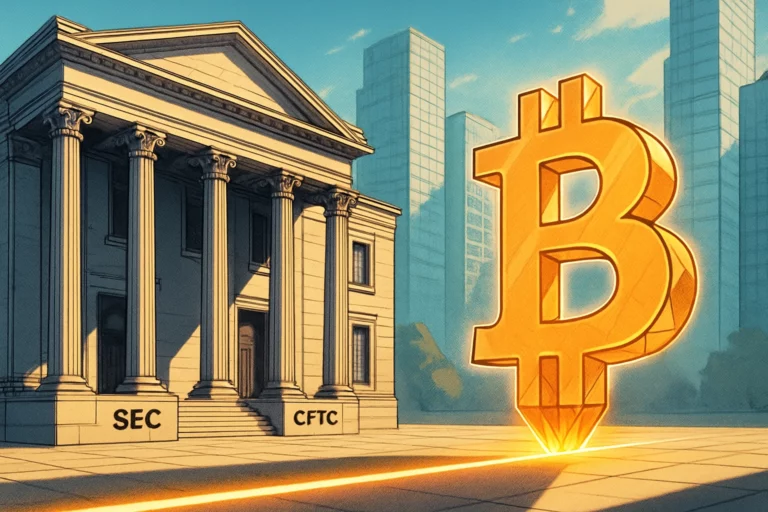
Featured image from DALL-E, chart from TradingView.com
İlgili Okumalar

Securities or Commodities? A Decade-Long Tug-of-War Ends as the 'Crypto Market Structure Act' Races to the Senate

The "Cryptocurrency Market Structure Act" (CLARITY Act) is advancing to the U.S. Senate for final review after passing the House with strong support. The bill aims to resolve the long-standing regulatory debate over whether cryptocurrencies are classified as securities or commodities. It introduces a clear framework: tokens on decentralized blockchains are defined as "digital commodities" under CFTC oversight, while those meeting the Howey test remain securities regulated by the SEC. Key provisions include a "mature blockchain" exemption for highly decentralized networks like Bitcoin and Ethereum, a 360-day temporary registration pathway for trading platforms, and a fundraising exemption of up to $75 million for certain token offerings with enhanced disclosure. The bill also establishes a joint advisory committee to improve coordination between the CFTC and SEC and explicitly exempts non-custodial DeFi actors from broker-dealer regulations. This legislative effort aligns with the Trump administration's pro-crypto stance, including the appointment of industry-friendly leaders at key agencies like the SEC and CFTC, and recent moves to allow regulated spot crypto trading on CFTC-approved exchanges. If enacted, the law would provide regulatory clarity, encourage institutional adoption, and position the U.S. as a leader in the digital asset space.

Odaily星球日报10 dk önce

Securities or Commodities? A Decade-Long Tug-of-War Ends as the 'Crypto Market Structure Act' Races to the Senate

Odaily星球日报10 dk önce

Analyst: Ripple (XRP) Price Could Rise from $2 to $10 in Less Than a Year

Cryptocurrency analyst Chad Steingraber predicts that XRP could surge from $2 to $10 in less than a year, driven by strong institutional demand through recently launched exchange-traded funds (ETFs). Key factors supporting this outlook include the rapid accumulation of XRP by ETFs. Data from SoSoValue shows that XRP-focused ETFs have absorbed over 506 million XRP (worth approximately $506 million) in under a month since their launch in November. This represents about 0.74% of XRP’s circulating supply—a significant level of adoption in a short time. Additionally, the Bitwise Crypto 10 Fund (BITW), which holds XRP as 5% of its portfolio, began trading with over $1.25 billion in assets. Steingraber draws parallels to Bitcoin’s post-ETF performance, suggesting that continued ETF inflows could propel XRP toward a 400% price increase by 2026. Technically, XRP’s chart patterns support a bullish outlook. On weekly charts, the token has broken out of a multi-month symmetrical triangle—a pattern often indicating a strong trend continuation. The measured move from this pattern suggests a potential rise to the $14–$15 range. A second pattern, a bull flag observed on higher timeframes, also points to a target near $14–$15, reinforcing the analyst’s prediction. The article includes standard disclaimers that it is not investment advice and all trading carries risk.

cointelegraph_中文20 dk önce

Analyst: Ripple (XRP) Price Could Rise from $2 to $10 in Less Than a Year

cointelegraph_中文20 dk önce

İşlemler

Spot
Futures
活动图片