Mining as Reasoning: How Does Nockchain Achieve Dual Rewards?

marsbit2026-08-17 tarihinde yayınlandı2026-08-17 tarihinde güncellendi

Özet

"Mining as Inference: How Does Nockchain's Dual Reward System Work? After looking at macroeconomic conditions, this piece delves into Nockchain's impending 'Logos' upgrade at block height 126,000. This Layer 1 blockchain, which launched fairly in May 2025, originally uses a Zero-Knowledge Proof-of-Work (ZKPoW) consensus where miners generate useful STARK proofs for the NockVM. The Logos upgrade introduces a second mining puzzle: integer matrix multiplication, the core computation for AI inference. The network will split block production, with 30% allocated to this AI puzzle and 70% to ZKPoW. This allows miners to potentially earn both block rewards and revenue from paid AI inference clients for the same computational work. The founders posit this creates a security budget that scales with AI demand. The upgrade, proposed and internally audited by National Compute (a company founded by Nockchain's creators to be its first major client), has been tested and delayed multiple times. While the technical implementation is a significant feat, the article notes the key challenge: National Compute must successfully onboard enough paying inference clients to generate real cash flow and validate the 'security + revenue' model. Currently, the $NOCK token trades around $0.009 with a ~$22 million market cap, awaiting the materialization of this promised market."

Authored by: Luke Leasure & Nick Carpinito

Compiled by: AididiaoJP, Foresight News

First, the Macro View: Mild CPI, Stocks Continue to Outperform Crypto

On Wednesday, CPI rose 0.1% month-on-month, meeting market expectations, showing a clear rebound from last month's -0.4%. Housing contributed about two-thirds of the increase, energy continued to fall by 1.5%, and gasoline dropped by 2.9%. This data is unlikely to alter the Fed's interest rate path.

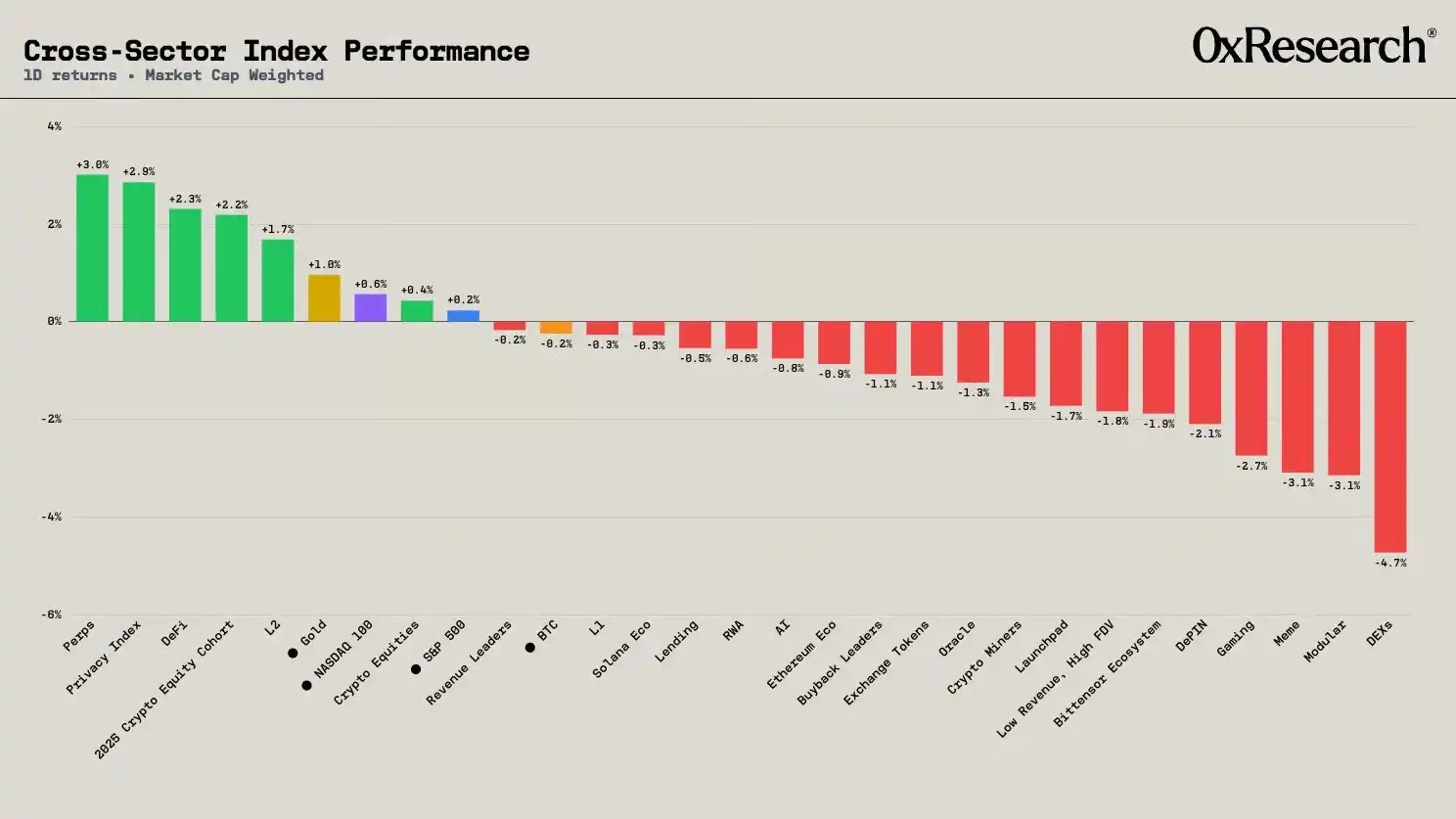
Equities outperformed cryptocurrencies that day: Nasdaq rose 0.56%, S&P 500 rose 0.23%, and crypto-related stocks gained 2.19%. BTC fell 0.25%, with most crypto indices performing even weaker—stocks beating tokens remains a persistent recent theme.
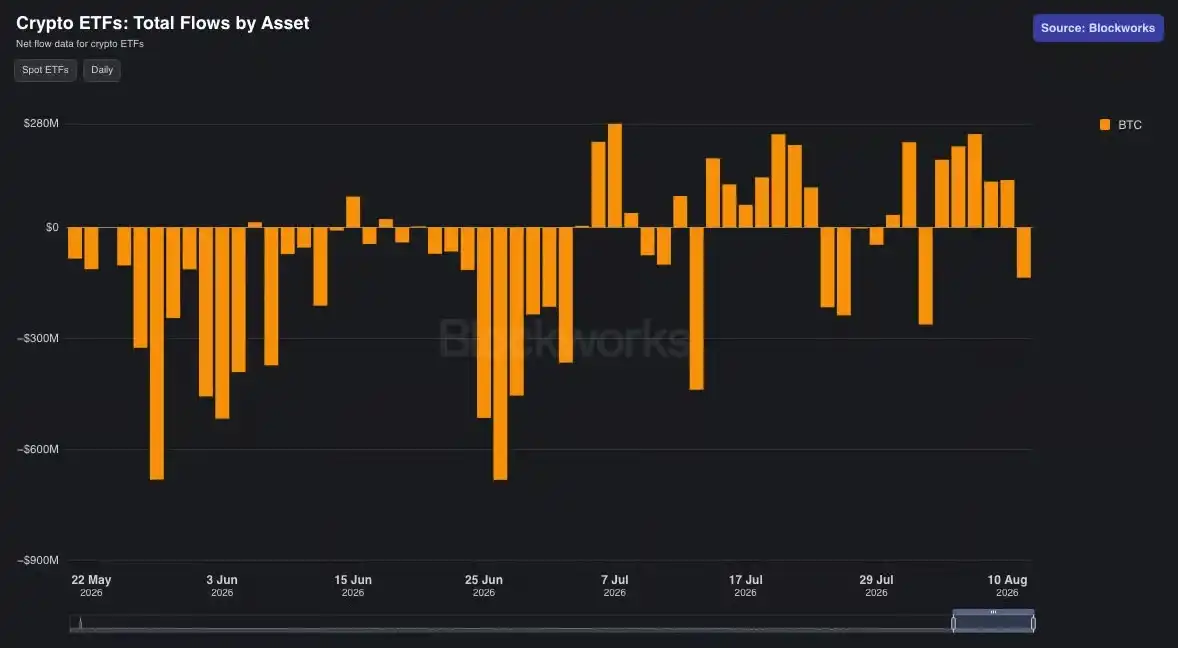
ETF flows saw a slight shift. Periods of moderate net inflows were interrupted by a single day of outflows, aligning with the weakening daily trend of BTC. However, net flows have turned positive since early July, contrasting with the significant outflows in May and June. If this trend continues, renewed ETF accumulation could provide support for BTC.
Computational Power: Paying Twice

Making proof-of-work do something useful isn't a new idea. Bitcoin miners burn computational power only for hashing, serving no other purpose; AI inference service providers sell GPU time to clients but don't mine.

Tomorrow, at block height 126000, Nockchain's Logos upgrade goes live, and the line between the two disappears.

Note: Nockchain is a Layer 1 public chain that launched fairly in May 2025 (no pre-mine, no VC allocation, no team allocation). Its core innovation is Zero-Knowledge Proof-of-Work (ZKPoW): miners no longer burn computational power on useless hashing like Bitcoin, but instead generate zero-knowledge proofs (STARK proofs based on NockVM). Mining itself produces "useful work," both securing the network and providing computational power for the verifiable computing market.

Dual-Puzzle Mining: 30% for AI, 70% for ZK

Logos adds a second mining puzzle to the original ZK proof-of-work—integer matrix multiplication, the core operation of AI inference, with its own independent difficulty target.

Upon activation, network block production is allocated 30% to the AI puzzle and 70% to ZK-PoW. Miners perform matrix multiplication, and achieving the target result wins them the block. If this computation happens to be for a paying inference client, the same computational power simultaneously becomes a lottery ticket for the block reward.
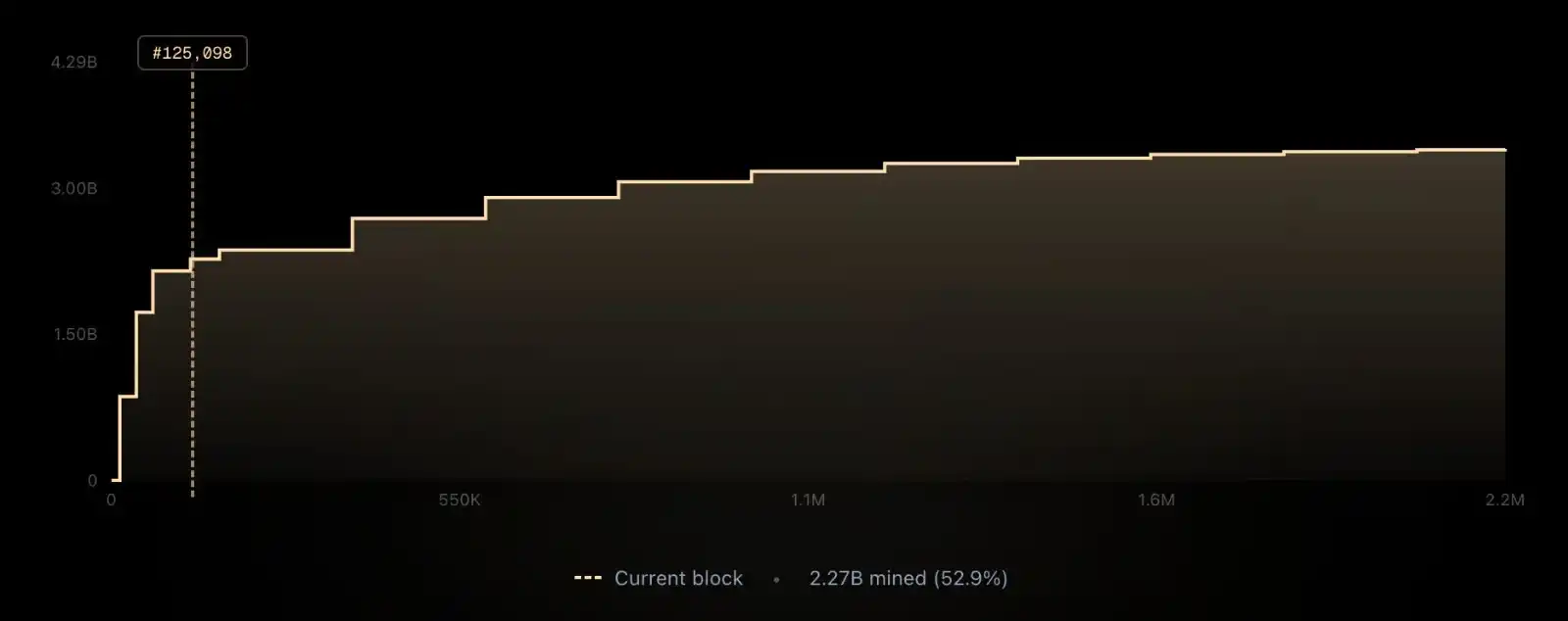
Nockchain's founders describe this mechanism as a security budget that grows with the expansion of the AI economy: as inference demand rises, more GPUs are directed towards this chain, increasing the cost of attack.

But this logic is built upon demand that hasn't yet materialized at scale. Nockchain needs genuine paying inference clients for the flywheel to start turning.

To this end, the founders established a separate company, National Compute, to specifically provide the first batch of clients. This company drafted the Logos proposal and completed the internal audit—in other words, the protocol's biggest upgrade and its first anchor client come from the same author.
Launch Timeline: Delayed Three Times

This launch coincides with Zorp (Nockchain's research company) shutting down weeks ago, transferring its trademarks and code repositories to the Nock Community Co. (a non-stock corporation managing 20% of the protocol fund).

Logos is the first upgrade under this new governance structure: it underwent a public testnet, third-party cryptography audits, a bug bounty of up to 1 million $NOCK, and a pre-announced activation block height. The dual-puzzle code ran on the public testnet for 20 days and was only merged into the mainnet this week.

Two things warrant caution:

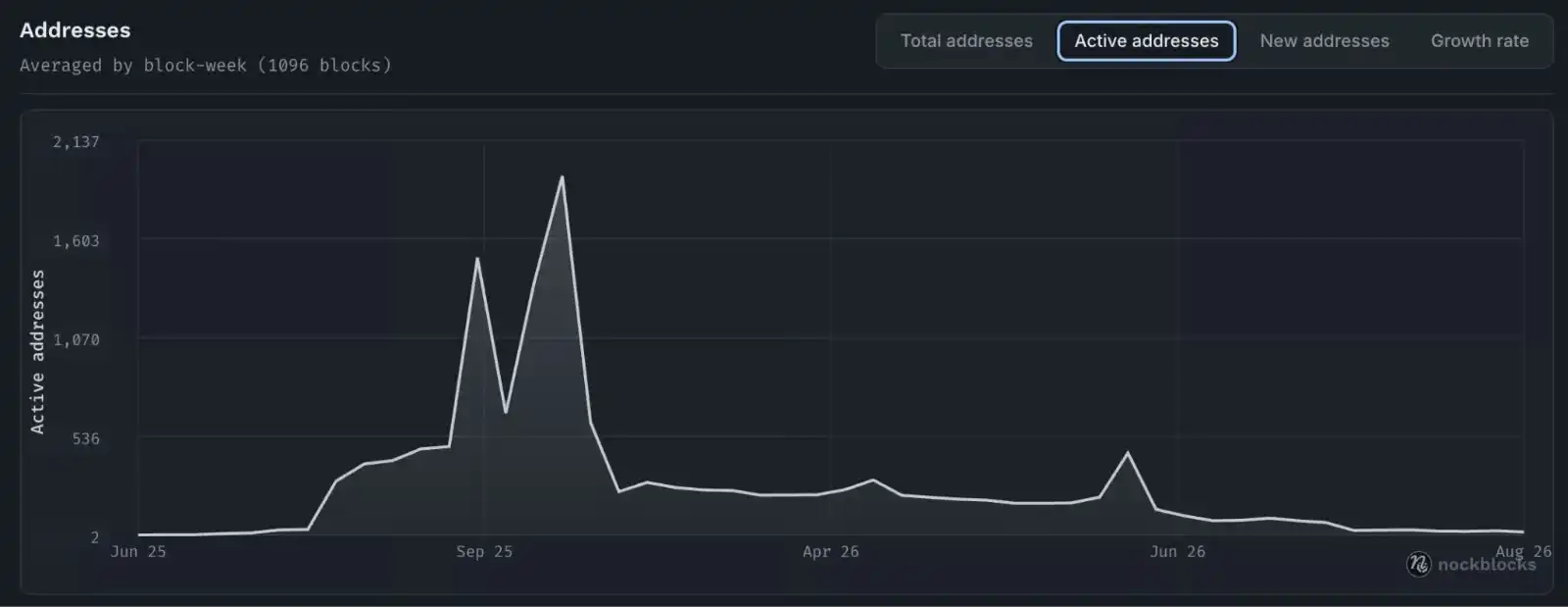
First, the activation height has been adjusted multiple times: set at 114300 in late July, changed to 122000 after the testnet, and finally set for Friday at 126000. Any launch repeatedly postponed carries the same uncertainty.

Second, the security argument is built on a puzzle with no historical track record. In early August, Nockchain patched a reusable trace mining vulnerability at height 119400 via the Zoe upgrade—a reminder that this proof mechanism is still in its early stages. Although that fix didn't alter the ZK scheme, only involving block reward capture, the AI puzzle itself also raises questions about its soundness, which is precisely why audits and bug bounties exist.
Market Pricing: $22M Market Cap, Waiting for a Market

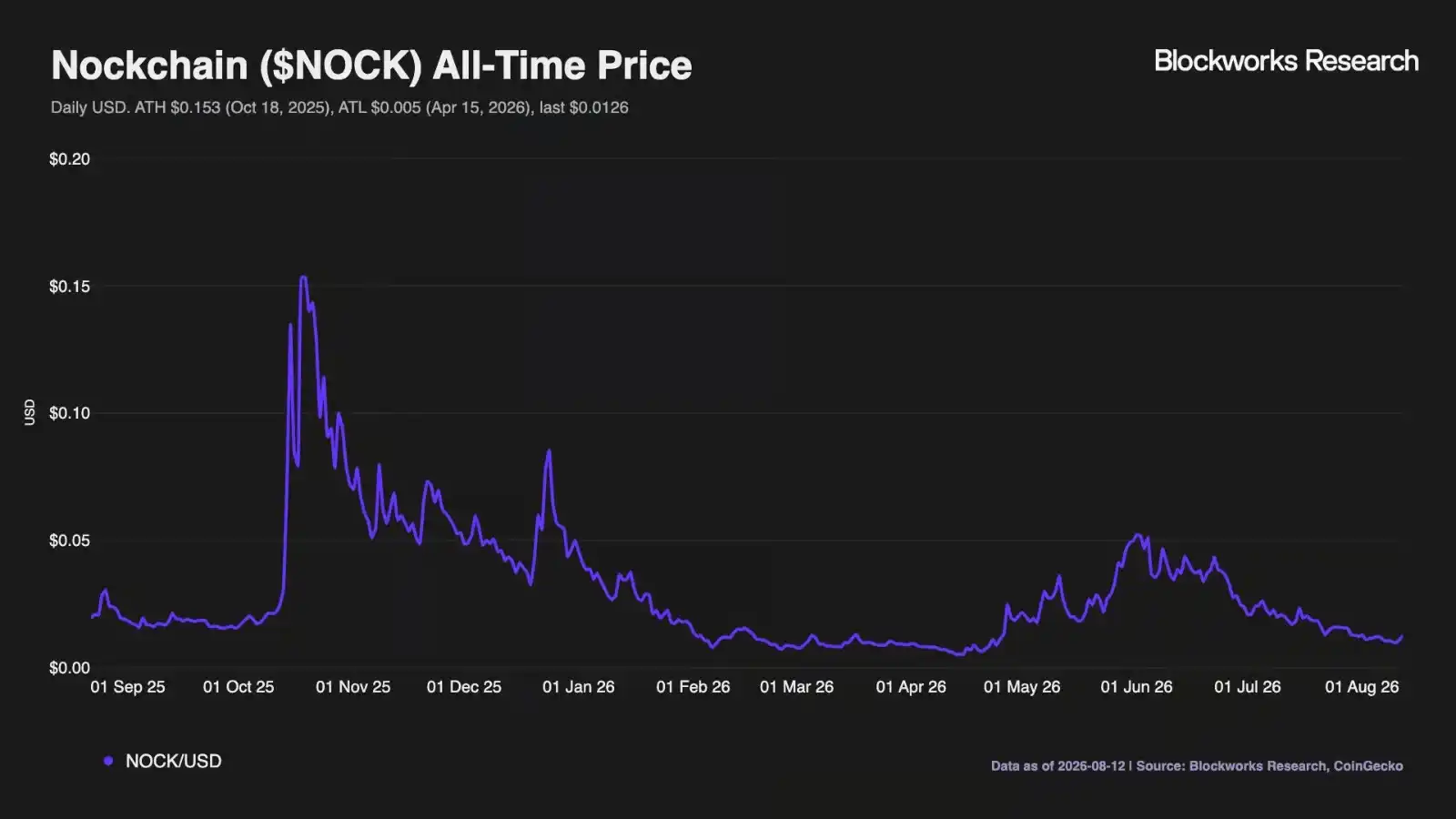
$NOCK is currently trading around $0.009, with a market cap of approximately $22 million and a fully diluted valuation of about $41 million, far from the attention it received during its fair launch last spring.

For holders, the mechanism details on Friday are less important than one question: Can National Compute channel enough paying inference traffic to the miner cluster to turn the "security + revenue" narrative into actual cash flow?

Nockchain has already accomplished the harder engineering. The market it truly needs, however, hasn't been built yet.

İlgili Sorular

QWhat is the core innovation of Nockchain's 'Logos' upgrade, and how does it differ from traditional proof-of-work mechanisms like Bitcoin's?

AThe core innovation is 'zero-knowledge proof-of-work' (ZKPoW), where miners generate zero-knowledge proofs (specifically STARK proofs) instead of performing useless hash computations. The 'Logos' upgrade adds a second mining puzzle: integer matrix multiplication, which is a core computation for AI inference. This allows miners to simultaneously earn block rewards and serve paid AI inference clients with the same computational work.

QAccording to the article, how is the block production split between the two mining puzzles after the Logos upgrade activates?

AAfter activation, network block production is allocated as 30% to the AI inference puzzle (integer matrix multiplication) and 70% to the original ZK-PoW puzzle.

QWhat is the role of the company 'National Compute' in relation to the Nockchain and its Logos upgrade?

ANational Compute is a company founded by the Nockchain founders to act as the first major, anchor client for the network's AI inference service. It is responsible for drafting the Logos upgrade proposal and providing the initial stream of paid inference demand to help bootstrap the network's economic flywheel.

QWhat are two potential risks or concerns highlighted in the article regarding the Logos upgrade's launch?

A1. The activation block height has been postponed multiple times (from 114300 to 122000, and finally to 126000), introducing uncertainty. 2. The security argument relies on a new, untested AI puzzle with no historical track record, and the underlying proof mechanisms are still in early stages, as evidenced by a prior vulnerability fix (Zoe upgrade) related to mining.

QWhat is the current market status of $NOCK token, and what does the article identify as the key challenge for its future success?

AThe $NOCK token trades around $0.009 with a market cap of approximately $22 million. The key challenge for its future success is not the technical mechanism, but the need to build a real, sustainable market with sufficient paid AI inference demand flowing through the network to turn the 'security + revenue' narrative into actual cash flow for miners.

İlgili Okumalar

AI Isn't Smarter Than Humans, It Can Just Afford to Fail; Fields Medalist Highlights 10 OpenAI Breakthroughs

"AI isn't smarter than humans, it just loses more." This is the core idea from Fields Medalist Timothy Gowers, analyzing OpenAI's ten new mathematical breakthroughs. These results, including disproving the 80-year-old Erdős unit distance conjecture and finding the first non-sofic group, caused a "Deep Blue moment" among mathematicians, prompting some to question their future role. Gowers argues the distinction between finding counterexamples and proving theorems is artificial. The real difference lies in the search strategy. AI excels in problems with well-defined, data-rich search paths where it can afford countless failed attempts—it "can lose." Its strengths are breadth of knowledge, speed, and resilience in brute-force exploration. However, AI currently struggles with problems requiring deep "pruning" of a vast decision tree—the intuitive judgment of which paths are fruitless. This is because training data consists of polished final proofs, lacking the crucial "natural friction" of human reasoning that highlights difficult steps. As Terence Tao noted, AI often misallocates emphasis, smoothing over this informative friction. True AI breakthrough, per Gowers, will arrive not when it solves isolated hard problems, but when it produces a method so novel and generative that it immediately redirects the research of an entire human mathematical community—like the cap-set problem solution did in 2016. For now, AI's advantage is stamina, not genius.

marsbit1 dk önce

AI Isn't Smarter Than Humans, It Can Just Afford to Fail; Fields Medalist Highlights 10 OpenAI Breakthroughs

marsbit1 dk önce

Looking Back at Information Hiding in the GenAI Era from Claude's Invisible Watermark: How Can Embedded Watermarks Ensure Losslessness?

On August 11, 2026, Anthropic announced that its new Claude models will embed invisible, machine-readable watermarks into generated text, allowing AI-generated content to be traced even after copying and redistribution, without affecting semantic quality or readability. This move follows global initiatives to watermark AI outputs, highlighted by the World Economic Forum and futurist Kevin Kelly. A core challenge is ensuring watermarking does not degrade model performance, leading to the key research goal of "provably lossless" generation. The theoretical foundation lies in provably secure steganography, which requires that watermarked data be indistinguishable from normal data in distribution. Early theoretical work was limited by the inability to precisely sample natural data distributions. The rise of generative AI models around 2018 provided a breakthrough, as these models learn and sample from explicit distributions. Pioneering work by a University of Science and Technology of China (USTC) team proposed frameworks for provably secure steganography using generative models, mapping encrypted messages to drive content generation. Subsequent research expanded the practicality of these techniques. Advancements include public-key steganography for asymmetric extraction, "box-less" extraction where the receiver doesn't need the original model, and "grey-box" scenarios for resource-constrained devices. A key innovation, SyncPool, resolved tokenization ambiguities in LLMs to ensure reliable message recovery. The principles of provably secure steganography directly enable "provably lossless" watermarks. If a watermark can be embedded without altering the model's sampling distribution, generation quality remains mathematically guaranteed. USTC's system, applied in platforms like Spark AI, offers plug-and-play watermarking for robust detection and model attribution. Internationally, research on "unbiased" or "distortion-free" watermarks for LLMs has accelerated, with work from Stanford, University of Maryland, and others. In the image domain, techniques like Gaussian Shading (CVPR 2024) embed watermarks by randomizing them into the latent space of diffusion models, proving no performance loss. Follow-up works enhanced robustness and addressed issues like parameter variation. The concept of "losslessness" has also been extended to model watermarking itself, using cryptographic constructs to ensure the watermark doesn't interfere with normal model use. The field has thus evolved from "empirical security" to "provable security," offering a theoretical guarantee against quality degradation from watermarking. The watermarking ecosystem involves an ongoing arms race between embedding and removal attempts, where the constraint of preserving content quality is a shared pursuit for both defenders and attackers, making the cost of removal a central part of the security博弈.

marsbit1 dk önce

Looking Back at Information Hiding in the GenAI Era from Claude's Invisible Watermark: How Can Embedded Watermarks Ensure Losslessness?

marsbit1 dk önce

Bitcoin Trading Sideways Around $63,500 Points to Upside and Downside Movement

Bitcoin has been consolidating around $63,500 for several days, unable to break above the $64,000 resistance while holding above the $60,000 support. According to Yusuf Fahro from ARP Digital, capital flows have shifted. U.S. spot ETFs saw their strongest inflows since May, attracting over 14,000 BTC in early May, with a net inflow of approximately 11,000 BTC in Q3. This contrasts with the institutional selling that dominated Q2. Market conditions show spot volumes at two-year lows, perpetual volumes at three-year lows, and volatility near multi-year lows. Fahro interprets Bitcoin's six-month stagnation between $60,000 and $80,000 as summer apathy. However, blockchain data is beginning to show signs of a potential bottom forming as sentiment shifts from panic to caution. Significant risk remains in both directions. Bitcoin is trapped in a tight range below $64,000 and above $62,000, with high leverage exacerbating the situation. Open interest for perpetual positions has stayed above 300,000 BTC, above average levels, while trading volumes have plummeted, making the market vulnerable to sharp liquidation-driven moves. The current HCN AI Analyst forecast for BTC at $63,338 is neutral. The base scenario (47% probability) targets $62,249 (-1.70%). The bearish scenario (32%) targets $60,982 (-3.70%), while the bullish scenario (21%) targets $64,098 (+1.20%). The weighted expectation aligns with the base scenario at approximately -1.7%, with downside risk being three times larger in amplitude and 1.5 times more likely than upside potential. Weak technical analysis and momentum readings are being offset only by liquidity inflows. The key practical levels for the week are a break above $64,098 to flip momentum or a break below $62,249 opening the path to $60,982.

cryptonews.ru5 dk önce

Bitcoin Trading Sideways Around $63,500 Points to Upside and Downside Movement

cryptonews.ru5 dk önce

İşlemler

Spot
活动图片