Looking Back at Information Hiding in the GenAI Era from Claude's Invisible Watermark: How Can Embedded Watermarks Ensure Losslessness?

marsbit2026-08-17 tarihinde yayınlandı2026-08-17 tarihinde güncellendi

Özet

On August 11, 2026, Anthropic announced that its new Claude models will embed invisible, machine-readable watermarks into generated text, allowing AI-generated content to be traced even after copying and redistribution, without affecting semantic quality or readability. This move follows global initiatives to watermark AI outputs, highlighted by the World Economic Forum and futurist Kevin Kelly. A core challenge is ensuring watermarking does not degrade model performance, leading to the key research goal of "provably lossless" generation. The theoretical foundation lies in provably secure steganography, which requires that watermarked data be indistinguishable from normal data in distribution. Early theoretical work was limited by the inability to precisely sample natural data distributions. The rise of generative AI models around 2018 provided a breakthrough, as these models learn and sample from explicit distributions. Pioneering work by a University of Science and Technology of China (USTC) team proposed frameworks for provably secure steganography using generative models, mapping encrypted messages to drive content generation. Subsequent research expanded the practicality of these techniques. Advancements include public-key steganography for asymmetric extraction, "box-less" extraction where the receiver doesn't need the original model, and "grey-box" scenarios for resource-constrained devices. A key innovation, SyncPool, resolved tokenization ambiguities in LLMs to ens...

On August 11, 2026, Anthropic announced that starting from August 2nd, the newly released version of the Claude model will directly embed invisible, machine-readable watermarks into generated text. This will enable AI-generated content to be identified and traced by software even after being copied and disseminated.

The official documentation states: "When a supported Claude model generates text, it embeds a subtle watermark directly into the text. You will not see it, and it does not change the semantics, quality, or readability of Claude's responses."

This mechanism covers Claude's web interface, API, Claude Code, and all product lines. It takes effect for global users and cannot be disabled. Generated images and other files will also include digital signature and traceability metadata compliant with the C2PA standard.

This is a landmark move by Anthropic following its signing of the EU's Artificial Intelligence Act, Article 50, Transparency Code of Conduct.

"Watermarking" AI-generated content is evolving from corporate initiatives to a global consensus. In June 2025, the World Economic Forum released the "Top 10 Emerging Technologies of 2025" at the Summer Davos in Tianjin, listing "Generative Watermarking" in second place. Futurist Kevin Kelly predicted in "2049: The Possible Next 10,000 Days" that the AI era necessitates "redefining reality" and "adding watermarks or similar markers to distinguish authenticity on AI-generated images and videos."
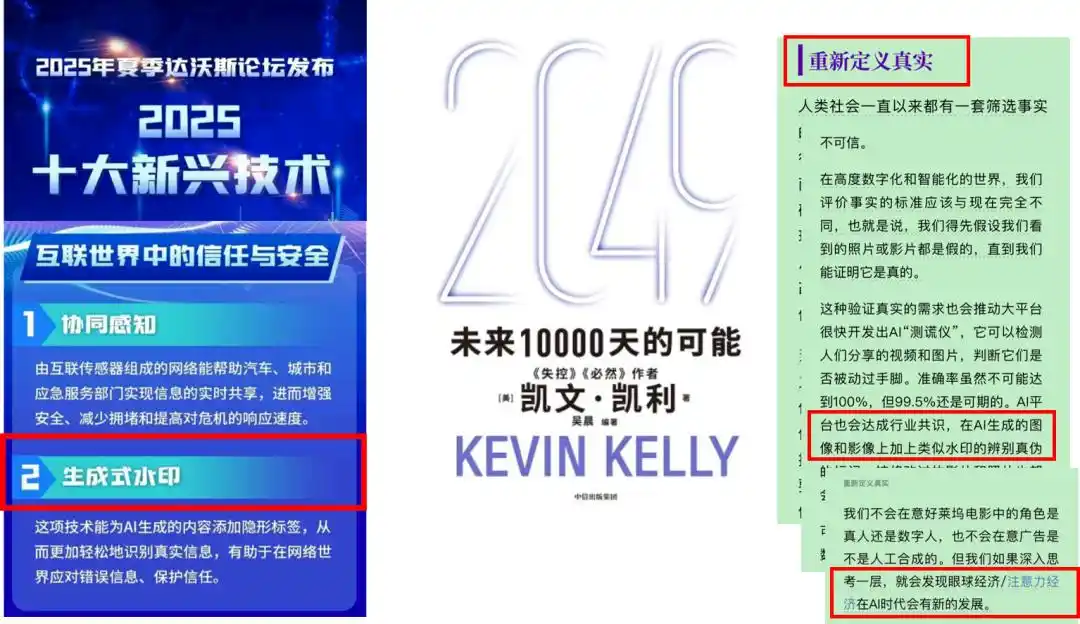
Figure 1: Summer Davos Forum and Kevin Kelly's Prediction

However, getting watermarks "right" is not easy.

On the day of Anthropic's announcement, users' most concentrated concern was precisely: will watermarking harm the model? Will it reduce generation quality?

"Provable performance losslessness" thus became the core proposition of information hiding research in the GenAI era. To understand this proposition, we must return to its theoretical origin—provably secure steganography.

Provably Secure Steganography: Twenty Years Waiting for Generative Models

Steganography and watermarking both belong to information hiding. Traditional steganography has long remained at the level of "empirical security": using steganalysis algorithms to test security strength, but unable to provide mathematical guarantees. Provably secure steganography requires strict proof: the distribution of data carrying secrets is indistinguishable from that of normal data.

This theoretical line has a long history.

In 1949, Shannon pointed out the difficulty of establishing a theory for covert communication; in 1998, Cachin introduced relative entropy, providing an information-theoretic security definition; in 2002, Turing Award winner Manuel Blum guided Hopper et al. in establishing the computational security steganography framework, further developing public-key steganography and covert key agreement in 2004.

However, all constructions of provably secure steganography rely on a stringent premise—the carrier distribution must be precisely sampleable. Natural data distributions are uncontrollable, causing the theory to lie dormant for years.
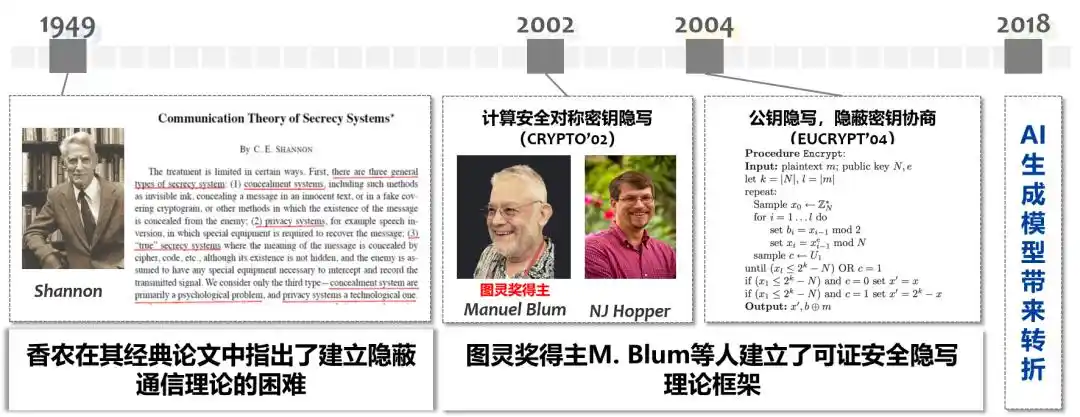
Figure 2: A Brief History of Provably Secure Steganography Development

In 2018, AI generative models brought a turning point: models first learn a distribution, then sample according to it, naturally providing an "explicit distribution or perfect sampler."

A team from the University of Science and Technology of China (USTC) pioneered the idea of generative provably secure steganography internationally. They proposed two frameworks: "black-box sampling" and "compression-reversible sampling" (IWDW 2018, arXiv 2018), reducing steganographic security to cryptographic algorithm security—encrypting a message into pseudo-random ciphertext, using the ciphertext to drive sampling for content generation, and allowing the receiver to recover the ciphertext via inverse sampling.

At that time, generative AI had not yet exploded, and this idea seemed "ahead of its time," initially finding it difficult to gain peer recognition. As the quality of generative models like text and audio improved rapidly, related achievements gradually gained acknowledgment. The International Workshop on Digital Forensics and Watermarking (IWDW) invited the USTC team to deliver a keynote report titled "When Provably Secure Steganography Meets Generative Models."
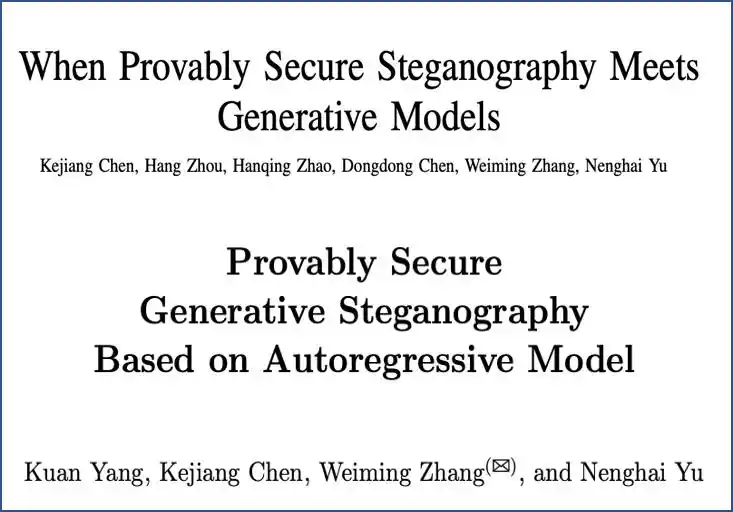
Figure 3: The Earliest Papers on Generative Provably Secure Steganography

Around 2021, AI-generated data gradually became a major form of online content. Provably secure steganography gained widespread attention globally: Tsinghua University proposed provably secure linguistic steganography based on sample grouping (Findings of ACL 2021); Boston University and Johns Hopkins University proposed the cryptographically secure steganography scheme Meteor for real distributions (ACM CCS 2021); Oxford University proposed perfectly secure steganography based on minimal entropy coupling (ICLR 2023).

The USTC team proposed the DisCop construction based on "distribution replicas" (IEEE S&P 2023), significantly improving embedding payload rate. In the same year, Quanta Magazine listed "perfectly hiding secret information in generated data" as one of the seven international breakthroughs in computer science for the year, heralding the entry of information hiding into the "provable" era.

From Symmetric to Asymmetric, from "Boxed" to "Box-less"

Early generative provably secure steganography schemes were all "symmetric key" systems, requiring the sender and receiver to pre-share a key and relying on white-box extraction, limiting their application scenarios.

Additionally, subword ambiguity could lead to extraction failure. The USTC team pushed the technical route towards public-key steganography, box-less/grey-box scenarios, and eliminated subword ambiguity, making generative hiding practical.

Public-key steganography (IEEE TIFS 2024): Proposed a provably secure public-key steganography scheme combining Elliptic Curve Cryptography (ECC) with generative models and introduced a steganographic key exchange protocol. Solved the problems of steganographic key agreement and "asymmetric" hidden information extraction.

Box-less steganography (IEEE TMM 2026): Traditional methods rely on "white-box" extraction, requiring the receiver to possess the exact same language model as the sender. The team proposed Disreo, achieving "box-less extraction" through token position randomization and output probability reorganization, enabling the receiver to recover the message without accessing the underlying model, providing greater convenience for practical deployment.

Grey-box steganography (ACM CCS 2026): Between white-box and box-less lies the "grey-box" scenario—unequal resources between sender and receiver; the receiver may only have the capability to run a small model (e.g., on mobile devices). SpecStega is based on speculative sampling: using a small model shared by both parties to embed and extract messages, then refining the output with the target large model. This ensures the final stego-text aligns with the large model's output distribution, maintaining high quality and security, while allowing efficient decoding at the receiver end using only the small model. The payload rate is improved over 20 times compared to existing black-box schemes—offering a third path between "boxed" and "box-less" for provably secure steganography.

Resolving subword ambiguity (IEEE TDSC): Steganography based on large language models commonly faces token decoding ambiguity—the same text segment can be tokenized into different subword sequences, causing extraction failure. The team proposed SyncPool, which groups tokens with prefix relationships before embedding, eliminating ambiguity in principle and achieving reliable extraction for provably secure steganography.

From Steganography to Watermarking: Bringing "Provable Losslessness" to Industry

First, AIGC large models learn the distribution of natural data, then sample according to that distribution to generate text, images, audio, video, etc. If one can: embed a watermark in the generated content without affecting the sampling distribution, it means the watermark embedding does not impact generation quality.

Provably secure steganography theoretically guarantees that the distribution of data carrying secrets is indistinguishable from that of normally generated data—meaning embedding information does not alter the model's sampling distribution. This is precisely the definition of "provably generation-quality-lossless watermarking." Watermarking does not require the large capacity of steganography, thus capacity can be traded for robustness.

In the text domain, the provably generation-quality-lossless watermarking system developed by the USTC team is plug-and-play, requiring no modification of model parameters. It supports single-bit robust discrimination and multi-bit model attribution, and has been applied to platforms like the Spark large model and Secure GPT, serving 13,000 developers.

Meanwhile, international research on provably lossless generative text watermarks is also advancing rapidly:

In 2024, teams from the University of Maryland and others' "Unbiased Watermark for Large Language Models" (ICLR 2024 Spotlight) defined unbiased watermarks and provided a general construction.

The same year, Stanford University proposed robust unbiased watermarks resistant to distortion (TMLR 2024).

In 2025, Multi-Channel Unbiased Watermark MCmark (ACL 2025) improved watermark extraction robustness while maintaining strict unbiasedness.

In the image domain, the USTC team proposed Gaussian Shading (CVPR 2024), mapping an encrypted, randomized watermark to Gaussian latent variables indistinguishable from normal generation, then acting on the entire latent space via the diffusion process—training-free, plug-and-play, and provably performance-lossless.

Gaussian Shading++ and T2SMark (NeurIPS 2025) further addressed robustness, generation parameter variation, and generation diversity issues in real-world deployment.

TAG-WM (ICCV 2025) introduced a dual mechanism of "template watermark + information watermark," achieving both tamper localization and ownership verification under the lossless premise.

SemBind (ICML 2026) binds the watermark to image semantics through a semantic masker, resisting black-box forgery attacks.
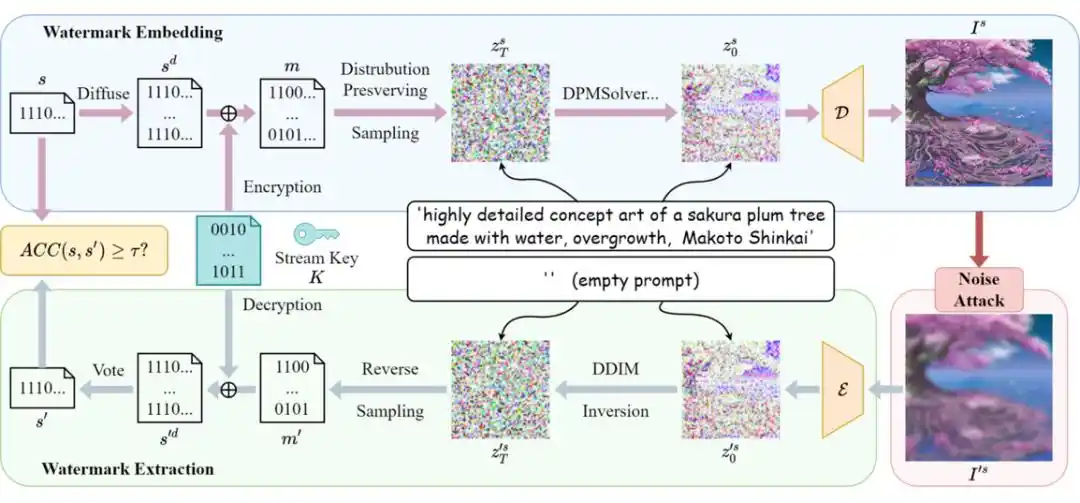
Figure 4: Provably Lossless Generative Image Watermark Gaussian Shading (CVPR 2024)

From content watermarking to model watermarking. Models themselves are important digital assets, also requiring reliable provenance. Model watermarking always faces one question: will it affect the model's normal use?

Drawing inspiration from the "provably undetectable backdoor" construction proposed by Turing Award winner Shafi Goldwasser et al. at FOCS 2022, the USTC team proposed a provably performance-lossless black-box model watermarking protocol (IEEE TDSC 2026): using unforgeable message authentication codes to construct branch indicators, making the probability of normal users triggering the watermark branch computationally negligible, thereby reducing performance losslessness to cryptographic security.

Thus, "provable losslessness" extends from generated content to the models themselves.

From "Empirical Security" to "Provable Security"

Anthropic's invisible watermark sparked controversy on its launch day: writers worried about attribution, developers worried "will the watermark reduce generation quality?" Industry pioneers chose "engineering fast runs," while the goals of "accurate marking, no harm, withstand rewriting and erasure, and provide definitive evidence" call for solid theoretical support.

From Shannon's conceptual challenge to Blum et al.'s theoretical frameworks, from the first generative provably secure steganography algorithm in 2018 to the Spark model watermark and Claude's watermark, information hiding has taken seventy-seven years to finally upgrade from "empirical security" to "provable security," turning "worrying that embedding watermarks harms the model" into "mathematically proven losslessness"—whether for generated content or the model itself—providing theoretically guaranteed technical support for AI content governance.

Watermarking: Attack and Defense

Designing watermarks is hard; erasing them is easy. Or perhaps not entirely. Designing watermarks requires pursuing both quality losslessness and robustness simultaneously, while attackers also need to erase watermarks under quality constraints.

Without constraints, watermarks are easily erased. Rewriting sentence by sentence to erase watermarks—does it still count as content generated by the original model? Perhaps it would be easier to just use another open-source model for generation.

Like other security fields, attackers and defenders engage in a game under their respective constraints. The existence of both attack and defense keeps a technology direction vibrant.

And "losslessness" is the constraint and pursuit for both sides.

Defenders do not want to sacrifice generation quality by embedding watermarks; attackers also do not want to degrade quality by erasing watermarks.

Absolute security never exists. The significance of defense is to create the greatest possible cost for attack. The essence of attack and defense is a game of cost, and the same holds for watermarking.

This article is from the WeChat public account "New Zhiyuan," author: New Zhiyuan.

Trend Kriptolar

İlgili Sorular

QWhat is the core concept behind 'provably secure steganography' as discussed in the article?

AThe core concept of 'provably secure steganography' is to mathematically prove that the distribution of stego-data (data containing hidden information) is indistinguishable from the distribution of normal, cover data. This ensures that embedding information does not alter the statistical properties of the generated content, providing a theoretical guarantee of security and 'losslessness' in terms of generation quality.

QWhat key advantage do generative AI models provide for provably secure steganography, according to the article?

AGenerative AI models provide a key prerequisite that was historically difficult to achieve: an explicit or perfect sampler of a data distribution. Since these models learn a distribution and then sample from it to generate content, they naturally offer the 'perfect sampler' required for the theoretical constructions of provably secure steganography, enabling the shift from 'empirical security' to 'provable security'.

QName three practical challenges in steganography/watermarking that the research from USTC addressed, as mentioned in the article.

A1. Public Key Steganography: They proposed schemes combining Elliptic Curve Cryptography with generative models to solve asymmetric key management and extraction. 2. Boxless Extraction (Disreo): Enabling message recovery without the receiver needing access to the original generative model. 3. Subword Token Ambiguity (SyncPool): Solving extraction failures caused by the same text being tokenized into different subword sequences by grouping related tokens.

QHow does the concept of 'provable performance losslessness' apply to both generated content and AI models themselves?

AFor generated content (text, images), 'provable performance losslessness' means embedding a watermark does not change the model's sampling distribution, guaranteeing no degradation in generation quality. For AI models, it refers to model watermarking protocols where the probability of a normal user triggering the 'watermark branch' of the model is computationally negligible. This is achieved by using cryptographic constructs like unforgeable message authentication codes, thereby extending the guarantee of 'no performance impact' from the content to the model asset itself.

QAccording to the article, what is the fundamental nature of the battle between watermarking defense and attack?

AThe fundamental nature is a cost博弈 (game of cost/博弈). There is no absolute security. The goal of defense (watermarking) is to impose the highest possible cost on the attacker (e.g., significant quality degradation or computational effort required for removal). Conversely, attackers operate under the constraint of maintaining content quality while removing the watermark. 'Losslessness' is a shared constraint and pursuit for both sides in this ongoing博弈.

İlgili Okumalar

Tiger Research: How Far Can the On-Chain Foreign Exchange Settlement Layer Go?

"Tiger Research: How Far Can On-Chain FX Settlement Layers Go?" The article examines KiiChain, a startup aiming to create an on-chain foreign exchange settlement layer, focusing on its potential to address inefficiencies in cross-border payments, especially for emerging markets. The core problem is the slow, costly, and fragmented traditional FX infrastructure, where bank hours, regulations, and thin liquidity for local currencies create delays. KiiChain, founded by OTC veterans, proposes aggregating USD and local currency stablecoin liquidity on one chain to enable 24/7 settlement. The platform consists of four components: 1) The KiiChain App uses an Atomic Quote Network (RFQ-style price discovery with on-chain settlement) to tackle settlement delays, but not underlying liquidity scarcity. 2) The RWA Protocol tokenizes collateral using compliant standards (like ERC-3643), shifting trust from bank relationships to coded rules, though regulatory anchors remain. 3) Kii Oracle uses a decentralized validator network to create consensus pricing from fragmented data, improving transparency but not market depth. 4) KiiChain Pay bundles fiat on/off-ramps and swap services; only the DEX swap bypasses banking bottlenecks, while others still rely on licensed operators. The analysis concludes KiiChain doesn't eliminate intermediaries but creates a unified settlement layer where they can interact without geographic or time constraints. It streamlines the process—three of eight traditional steps are removed—by moving infrastructure on-chain, improving speed and accessibility for digital asset swaps. However, fiat entry/exit points remain subject to off-chain service limitations. Current metrics show over $500M in transaction volume. The future depends on ecosystem growth—attracting liquidity partners and users—to evolve beyond settlement into a broader financial hub. Ultimately, the on-chain structure currently solves settlement friction and time, not liquidity depth. Success will be determined by execution in building partnerships and market presence, not by architectural design alone.

marsbit10 dk önce

Tiger Research: How Far Can the On-Chain Foreign Exchange Settlement Layer Go?

marsbit10 dk önce

'The Idea of Catching the Absolute Bottom Is Wrong': Experts on a New Phase of Bitcoin Capitulation

Analysts from CryptoQuant advise investors against trying to pinpoint the exact bottom of Bitcoin's price. Their data shows the percentage of the Bitcoin supply in profit has fallen to 51.4%, a level historically associated with capitulation phases followed by accumulation. This means approximately 48.6% of circulating coins are held at an unrealized loss. The metric, based on UTXO analysis comparing a coin's last moved price to its current market value, last neared this level in early 2023 when Bitcoin traded between $16,000 and $20,000. CryptoQuant states that the idea of catching the "absolute bottom" is flawed. The decline in the average cost basis during a bear market reflects coins transferring from weak hands to stronger, long-term holders. While some investors realize losses, others may use the decline for gradual accumulation. The accumulation window may last longer than many expect, even as fear drives some participants away. Historically, a supply in profit below 55% has been linked to re-accumulation periods. Separately, Swan Bitcoin CEO Cory Klippsten offered a forecast, suggesting Bitcoin could form a bottom in October 2026, followed by a recovery towards approximately $130,000 ahead of the 2028 halving. This aligns with the historical pattern of local lows forming about 12 months after bull market peaks; Bitcoin hit its all-time high above $126,000 in early October 2025. However, Klippsten cautioned against over-relying on past cycles due to limited historical data.

cryptonews.ru53 dk önce

'The Idea of Catching the Absolute Bottom Is Wrong': Experts on a New Phase of Bitcoin Capitulation

cryptonews.ru53 dk önce

How Does FalconX Bring Institutional Lending On-Chain? Deep Dive into the FALX Operational Mechanism

FALX is a structured credit facility that brings institutional prime brokerage loans on-chain as fixed-income assets. It works by having FalconX originate overcollateralized loans to institutional clients (e.g., quant funds, market makers). These loan exposures enter a bankruptcy-remote SPV. The Pareto protocol provides the on-chain credit vault infrastructure, while M11 Credit acts as the credit curator, administrative agent, and collateral agent. Platforms like Plume, Ethereum, and Solana serve as distribution channels for investors. Investors deposit USDC into the vault, receiving an estimated ~7.4% net yield (after a 10% performance fee). This yield represents a premium over low-risk on-chain alternatives (like tokenized Treasuries at ~4%) to compensate for risks including FalconX operational risk, collateral liquidation risk, SPV legal risk, M11's execution risk, a 31-day redemption notice period, and potential contagion from DeFi re-collateralization. The structure incorporates multiple risk mitigations: overcollateralized underlying loans, a first-loss capital contribution from FalconX, and independent oversight by M11. However, challenges remain, such as scaling investor demand (current AUM is ~$148M against a ~$1B potential capacity), managing redemption liquidity, and addressing new risks from the vault token's use as collateral in DeFi lending protocols like Morpho. FALX demonstrates a pragmatic path for on-chain credit by leveraging existing institutional loan origination and combining it with legal structures, external curation, and blockchain-based distribution.

marsbit54 dk önce

How Does FalconX Bring Institutional Lending On-Chain? Deep Dive into the FALX Operational Mechanism

marsbit54 dk önce

İşlemler

Spot

Popüler Makaleler

$S$ Nedir

SPERO'yu Anlamak: Kapsamlı Bir Genel Bakış SPERO'ya Giriş İnovasyonun manzarası gelişmeye devam ederken, web3 teknolojilerinin ve kripto para projelerinin ortaya çıkışı dijital geleceği şekillendirmede önemli bir rol oynamaktadır. Bu dinamik alanda dikkat çeken projelerden biri SPERO, $$s$$ olarak adlandırılmaktadır. Bu makale, SPERO hakkında ayrıntılı bilgi toplamak ve sunmak amacıyla, meraklılar ve yatırımcıların web3 ve kripto alanlarındaki temellerini, hedeflerini ve yeniliklerini anlamalarına yardımcı olmayı amaçlamaktadır. SPERO,$$s$$ Nedir? SPERO,$$s$$, kripto alanında merkeziyetsizlik ve blok zinciri teknolojisi ilkelerini kullanarak etkileşimi, faydayı ve finansal kapsayıcılığı teşvik eden bir ekosistem yaratmayı amaçlayan benzersiz bir projedir. Proje, kullanıcıların yenilikçi finansal çözümler ve hizmetler sunarak eşler arası etkileşimleri yeni yollarla kolaylaştırmayı hedeflemektedir. SPERO,$$s$$'nin temel amacı, bireyleri güçlendirmek ve kripto para alanındaki kullanıcı deneyimini artıran araçlar ve platformlar sağlamaktır. Bu, daha esnek işlem yöntemlerini mümkün kılmayı, topluluk odaklı girişimleri teşvik etmeyi ve merkeziyetsiz uygulamalar (dApp'ler) aracılığıyla finansal fırsatlar yaratmayı içermektedir. SPERO,$$s$$'nin temel vizyonu kapsayıcılık etrafında dönmekte olup, geleneksel finansal sistemlerdeki boşlukları kapatmayı ve blok zinciri teknolojisinin faydalarından yararlanmayı hedeflemektedir. SPERO,$$s$$'nin Yaratıcısı Kimdir? SPERO,$$s$$'nin yaratıcısının kimliği bir miktar belirsizdir, çünkü kurucusu(ları) hakkında ayrıntılı arka plan bilgisi sağlayan sınırlı kamuya açık kaynaklar bulunmaktadır. Bu şeffaflık eksikliği, projenin merkeziyetsizlik taahhüdünden kaynaklanabilir—birçok web3 projesinin paylaştığı bir etik anlayışı, bireysel tanınmanın yerine kolektif katkıları önceliklendirmektedir. Topluluk ve onun kolektif hedefleri etrafında tartışmaları merkezileştirerek, SPERO,$$s$$, belirli bireyleri öne çıkarmadan güçlendirme özünü taşımaktadır. Bu nedenle, SPERO'nun etik anlayışını ve misyonunu anlamak, tek bir yaratıcının kimliğini belirlemekten daha önemlidir. SPERO,$$s$$'nin Yatırımcıları Kimlerdir? SPERO,$$s$$, kripto sektöründe yeniliği teşvik etmeye adanmış girişim sermayedarlarından melek yatırımcılara kadar çeşitli yatırımcılar tarafından desteklenmektedir. Bu yatırımcıların odak noktası genellikle SPERO'nun misyonuyla uyumlu olup, toplumsal teknolojik ilerlemeyi, finansal kapsayıcılığı ve merkeziyetsiz yönetimi vaat eden projeleri önceliklendirmektedir. Bu yatırımcı temelleri, yalnızca yenilikçi ürünler sunan projelere değil, aynı zamanda blok zinciri topluluğuna ve ekosistemlerine olumlu katkılarda bulunan projelere de ilgi duymaktadır. Bu yatırımcıların desteği, SPERO,$$s$$'yi hızla gelişen kripto projeleri alanında dikkate değer bir rakip haline getirmektedir. SPERO,$$s$$ Nasıl Çalışır? SPERO,$$s$$, onu geleneksel kripto para projelerinden ayıran çok yönlü bir çerçeve kullanmaktadır. İşte benzersizliğini ve yeniliğini vurgulayan bazı temel özellikler: Merkeziyetsiz Yönetim: SPERO,$$s$$, kullanıcıların projenin geleceğiyle ilgili karar alma süreçlerine aktif olarak katılmalarını sağlayan merkeziyetsiz yönetim modellerini entegre etmektedir. Bu yaklaşım, topluluk üyeleri arasında sahiplik ve hesap verebilirlik duygusunu teşvik etmektedir. Token Kullanımı: SPERO,$$s$$, ekosistem içinde çeşitli işlevler sunmak üzere tasarlanmış kendi kripto para token'ını kullanmaktadır. Bu token'lar, işlemleri, ödülleri ve platformda sunulan hizmetlerin kolaylaştırılmasını sağlayarak genel etkileşimi ve faydayı artırmaktadır. Katmanlı Mimari: SPERO,$$s$$'nin teknik mimarisi, modülerlik ve ölçeklenebilirliği destekleyerek projenin evrimi sırasında ek özelliklerin ve uygulamaların sorunsuz bir şekilde entegrasyonuna olanak tanımaktadır. Bu uyum sağlama yeteneği, sürekli değişen kripto manzarasında geçerliliği sürdürmek için hayati öneme sahiptir. Topluluk Katılımı: Proje, işbirliği ve geri bildirim teşvik eden mekanizmalar kullanarak topluluk odaklı girişimlere vurgu yapmaktadır. Güçlü bir topluluk oluşturarak, SPERO,$$s$$, kullanıcı ihtiyaçlarını daha iyi karşılayabilir ve piyasa trendlerine uyum sağlayabilir. Kapsayıcılığa Odaklanma: Düşük işlem ücretleri ve kullanıcı dostu arayüzler sunarak, SPERO,$$s$$, daha önce kripto alanında yer almamış bireyler de dahil olmak üzere çeşitli bir kullanıcı tabanını çekmeyi hedeflemektedir. Bu kapsayıcılık taahhüdü, erişilebilirlik yoluyla güçlendirme misyonuyla uyumludur. SPERO,$$s$$ Zaman Çizelgesi Bir projenin tarihini anlamak, gelişim yolculuğu ve kilometre taşları hakkında kritik bilgiler sağlar. Aşağıda, SPERO,$$s$$'nin evriminde önemli olayları haritalayan önerilen bir zaman çizelgesi bulunmaktadır: Kavram Geliştirme ve Fikir Aşaması: SPERO,$$s$$'nin temelini oluşturan ilk fikirler, blok zinciri endüstrisindeki merkeziyetsizlik ve topluluk odaklılık ilkeleriyle yakından uyumlu olarak geliştirildi. Proje Beyaz Kağıdının Yayınlanması: Kavramsal aşamayı takiben, SPERO,$$s$$'nin vizyonunu, hedeflerini ve teknolojik altyapısını ayrıntılı bir şekilde açıklayan kapsamlı bir beyaz kağıt yayımlandı ve topluluk ilgisini ve geri bildirimini toplamak amacıyla sunuldu. Topluluk Oluşturma ve Erken Katılımlar: Projenin hedefleri etrafında tartışmalar yürüterek destek toplamak ve erken benimseyenler ile potansiyel yatırımcılar için bir topluluk oluşturmak amacıyla aktif iletişim çabaları gerçekleştirildi. Token Üretim Etkinliği: SPERO,$$s$$, yerel token'larını erken destekçilere dağıtmak ve ekosistem içinde başlangıç likiditesini sağlamak amacıyla bir token üretim etkinliği (TGE) gerçekleştirdi. İlk dApp'in Yayınlanması: SPERO,$$s$$ ile ilişkili ilk merkeziyetsiz uygulama (dApp) faaliyete geçti ve kullanıcıların platformun temel işlevleriyle etkileşimde bulunmalarını sağladı. Sürekli Gelişim ve Ortaklıklar: Projenin tekliflerine sürekli güncellemeler ve iyileştirmeler yapılmakta olup, blok zinciri alanındaki diğer oyuncularla stratejik ortaklıklar, SPERO,$$s$$'yi rekabetçi ve gelişen bir oyuncu haline getirmiştir. Sonuç SPERO,$$s$$, web3 ve kripto paranın finansal sistemleri devrim niteliğinde dönüştürme ve bireyleri güçlendirme potansiyelinin bir kanıtıdır. Merkeziyetsiz yönetime, topluluk katılımına ve yenilikçi tasarlanmış işlevselliğe olan bağlılığıyla, daha kapsayıcı bir finansal manzaraya doğru bir yol açmaktadır. Hızla gelişen kripto alanındaki herhangi bir yatırımda olduğu gibi, potansiyel yatırımcılar ve kullanıcılar, SPERO,$$s$$ içindeki devam eden gelişmelerle ilgili olarak kapsamlı bir araştırma yapmaları ve düşünceli bir şekilde katılmaları teşvik edilmektedir. Proje, kripto endüstrisinin yenilikçi ruhunu sergileyerek, sayısız olasılığını keşfetmeye davet etmektedir. SPERO,$$s$$'nin yolculuğu hala devam ederken, temel ilkeleri, teknoloji, finans ve birbirimizle etkileşim biçimimizi etkileyebilir.

406 Toplam GörüntülenmeYayınlanma 2024.12.17Güncellenme 2024.12.17

$S$ Nedir

AGENT S Nedir

Agent S: Web3'te Otonom Etkileşimin Geleceği Giriş Web3 ve kripto para dünyasında sürekli gelişen manzarada, yenilikler bireylerin dijital platformlarla etkileşim biçimlerini sürekli olarak yeniden tanımlıyor. Bu tür öncü projelerden biri olan Agent S, açık ajans çerçevesi aracılığıyla insan-bilgisayar etkileşimini devrim niteliğinde değiştirmeyi vaat ediyor. Otonom etkileşimlerin yolunu açarak, Agent S karmaşık görevleri basitleştirmeyi ve yapay zeka (AI) alanında dönüştürücü uygulamalar sunmayı hedefliyor. Bu detaylı inceleme, projenin karmaşıklıklarına, benzersiz özelliklerine ve kripto para alanındaki etkilerine dalacaktır. Agent S Nedir? Agent S, bilgisayar görevlerinin otomasyonunda üç temel zorluğu ele almak üzere özel olarak tasarlanmış çığır açıcı bir açık ajans çerçevesidir: Alan Spesifik Bilgi Edinimi: Çerçeve, çeşitli dış bilgi kaynaklarından ve iç deneyimlerden akıllıca öğrenir. Bu çift yönlü yaklaşım, alan spesifik bilgi açısından zengin bir veri havuzu oluşturmasını sağlar ve görev yürütmedeki performansını artırır. Uzun Görev Ufukları Üzerinde Planlama: Agent S, karmaşık görevlerin verimli bir şekilde parçalanmasını ve yürütülmesini kolaylaştıran deneyim artırımlı hiyerarşik planlama kullanır. Bu özellik, çoklu alt görevleri etkili ve verimli bir şekilde yönetme yeteneğini önemli ölçüde artırır. Dinamik, Homojen Olmayan Arayüzlerle Başlama: Proje, ajanlar ve kullanıcılar arasındaki etkileşimi geliştiren yenilikçi bir çözüm olan Ajan-Bilgisayar Arayüzü'ni (ACI) tanıtmaktadır. Çok Modlu Büyük Dil Modellerini (MLLM'ler) kullanarak, Agent S çeşitli grafik kullanıcı arayüzlerini sorunsuz bir şekilde gezinebilir ve manipüle edebilir. Bu öncü özellikler aracılığıyla, Agent S, makinelerle insan etkileşimini otomatikleştirmede karşılaşılan karmaşıklıkları ele alan sağlam bir çerçeve sunarak, AI ve ötesinde birçok uygulama için zemin hazırlıyor. Agent S'nin Yaratıcısı Kimdir? Agent S'nin kavramı temelde yenilikçi olsa da, yaratıcısı hakkında spesifik bilgiler belirsizliğini koruyor. Yaratıcı şu anda bilinmiyor, bu da projenin yeni aşamasını veya kurucu üyeleri gizli tutma stratejik tercihini vurguluyor. Anonimlikten bağımsız olarak, odak çerçevenin yetenekleri ve potansiyeli üzerinde kalıyor. Agent S'nin Yatırımcıları Kimlerdir? Agent S, kriptografik ekosistemde oldukça yeni olduğundan, yatırımcıları ve finansal destekçileri hakkında ayrıntılı bilgiler açıkça belgelenmemiştir. Projeyi destekleyen yatırım temelleri veya organizasyonları hakkında kamuya açık bilgilerdeki eksiklik, finansman yapısı ve gelişim yol haritası hakkında sorular doğuruyor. Destekleyicilerin anlaşılması, projenin sürdürülebilirliğini ve potansiyel pazar etkisini değerlendirmek için kritik öneme sahiptir. Agent S Nasıl Çalışır? Agent S'nin temelinde, çeşitli ortamlarda etkili bir şekilde çalışmasını sağlayan son teknoloji bir sistem yatmaktadır. İşleyiş modeli birkaç ana özellik etrafında inşa edilmiştir: İnsan Benzeri Bilgisayar Etkileşimi: Çerçeve, bilgisayarlarla etkileşimleri daha sezgisel hale getirmeyi amaçlayan gelişmiş AI planlaması sunar. Görev yürütmedeki insan davranışını taklit ederek, kullanıcı deneyimlerini yükseltmeyi vaat eder. Anlatı Belleği: Yüksek düzeyde deneyimlerden yararlanmak için kullanılan Agent S, görev geçmişlerini takip etmek amacıyla anlatı belleğini kullanarak karar verme süreçlerini geliştirir. Episodik Bellek: Bu özellik, kullanıcılara adım adım rehberlik sağlayarak, çerçevenin görevler gelişirken bağlamsal destek sunmasına olanak tanır. OpenACI Desteği: Yerel olarak çalışabilme yeteneği ile Agent S, kullanıcıların etkileşimleri ve iş akışları üzerinde kontrol sağlamasına olanak tanır ve Web3'ün merkeziyetsiz felsefesiyle uyumlu hale gelir. Dış API'lerle Kolay Entegrasyon: Çeşitli AI platformlarıyla uyumluluğu ve çok yönlülüğü, Agent S'nin mevcut teknolojik ekosistemlere sorunsuz bir şekilde entegre olmasını sağlar ve geliştiriciler ile organizasyonlar için cazip bir seçenek haline getirir. Bu işlevsellikler, Agent S'nin kripto alanındaki benzersiz konumuna katkıda bulunarak, karmaşık, çok aşamalı görevleri minimum insan müdahalesi ile otomatikleştirir. Proje geliştikçe, Web3'teki potansiyel uygulamaları dijital etkileşimlerin nasıl gelişeceğini yeniden tanımlayabilir. Agent S'nin Zaman Çizelgesi Agent S'nin gelişimi ve kilometre taşları, önemli olaylarını vurgulayan bir zaman çizelgesinde özetlenebilir: 27 Eylül 2024: Agent S'nin kavramı, “Bilgisayarları İnsan Gibi Kullanan Açık Bir Ajans Çerçevesi” başlıklı kapsamlı bir araştırma makalesi ile tanıtıldı ve projenin temelini sergiledi. 10 Ekim 2024: Araştırma makalesi arXiv'de kamuya açık olarak yayınlandı ve çerçevenin derinlemesine bir incelemesini ve OSWorld benchmark'ına dayalı performans değerlendirmesini sundu. 12 Ekim 2024: Agent S'nin yetenekleri ve özellikleri hakkında görsel bir içgörü sağlayan bir video sunumu yayımlandı ve potansiyel kullanıcılar ve yatırımcılarla daha fazla etkileşim sağlandı. Bu zaman çizelgesindeki işaretler, sadece Agent S'nin ilerlemesini değil, aynı zamanda şeffaflık ve topluluk katılımına olan bağlılığını da göstermektedir. Agent S Hakkında Ana Noktalar Agent S çerçevesi gelişmeye devam ederken, birkaç ana özellik öne çıkmakta ve yenilikçi doğasını ve potansiyelini vurgulamaktadır: Yenilikçi Çerçeve: İnsan etkileşimine benzer bir bilgisayar kullanımı sağlamak üzere tasarlanan Agent S, görev otomasyonuna yeni bir yaklaşım getiriyor. Otonom Etkileşim: GUI aracılığıyla bilgisayarlarla otonom olarak etkileşim kurabilme yeteneği, daha akıllı ve verimli hesaplama çözümlerine doğru bir sıçrama anlamına geliyor. Karmaşık Görev Otomasyonu: Sağlam metodolojisi ile karmaşık, çok aşamalı görevleri otomatikleştirerek süreçleri daha hızlı ve daha az hata payı ile gerçekleştirebilir. Sürekli İyileştirme: Öğrenme mekanizmaları, Agent S'nin geçmiş deneyimlerden öğrenmesini sağlar ve sürekli olarak performansını ve etkinliğini artırır. Çok Yönlülük: OSWorld ve WindowsAgentArena gibi farklı işletim ortamlarında uyumlu olması, geniş bir uygulama yelpazesine hizmet edebilmesini sağlar. Agent S, Web3 ve kripto alanında kendini konumlandırırken, etkileşim yeteneklerini artırma ve süreçleri otomatikleştirme potansiyeli, AI teknolojilerinde önemli bir ilerlemeyi temsil etmektedir. Yenilikçi çerçevesi aracılığıyla, Agent S dijital etkileşimlerin geleceğini örneklemekte ve çeşitli sektörlerde kullanıcılar için daha sorunsuz ve verimli bir deneyim vaat etmektedir. Sonuç Agent S, AI ve Web3'ün birleşiminde cesur bir sıçramayı temsil ediyor ve teknoloji ile etkileşim biçimimizi yeniden tanımlama kapasitesine sahip. Henüz erken aşamalarında olmasına rağmen, uygulama olanakları geniş ve çekici. Kritik zorlukları ele alan kapsamlı çerçevesi ile Agent S, otonom etkileşimleri dijital deneyimin ön plana çıkmasına taşımayı hedefliyor. Kripto para ve merkeziyetsizlik alanlarına daha derinlemesine girdikçe, Agent S gibi projelerin teknoloji ve insan-bilgisayar işbirliğinin geleceğini şekillendirmede önemli bir rol oynayacağı kesin.

852 Toplam GörüntülenmeYayınlanma 2025.01.14Güncellenme 2025.01.14

AGENT S Nedir

S Nasıl Satın Alınır

HTX.com’a hoş geldiniz! Sonic (S) satın alma işlemlerini basit ve kullanışlı bir hâle getirdik. Adım adım açıkladığımız rehberimizi takip ederek kripto yolculuğunuza başlayın. 1. Adım: HTX Hesabınızı OluşturunHTX'te ücretsiz bir hesap açmak için e-posta adresinizi veya telefon numaranızı kullanın. Sorunsuzca kaydolun ve tüm özelliklerin kilidini açın. Hesabımı Aç2. Adım: Kripto Satın Al Bölümüne Gidin ve Ödeme Yönteminizi SeçinKredi/Banka Kartı: Visa veya Mastercard'ınızı kullanarak anında Sonic (S) satın alın.Bakiye: Sorunsuz bir şekilde işlem yapmak için HTX hesap bakiyenizdeki fonları kullanın.Üçüncü Taraflar: Kullanımı kolaylaştırmak için Google Pay ve Apple Pay gibi popüler ödeme yöntemlerini ekledik.P2P: HTX'teki diğer kullanıcılarla doğrudan işlem yapın.Borsa Dışı (OTC): Yatırımcılar için kişiye özel hizmetler ve rekabetçi döviz kurları sunuyoruz.3. Adım: Sonic (S) Varlıklarınızı SaklayınSonic (S) satın aldıktan sonra HTX hesabınızda saklayın. Alternatif olarak, blok zinciri transferi yoluyla başka bir yere gönderebilir veya diğer kripto para birimlerini takas etmek için kullanabilirsiniz.4. Adım: Sonic (S) Varlıklarınızla İşlem YapınHTX'in spot piyasasında Sonic (S) ile kolayca işlemler yapın.Hesabınıza erişin, işlem çiftinizi seçin, işlemlerinizi gerçekleştirin ve gerçek zamanlı olarak izleyin. Hem yeni başlayanlar hem de deneyimli yatırımcılar için kullanıcı dostu bir deneyim sunuyoruz.

2.2k Toplam GörüntülenmeYayınlanma 2025.01.15Güncellenme 2026.06.02

S Nasıl Satın Alınır

Tartışmalar

HTX Topluluğuna hoş geldiniz. Burada, en son platform gelişmeleri hakkında bilgi sahibi olabilir ve profesyonel piyasa görüşlerine erişebilirsiniz. Kullanıcıların S (S) fiyatı hakkındaki görüşleri aşağıda sunulmaktadır.

活动图片