a16z: Why Do Prediction Markets Matter?

marsbit2026-06-01 tarihinde yayınlandı2026-06-01 tarihinde güncellendi

Özet

Prediction markets, which allow users to trade on the outcome of future events, have gained significant traction, especially in the U.S. At their core, these markets function like any other market by aggregating information from all participants and translating it into a price signal—in this case, the perceived probability of a specific event occurring. Unlike polls or surveys that offer static snapshots, prediction markets provide dynamic, quantifiable probability estimates that update in real-time as new information and participants enter. A key advantage is the incentive structure: participants risk their own capital, which encourages serious research and trading based on genuine knowledge. This can surface information that traditional methods might miss. Furthermore, prediction markets can be created for a vast array of specialized questions—from geopolitical events to AI model performance—that aren't covered by traditional financial markets. However, several challenges remain. Infrastructure issues include reliably determining event outcomes and resolving disputes. Market design must ensure participation from well-informed individuals while preventing manipulation, such as insider trading or attempts to sway public perception by artificially moving prices. Addressing these concerns around rules, participation, and contract design is crucial. If these hurdles are overcome, prediction markets could evolve into a powerful, widely-used tool for forecasting and navigating u...

Author: Scott Duke Kominers, a16z crypto Research Partner

Compiler: Chopper, Foresight News

Prediction markets allow users to trade on the outcomes of various events. These platforms began scaling up in the United States last year, and their coverage now spans from geopolitics to entertainment award winners. But what exactly is a prediction market?

As an economic researcher who has long studied market mechanisms and incentive systems, my answer is simple: Prediction markets are, at their core, just ordinary markets. Markets are fundamental tools for allocating resources, enabling goods and services to flow to those who need them most. In this process, markets also aggregate information: the supply-demand clearing process integrates information held by all participants and converts it into signals like prices.

Prediction market platforms and related products directly leverage this information aggregation capability to forecast the direction of specific future events. Platforms issue assets tied to specific events; holders earn a payoff if the preset outcome occurs. Users trade these assets based on their judgment of the event's probability. For a long time, many companies have used prediction markets to tap into employees' implicit knowledge to assess whether key products would launch on schedule. Researchers also use these tools to evaluate which experimental conclusions are replicable. Today, several media organizations partner with prediction markets, supplementing frontline reporting and traditional coverage with collective intelligence to enrich their content.

Prediction markets gather all participants' individual judgments about the future and integrate these views into a trading market to estimate the probability of various events. Users betting on outcomes on such markets operate on the same logic as those predicting a company's stock price in the stock market or trading oil prices in the commodity market. The difference is that the price of an asset like oil is influenced by multiple complex factors, while a prediction market asset yields a return only if a specified event occurs.

When oil prices rise, we can infer that current demand exceeds supply, but we may not know the underlying reason: is the market worried about escalating Middle East tensions, or has oil found a new application? Prediction markets can create separate trading instruments for single possibilities, enabling precise and granular forecasting. For example, a market for "whether the Strait of Hormuz will be open for normal traffic at a specified time" could have contract rules set as: if true, each contract pays out $1. As users continuously buy and sell, the market price becomes a probabilistic indicator, reflecting the collective judgment of all traders on the likelihood of the event.

The operating logic is as follows: If the current price per contract is $0.50, it means the market judges the probability at 50%. If you believe the probability of passage is higher, say 67%, you would buy the contract. If correct, your $0.50 purchase would yield a $0.67 payoff. This buying action would push the market price and estimated probability higher, indicating that a trader believes the market previously underestimated the event's likelihood. Conversely, if someone thinks the current price is too high, they would sell or short the contract, pulling down the market's probability estimate.

Compared to other forecasting methods, well-functioning prediction markets offer significant advantages. First, they directly output quantitative probability results, which is a core highlight. Polls and surveys can only count the proportion of opinions; translating that into event probabilities requires additional statistical methods to analyze the relationship between sample data and the overall population. Furthermore, poll results are mostly static data from a single point in time, while prediction markets update judgments in real-time as new participants enter or new information emerges.

More crucially, prediction markets have built-in incentive constraints. Both buyers and sellers invest real money and will suffer losses if their judgment is wrong. This forces participants to carefully assess the information they possess and prioritize trading in areas where they are more familiar and have greater informational advantages. Conversely, the desire to profit from information and expertise incentivizes people to actively conduct research and dig deeper into event-related clues. A well-known case is that, prior to the 2024 U.S. election, some prediction market participants conducted unconventional polling specifically to gather information traditional pollsters couldn't access.

Finally, the coverage scope of prediction markets is extremely broad. In theory, a trader with oil industry information can express their view by going long or short on oil contracts. However, in reality, there are numerous event outcomes that cannot be forecast through mainstream commodity or stock markets. These scenarios are precisely where prediction markets can play a role. For example, many prediction markets have recently launched contracts to comprehensively evaluate the performance of various AI models across different tasks. Trends in such niche areas are difficult to reflect in traditional commodity markets. Anyone can create and fund a prediction market to address such specialized questions.

Prediction markets are not a new phenomenon; their earliest forms can be traced back to 16th-century Europe, where they were used to predict the next Pope. Modern prediction markets combine knowledge from economics, statistics, market design, and computer science. In the 1980s, Charles Plott and Shyam Sunder first established a formal academic framework for this mechanism. Soon after, the world's first modern prediction market—the Iowa Electronic Markets—launched. Leveraging internet technology, this model has integrated fragmented information from around the globe and continued to develop.

However, several challenges remain to be solved to fully realize the potential of prediction markets. First, at the infrastructure level: how to determine the final outcome of an event and reach consensus, how to ensure transparent market operation and traceable transactions; and how to implement large-scale dispute resolution mechanisms when contract payouts are contested or even subject to manipulation.

Second, there are challenges in market design. First, people with key information must participate. If all participants are uninformed, the market price signal is worthless. Conversely, if various informed parties are unwilling to enter, the prediction will be biased. I argued as early as 2016 that prediction markets underestimated the probability of events like Brexit and Trump's first presidential election win because participants at the time failed to perceive the trend of rising populism.

Furthermore, the participation of individuals with insider information poses risks, especially if they have the ability to influence the event's outcome. Imagine if insiders in a papal conclave placed bets in a "next Pope" prediction market using privileged information for front-running; or worse, secretly intervened in the election to favor their own holdings. If participants widely believe the market is rife with insider trading, they will leave, ultimately causing the market to collapse.

Another risk is that someone might deliberately manipulate prediction market prices to influence public perception of event probabilities. In this case, the prediction market becomes a tool for manipulating public opinion rather than aggregating views. For example, a campaign could use its funds to artificially inflate its own market probability of winning, creating a false sense of lead. However, prediction markets have some self-correcting ability: as long as prices deviate significantly from a reasonable range, traders will place opposing bets to hedge against unreasonable pricing.

These issues indicate that prediction markets need further refinement of rules, clarifying standards for participant access, contract design, and overall operation. But if industry practitioners can solve these problems one by one, prediction markets will ultimately become an important tool for humanity to forecast the future and navigate uncertainty.


İlgili Sorular

QWhat is the fundamental economic principle behind prediction markets according to the article?

AAccording to the article, the fundamental principle is that prediction markets are essentially ordinary markets. They harness the core function of markets to aggregate information from all participants and convert it into price signals, which are then used to forecast the probability of future events.

QHow does a prediction market translate market price into a probability estimate?

AIn a prediction market, a contract is created for a specific event. If the event occurs, the contract pays out a fixed amount (e.g., $1). Therefore, the market price of that contract directly reflects the collective probability assessment of the event happening. For example, a price of $0.50 implies the market believes there is a 50% chance the event will occur.

QWhat are three key advantages prediction markets have over traditional methods like polls?

AFirst, they provide direct, quantifiable probability estimates, whereas polls only show opinion distribution. Second, they are dynamic and update in real-time with new information and participation, unlike static poll snapshots. Third, they incorporate financial incentives, which encourage participants to act on their genuine beliefs and superior information.

QWhat are two major infrastructural challenges facing prediction markets mentioned in the article?

AThe two major infrastructural challenges are: 1) Determining event outcomes and establishing consensus, especially when disputes arise. 2) Ensuring market transparency, transaction traceability, and implementing scalable adjudication mechanisms to handle issues like manipulation or contested results.

QWhat market design challenge is illustrated by the example of insider trading in a papal election prediction market?

AThe example highlights the challenge of preventing participants with insider information or the ability to influence the event's outcome from trading. If such actors participate (e.g., a cardinal betting on the election), it can distort the market's predictive accuracy, undermine trust, and potentially lead to market collapse if other participants suspect widespread manipulation.

İlgili Okumalar

Chatbot has been burning money for three years, is it still the 'New Continent' of the AI era?

For years, the AI industry has been guided by a singular "map" — the belief that the AI era's "new continent" would be found in the Chatbot, a super-app akin to the mobile internet's super-apps. This belief was fueled by ChatGPT's explosive 2022 debut. However, three years of heavy investment reveal a different reality: the Chatbot-as-ultimate-entry-point model is struggling. The core issue is economic. Chatbots defy traditional internet economics. Unlike apps with near-zero marginal cost, each AI query consumes significant, expensive compute. More users mean higher costs, not profits. OpenAI, despite ~900M weekly active users, reportedly loses money. The expected network effects and data flywheels that power internet giants are weak in Chatbots, as one user's interactions don't improve another's experience. Monetization is a major hurdle. The subscription model faces low conversion rates, especially in China where users expect AI to be free. The "free + ads" model also struggles. Chatbot interactions often lack commercial intent, and inserting ads compromises the trust essential for an answer engine. Perplexity's minimal ad revenue and subsequent pivot away from ads highlight this difficulty. Switching between Chatbots is easy, making user loyalty low and competition a potential race to the bottom on price. Data suggests the standalone Chatbot's growth is slowing, and user engagement (avg. ~6 mins/day) pales compared to apps like TikTok. The product form itself is limiting; studies show nearly half of interactions are simple Q&A, trapping AI's potential in a passive, single-turn "cage." A contrasting, more successful path is emerging, exemplified by Anthropic. With over 85% of its ~$30B annualized revenue from enterprises, it focuses on AI as a productivity tool, not a companion. The rise of AI Agents (like OpenClaw) and the integration of AI into existing workflows (e.g., Google's AI Overviews, Apple Intelligence in OS) signal a shift. The future may not be a dominant Chatbot app, but AI embedded seamlessly into social apps, operating systems, and hardware — a capability-layer revolution, not a new distribution container. The conclusion is clear: the old "map" centered on a standalone Chatbot super-app is leading to a dead end. To find the true valuable "continent" of the AI era, the industry must update its navigation to prioritize deep integration, practical utility, and sustainable economics over a generic conversation window.

marsbit15 dk önce

Chatbot has been burning money for three years, is it still the 'New Continent' of the AI era?

marsbit15 dk önce

TaiJi Completes $3.5 Million Strategic Financing with Participation from Castrum Capital, Becker Ventures, and Coinvestor Ventures

TaiJi, an AI-driven market intelligence platform for Web3, has completed a $3.5 million strategic funding round. The investment was led by Castrum Capital, Becker Ventures, and Coinvestor Ventures. The funds will be allocated to product R&D, upgrading its AI inference engine, building a multi-agent analysis system, improving market data infrastructure, expanding its global community, and advancing ecosystem partnerships, particularly within the BSC ecosystem. TaiJi aims to transform how users understand the Web3 market by moving beyond simple data display. It integrates market data, on-chain signals, liquidity changes, social sentiment, and news events into a unified AI system. This system generates structured event inferences, impact pathways, risk assessments, and follow-up indicators. The platform's core approach involves a multi-agent framework where specialized agents (Market, On-chain, Sentiment, Risk, Event) collaboratively analyze disparate signals to produce coherent market intelligence. Its initial product will feature modules including Market Intelligence, a Scenario Engine for AI-powered event analysis, an Impact Map, Risk Signals, and a personalized user dashboard called "My TaiJi." TaiJi emphasizes that it does not custody user assets, execute trades, provide investment advice, or promise returns. Following this funding round, the company plans to accelerate product development and testing, gradually rolling out its core features to the broader Web3 market.

marsbit1 saat önce

TaiJi Completes $3.5 Million Strategic Financing with Participation from Castrum Capital, Becker Ventures, and Coinvestor Ventures

marsbit1 saat önce

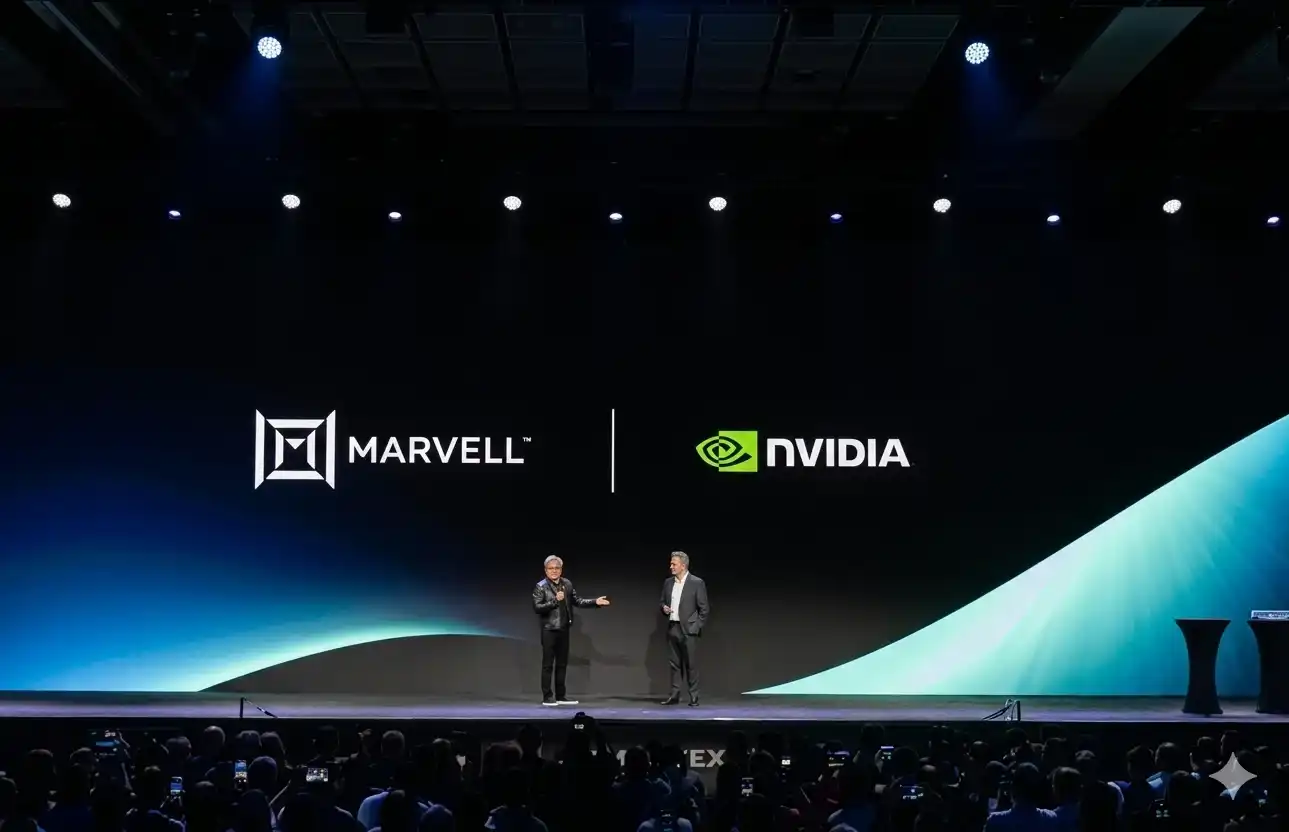
Huang Renxun and Marvell CEO Discuss on Stage: The Future of AI Competition is Not Computing Power but Connectivity, 'Use Copper Where You Can, Use Optics Only Where You Must'

Summary: At Computex 2024, NVIDIA CEO Jensen Huang joined Marvell CEO Matt Murphy on stage, highlighting the strategic partnership between their companies. The core theme was that the next decisive battleground for AI infrastructure is not compute or memory, but connectivity. As AI models evolve into vast agent-based systems, the ability to connect millions of processors efficiently is becoming the critical bottleneck. Huang announced NVIDIA's strategic $20 billion investment in Marvell, reflecting the deep integration between their technologies for AI data centers. A key discussion point was the transition from copper to optical interconnects within racks. The guiding principle, articulated by Huang, is: "You use optics wherever you must, you use copper wherever you can." While copper remains cost-effective for short distances, its physical limits are being reached as bandwidth demands double. When moving to 400Gbps, copper can no longer fully connect an entire rack. This shift necessitates innovations like Co-Packaged Optics (CPO), which integrates optical engines directly into the chip package to solve density and power challenges. Marvell demonstrated its 51.2T CPO-based switch, eliminating copper traces on the PCB. The future vision is a "distance-free data center," where optical connectivity removes physical constraints. This allows for fully disaggregated, dynamic architectures where compute, memory, and storage pools can be combined on-demand based on workload requirements, rather than being limited by connection boundaries. Marvell, positioned as a neutral "Switzerland" in the ecosystem with a comprehensive portfolio across all connectivity distances, is central to enabling this next era of AI infrastructure.

marsbit1 saat önce

Huang Renxun and Marvell CEO Discuss on Stage: The Future of AI Competition is Not Computing Power but Connectivity, 'Use Copper Where You Can, Use Optics Only Where You Must'

marsbit1 saat önce

İşlemler

Spot
Futures
活动图片