$500 Billion, 20-Year Lease: OpenAI in Talks for 10GW Ohio Data Center, Nvidia Set to Act as Credit 'Backstop'

marsbit2026-06-10 tarihinde yayınlandı2026-06-10 tarihinde güncellendi

Özet

OpenAI is in advanced negotiations with SB Energy, a SoftBank subsidiary, to lease a massive 10-gigawatt AI data center campus planned for a former uranium enrichment site in Pike County, Ohio. The proposed 20-year lease could involve total rental payments amounting to tens of billions of dollars, with the first 800-megawatt phase slated for 2028. A key structural innovation reported is that Nvidia is in discussions to act as a credit guarantor for OpenAI's lease payments and SB Energy's project financing. This marks a significant expansion of a financing model where major tech firms back AI startups' infrastructure commitments, following similar reported arrangements between Google and Anthropic. The project is part of a larger U.S.-Japan investment framework and involves SB Energy building 9.2 GW of gas-fired power generation. The total cost for the required IT hardware, primarily Nvidia chips, is estimated at around $350 billion, for which OpenAI is seeking separate financing. This deal represents a shift in OpenAI's strategy towards large-scale bilateral agreements for its own compute infrastructure, moving away from earlier joint venture plans like the shelved "Stargate" project. This massive infrastructure commitment coincides with OpenAI's confidential IPO filing. Analysts expect its long-term cloud and compute obligations, totaling over $665 billion, to be a major focus for SEC scrutiny and investor due diligence. SB Energy has also announced its own IPO plans, cre...

Author: Ada, Shenchao TechFlow

OpenAI's capital structure for computing infrastructure is being rewritten.

According to a June 10 report from The Information, OpenAI is in deep negotiations with SB Energy, a subsidiary of SoftBank Group, for a major lease. The subject is a planned AI data center campus on federal land in Pike County, southern Ohio, with a total planned capacity of 10 gigawatts. This campus was previously disclosed by the U.S. Department of Energy (DOE) and the Department of Commerce (DOC) in a "public-private partnership" format, to be built on the site of the former Portsmouth uranium enrichment plant, which produced weapons-grade uranium during the Cold War and shut down in 2001.

Under the terms disclosed by The Information, OpenAI will sign a 20-year lease with SB Energy, during which OpenAI will control the use of the equipment within the campus and will be obligated to pay rent after the project becomes operational. The cumulative rent over the lease period is expected to reach tens of billions of dollars. The first phase, with 800 megawatts of capacity, is expected to be operational by 2028.

Nvidia Steps In as Credit Guarantor, Structural Financing Model Begins to Spread

The core, and previously undisclosed, design of the deal lies in Nvidia's role. According to The Information, Nvidia is in discussions to use its own balance sheet to provide credit guarantees for OpenAI's lease payments and future project financing for SB Energy. This means Nvidia would, for the first time, act as a "financial guarantor" for an infrastructure project of this scale. Its previous collaborations with OpenAI have primarily involved equity investments and sale-leaseback financing structures.

This model is not an isolated case. According to a Bloomberg exclusive report on June 9, Google is essentially providing a backstop arrangement for Anthropic's TPU leasing obligations, which amount to approximately $35 billion, covering five data centers located in New York, Texas, Louisiana, and Indiana. That deal is supported by structured debt issued by a special purpose vehicle (SPV) led by Apollo and Blackstone, with Broadcom providing additional residual value guarantees on the senior tranche. SemiAnalysis describes this structure as a "hyperscaler-backed model," suggesting it is addressing the duration mismatch issue inherent in data centers, where "lease terms exceed 15 years while the payback period is about 8 years."

Nvidia's entry signals that this structure is spreading from cloud providers to the chip supplier side.

$500 Billion Campus Relies on U.S. DOE Land and Japan-U.S. Investment Agreement

The lessor, SB Energy, is an energy company established by SoftBank in 2019, with SoftBank holding a controlling stake. Ares Management and OpenAI are also shareholders. In January of this year, OpenAI and SoftBank Group each injected $500 million (totaling $1 billion) into SB Energy. Concurrently, OpenAI awarded SB Energy the contract to build the 1.2-gigawatt "Stargate" project in Milam County, Texas.

The project's governmental background is particularly crucial. According to a U.S. Department of Commerce disclosure in February, this SB Energy investment stems from the framework of the "Trade Agreement with Japan" reached during the Trump administration. Japan committed to investing $550 billion in the U.S., which includes SB Energy's $33 billion power plant project at the Portsmouth campus. In early May this year, Energy Secretary Chris Wright, Commerce Secretary Howard Lutnick (Note: This seems to be an error in the original text; likely meant a different official), and Interior Secretary Doug Burgum attended the project announcement ceremony in Piketon alongside representatives from SoftBank.

Under the plan, SB Energy will self-fund the construction of 9.2 gigawatts of natural gas power generation units (assets owned by the U.S. government, operated by SB Energy) and partner with AEP Ohio to invest $4.2 billion in grid upgrades. Upon completion, the campus's total 10-gigawatt capacity would be roughly equivalent to the output of 4.5 Hoover Dams, potentially making it the world's largest single data center campus.

$350 Billion Chip Shortfall to Fill, OpenAI Uses 'Piecemeal' Approach to Patch Infrastructure

Having just the campus facilities is far from sufficient. According to industry standards, chips and servers and other IT equipment account for about 70% of the total cost of an AI data center. For this project alone, OpenAI would need to raise approximately $350 billion to purchase Nvidia chips. The Information reports that OpenAI is already discussing how to finance this chip procurement separately.

This move reflects a shift in OpenAI's infrastructure strategy. Earlier this year, the $500 billion "Stargate" joint venture initiative launched by OpenAI, Oracle, and SoftBank was confirmed by the industry to have been effectively shelved mid-year. The FT reported that OpenAI has "effectively abandoned the joint venture model" and is turning to large-scale bilateral deals to advance its own computing power deployment. This 20-year lease with SB Energy is the largest single product of this new approach.

$665 Billion in Cloud Lease Obligations to Become Focus of IPO Prospectus Scrutiny

This Monday (June 8), OpenAI confirmed it had confidentially submitted its IPO prospectus (Form S-1) to the SEC. According to disclosures by CNBC and Reuters, the underwriting syndicate includes Goldman Sachs, Morgan Stanley, and JPMorgan Chase, with a target valuation potentially exceeding $1 trillion, aiming for a listing as early as September. Media outlets like Bloomberg, citing internal documents, predict OpenAI will still record a loss of approximately $14 billion in 2026 and may not achieve profitability before 2029.

Against this backdrop, the at least $665 billion in cloud leasing commitments OpenAI has signed over the past year with Microsoft (incremental $250 billion), Oracle ($300 billion over 5 years), and AWS ($100 billion total over 8 years, including an original $3.8 billion) will become a core focus for SEC review and institutional investor due diligence. OpenAI's CFO, Sarah Friar, admitted internally in April that if revenue growth falls short of expectations, the company might not be able to fulfill its future computing power contracts.

Meanwhile, SB Energy itself announced its plans for a U.S. IPO in May of this year. The underwriting syndicate includes JPMorgan Chase, Goldman Sachs, Morgan Stanley, Citigroup, and Mizuho, with a valuation potentially exceeding $50 billion, aiming for a listing as early as September. This creates a situation where OpenAI, SB Energy, and their upstream partner Nvidia will be "exposing each other's risk exposures in their respective prospectuses," adding another layer to the "circular financing" narrative.


İlgili Sorular

QWhat is the scale and key financial arrangement of the AI data center campus that OpenAI is reportedly negotiating in Pike County, Ohio?

AOpenAI is negotiating a 20-year lease with SB Energy for a planned 10-gigawatt AI data center campus on federal land in Pike County, Ohio. The total rent over the lease term is projected to reach hundreds of billions of dollars, with the first phase of 800 megawatts expected to be operational by 2028.

QWhat unprecedented financial role is NVIDIA reportedly playing in the Ohio data center deal involving OpenAI and SB Energy?

ANVIDIA is reportedly in discussions to act as a 'credit guarantor' for the deal, using its balance sheet to backstop OpenAI's lease payments and future project financing for SB Energy. This marks a first for NVIDIA in providing such financial guarantees for a large-scale infrastructure project of this nature.

QWhat broader industry financing pattern does the OpenAI-SB Energy deal, with NVIDIA's involvement, represent according to the article?

AThe article suggests the deal represents the spread of a 'hyperscaler-backed' structured financing model from cloud providers to chip suppliers. This model, also seen in deals like Google backing Anthropic's obligations, addresses the 'duration mismatch' between long-term leases (15+ years) and the shorter return-on-investment period (around 8 years) for data centers.

QHow does the article describe the shift in OpenAI's infrastructure strategy, and what is a key example?

AThe article states OpenAI has shifted from a joint venture model (like the stalled $500 billion 'Stargate' project) to a strategy of advancing its own computing power through bilateral, large-scale deals. The 20-year lease with SB Energy for the Ohio campus is cited as the largest product of this new approach.

QWhat are the significant financial commitments and associated risks for OpenAI as it prepares for its IPO?

AOpenAI faces at least $665 billion in cloud leasing commitments from deals with Microsoft, Oracle, and AWS. These long-term obligations are expected to be a major focus of SEC review and investor due diligence for its IPO, especially given internal projections of continued significant losses until at least 2029.

İlgili Okumalar

Blockchain Has Finally Started to Sail into the Mainstream After 18 Years

Blockchain Finds Its True Path After 18 Years: Becoming the Financial Backbone for AI Agents and Autonomy This analysis explores a pivotal shift in the blockchain and crypto investment landscape, driven by the dominance of AI. Major venture capital firms, including Variant, Paradigm, Haun Ventures, and YZi Labs, are moving beyond pure "crypto" investment theses. They are expanding their focus to AI, robotics, and frontier tech, signaling that blockchain is no longer seen as a standalone sector but as an underlying infrastructure layer. The core argument is that blockchain's killer application may not be user-facing apps, but rather providing the economic rails for the coming wave of AI agents, autonomous robots, and automated systems. Key capabilities like self-custody wallets, programmable stablecoins for micropayments, on-chain identity, and verifiable smart contracts are positioned as essential for a future where machines conduct economic activity. The recent $1.4 billion investment by Tether (via its venture arm) in German robotics company NEURA Robotics exemplifies this, aiming to embed Tether's wallet tools directly into robots for autonomous transactions. While many "AI + Crypto" projects remain superficial, the article concludes that true value lies where crypto is a necessary component—enabling machine-to-machine payments, agent autonomy, verifiable data provenance, and open financial settlement for the AI era. For crypto venture capital, this convergence with AI represents both an adaptation to shifting capital flows and a potential path to unlocking the large-scale, non-speculative utility the industry has long sought.

marsbit13 dk önce

Blockchain Has Finally Started to Sail into the Mainstream After 18 Years

marsbit13 dk önce

Blockchain has finally begun sailing toward the main channel after 18 years

After 18 years of development, blockchain technology is beginning to move from a specialized niche into mainstream adoption, according to a recent industry analysis. The shift is reflected in the changing strategies of major crypto venture capital firms, which are expanding their focus beyond pure "digital ownership" towards broader themes like "autonomy." The report highlights that leading VC firms like Variant, Paradigm, Haun Ventures, and YZi Labs are broadening their investment mandates to include not only crypto but also artificial intelligence (AI), robotics, biotech, and other frontier technologies. This reflects a recognition that the isolated "crypto investment" narrative is losing appeal to limited partners (LPs) as capital and attention increasingly flow toward AI and other high-growth tech sectors. A key emerging thesis is that blockchain's most significant future application may not be as a consumer-facing product, but as the underlying economic and settlement infrastructure for the AI era. As AI agents and autonomous systems become more prevalent, they will require programmable, global, and low-cost payment networks (like stablecoins), verifiable digital identities, and secure wallets to manage transactions and assets on behalf of users. The investment by stablecoin issuer Tether into robotics company NEURA, with plans to integrate its wallet technology, is cited as a prime example of this convergence. However, the article cautions that simply labeling projects as "AI + Crypto" is insufficient. True value lies in integrations where blockchain technology is essential—such as enabling machine-to-machine micropayments, verifiable data provenance for AI, or transparent governance for autonomous organizations—rather than being a superficial marketing add-on. In conclusion, while AI currently dominates the tech narrative and capital flows, it may ultimately create the real-world, high-frequency demand that the crypto industry has long sought. For crypto VCs and projects, the path forward is to position blockchain not as a competing sector, but as a critical foundational layer powering autonomy and economic activity in an AI-driven future.

链捕手20 dk önce

Blockchain has finally begun sailing toward the main channel after 18 years

链捕手20 dk önce

Y Combinator Co-founder: How to Make a Billion Dollars?

The Y Combinator co-founder argues that becoming a billionaire by founding a successful startup is not only possible but demonstrably achievable without unfair or unethical practices. He disputes a politician's claim to the contrary, using the example of a founder whose company grew at 93% monthly solely through creating a product users loved and recommended. The core mechanism is exponential growth. A conservative 15% monthly growth rate compounds to a 4384x increase over five years, which can easily lead to billion-dollar valuations and founder wealth. The process depends on two key variables: the growth rate and the duration it can be sustained. A high growth rate stems from a great product that users naturally promote, while a long duration requires a large enough market. For aspiring founders, especially young ones, the simplest path is to build something they and their friends genuinely need. Young people's current needs often predict future mass-market trends. He advises against actively "searching" for ideas, as this tends to filter out unconventional but promising ones. Instead, inspiration should come from working on interesting projects with friends, as many iconic companies (e.g., Apple, Facebook) started this way. Ultimately, building a massively valuable startup is not about exploitation but empathy: deeply understanding a user group and building a product that significantly improves their lives. This, powered by exponential growth in a large market, is the legitimate path to immense wealth creation.

Foresight News22 dk önce

Y Combinator Co-founder: How to Make a Billion Dollars?

Foresight News22 dk önce

The 800V Voltage Standard Championed by Nvidia: Which Infrastructure Providers Stand to Benefit?

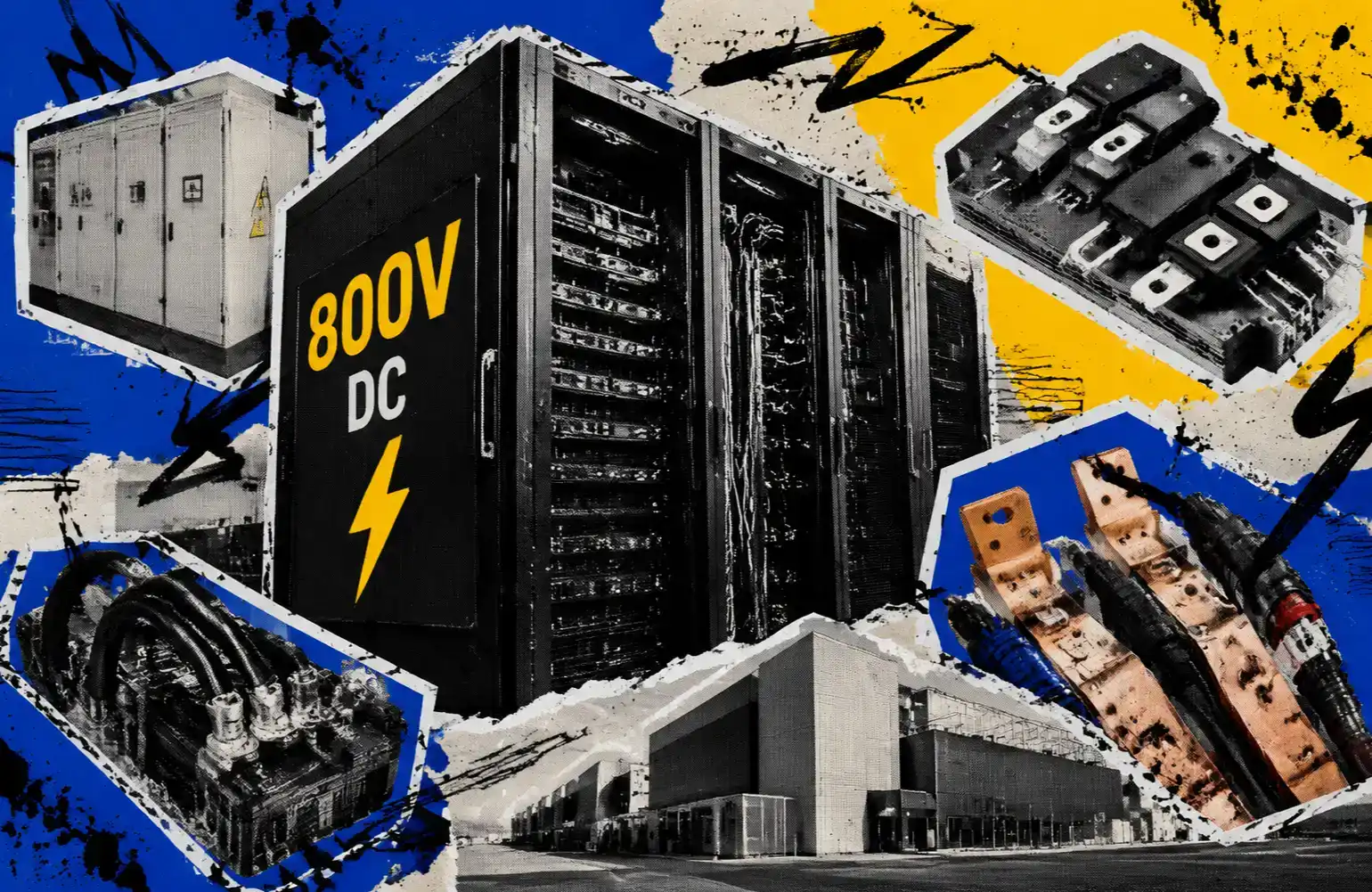
NVIDIA is actively promoting the 800VDC architecture as a key direction for its next-generation AI factories and high-power racks, particularly for the upcoming Rubin and Kyber platforms. The primary driver is the rapidly increasing power density of AI racks, with designs like GB200/GB300 NVL72 reaching 120-140kW and future systems potentially hitting 180-220kW. At such high power levels, traditional low-voltage power delivery becomes inefficient due to massive current, leading to significant copper use, cable bulk, heat, and power loss. The 800VDC standard aims to increase efficiency by transmitting power at higher voltage and lower current to the rack before stepping it down locally for GPUs. NVIDIA claims this can improve efficiency by up to 5%, reduce total cost of ownership (TCO) by up to 30%, and cut copper usage by approximately 45%. This shift redefines infrastructure roles, pushing power engineering to the forefront alongside GPU performance. Key beneficiaries and ecosystem partners highlighted include: 1. **Power Infrastructure Providers:** Companies like Vertiv, Schneider Electric, Delta Electronics (台达电), and Korean firms LS Electric and HD Hyundai Electric are involved in designing next-gen AI factory power distribution, rack power supplies, and backup systems. 2. **Power Semiconductors:** Suppliers of SiC/GaN devices, such as Infineon and STMicroelectronics, are better suited for high-voltage, high-efficiency conversion in this new architecture. 3. **Connectivity & Structure:** The focus shifts to high-reliability components like busbars, high-voltage connectors, and advanced PCBs that meet stricter insulation and safety requirements. 4. **Liquid Cooling & Rack ODM:** As power and heat density rise, liquid cooling becomes critical. Full-rack system integrators (e.g., Dell, Wiwynn, Wistron) must now demonstrate robust pre-delivery testing capabilities, including burn-in testing under full load, requiring significant power and cooling infrastructure in their factories. The transition is not immediate for all data centers but is targeted at high-density AI factories. NVIDIA’s 800VDC ecosystem is in a preparatory phase, with full-scale production expected to align with the 2027 launch of Kyber rack-scale systems. The investment thesis revolves around which companies can demonstrate proven product integration, customer validation, and reliable delivery of complete, high-power AI rack systems, making power, cooling, and testing capabilities new critical variables in the AI infrastructure value chain alongside GPUs.

marsbit43 dk önce

The 800V Voltage Standard Championed by Nvidia: Which Infrastructure Providers Stand to Benefit?

marsbit43 dk önce

İşlemler

Spot
Futures

Popüler Makaleler

ADA Nasıl Satın Alınır

HTX.com’a hoş geldiniz! Cardano (ADA) satın alma işlemlerini basit ve kullanışlı bir hâle getirdik. Adım adım açıkladığımız rehberimizi takip ederek kripto yolculuğunuza başlayın. 1. Adım: HTX Hesabınızı OluşturunHTX'te ücretsiz bir hesap açmak için e-posta adresinizi veya telefon numaranızı kullanın. Sorunsuzca kaydolun ve tüm özelliklerin kilidini açın. Hesabımı Aç2. Adım: Kripto Satın Al Bölümüne Gidin ve Ödeme Yönteminizi SeçinKredi/Banka Kartı: Visa veya Mastercard'ınızı kullanarak anında Cardano (ADA) satın alın.Bakiye: Sorunsuz bir şekilde işlem yapmak için HTX hesap bakiyenizdeki fonları kullanın.Üçüncü Taraflar: Kullanımı kolaylaştırmak için Google Pay ve Apple Pay gibi popüler ödeme yöntemlerini ekledik.P2P: HTX'teki diğer kullanıcılarla doğrudan işlem yapın.Borsa Dışı (OTC): Yatırımcılar için kişiye özel hizmetler ve rekabetçi döviz kurları sunuyoruz.3. Adım: Cardano (ADA) Varlıklarınızı SaklayınCardano (ADA) satın aldıktan sonra HTX hesabınızda saklayın. Alternatif olarak, blok zinciri transferi yoluyla başka bir yere gönderebilir veya diğer kripto para birimlerini takas etmek için kullanabilirsiniz.4. Adım: Cardano (ADA) Varlıklarınızla İşlem YapınHTX'in spot piyasasında Cardano (ADA) ile kolayca işlemler yapın.Hesabınıza erişin, işlem çiftinizi seçin, işlemlerinizi gerçekleştirin ve gerçek zamanlı olarak izleyin. Hem yeni başlayanlar hem de deneyimli yatırımcılar için kullanıcı dostu bir deneyim sunuyoruz.

1.4k Toplam GörüntülenmeYayınlanma 2024.12.10Güncellenme 2026.06.02

ADA Nasıl Satın Alınır

Tartışmalar

HTX Topluluğuna hoş geldiniz. Burada, en son platform gelişmeleri hakkında bilgi sahibi olabilir ve profesyonel piyasa görüşlerine erişebilirsiniz. Kullanıcıların ADA (ADA) fiyatı hakkındaki görüşleri aşağıda sunulmaktadır.

活动图片