80% of Oil Revenue Settled in USDT, Stablecoin Becomes Venezuela's 'Second Dollar'

比推2026-01-13 tarihinde yayınlandı2026-01-13 tarihinde güncellendi

Özet

Summary: Venezuela's state oil company PDVSA now uses Tether's USDT stablecoin to settle approximately 80% of its oil export revenue, a strategic shift to circumvent U.S. sanctions. This move has cemented USDT's role as a "second dollar" in the country's economy. While it serves as a critical financial lifeline for citizens grappling with hyperinflation and the collapse of the bolivar, it also functions as a tool for the government to bypass traditional banking systems. The dual-use nature of stablecoins is highlighted: they provide essential stability for everyday transactions and remittances for the populace, yet simultaneously enable sanctioned entities to evade financial oversight. Despite the recent arrest of former President Nicolás Maduro, the pervasive use of USDT is expected to continue due to Venezuela's ongoing economic instability.

Author: Vicky Ge Huang, the Wall Street Journal

Compiled by: Peggy, BlockBeats

Original title: 80% of Oil Revenue Settled in Stablecoin, Venezuela Turns USDT into a Second Dollar


Editor's Note: From the "stablecoin of outlaws" to attempting to enter the U.S. compliant market, the role of USDT in Venezuela reveals the most real and contradictory aspect of stablecoins: they serve both as a settlement tool for oil exports to bypass sanctions and the traditional banking system, and as a financial lifeline for ordinary people to sustain their lives amid the collapse of the bolivar and capital controls.

When nearly 80% of a country's oil revenue is taken over by stablecoins, and even the elderly pay property fees with USDT, this is not only an extreme example of crypto penetrating the real economy but also a reminder that the core controversy of stablecoins has never been just about "how well they work," but rather their inherent "dual use": becoming a lifeline where institutions fail, and an escape route in regulatory vacuums.

Below is the original text:
Nicolás Maduro has, in a way, contributed to USDT becoming the world's most dominant stablecoin. And now, as the former Venezuelan leader is held in a Brooklyn prison, the central role of this cryptocurrency in Venezuela's economy is once again in the spotlight.

For Venezuela's state-owned oil company, USDT has become a crucial tool to evade sanctions and is used as a payment currency for settling oil transactions. At the same time, Tether provides a financial "lifeline" for ordinary Venezuelans amid the ongoing devaluation of the national currency, the bolivar. Like most major stablecoins, USDT maintains a 1:1 peg to the U.S. dollar.

According to crypto industry analysts, Maduro's arrest and removal as Venezuela's president may not necessarily weaken USDT's presence in the country—after all, hyperinflation remains a long-term challenge. Meanwhile, the financial ties between Tether and Venezuela also place the cryptocurrency company in a critical position: it could become a key ally for U.S. authorities as they attempt to trace the whereabouts of funds allegedly embezzled by the Maduro regime.

Adam Zarazinski, CEO of crypto intelligence firm Inca Digital, stated: "The use of cryptocurrency in Venezuela will continue and is likely to expand in the short term. For ordinary users, it is a self-help mechanism to cope with economic failure and institutional collapse. But the same governance failures also create space for evading sanctions—if there is no credible improvement in governance, this outcome will not change."

Maduro pleaded not guilty to drug trafficking charges in his arraignment in U.S. federal court last week.

This new phase comes as cryptocurrency company Tether and its token—once stigmatized as the "stablecoin of choice for outlaws"—are seeking acceptance in the U.S. market. Last year, legislation was passed to pave the way for broader use of stablecoins, and Tether announced plans to launch a stablecoin open to U.S. investors. If realized, this would put it on a level playing field with competitors like Circle Internet Group and Paxos. Otherwise, Tether risks being marginalized in the U.S. market.

Just last week, U.S. Energy Secretary Chris Wright stated that the U.S. would indefinitely sell blocked Venezuelan oil. He said the proceeds from the sales would be deposited into accounts controlled by the U.S. government and eventually transferred to the Latin American country to "benefit the Venezuelan people." A senior Trump administration official also told The Wall Street Journal that the government is selectively rolling back some sanctions to allow crude oil and petroleum products to be transported and sold to global markets.

Faced with escalating U.S. sanctions in 2020, Venezuela's state-owned oil company Petroleos de Venezuela (PdVSA) began requiring payments in USDT to bypass the traditional banking system. Oil export revenues are settled either by directly transferring USDT to a wallet address or by converting cash proceeds into USDT through intermediaries.

This shift has been "transformative" for the country's oil economy. Venezuelan local economist Asdrúbal Oliveros recently stated in a podcast that, according to one estimate, nearly 80% of Venezuela's oil revenue is received in the form of stablecoins like USDT.

Subsequently, Tether cooperated with U.S. authorities to freeze dozens of wallets identified as being involved in Venezuelan oil trade. A Tether spokesperson did not respond to requests for comment.

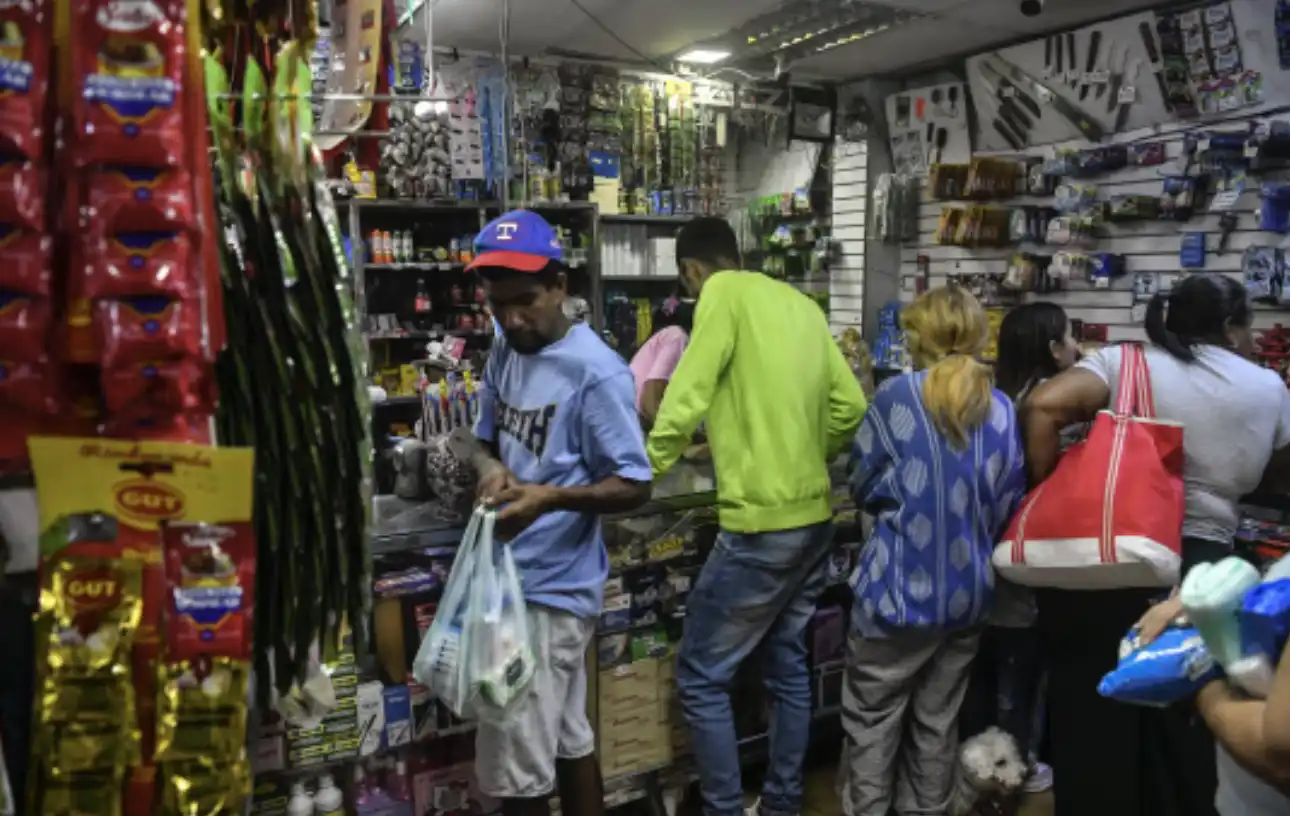
Soon after the sanctions took effect, Tether, with the ticker USDT, also became a viable alternative currency for many Venezuelans. They use this stablecoin for cross-border remittances, savings preservation, and daily payments.

Tether CEO Paolo Ardoino said at a recent crypto industry conference: "Over the past 10 years, the Venezuelan bolivar has depreciated by 99.8% against the U.S. dollar, the Turkish lira by 80%, and the Argentine peso by about 94.5%. This simple chart alone is enough to explain why USDT has succeeded."

Mauricio Di Bartolomeo, a crypto entrepreneur born and raised in Venezuela, said that two months ago, his 71-year-old aunt called him because she needed to buy some USDT to pay her apartment's homeowners association fee.

"You pay the gardener, you pay for a haircut—everything is paid this way. Basically, you can use USDT for anything," said Di Bartolomeo, co-founder of crypto lending platform Ledn. "The penetration of stablecoins in Venezuela is so deep that even without regulated, compliant channels to buy and sell stablecoins, people still choose stablecoins over the local banking system."

Researchers say it was almost inevitable that USDT would play a major role in Venezuela—due to a lack of trust in the country's banking system and strict capital controls that limit access to physical dollars. A prime example: the Venezuelan government attempted to launch an oil-backed cryptocurrency called Petro in 2018, but it failed due to lack of public trust and international recognition.

Ari Redbord, global head of policy at blockchain analytics firm TRM Labs, said: "The issue is not with USDT itself, but with the inherent 'dual-use' reality of stablecoins." TRM Labs has partnered with Tether to track the use of stablecoins on the Tron blockchain in illegal activities. "They can be a lifeline for ordinary people and also serve as a tool to evade sanctions under pressure."



Original link: https://www.bitpush.news/articles/7602350

İlgili Sorular

QWhat percentage of Venezuela's oil revenue is settled using USDT, according to the article?

ANearly 80% of Venezuela's oil revenue is settled using USDT and other stablecoins.

QWhy has USDT become a crucial tool for Venezuela's state oil company, PDVSA?

AUSDT has become a crucial tool for PDVSA to circumvent international sanctions and bypass the traditional banking system for settling oil transactions.

QWhat dual role does USDT play in the Venezuelan economy, as described in the article?

AUSDT serves a dual role: it acts as a financial lifeline for ordinary citizens coping with hyperinflation and capital controls, while also being used as a tool to evade sanctions for oil exports.

QWhat was the outcome of the Venezuelan government's attempt to launch its own oil-backed cryptocurrency, the Petro?

AThe government's attempt to launch the Petro failed due to a lack of public trust and international recognition.

QHow is Tether, the company behind USDT, attempting to gain legitimacy in the US market?

ATether is attempting to gain legitimacy in the US market by announcing plans to launch a stablecoin that will be open to US investors, following new legislation that paves the way for wider stablecoin use.

İlgili Okumalar

Winter for Crypto IPOs: Consensys and Ledger Withdraw Applications

The crypto IPO window is tightening significantly in 2026, marked by prominent companies delaying or pausing their public listing plans. Following a successful 2025 "harvest year" that saw Circle, Bullish, and Gemini go public amidst a bull market, the tide has turned. Consensys, developer of MetaMask, recently postponed its IPO until at least fall 2026. Hardware wallet leader Ledger also suspended its planned US listing due to unfavorable market conditions, with Kraken having previously delayed its own plans. This shift is driven by a cooling market in 2026, characterized by a significant Bitcoin price correction, declining trading volumes, and reduced investor risk appetite for crypto stocks. The poor post-IPO performance of 2025 listings like Circle and Bullish, which saw major share price declines, has heightened investor caution. This contrasts sharply with the current AI sector, where companies like SpaceX, OpenAI, and Anthropic are commanding massive valuations and investor enthusiasm based on narratives of stable, exponential growth. Crypto companies now face pressure to transition from hype-driven models to demonstrating reliable cash flows and robust compliance. While the paused IPO plans may lead to valuation resets and affect ecosystem liquidity, they also accelerate industry consolidation toward stronger, more compliant infrastructure players. A potential recovery in Bitcoin's price and clearer regulations could reopen the IPO window in the latter half of 2026.

marsbit6 dk önce

Winter for Crypto IPOs: Consensys and Ledger Withdraw Applications

marsbit6 dk önce

ChatGPT Can Manage Your Money for You. Would You Trust It with Your Bank Account?

OpenAI has launched a personal finance tool for ChatGPT, currently in preview for US-based ChatGPT Pro users. This feature allows users to connect their bank and investment accounts (via Plaid, supporting over 12,000 institutions) directly to ChatGPT. It analyzes transactions, generates visual dashboards, and offers conversational financial advice—such as budgeting or planning for major purchases—based on the user's actual data. This move follows OpenAI's acquisitions of fintech startups Roi and Hiro Finance, signaling a strategic push into vertical "super assistant" applications, similar to its earlier health-focused feature. However, the launch has sparked significant privacy concerns. Critics question the safety of granting such sensitive financial access to an AI, especially amid ongoing lawsuits alleging OpenAI shared user chat data with third parties like Meta and Google. OpenAI emphasizes that ChatGPT only reads data (no transaction capabilities), deletes it within 30 days if disconnected, and offers opt-out options for model training. Yet, trust remains a major hurdle. The trend reflects a broader industry shift: AI companies like Anthropic and Perplexity are also targeting high-value, data-rich domains like finance and health. While technically promising, the tool operates in a regulatory gray area—it provides personalized guidance but disclaims formal financial advice or liability. Ultimately, OpenAI's challenge is convincing users to trust an AI with their most private financial information.

marsbit7 dk önce

ChatGPT Can Manage Your Money for You. Would You Trust It with Your Bank Account?

marsbit7 dk önce

Breaking: OpenAI Undergoes Major Reorganization, President Brockman Assumes Command

OpenAI has announced a major internal reorganization just months before its anticipated IPO. The company is merging its three flagship product lines—ChatGPT, Codex, and the API platform—into a single, unified product organization. The most significant leadership change involves co-founder and President Greg Brockman moving from a background technical role to take full, permanent control over all product strategy. This follows the indefinite medical leave of AGI Deployment CEO Fidji Simo. Additionally, ChatGPT's longtime lead, Nick Turley, has been reassigned to enterprise products, with former Instagram executive Ashley Alexander taking over consumer offerings. The consolidation, internally framed as a strategic move towards an "Agentic Future," aims to break down internal silos and create a cohesive "Super App." This planned desktop application would integrate ChatGPT's conversational abilities, Codex's coding power, and a rumored internal web browser named "Atlas" to autonomously perform complex user tasks. The reorganization occurs amid significant internal and external pressures. OpenAI has recently seen a wave of high-profile departures, including Sora co-lead Bill Peebles and other senior technical leaders, leading to concerns about a thinning executive bench. Externally, rival Anthropic recently secured funding at a staggering $900 billion valuation, surpassing OpenAI's own. Google's upcoming I/O developer conference also poses a competitive threat. Analysts suggest the dramatic restructure is a pre-IPO move to present a clearer, more focused narrative to Wall Street—streamlining operations and demonstrating decisive leadership under Brockman to counter internal turbulence and intense market competition.

marsbit3 saat önce

Breaking: OpenAI Undergoes Major Reorganization, President Brockman Assumes Command

marsbit3 saat önce

İşlemler

Spot
Futures
活动图片