无惧回调,巴克莱相信:海力士能翻倍!

华尔街见闻2026-07-15 tarihinde yayınlandı2026-07-15 tarihinde güncellendi

Özet

巴克莱给予"增持"评级,目标价330美元,核心逻辑三条:科技行业内存持续短缺支撑涨价;SK海力士在高带宽内存(HBM)领域的强势地位将带来显著定价溢价,推动2027年营收大幅超出市场预期;现金储备预计达市值40%以上,具备大规模回购能力。

巴克莱银行以一份极具冲击力的研究报告,为近期上市的SK海力士美股打出了一张强力背书。

周二(7月14日),巴克莱启动对SK海力士的覆盖研究,给予"增持"评级,并设定330美元的目标价,较该股周二收盘价隐含约100%的上行空间,意味着股价有望在未来一年内翻倍。受此提振,SK海力士美国存托股票(ADR)周二大涨超过27%,跻身Stocktwits平台热门股票前十。
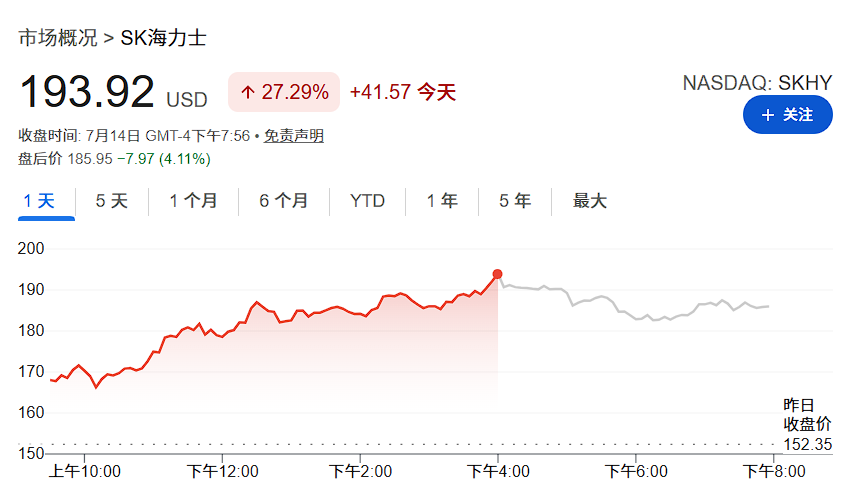
巴克莱的核心逻辑围绕三条主线展开:科技行业持续的内存短缺将支撑涨价预期、推动营收增长;SK海力士在高带宽内存(HBM)领域的强势地位将带来显著的定价溢价;以及公司雄厚的现金储备为大规模股票回购提供了充足弹药。

这一判断与华尔街整体情绪高度吻合——据Koyfin数据,覆盖SK海力士的37位分析师中,36位给予"买入"或"强力买入"评级,仅一位持"持有"立场。

目标价330美元:翻倍逻辑从何而来

巴克莱的330美元目标价是此次报告最具震撼力的数字。该行分析师Simon Coles在周二的报告中写道:

"我们认为近期毛利率存在一定上行空间,但相较于彭博市场一致预期,最大的差异在于2027年营收将显著更高,驱动力来自HBM定价提升以及SK海力士的强势市场地位。"

巴克莱认为,科技行业内存短缺的持续态势是推动SK海力士股价上行的核心催化剂。内存供应偏紧的格局将赋予厂商更强的定价权,从而直接拉动营收增长。在这一逻辑框架下,SK海力士凭借其在HBM领域的领先布局,被视为最直接的受益标的。

HBM定价优势:2027年营收的最大变量

巴克莱特别点出,与市场一致预期相比,其对SK海力士2027年营收的预测存在"实质性更高"的偏差,而这一差距的主要来源正是HBM的定价溢价。

HBM作为支撑AI算力基础设施的关键存储芯片,需求持续旺盛。

SK海力士在该细分市场的强势地位,使其能够在供需偏紧的环境下获取更高的产品溢价,进而在2027年前后形成显著的营收弹性。这也是巴克莱判断其预测与市场一致预期产生最大分歧的核心所在。

现金储备充裕:股票回购提供额外支撑

除营收增长逻辑外,巴克莱还从资产负债表角度为SK海力士的估值提供了另一层支撑。该行估计,至2027年底,SK海力士持有的现金将相当于其当前市值的40%以上。

这一充裕的现金储备意味着公司具备实施大规模股票回购的能力。回购不仅能够直接提升每股收益,还将为股价提供额外的上行动力。巴克莱认为,这一潜在的资本回报路径是其看多逻辑中不可忽视的组成部分。

İlgili Okumalar

Founder of Real Vision: We Are Living in the Era of Exponential Growth

Real Vision founder Raoul Pal argues that humanity is now in an "Age of Exponential Growth," a reality the human brain's linear intuition struggles to comprehend. The core drivers are the convergence of multiple, mutually-reinforcing technological curves: Artificial Intelligence, robotics, solar & storage, biotechnology, and blockchain networks. He notes that while his 2021 analysis correctly identified fiat currency debasement and assets like Bitcoin as inflation hedges, he underestimated the scale of change. Beyond monetary liquidity, a more profound force is at work: these key technologies have moved from theoretical promise into simultaneous, accelerating commercialization. They are no longer growing in parallel but are fusing, creating a "double exponential" growth curve. AI and robotics create an "artificial labor supply," breaking the cycle of debt-driven growth needed to offset aging demographics. Energy, particularly solar power guided by Wright's Law, is seeing collapsing costs, removing a key bottleneck for compute-hungry AI. Cryptocurrencies are evolving from monetary assets into the essential, programmable settlement layer for transactions between future AI agents. This fusion creates a feedback loop: AI optimizes energy grids, cheaper energy powers more compute, which builds better AI, and crypto networks settle the transactions. This leads to "Reed's Law" playing out at scale, where intelligent nodes (AI agents) form and re-form groups at machine speed, creating network value that grows at 2^n. Pal concludes that the critical question is no longer how to protect jobs from machines, but how to own a share of the machines and their foundational infrastructure. He sees the 2030-2032 period as a potential "Economic Singularity" where these trends fully merge, fundamentally transforming the economy. The data, he asserts, shows this is not a bubble but an observable, quantifiable new era.

Foresight News16 dk önce

Founder of Real Vision: We Are Living in the Era of Exponential Growth

Foresight News16 dk önce

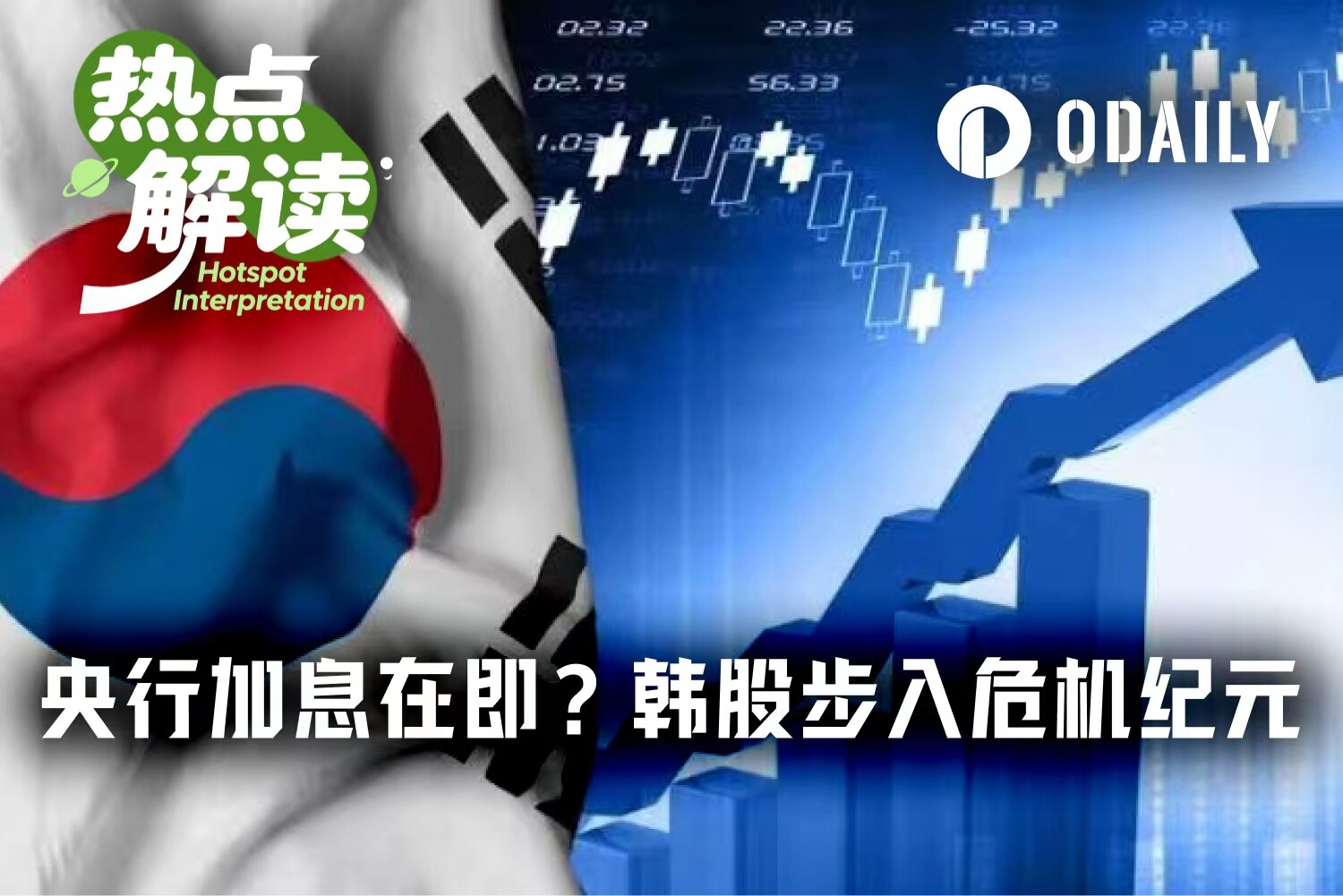
Golden Age VS Crisis Era? Bank of Korea Set to Hike Rates, Brokerage Margin Requirements May Increase 5-Fold

South Korea's financial authorities are taking coordinated action to cool an overheated and volatile stock market. The Bank of Korea is widely expected to raise its benchmark interest rate by 25 basis points to 2.75% on Thursday, which would be its first hike in approximately three and a half years since January 2023. Analysts predict further increases, potentially bringing the rate to 3.00% by year-end. This move aims to tighten market liquidity, raising costs for leveraged investments. Concurrently, major Korean brokerages have agreed to raise the minimum investment requirement for single-stock leveraged ETFs fivefold, from 10 million won to 50 million won, to curb excessive retail speculation. This follows extreme market swings focused on major chip stocks like Samsung Electronics and SK Hynix, which together account for nearly half of the KOSPI index's weight. The index itself has seen a dramatic 204% surge from its recent low. President Yoon Suk Yeol acknowledged market instability and urged regulators to address risks from leveraged products. Meanwhile, financial watchdogs are imposing new limits on stock-backed loans to individual investors to prevent bubble formation. These measures come as foreign investors have been massive net sellers this year, offloading a record $110 billion in assets, while domestic retail investors, using significant leverage, have been the primary buyers, absorbing the sales pressure. The government's multi-pronged strategy seeks to stabilize the market by restricting leverage, raising barriers, and tightening monetary policy.

Odaily星球日报26 dk önce

Golden Age VS Crisis Era? Bank of Korea Set to Hike Rates, Brokerage Margin Requirements May Increase 5-Fold

Odaily星球日报26 dk önce

İşlemler

Spot
活动图片