Chainlink CCIP Solana Support Keeps LINK’s Infrastructure Story In Focus

bitcoinist2026-07-06 tarihinde yayınlandı2026-07-06 tarihinde güncellendi

Özet

Chainlink's CCIP v1.6 upgrade introduces support for Solana, marking a significant step toward a more virtual machine-agnostic protocol. This expansion beyond EVM chains enhances flexibility for developers and token issuers seeking secure cross-chain interoperability for assets and applications. The upgrade reduces costs, accelerates chain expansion, and strengthens the Cross-Chain Token standard narrative. For LINK, this underscores Chainlink's long-term infrastructure strategy to become essential connective tissue in a fragmented, multi-chain crypto ecosystem, particularly for growing sectors like tokenized real-world assets, stablecoins, and DeFi. While adoption may be gradual, Solana integration positions Chainlink within a key high-throughput ecosystem, aligning with the broader market need for standardized, secure cross-chain communication.

Chainlink’s infrastructure story keeps getting broader. The CCIP v1.6 upgrade brings support for Solana and introduces architectural improvements aimed at making the protocol more flexible across different virtual machine designs.

For LINK investors, this is the kind of development that matters even when the token price is quiet. Chainlink is not trying to win attention through one consumer app. It is trying to become connective tissue for tokenized assets, cross-chain applications, and institutional blockchain systems.

For more details, visit the official Chain platform.

TL;DR

Chainlink says CCIP v1.6 introduces support for non-EVM chains starting with Solana, while reducing costs and making chain expansion faster. The upgrade also strengthens the Cross-Chain Token standard narrative and supports a broader push toward secure interoperability.

That is important because the next wave of crypto activity is unlikely to live on one chain.

Stablecoins, tokenized assets, DeFi applications, private chains, public chains, and hybrid networks all need ways to communicate safely. Chainlink’s bet is that secure messaging, cross-chain transfers, and programmable infrastructure become more valuable as the market becomes more fragmented.

Why Solana Support Matters

Solana is not an EVM chain, which makes this upgrade more meaningful than adding another similar network. Supporting Solana shows that CCIP is moving toward a more VM-agnostic model, giving developers and token issuers more options beyond the Ethereum-style environment.

That matters for assets that want distribution across different ecosystems. A token issuer may want Ethereum liquidity, Solana speed, and access to other chains without fragmenting supply or relying on weaker bridge architecture.

CCIP’s role is to make that movement more secure and standardized.

For Chainlink, Solana support also places the project inside one of the most active high-throughput ecosystems in crypto. If Solana’s RWA, stablecoin, and DeFi activity keeps growing, interoperability demand should grow with it.

LINK’s Long-Term Setup

LINK does not always trade directly on announcements like this. Infrastructure tokens can be frustrating because adoption often shows up slowly through integrations, standards, and enterprise conversations rather than explosive user-facing metrics.

But the strategic direction is clear. Chainlink wants to be part of the stack that lets value move across chains with fewer trust assumptions.

If crypto’s future is multi-chain, that role becomes more important. If tokenized real-world assets keep expanding, the need for secure cross-chain infrastructure becomes even harder to ignore.

The market may still judge LINK through price action, but CCIP v1.6 gives the project a stronger product story. Solana support is not just another integration. It is a sign that Chainlink is building for a crypto market where assets and applications refuse to stay inside one network.

This report is based on information from Chainlink.

The commercial angle is just as important as the technical one. Institutions and token issuers do not want every new chain connection to require a custom security model. A standardised interoperability layer gives them a clearer framework for expansion, which is exactly the role Chainlink is trying to own.

This article was written by the News Desk and edited by Samuel Rae.

Source: Chain

Trend Kriptolar

İlgili Sorular

QWhat is the key upgrade introduced in Chainlink CCIP v1.6 according to the article?

AChainlink CCIP v1.6 introduces support for non-EVM chains, starting with Solana, while reducing costs and making chain expansion faster. It also strengthens the Cross-Chain Token standard narrative.

QWhy does the article consider Solana support for CCIP particularly meaningful?

ASolana support is particularly meaningful because Solana is not an EVM chain, showing that CCIP is moving toward a more VM-agnostic model. It gives developers and token issuers more options beyond the Ethereum-style environment and integrates Chainlink into one of crypto's most active high-throughput ecosystems.

QHow does the article describe the long-term role Chainlink is trying to play in the crypto ecosystem?

AThe article describes Chainlink's long-term role as aiming to be part of the infrastructure stack that enables value to move securely across different chains with fewer trust assumptions. It is building to be a standardized interoperability layer for a fragmented, multi-chain crypto future.

QAccording to the article, why might infrastructure tokens like LINK be frustrating for investors?

AInfrastructure tokens like LINK might be frustrating for investors because adoption often shows up slowly through integrations, standards, and enterprise conversations rather than through explosive, user-facing metrics that directly and immediately impact token price.

QWhat broader market need does the article suggest Chainlink's CCIP is addressing?

AThe article suggests Chainlink's CCIP is addressing the broader market need for secure messaging, cross-chain transfers, and programmable infrastructure as the crypto market becomes more fragmented across stablecoins, tokenized assets, DeFi, and various public and private chains, all of which need safe ways to communicate.

İlgili Okumalar

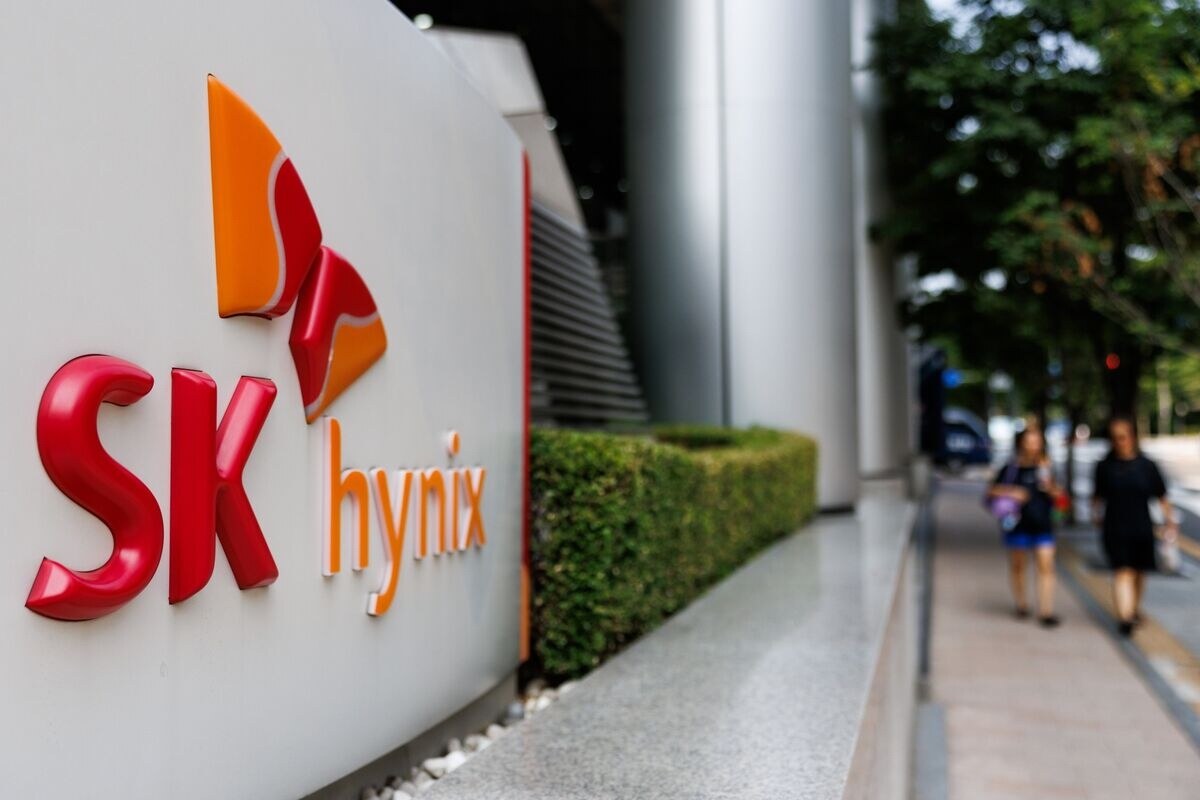
Sevenfold Oversubscription, Can SK Hynix Save the Semiconductor Industry This Time?

SK Hynix's planned US ADR listing is drawing intense interest, with its offering reportedly oversubscribed by over seven times, potentially making it the largest foreign listing in US history. The fundraising of approximately $24.5 billion is intended for expanding its Korean production capacity, including advanced packaging and EUV equipment. This massive demand from long-term funds and prominent institutions like Baillie Gifford and Situational Awareness Partners (led by noted investor Leopold Aschenbrenner) presents a stark contrast to the recent downturn in the broader semiconductor sector. The sector has faced a significant correction, with SK Hynix's own stock falling nearly 30% from its June high. This sell-off was triggered by concerns that major tech giants might slow their AI infrastructure spending, following signals like Meta's reported plan to sell surplus computing capacity. The strong ADR appetite suggests long-term investors still believe in the AI investment cycle's fundamentals, viewing the recent decline more as a valuation reset than a demand collapse. Some market speculation even suggests the pre-IPO price drop could be strategic, setting the stage for a stronger post-listing performance. While SK Hynix's successful listing may act as a short-term positive catalyst for market sentiment, the article argues the true signal for a sustained semiconductor recovery will come from upcoming earnings reports of tech giants like Microsoft, Google, Meta, and Amazon. Their future capital expenditure plans will be crucial in determining whether the AI-driven growth cycle can continue.

Odaily星球日报6 dk önce

Sevenfold Oversubscription, Can SK Hynix Save the Semiconductor Industry This Time?

Odaily星球日报6 dk önce

Breaking News: Musk Delivers the Most Powerful Grok 4.5, Slashes Price of Top-tier Opus Intelligence Drastically

**Elon Musk Launches Grok 4.5: A Cost-Effective, High-Performance AI Rival** SpaceXAI, in collaboration with Cursor, has released Grok 4.5, its new flagship AI model designed specifically for coding and agentic tasks. Trained on tens of thousands of NVIDIA GB300 GPUs using massive, high-quality data filtered from trillions of Cursor developer interactions, the model emphasizes "per-token intelligence." In benchmark performance, Grok 4.5 is highly competitive. It scores 64.7% on SWE Bench Pro (surpassing GPT-5.5's 58.6% and Opus 4.7's 64.3%), 83.3% on Terminal Bench 2.1 (nearly matching GPT-5.5), and 62.0% on DeepSWE 1.0 (beating Opus 4.8). Overall, it ranks fourth in AAAI official tests and first in the Harvey legal agent benchmark. The model's key advantage is its combination of speed, efficiency, and low cost. It generates responses at 80 tokens per second and, crucially, uses far fewer tokens to complete tasks—4.2 times fewer than Opus 4.8 on SWE Bench Pro. It is priced at $2 per million input tokens and $6 per million output tokens, significantly undercutting competitors. Musk stated it is "roughly equivalent to Opus 4.7, but much faster." Early user tests show Grok 4.5 can generate functional code for applications like 3D solar system simulators and basic games from simple prompts, though some note it still lags behind top models in certain creative tasks. Musk has hinted at a major update next month, leveraging real-world engineering data from his companies, with an even larger 2-trillion parameter version reportedly in development. Grok 4.5 positions itself not as the absolute strongest model, but as a highly efficient and affordable alternative in the top tier.

marsbit10 dk önce

Breaking News: Musk Delivers the Most Powerful Grok 4.5, Slashes Price of Top-tier Opus Intelligence Drastically

marsbit10 dk önce

Today, The Hong Kong Exchange Was Once Again Overwhelmed

Hong Kong's stock exchange witnessed an exceptionally busy day on July 9, with a record seven companies conducting initial public offerings (IPOs) simultaneously. The list included major firms such as Luxshare Precision, which launched the largest Hong Kong IPO of the year, and other notable names like Tri-Ring Group and Qiyunshan Food. However, the market reception was sharply divided on the first trading day. While Qiyunshan Food's shares surged over 110%, several other newcomers, including Luxshare Precision, Dingtai High-Tech, and Rigol Technologies, opened below their issue prices, with some falling nearly 20%. This event highlights a broader, bustling IPO scene in Hong Kong for 2024, with 82 Chinese companies listing in the first half alone—more than double the figure from the same period last year. A significant portion of this activity comes from dual "A+H" listings, where mainland China-listed firms seek secondary listings in Hong Kong. These larger companies have accounted for nearly 60% of total fundraising. Despite the high volume, recent trends show a cooling market sentiment for many new listings. Several IPOs in early July, including that of Tongrentang Healthcare, debuted with significant losses, indicating increased investor caution and selectivity. The market narrative is shifting, with capital increasingly concentrating on high-growth sectors like artificial intelligence, robotics, and semiconductors, while traditional manufacturing and consumer goods face greater pressure and volatility. This divergence underscores a market where success is no longer guaranteed by merely listing, but depends heavily on a company's growth prospects and sector appeal.

marsbit14 dk önce

Today, The Hong Kong Exchange Was Once Again Overwhelmed

marsbit14 dk önce

Glassnode: Crypto Market Enters Later Stages of Bottoming Phase

Glassnode: Crypto Market Enters Later Stages of Bottom Formation Bitcoin has traded below the true market average and the short-term holder cost basis for five consecutive months, indicating a deep undervaluation. On-chain data reveals a significant shift in selling pressure, with long-term holders now accounting for 43% of all realized losses. Daily realized losses for this group recently peaked at $280 million, the highest level since December 2022. While this large-scale capitulation is a hallmark of bear market bottoms, a sustained decline in this metric is a prerequisite for a sustained recovery. Institutional demand remains weak. US spot Bitcoin ETFs continue to see monthly net outflows, although the pace has moderated from June's peak. Furthermore, average daily ETF trading volumes have contracted by approximately 80% from their October 2025 peak, reflecting subdued institutional participation. Derivatives markets present a mixed picture. Overall positioning has shifted to cautiously bullish, with the put/call ratio dropping to a yearly low. However, the options volatility skew remains elevated, signaling that traders are still paying a premium for downside protection. The spot price also trades below the gamma "max pain" level. In summary, multiple indicators suggest the market is in the later phases of a bottoming process, characterized by long-term holder capitulation and weak institutional inflows. However, key confirmation signals for a durable trend reversal—a sustained drop in long-term holder selling pressure, stabilization of ETF flows, and a price recovery above key cost bases—are still pending.

Foresight News41 dk önce

Glassnode: Crypto Market Enters Later Stages of Bottoming Phase

Foresight News41 dk önce

İşlemler

Spot

Popüler Makaleler

LINK Nasıl Satın Alınır

HTX.com’a hoş geldiniz! ChainLink (LINK) satın alma işlemlerini basit ve kullanışlı bir hâle getirdik. Adım adım açıkladığımız rehberimizi takip ederek kripto yolculuğunuza başlayın. 1. Adım: HTX Hesabınızı OluşturunHTX'te ücretsiz bir hesap açmak için e-posta adresinizi veya telefon numaranızı kullanın. Sorunsuzca kaydolun ve tüm özelliklerin kilidini açın. Hesabımı Aç2. Adım: Kripto Satın Al Bölümüne Gidin ve Ödeme Yönteminizi SeçinKredi/Banka Kartı: Visa veya Mastercard'ınızı kullanarak anında ChainLink (LINK) satın alın.Bakiye: Sorunsuz bir şekilde işlem yapmak için HTX hesap bakiyenizdeki fonları kullanın.Üçüncü Taraflar: Kullanımı kolaylaştırmak için Google Pay ve Apple Pay gibi popüler ödeme yöntemlerini ekledik.P2P: HTX'teki diğer kullanıcılarla doğrudan işlem yapın.Borsa Dışı (OTC): Yatırımcılar için kişiye özel hizmetler ve rekabetçi döviz kurları sunuyoruz.3. Adım: ChainLink (LINK) Varlıklarınızı SaklayınChainLink (LINK) satın aldıktan sonra HTX hesabınızda saklayın. Alternatif olarak, blok zinciri transferi yoluyla başka bir yere gönderebilir veya diğer kripto para birimlerini takas etmek için kullanabilirsiniz.4. Adım: ChainLink (LINK) Varlıklarınızla İşlem YapınHTX'in spot piyasasında ChainLink (LINK) ile kolayca işlemler yapın.Hesabınıza erişin, işlem çiftinizi seçin, işlemlerinizi gerçekleştirin ve gerçek zamanlı olarak izleyin. Hem yeni başlayanlar hem de deneyimli yatırımcılar için kullanıcı dostu bir deneyim sunuyoruz.

921 Toplam GörüntülenmeYayınlanma 2024.12.13Güncellenme 2026.06.02

LINK Nasıl Satın Alınır

Tartışmalar

HTX Topluluğuna hoş geldiniz. Burada, en son platform gelişmeleri hakkında bilgi sahibi olabilir ve profesyonel piyasa görüşlerine erişebilirsiniz. Kullanıcıların LINK (LINK) fiyatı hakkındaki görüşleri aşağıda sunulmaktadır.

活动图片