早报 | Michael Saylor 表示本周买入的是债券而非比特币;StablR 遭攻击损失约 280 万美元;美国国会再推比特币储备法案

链捕手2026-05-25 tarihinde yayınlandı2026-05-25 tarihinde güncellendi

Özet

早报摘要:FTX前律所与审计机构同意支付6600万美元就欺诈指控达成和解。稳定币项目StablR遭攻击,损失约280万美元。美国国会再推比特币储备法案,共和党拟推动囤积全球5%的比特币。MicroStrategy创始人Michael Saylor澄清本周购买的是债券而非比特币。以太坊基金会频遭质疑,有研究员为其辩护称其使命是建设协议。此外,多位对市场监管持怀疑态度的CFTC官员被停职并离职。 市场方面,过去24小时,以太坊链上热门Meme代币前五为HEX、SHIB、LINK、PEPE、mUSD;Solana链上前五为TROLL、neet、WORLDCUP、HANTA、Buttcoin;Base链上前五为TOSHI、KEYCAT、BRETT、CLANKER、LUNA。 观点与分析文章指出,代币化资产(RWA)市场规模已突破300亿美元,两年增长超10倍,正改变资产形态与金融系统构建。另一篇文章从五层金融堆栈的角度,拆解了去中心化衍生品交易所Hyperliquid的成功在于其从底层清算层开始扎实构建基础设施的策略。

整理:ChainCatcher


重要资讯:

  • FTX 前律所与审计机构同意支付 6600 万美元,就欺诈指控达成和解
  • StablR 稳定币遭攻击后脱锚,攻击者已获利约 280 万美元
  • 以太坊基金会频遭抨击,研究员力挺其使命是建设协议而非拉盘 ETH
  • 多位质疑预测市场监管的 CFTC 官员遭停职并被迫离职
  • 美国国会再推比特币储备法案,共和党拟推动囤积全球 5% 比特币
  • Michael Saylor:本周买入的是债券,而不是比特币

过去 24 小时发生了哪些重要的事?

美国国会再推比特币储备法案,共和党拟推动囤积全球 5% 比特币

Meme 热门榜

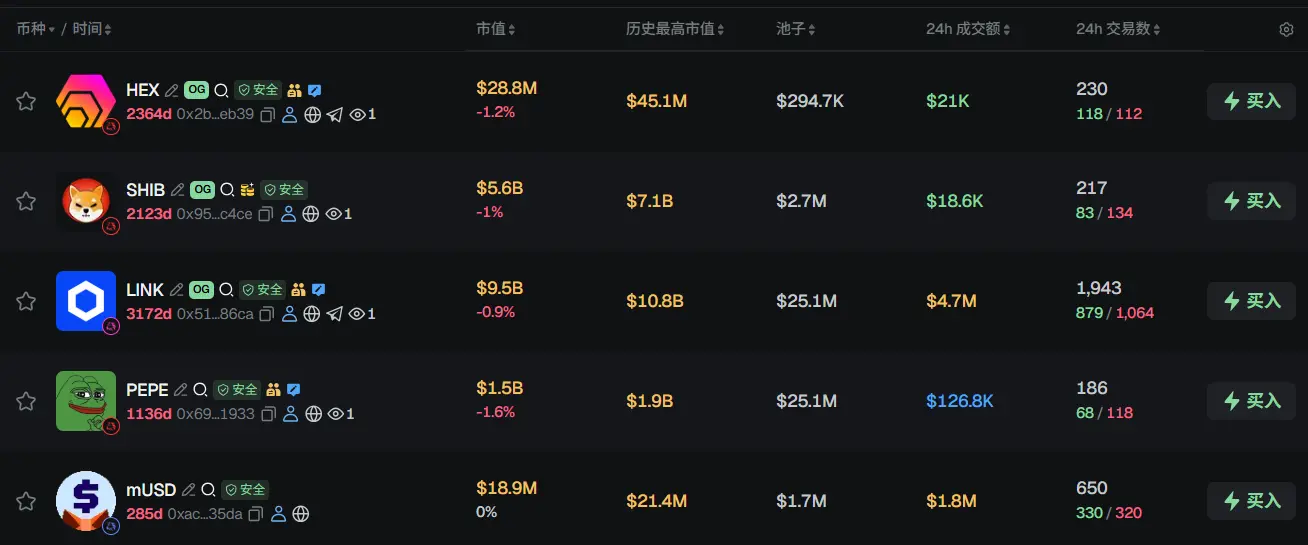
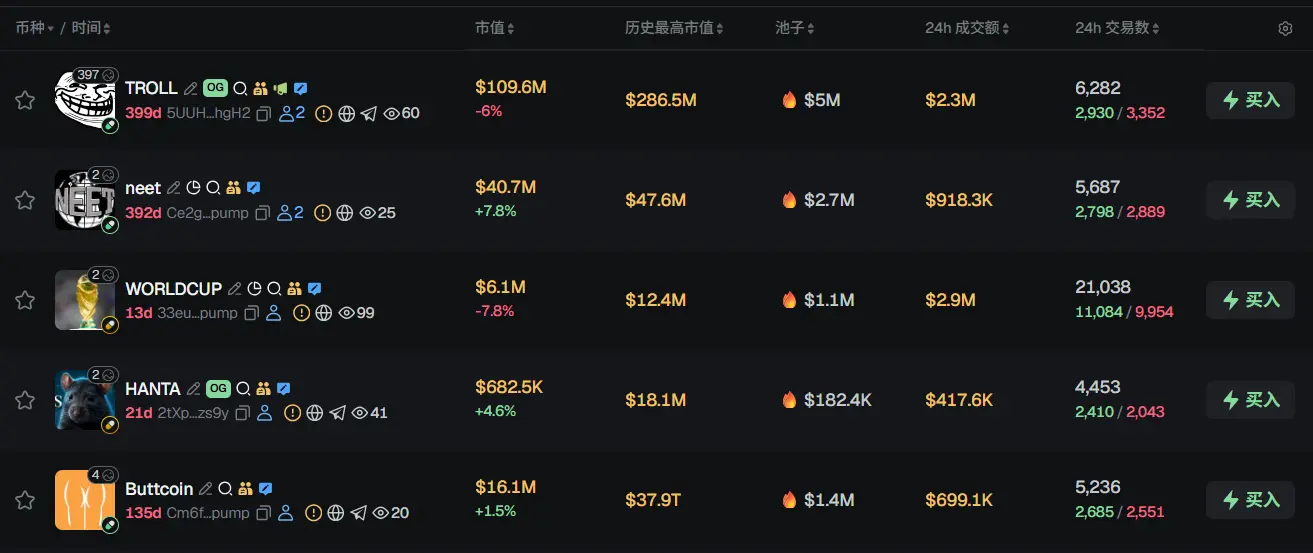
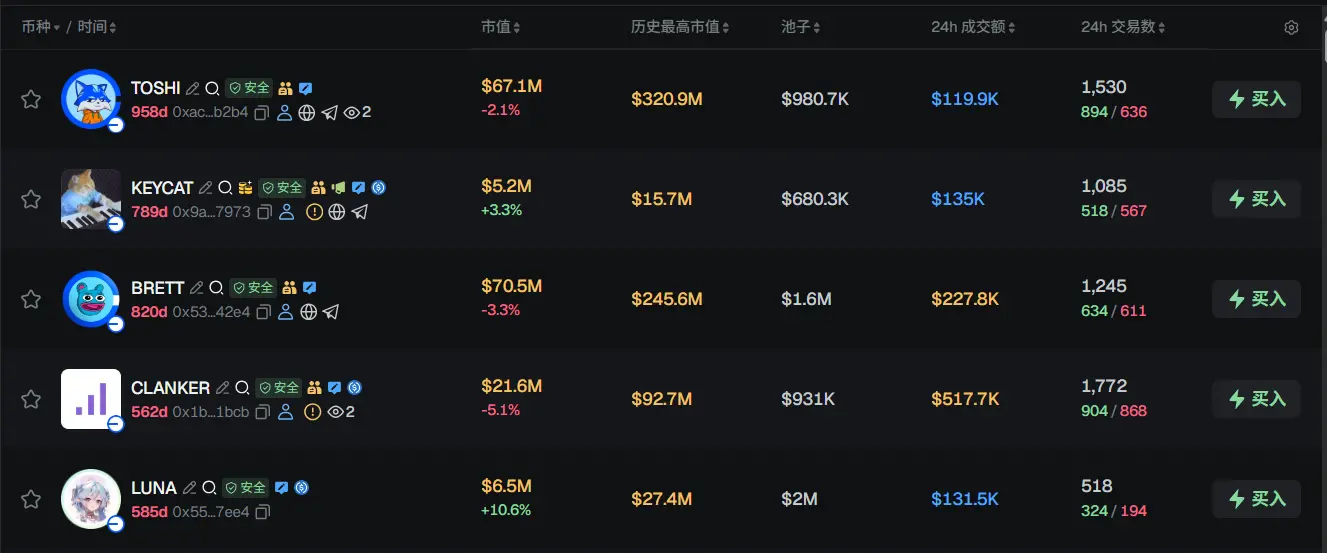
根据 Meme 代币追踪和分析平台 GMGN 行情数据显示,截止 5 月 25 日 09:00,

过去 24h ETH 热门代币前五依次为:HEX、SHIB、LINK、PEPE、mUSD
过去 24h Solana 热门代币前五依次为:TROLL、neet、WORLDCUP、HANTA、Buttcoin
过去 24h Base 热门代币前五依次为:TOSHI、KEYCAT、BRETT、CLANKER、LUNA
过去 24 小时有哪些值得阅读的精彩文章?

a16z:7 张图读懂代币化如何改变资产的本质

代币化资产(Tokenized Assets),也就是许多人常说的“现实世界资产(RWA)”,正在改变资产的形态、流动方式,以及金融系统的构建方式。

就在上个月,代币化资产市场规模突破 300 亿美元,目前稳定在约 340 亿美元附近(不包括稳定币),这一规模大致相当于一家区域性银行或顶级大学捐赠基金,虽然相较全球金融体系仍然十分微小,但已经足够产生实际影响。

要知道,两年前代币化资产市场规模还不足 30 亿美元,但随后市场发生了天翻地覆的变化:美国 GENIUS 法案为稳定币监管带来了更清晰框架、机构级链上基础设施逐渐成熟、大量金融机构也几乎在同一时期开始部署区块链技术——正是在这些因素推动下,代币化资产市场在不到两年时间内增长了 10 倍。

从五层金融堆栈拆解 Hyperliquid 成功的秘密

机构级金融基础设施的构建往往有迹可循。你不能从最具表现力的产品开始,然后再逆向推进。

你要从清算层开始,证明它能在压力下正常运作,然后再去解锁依赖于它的所有功能。

纽约证券交易所并不是在拥有运作良好的股票市场之前就增加了衍生品。芝加哥商品交易所也不是在推出期货之前就推出了期权。

这种顺序绝非随意为之。基层的顺序决定了顶层建筑的可能性。

Hyperliquid 深谙此道。

İlgili Sorular

QFTX 前律所与审计机构为欺诈指控支付了多少赔偿金达成和解?

AFTX 前律所与审计机构同意支付 6600 万美元,就欺诈指控达成和解。

QStablR 稳定币遭攻击后,攻击者获利约多少美元?

AStablR 稳定币遭攻击后,攻击者已获利约 280 万美元。

Q根据文章,美国国会再推的比特币储备法案,其政党拟推动囤积全球多少比例的比特币?

A根据文章,美国国会再推的比特币储备法案,其中共和党拟推动囤积全球 5% 的比特币。

QMichael Saylor 本周明确表示买入的是什么资产而非比特币?

AMichael Saylor 本周明确表示买入的是债券,而不是比特币。

Q根据 a16z 的分析,代币化资产(RWA)的市场规模在不到两年时间内增长了多少倍?

A根据 a16z 的分析,代币化资产(RWA)的市场规模在不到两年时间内增长了 10 倍,从两年前不足30亿美元增长到突破300亿美元。

İlgili Okumalar

Has the 'Digital Gold' Narrative for BTC Failed?

**Title: Has the "Digital Gold" Narrative for Bitcoin Failed?** The article argues that Bitcoin's "digital gold" narrative remains valid despite a recent sharp price decline (from a peak near $126k in Oct 2025 to briefly under $61k in Feb 2026). It presents a long-term investment framework based on three core points: **1. Viewing Bitcoin as an Asset:** Bitcoin is presented as a superior potential store of value compared to gold. Key arguments are its absolute scarcity (21 million cap), superior portability, and transparent auditability via its public ledger. While acknowledging its current use in early, volatile stages (~3-4% global adoption), the author draws parallels to the early, disruptive phases of the internet and e-commerce. **2. Understanding the Recent Downturn:** The current ~50% correction is framed as a predictable, consensus-driven cycle following its post-halving peak (the 2024 halving preceded the Oct 2025 high). A crucial factor is a historic "changing of hands": the influx of new institutional buyers via ETFs allowed early, low-cost holders (miners, OG believers) to take profits. The author notes that while severe, Bitcoin's historical drawdowns (e.g., 93% in 2011, 77% in 2021-22) have been progressively smaller, suggesting maturing holder structure and decreasing volatility over time. **3. The Long-Term Perspective:** The long-term thesis hinges on Bitcoin capturing a portion of gold's market value. With Bitcoin's market cap at ~$1.4 trillion (at $70k) versus gold's ~$20 trillion, significant upside potential exists if the "digital gold" narrative is partially realized. However, the author strongly cautions that short-term risks remain, the bottom is unpredictable, and high volatility is inherent. The real risk is not Bitcoin failing but poor personal position management (over-leverage, wrong capital) and a lack of deep understanding, which can force investors out during severe downturns. The conclusion uses Amazon's 95% crash post-2000 dot-com bubble and subsequent 42x recovery as an analogy. The ultimate question is not if Bitcoin's price will rise, but if an investor's strategy and conviction can withstand the volatility to see the long-term play out. The recent divergence (gold up, Bitcoin down) is posed not as a narrative failure, but as potential evidence of this ongoing, painful transition from a speculative asset to a mainstream allocation.

marsbit57 dk önce

Has the 'Digital Gold' Narrative for BTC Failed?

marsbit57 dk önce

Has BTC's 'Digital Gold' Narrative Failed?

The article discusses Bitcoin's "digital gold" narrative, its recent price drop, and long-term outlook through the perspective of "Jason". It argues the narrative is not a failure but that Bitcoin represents a superior, new asset class due to its fixed supply (21 million), portability, and auditability. The piece compares its current ~3-4% global adoption rate to early internet/e-commerce, suggesting significant growth potential. Regarding the 2025-2026 price decline (from ~$126k to briefly under $61k), the author views it as a predictable, consensus-driven sell-off within Bitcoin's ~4-year cycle post-halving, exacerbated by a major "handover" from early, low-cost holders to new institutional buyers via ETFs. A key observation is that historical peak-to-trough drawdowns have lessened over time (e.g., 93% in 2011 to ~50% in 2026), indicating maturing volatility as holder structure changes. For the long term, the author uses a simple framework: Bitcoin's total market cap (~$1.4T at $70k) is only about 7% of gold's (~$20T). Even capturing 30-50% of gold's value would imply substantial upside. However, the article strongly cautions against viewing this as investment advice, emphasizing extreme volatility and the critical importance of risk management, position sizing, and deep fundamental understanding to survive severe drawdowns. It concludes by drawing a parallel to Amazon's 95% crash in 2000 and subsequent 42x recovery, stressing that the key is surviving market cycles to realize long-term potential.

链捕手1 saat önce

Has BTC's 'Digital Gold' Narrative Failed?

链捕手1 saat önce

From Code to Cognition: A Ten-Thousand-Word Guide to the Evolution of the Robot Brain

"From Code to Cognition: The Evolution of Robot Brains" The journey of robotic intelligence has shifted dramatically from manually coded systems to AI-driven brains. For decades, robots relied on layered software stacks—perception, state estimation, planning, control—each handcrafted. While predictable, they lacked adaptability. The 2010s saw deep learning revolutionize perception (e.g., object detection) and control (via reinforcement learning), but learned skills remained narrow. The arrival of Large Language Models (LLMs) marked a turning point. LLMs acted as high-level planners, interpreting natural language instructions and generating sequences of actions for traditional robotic systems to execute. However, true integration came with Visual-Language-Action (VLA) models, which fused vision, language, and motion prediction into a single network. Pioneered by models like RT-2 and open-source projects like OpenVLA, VLAs enable robots to reason and act directly from visual input and commands. The most advanced humanoid robots now employ a "dual-brain" architecture: a slow-thinking, large VLA (System 2) for reasoning and planning, and a fast-reacting, small network (System 1) for high-frequency motion control, sometimes with an even lower-level System 0 for balance. This split balances cognition with the physics of real-time movement. Computation is split between onboard hardware (e.g., NVIDIA Jetson) for safety-critical control loops and cloud/edge servers for non-critical tasks like learning and interfaces. A crucial driver is the open-source ecosystem—models like GR00T and OpenVLA allow startups to build upon pre-trained brains and fine-tune them with their own data, accelerating development. Despite progress, current systems struggle with recovery from errors, sample inefficiency, and long-horizon tasks. This has spurred the rise of **World Models**—neural networks that predict the consequences of actions. By simulating possible futures before acting (like NVIDIA Cosmos or Meta V-JEPA), robots can plan, recover, and generalize better. This represents the next frontier: shifting intelligence from learned reactions to an internal model of physics and cause-and-effect. The field is rapidly evolving. While not yet at its "ChatGPT moment," the convergence of cheaper hardware, scalable simulation, and world models points toward robots that are increasingly capable, adaptive, and useful. The question is shifting from "what can robots do?" to "what *should* they do?"

marsbit1 saat önce

From Code to Cognition: A Ten-Thousand-Word Guide to the Evolution of the Robot Brain

marsbit1 saat önce

AI Bubble Is Bursting

The AI Bubble is Bursting: A Necessary Purge on the Path to Ubiquitous Intelligence Market volatility has reignited debates about an AI bubble, with figures like Ray Dalio pointing to high valuations. However, this parallels the dot-com bubble, which, despite its crash, laid the physical infrastructure for today's internet era. The current AI investment frenzy, with tech giants planning trillions in infrastructure spending far outstripping current AI application revenues, appears similarly imbalanced. This 'bubble' is seen as an inevitable phase for a disruptive technology, paying the "innovation tax." Critically, AI inference costs have plummeted over 99.7% since 2023, making intelligence nearly free at the margin. This hasn't reduced spending but has instead unlocked massive new demand, as seen in enterprise AI cloud expenditure tripling. This follows the Jevons Paradox: efficiency gains lead to greater total consumption. The market is now entering a cleansing phase, weeding out speculative ventures lacking real moats. The deeper shift is a move from capital expenditure (CapEx) on hardware to value creation in operational expenditure (OpEx) through AI applications that solve real industry problems. While infrastructure valuations are high, rapid earnings growth from widespread AI adoption across sectors—from manufacturing and finance to law and healthcare—may digest these valuations over time. Ultimately, this creative destruction will leave behind robust infrastructure and optimized models, cheaply powering an AI-augmented future for all industries, much as the internet became indispensable after its own bubble burst. The core productive potential remains undiminished.

链捕手1 saat önce

AI Bubble Is Bursting

链捕手1 saat önce

İşlemler

Spot
Futures

Popüler Makaleler

BILL Nasıl Satın Alınır

HTX.com’a hoş geldiniz! Billions Network (BILL) satın alma işlemlerini basit ve kullanışlı bir hâle getirdik. Adım adım açıkladığımız rehberimizi takip ederek kripto yolculuğunuza başlayın. 1. Adım: HTX Hesabınızı OluşturunHTX'te ücretsiz bir hesap açmak için e-posta adresinizi veya telefon numaranızı kullanın. Sorunsuzca kaydolun ve tüm özelliklerin kilidini açın. Hesabımı Aç2. Adım: Kripto Satın Al Bölümüne Gidin ve Ödeme Yönteminizi SeçinKredi/Banka Kartı: Visa veya Mastercard'ınızı kullanarak anında Billions Network (BILL) satın alın.Bakiye: Sorunsuz bir şekilde işlem yapmak için HTX hesap bakiyenizdeki fonları kullanın.Üçüncü Taraflar: Kullanımı kolaylaştırmak için Google Pay ve Apple Pay gibi popüler ödeme yöntemlerini ekledik.P2P: HTX'teki diğer kullanıcılarla doğrudan işlem yapın.Borsa Dışı (OTC): Yatırımcılar için kişiye özel hizmetler ve rekabetçi döviz kurları sunuyoruz.3. Adım: Billions Network (BILL) Varlıklarınızı SaklayınBillions Network (BILL) satın aldıktan sonra HTX hesabınızda saklayın. Alternatif olarak, blok zinciri transferi yoluyla başka bir yere gönderebilir veya diğer kripto para birimlerini takas etmek için kullanabilirsiniz.4. Adım: Billions Network (BILL) Varlıklarınızla İşlem YapınHTX'in spot piyasasında Billions Network (BILL) ile kolayca işlemler yapın.Hesabınıza erişin, işlem çiftinizi seçin, işlemlerinizi gerçekleştirin ve gerçek zamanlı olarak izleyin. Hem yeni başlayanlar hem de deneyimli yatırımcılar için kullanıcı dostu bir deneyim sunuyoruz.

254 Toplam GörüntülenmeYayınlanma 2026.05.07Güncellenme 2026.06.02

BILL Nasıl Satın Alınır

Tartışmalar

HTX Topluluğuna hoş geldiniz. Burada, en son platform gelişmeleri hakkında bilgi sahibi olabilir ve profesyonel piyasa görüşlerine erişebilirsiniz. Kullanıcıların BILL (BILL) fiyatı hakkındaki görüşleri aşağıda sunulmaktadır.

活动图片