AI Bubble Is Bursting

链捕手2026-06-07 tarihinde yayınlandı2026-06-07 tarihinde güncellendi

Özet

The AI Bubble is Bursting: A Necessary Purge on the Path to Ubiquitous Intelligence Market volatility has reignited debates about an AI bubble, with figures like Ray Dalio pointing to high valuations. However, this parallels the dot-com bubble, which, despite its crash, laid the physical infrastructure for today's internet era. The current AI investment frenzy, with tech giants planning trillions in infrastructure spending far outstripping current AI application revenues, appears similarly imbalanced. This 'bubble' is seen as an inevitable phase for a disruptive technology, paying the "innovation tax." Critically, AI inference costs have plummeted over 99.7% since 2023, making intelligence nearly free at the margin. This hasn't reduced spending but has instead unlocked massive new demand, as seen in enterprise AI cloud expenditure tripling. This follows the Jevons Paradox: efficiency gains lead to greater total consumption. The market is now entering a cleansing phase, weeding out speculative ventures lacking real moats. The deeper shift is a move from capital expenditure (CapEx) on hardware to value creation in operational expenditure (OpEx) through AI applications that solve real industry problems. While infrastructure valuations are high, rapid earnings growth from widespread AI adoption across sectors—from manufacturing and finance to law and healthcare—may digest these valuations over time. Ultimately, this creative destruction will leave behind robust infrastructure...

Original Title: AI Bubble Is Already Bursting

Original Author: Chengbei Xugong, Gelong

In recent days, the market has experienced severe volatility, with "AI bubble theories" swirling.

Ray Dalio, founder of Bridgewater Associates, said: There is a bubble in the AI market, and the level is "relatively high."

NVIDIA CEO Jensen Huang said: AI presents a massive opportunity, and the demand for computing power has just begun to explode.

Who to believe?

Both of them are correct.

Is there a bubble in the AI industry? Inevitably, yes.

However, bubbles in the technology field are often the only way society can pay homage to a disruptive advanced productive force.

It is not a purely derogatory term.

In the long run, this is an inevitable phenomenon at the beginning of the emergence of advanced productive forces.
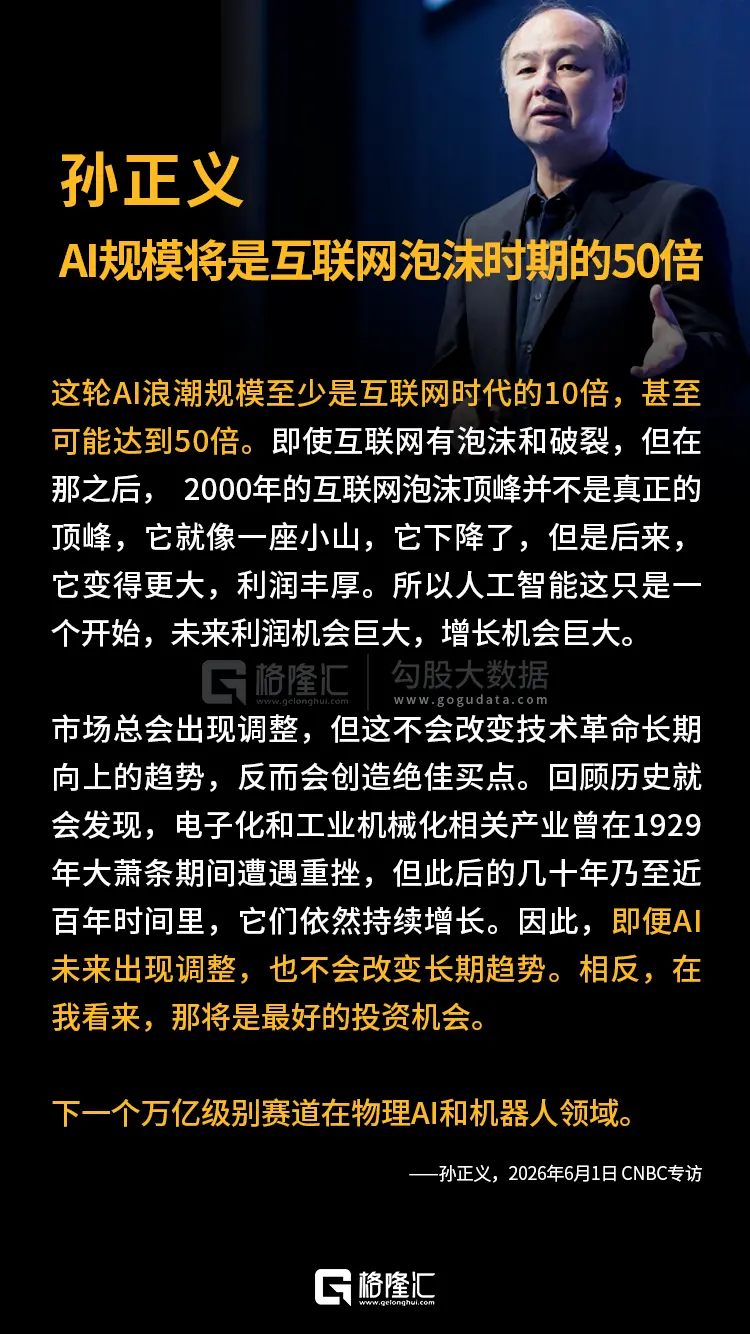
Many people compare the current situation to the 2000 internet bubble, feeling deeply concerned.

The dot-com bubble did cause the Nasdaq to plunge nearly 78%, evaporating over $5 trillion in wealth.

But twenty years later, which industry can operate without the internet?

Today, the value of the internet industry far exceeds that of the bubble era.

The AI bubble, at least on the surface, appears to be a similar situation.

The bubble existing in the capital markets cannot stop virtually every industry in society from actively being empowered by AI.

AI+ is an unstoppable trend.

Just as all industries today are inseparable from the internet, all industries in the future will be inseparable from AI.

01

In that era where any company with a '.com' in its name could go public and raise money, the Nasdaq soared nearly 600% between 1995 and 2000. Subsequently, a financial storm lasting two and a half years ensued.

Those prominent names back then, like software company MicroStrategy, plummeted 62% in a single day due to accounting scandals and overblown promises; Pets.com (selling pet food online) and Webvan (the pioneer of fresh grocery e-commerce) went bankrupt outright.

......

Amid the panic, almost everyone condemned the internet as a scam.

However, the physical infrastructure left behind by the reckless spending of speculative capital often nurtures the next era's supergiants at extremely low costs.

The bubble burst not because of the internet technology itself, but because the pace of physical infrastructure construction couldn't keep up with the market's rhythm.

For example, the once-dominant telecommunications companies (like WorldCom, Global Crossing) invested heavily in laying global submarine cables and dense wave division multiplexing networks. While they went bankrupt, these cheap "information superhighways" became the perfect breeding ground for the later rise of Netflix, Zoom, and mobile internet.

Without the frenzied, ahead-of-its-time global investment in telecom infrastructure around 2000, there would have been no later explosion of YouTube's video streaming or the development of cloud computing infrastructure.

Amazon is the most typical example.

Its stock price plunged from a high of $107 in 1999 to $7 in 2001, a drop of over 90%.

But it survived because its underlying business logic, "reconstructing retail through the network," aligned with the direction of advanced productive forces.

This is a classic case of Amara's Law: overestimating the short-term impact of a new technology while severely underestimating its long-term impact.

In the early stages of a technological revolution, the frenzy of speculative capital inevitably leads to overinvestment, forming a bubble.

This is the intelligence tax that innovation must pay.

But when the bubble subsides, what remains will be a more indestructible advanced productive force.

02

Returning to 2026, the bubble in the AI industry appears even larger.

Just the five major cloud service providers—Amazon, Google, Meta, Microsoft, and Oracle—are expected to have capital expenditures of $690 billion in 2026, with total AI infrastructure investment projected to reach $5.3 trillion by 2030.

Of this, only about 25% is spent on GPUs; the remaining 75% is invested entirely in physical infrastructure: liquid cooling systems, power transmission, network switches, optical modules, and land.

On the revenue side, the combined total revenue of all leading pure-play AI vendors like OpenAI, Anthropic, Cohere, Mistral, and Perplexity in 2026 is expected not to exceed $40 billion.

Nearly $700 billion poured into the foundational layer, only hundreds of billions returned from the application layer.

This severe asymmetry—what is it if not a bubble?

One cannot simply jump to such a conclusion.

There is a crucial point that cannot be overlooked.

In March 2023, when OpenAI released GPT-4, the blended cost per million input tokens was about $30.

By April 2025, thanks to model architecture optimization and inference computing improvements, the price for models with equivalent intelligence levels plummeted to $0.1-$0.15 per million tokens.

According to Stanford's "AI Index Report" and TokenCost data: AI inference costs have dropped over 99.7% in the past two years.

Following traditional linear thinking, with costs plummeting, corporate AI spending should decrease, right?

But the reality is, enterprise AI cloud spending tripled between 2024 and 2025.

Why?

Because when the marginal cost of "intelligence" approaches zero, AI is no longer just a simple text summarizer or chatbot; it has entered a new era of agents and multimodal augmented retrieval.

Companies are starting to let AI agents automatically run tasks thousands of times—writing code, scanning millions of legal contracts, simulating biological experiments.

Cheap tokens have unlocked a massive amount of long-tail demand previously uncommercializable due to cost constraints.

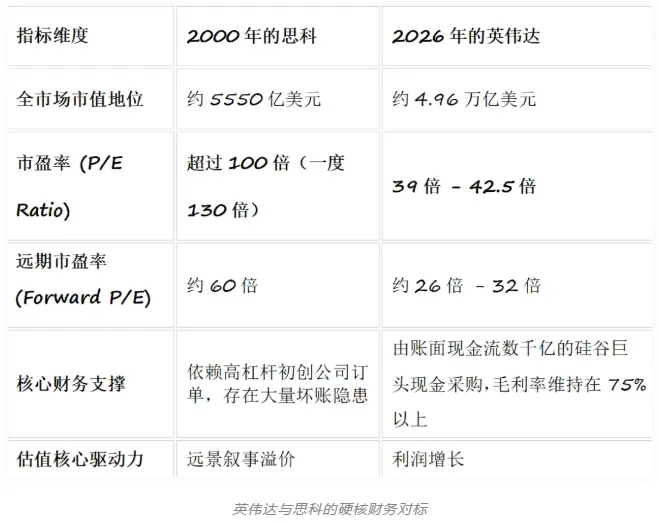
This point can also be gleaned by comparing NVIDIA in 2026 and Cisco, the network hardware kingpin of 2000.

Their ecological niches are strikingly similar, but their underlying financial health is worlds apart.
This precisely validates the economic principle known as the "Jevons Paradox": technological progress improves energy efficiency, but instead of reducing energy consumption, it leads to greater demand due to cost reduction.

Even after experiencing the so-called "DeepSeek moment" early last year, the market quickly sobered up in the following months: the more optimized the algorithms, the lower the barrier for enterprise AI adoption, ultimately leading to an exponential increase in total computing power consumption.

It is precisely because of this that AI can gradually embed itself into virtually every traditional industry.

Just as all industries embraced internet+ over the past two decades.

From SaaS software to biopharmaceuticals, and then to advanced manufacturing robotics driven by embodied intelligence, in 2026, almost every industry is embracing AI+.

No one discusses "should we use AI," but rather anxiously questions "is our data properly cleaned? Do we have enough API call quota? Is our RAG architecture optimal?"

Currently, the AI industry does indeed have a bubble.

But for enterprises, if you don't embrace the bubble, you will be crushed by the times.

This has been proven over the past two decades of the internet era.

03

Currently, we are undoubtedly at an extremely critical node in the technology lifecycle: just before the "Trough of Disillusionment" on Gartner's Hype Cycle, or at a turning point in the theory of "Technological Revolutions and Financial Capital."

The AI bubble is already bursting, it's just that many haven't realized it.

Over the past few years, a large number of venture capital firms suffered from fear of missing out (FOMO).

Any new startup, with just a few dozen PPT slides, wrapping a layer of OpenAI's API, could raise money. Now, as the tide recedes, these companies with no moat, only concepts, are dying en masse.

This is the market self-cleansing, a manifestation of the bubble bursting.

But this is only the surface phenomenon.

Three profound evolutions are taking place in the market's underlying logic:

First, the shift of value from CapEx to OpEx

Currently, the money is being made by the shovel sellers—NVIDIA, TSMC, and those selling optical modules and server liquid cooling equipment have captured most of the gains.

But as computing power gradually becomes "infrastructural," like water and electricity, the real excess profits will gradually shift to the application layer.

Namely, those AI-native enterprises that can use extremely low-cost tokens to genuinely solve pain points in vertical industries and reshape business processes (OpEx optimization).

Second, valuation multiple compression and earnings digestion

The market's high valuation for AI infrastructure does not necessarily mean a crash.

In many cases, the high-speed growth of corporate earnings will gradually digest lofty valuations through a "time-for-space" approach.

As long as the revenue growth of cloud computing giants keeps pace with the depreciation rate of capital expenditures, this game of pass-the-parcel can evolve into an unprecedented industrial upgrade.

For example, global automotive manufacturing giants and chip giants, by introducing end-to-end AI twin technology, have shortened the R&D-to-mass-production cycle for new products by 35% and improved overall equipment effectiveness (OEE) by 18%.

Another example: in the financial industry, by 2026, quantitative trading, risk control, and credit assessment are fully dominated by multimodal agents. AI is not only processing macro expectations with microsecond timestamps but also deeply involved in micro-level asset pricing for each transaction.

In highly knowledge-intensive industries like law, healthcare, and auditing, AI has completed its evolution from "junior assistant" to "partner-level expert."

Among the over 1 billion active users of ChatGPT, Gemini, Claude, a significant portion uses it as a substitute tool for daily high-intensity intellectual labor.

Including you and me.

All of the above are tangible developments, visible to everyone.

04

Looking back at the grand history of technology, Schumpeter's "creative destruction" is always unfolding.

Capital markets are always impatient, hoping that $1 invested today will return $10 tomorrow.

When nearly $700 billion in infrastructure investment cannot be fully transformed into application-layer profits in the short term, the market is bound to experience a brutal reshuffle.

Eliminating those speculative, shell companies that rely solely on PPT presentations, and retaining those with real technological depth and viable application scenarios.

After the reshuffle, those cheap and massive computing centers, highly optimized model algorithms, will serve thousands of industries at extremely low cost.

After 2000, humanity entered a digital age where no industry could function without the internet.

Today, we are also irreversibly heading towards a fully intelligent era where all industries are governed and empowered by AI.

Amidst the noise of the bubble, the underlying momentum of productive force contains not a drop of water.


İlgili Sorular

QThe article mentions that AI market bubbles are a recurring phenomenon in technological revolutions. What specific historical example does it draw a parallel to, and what was the long-term outcome?

AThe article draws a direct parallel to the dot-com bubble of 2000. While it caused a massive market crash and wealth destruction in the short term, the long-term outcome was that the internet's value far surpassed its pre-bubble valuation, becoming indispensable to almost every industry. The author suggests AI is following a similar pattern: short-term speculative excess (the bubble) funding the infrastructure for long-term, transformative adoption across all sectors.

QAccording to the article, what is the "Jevons Paradox" in the context of AI, and how does it explain the surge in corporate AI spending despite falling costs?

AThe Jevons Paradox states that technological progress that increases the efficiency of using a resource (like AI computing power) often leads to an *increase*, not a decrease, in the total consumption of that resource. The article applies this to AI: as the cost per token (the unit of AI computation) plummets (over 99.7%), it unlocks vast new, previously cost-prohibitive use cases. Companies don't just do the same tasks cheaper; they deploy AI for massively scaled, complex applications (like automated agents running thousands of tasks), leading to a net explosion in total AI spending and compute demand.

QThe article describes a significant asymmetry between AI infrastructure investment and application-layer revenue. What are the figures cited for 2026, and what broader point does this contrast illustrate?

AThe article states that for 2026, major cloud service providers are projected to have capital expenditures of $690 billion on AI infrastructure. In contrast, the combined revenue of all leading pure-play AI companies (like OpenAI, Anthropic) is projected to be under $40 billion. This massive asymmetry (nearly 700B in vs. ~40B out) illustrates the current 'bubble' characteristic of over-investment in anticipation of future demand. However, the author argues this infrastructure buildup is necessary, akin to the telecom overbuild during the dot-com era, which later enabled the rise of streaming and cloud computing.

QWhat are the three 'profound evolutions' in the market's deep logic that the article identifies as happening beneath the surface of the apparent bubble burst?

A1. Value shift from CapEx to OpEx: Profits will gradually move from sellers of infrastructure (hardware like GPUs) to AI-native application companies that use cheap compute to solve real business problems and optimize operational expenses. 2. Valuation compression and earnings digestion: High valuations for infrastructure may be sustained not by perpetual hype, but by companies growing their earnings fast enough to eventually justify the high prices ('time for space'). 3. The article heavily implies a third evolution (though not explicitly numbered as such in the provided text): The widespread, tangible integration of AI into core industries (automotive, finance, law, medicine), moving from concept to essential, productivity-enhancing tool, which validates the underlying technological shift.

QHow does the article characterize the nature of the current AI bubble's burst, and what is the primary mechanism of this 'self-purification' of the market?

AThe article characterizes the current bubble burst as a necessary 'market self-purification' or 'creative destruction.' The primary mechanism is the widespread failure and weeding out of speculative, low-substance companies that lacked a true technological moat—specifically, those that were merely 'wrapping' existing AI APIs (like OpenAI's) in a presentation without solving a unique problem or building defensible technology. This clears the field for serious companies with real technology and viable business models.

İlgili Okumalar

Has the 'Digital Gold' Narrative for BTC Failed?

**Title: Has the "Digital Gold" Narrative for Bitcoin Failed?** The article argues that Bitcoin's "digital gold" narrative remains valid despite a recent sharp price decline (from a peak near $126k in Oct 2025 to briefly under $61k in Feb 2026). It presents a long-term investment framework based on three core points: **1. Viewing Bitcoin as an Asset:** Bitcoin is presented as a superior potential store of value compared to gold. Key arguments are its absolute scarcity (21 million cap), superior portability, and transparent auditability via its public ledger. While acknowledging its current use in early, volatile stages (~3-4% global adoption), the author draws parallels to the early, disruptive phases of the internet and e-commerce. **2. Understanding the Recent Downturn:** The current ~50% correction is framed as a predictable, consensus-driven cycle following its post-halving peak (the 2024 halving preceded the Oct 2025 high). A crucial factor is a historic "changing of hands": the influx of new institutional buyers via ETFs allowed early, low-cost holders (miners, OG believers) to take profits. The author notes that while severe, Bitcoin's historical drawdowns (e.g., 93% in 2011, 77% in 2021-22) have been progressively smaller, suggesting maturing holder structure and decreasing volatility over time. **3. The Long-Term Perspective:** The long-term thesis hinges on Bitcoin capturing a portion of gold's market value. With Bitcoin's market cap at ~$1.4 trillion (at $70k) versus gold's ~$20 trillion, significant upside potential exists if the "digital gold" narrative is partially realized. However, the author strongly cautions that short-term risks remain, the bottom is unpredictable, and high volatility is inherent. The real risk is not Bitcoin failing but poor personal position management (over-leverage, wrong capital) and a lack of deep understanding, which can force investors out during severe downturns. The conclusion uses Amazon's 95% crash post-2000 dot-com bubble and subsequent 42x recovery as an analogy. The ultimate question is not if Bitcoin's price will rise, but if an investor's strategy and conviction can withstand the volatility to see the long-term play out. The recent divergence (gold up, Bitcoin down) is posed not as a narrative failure, but as potential evidence of this ongoing, painful transition from a speculative asset to a mainstream allocation.

marsbit1 saat önce

Has the 'Digital Gold' Narrative for BTC Failed?

marsbit1 saat önce

Has BTC's 'Digital Gold' Narrative Failed?

The article discusses Bitcoin's "digital gold" narrative, its recent price drop, and long-term outlook through the perspective of "Jason". It argues the narrative is not a failure but that Bitcoin represents a superior, new asset class due to its fixed supply (21 million), portability, and auditability. The piece compares its current ~3-4% global adoption rate to early internet/e-commerce, suggesting significant growth potential. Regarding the 2025-2026 price decline (from ~$126k to briefly under $61k), the author views it as a predictable, consensus-driven sell-off within Bitcoin's ~4-year cycle post-halving, exacerbated by a major "handover" from early, low-cost holders to new institutional buyers via ETFs. A key observation is that historical peak-to-trough drawdowns have lessened over time (e.g., 93% in 2011 to ~50% in 2026), indicating maturing volatility as holder structure changes. For the long term, the author uses a simple framework: Bitcoin's total market cap (~$1.4T at $70k) is only about 7% of gold's (~$20T). Even capturing 30-50% of gold's value would imply substantial upside. However, the article strongly cautions against viewing this as investment advice, emphasizing extreme volatility and the critical importance of risk management, position sizing, and deep fundamental understanding to survive severe drawdowns. It concludes by drawing a parallel to Amazon's 95% crash in 2000 and subsequent 42x recovery, stressing that the key is surviving market cycles to realize long-term potential.

链捕手1 saat önce

Has BTC's 'Digital Gold' Narrative Failed?

链捕手1 saat önce

From Code to Cognition: A Ten-Thousand-Word Guide to the Evolution of the Robot Brain

"From Code to Cognition: The Evolution of Robot Brains" The journey of robotic intelligence has shifted dramatically from manually coded systems to AI-driven brains. For decades, robots relied on layered software stacks—perception, state estimation, planning, control—each handcrafted. While predictable, they lacked adaptability. The 2010s saw deep learning revolutionize perception (e.g., object detection) and control (via reinforcement learning), but learned skills remained narrow. The arrival of Large Language Models (LLMs) marked a turning point. LLMs acted as high-level planners, interpreting natural language instructions and generating sequences of actions for traditional robotic systems to execute. However, true integration came with Visual-Language-Action (VLA) models, which fused vision, language, and motion prediction into a single network. Pioneered by models like RT-2 and open-source projects like OpenVLA, VLAs enable robots to reason and act directly from visual input and commands. The most advanced humanoid robots now employ a "dual-brain" architecture: a slow-thinking, large VLA (System 2) for reasoning and planning, and a fast-reacting, small network (System 1) for high-frequency motion control, sometimes with an even lower-level System 0 for balance. This split balances cognition with the physics of real-time movement. Computation is split between onboard hardware (e.g., NVIDIA Jetson) for safety-critical control loops and cloud/edge servers for non-critical tasks like learning and interfaces. A crucial driver is the open-source ecosystem—models like GR00T and OpenVLA allow startups to build upon pre-trained brains and fine-tune them with their own data, accelerating development. Despite progress, current systems struggle with recovery from errors, sample inefficiency, and long-horizon tasks. This has spurred the rise of **World Models**—neural networks that predict the consequences of actions. By simulating possible futures before acting (like NVIDIA Cosmos or Meta V-JEPA), robots can plan, recover, and generalize better. This represents the next frontier: shifting intelligence from learned reactions to an internal model of physics and cause-and-effect. The field is rapidly evolving. While not yet at its "ChatGPT moment," the convergence of cheaper hardware, scalable simulation, and world models points toward robots that are increasingly capable, adaptive, and useful. The question is shifting from "what can robots do?" to "what *should* they do?"

marsbit2 saat önce

From Code to Cognition: A Ten-Thousand-Word Guide to the Evolution of the Robot Brain

marsbit2 saat önce

İşlemler

Spot
Futures

Popüler Makaleler

GROK AI Nedir

Grok AI: Web3 Döneminde Konuşma Teknolojisini Devrim Niteliğinde Yenilik Giriş Hızla gelişen yapay zeka alanında, Grok AI, ileri teknoloji ve kullanıcı etkileşimi alanlarını birleştiren dikkate değer bir proje olarak öne çıkıyor. Ünlü girişimci Elon Musk'ın liderliğindeki xAI tarafından geliştirilen Grok AI, yapay zeka ile etkileşim şeklimizi yeniden tanımlamayı hedefliyor. Web3 hareketi devam ederken, Grok AI, karmaşık sorgulara yanıt vermek için konuşma yapay zekasının gücünden yararlanmayı amaçlıyor ve kullanıcılara sadece bilgilendirici değil, aynı zamanda eğlenceli bir deneyim sunuyor. Grok AI Nedir? Grok AI, kullanıcılarla dinamik bir şekilde etkileşimde bulunmak üzere tasarlanmış sofistike bir konuşma yapay zeka sohbet botudur. Birçok geleneksel yapay zeka sisteminin aksine, Grok AI, genellikle uygunsuz veya standart yanıtların dışında kabul edilen daha geniş bir sorgu yelpazesini benimsemektedir. Projenin temel hedefleri şunlardır: Güvenilir Akıl Yürütme: Grok AI, bağlamsal anlayışa dayalı mantıklı yanıtlar sağlamak için sağduyu akıl yürütmeyi vurgular. Ölçeklenebilir Denetim: Araç yardımı entegrasyonu, kullanıcı etkileşimlerinin hem izlenmesini hem de kalite için optimize edilmesini sağlar. Resmi Doğrulama: Güvenlik en önemli önceliktir; Grok AI, çıktılarının güvenilirliğini artırmak için resmi doğrulama yöntemlerini entegre eder. Uzun Bağlam Anlayışı: AI modeli, kapsamlı konuşma geçmişini saklama ve hatırlama konusunda mükemmel bir performans sergileyerek anlamlı ve bağlamsal olarak farkında tartışmaların yapılmasını kolaylaştırır. Saldırgan Dayanıklılık: Manipüle edilmiş veya kötü niyetli girdilere karşı savunmalarını geliştirmeye odaklanarak, Grok AI kullanıcı etkileşimlerinin bütünlüğünü korumayı hedefler. Özünde, Grok AI sadece bir bilgi alma cihazı değil; dinamik diyalogu teşvik eden, etkileyici bir konuşma partneridir. Grok AI'nın Yaratıcısı Grok AI'nın arkasındaki beyin, otomotiv, uzay yolculuğu ve teknoloji gibi çeşitli alanlarda yenilikle özdeşleşen Elon Musk'tır. Yapay zeka teknolojisini faydalı yollarla geliştirmeye odaklanan xAI çatısı altında, Musk'ın vizyonu, yapay zeka etkileşimlerinin anlaşılmasını yeniden şekillendirmeyi amaçlıyor. Liderlik ve temel etik, Musk'ın teknolojik sınırları zorlamaya olan bağlılığı tarafından derinden etkilenmektedir. Grok AI'nın Yatırımcıları Grok AI'yi destekleyen yatırımcılarla ilgili spesifik detaylar sınırlı kalmakla birlikte, projenin kuluçka merkezi olan xAI'nin, esasen Elon Musk tarafından kurulduğu ve desteklendiği kamuya açık bir şekilde kabul edilmektedir. Musk'ın önceki girişimleri ve mülkleri, Grok AI'nın güvenilirliğini ve büyüme potansiyelini daha da artıran sağlam bir destek sağlar. Ancak, şu anda Grok AI'yı destekleyen ek yatırım fonları veya kuruluşlarıyla ilgili bilgiye kolayca erişim sağlanamamaktadır; bu da potansiyel gelecekteki keşif alanını işaret etmektedir. Grok AI Nasıl Çalışır? Grok AI'nın operasyonel mekanikleri, kavramsal çerçevesi kadar yenilikçidir. Proje, benzersiz işlevselliklerini kolaylaştıran birkaç son teknoloji ürünü teknolojiyi entegre eder: Sağlam Altyapı: Grok AI, konteyner orkestrasyonu için Kubernetes, performans ve güvenlik için Rust ve yüksek performanslı sayısal hesaplama için JAX kullanılarak inşa edilmiştir. Bu üçlü, sohbet botunun verimli çalışmasını, etkili bir şekilde ölçeklenmesini ve kullanıcılara zamanında hizmet vermesini sağlar. Gerçek Zamanlı Bilgi Erişimi: Grok AI'nın ayırt edici özelliklerinden biri, X platformu (önceden Twitter olarak biliniyordu) aracılığıyla gerçek zamanlı verilere erişim yeteneğidir. Bu yetenek, yapay zekaya en son bilgilere erişim sağlar ve diğer yapay zeka modellerinin gözden kaçırabileceği zamanında yanıtlar ve öneriler sunmasına olanak tanır. İki Etkileşim Modu: Grok AI, kullanıcılara “Eğlenceli Mod” ve “Normal Mod” arasında seçim yapma imkanı sunar. Eğlenceli Mod, daha eğlenceli ve mizahi bir etkileşim tarzı sağlarken, Normal Mod, kesin ve doğru yanıtlar vermeye odaklanır. Bu çok yönlülük, çeşitli kullanıcı tercihlerine hitap eden özelleştirilmiş bir deneyim sağlar. Özünde, Grok AI performansı etkileşimle birleştirerek, hem zenginleştirici hem de eğlenceli bir deneyim yaratmaktadır. Grok AI'nın Zaman Çizelgesi Grok AI'nın yolculuğu, gelişim ve dağıtım aşamalarını yansıtan önemli dönüm noktalarıyla işaretlenmiştir: İlk Geliştirme: Grok AI'nın temel aşaması, modelin ilk eğitim ve ince ayarının yapıldığı yaklaşık iki ay boyunca gerçekleşmiştir. Grok-2 Beta Yayını: Önemli bir ilerleme olarak, Grok-2 beta duyurulmuştur. Bu sürüm, sohbet etme, kodlama ve akıl yürütme yetenekleriyle donatılmış iki versiyon—Grok-2 ve Grok-2 mini—sunmuştur. Halka Açık Erişim: Beta geliştirmesinin ardından, Grok AI X platformu kullanıcılarına sunulmuştur. Telefon numarasıyla doğrulanan ve en az yedi gün aktif olan hesap sahipleri, sınırlı bir versiyona erişim sağlayarak teknolojiyi daha geniş bir kitleye ulaştırmaktadır. Bu zaman çizelgesi, Grok AI'nın kuruluşundan kamu etkileşimine kadar sistematik büyümesini kapsar ve sürekli iyileştirme ve kullanıcı etkileşimine olan bağlılığını vurgular. Grok AI'nın Ana Özellikleri Grok AI, yenilikçi kimliğine katkıda bulunan birkaç ana özelliği kapsamaktadır: Gerçek Zamanlı Bilgi Entegrasyonu: Güncel ve ilgili bilgilere erişim, Grok AI'yı birçok statik modelden ayırarak, etkileyici ve doğru bir kullanıcı deneyimi sağlar. Çeşitli Etkileşim Tarzları: Farklı etkileşim modları sunarak, Grok AI çeşitli kullanıcı tercihlerine hitap eder ve yapay zeka ile konuşurken yaratıcılığı ve kişiselleştirmeyi teşvik eder. Gelişmiş Teknolojik Altyapı: Kubernetes, Rust ve JAX kullanımı, projeye güvenilirlik ve optimal performans sağlamak için sağlam bir çerçeve sunar. Etik Tartışma Dikkati: Görüntü üreten bir işlevin dahil edilmesi, projenin yenilikçi ruhunu sergiler. Ancak, aynı zamanda tanınabilir figürlerin saygılı bir şekilde tasvir edilmesi ve telif hakkı ile ilgili etik konuları da gündeme getirir—bu, yapay zeka topluluğunda süregelen bir tartışmadır. Sonuç Konuşma yapay zekası alanında öncü bir varlık olarak Grok AI, dijital çağda dönüştürücü kullanıcı deneyimlerinin potansiyelini kapsar. xAI tarafından geliştirilen ve Elon Musk'ın vizyoner yaklaşımıyla yönlendirilen Grok AI, gerçek zamanlı bilgiyi gelişmiş etkileşim yetenekleriyle birleştirir. Yapay zekanın neler başarabileceği konusunda sınırları zorlamayı hedeflerken, etik konulara ve kullanıcı güvenliğine odaklanmayı sürdürmektedir. Grok AI, sadece teknolojik ilerlemeyi değil, aynı zamanda Web3 manzarasında yeni bir konuşma paradigmasını da temsil eder ve kullanıcılara hem yetkin bilgi hem de eğlenceli etkileşim sunma vaadinde bulunur. Proje gelişmeye devam ederken, teknolojinin, yaratıcılığın ve insan benzeri etkileşimin kesişim noktasında nelerin başarılabileceğinin bir kanıtı olarak durmaktadır.

379 Toplam GörüntülenmeYayınlanma 2024.12.26Güncellenme 2024.12.26

GROK AI Nedir

ERC AI Nedir

Euruka Tech: $erc ai ve Web3'teki Hedefleri Üzerine Bir Genel Bakış Giriş Blockchain teknolojisi ve merkeziyetsiz uygulamaların hızla gelişen manzarasında, her biri benzersiz hedefler ve metodolojilerle yeni projeler sıkça ortaya çıkmaktadır. Bu projelerden biri, kripto para ve Web3 alanında faaliyet gösteren Euruka Tech'tir. Euruka Tech'in, özellikle $erc ai token'ının ana odak noktası, merkeziyetsiz teknolojinin büyüyen yeteneklerinden yararlanmak için tasarlanmış yenilikçi çözümler sunmaktır. Bu makale, Euruka Tech'in kapsamlı bir genel görünümünü, hedeflerini, işlevselliğini, yaratıcısının kimliğini, potansiyel yatırımcılarını ve Web3'teki daha geniş bağlam içindeki önemini keşfetmeyi amaçlamaktadır. Euruka Tech, $erc ai Nedir? Euruka Tech, Web3 ortamının sunduğu araçlar ve işlevsellikleri kullanan bir proje olarak tanımlanmaktadır ve operasyonlarında yapay zekayı entegre etmeye odaklanmaktadır. Projenin çerçevesine dair spesifik detaylar biraz belirsiz olsa da, kullanıcı etkileşimini artırmayı ve kripto alanındaki süreçleri otomatikleştirmeyi amaçlamaktadır. Proje, yalnızca işlemleri kolaylaştırmakla kalmayıp, aynı zamanda yapay zeka aracılığıyla öngörücü işlevsellikleri de entegre eden merkeziyetsiz bir ekosistem yaratmayı hedeflemektedir; bu nedenle token'ının adı $erc ai'dir. Amaç, büyüyen Web3 alanında daha akıllı etkileşimleri ve verimli işlem işleme süreçlerini kolaylaştıran sezgisel bir platform sunmaktır. Euruka Tech'in Yaratıcısı Kimdir, $erc ai? Şu anda, Euruka Tech'in arkasındaki yaratıcı veya kurucu ekip hakkında bilgi verilmemiştir ve bu durum biraz belirsizdir. Bu veri eksikliği, ekibin geçmişi hakkında bilgi sahibi olmanın genellikle blockchain sektöründe güvenilirlik oluşturmak için gerekli olduğu endişelerini doğurmaktadır. Bu nedenle, somut detaylar kamuya sunulana kadar bu bilgiyi bilinmeyen olarak sınıflandırdık. Euruka Tech'in Yatırımcıları Kimlerdir, $erc ai? Benzer şekilde, Euruka Tech projesinin yatırımcıları veya destekleyen organizasyonları hakkında mevcut araştırmalarla kolayca sağlanan bir bilgi yoktur. Euruka Tech ile etkileşimde bulunmayı düşünen potansiyel paydaşlar veya kullanıcılar için kritik bir unsur, kurumsal finansal ortaklıklar veya saygın yatırım firmalarından gelen destekle sağlanan güvencedir. Yatırım ilişkileri hakkında açıklamalar olmadan, projenin finansal güvenliği veya sürdürülebilirliği hakkında kapsamlı sonuçlar çıkarmak zordur. Bulunan bilgilere paralel olarak, bu bölüm de bilinmeyen durumundadır. Euruka Tech, $erc ai Nasıl Çalışır? Euruka Tech için detaylı teknik spesifikasyonların eksik olmasına rağmen, yenilikçi hedeflerini göz önünde bulundurmak önemlidir. Proje, yapay zekanın hesaplama gücünden yararlanarak kripto para ortamında kullanıcı deneyimini otomatikleştirmeyi ve geliştirmeyi hedeflemektedir. AI'yi blockchain teknolojisiyle entegre ederek, Euruka Tech otomatik ticaret, risk değerlendirmeleri ve kişiselleştirilmiş kullanıcı arayüzleri gibi özellikler sunmayı amaçlamaktadır. Euruka Tech'in yenilikçi özü, kullanıcılar ile merkeziyetsiz ağların sunduğu geniş olanaklar arasında kesintisiz bir bağlantı yaratma hedefinde yatmaktadır. Makine öğrenimi algoritmaları ve AI kullanarak, ilk kez kullanıcı zorluklarını en aza indirmeyi ve Web3 çerçevesindeki işlem deneyimlerini düzene sokmayı amaçlamaktadır. AI ve blockchain arasındaki bu simbiyoz, $erc ai token'ının önemini vurgulamakta ve geleneksel kullanıcı arayüzleri ile merkeziyetsiz teknolojilerin gelişmiş yetenekleri arasında bir köprü işlevi görmektedir. Euruka Tech, $erc ai Zaman Çizelgesi Maalesef, Euruka Tech hakkında mevcut olan sınırlı bilgiler nedeniyle, projenin yolculuğundaki önemli gelişmeler veya kilometre taşları hakkında detaylı bir zaman çizelgesi sunamıyoruz. Genellikle bir projenin evrimini haritalamak ve büyüme eğrisini anlamak için değerli olan bu zaman çizelgesi şu anda mevcut değildir. Önemli olaylar, ortaklıklar veya işlevsel eklemeler hakkında bilgiler belirgin hale geldikçe, güncellemeler kesinlikle Euruka Tech'in kripto alanındaki görünürlüğünü artıracaktır. Diğer “Eureka” Projeleri Üzerine Açıklama Birden fazla projenin ve şirketin “Eureka” benzeri bir isimlendirmeye sahip olduğunu belirtmek önemlidir. Araştırmalar, robotlara karmaşık görevler öğretmeye odaklanan NVIDIA Research'ten bir AI ajanı gibi girişimleri, ayrıca eğitim ve müşteri hizmetleri analitiğinde kullanıcı deneyimini geliştiren Eureka Labs ve Eureka AI'yi tanımlamıştır. Ancak, bu projeler Euruka Tech'ten farklıdır ve hedefleri veya işlevleri ile karıştırılmamalıdır. Sonuç Euruka Tech, $erc ai token'ı ile birlikte, Web3 manzarasında umut verici ancak şu anda belirsiz bir oyuncuyu temsil etmektedir. Yaratıcısı ve yatırımcıları hakkında detaylar açıklanmamış olsa da, yapay zekayı blockchain teknolojisiyle birleştirme konusundaki temel hedefi ilgi odağı olmaktadır. Projenin, gelişmiş otomasyon aracılığıyla kullanıcı etkileşimini teşvik etme konusundaki benzersiz yaklaşımları, Web3 ekosistemi ilerledikçe onu farklı kılabilir. Kripto piyasası gelişmeye devam ederken, paydaşların Euruka Tech etrafındaki gelişmelere dikkat etmeleri önemlidir; belgelenmiş yeniliklerin, ortaklıkların veya tanımlanmış bir yol haritasının gelişimi, önümüzdeki dönemde önemli fırsatlar sunabilir. Şu an itibarıyla, Euruka Tech'in potansiyelini ve rekabetçi kripto manzarasındaki konumunu açığa çıkarabilecek daha somut içgörüler beklemekteyiz.

350 Toplam GörüntülenmeYayınlanma 2025.01.02Güncellenme 2025.01.02

ERC AI Nedir

DUOLINGO AI Nedir

DUOLINGO AI: Dil Öğrenimini Web3 ve AI İnovasyonu ile Entegre Etmek Teknolojinin eğitimi yeniden şekillendirdiği bir çağda, yapay zeka (AI) ve blok zinciri ağlarının entegrasyonu dil öğrenimi için yeni bir ufuk açmaktadır. DUOLINGO AI ve ona bağlı kripto para birimi $DUOLINGO AI ile tanışın. Bu proje, önde gelen dil öğrenme platformlarının eğitimsel yeteneklerini merkeziyetsiz Web3 teknolojisinin faydalarıyla birleştirmeyi hedefliyor. Bu makale, DUOLINGO AI'nın temel yönlerini, hedeflerini, teknolojik çerçevesini, tarihsel gelişimini ve gelecekteki potansiyelini incelerken, orijinal eğitim kaynağı ile bu bağımsız kripto para girişimi arasındaki netliği korumaktadır. DUOLINGO AI Genel Görünümü DUOLINGO AI'nın temelinde, öğrenicilerin dil yeterliliğinde eğitimsel kilometre taşlarına ulaşmaları için kriptografik ödüller kazanabilecekleri merkeziyetsiz bir ortam oluşturma hedefi yatmaktadır. Akıllı sözleşmeler uygulayarak, proje beceri doğrulama süreçlerini ve token tahsislerini otomatikleştirmeyi amaçlamakta, şeffaflık ve kullanıcı sahipliğini vurgulayan Web3 ilkelerine uymaktadır. Model, dil edinimindeki geleneksel yaklaşımlardan ayrılarak, token sahiplerinin kurs içeriği ve ödül dağıtımları üzerinde iyileştirmeler önermesine olanak tanıyan topluluk odaklı bir yönetişim yapısına dayanmaktadır. DUOLINGO AI'nın bazı dikkat çekici hedefleri şunlardır: Oyunlaştırılmış Öğrenme: Proje, dil yeterlilik seviyelerini temsil etmek için blok zinciri başarıları ve değiştirilemez tokenleri (NFT'ler) entegre ederek, katılımcıları motive eden dijital ödüller sunmaktadır. Merkeziyetsiz İçerik Üretimi: Eğitmenler ve dil meraklılarının kendi kurslarını katkıda bulunmalarına olanak tanıyarak, tüm katkıda bulunanların fayda sağladığı bir gelir paylaşım modeli oluşturmaktadır. AI Destekli Kişiselleştirme: Gelişmiş makine öğrenimi modellerini kullanarak, DUOLINGO AI dersleri bireysel öğrenme ilerlemesine uyacak şekilde kişiselleştirmekte, köklü platformlarda bulunan uyarlamalı özelliklere benzer bir deneyim sunmaktadır. Proje Yaratıcıları ve Yönetişim Nisan 2025 itibarıyla, $DUOLINGO AI'nın arkasındaki ekip takma isimler kullanmaktadır; bu, merkeziyetsiz kripto para alanında sıkça görülen bir uygulamadır. Bu anonimlik, bireysel geliştiricilere odaklanmak yerine kolektif büyümeyi ve paydaş katılımını teşvik etmek amacıyla tasarlanmıştır. Solana blok zincirinde dağıtılan akıllı sözleşme, geliştiricinin cüzdan adresini not etmekte, bu da yaratıcıların kimliğinin bilinmemesine rağmen işlemlerle ilgili şeffaflık taahhüdünü simgelemektedir. Yol haritasına göre, DUOLINGO AI, Merkeziyetsiz Otonom Organizasyon (DAO) haline gelmeyi hedeflemektedir. Bu yönetişim yapısı, token sahiplerinin özellik uygulamaları ve hazine tahsisleri gibi kritik konularda oy kullanmalarına olanak tanımaktadır. Bu model, çeşitli merkeziyetsiz uygulamalarda bulunan topluluk güçlendirme ethosu ile uyumlu olup, kolektif karar verme sürecinin önemini vurgulamaktadır. Yatırımcılar ve Stratejik Ortaklıklar Şu anda, $DUOLINGO AI ile bağlantılı olarak kamuya açık tanımlanabilir kurumsal yatırımcılar veya risk sermayedarları bulunmamaktadır. Bunun yerine, projenin likiditesi esas olarak merkeziyetsiz borsa (DEX) kaynaklıdır ve bu, geleneksel eğitim teknolojisi şirketlerinin finansman stratejileriyle keskin bir zıtlık oluşturmaktadır. Bu tabandan gelen model, merkeziyetsizliğe olan bağlılığını yansıtan topluluk odaklı bir yaklaşımı işaret etmektedir. DUOLINGO AI, beyaz kitabında, kurs tekliflerini zenginleştirmeyi amaçlayan belirsiz “blok zinciri eğitim platformları” ile işbirlikleri kurmayı planladığını belirtmektedir. Belirli ortaklıklar henüz açıklanmamış olsa da, bu işbirlikçi çabalar, blok zinciri yeniliğini eğitim girişimleri ile birleştirmeyi amaçlayan bir stratejiyi ima etmektedir ve çeşitli öğrenme yollarında erişimi ve kullanıcı katılımını genişletmektedir. Teknolojik Mimari AI Entegrasyonu DUOLINGO AI, eğitimsel tekliflerini geliştirmek için iki ana AI destekli bileşen içermektedir: Uyarlanabilir Öğrenme Motoru: Bu sofistike motor, kullanıcı etkileşimlerinden öğrenmekte olup, büyük eğitim platformlarından gelen özel modellere benzer. Belirli öğrenici zorluklarını ele almak için ders zorluğunu dinamik olarak ayarlamakta ve zayıf alanları hedeflenmiş alıştırmalarla pekiştirmektedir. Konuşma Ajanları: GPT-4 destekli sohbet botlarını kullanarak, DUOLINGO AI kullanıcıların simüle edilmiş konuşmalara katılmalarına olanak tanıyarak, daha etkileşimli ve pratik bir dil öğrenme deneyimi sunmaktadır. Blok Zinciri Altyapısı $DUOLINGO AI, Solana blok zincirinde inşa edilmiş kapsamlı bir teknolojik çerçeve kullanmaktadır: Beceri Doğrulama Akıllı Sözleşmeleri: Bu özellik, yeterlilik testlerini başarıyla geçen kullanıcılara otomatik olarak token ödülleri vermekte, gerçek öğrenim sonuçları için teşvik yapısını güçlendirmektedir. NFT Rozetleri: Bu dijital tokenler, öğrenicilerin kurslarının bir bölümünü tamamlamak veya belirli becerileri ustalaşmak gibi ulaştıkları çeşitli kilometre taşlarını simgelemekte ve bunları dijital olarak takas etmelerine veya sergilemelerine olanak tanımaktadır. DAO Yönetişimi: Token sahibi topluluk üyeleri, anahtar öneriler üzerinde oy kullanarak yönetişime katılabilir, bu da kurs teklifleri ve platform özelliklerinde yeniliği teşvik eden katılımcı bir kültürü kolaylaştırmaktadır. Tarihsel Zaman Çizelgesi 2022–2023: Kavramsallaştırma DUOLINGO AI için temel, dil öğrenimindeki AI ilerlemeleri ile blok zinciri teknolojisinin merkeziyetsiz potansiyeli arasındaki sinerjiyi vurgulayan bir beyaz kağıdın oluşturulmasıyla başlar. 2024: Beta Lansmanı Sınırlı bir beta sürümü, popüler dillerdeki teklifleri tanıtarak, erken kullanıcıları token teşvikleri ile ödüllendirir ve projenin topluluk katılım stratejisinin bir parçası olarak sunulmaktadır. 2025: DAO Geçişi Nisan ayında, tokenlerin dolaşıma girmesiyle tam bir ana ağ lansmanı gerçekleşir ve topluluk, Asya dillerine ve diğer kurs gelişmelerine olası genişlemeler hakkında tartışmalara başlar. Zorluklar ve Gelecek Yönelimleri Teknik Engeller Hırslı hedeflerine rağmen, DUOLINGO AI önemli zorluklarla karşı karşıyadır. Ölçeklenebilirlik, AI işleme ile merkeziyetsiz bir ağı sürdürme maliyetleri arasında denge kurma konusunda sürekli bir endişe kaynağıdır. Ayrıca, merkeziyetsiz bir teklif arasında kaliteli içerik üretimi ve moderasyonu sağlamak, eğitim standartlarını koruma konusunda karmaşıklıklar yaratmaktadır. Stratejik Fırsatlar İleriye dönük olarak, DUOLINGO AI, akademik kurumlarla mikro yeterlilik ortaklıkları kurma potansiyeline sahiptir ve dil becerilerinin blok zinciri ile doğrulanmış onaylarını sağlamaktadır. Ayrıca, çapraz zincir genişlemesi, projenin daha geniş kullanıcı tabanlarına ve ek blok zinciri ekosistemlerine erişim sağlamasına olanak tanıyabilir, böylece birlikte çalışabilirliğini ve erişimini artırabilir. Sonuç DUOLINGO AI, yapay zeka ve blok zinciri teknolojisinin yenilikçi bir birleşimini temsil etmekte olup, geleneksel dil öğrenim sistemlerine topluluk odaklı bir alternatif sunmaktadır. Takma isimli geliştirme süreci ve ortaya çıkan ekonomik modeli bazı riskler taşısa da, projenin oyunlaştırılmış öğrenme, kişiselleştirilmiş eğitim ve merkeziyetsiz yönetişim konusundaki taahhüdü, Web3 alanında eğitim teknolojisi için bir yol haritası aydınlatmaktadır. AI gelişmeye devam ederken ve blok zinciri ekosistemi evrim geçirirken, DUOLINGO AI gibi girişimler, kullanıcıların dil eğitimi ile etkileşim biçimlerini yeniden tanımlayabilir, toplulukları güçlendirebilir ve yenilikçi öğrenme mekanizmaları aracılığıyla katılımı ödüllendirebilir.

398 Toplam GörüntülenmeYayınlanma 2025.04.11Güncellenme 2025.04.11

DUOLINGO AI Nedir

Tartışmalar

HTX Topluluğuna hoş geldiniz. Burada, en son platform gelişmeleri hakkında bilgi sahibi olabilir ve profesyonel piyasa görüşlerine erişebilirsiniz. Kullanıcıların AI (AI) fiyatı hakkındaki görüşleri aşağıda sunulmaktadır.

活动图片