In-Depth Report on Web3 Robots Sector: When Machines Become On-Chain Economic Agents

HTX Learn2026-04-09 tarihinde yayınlandı2026-06-19 tarihinde güncellendi

Özet

In 2026, the deep integration of AI, robotics, and Web3 infrastructure is giving rise to an entirely new narrative—the Web3 Robots sector. This sector has moved beyond conceptual hype into a critical phase of real-world application deployment. This report systematically outlines the definition, boundaries, and developmental logic of the Web3 Robots sector, and conducts an in-depth analysis across three layers: the infrastructure layer (operating systems, data layer, network layer), the machine economy layer (tokenized platforms, positioning networks), and the application-deployment layer (DePIN investment)—of representative projects including OpenMind, PrismaX, peaq, Virtuals Protocol, Geodnet, and XMAQUINA. The analysis covers their technical architectures, funding backgrounds, market performance, and participation opportunities. The research reveals that the sector is forming a three-tiered, synergistic architecture: “data-layer training for intelligence - system-layer standardization - network-layer incentive-driven collaboration”. Machines are evolving from closed-off tools into autonomous economic agents with on-chain identities, payment capabilities, and collaborative networks. Although the sector remains in its early stage and primarily focuses on foundational capability building, the emergence of tangible yield cases (e.g., peaq’s robot farm delivering 18% APY) signals a definitive shift from theoretical concept to observable, participable, substantive development. Fo...

I. Sector Definition & Evolutionary Logic: From Automated Tools to On-Chain Economic Agents

Robotics technology is nothing new. Over the past decade, industrial robotic arms, warehouse robots, and drones have achieved large-scale deployment across manufacturing and logistics sectors. Yet these robots remain fundamentally closed-system tools—they execute pre-programmed instructions but lack identity recognition, autonomous decision-making, value exchange, or cross-platform collaboration capabilities. As large AI models endow machines with “thinking” ability and blockchain provides identity and settlement infrastructure, a new paradigm is emerging: machines are no longer mere hardware—they are autonomous economic agents capable of holding on-chain identities, executing transactions independently, and participating in real-world production.
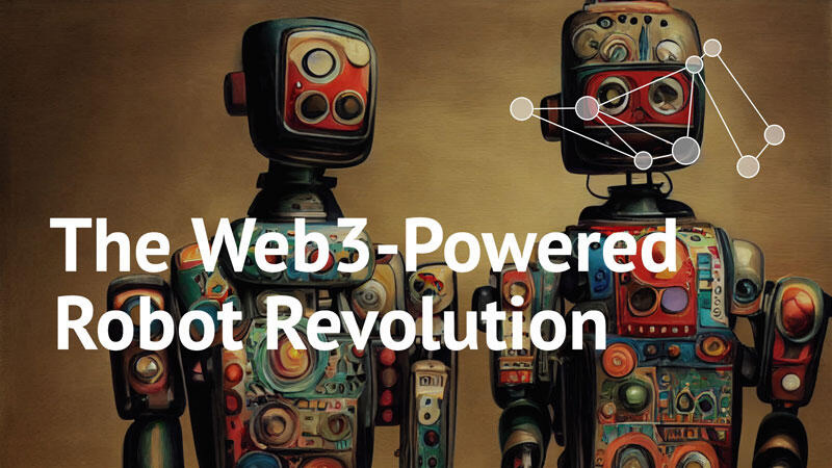
This transformation is driven by technological maturity across three dimensions. First, breakthroughs in embodied AI: large language models and multimodal models have endowed robots with natural language understanding, environmental perception, and task planning capabilities. For example, OpenMind’s OM1 operating system unifies perception, memory, reasoning, and action into a single framework, evolving robots from “capable of movement” to “capable of understanding and thinking”. Second, the rise of decentralized physical infrastructure networks (DePIN): blockchain provides physical devices with decentralized identifiers (DIDs), trusted data recording, and automated settlement, enabling machines to participate in market transactions as economic agents. Third, the maturation of stablecoins and Layer-2 solutions: efficient micropayment infrastructure makes high-frequency, low-value settlements between machines feasible, laying the financial foundation for the Machine Economy.

Forbes’ 2026 forecast states that blockchain will become AI’s trust network—every significant agent action will be recorded on a lightweight ledger, enabling compliance, governance, and accountability. In essence, the Web3 Robots sector is constructing a new economic system wherein machines can prove themselves, trust others, create value, and participate in distribution. This system comprises three architectural layers: the base layer is the OS empowering machine intelligence (e.g., OpenMind OM1); the middle layer is the protocol layer providing identity and collaborative networks (e.g., OpenMind FABRIC, peaq); and the top layer consists of labor markets and tokenized platforms targeting specific applications (e.g., Konnex, Virtuals). Synergy among these three layers is reshaping robots from “tools” into “digital citizens”.

II. Infrastructure Layer: Co-Evolution of Operating Systems, Data, and Networks

Foundational infrastructure development for the Web3 Robots sector is advancing simultaneously across multiple dimensions, with OpenMind’s OS-layer strategy, PrismaX’s data-layer exploration, and peaq’s network-layer construction standing out as most representative. Together, these three projects form a complete infrastructure loop of “system–data–network”, providing the operational bedrock for upper-layer applications.

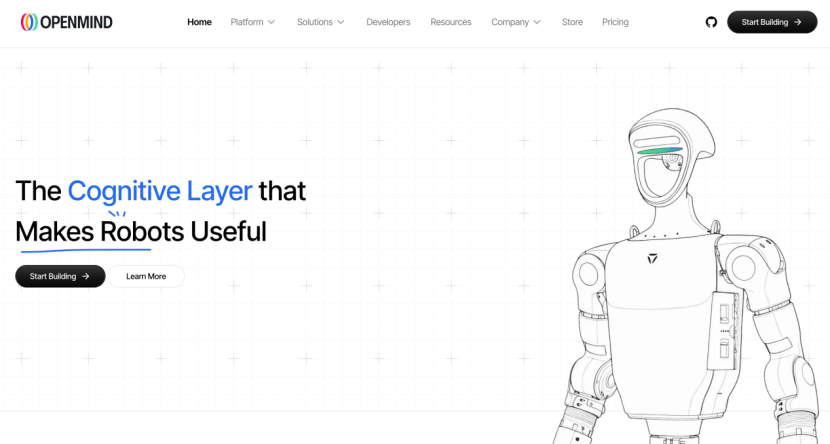
OpenMind is hailed as “Android for robotics”. Its core products include the open-source, AI-native robot operating system OM1 and the decentralized collaboration network FABRIC. OM1, licensed under MIT, has garnered over 2,500 stars on GitHub, attracted more than 500 global contributors, and welcomed over 7,500 independent developers. Unlike traditional robot operating systems (ROS), which focus solely on motion control and navigation, OM1 integrates four core modules—perception, memory, reasoning, and action—and supports advanced functions such as natural language interaction, environment mapping, and object recognition. OM1 has already been adapted for over ten leading hardware manufacturers including Unitree, Fourier Intelligence, UBTECH, and Deep Robotics, covering humanoid robots, quadrupeds, and robotic arms. The FABRIC protocol establishes a decentralized machine collaboration network, assigning each robot an on-chain identity (peaq ID) and supporting inter-machine skill sharing, task coordination, and USDC micropayments. In February 2026, FABRIC Protocol (ROBO) was launched on Binance Alpha and Binance Futures, achieving over $140 million in 24-hour trading volume, and was subsequently listed on OKX, Coinbase, Kraken, and other major exchanges. The project raised about $20 million in August 2025, led by Pantera Capital, with participation from Coinbase Ventures, DCG, and Sequoia China. Its latest valuation stands at approximately $200 million, while its Kaito Launchpad presale reached a $400 million FDV. Current participation avenues include Season 1 points programs, NFT minting on the FABRIC Identity Network, and GitHub code contributions, with strong expectations for upcoming airdrops.
PrismaX is dubbed the “gold mine” of physical-world training data. If algorithms are robots’ “brains”, then data is their “nourishment”. PrismaX targets the AI-robotics data layer, solving the industry’s most scarce resource—“physical-world interaction data”—Reinforcement Learning from Human Feedback (RLHF). Its platform allows users to remotely control real robotic arms via web interface and the system to record those operations, and sell the resulting datasets to robotics companies for AI training, rewarding users with points redeemable for future tokens. This “Play-to-Train” model creates a data flywheel: more users → more data → better models → more users. PrismaX recently closed an $11 million seed round led by top-tier VC a16z, with participation from Virtuals Protocol. Its ecosystem already hosts over 500 participants who’ve completed remote robotic arm operations, and it has deployed two fully functional robotic arm systems (“Tommy” and “Bill” from Unitech Walker). Users earn points via daily check-ins, whitepaper quizzes, or even paid training ($99), with market expectations pointing toward future airdrop distributions. Key risks include potential dilution of point value due to influxes of “airdrop-farming groups", and ongoing industry debate over whether remote-operation data can truly train commercially viable robots.

peaq is the Layer-1 network for the Machine Economy. peaq is a Layer-1 blockchain purpose-built for the Machine Economy, offering core functionalities including machine identity (peaq IDs), on-chain wallets, access control, and nanosecond-level time synchronization and supporting autonomous transactions among millions of robots and devices. Unlike many DePIN projects stuck at the conceptual stage, peaq has already validated a genuine commercial closed loop. Its Hong Kong-based Robo-farm deploys automated robots to grow hydroponic vegetables; users purchase NFTs representing farm equity, and vegetable sales revenue—converted into stablecoins—is distributed directly on-chain to NFT holders. Its first revenue distribution in late January 2026 yielded $3,820 USDT per claim, translating to an annualized return of approximately 18%. This “earn money by selling vegetables—not inflating tokens” model positions peaq as a flagship case of RWA (real-world asset) adoption. Partnerships include Bosch, Mastercard, and Airbus—spanning IoT sensor integration, payment gateway interoperability, and supply chain tracking. Its mainnet was launched in 2024; current circulating market cap stands at $34.25 million or so, with FDV at about $78 million. It hosts 50–60 live DePIN applications connecting over 2 million physical devices. Its native token $PEAQ serves primarily for gas fees and staking. The ongoing “Get Real” campaign offers a $210 million $PEAQ reward pool (valued at >$100 million), allowing users to earn XP/NP and claim tokens by completing real-world DePIN tasks.

The relationship among these three projects mirrors a complete production system: PrismaX supplies the “raw material” (data) for robot training; OpenMind’s OM1 serves as the “operating system” enabling intelligent robot operation; and peaq provides the “network and incentive layer” facilitating economic settlement. Their synergy forms the full infrastructure stack for decentralized embodied intelligence.

III. Financial Layer of the Machine Economy: Tokenized Platforms & Positioning Networks

Once the infrastructure layer resolves “how machines become intelligent” and “how machines collaborate”, the financial layer of the Machine Economy emerges. This layer addresses the core question: how do we price, trade, and circulate machine value? Virtuals Protocol and Geodnet offer distinct answers from complementary angles.

Virtuals Protocol is a tokenization platform for AI agents/robots, enabling community participation in agent issuance, staking, and governance. Its core mechanisms include the Pegasus/Unicorn ecosystem, the Agent Commerce Protocol (ACP) marketplace, and the Butler toolset. The ACP marketplace facilitates trustless commercial transactions among AI agents, supporting fully on-chain task posting, verification, and settlement. In March 2026, Virtuals co-developed the ERC-8183 standard (Agentic Commerce) with the Ethereum Foundation’s dAI team, introducing work primitives featuring on-chain escrow, evaluator certification, and modular hooks, enabling trustless agent-to-agent commerce. Data shows on-chain agent-generated revenue on Virtuals has surpassed $3 million (excluding fees), marking the emergence of verifiable, AI-agent-created economic output at scale. Its native token $VIRTUAL was launched at the end of 2023, currently commanding a $500 million or so market cap and being listed on major CEXs like Gate.io. Its weekly Epoch airdrop program remains active, allocating rewards based on veVIRTUAL staking and Butler usage: 2% to stakers, 3% to ecosystem participants. Early 2026 saw Virtuals partner with OpenMind’s FABRIC protoco, enabling robots to acquire economic identity via FABRIC, receive tasks from agents and settle them on-chain via ACP, achieving deep integration between the machine economy layer and infrastructure layer.

Geodnet is dubbed the centimeter-accurate navigation infrastructure for robots. Built on Solana, Geodnet is a decentralized high-precision positioning network delivering RTK (Real-Time Kinematic) centimeter-grade navigation services for robots, drones, and autonomous vehicles. Its network comprises globally distributed reference stations; node operators earn $GEOD tokens by deploying hardware, while users subscribe to access positioning data. Geodnet’s business model exhibits classic “real yield” traits: 80% of data revenue funds $GEOD buybacks and burns, creating a deflationary mechanism. At CES 2026 in January, Geodnet showcased its Geoswarm home-security drone, which autonomously launches from a compact rooftop docking station, patrols using GEODNET’s high-precision positioning data, and returns to dock without human intervention. Additionally, Geodnet launched consumer-facing RTK automotive hardware ($150) and an RTK survey receiver ($695), with the latter winning a CES Innovation Award. Geodnet has raised over $15 million total, including a round led by Multicoin Capital. Its token has migrated from Polygon to Solana and is now tradable on Coinbase. For investors, Geodnet’s buyback-and-burn mechanism and real hardware sales provide fundamental value support; notable ongoing incentives include node deployment rewards and staking yields.

From the financial-layer perspective, Virtuals Protocol solves the “liquidity” problem for AI agents, enabling agent capabilities to be tokenized, traded, and priced; Geodnet solves robots’ “spatial awareness” problem, enabling precise physical-world localization and navigation. Together, they expand the boundaries of the Machine Economy: the former allows machine value to flow within the digital world; the latter ensures machine activity in the physical world becomes more accurate and reliable.

IV. Application-Deployment Layer: From DePIN Investment to Real-World Assets

The infrastructure and financial layers constitute the “skeleton” and “blood” of the Web3 Robots sector, but what ultimately determines its vitality is whether the application-deployment layer can generate value in the real world. XMAQUINA and Robonomics explore this proposition from divergent angles.

XMAQUINA is a DAO-governed robot investment bank. XMAQUINA is a DePIN project that invests in and tokenizes real humanoid robot companies through DAO governance, allowing token holders to share in the companies’ earnings. Its core mechanisms include the “Robotics Bank” and the “Machine Economy Launchpad”. The DAO allocates capital to promising robotics startups (e.g., Apptronik, Figure AI) and manages them via specialized SubDAOs. In January 2026, XMAQUINA completed its final public auction, raising over $3.25 million from the community in less than 30 minutes, bringing its cumulative fundraising to $10 million. Its native token $DEUS was scheduled for TGE activation in January–February 2026, with 33% unlocked at launch and 67% released linearly. Current participation paths include holding $DEUS for governance voting and profit-sharing, monitoring DAO proposals and staking mechanisms, and preparing for upcoming Launchpad project listings. XMAQUINA’s model is essentially a “robotics-focused investment fund”, lowering the barrier for retail investors to participate in early-stage robotics company investments while decentralizing investment decisions via DAO governance.

Robonomics represents the earliest Web3 robot coordination platform. A pioneer in Web3 robotics since launching its testnet back in 2018, Robonomics provides cloud robotics services and smart-contract-based task assignment. Its core capabilities include IoT device integration, sensor data on-chain recording, and automated task execution. Its native token $XRT was launched in 2019 and trades on exchanges including Kraken, but maintains a relatively small market cap, making it an established project within the sector. Compared to newer entrants, Robonomics’ ecosystem is comparatively mature yet growth-stagnant, lacking recent large-scale airdrops or incentive campaigns, making it better suited for long-term observers focused on IoT-robotics integration.

Notably, innovative models are emerging across the application-deployment layer. peaq’s “Universal Basic Ownership Pilot” explores inclusive ownership of machine assets, while its tokenized machine deployment mechanism enables ordinary users to invest in and share profits from robot operations. Meanwhile, Virtuals’ ecosystem has given birth to agents like ArAIstotle ($FACY), achieving 382,000 queries, possessing 8,000 users, and generating $760,000 in tax revenue with ACP monthly growth surging 413x MoM, demonstrating the immense potential of the AI agent economy.

V. Challenges, Risks, and Future Outlook

Although the Web3 Robots sector holds vast promise, it remains in its infancy and faces multiple challenges and risks.

Technically, the sector still faces bottlenecks in hardware reliability and environmental adaptability. As OpenMind founder Jan Liphardt notes, reliability of critical components like dexterous hands remains a challenge: a five-fingered, 12-degree-of-freedom robotic hand failing after just 100 hours of operation would severely undermine its practical utility. Moreover, gaps between simulation tools and real environments as well as voice-interaction simulation requirements for social robots demand sustained engineering effort.

Valuation-wise, some projects face high-valuation/low-circulation risk. Take OpenMind for instance, its Kaito Launchpad presale is valued the project at $400 million FDV, doubling its prior round valuation ($200 million), potentially overextending secondary-market upside and exposing it to sell pressure from early VC unlocks. Investors must remain wary of projects where “narrative premiums” far exceed actual deployment progress.

Data-quality-wise, data-layer projects like PrismaX confront risks from “airdrop-farming groups" flooding in the system. If teams fail to effectively filter high-quality training data, points lose value, triggering sharp sell-offs during airdrops. Balancing user incentives with data integrity remains a universal challenge for all data-layer projects.

On the competition landscape, traditional robotics vendors favor closed systems (e.g., Tesla Optimus), akin to Apple’s iOS model. Whether open-source “Android-style” alternatives like OpenMind can survive amid tech giants hinges on their ability to attract sufficient mid-tier hardware vendors to build collective ecosystem momentum.

Looking ahead, the Web3 Robots sector will evolve along three primary trajectories: First, standardization. A2A (Agent-to-Agent) communication protocols are becoming the universal language for robots and agents. Just as HTTP unified the early internet, A2A will serve as the foundational communication layer for the autonomous world. Second, real yield. The peaq robot farm demonstrates that Web3 robotics projects can generate genuine cash flow independent of token inflation. More projects will explore “Device-as-a-Service” and “Robot-as-an-Asset” business models. Third, compliance and governance. As robots deepen economic participation, regulators will demand explainability and traceability for AI decisions. Blockchain’s immutable ledger will become critical infrastructure for meeting compliance requirements.

VI. Conclusion: Participation Strategy & Investment Logic

The Web3 Robots sector stands at a pivotal inflection point of transitioning from proof-of-concept to scalable application. For investors and ecosystem participants, the core strategic imperative today is to prioritize foundational capability building, track real-world deployment scale, and seize early participation opportunities.

On the ecosystem side, infrastructure-layer projects (OpenMind, peaq) offer higher certainty and moats, but valuations may already partially reflect expectations; data-layer projects (PrismaX) offer high optionality alongside data-quality risks; financial-layer (Virtuals) and application-layer (XMAQUINA) projects depend more heavily on ecosystem vitality and community engagement.

Reflecting on the mobile industry’s evolution from “copycat phone era” to the “Android/iOS duopoly”, the Web3 robotics sector may be experiencing a similar nascent phase. As OpenMind’s founder observes, there won’t be just one winner, rather, many strong players will emerge. For investors tracking this space, it is the optimal window now for observation, learning, and selective participation. The future of machines as on-chain economic agents is no longer science fiction, rather, it’s becoming reality.


Trend Kriptolar

İlgili Okumalar

A Guide to Grayscale’s ‘Bottom Fishing’: Using Cash Flow to Assess Cryptocurrency Value

**Title:** Grayscale's Guide to Bottom-Fishing: Valuing Cryptoassets Using Cash Flows **Summary:** This report by Grayscale Research presents a fundamental valuation framework for cryptocurrency assets, moving beyond pure speculation to analyze those with underlying cash flows. It distinguishes between "commodity-like" assets (e.g., Bitcoin) and "cash-flow" assets, primarily within DeFi. Using the leading decentralized lending protocol Aave as a case study, the analysis applies traditional financial methodologies like Discounted Cash Flow (DCF) and Price-to-Earnings (P/E) multiples. Key findings indicate that AAVE tokens are currently undervalued. Despite recent challenges, the protocol's strong revenue growth, ~50% net profit margin, and diversified treasury support a fundamental valuation range of $80-$100 per token (compared to a ~$75 market price at the time of writing). In a base-case scenario driven by stablecoin adoption and regulatory clarity, the fair value could rise to around $175 within a year. The report emphasizes that protocol success does not automatically translate to token value. It critically examines the "value capture" mechanisms—such as buybacks, burns, and staking rewards—that channel protocol profits to token holders. Furthermore, it addresses the legal and governance complexities of Decentralized Autonomous Organizations (DAOs), noting their difference from traditional corporate equity but highlighting how robust, transparent governance can align protocol economics with holder interests. The conclusion is that the crypto market is maturing, with capital increasingly flowing towards projects with demonstrable fundamentals, real adoption, and disciplined capital allocation, creating opportunities for value-based investors.

marsbit24 dk önce

A Guide to Grayscale’s ‘Bottom Fishing’: Using Cash Flow to Assess Cryptocurrency Value

marsbit24 dk önce

After semiconductors lead the gains, are funds buying into AI orders or a macroeconomic rebound?

After US-Iran talks led to a temporary ceasefire and framework for reopening the strategic Strait of Hormuz, U.S. stocks rose on June 18, with the Nasdaq gaining 1.9%. The semiconductor and AI hardware sectors outperformed. This rally stemmed primarily from reduced geopolitical risk, which lowered oil prices and inflation expectations, easing discount rate pressure on high-valuation growth stocks like tech. The key question is not whether tech rebounded, but the nature of the rebound. The market appears to be selectively repricing AI infrastructure plays rather than broadly chasing AI narratives. Gains were concentrated in chips, optical interconnects, memory, and domestic manufacturing—segments tied to tangible data center build-outs and capital expenditure. Intel's ~10% surge, fueled by a Trump statement about potential Apple collaboration, exemplifies this mixed dynamic. It reflects policy catalysts and domestic manufacturing sentiment more than confirmed fundamentals. Meanwhile, strong earnings from companies like Astera Labs (revenue up 93% YoY) provided concrete evidence of AI-driven demand in hardware. In essence, the rally represents a risk-premium recalibration. Lower Middle East tensions opened a valuation repair window, and capital flowed first into AI infrastructure segments with visible near-term revenue streams. The sustainability of this move hinges on upcoming Q2 earnings, specifically continued strength in cloud provider capex, AI server orders, and hardware company guidance. Policy hopes alone are insufficient; the cycle needs validation from orders and financials.

marsbit29 dk önce

After semiconductors lead the gains, are funds buying into AI orders or a macroeconomic rebound?

marsbit29 dk önce

The Entire Internet Hails Noam's Joining, But OpenAI's Loss Bill Just Got Thicker

While the AI community celebrates Noam Shazeer, co-author of the "Attention Is All You Need" paper, joining OpenAI as Head of Architectural Research, the company's audited financials reveal a starkly different reality. In 2025, OpenAI reported $13.07 billion in revenue but a massive $20.92 billion operating loss. Even excluding a one-time accounting charge, the cash burn is severe, with $3.7 billion consumed in Q1 2026 alone. This high-profile hiring occurs against a backdrop of significant internal research talent drain, with key founders and researchers departing as the company's focus shifts from exploratory research to product iteration. Meanwhile, OpenAI's fundamental business model faces a deep crisis. It paid Microsoft $10.59 billion for compute in 2025, while its vast user base of 9 billion weekly actives includes only 50 million paying customers, making growth a direct driver of escalating costs. The article argues Shazeer's recruitment is less about technical necessity and more about crafting a compelling narrative for OpenAI's upcoming IPO, aiming to justify a rumored $1 trillion valuation to future public market investors. It contrasts OpenAI's strategy with Anthropic's reported path to profitability, which relies on a strong enterprise customer base and cost control, rather than star-powered narratives. Ultimately, the piece concludes that while Shazeer's architectural work may take 1-2 years to materialize, OpenAI's financial clock is ticking much faster, with its massive losses undercutting the celebratory headlines.

marsbit2 saat önce

The Entire Internet Hails Noam's Joining, But OpenAI's Loss Bill Just Got Thicker

marsbit2 saat önce

İşlemler

Spot
Futures

Popüler Makaleler

ETH 2.0 Nedir

ETH 2.0: Ethereum için Yeni Bir Dönem Giriş ETH 2.0, Ethereum 2.0 olarak da bilinir, Ethereum blok zincirinde önemli bir yükseltmeyi işaret eder. Bu geçiş yalnızca bir yüz değiştirme değil; ağın ölçeklenebilirliğini, güvenliğini ve sürdürülebilirliğini temelinden geliştirmeyi hedeflemektedir. Enerji yoğun Proof of Work (PoW) konsensüs mekanizmasından daha verimli olan Proof of Stake (PoS) mekanizmasına geçişle birlikte, ETH 2.0 blok zinciri ekosistemine dönüştürücü bir yaklaşım vaat etmektedir. ETH 2.0 Nedir? ETH 2.0, Ethereum'un yeteneklerini ve performansını optimize etmeye odaklanmış özel, birbirine bağlı güncellemelerin bir derlemesidir. Yenileme, mevcut Ethereum mekanizmasının karşılaştığı kritik zorlukları, özellikle işlem hızı ve ağ tıkanıklığı ile ilgili sorunları ele almak üzere tasarlanmıştır. ETH 2.0'ın Amaçları ETH 2.0'ın ana amaçları, üç temel unsuru geliştirmeye odaklanmaktadır: Ölçeklenebilirlik: Ağın saniye başına işleyebileceği işlem sayısını önemli ölçüde artırmayı hedefleyen ETH 2.0, mevcut yaklaşık 15 işlem/saniye sınırlamasını aşmayı ve potansiyel olarak binlerce işleme ulaşmayı planlamaktadır. Güvenlik: Geliştirilmiş güvenlik önlemleri, özellikle siber saldırılara karşı daha iyi direnç sağlama ve Ethereum'un merkeziyetsiz görünümünü koruma açısından ETH 2.0 için hayati öneme sahiptir. Sürdürülebilirlik: Yeni PoS mekanizması, sadece verimliliği artırmakla kalmayıp aynı zamanda enerji tüketimini de önemli ölçüde azaltma hedefiyle tasarlanmış olup, Ethereum'un operasyonel çerçevesini çevresel kaygılarla uyumlu hale getirmektedir. ETH 2.0'ın Yaratıcısı Kimdir? ETH 2.0'ın yaratılması Ethereum Vakfı'na atfedilebilir. Ethereum'un gelişimini destekleme konusunda kritik bir rol oynayan bu kar amacı gütmeyen kuruluş, dikkat çekici kurucu ortağı Vitalik Buterin tarafından yönetilmektedir. Daha ölçeklenebilir ve sürdürülebilir bir Ethereum vizyonu, bu yükseltmenin arkasındaki itici güç olmuştur ve protokolü geliştirmek için kendini adamış küresel bir geliştici ve meraklı topluluğunun katkılarını içermektedir. ETH 2.0'ın Yatırımcıları Kimlerdir? ETH 2.0 yatırımcıları ile ilgili detaylar kamuoyuna açıklanmamış olsa da, Ethereum Vakfı'nın blok zinciri ve teknoloji alanında çeşitli kuruluşlar ve bireyler tarafından desteklendiği bilinmektedir. Bu ortaklar arasında merkeziyetsiz teknolojilerin ve blok zinciri altyapısının geliştirilmesine karşılıklı ilgi duyan girişim sermayesi şirketleri, teknoloji firmaları ve hayır kurumları yer almaktadır. ETH 2.0 Nasıl Çalışır? ETH 2.0, onu öncüsünden ayıran bir dizi önemli özelliği tanıtmasıyla dikkat çekmektedir. Proof of Stake (PoS) PoS konsensüs mekanizmasına geçiş, ETH 2.0'ın en belirgin değişikliklerinden biridir. İşlem doğrulama için enerji yoğun madenciliğe dayanmak yerine, PoS kullanıcıların ağa yatırdıkları ETH miktarına göre işlemleri doğrulayıp yeni bloklar oluşturmalarına olanak tanır. Bu, enerji verimliliğinin artırılmasına yol açarak tüketimi yaklaşık %99,95 oranında azaltmakta ve Ethereum 2.0'ı önemli ölçüde daha çevre dostu bir alternatif haline getirmektedir. Shard Zincirleri Shard zincirleri, ETH 2.0'ın diğer bir kritik yeniliğidir. Bu daha küçük zincirler, ana Ethereum zinciri ile paralel olarak çalışarak birden fazla işlemin aynı anda işlenmesine olanak tanır. Bu yaklaşım, ağın genel kapasitesini artırarak Ethereum'u rahatsız eden ölçeklenebilirlik sorunlarını ele alır. Beacon Zinciri ETH 2.0'ın temelinde, ağı koordine eden ve PoS protokolünü yöneten Beacon Zinciri yer almaktadır. Bu, bir tür organizatör olarak işlev görür: doğrulayıcıları denetler, shard'ların ağa bağlı kalmasını sağlar ve blok zinciri ekosisteminin genel sağlığını izler. ETH 2.0 Zaman Çizelgesi ETH 2.0'ın yolculuğu, bu önemli yükseltmenin evrimini gösteren birkaç önemli dönüm noktası ile tanımlanmıştır: Aralık 2020: Beacon Zinciri'nin başlatılması, PoS'un tanıtımını işaret etmiş ve ETH 2.0’a geçiş için sahneyi hazırlamıştır. Eylül 2022: "The Merge" tamamlanması, Ethereum ağının başarılı bir şekilde PoW'den PoS çerçevesine geçiş yaptığı kritik bir anı temsil etmekte ve Ethereum için yeni bir dönemi müjdelemektedir. 2023: Shard zincirlerinin beklenen dağıtımı, Ethereum ağının ölçeklenebilirliğini daha da artırmayı hedeflemekte ve ETH 2.0'ı merkeziyetsiz uygulamalar ve hizmetler için sağlam bir platform haline getirmeyi pekiştirmektedir. Ana Özellikler ve Faydalar Geliştirilmiş Ölçeklenebilirlik ETH 2.0'ın en önemli avantajlarından biri, geliştirilmiş ölçeklenebilirliğidir. PoS ve shard zincirlerinin kombinasyonu, ağın kapasitesini artırarak, eski sistemle kıyaslandığında çok daha fazla işlem hacmi karşılayabilmesini sağlamaktadır. Enerji Verimliliği PoS'un uygulanması, blok zinciri teknolojisinde enerji verimliliği yönünde büyük bir adım teşkil etmektedir. Enerji tüketimini ciddi şekilde azaltarak, ETH 2.0 yalnızca işletme maliyetlerini düşürmekle kalmaz, aynı zamanda küresel sürdürülebilirlik hedefleriyle daha yakın bir uyum sağlar. Geliştirilmiş Güvenlik ETH 2.0'ın güncellenmiş mekanizmaları, ağ genelinde güvenliğin artırılmasına katkıda bulunmaktadır. PoS'un uygulanması ve shard zincirleri ile Beacon Zinciri aracılığıyla geliştirilen yenilikçi kontrol önlemleri, potansiyel tehditlere karşı daha yüksek bir koruma sağlar. Kullanıcılar için Düşük Maliyetler Ölçeklenebilirlik geliştikçe, işlem maliyetleri üzerindeki etkiler de belirgin hale gelecektir. Artan kapasite ve azalan tıkanıklığın, kullanıcılar için düşük ücretler anlamına gelmesi beklenmekte ve Ethereum'u günlük işlemler için daha erişilebilir hale getirmektedir. Sonuç ETH 2.0, Ethereum blok zinciri ekosisteminde önemli bir evrimi işaret etmektedir. Ölçeklenebilirlik, enerji tüketimi, işlem verimliliği ve genel güvenlik gibi temel sorunları ele alırken, bu güncellemenin önemi abartılamaz. Proof of Stake'e geçiş, shard zincirlerinin tanıtımı ve Beacon Zinciri'nin altyapı çalışmaları, Ethereum'un merkeziyetsiz piyasalarının artan taleplerini karşılayabileceği bir geleceği göstermektedir. Yenilik ve ilerleme ile şekillenen bir sektörde, ETH 2.0, blok zinciri teknolojisinin daha sürdürülebilir ve verimli bir dijital ekonomi için yol açmadaki yeteneklerinin bir kanıtıdır.

179 Toplam GörüntülenmeYayınlanma 2024.04.04Güncellenme 2024.12.03

ETH 2.0 Nedir

ETH 3.0 Nedir

ETH3.0 ve $eth 3.0: Ethereum'un Geleceği Üzerine Derinlemesine Bir İnceleme Giriş Hızla evrilen kripto para ve blok zinciri teknolojisi ortamında, ETH3.0, sıklıkla $eth 3.0 olarak adlandırılmakta, önemli bir ilgi ve spekülasyon konusu haline gelmiştir. Bu terim, netleştirilmesi gereken iki temel kavramı kapsamaktadır: Ethereum 3.0: Bu, mevcut Ethereum blok zincirinin yeteneklerini artırmayı hedefleyen olası bir gelecekteki güncellemeyi temsil eder, özellikle ölçeklenebilirlik ve performansı iyileştirmeye odaklanmaktadır. ETH3.0 Meme Token: Bu ayrı kripto para projesi, Ethereum blok zincirini kullanarak meme merkezli bir ekosistem oluşturmayı amaçlamakta ve kripto para topluluğu içinde etkileşimi artırmaktadır. ETH3.0'ün bu yönlerini anlamak, yalnızca kripto meraklıları için değil, aynı zamanda dijital alandaki daha geniş teknolojik trendleri gözlemleyenler için de hayati öneme sahiptir. ETH3.0 Nedir? Ethereum 3.0 Ethereum 3.0, zaten kurulmuş olan Ethereum ağına önerilen bir güncelleme olarak duyurulmaktadır; bu ağ, kuruluşundan bu yana birçok merkeziyetsiz uygulamanın (dApp'ler) ve akıllı sözleşmelerin belkemiği olmuştur. Tasarlanan iyileştirmeler, esasen ölçeklenebilirlik üzerine yoğunlaşmakta – shardlama ve sıfır bilgi kanıtları (zk-proofs) gibi ileri teknolojileri entegre etmektedir. Bu teknolojik yenilikler, saniyede eşi benzeri görülmemiş sayıda işlem (TPS) gerçekleştirmeyi kolaylaştırmayı amaçlamakta olup, muhtemelen milyonlara ulaşarak mevcut blok zinciri teknolojisinin karşılaştığı en büyük sınırlamalardan birine çözüm getirmektedir. İyileştirme yalnızca teknik değil, aynı zamanda stratejiktir; Ethereum ağını, merkeziyetsiz çözümlere olan artan talep ile belirginleşen bir geleceğe hazırlamak için tasarlanmıştır. ETH3.0 Meme Token Ethereum 3.0'ın aksine, ETH3.0 Meme Token, internet meme kültürünü kripto para dinamikleriyle birleştirerek daha hafif ve eğlenceli bir alanda hareket etmektedir. Bu proje, kullanıcıların Ethereum blok zincirinde meme alım, satım ve ticaret yapmalarına izin vererek, yaratıcılık ve ortak ilgi alanları aracılığıyla topluluk etkileşimini teşvik eden bir platform sunmaktadır. ETH3.0 Meme Token, blok zinciri teknolojisinin dijital kültürle nasıl kesişebileceğini göstererek, hem eğlenceli hem de finansal olarak sürdürülebilir kullanım senaryoları oluşturmayı hedeflemektedir. ETH3.0'un Yaratıcısı Kimdir? Ethereum 3.0 Ethereum 3.0'a yönelik girişim, esas olarak Ethereum topluluğundaki bir geliştirici ve araştırmacı konsorsiyumu tarafından yönlendirilmektedir ve bunlar arasında Justin Drake de bulunmaktadır. Ethereum'un evrimine yönelik içgörüleri ve katkılarıyla tanınan Drake, Ethereum'u “Beam Chain” olarak adlandırılan yeni bir konsensüs katmanına geçirme konusundaki tartışmalarda öne çıkan bir figür olmuştur. Geliştirmeye yönelik bu iş birliği yaklaşımı, Ethereum 3.0'ın tek bir yaratıcının ürünü olmadığını, aksine blok zinciri teknolojisini ilerletmeye odaklanmış kolektif bir dehanın tezahürü olduğunu göstermektedir. ETH3.0 Meme Token ETH3.0 Meme Token'ın yaratıcısına dair detaylar şu anda izlenemez durumdadır. Meme tokenların doğası, genellikle daha merkeziyetsiz ve topluluk odaklı bir yapıya yol açmakta olup, bu da spesifik bir atıf eksikliğini açıklayabilir. Bu durum, yeniliğin genellikle iş birliği yerine bireysel çabalardan ortaya çıktığı kripto topluluğunun genel felsefesiyle uyumludur. ETH3.0 Yatırımcıları Kimlerdir? Ethereum 3.0 Ethereum 3.0'a olan destek, esasen Ethereum Vakfı ve hevesli bir geliştirici ve yatırımcı topluluğu tarafından sağlanmaktadır. Bu temel birliktelik, yıllar süren ağ operasyonlarıyla inşa edilen güven ve itibarından yararlanarak önemli bir meşruiyet sağlamaktadır. Kripto para dünyasının hızla değişen ikliminde, topluluk desteği, gelişim ve benimsemeyi yönlendirmede kritik bir rol oynamakta ve Ethereum 3.0'ı gelecekteki blok zinciri ilerlemeleri için ciddi bir rakip haline getirmektedir. ETH3.0 Meme Token Mevcut kaynaklar, ETH3.0 Meme Token'ı destekleyen yatırım temelleri veya kuruluşları hakkında net bilgiler sağlamasa da, bu durum meme tokenlar için tipik olan finansman modelini göstermektedir; bu model genellikle tabandan destek ve topluluk katılımına dayanır. Bu tür projelerdeki yatırımcılar genellikle toplum odaklı yenilik potansiyeli ve kripto topluluğunda bulunan iş birliği ruhuyla motive olmuş bireylerden oluşmaktadır. ETH3.0 Nasıl Çalışır? Ethereum 3.0 Ethereum 3.0'ın ayırt edici özellikleri, önerilen shardlama ve zk-proof teknolojisinin uygulanmasında yatmaktadır. Shardlama, blok zincirini daha küçük, yönetilebilir parçalara veya “parçalara” ayırma yöntemidir; bu parçalar işlemleri ardışık değil, eşzamanlı olarak işleyebilir. Bu işlem yükünün merkeziyetsizliği, tıkanıklığı önlemeye yardımcı olur ve ağın yoğun yük altında bile yanıt verebilir olmasını sağlar. Sıfır bilgi kanıtı (zk-proof) teknolojisi, işleme katılan temel verileri ifşa etmeden işlem doğrulaması sağlamasıyla başka bir sofistike katman ekler. Bu yön, sadece gizliliği artırmakla kalmaz, aynı zamanda ağın genel verimliliğini de artırır. Bu güncellemeye, ağın yeteneklerini ve faydasını daha da artırarak sıfır bilgi Ethereum Sanal Makinesi (zkEVM) entegrasyonunun da eklenmesi gündeme gelmektedir. ETH3.0 Meme Token ETH3.0 Meme Token, meme kültürünün popülaritesinden yararlanarak kendini farklılaştırmaktadır. Kullanıcıların sadece eğlence için değil, aynı zamanda potansiyel ekonomik kazançlar için meme ticareti yapmalarına olanak tanıyacak bir pazar yeri oluşturur. Stake etme, likidite sağlama ve yönetim mekanizmaları gibi özelliklerin entegrasyonu sayesinde, proje topluluk etkileşimini ve katılımını teşvik eden bir ortam oluşturur. Eğlence ve ekonomik fırsatların eşsiz bir karışımını sunarak, ETH3.0 Meme Token, kripto tutkunlarından gündelik meme meraklılarına kadar çeşitli bir kitleyi çekmeyi hedeflemektedir. ETH3.0 Zaman Çizelgesi Ethereum 3.0 11 Kasım 2024: Justin Drake, ölçeklenebilirlik iyileştirmeleri etrafında şekillenen yaklaşan ETH 3.0 güncellemesine işaret ediyor. Bu duyuru, Ethereum'un gelecekteki mimarisi hakkında resmi tartışmaların başlangıcını simgeliyor. 12 Kasım 2024: Ethereum 3.0'a yönelik beklenen önerinin, Bangkok'taki Devcon'da açıklanması planlanıyor ve bu, daha geniş topluluk geri bildirimi ve gelişim için olası sonraki adımların zeminini hazırlıyor. ETH3.0 Meme Token 21 Mart 2024: ETH3.0 Meme Token, CoinMarketCap'ta resmi olarak listeleniyor, bu da kamusal kripto alanına adım atarak meme merkezli ekosisteminin görünürlüğünü artırıyor. Ana Noktalar Sonuç olarak, Ethereum 3.0, gelişmiş teknolojiler aracılığıyla ölçeklenebilirlik ve performansla ilgili sınırlamaların üstesinden gelmeye odaklanan Ethereum ağındaki önemli bir evrimi temsil etmektedir. Önerilen güncellemeleri, gelecekteki talepler ve kullanılabilirlik için proaktif bir yaklaşımı yansıtmaktadır. Öte yandan, ETH3.0 Meme Token, kripto para alanındaki topluluk odaklı kültürün özünü kapsamakta, meme kültürünü kullanarak kullanıcı yaratıcılığını ve katılımını teşvik eden etkileşimli platformlar oluşturmayı hedeflemektedir. ETH3.0 ve $eth 3.0'un farklı amaçlarının ve işlevlerinin anlaşılması, kripto alanındaki gelişmeleri takip eden herkes için hayati öneme sahiptir. Her iki girişim de benzersiz yollar çizerek, blok zinciri yeniliğinin dinamik ve çok yönlü doğasını birlikte vurgulamaktadır.

175 Toplam GörüntülenmeYayınlanma 2024.04.04Güncellenme 2024.12.03

ETH 3.0 Nedir

ETH Nasıl Satın Alınır

HTX.com’a hoş geldiniz! Ethereum (ETH) satın alma işlemlerini basit ve kullanışlı bir hâle getirdik. Adım adım açıkladığımız rehberimizi takip ederek kripto yolculuğunuza başlayın. 1. Adım: HTX Hesabınızı OluşturunHTX'te ücretsiz bir hesap açmak için e-posta adresinizi veya telefon numaranızı kullanın. Sorunsuzca kaydolun ve tüm özelliklerin kilidini açın. Hesabımı Aç2. Adım: Kripto Satın Al Bölümüne Gidin ve Ödeme Yönteminizi SeçinKredi/Banka Kartı: Visa veya Mastercard'ınızı kullanarak anında Ethereum (ETH) satın alın.Bakiye: Sorunsuz bir şekilde işlem yapmak için HTX hesap bakiyenizdeki fonları kullanın.Üçüncü Taraflar: Kullanımı kolaylaştırmak için Google Pay ve Apple Pay gibi popüler ödeme yöntemlerini ekledik.P2P: HTX'teki diğer kullanıcılarla doğrudan işlem yapın.Borsa Dışı (OTC): Yatırımcılar için kişiye özel hizmetler ve rekabetçi döviz kurları sunuyoruz.3. Adım: Ethereum (ETH) Varlıklarınızı SaklayınEthereum (ETH) satın aldıktan sonra HTX hesabınızda saklayın. Alternatif olarak, blok zinciri transferi yoluyla başka bir yere gönderebilir veya diğer kripto para birimlerini takas etmek için kullanabilirsiniz.4. Adım: Ethereum (ETH) Varlıklarınızla İşlem YapınHTX'in spot piyasasında Ethereum (ETH) ile kolayca işlemler yapın.Hesabınıza erişin, işlem çiftinizi seçin, işlemlerinizi gerçekleştirin ve gerçek zamanlı olarak izleyin. Hem yeni başlayanlar hem de deneyimli yatırımcılar için kullanıcı dostu bir deneyim sunuyoruz.

3.6k Toplam GörüntülenmeYayınlanma 2024.12.10Güncellenme 2026.06.02

ETH Nasıl Satın Alınır

Tartışmalar

HTX Topluluğuna hoş geldiniz. Burada, en son platform gelişmeleri hakkında bilgi sahibi olabilir ve profesyonel piyasa görüşlerine erişebilirsiniz. Kullanıcıların ETH (ETH) fiyatı hakkındaki görüşleri aşağıda sunulmaktadır.

活动图片