‘所有权必须在创作时即被追踪’——Camp Network能否解决这一难题?

ambcrypto2026-03-23 tarihinde yayınlandı2026-03-23 tarihinde güncellendi

Özet

区块链初创公司Camp Network致力于利用区块链技术解决娱乐金融和数字所有权领域的问题,特别是在人工智能(AI)加速内容创作的背景下,传统融资和版权系统滞后。该公司通过基于区块链的“链上金库”模式,实现可编程的所有权和自动化收益流,替代中介机构,使创作者能够直接从社区获得资金,粉丝也可共享知识产权收益。目前已有53个全球音乐节加入该网络。行业反应谨慎,强调区块链需真正解决跨境支付、版权跟踪和收益分配等低效问题,而非增加复杂性。AI的快速发展暴露了所有权跟踪的不足,Camp Network通过“来源证明”记录内容创建和使用情况,旨在构建AI系统的“自主知识产权层”,确保数据可追溯和授权。公司已获得约3000万美元融资,但采用仍不均衡,机构投资者主导代币化资产的早期参与。随着AI生成内容增多,所有权界定可能变得更加复杂。

专注于人工智能(AI)与知识产权(IP)的区块链初创公司Camp Network,正将加密货币作为解决娱乐金融和数字所有权领域日益增长问题的方案。

这一主张提出之际,AI正加速内容创作,而资金支持和权利体系却进展缓慢。

创作者常面临所有权不清晰和融资复杂化的困境。Camp Network通过基于区块链的"链上金库"方案,试图以可编程所有权和自动化收益流替代中介机构。

去中介化融资模式

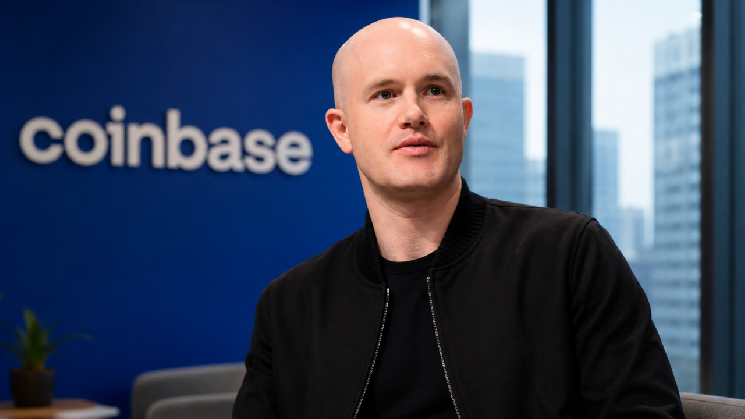
联合创始人Nirav Murthy在接受AltcoinDesk采访时表示,娱乐融资流程仍由少数参与者把持且效率低下。创作者为获取资金往往需放弃股权并支付高额法律费用。

Camp的模式允许社区直接资助项目,粉丝可共享所支持IP的收益增长。近期案例包括一个用于电影后期制作与营销的20万美元链上金库。

Murthy指出这种模式能构建更稳固的受众群体:"当支持者拥有经济权益时,参与度会显著提升。"

娱乐流通的代币化消除了创作者、资本与受众之间的隔阂。

该公司宣布全球已有53个音乐节加入网络,包括Clockenflap和S2O音乐节。

行业反应仍持谨慎态度。纽约某唱片公司在接受IBM采访时表示:

版税支付通常延迟三至六个月。当歌曲爆红后统计数据显示未正确标注创作者时,修改元数据不仅繁琐且常被敷衍了事。

业界高管仅会在区块链能真正解决跨境支付、权利追踪和收益分配等低效问题而非增加复杂度时,才会考虑采用。

AI暴露所有权体系缺陷

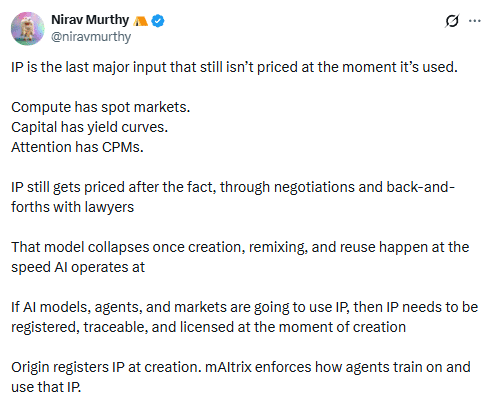
AI的快速发展带来压力:内容生成速度已超越所有权系统的追踪能力。

知识产权仍在事后定价...当创作以AI速度进行时,这种模式将彻底崩溃。

Murthy强调所有权必须在创作瞬间即被记录,延迟可能导致创作者无法获得报酬或失去权限。
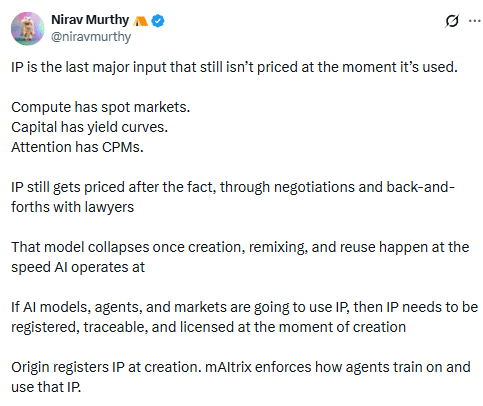
来源:Nirav Murthy/X

Camp Network的系统聚焦"溯源证明",记录内容创作者及使用方式,旨在实现创作者自动授权作品并收取版税。

该公司将其定义为构建AI系统的"自主知识产权层",确保训练模型使用的数据可追溯且经授权。

这一思路与行业广泛关切相契合。据a16z Crypto《2025加密行业现状》报告显示,AI与区块链正加速融合,加密基础设施逐渐发展为数字经济的核心层。

资本涌入IP区块链领域

投资者已对此模式表示支持。

Camp Network通过多轮融资筹集约3000万美元,其中包括由1kx和Blockchain Capital领投的2500万美元A轮融资。

Murthy同时指出市场的深层变革,包括创作者与平台对AI的反应:

若初创公司试图训练语音或视频模型...现有模式已难以为继

与此同时法律压力日益增大。创作者与出版商已就AI使用版权材料训练提起了多项诉讼。

尽管如此,应用推广仍不均衡。机构投资者仍在代币化资产早期参与中占据主导。随着AI生成内容激增,所有权界定可能愈发困难。


核心摘要

  • 传统体系下创作者仍面临融资缓慢、法律成本高企与股权流失问题
  • Camp的"链上金库"实现社区直投,使粉丝可共享IP收益

Trend Kriptolar

İlgili Sorular

QCamp Network 旨在解决娱乐和数字所有权领域的哪些主要问题?

ACamp Network 旨在解决娱乐融资流程缓慢、所有权不清晰、中间商控制导致的高额法律成本和股权流失问题,以及AI时代内容创作速度远超所有权跟踪系统带来的挑战。

QCamp Network 的‘链上金库’模型如何改变传统创作融资方式?

A该模型允许社区直接资助创作项目,粉丝可以通过支持IP分享收益,替代了传统中间商主导的融资模式,例如曾有一个20万美元的金库用于电影后期制作和营销。

Q为什么Nirav Murthy认为‘所有权必须在创作时就被追踪’?

A因为AI加速了创作速度,延迟的所有权追踪会导致创作者无法及时获得报酬或失去控制权,实时追踪能通过‘来源证明’确保版权和收益分配的准确性。

Q行业对区块链在娱乐产权管理中的应用持何种态度?

A行业态度谨慎,仅当区块链能真正解决跨境支付、权利追踪和收入分配等低效问题而非增加复杂性时,机构才愿意采纳,例如唱片公司指出版税支付延迟和元数据修正困难是当前痛点。

QCamp Network 在融资和市场认可方面取得了哪些进展?

ACamp Network 已获得约3000万美元融资,包括由1kx和Blockchain Capital领投的2500万美元A轮融资,并已吸引53个全球音乐节加入网络,如Clockenflap和S2O Festival。

İlgili Okumalar

MSTR Discloses Sale of 3,588 Bitcoins, Stock Price Drops Over 5% at One Point During Trading

MicroStrategy, the world's largest corporate holder of Bitcoin, has significantly shifted its business model. Between June 29 and July 5, the company sold 3,588 bitcoins for approximately $216 million to fund quarterly dividends for its preferred stock. This marks its largest-ever Bitcoin sale and signals a strategic pivot: Bitcoin is transitioning from a "buy-and-hold" reserve asset to a liquidity management tool for the company. This move follows a recent authorization allowing Bitcoin sales when equity fundraising is less attractive. The announcement contributed to a more than 5% intraday drop in MicroStrategy's stock price, while Bitcoin fell to around $61,800—below the company's average holding cost of roughly $75,700. The sale represents a major departure from MicroStrategy's long-standing "never sell" commitment, which saw its first minor breach in May with a $2.5 million sale. The latest, hundred-times-larger transaction underscores growing financial pressures. Analysts note the company faces about $1.5 billion in annual preferred dividend obligations, far exceeding cash flow from its software business. As of July 5, MicroStrategy holds 843,775 bitcoins. Its current operational logic involves buying Bitcoin during favorable financing conditions and selling portions to cover dividends when needed, creating a flexible capital management cycle amidst a challenging market environment.

华尔街日报4 saat önce

MSTR Discloses Sale of 3,588 Bitcoins, Stock Price Drops Over 5% at One Point During Trading

华尔街日报4 saat önce

Q-Day Countdown: Will Quantum Computing End Cryptocurrencies?

Quantum Computing's Threat to Cryptocurrency: A Countdown to Q-Day Quantum computing, specifically Shor's algorithm, poses a fundamental threat to the public-key cryptography (e.g., ECDSA, RSA) that secures blockchain networks like Bitcoin and Ethereum. This critical juncture, known as Q-Day, is estimated to occur potentially within the next 5-15 years. The core vulnerability stems from the public and immutable nature of blockchains. Assets in addresses where the public key is already exposed on-chain (e.g., spent outputs) are at direct risk, as a sufficiently powerful quantum computer could derive the private key. This threatens the very trust model of cryptocurrencies. The response lies in Post-Quantum Cryptography (PQC)—algorithms like lattice-based ML-DSA and hash-based SLH-DSA, which are resistant to quantum attacks. NIST has standardized key PQC algorithms (FIPS 203, 204, 205), providing a migration path. However, the primary challenge is not technical but socio-economic and involves complex governance: * **Bitcoin's** path is constrained by its conservative ethos. Migrating requires a soft-fork to new address types, facing hurdles like significantly larger signature sizes and, most critically, the divisive governance question of how to handle at-risk legacy UTXOs without violating core principles. * **Ethereum** is pursuing a "cryptographic agility" strategy, with a multi-layered roadmap. It leverages account abstraction for user accounts and is developing compressed hash-based signatures (e.g., leanXMSS) for its consensus layer, aiming for a full-stack upgrade over time. In conclusion, quantum computing does not spell an instant end for cryptocurrency but initiates a critical countdown. The industry has a limited "engineering comfort window" to orchestrate a coordinated, ecosystem-wide migration to PQC. The ultimate bottlenecks are the immense coordination efforts and governance decisions required for this foundational transition.

marsbit5 saat önce

Q-Day Countdown: Will Quantum Computing End Cryptocurrencies?

marsbit5 saat önce

Trump, the President Who Knows Best How to 'Trade Stocks'

Former US President Donald Trump reported a record-breaking $2.2 billion in personal income for 2025, the highest annual income ever disclosed by a sitting president. This figure, from a 927-page government ethics filing, represented a 3.5-fold increase from his $600 million income in 2024 and boosted his net worth to $6.5 billion. The primary drivers were cryptocurrency (64% of income, approximately $1.4 billion) and real estate (26%, approximately $575 million). His crypto earnings stemmed largely from the launch of his personal meme coin, $TRUMP, generating over $600 million in licensing fees, and substantial profits from the WLFI token and its parent company. Despite a sluggish property market, his Mar-a-Lago resort and associated golf clubs saw revenue surges of 50% and 27%, respectively, attributed to their use as venues for presidential events. Trump's financial disclosure also revealed an unprecedented level of stock market activity, with over 22,000 trades executed in 2025, averaging 87 trades per market day. Media analyses noted several instances where significant trading coincided with major policy announcements, such as proposed tariffs, raising questions about potential conflicts of interest. While the White House stated these trades were handled by a family-managed trust fund and not Trump directly, critics highlighted this as a departure from the blind trusts traditionally used by presidents post-Watergate. The report has intensified debate over the commercialization of the presidency. Supporters view it as a success story of a businessman-president, while critics argue it demonstrates an unprecedented conversion of public influence into private wealth, with policy decisions potentially linked to personal financial gains. The controversy centers on whether Trump's earnings represent innovative entrepreneurship or a fundamental conflict of interest, sparking renewed calls for stricter ethics reforms in US governance.

marsbit5 saat önce

Trump, the President Who Knows Best How to 'Trade Stocks'

marsbit5 saat önce

Countdown to Q-Day: Will Quantum Computing End Cryptocurrencies?

The article explores the existential threat quantum computing poses to cryptocurrencies and the urgent need for "post-quantum" migration. It outlines that quantum computers, through Shor's algorithm, could break the elliptic-curve cryptography (ECC) underlying blockchain security, potentially allowing private keys to be derived from public keys. The core challenge is not a lack of post-quantum cryptography (PQC) standards—like NIST's ML-KEM and ML-DSA—but the immense complexity of upgrading entire ecosystems before "Q-Day" (when quantum computers become capable of such attacks, estimated around 2035-2045). Key points include: * **Bitcoin's** risk is concentrated in legacy UTXOs with exposed public keys (e.g., early P2PK outputs). Migration faces massive hurdles: PQC signatures are much larger, increasing transaction size and cost, and the governance dilemma of handling un-migrated assets threatens its "code is law" ethos. * **Ethereum's** strategy focuses on "cryptographic agility," using Account Abstraction for user accounts and developing compressed hash-based signatures (like leanXMSS with SNARK aggregation) for consensus. Its migration is a complex, full-stack overhaul of execution, consensus, and data layers. * The "security debt" is enormous. The comfortable engineering window for a coordinated, ecosystem-wide upgrade is only 5-8 years. High-value infrastructure (exchanges, bridges) may face pressure before mainnet protocols. In conclusion, quantum computing is not an instant "doomsday" event but a forcing function for systemic change. Bitcoin's ultimate test is social consensus and property rights governance, while Ethereum's is technical complexity. Failure to migrate in time could lead to a fundamental re-pricing of crypto assets.

链捕手5 saat önce

Countdown to Q-Day: Will Quantum Computing End Cryptocurrencies?

链捕手5 saat önce

İşlemler

Spot

Popüler Makaleler

CAMP Nasıl Satın Alınır

HTX.com’a hoş geldiniz! Camp Network (CAMP) satın alma işlemlerini basit ve kullanışlı bir hâle getirdik. Adım adım açıkladığımız rehberimizi takip ederek kripto yolculuğunuza başlayın. 1. Adım: HTX Hesabınızı OluşturunHTX'te ücretsiz bir hesap açmak için e-posta adresinizi veya telefon numaranızı kullanın. Sorunsuzca kaydolun ve tüm özelliklerin kilidini açın. Hesabımı Aç2. Adım: Kripto Satın Al Bölümüne Gidin ve Ödeme Yönteminizi SeçinKredi/Banka Kartı: Visa veya Mastercard'ınızı kullanarak anında Camp Network (CAMP) satın alın.Bakiye: Sorunsuz bir şekilde işlem yapmak için HTX hesap bakiyenizdeki fonları kullanın.Üçüncü Taraflar: Kullanımı kolaylaştırmak için Google Pay ve Apple Pay gibi popüler ödeme yöntemlerini ekledik.P2P: HTX'teki diğer kullanıcılarla doğrudan işlem yapın.Borsa Dışı (OTC): Yatırımcılar için kişiye özel hizmetler ve rekabetçi döviz kurları sunuyoruz.3. Adım: Camp Network (CAMP) Varlıklarınızı SaklayınCamp Network (CAMP) satın aldıktan sonra HTX hesabınızda saklayın. Alternatif olarak, blok zinciri transferi yoluyla başka bir yere gönderebilir veya diğer kripto para birimlerini takas etmek için kullanabilirsiniz.4. Adım: Camp Network (CAMP) Varlıklarınızla İşlem YapınHTX'in spot piyasasında Camp Network (CAMP) ile kolayca işlemler yapın.Hesabınıza erişin, işlem çiftinizi seçin, işlemlerinizi gerçekleştirin ve gerçek zamanlı olarak izleyin. Hem yeni başlayanlar hem de deneyimli yatırımcılar için kullanıcı dostu bir deneyim sunuyoruz.

483 Toplam GörüntülenmeYayınlanma 2025.08.27Güncellenme 2026.06.02

CAMP Nasıl Satın Alınır

Tartışmalar

HTX Topluluğuna hoş geldiniz. Burada, en son platform gelişmeleri hakkında bilgi sahibi olabilir ve profesyonel piyasa görüşlerine erişebilirsiniz. Kullanıcıların CAMP (CAMP) fiyatı hakkındaki görüşleri aşağıda sunulmaktadır.

活动图片