Что происходит с биткоином после крупнейшего сброса плечей: мнения, цифры, выводы

cryptonews.ru2025-07-26 tarihinde yayınlandı2025-11-27 tarihinde güncellendi

Биткоин пережил одну из самых резких встрясок за текущий цикл. Открытый интерес рухнул, крупные кошельки вывели заметные объемы, а Tether сместила внимания на золото. Картина получилась неоднородной, но в ней просматриваются важные сдвиги.

Одни участники говорят о процессе очистки и подготовке к новому движению. Другие видят ограниченный отскок без устойчивой опоры. Редакция BeInCrypto собрала в одном обзоре ключевые наблюдения, которые помогут понять, куда движется рынок.

Как купить криптовалюту в 2025: полное руководство

Сброс плеча

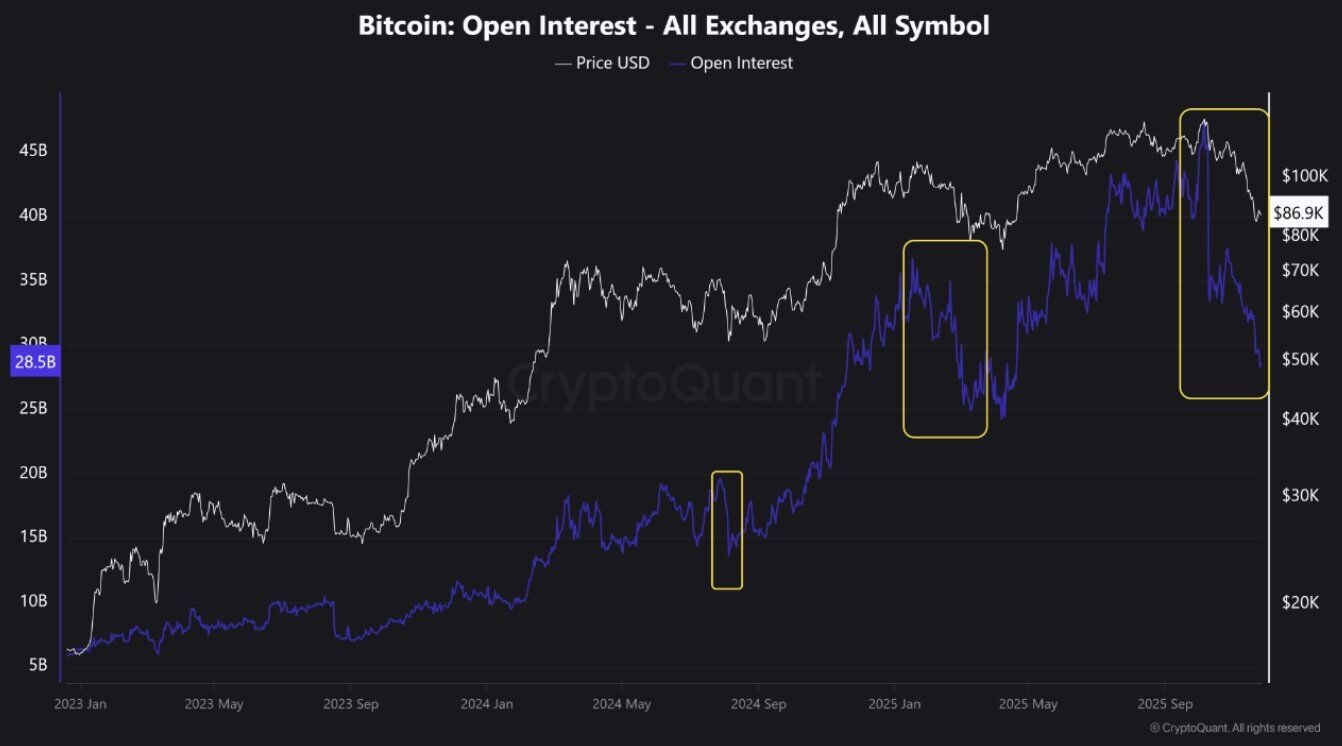
CryptoQuant фиксирует падение открытого интереса с $45 млрд до $28 млрд за несколько дней. Масштаб движения редкий даже для волатильного рынка. По оценке аналитиков, ситуация напоминает массовое закрытие перегруженных длинных позиций. Не разворот, а именно разгрузка от накопившегося плеча.
Падение открытого интереса по биткоину
Падение открытого интереса по биткоину. Источник: CryptoQuant

После снижения часть крупных держателей начала подбирать монеты. Особенно активны были группы 100–1000 BTC и свыше 10 000 BTC. На этом фоне держатели 1000–10 000 BTC продолжали продавать. Разброс действий создает характерную неровность после сильных ликвидаций.

Длинный цикл и альткоины

Аналитик Михаэль ван де Поппе считает, что текущая фаза идет по иной траектории, чем привычные четырехлетние циклы. Он отмечает влияние спотовых ETF, которые изменили структуру спроса. Появился новый ценовой пол выше прежнего исторического максимума, и биткоин удерживается в верхнем диапазоне дольше, чем ожидали многие.

По его словам, рынок альткоинов завершил собственную медвежью стадию. Аналитик сравнивает текущий момент с 2012, 2016 и 2020 годами, когда минимумы формировались в периоды слабой экономической активности. По его ощущению, основной импульс биткоина еще впереди, и цикл выглядит длиннее стандартного.

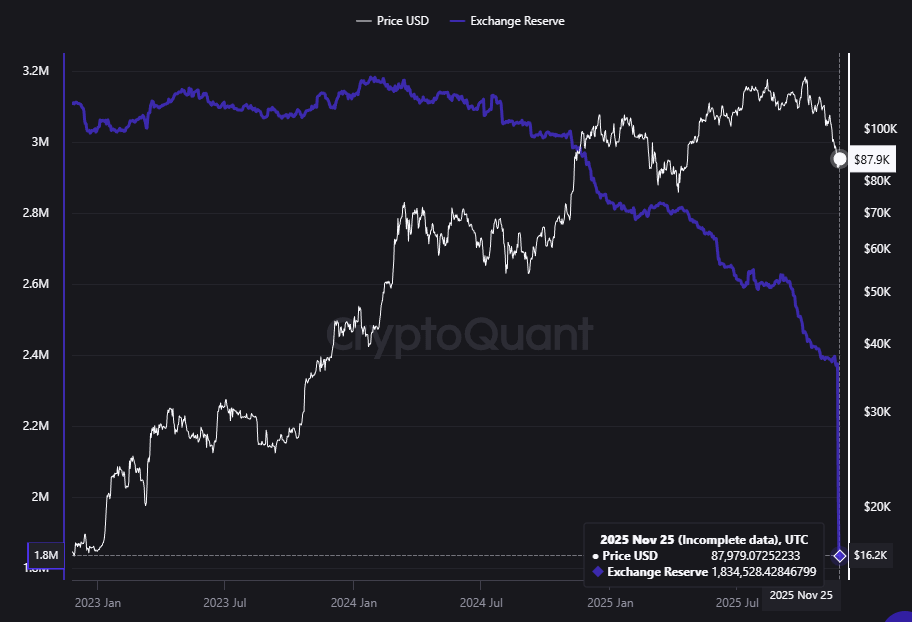
С выводами аналитика перекликается наблюдение Rekt Fencer, который отметил вывод 1,8 млн BTC с бирж за одну ночь. Масштаб движения выглядит нетипичным и обычно связан с точечными решениями крупных держателей. Чаще всего крупные выводы крипты с бирж указывают на неготовность инвесторов продавать, а значит говорят об их надежде на продолжение роста BTC.
темп вывода биткоинов с бирж
Вывод биткоинов с бирж. Источник: CryptoQuant

Ограниченное восстановление и идея мнимого отскока

Аналитик @snowinjon рассматривает ситуацию иначе. Он указывает, что рекомендовал фиксировать прибыль около $125 000. Снижение к $80 000, по его словам, подтвердило расчет его модели.

В рамках этой модели текущее движение напоминает мнимый отскок. Цена способна временно восстановиться, но, по его оценке, не располагает потенциалом преодолеть $116 500 в ближайшие 12 месяцев.

Tether, золото и смена приоритетов

CEO SwanDesk Джейкоб Кинг обращает внимание на изменение поведения Tether, эмитента самого популярного долларового стейблкоина. Компания практически не покупает биткоин в последние недели, но активно приобретает золото. По его версии, физический металл удобен для перемещения капитала без цифровых следов.

Кинг отмечает, что отслеживание транзакций в криптовалютах превратилось в отдельную индустрию. Аналитические компании и государственные структуры наблюдают за потоками в реальном времени. На этом фоне, по словам Кинга, золото дает больше свободы крупным держателям, чем любые блокчейн-активы.

Такой сдвиг, если опираться на логику Кинга, может указывать на желание части крупного капитала действовать вне публичного поля, что создает дополнительный элемент неопределенности вокруг поведения ключевых игроков крипторынка.

Потоки USDT как индикатор состояния рынка

Glassnode изучает динамику USDT. В периоды эйфории инвесторы выводят стейблкоин на фоне фиксации прибыли. Обычно это минус $100–200 млн в сутки. При цене около $126 000 30-дневная средняя нетто-оттока превысила минус $220 млн.
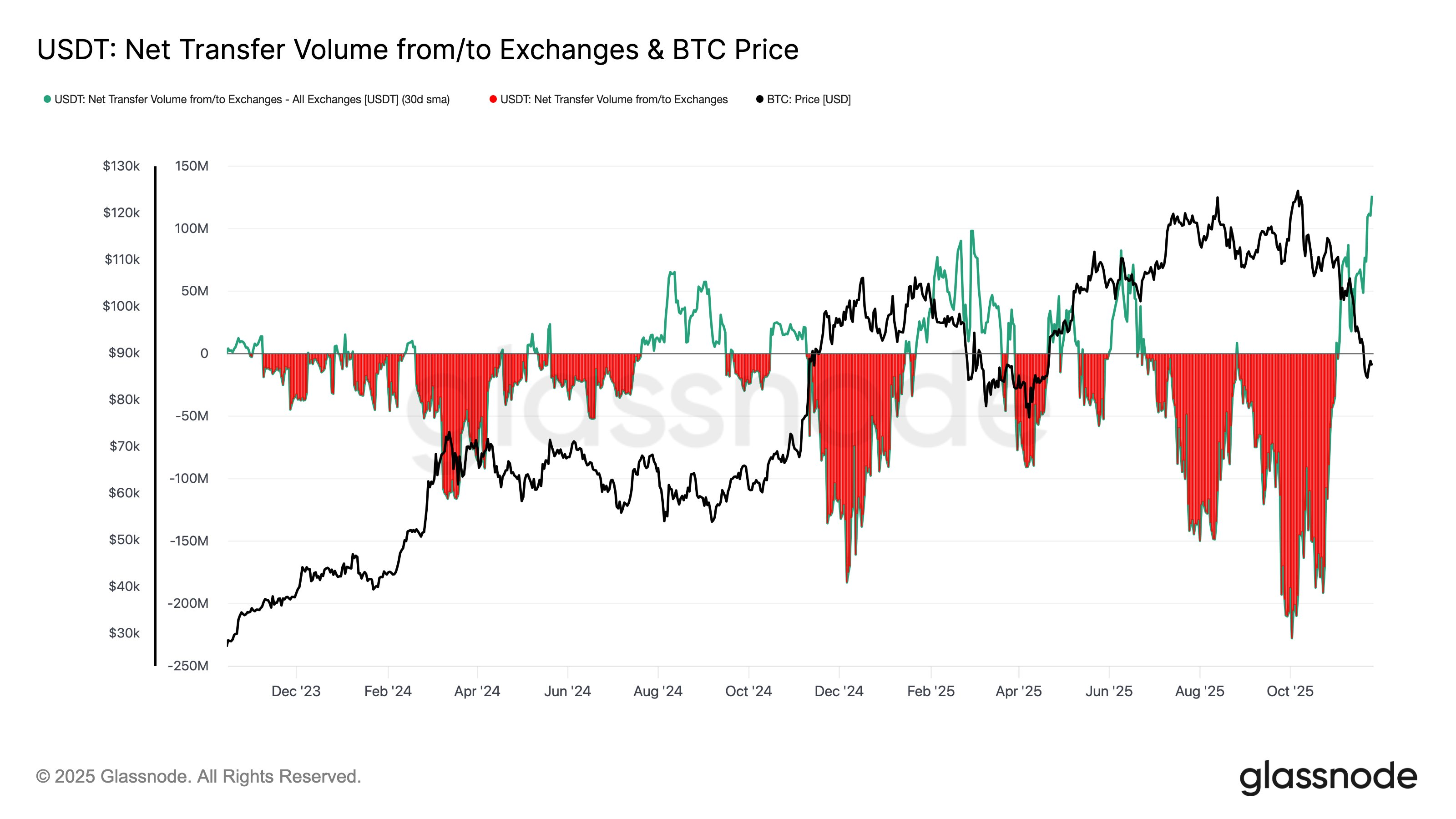
График показывает связь между чистыми потоками USDT на биржи и с бирж (в разрезе накопления и вывода стейблкоина) и ценой биткоина.
График показывает связь между чистыми потоками USDT на биржи и с бирж (в разрезе накопления и вывода стейблкоина) и ценой биткоина. Источник: GlassNode

Сейчас показатель смягчается. Потоки переходят в положительную зону, а давление продавцов снижается. Постепенное выравнивание метрик создает ощущение, что рынок переваривает последствия сильного сброса плечей.

Выводы

Все факты складываются в довольно прозрачную картину: биткоин пережил мощную встряску, сбросил лишнее плечо и теперь постепенно приходит в себя. Крупные держатели ведут себя неравномерно — одни подбирают монеты, другие сокращают позиции — и из-за этого рынок пока выглядит рваным и нервным. Потоки стейблкоинов начинают успокаиваться, цепочки ликвидаций прошли, и хаос последних недель постепенно расслаивается.

Часть аналитиков считает текущее движение мнимым отскоком с ограниченным потенциалом. Осторожность добавляет и тот факт, что Tether переводит часть капитала в золото. В сумме это не похоже ни на готовое ралли, ни на начало глубокого падения. Скорее, биткоин остановился на развилке после серьезной очистки и заново ищет опору. Дальнейшее направление будет зависеть от того, какие крупные игроки зададут тон следующего движения.

İlgili Okumalar

South Korean Retail Investors 'Move from Seoul to Wall Street': Buying SK Hynix ADR, Betting on Triple-Leverage ETF

A surge of Korean retail investors is shifting funds from the volatile Seoul market to Wall Street, intensifying their bets on the AI theme through unconventional and high-risk instruments. Data shows Korean investors were net buyers of about $4.5 billion in US stocks in July, nearing a yearly peak. A notable trend is their purchase of approximately $840 million worth of SK Hynix American Depositary Receipts (ADRs), despite a significant 10% premium over the company's domestic shares, leading analysts to label the move as speculative and irrational. Simultaneously, Korean traders are heavily favoring leveraged ETFs. The triple-leveraged semiconductor ETF SOXL was the most-bought US product in July, with leveraged products occupying four of the top ten spots. Experts note that this shift in geography does not represent a diversification of risk; instead, investors are merely expressing the same concentrated bet on AI hardware through different, often riskier, US-listed vehicles. Analysts warn that while this capital inflow is unlikely to systemically impact the vast US institutional market, it risks creating localized distortions and amplifying volatility, particularly in the targeted sectors and instruments. The move follows a sharp correction in the Korean market, where high leverage in semiconductor stocks and related ETFs had previously led to significant losses, prompting this search for alternative avenues to chase the AI narrative.

marsbit12 dk önce

South Korean Retail Investors 'Move from Seoul to Wall Street': Buying SK Hynix ADR, Betting on Triple-Leverage ETF

marsbit12 dk önce

Bithumb's First Half Report: Net Loss Exceeds $76 Million, Where Did the Profits Go?

**Title: Bithumb H1 2026 Report: Net Loss Exceeds $76M – Where Did the Profits Go?** Despite a headline net loss of approximately 108.7 billion KRW (~$76.44 million) for the first half of 2026, a detailed breakdown reveals Bithumb's core exchange business remained profitable. The significant loss was primarily driven by two major non-operating items: substantial losses on the disposal and valuation of the company's own cryptocurrency holdings (net loss ~$48.21 million) and a sharp increase in litigation provisions (~$25.93 million), largely linked to a regulatory fine. Operating revenue fell 48.7% year-on-year to ~$119 million, almost entirely from transaction fees, as market activity cooled. While the company drastically cut marketing and subsidy expenses by ~70% to protect margins, more rigid costs like payment processing and salaries declined only modestly. This highlights the vulnerability of its highly fee-dependent revenue model in a down market. Total assets decreased by ~$584 million, but this was largely attributable to an ~86% drop in client KRW deposits. The market value of client crypto assets under custody also fell (~32.7%), partly influenced by declining cryptocurrency prices rather than solely client withdrawals. In summary, the report indicates underlying exchange profitability was eroded by significant crypto asset losses and mounting regulatory/legal costs, against a backdrop of declining trading revenue. Future focus should be on revenue recovery, managing crypto-related损益, and the ongoing impact of regulatory challenges.

marsbit31 dk önce

Bithumb's First Half Report: Net Loss Exceeds $76 Million, Where Did the Profits Go?

marsbit31 dk önce

BitMart's Final 9 Days: A True Exchange Crisis Is Never About Shutting Down

BitMart's Final 9 Days: A True Exchange Crisis Is Not About Shutting Down On August 17, 2026, with just 9 days until BitMart's scheduled cessation of trading, the focus shifted from the platform's orderly closure to serious questions about user withdrawals, platform solvency, employee payments, and reserve transparency. Stakeholders, claiming to represent users and staff, publicly demanded asset/liability disclosures, explanations for withdrawal delays, a user repayment plan, and an independent audit, setting an August 19 deadline. While BitMart CEO Sheldon Lee denied allegations of insolvency or wrongdoing, the controversy highlighted a core vulnerability of centralized exchanges (CEXs). When an exchange announces its shutdown, normal user behavior changes dramatically, triggering a mass withdrawal event—the ultimate stress test for its liquidity and custodial integrity. The key question becomes not whether the platform has assets, but whether it holds sufficient *liquid* assets to cover all user liabilities on demand. The article argues that the trust placed in CEXs is based on the convenience they provide, abstracting users from direct control of their private keys. This trust is rarely questioned during normal operations but becomes critically exposed during a wind-down. The situation underscores the limitations of simple Proof of Reserves, which shows "what we have" but not the crucial "what we owe." True financial credibility requires transparent, auditable data on assets, liabilities, and segregated user funds. BitMart's situation reflects a broader, often overlooked issue in the crypto industry: while there is extensive focus on growth mechanisms for exchanges, there is little discussion or established protocol for a safe and transparent "exit mechanism." The final measure of an exchange's integrity, the article concludes, is not its user count or trading volume during a bull market, but its ability to ensure every last user can successfully withdraw their assets when the doors are closing. The outcome will be determined not by statements, but by whether the final user's funds securely leave the platform.

marsbit1 saat önce

BitMart's Final 9 Days: A True Exchange Crisis Is Never About Shutting Down

marsbit1 saat önce

Don't Speculate on 100x Coins, Just Bet on 'Cash Cows': Which Projects Are Worth Dollar-Cost Averaging in the Bear Market?

In a bearish crypto market, finding sustainable investments is more prudent than chasing speculative meme coins. This article analyzes projects generating consistent revenue, highlighting them as potential "cash cows" for long-term dollar-cost averaging (DCA). The top performers are "picks-and-shovels" plays. **Pump.fun**, a Solana-based meme coin launchpad, leads with $415.3M in monthly revenue, profiting from a 1.25% fee on token transactions. Despite market volatility, it has averaged tens of millions in monthly income in 2024. Perpetual DEX **Hyperliquid** stands out as a "bear market star," accumulating ~$352M in revenue over seven months. Its model funnels ~99% of fees into buying back and permanently burning its HYPE token. Established giants are also adapting. **Uniswap**, after enabling its fee switch, now earns protocol revenue (e.g., $5.6M recently), which is used to buy back and burn UNI, giving the token direct value accrual. Similarly, oracle provider **Chainlink** generates stable monthly revenue (~$4.57M recently) from its essential data, cross-chain, and automation services. Its new Payment Abstraction feature automatically converts service fees into LINK, accruing value in its treasury. The core thesis is clear: in a downturn, focus on projects with proven, resilient business models—those acting as essential infrastructure or capturing consistent transaction fees—rather than speculative narratives.

marsbit1 saat önce

Don't Speculate on 100x Coins, Just Bet on 'Cash Cows': Which Projects Are Worth Dollar-Cost Averaging in the Bear Market?

marsbit1 saat önce

İşlemler

Spot
活动图片