Криптовалюта как спасательный круг для Газы: от гуманитарной помощи до мошенничества

cryptonews.ru2025-04-26 tarihinde yayınlandı2025-11-27 tarihinde güncellendi

Криптовалютные пожертвования превратились в ключевой механизм поддержки в условиях войны. Газа столкнулась с жесткими банковскими ограничениями и блокировкой финансовых каналов.

В такой обстановке распределение традиционной гуманитарной помощи стало практически невозможным. Однако фрагментация инфраструктуры и критическое положение населения открыли двери для сомнительных операций. В последнее время наблюдается рост числа подозрительных «гуманитарных» проектов.

Частные инициативы и прозрачность сборов

Криптовалюта позволяет обходить политические и логистические барьеры. Цифровые активы предлагают быстрый и трансграничный способ передачи средств.

На этом фоне особое внимание привлекли низовые кампании. Они демонстрируют эффективность децентрализованных финансов.

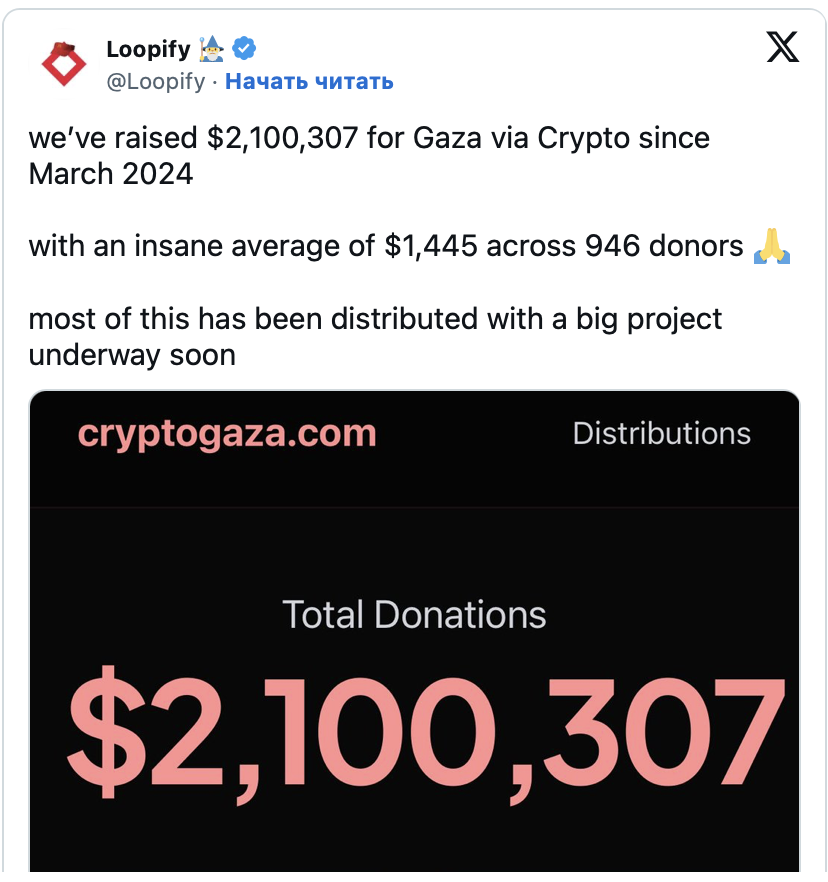
Одной из таких инициатив руководит трейдер под псевдонимом Loopify. С начала конфликта он привлек более $2,1 млн в криптовалюте для помощи пострадавшим.

Платформа Cryptogaza.com предоставляет статистику пожертвований. За последний год 946 человек перевели средства палестинцам через этот ресурс.

Эти данные подтверждают востребованность цифровых инструментов. Они обеспечивают прямую поддержку там, где отсутствует доступ к банковским услугам.
Появляются и менее масштабные личные кампании. Широкую огласку получила история молодого жителя Газы. Он ежедневно публикует в социальной сети Instagram отчеты о перемещениях, дефиците продовольствия и ударах дронов.

Молодой человек тренируется с использованием самодельного инвентаря. Свой аккаунт он использует для сбора пожертвований в криптоактивах. По его словам, удалось собрать более $45 000.

Автор блога отмечает катастрофический рост цен. Например, стоимость одного мешка муки в регионе достигает $360.

Такие инициативы доказывают, что цифровые валюты стали реальным спасательным кругом. Они гарантируют скорость и доступность средств. Тем не менее, те же инструменты могут быть использованы недобросовестными лицами.

Риски и сомнительные схемы эвакуации

Ранее в этом месяце телеканал Al Jazeera опубликовал расследование о группе Al-Majd Europe. Эта малоизвестная организация предлагала услуги по организации эвакуационных рейсов. В качестве оплаты компания принимала исключительно криптовалюту.

Организация позиционировала себя как гуманитарный проект. Однако следователи быстро выявили серьезные признаки мошенничества.

Во-первых, сайт Al-Majd Europe был зарегистрирован только в текущем году. Во-вторых, фотографии «руководителей» компании, вероятно, были сгенерированы искусственным интеллектом.

Группа практически не предоставляла проверяемой информации о своей деятельности. Несмотря на это, она активно рекламировала услуги по вывозу палестинцев из зоны конфликта.

Семьям предлагали оплатить выезд цифровыми активами. По сообщениям пострадавших, стоимость услуги варьировалась от $1000 до $2000 с человека.

Примечательно, что плата взималась даже за младенцев. Это вызывает серьезные опасения по поводу эксплуатации людей, находящихся в кризисной ситуации.

Отсутствие прозрачности встревожило экспертов. Они опасаются, что гражданское население может стать целью нерегулируемых субъектов, которые выдают себя за спасателей.

Таким образом, криптовалюта играет двоякую роль. Она способна обеспечить подлинную поддержку, но также создает возможности для финансовых злоупотреблений.

İlgili Okumalar

Galaxy Research: Can SEC's New Regulations Usher in a New Era for Token Financing?

**SEC Proposes New Framework for Token Offerings, Potentially Unlocking Legal Paths for U.S. Crypto Fundraising** On August 18, the U.S. Securities and Exchange Commission (SEC) proposed new rules, dubbed "Reg Crypto," specifically tailored for crypto asset offerings. This framework marks a departure from applying traditional securities rules designed for stocks to tokens. It creates a potential legal pathway for token sales to the U.S. public, including non-accredited investors, without full registration. The proposed rules apply to crypto assets that are not themselves securities but were sold as part of an investment contract where the issuer promised to build a product, network, or ecosystem. It establishes a four-phase lifecycle: Raise, Disclose, Build, and Exit. The "Raise" phase includes two new fundraising exemptions: a startup exemption allowing up to $5 million over four years and a larger, Regulation A-based exemption for up to $20 million or $75 million over 12 months. The "Disclose" phase requires specific token-related disclosures like supply schedules, governance, and development progress. After the issuer completes its promised development work and files a transition report, the "Exit" phase allows the associated investment contract to terminate, even if the token continues to trade. The analysis highlights that the framework's most immediate impact may be providing a formal "exit" path for existing tokens with unclear legal status, rather than immediately sparking a new wave of U.S.-based token offerings. It offers advantages over traditional private placements by allowing public sales and immediate token transferability but imposes ongoing disclosure and reporting obligations. A key hurdle is that the larger exemption requires a substantial U.S. operational presence, which may deter projects with offshore structures. Overall, the proposal is seen as a constructive step toward regulatory clarity, acknowledging that token offerings differ from equity offerings and require tailored investor disclosures. However, it remains a proposal subject to a 60-day public comment period, and its long-term stability may ultimately depend on congressional action.

marsbit1 saat önce

Galaxy Research: Can SEC's New Regulations Usher in a New Era for Token Financing?

marsbit1 saat önce

Bitcoin and Ethereum Soar Together! Eight Altcoins Worth Watching in the Later Market

Bitcoin and Ethereum Surge, Fueling Altcoin Speculation. Bitcoin Eyes $77,000, Ethereum Gains 20% in a Single Day. Market anticipates capital rotation from major cryptos to high-beta altcoins, but a selective rise is expected, favoring projects with genuine users, protocol revenue, and healthy tokenomics. Analysts highlight eight altcoins across key sectors: **High-Performance Blockchains:** * **SOL (Solana):** Market cap ~$51.88B. A dominant player with a strong ecosystem. Considered a relatively safe bet for potential catch-up growth. * **SUI (Sui):** Market cap ~$3.03B. High volatility potential but faces risks from its low circulating supply and future token unlocks. **DeFi Lending:** * **UNI (Uniswap):** Market cap ~$2.38B. Transitioning to a revenue-capturing asset post-fee switch implementation. * **AAVE (Aave):** Market cap ~$1.53B. Features balanced tokenomics and revenue but has seen significant recent gains. * **MORPHO:** Market cap ~$1.50B. Rapid protocol growth but weaker token value capture and opaque supply data. **Perpetual DEX:** * **HYPE (Hyperliquid):** Market cap ~$16.41B. The clear sector leader with strong revenue but high valuation and a large portion of tokens still locked, warranting caution. **RWA & On-Chain Finance Infrastructure:** * **LINK (Chainlink):** Market cap ~$8.09B. A key oracle provider positioned to benefit from multiple trends like RWA and institutional adoption, offering strong fundamentals. * **ONDO (Ondo Finance):** Market cap ~$1.77B. Shows strong business growth but carries high risks due to concentrated token holdings and a massive unlock scheduled for 2027. **Conclusion:** The altcoin rally is expected to be selective. Recommendations include a medium position in SOL, small allocations to SUI and UNI/AAVE for DeFi exposure, and caution with HYPE and ONDO due to their specific risks. LINK is suggested as a core holding for the RWA thematic.

marsbit3 saat önce

Bitcoin and Ethereum Soar Together! Eight Altcoins Worth Watching in the Later Market

marsbit3 saat önce

Shanghai's $10 Billion Unicorn Is About to Go Public

Shanghai-based automotive-grade millimeter-wave radar chip unicorn Calterah Microelectronics Technology (Shanghai) Co., Ltd. has filed for an IPO on Shanghai's STAR Market, aiming to raise 3.49 billion yuan. Founded in 2014 by Chen Jiashu, a UC Berkeley PhD graduate, and his professor Ali Niknejad, Calterah pioneered CMOS technology for 77GHz radar chips, breaking the decades-long monopoly of international giants like Texas Instruments. Its low-cost, highly integrated solutions enabled millimeter-wave radar to move from luxury to mass-market vehicles. By 2025, Calterah captured a 31.1% share in China's automotive millimeter-wave radar chip market (second domestically, fourth globally), with cumulative shipments exceeding 30 million units. Its client list includes BYD, Geely, Nio, and Volvo. The company has undergone 11 funding rounds, attracting high-profile investors such as the National Integrated Circuit Industry Investment Fund Phase II, China Capital Management, and GD Capital. Its valuation has reached tens of billions of yuan, with a projected post-IPO valuation of approximately 14 billion yuan. Despite rapid revenue growth—increasing from 206 million yuan in 2023 to 632 million yuan in 2025 with a 75.28% CAGR—Calterah remains unprofitable. It reported net losses of 323 million yuan, 334 million yuan, and 193 million yuan from 2023 to 2025, accumulating over 900 million yuan in losses over three and a half years. These losses are primarily attributed to heavy R&D investment, which totaled over 1.039 billion yuan in the reporting period, often exceeding annual revenue. The company faces significant risks, including high customer concentration (its top five customers accounted for over 99% of revenue from 2023-2025, with BYD alone representing over 50% in 2025) and supply chain concentration. Revenue pressure from key customers and dependencies on overseas suppliers for EDA tools and IP pose challenges to sustainable growth. The IPO is seen as crucial for securing capital to expand production, diversify its customer base, and reduce supply chain dependencies.

marsbit3 saat önce

Shanghai's $10 Billion Unicorn Is About to Go Public

marsbit3 saat önce

Ray Dalio's Latest Macro Analysis Full Text: Buy More Gold, Add Some Bitcoin

In his latest macro analysis, Ray Dalio applies his framework from "How Countries Go Broke: The Big Cycle" to the current global debt environment. He highlights recent events like Japan selling U.S. Treasuries and rising U.S. long-term yields as signs of an unsustainable debt dynamic. Dalio explains that excessive government debt leads to either unacceptably high interest rates, severe economic downturns, or significant currency debasement through central bank money printing. He summarizes the U.S. fiscal situation: with $5.5 trillion in revenue, $7.5 trillion in spending, a $2 trillion deficit, and total debt at six times annual revenue, debt servicing costs are immense. Without correction, U.S. debt could reach $55-$60 trillion in a decade. Dalio proposes a "3% Three-Way" solution: reducing the budget deficit to 3% of GDP through balanced spending cuts, tax increases, and interest rate reductions to avoid a traumatic adjustment. In response to FAQs, he argues that the risk of a U.S. debt crisis is high and could materialize within a few years if the current path continues. He dismisses the notion that the dollar's reserve status makes the U.S. immune, citing historical precedents of reserve currency declines. He is also unconvinced by Japan's high-debt stability, noting poor returns for yen-denominated assets. For investors, Dalio recommends diversifying globally, underweighting bonds, and overweighting assets like gold and a small allocation to Bitcoin (around 10-15% to gold) to hedge against currency debasement and poor debt returns.

marsbit4 saat önce

Ray Dalio's Latest Macro Analysis Full Text: Buy More Gold, Add Some Bitcoin

marsbit4 saat önce

İşlemler

Spot
活动图片