Спрос на биткоин-ETF остается слабым

cryptonews.ru2025-04-11 tarihinde yayınlandı2025-11-12 tarihinde güncellendi

Отсутствие спроса на спотовые биржевые фонды биткоина вызывает беспокойство относительно перспектив криптовалюты до конца года. Эта ситуация сохраняется, даже несмотря на то, что правительство США, по всей видимости, приближается к завершению остановки работы, которая длится уже 41 день.

В понедельник Сенат США одобрил пакет финансирования, сделав важный шаг к завершению остановки работы правительства. Теперь законопроект направлен на полное голосование в Палате представителей, которое может состояться уже в среду, как сообщил CBS News в понедельник.

Лидер большинства в Сенате Джон Тюн заявил, что надеется на принятие пакета в течение «часов, а не дней», во время утреннего заседания Сената в понедельник, согласно данным Military Times.

Несмотря на оптимистичные новости из США, инвестиции в спотовые биткоин-ETF оставались без изменений в понедельник, составив всего $1,2 млн притока средств, согласно данным Farside Investors.
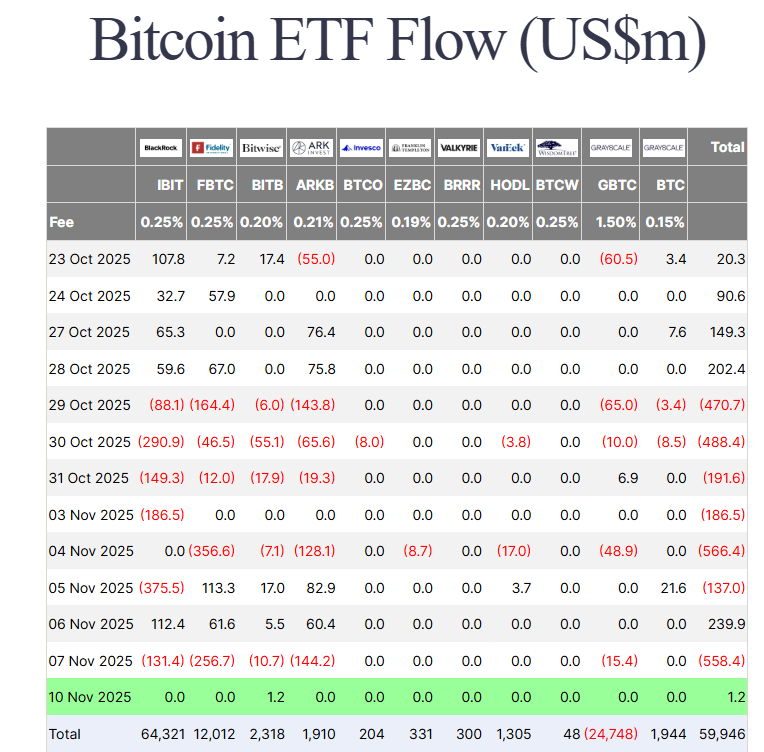

Потоки средств биткоин-ETF, доллары США (в миллионах). Источник: Farside Investors

Несмотря на то, что остановка работы правительства США, похоже, завершается, и S&P, и золото демонстрируют сильный рост, биткоин-ETF не увидели спроса вчера», — заявил основатель Capriole Investments Чарльз Эдвардс.

Он добавил, что это не та динамика, которую хотелось бы видеть продолженной.

«Рисковые активы обычно показывают сильный спрос в течение недель после завершения остановки работы. Еще есть время развернуть эту ситуацию, но разворот необходим», — добавил он.

Ранее приток средств в спотовые биткоин-ETF считался основным драйвером роста биткоина в 2025 году, как отмечал глобальный глава исследований цифровых активов Standard Chartered Джефф Кендрик.
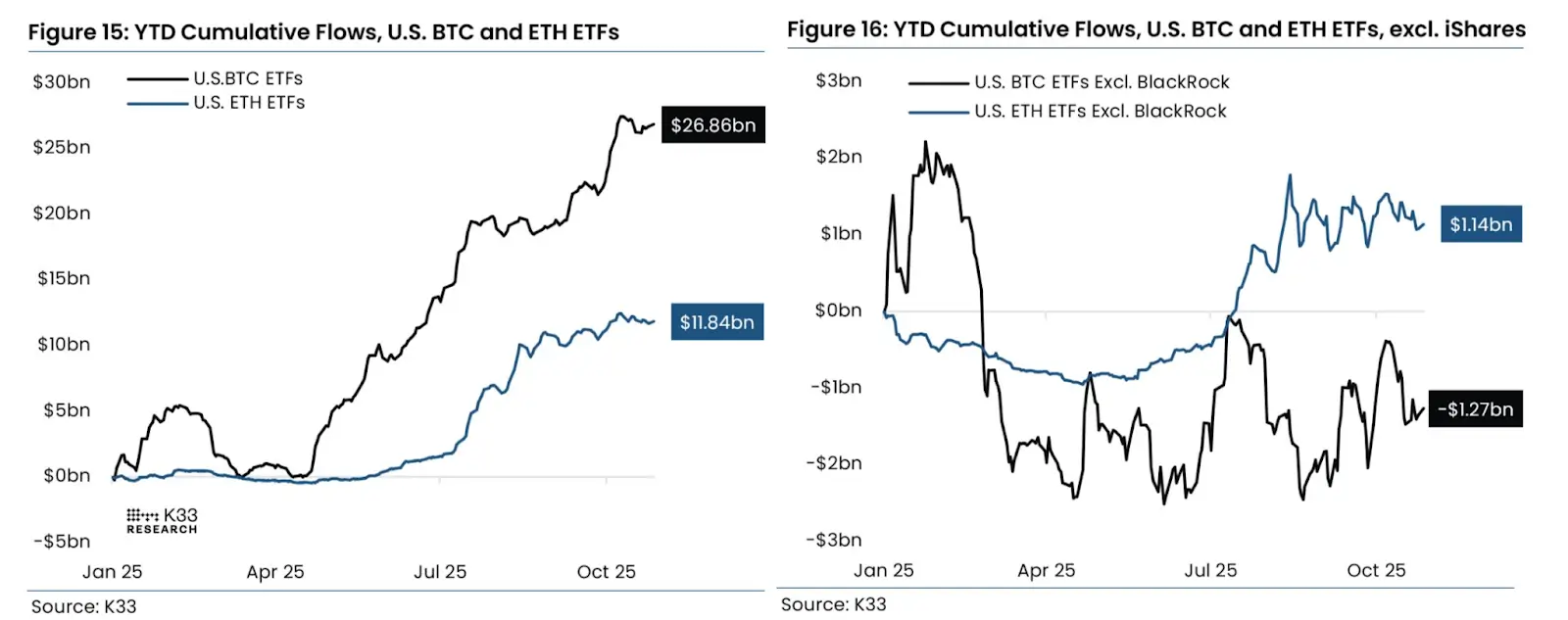

Источник: Vetle Lunde

Фонд BlackRock оказался единственным с положительным притоком средств с начала года, привлекшим $28,1 млрд. Одновременно другие эмитенты столкнулись с совокупным оттоком в $1,27 млн.

Аналитики расценивают текущую ситуацию как консолидацию, а не завершение бычьего рынка

В отличие от некоторых инвесторов, опасающихся завершения бычьего цикла, аналитики Bitfinex считают текущий период фазой консолидации.

«Текущая коррекция напоминает ситуации июня 2024 года и февраля 2025 года, когда биткоин находился на перепутье между восстановлением и более глубоким падением», — отметили аналитики.

По их оценке, текущее снижение соответствует средним показателям предыдущих коррекций. Каждый этап снижения с начала бычьего рынка в 2023 году достигал примерно 22% от исторического максимума перед разворотом.

Важно, что около 72% предложения BTC оставалось в прибыли при падении биткоина до $100 000. Это свидетельствует о консолидации в середине цикла, но для восстановления потребуется новый приток спроса от институциональных и розничных инвесторов.
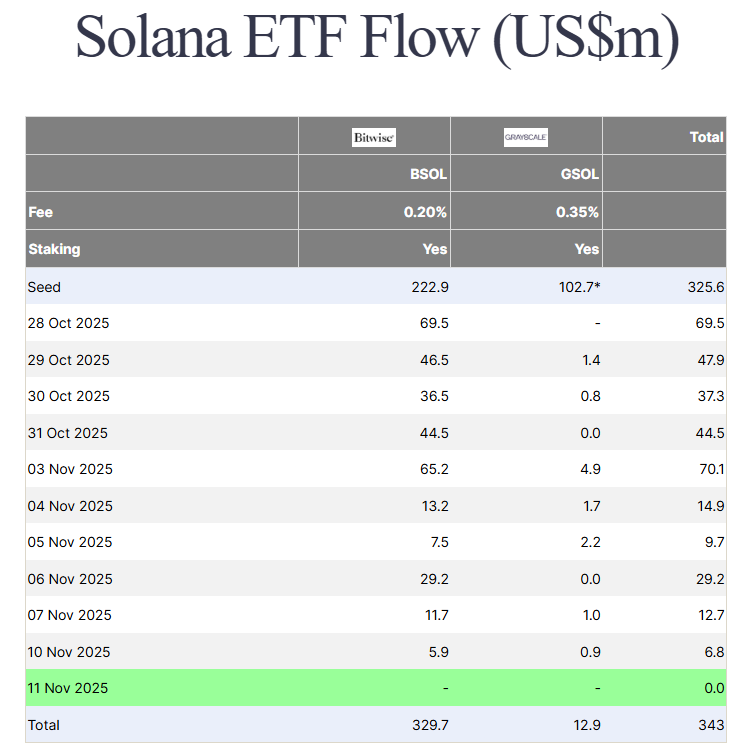

Потоки средств Solana-ETF, USD, миллионы. Источник: Farside Investors

Среди других криптовалютных ETF Ethereum-ETF также не показали роста в понедельник. В то же время Solana-ETF привлекли $6,8 млн, продолжив серию из 10 дней чистого притока средств.

İlgili Okumalar

IOSG Founder: Ethereum Doesn't Need Another Leap of Technical Faith, It Needs a Musk-style Compromise

Jocy, founder of IOSG Ventures, argues that Ethereum does not need renewed technological faith but a "Musk-like compromise." The recent formation of ETHLabs—funded by major ETH holders like BitMine and Lubin—highlights a market-driven move to fill a gap left by the Ethereum Foundation (EF), signaling a loss of confidence in its decentralized, hands-off approach. The core critique contrasts Vitalik Buterin's (V) idealistic, technology-first vision with Elon Musk's pragmatic, business-driven execution. The author asserts Ethereum's current shortage is not another technical roadmap but a clear, real-world application narrative and a leader willing to engage directly with commercial realities—like Musk. Internal issues are emphasized, citing EF's management problems and talent drain. While the new decentralized model with independent nodes like ETHLabs addresses the single foundation's limitations, it risks fragmentation without cohesive direction. True cohesion, the author suggests, must come from a shared, compelling narrative around ETH's value, not just from aligned financial interests. Independence claims for new entities are seen as aspirational, needing years of transparency to build trust. The ultimate threat is not competitors like Solana, but the broader shift of attention and talent toward AI. Ethereum has a limited window—12 to 18 months—to recapture focus by delivering tangible, real-world applications. The conclusion urges V to shift from abstract ideals to grounded, pragmatic leadership. The time for this crucial pivot is running out.

marsbit55 dk önce

IOSG Founder: Ethereum Doesn't Need Another Leap of Technical Faith, It Needs a Musk-style Compromise

marsbit55 dk önce

Google Starts Selling TPUs, Big Tech Aims to Produce "Low-Cost Tokens" with AI Chips

Google has begun selling its proprietary TPU chips and AI computing hardware directly to third-party data centers and clients, marking a strategic shift. Previously only accessible via cloud rentals, TPUs are specialized processors designed for the matrix and tensor operations central to AI models. By combining thousands into supercomputing clusters managed by CPUs, Google achieves high-efficiency AI processing. This move enables Google’s Gemini AI to offer competitive token pricing, challenging rivals like OpenAI. It also signals a broader industry trend where AI compute is becoming a commoditized resource like electricity. While NVIDIA remains dominant with its CUDA ecosystem and high-performance GPUs, the focus is shifting from raw power to cost efficiency and system integration. Google’s approach mirrors NVIDIA’s by selling an entire ecosystem—hardware, software, and data center expertise—rather than just chips. This threatens NVIDIA’s grip on the mid-range inference market, where lower-cost, efficient solutions are increasingly demanded. Similarly, cloud providers like Huawei Cloud and Alibaba Cloud in China are developing their own AI chip ecosystems (e.g., Ascend, Zhenwu), packaging chips, clusters, and tools into full-stack solutions. They aim to reduce token costs and capture market share through integrated systems. In summary, the AI infrastructure race is evolving from a competition for the strongest chips to a contest for the most efficient and cost-effective systems. Google’s TPU sales highlight this transition, emphasizing that future success lies in delivering affordable, scalable AI compute as a foundational service.

marsbit1 saat önce

Google Starts Selling TPUs, Big Tech Aims to Produce "Low-Cost Tokens" with AI Chips

marsbit1 saat önce

İşlemler

Spot
Futures
活动图片