读懂200亿爆仓:市场的风险从来没走远

比推2025-10-13 tarihinde yayınlandı2025-10-13 tarihinde güncellendi

原文来源:区块链骑士

原文标题:200亿爆仓的背后:我们应该了解什么?


2025年10月10日,加密货币市场迎来史诗级去杠杆化风暴。

当狂热的多头交易员被迫直面市场铁律时,一小时内超过200亿美元杠杆仓位爆仓,比特币单日暴跌15%,山寨币流动性几近枯竭,就连资深玩家也在血色盘面前措手不及。

这场屠杀由宏观层面多重利空引爆:贸易紧张局势升级触发风险资产恐慌性抛售。

比特币一小时内重挫13%,山寨币滑点情况更为惨烈。ATOM等代币在缺乏流动性的交易所一度逼近归零,虽后续部分收复失地,但市场已遭重创。

全市场中心化与去中心化平台清算总额突破200亿美元,创下加密货币史上最大单日爆仓纪录。
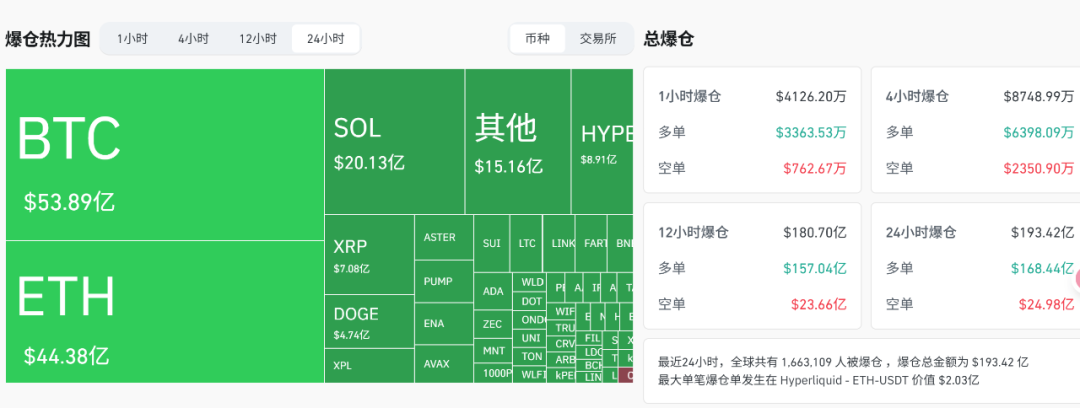
这并非温和阴跌——数周积累的看涨情绪与高企未平仓合约一夜蒸发,650亿美元未平仓头寸从系统消失,市场格局直接退回数月前水平。

表面看是"散户溃败",但《华尔街之狼》的Scott Melker与多位分析师指出真相:"爆仓者并非散户,而是使用去中心化交易所杠杆的加密原生交易员,这是对最坚定持有者的杠杆清洗。"

数据印证:新入市资金主要配置现货ETF或主流资产,规避了DeFi杠杆机制冲击。真正受重创的是高杠杆永续合约玩家,其中又主要是加密老兵而非新手。

据Bitwise基金经理Jonathan复盘,祸根在于市场结构缺陷,永续合约作为零和游戏,当亏损方偿付能力崩溃时便引发系统性风险。

波动率飙升导致流动性提供商撤离,山寨币订单簿薄弱引发价格塌方,自动减仓机制甚至误伤盈利仓位。

Hyperliquid等平台则通过链上流动性池反向获利,趁强制平仓以折价收购资产。截至收盘,连市场中性的精密策略也因操作延迟与抵押品清算问题遭遇突袭。

中心化交易所尤其是长尾代币成为重灾区,而DeFi凭借严格抵押标准与硬编码价格机制展现韧性。

例如Aave等协议要求高质量抵押品,避免稳定币价格脱钩引发的死亡螺旋。但痛点犹存:部分交易所USDe跌至0.65美元,相关保证金仓位瞬间蒸发。

交易所间高达300美元价差为套利者创造机会,但更值得警醒的是:200亿美元蒸发同时,现货买盘保持稳定。

价格从极端值反弹,市场过剩杠杆被强制出清。正如Jonathan所言,决定生存的关键不仅是方向判断,更是运营能力与流动性管理艺术。

Bitwise首席执行官亨特·霍斯利对此评价:"比特币史上最大爆仓日跌幅仅15%,彰显其内在强度,这辆列车不可阻挡。"

加密货币与宏观环境日益增强的关联性意味着,此类去杠杆化既是不可避免的市场调节机制,也是重塑健康生态的必经阵痛。

当杠杆的残酷性显露无疑,每个参与者都需铭记:风险控制永远比收益追逐更重要。


Twitter:https://twitter.com/BitpushNewsCN

比推 TG 交流群:https://t.me/BitPushCommunity

比推 TG 订阅: https://t.me/bitpush

说明: 比推所有文章只代表作者观点,不构成投资建议

İlgili Okumalar

South Korea’s KB Financial Completes Stablecoin Pilot As Lawmakers Press For Regulatory Framework

South Korea's KB Financial Group has completed a Proof-of-Concept (PoC) for a won-denominated stablecoin in partnership with several companies. The pilot integrated the entire financial process—from stablecoin issuance to offline payments, merchant settlements, and international remittances—into a single blockchain-based workflow. A key test involved offline payments at a coffee shop via QR code without requiring a digital wallet. For international transfers, the model converted the won stablecoin to a dollar stablecoin, completing the process within three minutes and reducing fees by approximately 87% compared to traditional methods. KB aims to launch services once digital asset regulations are established. However, South Korea's Digital Asset Act, which would establish rules for such stablecoins, faces significant delays due to a disagreement between the Financial Services Commission (FSC) and the Bank of Korea (BOK). The central bank advocates for a consortium of banks to hold a majority stake in any issuer, while the FSC worries this could stifle innovation and tech firm participation. Lawmakers and experts have urged the National Assembly to prioritize the legislation, warning that South Korea is falling behind in the global digital asset market despite accounting for 10% of global transactions. Bank of Korea Deputy Governor Chang Cheong-soo acknowledged the potential of won-pegged stablecoins as a competitive future payment method.

bitcoinist33 dk önce

South Korea’s KB Financial Completes Stablecoin Pilot As Lawmakers Press For Regulatory Framework

bitcoinist33 dk önce

The Bond Market Deals a Blow to the AI Bull Market

The article "Bond Market Deals a Blow to the AI Bull Market" discusses how a recent global bond sell-off is threatening to end the AI-driven stock market rally that had been ongoing for about a month and a half. A sharp sell-off in global equity markets began last Friday, with significant declines in indices like South Korea's KOSPI and Japan's Nikkei 225. The primary suspect, according to Morgan Stanley, is the bond market. Key long-term bond yields, such as the U.S. 30-year Treasury and Japan's 10-year government bond, have surged to multi-decade highs. This breach of critical yield levels (like 5% for the 30-year U.S. Treasury) is seen as a dangerous signal that historically precedes risk asset corrections. The root cause is identified as resurgent inflation, fueled by rising oil prices due to renewed Middle East geopolitical tensions, specifically the breakdown of U.S.-Iran talks and the blockade of the Strait of Hormuz. This has led markets to drastically revise expectations for U.S. Federal Reserve policy, now pricing in a significant chance of future rate hikes instead of cuts. Higher bond yields negatively impact stocks, especially high-growth tech/AI stocks, through two main channels: 1. **Valuation Pressure:** Higher yields increase the discount rate used to value future earnings, making the present value of distant AI-related cash flows less attractive. 2. **Relative Attraction:** Safer government bonds offering ~5% yields reduce the appeal of riskier equity investments in emerging markets and tech sectors. Despite the pressure from bonds, the AI bull market has fundamental support from strong sector earnings (e.g., semiconductor companies). The current situation is described as a "tug-of-war" between bond market turbulence and AI prosperity. However, warnings exist that AI stock valuations have become excessive. For investors, the advice is to increase portfolio flexibility. Suggestions include focusing on specific AI supply chain segments (domestic computing, semiconductors, equipment) and being prepared for continued volatility. The article concludes by noting the market is at a precarious point, caught between geopolitical uncertainty and the AI revolution, requiring careful navigation.

marsbit39 dk önce

The Bond Market Deals a Blow to the AI Bull Market

marsbit39 dk önce

İşlemler

Spot
Futures
活动图片




