Соучредитель Tether: к 2030 году все валюты станут стейблкоинами

cryptonews.ru2025-01-02 tarihinde yayınlandı2025-10-03 tarihinde güncellendi

Соучредитель Tether Рив Коллинз (Reeve Collins) заявил, что к 2030 году все виды денег, включая доллары и евро, станут стейблкоинами и будут представлены на блокчейне. По его словам, эта трансформация станет частью процесса перехода всей финансовой системы на блокчейн.

«Вся валюта станет стейблкоином. Даже фиатная валюта будет стейблкоином. Просто ее будут называть долларами, евро или иенами», — заявил Коллинз в интервью во время криптовалютной конференции Token2049 в Сингапуре.

По его мнению, стейблкоин — это обычный доллар, евро, иена или другая традиционная валюта, которая работает на блокчейн-рельсах. Он считает, что такие активы станут основным способом перевода денег в ближайшие пять лет, поскольку преимущества токенизированных активов стали слишком очевидными для традиционных финансов.

«Вероятно, даже раньше, потому что вы все равно будете использовать доллары. Но многое зависит от того, как определить стейблкоин. По сути, определение стейблкоина — это перемещение денег на блокчейне», — добавил он.

Изменение позиции США стало прорывом

Коллинз считает, что лучшее, что произошло с криптовалютным рынком, — это позитивное изменение отношения правительства США к отрасли в этом году. Он отметил, что многие крупные компании из традиционных финансов боялись войти в индустрию из-за опасений проверок со стороны регуляторов. Хотя вокруг сектора все еще остаются серые зоны, сейчас ситуация кардинально изменилась.

По словам соучредителя Tether, эта смена курса открыла шлюзы: мир традиционных финансов устремился в криптовалютный сектор, и блокчейн-стейблкоины стали ключевым направлением благодаря их очевидной полезности.

«Каждая крупная организация, каждый банк — все хотят создать собственный стейблкоин, потому что это прибыльно и просто лучший способ проводить транзакции. Эти шлюзы открыты, и скоро не будет разделения на CeFi и DeFi», — заявил он.

Коллинз предсказывает появление приложений, которые будут выполнять различные функции — переводить деньги, выдавать кредиты, осуществлять инвестиции. При этом они объединят старые, традиционные инвестиционные подходы и DeFi.

Токенизация открывает новые возможности

Коллинз подчеркнул, что токенизированные активы обеспечивают гораздо большую прозрачность и эффективность по сравнению с нетокенизированными активами. Их можно быстро перемещать по всему миру без посредников, что открывает дополнительные возможности для роста доходности.

«Вот почему так много говорят о токенизации: все понимают, что увеличение полезности токенизированного актива по сравнению с нетокенизированным настолько значительно, что даже два одинаковых актива — как только они переносятся в блокчейн — приобретают большую полезность, а значит, и доходность растет», — объяснил он.

Однако Коллинз признал, что такой масштабный сдвиг в глобальных финансах несет и риски безопасности.

Криптовалютные взломы и социальная инженерия остаются важными проблемами, которые требуют решения. При этом он отметил, что общий уровень безопасности улучшается.

İlgili Okumalar

How Far Are We from the End of the Crypto Bear Market?

How Much Longer Until the Crypto Bear Market Ends? A persistent negative Coinbase Bitcoin Premium Index, reaching a record 46 consecutive days of negative values, underscores the ongoing crypto bear market. The downturn accelerated in late May/early June when MicroStrategy (referred to as "Strategy" in the text), a major BTC holder, sold a small amount of Bitcoin (32 BTC), shattering market confidence and triggering sharp declines in BTC, ETH, and SOL. This was compounded by sustained net outflows from US spot Bitcoin ETFs. June saw Bitcoin briefly fall below $60,000, its worst weekly performance since 2022, breaking below the critical 200-week moving average—a signal some analysts consider confirmation of a bear market. While some institutional analyses in mid-June suggested the bottom might be near (e.g., around $53,600 based on realized price, or a potential end during the 2026 World Cup summer), further price drops quickly disproved these optimistic forecasts. Key bear market indicators include: the severe de-pegging of MicroStrategy's preferred shares (STRC) from their $100 NAV, which later recovered partly due to company stabilization plans; a record number of BTC (over 10.83 million) and a significant portion of long-term ETH holders now in unrealized loss; and Bitcoin's price trading below its 200-week moving average. Predictions for the bear market's end vary. Some, like investor Yilihua, suggest July-August 2026 could present a final buying opportunity. Others, like miner Jiang Zhu'o'er, predict a bottom between $42,000-$44,000 in October-December 2026, based on the historical lag between MicroStrategy's mNAV ratio bottom and Bitcoin's price bottom. Technical indicators like the BTC 4-year average price index dipped briefly below 1, and the Coinbase Premium Index remains negative, suggesting a need for a price rebound to around $77,000 for a return to positive territory. In the absence of major external catalysts, the consensus leans toward the bear market persisting for another 2-3 months, with late September to early October 2026 being a potential turning point window.

Odaily星球日报18 dk önce

How Far Are We from the End of the Crypto Bear Market?

Odaily星球日报18 dk önce

Solana Ecosystem Shows Signs of Recovery: On-Chain Governance Upgrade, Tokenized Stocks and Meme Coins Heat Up

Solana Ecosystem Shows Signs of Revival: Governance Upgrades, Tokenized Stocks, and Memecoins Heat Up While the broader crypto market faces a downturn, Solana has shown relative strength with its price rising nearly 15% recently. This resilience is attributed to warming ecosystem activity, particularly in tokenized stocks and memecoins, coupled with a major upgrade to its on-chain governance. In the Real World Assets (RWA) sector, Solana now leads all public chains in both the number of unique holder wallets and the quantity of RWA assets. Its tokenized stock weekly trading volume has surged to a record $1.42 billion, capturing about 96% of the market share, largely driven by the Backpack exchange. Simultaneously, the Solana memecoin sector has reignited, fueled by the rapid ascent of the ANSEM token following endorsements from a prominent crypto influencer. This has boosted activity across platforms like Pump.fun and increased fee revenue for several Solana-based exchanges. A key development is the launch of Solana Governance Proposals (SGP), a new on-chain mechanism. It allows validators with at least 100,000 SOL delegated to submit proposals for community vote, enhancing decentralized decision-making. SGP will operate alongside the existing technical proposal process (SIMD), focusing on broader ecosystem governance. Despite these positive signals in specific areas, overall on-chain activity and transaction volumes still lag behind previous bull market peaks, indicating the recovery remains partial rather than ecosystem-wide.

marsbit42 dk önce

Solana Ecosystem Shows Signs of Recovery: On-Chain Governance Upgrade, Tokenized Stocks and Meme Coins Heat Up

marsbit42 dk önce

While Semiconductor Stocks Plunge, Anthropic Plans to Develop a 2nm Chip

Anthropic, the AI company behind Claude, is exploring the development of its own custom AI chip, according to a report from The Information. The company is in early discussions with Samsung Electronics to manufacture the chip using Samsung's most advanced 2-nanometer process and packaging technology. While the project is still in preliminary stages, including defining chip specifications, and could be abandoned, it marks a strategic step for Anthropic. The move comes as the company seeks greater control over its computing costs and hardware optimization, particularly for inference tasks to run its models more efficiently and cheaply. Samsung's potential involvement follows its participation as a strategic investor in Anthropic's recent $65 billion funding round. For Samsung, partnering with a major AI lab represents a significant opportunity for its foundry business to compete with market leader TSMC in advanced semiconductor manufacturing. Anthropic's CEO, Dario Amodei, has previously highlighted the immense financial challenge of securing enough computing power for anticipated growth, making cost-effective inference a critical focus. The company would join other tech giants like Google, Amazon, Microsoft, Meta, and OpenAI in pursuing custom AI silicon. However, analysts note this trend creates deeper interdependencies rather than independence, as US AI labs become more tightly woven into Asian semiconductor supply chains. Despite this move, Anthropic remains heavily reliant on a multi-cloud, multi-vendor strategy for its immediate computing needs. It has secured massive, long-term commitments for capacity from Amazon Web Services (Trainium chips), Google (TPUs), and even leased a large GPU cluster from xAI. For now, Nvidia continues to dominate the AI chip market, with its share reportedly growing to 74%.

链捕手43 dk önce

While Semiconductor Stocks Plunge, Anthropic Plans to Develop a 2nm Chip

链捕手43 dk önce

Korean Companies Following Strategy in Accumulating Cryptocurrency: From Bull Market to Delisting?

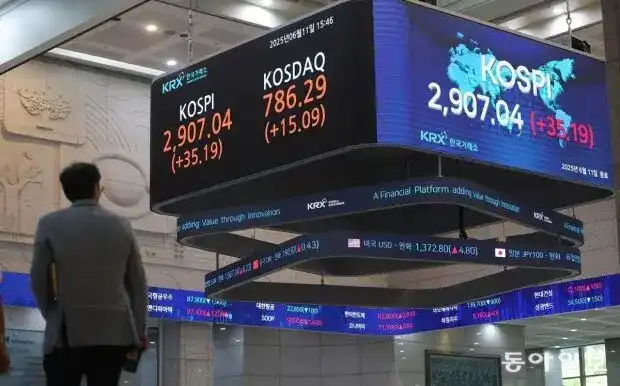
Title: Korean DAT Companies Following "Strategy" Bitcoin Hoarding Model Face Delisting Amid Bear Market Summary: Several Korean KOSDAQ-listed companies, known as Digital Asset Trusts (DATs), are at risk of being delisted due to a combination of stricter regulatory thresholds and a downturn in crypto markets. These firms, inspired by models like Strategy and Japan's Metaplanet, raised capital to buy Bitcoin, relying on a cycle of rising crypto prices to boost their stock value. However, recent reforms in Korea have raised the minimum market capitalization required to stay listed from 150 billion won to 200 billion won (approx. $1.3M), with a further increase to 300 billion won set for next January. The new rules also close loopholes like reverse stock splits used to artificially inflate share prices. The situation is exacerbated by a significant drop in Bitcoin's price from its 2025 peak and a weak KOSDAQ market. While the main KOSPI index has surged nearly 95% year-to-date, KOSDAQ has fallen about 10%, draining liquidity from smaller companies. Many DATs now hover near or below the new market cap thresholds and must also book substantial valuation losses on their Bitcoin holdings. Analysts suggest that without a sustained recovery in both crypto prices and broader market interest in KOSDAQ stocks, these companies have limited options to avoid delisting, marking a precarious moment for Korea's crypto-linked public companies.

marsbit53 dk önce

Korean Companies Following Strategy in Accumulating Cryptocurrency: From Bull Market to Delisting?

marsbit53 dk önce

İşlemler

Spot
活动图片