Galaxy Digital CEO Mike Novogratz used a weekend appearance on Kyle Chassé’s podcast to make an unexpected—if nuanced—bull case for XRP, arguing that the asset’s value today is anchored less in on-chain activity than in an unusually durable, identity-forming community that has survived lawsuits, bear markets and cycles of derision from rivals.
“XRP has one of the strongest communities there is. You want to learn about it, say something bad about them,” Novogratz said. “People will be out in front of your house with picket signs protesting you. Those community members love their token. They have a narrative, it’s going to be payments…” He acknowledged that present-day activity trails faster networks—“We can look at how much use case is on the blockchain. It’s not nearly as much as on Solana, right? Small. It doesn’t matter for their value proposition right now. Their value proposition is the intensity of that community.”
The Bull Case For XRP
The Galaxy CEO framed that intensity as a rational response to a broader collapse of trust since the 2008 crisis. “We have so little trust that we’re finding trust in these online crypto communities,” he argued, describing the strongest crypto ecosystems as “cults” in the sociological sense—conviction-driven communities that substitute identity and shared myth for institutional trust. “All the crypto that are successful are cults,” he said. It is the kind of commitment that inspires permanence signals—“that’s why people get tattoos… No one gets tattoos about their stock.”
Novogratz contrasted equity investors’ price discipline with crypto tribal loyalty. “I’m an Oracle guy. I like Oracle when it’s cheap. I don’t like it when it’s expensive,” he said. “You’ve never heard an XRP Army guy think XRP is expensive… They just want to be in XRP.” The same identity logic, he noted, permeates Bitcoin: “I’ve got one employee who loves Bitcoin so much… if Bitcoin went away, he would have almost no purpose in life. Like, his purpose is Bitcoin.”
Chassé pushed the analogy into equities by name-checking Tesla’s fandom. Novogratz agreed: “Tesla, because it’s become a cult. It’s a community. It’s a cult.” That bleed-through between markets, in his view, is the tell: culture can dominate valuation models for long stretches, and crypto’s most resilient assets are those whose communities behave as movements.
XRP’s path through US litigation became his central case study in resilience. “I didn’t think XRP would last after the lawsuits and all the… It did. And it’s stronger. It’s actually been the best token you could have bought post-election,” he said, calling the phenomenon “almost irrational” but instructive for understanding why dismissing a community can be costly. Novogratz credited Ripple’s chief executive directly: “Brad Garlinghouse has done a world-class job of navigating these lawsuits, of keeping that community…”
He also used the moment to revisit his own priors about decentralization purity tests. “I used to get angry about it because I was like, oh, it’s not Bitcoin. It’s not as decentralized… Like, who am I to judge where people want to store their money?” He extended the principle beyond XRP: “The same holds true for XRP or Cardano. If people want to store their money in that community, go for it… The arrogance of thinking my community is good, but your community sucks. It’s just stupid. Now, I can make technical arguments for more decentralized than you… Like, who cares? No one cares.”
For Novogratz, crypto communities behave like polities—“They each have their own constitution, Declaration of Independence. They each have their own culture.” He illustrated the point with a story about Galaxy’s own office décor: “We have the Bitcoin white paper on our freaking ceiling… like the beginning [crawl] in Star Wars… That is the constitution of the Bitcoin community.” The implication for XRP is straightforward: as long as the “constitution” of its community remains intact—an ethos he sees as forged under legal fire—the token’s bid can be sustained by identity as much as by immediate utility.
Chassé briefly touched on price perceptions from retail—“people think XRP is very cheap at $3 because if it gets the same price Bitcoin’s at one day, imagine the upside”—to which Novogratz responded by reiterating his refusal to play judge over others’ monetary choices. “When people thought I was crazy, I was like, who the freak are you to judge where I want to… save my money?”
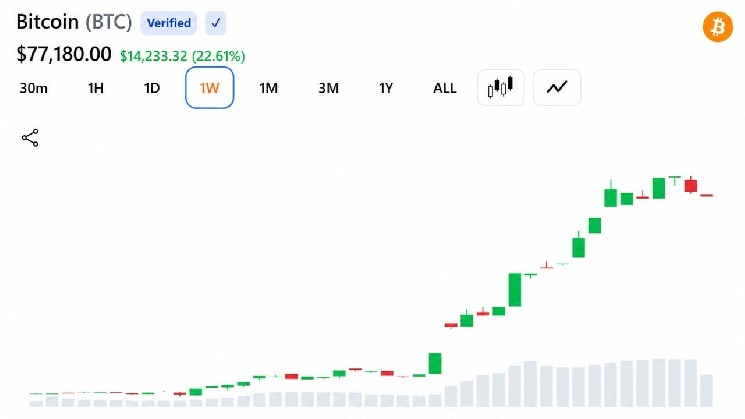
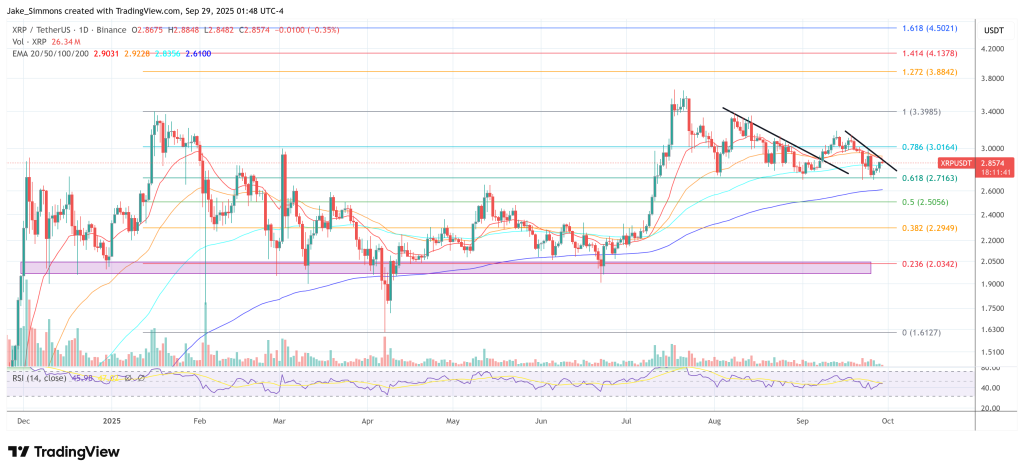
At press time, XRP traded at $2.85.

Related Posts