US Bitcoin ETFs Post $900M Net Outflows In Past Week – Details

bitcoinist2025-09-28 tarihinde yayınlandı2025-09-28 tarihinde güncellendi

Özet

The US spot Bitcoin ETFs (exchange-traded funds) endured some of the most difficult days in recent months over the past...

Trusted Editorial content, reviewed by leading industry experts and seasoned editors. Ad Disclosure

The US spot Bitcoin ETFs (exchange-traded funds) endured some of the most difficult days in recent months over the past week. With the market sentiment flipping and the BTC price stalling, several US investors cashed out on their positions in the world’s largest cryptocurrency by market cap.

After posting strong performances over the past few weeks, the tides appear to be shifting for the Bitcoin exchange-traded fund market, with investor appetite in the United States seemingly waning. This latest round of withdrawals ended an inflow streak of four consecutive weeks for the spot Bitcoin ETFs.

Bitcoin ETFs Register $418 Million Net Inflows

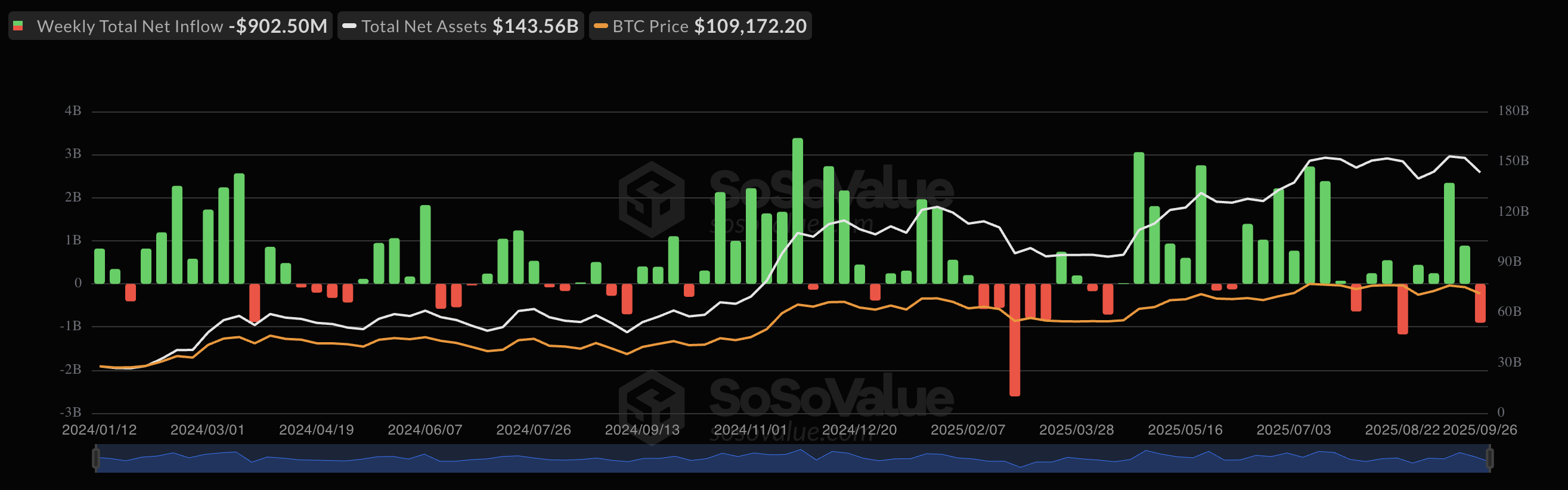
According to the latest market data, the US Bitcoin ETFs registered a daily total net inflow of $418.25 million on Friday, September 26. This performance continued the terrible run of form for the crypto-linked investment products, which recorded only a positive inflow day in the past week.

Breaking things down, Fidelity Wise Origin Bitcoin Fund (with the ticker FBTC) posted the most significant daily net outflows, losing more than $300 million on the day. BlackRock’s iShares Bitcoin Trust came in second, with a total daily withdrawal of $37.25 million to close the week.

Bitwise Bitcoin ETF (BITB) recorded a daily total net outflow of $23.79 million on Friday, while Ark & 21Shares Bitcoin ETF (ARKB) lost $17.81 million in value on the day. Grayscale Bitcoin Mini Trust (BTC) and Bitcoin Trust were the only other Bitcoin ETFs with double-digit outflows ($17.14 million and $12.57 million, respectively) on the day.

VanEck Bitcoin ETF (HODL) was the only exchange-traded fund to record any activity on Friday, with a daily net outflow of $9.28 million. This negative $418.25 million performance amounted to a cumulative $902.5 million net outflow in the past week.
Bitcoin ETFs

Source: SoSoValue

This negative weekly performance marked the end of a streak of four consecutive weeks of positive inflows. In the previous two weeks, the US spot Bitcoin ETFs registered more than $3 billion in capital inflows, as the macroeconomic conditions shifted in favor of risk assets.

Bitcoin Price Overview

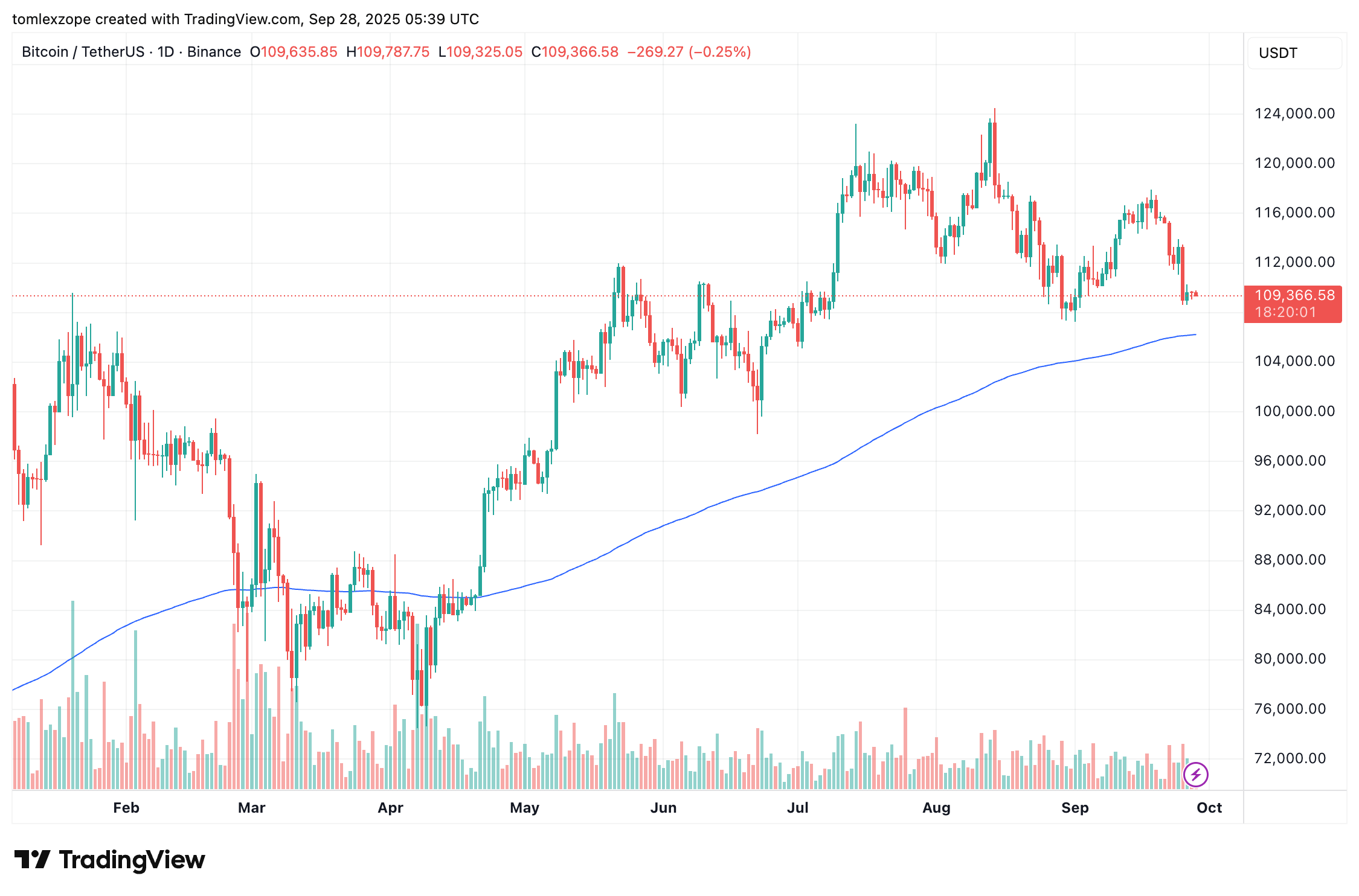
However, the crypto market seems to have cooled off, as seen with the price of Bitcoin over the past week. The premier cryptocurrency lost over 5% in its value, falling from around $116,000 to beneath the $110,000 level in the last seven days.

With the Bitcoin price struggling at the moment, it is no shock that the Bitcoin ETFs have seen massive withdrawals in the past week. As of this writing, the price of BTC stands at around $109,690, reflecting no significant movement in the past 24 hours.
Bitcoin ETFs

The price of BTC on the daily timeframe | Source: BTCUSDT chart on TradingView

Featured image from iStock, chart from TradingView
Editorial Process for bitcoinist is centered on delivering thoroughly researched, accurate, and unbiased content. We uphold strict sourcing standards, and each page undergoes diligent review by our team of top technology experts and seasoned editors. This process ensures the integrity, relevance, and value of our content for our readers.

Opeyemi Sule is a passionate crypto enthusiast, a proficient content writer, and a journalist at Bitcoinist. Opeyemi creates unique pieces unraveling the complexities of blockchain technology and sharing insights on the latest trends in the world of cryptocurrencies. Opeyemi enjoys reading poetry, chatting about politics, and listening to music, in addition to his strong interest in cryptocurrency.

İlgili Okumalar

From Logo to Bo Niu: TRON Further Perfects Its Brand Visual Assets

On June 23rd, TRON completed a significant upgrade to its official mascot, Bo Niu. The revamped character features larger, brighter eyes, more expressive facial details, and a clearer "T" structural motif, while retaining its signature red-and-white color scheme and horned design. This refresh aims to enhance Bo Niu's approachability, emotional range, and versatility for use across social media, community interactions, offline events, and branded merchandise. The redesign focuses on creating a stronger first impression. A more open facial structure with distinct, expressive eyes and the addition of a mouth with a small fang make the character friendlier and more suitable for dynamic content like animations and emojis. Subtle brand elements are integrated, such as stylized cheek lines inspired by "signal" icons, referencing the "wave" in "TRON," and a "T" shape formed by its smile and chest markings. Bo Niu has also been given a more defined personality as "TRON's Chief Luck Officer," with traits like being playful and sweet. This persona provides a more accessible and emotionally resonant entry point to the TRON brand, contrasting with often technical Web3 narratives. This mascot upgrade is part of TRON's ongoing effort to build a comprehensive and extensible visual identity system, following its recent logo refresh. Bo Niu is positioned as a key asset to connect with users, foster community, and convey brand warmth in everyday contexts.

marsbit1 dk önce

From Logo to Bo Niu: TRON Further Perfects Its Brand Visual Assets

marsbit1 dk önce

TRON Refreshes the Bull Image, Creating a More Approachable Brand Character

TRON's official mascot "BONiu" (Wave Bull) has received a comprehensive visual upgrade. Retaining its core red-and-white color scheme, horned silhouette, and brand DNA, the refreshed character features larger, brighter eyes, more expressive facial details including a mouth with a small fang, and enhanced emotive capabilities. The redesign aims to strengthen the mascot's亲和力, emotional expressiveness, and adaptability across various scenarios. Key updates include a clearer facial structure for instant recognition, a simplified and more intuitive五官 design, and the integration of subtle brand language. The cheek blushes are now inspired by a "signal" icon, while the smile and chest lines form a stable "T" structure, creating a cohesive超级符号 for the brand. The character has also been equipped with a 12-phoneme lip-sync system to support future动画 and interactive content. Beyond its visual role, BONiu's persona has been enriched. Now titled "TRON's Chief Luck Officer," it carries playful personality tags like "foodie enthusiast" and "full-of-tricks," allowing it to engage with the community in a more approachable and relatable manner. This update provides a lower-barrier, emotionally warm entry point for users amidst the often technical and abstract narratives of Web3. This mascot revamp is part of TRON's ongoing effort to refine its visual asset system, following the earlier logo update. By evolving from a static visual into a dynamic, expressive brand角色, the new BONiu is positioned to become a key asset for connecting with users, building brand记忆, and conveying TRON's personality across社交传播, community互动,线下活动, and merchandise.

链捕手17 dk önce

TRON Refreshes the Bull Image, Creating a More Approachable Brand Character

链捕手17 dk önce

With Labour Changing Leaders, Is the Long-Suppressed UK Crypto Market About to Turn Around?

Labour leader change: Hope for UK crypto market? With Keir Starmer's resignation as Prime Minister and Labour leader, a leadership contest has begun. Andy Burnham, the former Mayor of Greater Manchester and now the overwhelming favourite to succeed, has sparked cautious optimism within the UK cryptocurrency industry. Industry figures hope Burnham, seen as more receptive to digital assets than much of the Labour establishment, could shift the party's traditionally harder line. The leadership transition is expected to be swift, with prediction markets like Polymarket assigning a 97% probability to Burnham becoming the next Prime Minister. However, this political shift comes as a comprehensive regulatory framework for crypto, established by law earlier this year, is in its final implementation phase. The Financial Conduct Authority (FCA) is finalizing detailed rules covering trading, custody, stablecoins, and market abuse, with the full regime set to go live in October 2027. While a new Prime Minister can reshuffle ministers and adjust policy priorities, the core regulatory architecture is now law and unlikely to be fundamentally overturned without significant, deliberate government intervention. The main industry hope is that a Burnham government, focusing on economic growth, will ensure the FCA's implementation is pragmatic and growth-oriented. Industry advocates seek proportionate capital requirements, a streamlined licensing process, and clear rules for staking and stablecoins. They argue that embracing the crypto sector could attract investment and listings to London's struggling markets. Despite the optimism, concerns remain that regulatory implementation may still be influenced by more sceptical factions within the Labour party.

Foresight News46 dk önce

With Labour Changing Leaders, Is the Long-Suppressed UK Crypto Market About to Turn Around?

Foresight News46 dk önce

A 60-Day Window Depresses Oil Prices, So Why Is the Market Falling Instead?

International oil prices continued to decline on June 23, extending significant losses from the previous session. The market shifted focus from Middle East military risks to actual supply changes following a temporary U.S.-Iran arrangement. The immediate trigger was the resumption of traffic through the Strait of Hormuz, a critical oil shipping chokepoint, with two tankers passing through, signaling eased near-term supply disruption fears. Prices retreated as the "worst-case scenario" was temporarily averted. A reported 60-day window in a U.S.-Iran understanding allows Iran to sell oil during this period, further dampening supply concerns. However, this arrangement is temporary, linked to nuclear talks, and does not guarantee a long-term solution. Market sentiment remains cautious because the deal could still unravel, potentially reinstating sanctions or disrupting shipping. While these developments have lowered immediate risk premiums, prices have not fully returned to pre-conflict levels. Geopolitical news, particularly regarding the stability of the Strait of Hormuz or the progress of negotiations, could quickly reverse the price drop. Additionally, low U.S. strategic petroleum reserves limit the emergency buffer available if supply shocks reemerge. Therefore, the current price decline reflects a reduction in near-term panic, not a complete elimination of Middle East supply risks.

marsbit1 saat önce

A 60-Day Window Depresses Oil Prices, So Why Is the Market Falling Instead?

marsbit1 saat önce

İşlemler

Spot
Futures
活动图片