TRON stuck near $0.35 – Can rising Futures demand break TRX free?

ambcrypto2025-09-14 tarihinde yayınlandı2025-09-15 tarihinde güncellendi

Key Takeaways

What does the surge in TRON Futures Netflow indicate?

The 170% surge to $7.48 million shows buyers are dominating the TRON Futures market, hinting at strong bullish momentum.

How does the increase in USDT supply affect TRX’s potential?

The $23 billion spike in USDT supply on TRON signals rising demand and user activity, setting TRX up for possible price gains.


Since bouncing back to $0.3549 three days ago, TRON [TRX] has traded within a thin margin. Over this period, the altcoin has remained stuck between $0.34 and $0.35 range. 

As of this writing, TRON was trading at $0.351, marking a 0.17% decline over the past 24 hours. Amid this market cooldown, investors have taken the opportunity to position themselves, awaiting the next move. 

Buyers take over TRON’s Futures market 

According to CryptoQuant analyst Burak Kesmeci, TRON Futures have experienced a significant shift in investor behavior.

Notably, the altcoin’s Taker CVD (90D) has been within green territory for three consecutive days — this is the second time in 2025. 

Tron Futures CVDTron Futures CVD

Source: CryptoQuant

The last time TRON’s Taker CVD was in the green was between the 15th of March to the 15th of June, which saw price jump from $0.26 to $0.29.

This signals rising buyer dominance in the Futures market.

 In fact, Futures have recorded significant capital inflow. According to CoinGlass, Futures inflow jumped to $75.38 million compared to $67.91 million in outflows. 

Tron Futures FlowTron Futures Flow

Source: CoinGlass

As a result, TRON’s Futures Netflow surged 170% to $7.48 million, a clear sign of rising buyers’ dominance.  

Spot market takes a different path 

Interestingly, while Futures have recorded increased buying pressure, sellers have dominated the Spot market. According to CryptoQuant, Spot Taker CVD (90) has remained in the red over the past 30 days.

Tron Spot taker CVDTron Spot taker CVD

Source: CryptoQuant

Thus, sellers have been hitting the bid more aggressively than buyers lifting the ask. This often signals seller dominance in the Spot markets, a clear sign of bearish sentiment. 

On top of that, TRON’s Spot Netflow just flipped positive after being negative for two consecutive days. 

Tron Spot FlowsTron Spot Flows

Source: CoinGlass

TRON saw $52.24 million in inflows compared to $51.19 million in spot outflows. As a result, its netflow jumped to 110% to $1.05 million, a clear sign of aggressive spot selling. 

User activity and demand soar too

Besides market activity, TRON has recorded a massive spike in USDT supply. According to Darkfost, USDT supply on the network has surged to $23 billion in 2025, reflecting growing demand. 

Tron USDT supplyTron USDT supply

Source: CryptoQuant

Historically, increased USDT supply has preceded a substantial uptick in TRX’s price charts. Likewise, when supply drops, TRX prices tend to consolidate or decline, a clear sign of correlation.

Significantly, the surge in USDT supply on TRON signals increased user activity and demand for the network.

Is a rally coming for TRX?

Undoubtedly, TRON has experienced strong demand in the Futures market, while USDT supply has spiked significantly, indicating strengthening demand.

These two market conditions position TRX for more gains.

If Futures demand holds, backed by an increased user base, TRX will break out and target $0.37.

However, if sellers in the spot cause significant pressure, TRX will continue to trade within a consolidation range, with $0.344 acting as support.


Share

Trend Kriptolar

İlgili Okumalar

EIP-8363 Quantitative Review: Cutting Staking 'Subsidies' – What Does Ethereum Hope to Gain?

**EIP-8363 Quantitative Review: Reducing Staking "Subsidies" – What Does Ethereum Want in Return?** EIP-8363 proposes burning an increasing portion of validator rewards as the staking rate rises, reaching 100% burn when 50% of ETH is staked. This analysis models its impact on issuance, yield, and staking equilibrium, examines whether ETH's yield explains its price, quantifies the chain economy's reliance on this yield, and presents conclusions. Key findings: 1. **EIP-1559 Burns Are Ineffective:** Post-merge, burning (via base fees) has collapsed by 98% and now offsets only 2.4% of new ETH issuance, making issuance policy Ethereum's sole remaining supply lever. 2. **EIP-8363's Real Impact:** At the current ~42.2M ETH staked, the proposal would cut issuance by ~58.6% and staking APR by ~56.4%, removing ~633k ETH ($1.55B) in annual dilution (0.53% of market cap). It's not zero issuance; that would require 43% more ETH staked. 3. **Self-Limiting Mechanism:** The design has a built-in equilibrium. At reasonable required returns (e.g., 2%), the system stabilizes at ~26% staking rate and ~0.48% annual inflation. 4. **Yield vs. Price:** No detectable statistical relationship exists between changes in staking yield and ETH price returns over 43 months. The natural 37% yield decline since 2023 did not drive price action. 5. **Chain Economy Dependence:** While LSTs like wstETH form ~34% of collateral in major lending markets, their utility as collateral remains if yield is positive. The direct revenue hit to protocols like Lido is significant (~50% of fee income) but not systemic. Staking-focused ETFs represent only 0.19% of ETH supply. 6. **Core Conflict:** The debate masks a zero-sum redistribution: cutting ~$1.55B in annual issuance transfers value from concentrated staking intermediaries (LST/LRT protocols, leverage players) to the dispersed majority of non-staking ETH holders. 7. **Outlook:** The proposal is economically sound for ETH's scarcity but politically difficult due to concentrated opposition. It is unlikely to pass in its current form.

marsbit4 dk önce

EIP-8363 Quantitative Review: Cutting Staking 'Subsidies' – What Does Ethereum Hope to Gain?

marsbit4 dk önce

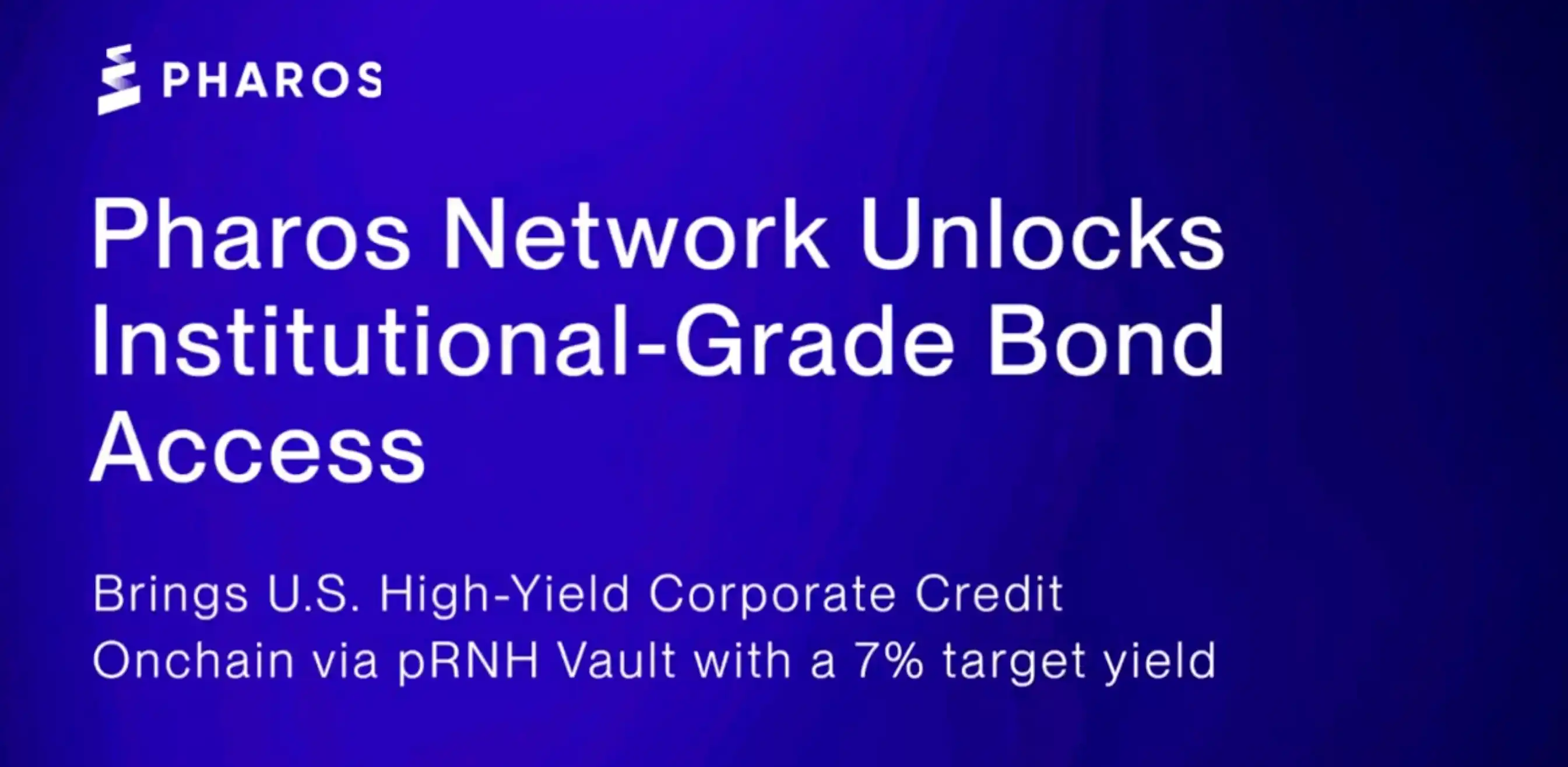
Pharos Introduces On-Chain Institutional-Grade U.S. Corporate Bond Credit, Expanding Its RealFi Asset Portfolio

Pharos Network has launched the pRNH Vault, introducing institutional-grade US corporate high-yield bond exposure to its on-chain RealFi (Real World Finance) ecosystem. Developed by the R25 protocol, the vault provides qualified users access to a tokenized portfolio of high-yield corporate debt, broadening Pharos's asset offerings beyond stablecoins and cash-equivalents. The vault's underlying asset is the NYLIM Anemoy US High Yield Corporate Bond separate account (HYB), managed by New York Life Investment Management (NYLIM) and tokenized in collaboration with Anemoy and Centrifuge. Users can deposit USDC into the vault to receive pRNH tokens, representing indirect ownership of the HYB portfolio, which targets an annualized yield of approximately 7%. The structure offers programmability and composability for on-chain financial applications. Pharos views this move as a key evolution from basic asset tokenization towards building a dynamic marketplace where institutional assets can be actively discovered, evaluated, and utilized programmatically. The pRNH Vault architecture incorporates agent-assisted functionalities for credit screening, liquidity monitoring, and on-chain operations, signaling tighter integration between real-world finance and intelligent on-chain systems. To support this vision, Pharos employs a technical stack including the SALI engine for parallel execution, modular SPNs, protocol-level compliance, ZK-KYC/AML, and native AI agent support. The network positions itself as the "value discovery layer" for the agent economy, aiming to make real-world value, smart agents, and institutional assets widely accessible. The pRNH launch adds a core credit asset to this ecosystem and serves as a practical test case for its infrastructure.

marsbit21 dk önce

Pharos Introduces On-Chain Institutional-Grade U.S. Corporate Bond Credit, Expanding Its RealFi Asset Portfolio

marsbit21 dk önce

İşlemler

Spot

Popüler Makaleler

TRX Nasıl Satın Alınır

HTX.com’a hoş geldiniz! TRON (TRX) satın alma işlemlerini basit ve kullanışlı bir hâle getirdik. Adım adım açıkladığımız rehberimizi takip ederek kripto yolculuğunuza başlayın. 1. Adım: HTX Hesabınızı OluşturunHTX'te ücretsiz bir hesap açmak için e-posta adresinizi veya telefon numaranızı kullanın. Sorunsuzca kaydolun ve tüm özelliklerin kilidini açın. Hesabımı Aç2. Adım: Kripto Satın Al Bölümüne Gidin ve Ödeme Yönteminizi SeçinKredi/Banka Kartı: Visa veya Mastercard'ınızı kullanarak anında TRON (TRX) satın alın.Bakiye: Sorunsuz bir şekilde işlem yapmak için HTX hesap bakiyenizdeki fonları kullanın.Üçüncü Taraflar: Kullanımı kolaylaştırmak için Google Pay ve Apple Pay gibi popüler ödeme yöntemlerini ekledik.P2P: HTX'teki diğer kullanıcılarla doğrudan işlem yapın.Borsa Dışı (OTC): Yatırımcılar için kişiye özel hizmetler ve rekabetçi döviz kurları sunuyoruz.3. Adım: TRON (TRX) Varlıklarınızı SaklayınTRON (TRX) satın aldıktan sonra HTX hesabınızda saklayın. Alternatif olarak, blok zinciri transferi yoluyla başka bir yere gönderebilir veya diğer kripto para birimlerini takas etmek için kullanabilirsiniz.4. Adım: TRON (TRX) Varlıklarınızla İşlem YapınHTX'in spot piyasasında TRON (TRX) ile kolayca işlemler yapın.Hesabınıza erişin, işlem çiftinizi seçin, işlemlerinizi gerçekleştirin ve gerçek zamanlı olarak izleyin. Hem yeni başlayanlar hem de deneyimli yatırımcılar için kullanıcı dostu bir deneyim sunuyoruz.

1.9k Toplam GörüntülenmeYayınlanma 2024.12.10Güncellenme 2026.06.02

TRX Nasıl Satın Alınır

Tartışmalar

HTX Topluluğuna hoş geldiniz. Burada, en son platform gelişmeleri hakkında bilgi sahibi olabilir ve profesyonel piyasa görüşlerine erişebilirsiniz. Kullanıcıların TRX (TRX) fiyatı hakkındaki görüşleri aşağıda sunulmaktadır.

活动图片