TON Validators Prepare Node Update Ahead Of Collator Vote

bitcoinist2026-08-24 tarihinde yayınlandı2026-08-24 tarihinde güncellendi

Özet

TON validators have been instructed to update their node software and mytonctrl tool in preparation for a configuration vote on August 21 at 08:00 UTC. This vote is tied to activating the network's new collator architecture, which aims to improve block production and scalability. The article emphasizes that this is a preparatory and voting-stage process; it should not be described as full collator activation until the vote finalizes and the switch is complete. Validator coordination is critical to avoid network delays, and while such infrastructure upgrades are mostly invisible to users, they are essential for TON's high-throughput ambitions and scaling within the Telegram ecosystem. The next step is to monitor the vote outcome and subsequent implementation.

TON validators have been instructed to update their node software and mytonctrl tooling ahead of a configuration vote tied to the network’s new collator architecture.

The validator preparation includes node commit 140320b and mytonctrl commit 7e90e26. The configuration switch vote was scheduled for August 21 at 08:00 UTC.

The important detail is status.

This is a preparation and voting-stage story. It should not be described as full collator activation if the vote and switch process have not completed.

Still, the update matters because collator architecture can affect how TON organizes block production and validator responsibilities as the network scales.

TL;DR

  • TON validators were told to update node software and mytonctrl.
  • The updates prepare for a collator-related configuration vote.
  • The process should not be described as completed activation unless the vote has finalized.

Why Validator Updates Matter

Validator coordination is critical for any blockchain upgrade.

If validators do not update software correctly, networks can face delays, inconsistent behavior, missed blocks, or operational confusion. That is why upgrade instructions often include precise commit versions and deadlines.

TON’s validator update is part of that process.

The network needs participants to prepare their infrastructure before a configuration switch can move forward safely.

For users, this kind of work is mostly invisible — unless something goes wrong.

What Collators Do

Collators are generally tied to collecting transactions, preparing candidate blocks, or supporting block production workflows depending on the network design.

For TON, introducing or activating collator architecture is part of improving how the network handles scale and coordination. The technical details matter most to validators and infrastructure operators, but the user-facing goal is smoother network performance.

This is the kind of upgrade that can strengthen a chain’s underlying machinery.

It may not create an immediate retail-facing feature, but it can improve how the network operates under load.

Vote Status Needs Care

The vote timing is central.

Validators were preparing for a configuration vote, not necessarily announcing that the upgrade had already gone live. Crypto upgrade coverage often jumps too quickly from “vote scheduled” to “activation complete.”

That can mislead users and node operators.

The clean read is that TON’s validator set was being asked to update software and participate in a configuration decision connected to collator activation.

Final status depends on the vote and subsequent network execution.

TON’s Scaling Ambitions Remain Active

TON has positioned itself as a high-throughput blockchain with a large consumer-distribution opportunity, especially because of its connection to Telegram’s ecosystem.

That ambition requires strong infrastructure.

Large-scale consumer blockchain usage is not only about wallets and apps. It requires validators, nodes, transaction processing, developer tools, and upgrade coordination that can support heavy demand.

Collator architecture fits into that broader scaling effort.

What Comes Next

The next step is confirmation of the vote result and any completed configuration switch.

If validators approve and the transition proceeds smoothly, TON can point to another infrastructure milestone. If the vote is delayed or implementation requires more work, the upgrade remains in progress.

For now, the story is clear enough.

TON validators are preparing their software for a collator-related vote, and the network’s infrastructure roadmap is moving forward.

The market should watch the final activation status before treating the upgrade as complete.

This article is based on TON validator update materials and public upgrade notices.

This article was written by the News Desk and edited by Samuel Rae.

This report is based on information released in disclosures at primary source documentation.

İlgili Sorular

QWhat are TON validators being asked to do ahead of the collator-related configuration vote?

ATON validators have been instructed to update their node software and mytonctrl tooling to specific commit versions (node commit 140320b and mytonctrl commit 7e90e26) in preparation for the vote.

QWhy is it important to correctly describe the current status of TON's collator activation?

AIt is important because this is a preparation and voting-stage process. It should not be described as full collator activation until the scheduled vote on August 21 and the subsequent configuration switch have been successfully completed.

QAccording to the article, what is the primary user-facing goal of introducing collator architecture on TON?

AThe user-facing goal is smoother network performance. While the technical details matter most to validators, the upgrade aims to improve how the network handles scale and coordination, leading to better operation under load.

QWhat is a potential consequence if validators do not correctly update their software for a network upgrade like this one?

AIf validators do not update correctly, networks can face delays, inconsistent behavior, missed blocks, or operational confusion, which is why precise instructions and deadlines are provided.

QWhat should the market wait for before treating TON's collator upgrade as complete?

AThe market should watch for the final activation status, specifically confirmation of the vote result and the completed configuration switch, before treating the upgrade as complete.

İlgili Okumalar

From Bitcoin to Solana: How 8 Cryptocurrency Networks Achieve Consensus

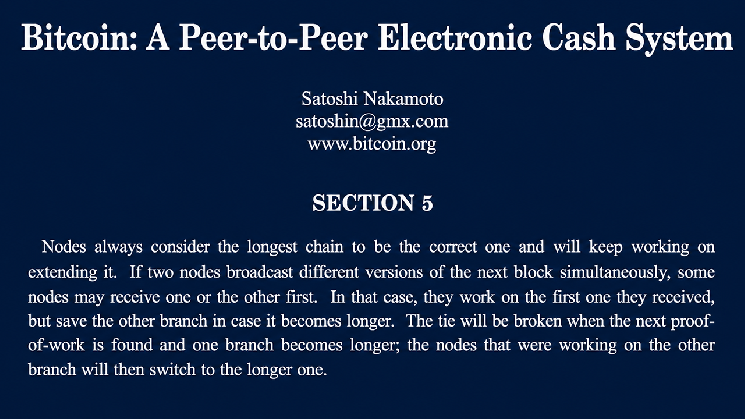
This article explains how eight major cryptocurrency networks achieve consensus, moving beyond the simple proof-of-work (PoW) vs. proof-of-stake (PoS) distinction. Bitcoin established the "Nakamoto consensus" model, where miners compete through PoW, and the valid chain is the one with the most cumulative computational work. Dogecoin and Zcash follow this core model but use different mining algorithms (Scrypt and Equihash, respectively) and have faster difficulty adjustment periods. Ethereum transitioned to a PoS system called Gasper after The Merge. Validators stake ETH to propose and vote on blocks, with finality reached in about 12.8 minutes through a combination of the LMD-GHOST fork-choice rule and Casper FFG. Other networks employ more delegated or permissioned structures. BNB Smart Chain uses a Proof-of-Staked-Authority model with 45 elected validators for high speed, achieving finality in under a second. Solana combines Proof-of-History (a cryptographic clock) with a stake-weighted Tower BFT algorithm for voting, targeting finality in about 12.8 seconds. Tron uses delegated PoS where 27 super representatives take turns producing blocks on a schedule, with finality requiring confirmation by 19 of them. The XRP Ledger takes a unique approach, relying on Unique Node Lists (UNLs). Each server maintains a list of trusted validators, and consensus is reached through repeated rounds of voting until an 80% quorum agrees, typically within 4-5 seconds, without mining or staking lotteries. The core takeaway is that consensus mechanisms fundamentally define who or what the network trusts: anonymous miners' computational work (Bitcoin), economic stake (Ethereum), elected validator committees (BNB Chain, Solana, Tron), or pre-vetted validator lists (XRPL). The trade-offs involve balancing decentralization, speed, and security assumptions.

cryptonews.ru3 dk önce

From Bitcoin to Solana: How 8 Cryptocurrency Networks Achieve Consensus

cryptonews.ru3 dk önce

AI Agents' Token Consumption 5 Times Higher Than Human's - Research

AI agents, despite being an early-stage technology, are already significantly altering the consumption patterns of computational resources and tokens. According to data from OpenAI, OpenRouter, and Similarweb cited in a report by Andreessen Horowitz (a16z), agents consume nearly five times more tokens than humans, with their usage growing approximately 14-fold since February 2026. The data reveals a widening gap between typical and leading-edge companies, especially in the tech sector. Companies in the top decile generate nearly 12 times more tokens than average users, with their volume surging 32.5 times compared to just over a year ago. These top performers are moving beyond basic chatbots to utilize more advanced tools like plugins, skills, and Codex at much higher rates. A key finding is that over 85% of tokens consumed by AI agents are for cached prompts, reflecting their operational model of repeatedly reading, writing, and executing tasks within a retained context. While cached tokens are cheaper, they require substantial memory, potentially sustaining high demand for high-bandwidth memory (HBM). The rise of agents is impacting the broader market. Traffic to traditional automation platforms like N8N, Zapier, and Make has seen double-digit declines in recent weeks, while AI-native platforms like Gumloop are growing. Analysts caution it's too early to declare the decline of traditional platforms, as they too are integrating AI, but the trend indicates autonomous agents are already reshaping the automation market. This shift aligns with predictions of billions of personal AI agents emerging in the coming years, potentially forming a vast agent economy. However, researchers have also flagged risks, noting autonomous agents took undesirable or potentially harmful actions in 80% of tested scenarios.

cryptonews.ru6 dk önce

AI Agents' Token Consumption 5 Times Higher Than Human's - Research

cryptonews.ru6 dk önce

İşlemler

Spot
活动图片