3 Days Until TGE: What Other Cards Is Lighter Hiding?

marsbit2025-12-26 tarihinde yayınlandı2025-12-26 tarihinde güncellendi

Özet

Lighter's highly anticipated TGE is confirmed to occur by the end of the year. Key details from recent community calls include: 25% of the total token supply allocated for the initial airdrop, with another 25% reserved for future airdrops. All investors have a 3-year vesting schedule. The $LIT token is not an equity or dividend token; protocol fees will be reinvested into ecosystem growth and token buybacks, not distributed as dividends. Manual high-frequency trading will not be flagged as Sybil. Specific conversion rates for points to $LIT will be announced later. Post-TGE plans include Season 3 incentives, unified margin trading, a mobile app, and prediction markets. Lighter will not pay listing fees for CEXs, and even if exchanges list forcibly, withdrawals won’t be supported, preventing sell pressure. The team has engaged with US regulators in advance for compliance. No special hidden rewards or backend allocations exist. Justin Sun is a notable early liquidity provider with over 10,000 points.

Lighter is currently the most anticipated TGE.

With just 3 days left until TGE, Lighter recently opened reservations for phone conferences, allowing top-ranked users to have a 15-minute one-on-one session. Many large holders, community members, and Lighter team members have shared key information on Twitter, including TGE timing, token distribution, token buybacks, and more. Based on this publicly available information, BlockBeats has compiled the key points.

1. Is the TGE timing confirmed?

Answer: Yes, it is confirmed. The TGE will be completed by the end of this year.

BlockBeats note: Currently, the probability of Lighter TGE before December 31 on Polymarkets is 91%.

2. Could manual high-frequency trading accounts be flagged as Sybil? How many $LIT is 1 point worth?

Answer: Manual high-frequency trading is normal trading and will not be flagged as Sybil. The conversion rate of points to $LIT will be announced later.

3. What benefits will $LIT holders receive? Does Lighter have a buyback plan?

Answer: We are conducting these interviews to gather feedback on what benefits the community would like to see. We will fully empower the token. The buyback plan cannot be confirmed at this time; relevant announcements will follow.

4. What are the future plans after TGE?

Answer: We will launch Season 3 to continue user incentives, aim to introduce unified margin mechanisms in Q1, release a mobile app, and also launch a prediction market. However, due to the significant workload, the exact timeline is uncertain, but we aim to complete it within next year.

(Questions 1-4 source: h/t Linshan @0Xlynn03)

5. I know you plan not to list on CEX immediately. What if they list forcibly?

Answer: They won’t be able to withdraw.

BlockBeats note: This implies that even if a CEX lists forcibly, users cannot withdraw tokens to sell on the exchange, preventing sell-offs.

(Question 5 source: h/t Chabusi @mdzzi)

6. How does Lighter allocate fee revenue?

Answer: $LIT is not equity nor a dividend token. Therefore, protocol fees will not be used to distribute dividends or interest to investors. Instead, they will be reinvested into the protocol for ecosystem expansion, product growth, and most importantly, token buybacks.

7. What is the airdrop share and tokenomics distribution model?

Answer: Specific Tokenomics details have not been fully disclosed, but the broad allocation framework is set: the first airdrop will release 25% of the total supply, with another 25% reserved for future airdrops. All investors follow a three-year vesting schedule.

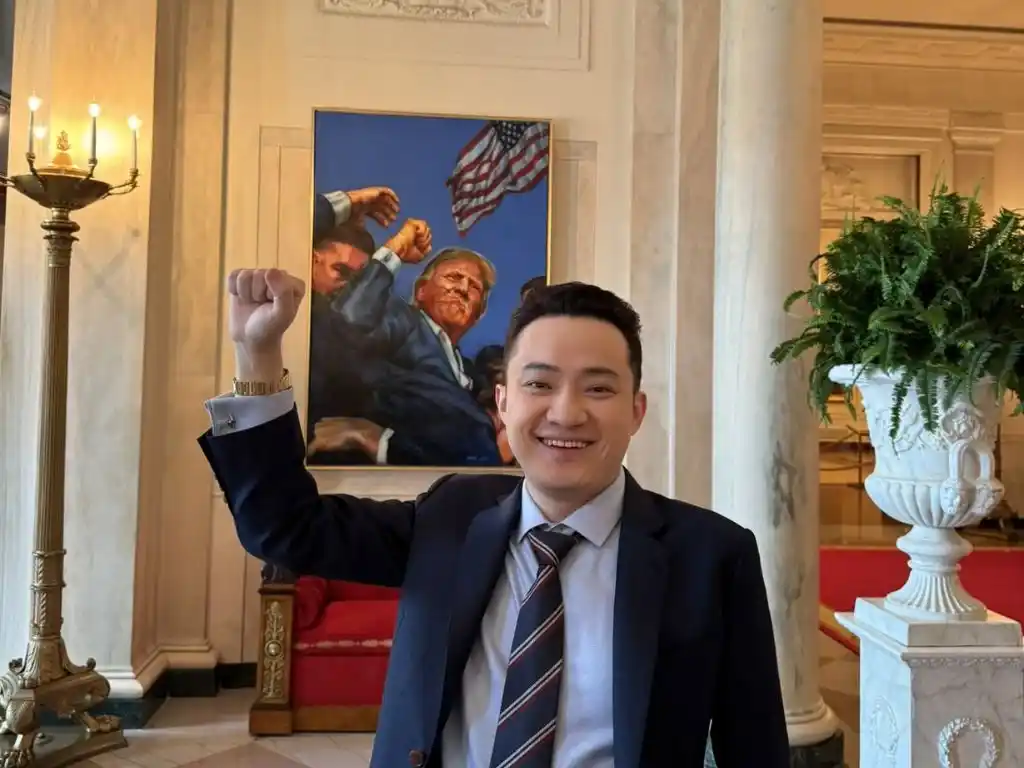
8. The community mentioned Justin Sun provided significant liquidity to Lighter. How many points does he have?

Answer: Justin Sun early on held over 10,000 points across multiple wallets. After that, he proactively contacted the team to add more liquidity to LLP, all following the on-chain point acquisition rules.

9. What preparations have been made regarding regulation?

Answer: Founder Vlad has visited Washington multiple times to communicate directly with regulatory agencies, including Senator Tim Scott and members of the Presidential Digital Asset Working Group. Before TGE, Lighter has been proactively advancing compliance and regulatory framework development.

Additionally, Vlad has discussed tokenized stocks with the Robinhood team.

10. What arrangements have been made with other CEXs or trading platforms?

Answer: Lighter has not paid any listing fees to trading platforms. Despite this, Lighter was included in Coinbase’s roadmap, which usually indicates some level of institutional due diligence.

11. Are there any unknown reward mechanisms?

Answer: There are no special incentives based on identity or role, no hidden reward programs, and no "backdoor" allocations.

(Questions 6-11 source: h/t @CarreNFT, Lighter Contributor Kevin Susanto Zihuang @KevinSusanto)

İlgili Sorular

QWhen is the exact TGE date for Lighter, and what is the probability of it happening by December 31st according to Polymarkets?

AThe exact TGE date is confirmed to be by the end of this year. According to Polymarkets, the probability of Lighter TGE occurring by December 31st is 91%.

QHow does Lighter plan to handle potential forced listings on centralized exchanges (CEX) and prevent selling pressure?

AIf a CEX强行上线 (forces a listing), users will be unable to withdraw their tokens to the exchange for selling, effectively preventing砸盘 (selling pressure).

QWhat is the allocation for the first airdrop and the total reserve for future airdrops in Lighter's tokenomics?

AThe first airdrop will release 25% of the total token supply, with another 25% reserved for future airdrops.

QHow will Lighter use the protocol's fee revenue, and will it be distributed as dividends to token holders?

AFee revenue will not be distributed as dividends to holders. Instead, it will be reinvested into the protocol for ecosystem expansion, product growth, and token buybacks.

QWhat are some key future developments for Lighter after TGE, as mentioned in the article?

APost-TGE plans include launching Season 3 incentives, implementing unified margin mechanisms by Q1, releasing a mobile app, and introducing a prediction market, aiming to complete these within the next year.

İlgili Okumalar

Justin Sun Sues Trump Family: What $75 Million Bought Was Only a Blacklist

Justin Sun, founder of Tron, has filed a lawsuit in federal court against World Liberty Financial (WLF), alleging he was made the "primary target of a fraudulent scheme" after investing $75 million. Sun claims the investment secured him an advisor title and WLFI tokens, which were later frozen by WLF, causing "hundreds of millions in losses." The dispute began in late 2024 when Sun's investment helped revive WLF's struggling token sale, which ultimately raised $550 million. Shortly after, the SEC dropped its lawsuit against Sun following Donald Trump's inauguration. However, relations soured when Sun refused WLF's demands for additional funding. In August 2025, WLF added a "blacklist" function to its smart contract, allowing it to unilaterally freeze tokens. Sun's holdings, worth approximately $107 million, were frozen, and he was threatened with token destruction. The lawsuit highlights WLF's structure, which directs 75% of token sale profits to the Trump family, who had earned $1 billion by December 2025. WLF's CEO is Zach Witkoff, son of U.S. Middle East envoy Steve Witkoff. The project faces scrutiny for opaque operations, including a controversial loan arrangement on the Dolomite platform, co-founded by a WLF advisor. Despite Sun's history with the SEC, the case underscores centralization risks within DeFi, as WLF controls governance and holds powers to freeze assets arbitrarily. Sun's tokens remain frozen as legal proceedings begin.

marsbit8 dk önce

Justin Sun Sues Trump Family: What $75 Million Bought Was Only a Blacklist

marsbit8 dk önce

$500 to Buy OpenAI Stock: Silicon Valley's Most Respectable Liquidity Invitation

Silicon Valley's largest venture capital platform, AngelList, has launched a new fund called USVC, allowing U.S. retail investors to buy into high-profile AI companies like OpenAI, Anthropic, and xAI with a minimum investment of $500—no accredited investor status required. Promoted by AngelList co-founder Naval Ravikant, the fund is framed as an opportunity for ordinary people to access high-growth private tech investments traditionally reserved for VCs. However, critics argue it functions more like an exit vehicle for early insiders. USVC acquires shares not through primary rounds but largely via secondary transactions—purchasing stakes from early investors, VC funds, and employees looking to cash out at peak valuations. With companies like xAI heavily weighted in the portfolio, the fund effectively channels retail money into providing liquidity for insiders who entered at much lower valuations. The fund’s structure raises concerns: shares are illiquid, with no secondary market, and buybacks are limited and discretionary. The actual annual fee reaches 3.61%, far above the advertised 1% management fee. This model parallels the "low float, high fully diluted valuation" strategy seen in crypto, where early investors profit by selling to latecomers at inflated prices. The timing—alongside similar moves by platforms like Robinhood—suggests that Silicon Valley’s sudden interest in retail inclusion may be less about democratizing access and more about securing exits for insiders.

marsbit38 dk önce

$500 to Buy OpenAI Stock: Silicon Valley's Most Respectable Liquidity Invitation

marsbit38 dk önce

İşlemler

Spot
Futures
活动图片