PUMP公售12分钟售罄,开盘后的两种剧本,你信哪个?

Odaily星球日报2025-07-12 tarihinde yayınlandı2025-07-12 tarihinde güncellendi

Özet

开盘先拉爆空头,还是直接恐慌抛售呢?

原创 | Odaily星球日报(@OdailyChina

作者|Golem(@web3_golem

PUMP公售12分钟售罄,开盘后的两种剧本,你信哪个?

万众期待的 PUMP 代币 1C0于今晚 22: 00 准时开启,虽然代币发售前市场中仍充斥着对 pump.fun 团队的诟病和对 PUMP 估值过高等等的负面之声,但“群友 FUD,我猛干”的真理依旧真香。

PUMP 代币公售场面火热, 1500 亿枚代币(占总供应量的 15% )在 12 分钟内便已宣告售空。据 Arkham 监测,有 189 个地址在 PUMP 链上公售打入 100 万美元,甚至也出现了在交易平台或因瞬时流量过大“打不上”的崩溃情况。

此外,今晚还出现了一个“小插曲”,据 pump.fun 官网页面信息,此次公售售出了 12.5% 代币,募集资金 5 亿美元,与此前公告的计划出售 15% 代币,募集 6 亿美元存在出入,市场猜测或因几个交易所的公售系统没有同步所致,截至目前 pump.fun 并未公开明确差额原因。

无论如何,今晚的公售并不是结束,而是市场更大规模博弈的开始。根据官方规定,虽然1C0 参与者在公售结束后可收到代币,但代币最初为不可转让状态(不可交易),1C0 结束后 48-72 小时内代币转让权限将开启,即最快可能是下周一开盘。

那么,开盘后结局究竟是让交易者“拍大腿”还是“跌眼镜”?市场上流传着以下两种主流剧本:

纸手开盘恐慌抛售,官方放出利好拉回价值

第一种剧本是,在下周 PUMP 代币开盘时,代币价格并未短时大幅拉升,参与公售的纸手或因恐慌而抛售,待短期投机者抛售完后,官方再放出利好消息配合价格拉升,成功将散户洗下车。这个剧本具有一定的道理,MoonRock Capital CEO Simon 也持同样的观点, 其认为 PUMP 代币在开盘后会先跌至 25 亿美元后拉升至 200 亿美元。

Pump.fun 此次1C0 面临的 FUD 可以说是史无前例的,Meme 赛道流动性逐渐散失、 40 亿美元估值过高、Pump.fun 日收入和用户活跃度下滑、Meme 发射平台龙头地位不保、代币未有实际价值、团队代币份额解锁方案不透明、此前持续抛售 SOL 套现的行为等等,若开盘后代币价格没有被拉升,这些 FUD 言论便会被合理化,Pump.fun 的“行业坏人”身份将做实。加之开盘后 33% 的代币(1C0价值 13.2 亿美元)将直接流通,当发生恐慌抛售时,市场也可能承受不了如此巨大的抛压。

但这个剧本精彩的地方是后半段,Pump.fun 官方和做市商将利用这些 FUD 吸筹,并且在成功“洗车”后再释放积压的利好消息。那么,Pump.fun 会释放什么样的利好来重新调动市场情绪呢?

此前据 Lookonchain 监测,Pump.fun 自 6 月 10 日起,已有近一个月未向 Kraken 存入 SOL。Pump.fun 最近一次出售 SOL 是在 6 月 11 日,其将 132180 枚 SOL 存入 Kraken,今年迄今 Pump.fun 已出售总计 2, 476, 697 枚 SOL,总价值 4.0464 亿美元。DeFiLlama 数据显示,Pump.fun 过去 30 天收入达 3194 万美元,若这些 SOL 全部都没卖的话,其有可能宣布将其注入 PUMP 的池子或作为用户为 PUMP 提供流动性的奖励发出。

其次,对于 Pump.fun 的核心 FUD 还在于其代币可能毫无实用价值可言。但此前,Pump.fun 创始人 Alon 就发文表示,pump.fun 的愿景是打造一个 Solana 原生平台,PUMP 代币将赋能创作者掌控财务,并表示未来 Pump.fun 的重点发展方向包括未来创作者收益共享机制功能;进一步投资和聚焦 Pump.fun 直播功能;通过招聘和战略性收购扩张团队,首笔收购也即将官宣。

这些都可构成对于 PUMP 代币潜在的利好,因为这些进展的推进意味着 Pump.fun 正在从一个单一的 Meme 发射平台向类似于 TikTok 和 facebook 等社交平台转变,区别是以代币驱动。

以上这些信号都有可能使长期持有者建立信心,在 PUMP 代币被恐慌抛售后选择买入,再加入本周 ETH 带领山寨币市场集体反弹,市场行情回暖,投资者对于 Pump.fun 的估值上限或许也将提高。

开盘上涨拉爆空头,然后持续阴跌

Pump.fun 此次发币分歧也是空前的,华语区存在大量 FUD 的声音,但海外也有玩家持续看好,再加上可能开盘前会有许多不看好 PUMP 代币的玩家在盘前做空,因此第二个市场普遍认为理想的剧本是 PUMP开盘后上涨拉爆空头,然后价格再持续阴跌。

开盘被拉高的可能性一方面来源于纯粹的盘前合约交易博弈,另一方面则可能来源于真正 FOMO PUMP 代币的玩家。中文区 KOL 0x Sun 就发文表示,“海外 KOL 如 zAnsem、Izebel 等很看好 PUMP,一些老外甚至怕公售抢不到,提前开多合约,包括 VC 以 40 亿美元估值打了 7.2 亿美元也证明这个价格存在一定合理性”,其也预料到 PUMP 公售会比较快打完,同时预测 PUMP 一直到开盘都没出现什么幺蛾子,现货开盘后涨个 40-80% ,然后开始阴跌,大家皆大欢喜。

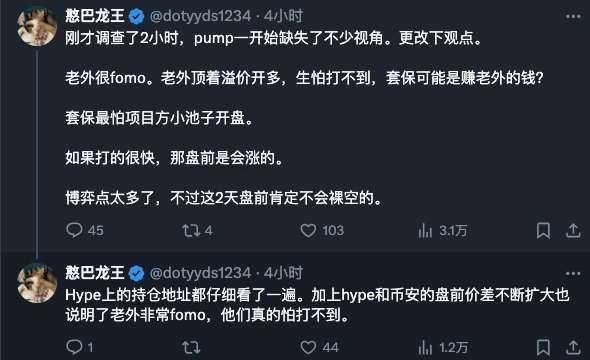
另一位中文 KOL 憨巴龙王也表示,“海外玩家非常 FOMO,顶着溢价开多,生怕打不到”。据行情信息,PUMP 在公售前 3 个小时, 于 Hyperliquid 盘前价格和在币安的盘前价格差价达 5% 

PUMP公售12分钟售罄,开盘后的两种剧本,你信哪个?

这个剧本最终的结局是市场短期 FOMO 后,仍会回归理性认为 Pump.fun 并不值得 40 亿美元的估值,加之 Pump.fun 创始人此前的“预售即骗局”言论,使市场对其信任度已几乎透支,因此成为 Meme 时代的 Otherside 猴地是理所当然的。
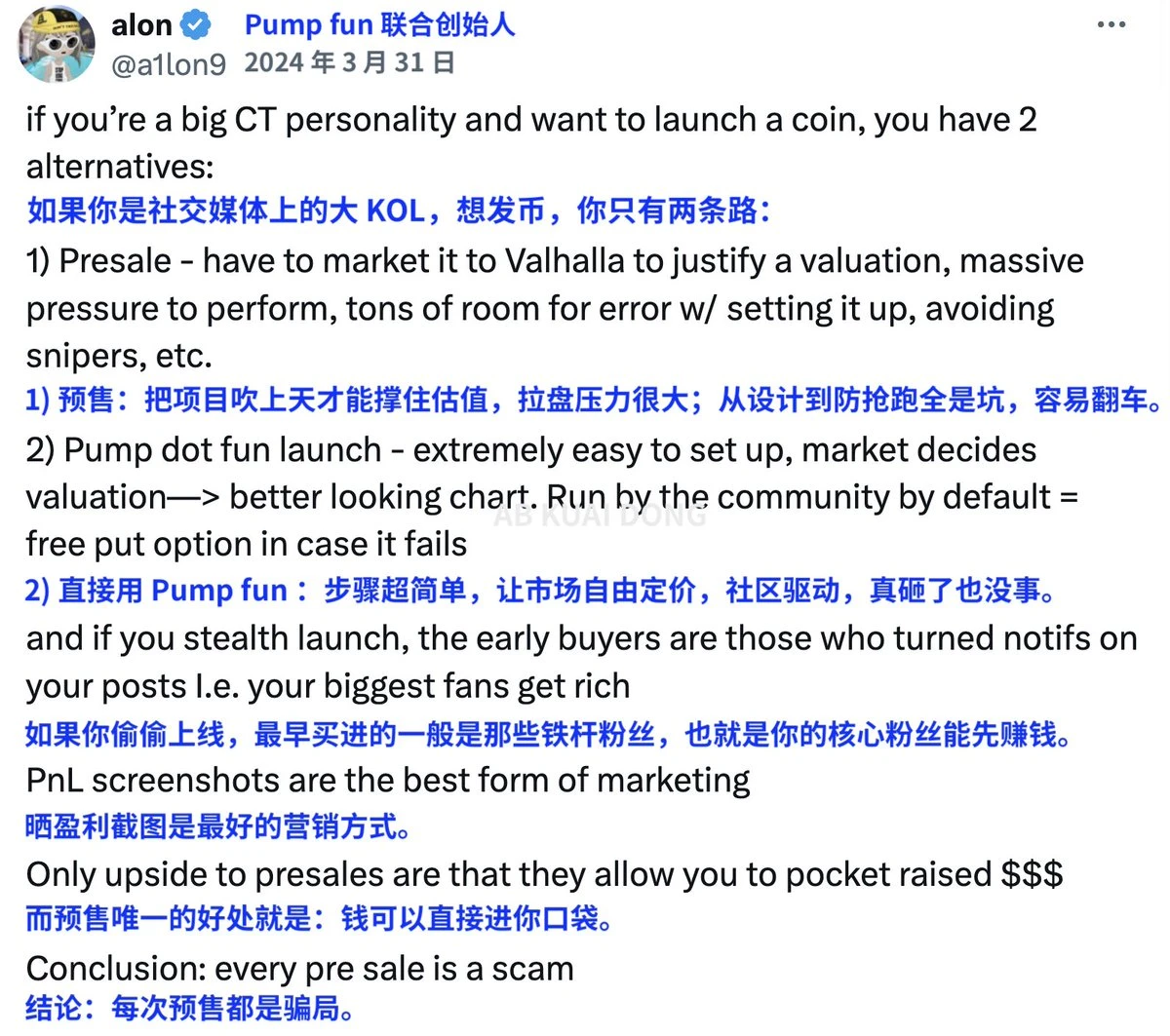
PUMP公售12分钟售罄,开盘后的两种剧本,你信哪个?

支持这个剧本的中文区 KOL 0x Sun 也分享了自己的操作,其表示“原计划是打 200 万美元,套保 100 万美元,但因单号限额最后总共打进去 150 万美元,已在 0.0054 的位置套保了 100 万美元,如果现在到开盘期间,合约到 0.008 美元以上,会套满并且裸空,如果负费率拉满就提前平空,如果无事发生顺利完成套利的话,按 35% 的涨幅计算, 1 倍保证金利润率 17.5% ,即使留 4 倍保证金也还是有 7% 的利润率。”

以上便是 PUMP 代币开盘后两种剧本,你更倾向哪个呢?

相关阅读

Pump.fun 终发币,总量 1 万亿枚,Meme 之王来了?

İlgili Okumalar

Semiconductor Stock Rebound: Is the Technical Correction Over or a Trend Reversal?

The core of recent semiconductor stock volatility is not about daily price swings, but rather the market questioning whether AI-driven semiconductor pricing has entered a new phase. Following a sharp sell-off in Korean stocks on June 23rd, led by Samsung and SK Hynix, a subsequent rebound is seen more as a technical positioning adjustment rather than a confirmed trend reversal. The key variable is HBM (High Bandwidth Memory), essential for AI chips. Its supply-demand imbalance granted memory makers significant pricing power. The current market focus is on whether this dynamic remains strong enough to justify elevated valuations. All eyes are on Micron's upcoming earnings report. The critical factor is not whether results meet already high expectations, but whether the company's guidance confirms that AI memory pricing power, order visibility, and future margins are still expanding. Micron's outlook will serve as a crucial test for the broader AI semiconductor chain, including Samsung, SK Hynix, and other infrastructure players. The recent bounce appears to be a pre-earnings positioning repair. For it to evolve into a sustained uptrend, concrete evidence is needed that the AI infrastructure expansion cycle's fundamentals—particularly for high-end memory—remain robust and can continue to surpass elevated market expectations. The risk is that strong demand alone may not be sufficient if future guidance hints at peaking momentum or increasing supply-side pressures.

marsbit27 dk önce

Semiconductor Stock Rebound: Is the Technical Correction Over or a Trend Reversal?

marsbit27 dk önce

Global Tech Stocks Plunge: Another Stress Test for the AI Bull Market

Global tech stocks plummeted in a sharp selloff on June 23, with South Korea's KOSPI index crashing nearly 10%, triggering a trading halt. The plunge was led by semiconductor giants Samsung and SK Hynix, dragging down major Asian and US tech indexes and levered ETFs. The immediate trigger was a confluence of three signals within 24 hours: 1) reports that SK Hynix was slowing HBM4 expansion, raising doubts about a key AI chip bottleneck; 2) profit-taking ahead of Micron's earnings report after its massive year-to-date rally; and 3) a warning from Korean regulators about the risks of single-stock leveraged ETFs. The selloff's severity was amplified by Korea's uniquely leveraged market structure: record-high retail margin debt, over $30 billion in volatile single-stock leveraged ETFs requiring daily rebalancing (which creates selling pressure during declines), and the surprising shift of the National Pension Service from a net buyer to a net seller. The event reignited debates about an AI bubble. Analysts differed on timing—some warned of imminent rupture, others saw a temporary liquidity-driven correction—but agreed that sky-high valuations, a shift to retail/leveraged buying, and rising rates created a fragile setup. The parallel steep drop in SpaceX's stock, alongside its massive debt raise for AI infrastructure, underscored a broader market shift from narrative-driven "infinite imagination" to a "return on investment" calculation phase. All eyes are now on Micron's upcoming earnings report, seen as a key test for the AI hardware trade's fundamental logic. A strong report could stabilize markets, while a miss could validate deeper fears. The episode serves as a stark warning: when a bull run becomes dependent on leveraged bets on a single narrative, a violent and rapid correction should not be a surprise. The core question for investors is how much drawdown they are willing to tolerate to stay invested.

marsbit29 dk önce

Global Tech Stocks Plunge: Another Stress Test for the AI Bull Market

marsbit29 dk önce

Ethereum Foundation Cuts 20% of Staff, 54 Depart: The Survival Logic Behind the Restructuring

The Ethereum Foundation (EF) has announced a major restructuring, resulting in the departure of 54 staff members, representing approximately 20% of its workforce. This reorganization is not merely a cost-cutting measure but a strategic refocusing. The EF will now concentrate its resources on what it deems critical and unique tasks, structured around five new operational clusters. The new structure comprises clusters dedicated to: the Protocol Layer (ensuring Ethereum's core properties like censorship resistance and security); the Access Layer (enabling trusted, non-intermediated user interactions); the User Layer (grounding decisions in real user needs and constraints); the Community Layer (representing EF's stance and building alliances); and the Institutional Layer (engaging with enterprises, governments, and academia to promote principled adoption). The foundation stated that the layoffs were a difficult but necessary step to align its organization and spending with its long-term mandate, insulating its core work from short-term market fluctuations. Affected employees were offered a severance package and transition support. The restructured EF emerges as a leaner and more focused organization, poised to prioritize the development and preservation of Ethereum's foundational promise of self-sovereignty. Further details on the new operational model are expected in the coming weeks.

marsbit31 dk önce

Ethereum Foundation Cuts 20% of Staff, 54 Depart: The Survival Logic Behind the Restructuring

marsbit31 dk önce

Talking About Returns But Not Collection? Goldfinch's Liquidation Sounds the Alarm for RWA Credit

Goldfinch, a crypto lending platform connecting investors with real-world borrowers, has proposed a full wind-down via governance proposal GIP-87. The plan would halt all new development, shut down its flagship Goldfinch Prime product, and allocate 150,000 USDC to manage the collection of outstanding loans. While the proposal is under community vote, it highlights a critical shift for the RWA (Real World Asset) lending sector: the transition from a growth phase focused on yields to a difficult recovery phase focused on collections. The proposal reveals that while the protocol's on-chain TVL is low, it still holds tens of millions in active, non-performing loans off-chain. This gap underscores that tokenizing debt makes tracking exposure transparent but does not simplify the offline, labor-intensive, and legally complex process of loan recovery. The case of the Lend East pool, where only an estimated 42% of a $10.15 million loan may be recovered, exemplifies the potential for significant investor losses. The wind-down plan forces token holders to govern not expansion but the maintenance of a debt collection system, including funding legal trust structures and preserving user access for repayments. This move starkly contrasts with the sector's typical narrative of rapid, AI-powered underwriting and high yields, exposing the often-overlooked necessity for robust borrower vetting, standardized disclosure, and sustainable collection mechanisms. Ultimately, Goldfinch's situation serves as a crucial stress test for the entire RWA lending space. It demonstrates that a platform's true resilience is tested not during capital deployment but during the protracted, costly, and uncertain process of recovering defaulted loans from real-world borrowers, a challenge blockchain transparency alone cannot solve.

Foresight News36 dk önce

Talking About Returns But Not Collection? Goldfinch's Liquidation Sounds the Alarm for RWA Credit

Foresight News36 dk önce

Meta Launches Prediction Market, Code-Named "Arena": Not Using Real Money, 3.56 Billion Daily Active Users Are Its Biggest Bargaining Chip

Meta, under the codename "Arena," is developing a standalone prediction market application, according to a June 23 report by The New York Times. Initially, the app will operate on a points-based system rather than real-money betting, though future integration of financial transactions is not ruled out. Meta plans to leverage its vast ecosystem of apps, boasting 3.56 billion daily active users, to distribute the product. The strategy aims to lower user acquisition costs and navigate regulatory complexities associated with real-money prediction markets, which are overseen by bodies like the CFTC. News of Meta's entry caused stock dips for established players like DraftKings and Robinhood, reflecting market concerns over Meta's potential to disrupt incumbents like Polymarket and Kalshi with its massive scale. The prediction market sector has seen explosive growth, with monthly trading volume on major platforms surging to approximately $24 billion as of April 2026. This marks Meta's second foray into the space, having launched and later shut down a similar virtual-points app called Forecast in 2020. While Arena poses a competitive threat to crypto-based platforms like Polymarket, its mainstream reach could also significantly expand the overall user base and awareness for prediction markets. The project remains in development with no public launch timeline, but its announcement has already impacted market sentiment.

marsbit41 dk önce

Meta Launches Prediction Market, Code-Named "Arena": Not Using Real Money, 3.56 Billion Daily Active Users Are Its Biggest Bargaining Chip

marsbit41 dk önce

İşlemler

Spot
Futures
活动图片