从日本出发,重塑加密资产传承安全感:NexVault在IVS Japan 2025的亮相复盘

Odaily星球日报2025-07-11 tarihinde yayınlandı2025-07-11 tarihinde güncellendi

Özet

Web3资产托管与传承的「最后一公里基础设施」。

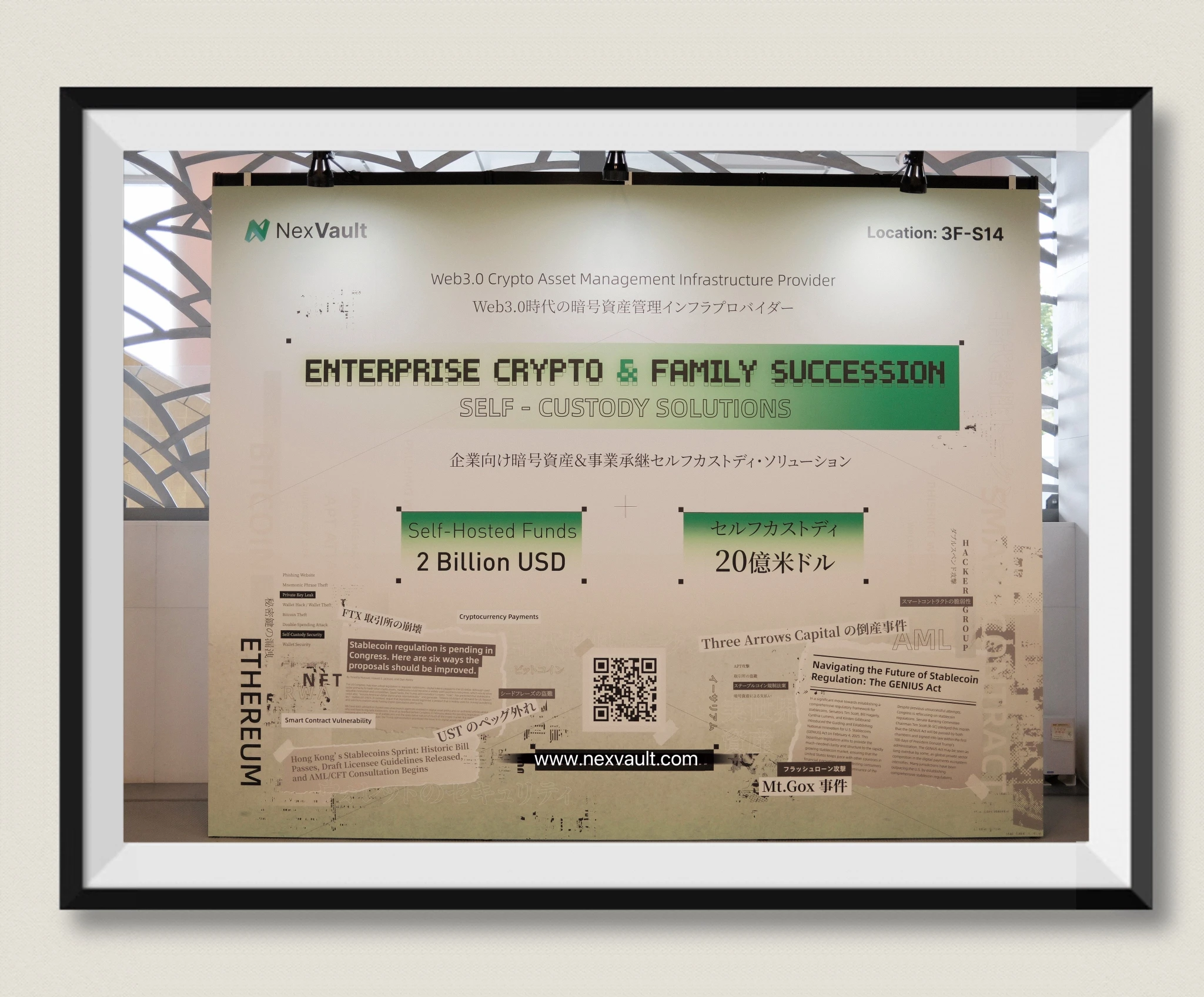
在 Web3 基础设施日益强调合规、安全与可信的大背景下,日本成为全球加密行业关注的下一个战略高地。作为亚洲最具影响力的加密盛会之一,IVS Crypto Japan 2025 于上周在京都成功落幕,吸引了超百家项目、数千位从业者参与。

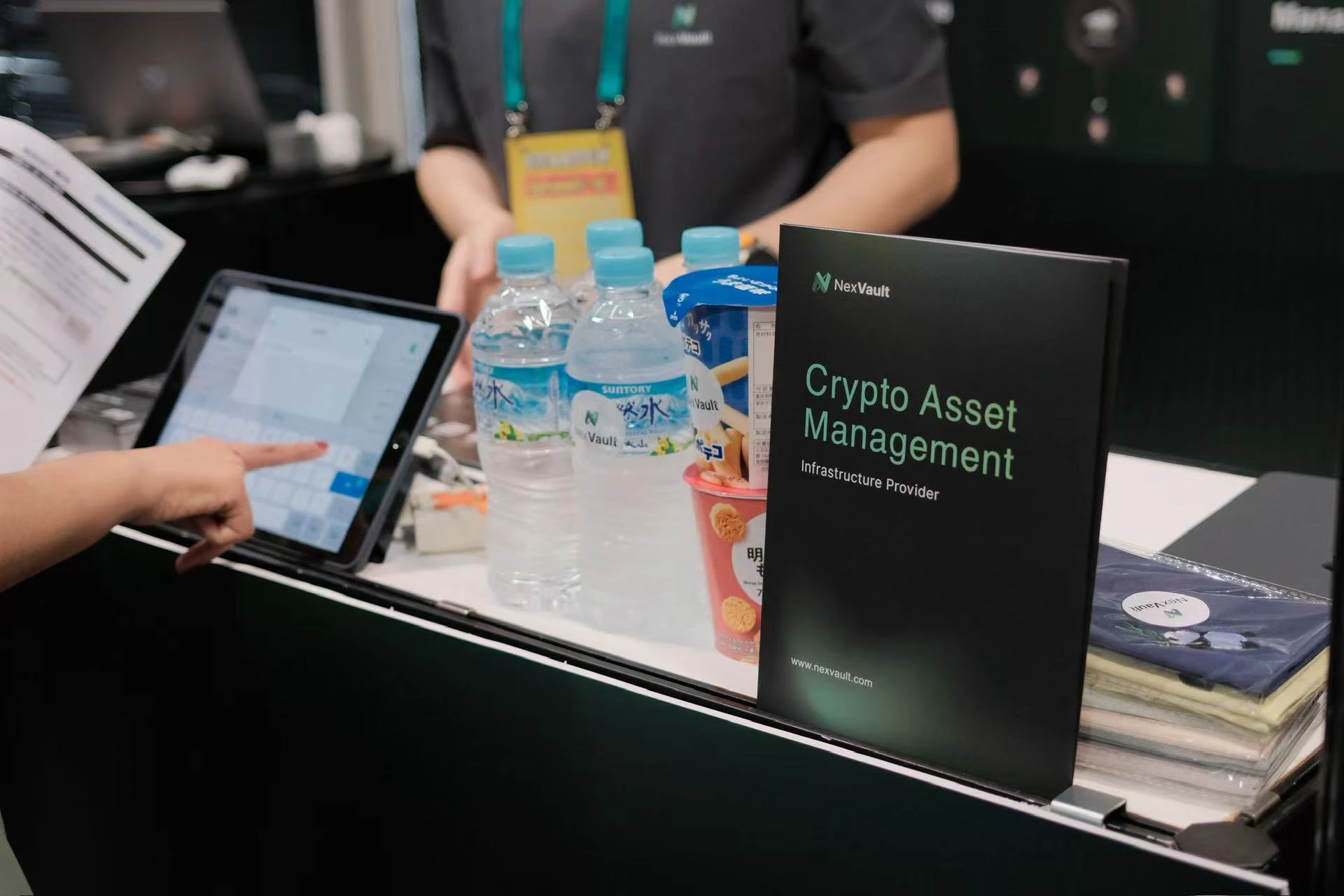
在这场被视为“亚洲 Crypto Davos”的大会中,专注于 Web3 资产自托管与家族传承方向的基础设施项目 NexVault 成为现场最受关注的企业级解决方案提供商之一。

从日本出发,重塑加密资产传承安全感:NexVault在IVS Japan 2025的亮相复盘

「遗产」也能上链?我们在日本看到了新的信任逻辑

在 NexVault 的展位前,不少参会者第一次认真思考:如果我的加密资产有一天需要被继承,该如何确保资产不会丢失、又不被轻易盗取?

我们展示了 NexVault 所打造的 “自托管多签传承机制”,通过灵活配置签名权限和恢复路径,用户无需依赖 CEX 或第三方验证,即可完成企业或家族资产的安全管理与长期传承,让链上资产真正做到可掌控、可交接、不中断。

本次参展,我们重点呈现了两类方案使用场景:

  • 高净值家族:多签继承,让遗产规划不再依赖传统法律路径;

  • 企业多签协作:防止员工离职、失联、密钥丢失等问题导致资产永久冻结。

来自海外 Web3 项目的真实反馈:“我们需要这样的工具很久了”

在三天的交流中,我们共接待了来自新加坡、日本、韩国、香港、美国等多个国家/地区的项目团队与投资人,对方普遍关注:

  • 如何以「非托管」形式实现“紧急恢复”?

  • 是否支持与 Gnosis 等系统对接?

而我们提供的多个阶段的继承方式 「多签传承+ 条件传承 + 法律兼容性支持」 ,获得了极高认同。

许多团队当场预约了后续产品 Demo,并表示希望将 NexVault 接入他们的资产账户体系中。

从日本出发,重塑加密资产传承安全感:NexVault在IVS Japan 2025的亮相复盘

为什么是 NexVault?我们专注的是“失控时刻”的确定性

NexVault 始终坚持“预防失控、保障传承”的设计理念,这不是一个钱包产品,也不是一个 CEX 替代品,而是一个:

Web3 资产托管与传承的「最后一公里基础设施」

我们解决的,是下面这些问题:

  • 如果资产私钥遗失,能否有“可验证”的恢复方式?

  • 如果家庭资产规划跨国,能否设计延时释放或触发机制?

  • 如果企业运营者突然失联,如何保障员工、股东的合法权益?

所有这些,都可以通过 NexVault 的条件逻辑、链上签名和权限策略得以解决。

下一站,我们将去哪里?

随着 IVS 的落幕,我们已经开始与数个日本厂商、跨国家族办公室展开深度交流。NexVault 将在 2025 年 Q3 推出更多版本的「传承模板」、「企业恢复逻辑」与「跨境资产配置方案」,并继续参加:

  • WebX Tokyo(8 月)

  • Bitcoin 2025 HK(8 月)

  • 多场海外私享交流晚宴(深圳、杭州、成都等)

我们希望在真正需要安全的人身边出现,而不仅仅是出现在市场热度的浪尖。

如需了解 NexVault 最新产品进展与行业应用方案,请关注我们的官网及推特账号:

官网: www.nexvault.com X: @NexVaultGlobal @NexVault

İlgili Okumalar

Don't Just Focus on Layoffs, The New Structure of the Ethereum Foundation is More Worthy of Appreciation

The Ethereum Foundation (EF) has undergone a significant organizational restructuring, with the most notable change being a strategic refocusing of its priorities rather than just a 20% staff reduction (approximately 54 people). The new structure clearly prioritizes the Protocol and Access layers, which now comprise the largest teams (57 and 34 people, respectively). This signals EF's intent to concentrate its core resources on fundamental, hard-to-outsource aspects of Ethereum: protocol evolution, security, privacy, client development, and the foundational access layer. Key areas within the Protocol layer, led by an architecture group including Vitalik Buterin and Justin Drake, receive heightened emphasis. These include post-quantum security, zkEVM, formal verification, and long-term roadmap development ("Strawmap"). This reflects a shift towards tackling complex, interdependent challenges like scalability, privacy, and future-proofing the protocol, potentially moving from a pure "redundant security" multi-client model towards more specialized clients aided by AI-assisted formal verification. Financially, EF's budget is being reduced by approximately 40%. The goal is to transition from spending about 15% of its remaining funds annually to a more sustainable 5% rate, akin to a long-term endowment, ensuring its longevity. Concurrently, the restructuring involves pushing certain responsibilities—such as application development, adoption, and ecosystem coordination—to external organizations like EthLabs, the Ethereum Apps Guild, and others. This "multi-node" model aims to increase ecosystem resilience by decentralizing functions beyond the EF, though it introduces new coordination challenges. In essence, the reorganization represents EF consciously narrowing its scope to focus on the hardest, most critical protocol-level problems while fostering a more distributed and sustainable ecosystem structure for Ethereum's future growth.

Foresight News28 dk önce

Don't Just Focus on Layoffs, The New Structure of the Ethereum Foundation is More Worthy of Appreciation

Foresight News28 dk önce

Report Analysis: What Is Coherent Planning as CPO Booms?

Title: Report Interpretation: What Moves Is Coherent Making Amid the CPO Boom? Summary: JP Morgan analyst Samik Chatterjee reiterates an Overweight rating on Coherent (COHR), citing undervalued growth potential across three core areas: data center optical transceivers, co-packaged optics (CPO) chips, and industrial lasers/thermal management. COHR's 1.6T data center transceivers are in high demand, with pricing remaining firm. The rise of CPO is seen not as a threat but as a catalyst, creating higher demand for sophisticated optical components, an area where COHR holds a competitive edge with its comprehensive portfolio (lasers, isolators, VCSELs, thermoelectric coolers). Each CPO chip offers significantly greater revenue potential than traditional transceivers. Furthermore, its Optical Circuit Switch (OCS) technology targets a potential $4B market with reliability and power advantages. The company is expanding its InP (Indium Phosphide) device capacity fourfold within two years, securing substrate supply and transitioning to more cost-effective 6-inch wafers. As one of only two major suppliers of high-quality pump lasers—currently in severe shortage—COHR can now move up the value chain from components to complete line cards/systems, boosting ASP over tenfold. Gross margin targets (>42%) may be revised upward due to high-end product premiums, cost improvements from the wafer transition, and contributions from new high-margin products like CPO and OCS. Its efficient thermadite thermal material also offers long-term growth. Industrial segment revenue grows at a steady 5-10%, supported by semiconductor equipment orders. Changes in Apple's Face ID protocol present a re-competition opportunity for 3D sensing. Overall, Coherent is positioned as a key infrastructure provider, with AI-driven compute demand fueling the need for high-speed optical interconnectivity. Growth from CPO/OCS, stable industrial performance, and margin improvement support the bullish thesis. *Disclaimer: This summary interprets a third-party analyst report from JP Morgan. It does not constitute investment advice.*

marsbit51 dk önce

Report Analysis: What Is Coherent Planning as CPO Booms?

marsbit51 dk önce

After Laying Off 20% of Staff, What Are the Key Points of EF's New Structure?

Following the completion of a months-long organizational restructuring, the Ethereum Foundation (EF) announced a 20% workforce reduction (approximately 54 employees) on June 23rd. It reorganized its teams into five new core clusters: Protocol, Access, User, Community, and Institutional (plus Operations/Management support units). Officially, this move implements the EF's 2026 Mandate and 2025 Treasury Management Policy, aiming to create a more focused and "self-sovereign" organization. The restructuring prioritizes the CROPS principles—Censorship Resistance, Openness & Freedom, Privacy, and Security—as foundational organizational tenets. The Protocol cluster will focus on core protocol R&D, including MEV reduction and zkEVM. The Access cluster emphasizes preserving user "zero option" for non-custodial, permissionless interaction. The User, Community, and Institutional clusters will manage external engagement, with the latter handling institutional and regulatory matters. While offering enhanced severance and transition support for affected employees, the EF did not disclose budget allocations or specific KPIs for the new clusters. This has led to market uncertainty about the impact on project funding and development priorities. Analysts note the announcement's positive tone of mission focus contrasts with a backdrop of recent EF leadership changes and broader ecosystem pressures. The true impact—whether this signifies strategic realignment or reactive contraction—will become clearer as the new structure's resource allocation and project prioritization are revealed in the coming months.

marsbit1 saat önce

After Laying Off 20% of Staff, What Are the Key Points of EF's New Structure?

marsbit1 saat önce

Top-Tier MEV Bot Loses $7.5 Million: Is 'Approval' the Most Overlooked Fatal Risk On-Chain?

The article discusses a sophisticated attack on a prominent Ethereum MEV (Miner Extractable Value) bot, Jaredfromsubway.eth, resulting in a loss exceeding $7.5 million. Unlike typical exploits involving key leaks or smart contract bugs, this attack was a carefully orchestrated "reverse hunt." The attacker spent weeks deploying fake tokens and liquidity pools that mimicked legitimate assets like WETH and USDC. These pools were designed to appear as profitable arbitrage opportunities, tricking the automated bot's trading logic. During its normal operation, the bot was induced to grant ERC-20 token approvals to the malicious contracts. Once sufficient permissions were accumulated, the attacker drained the bot's funds by calling these pre-approved allowances. This incident highlights the often-underestimated risks associated with token approvals in Web3. The article explains that approvals are a fundamental mechanism, allowing smart contracts (like DEXs) to move a user's tokens on their behalf. However, risks arise from practices like granting infinite approvals, the persistence of approvals even after disconnecting from a dApp, and the potential for a once-trusted contract to become compromised later. The piece concludes with advice for managing approval risks: users should adopt the principle of least privilege (approving only the needed amount), use separate wallets for storage versus interactions, and regularly audit and revoke unnecessary approvals using tools like Revoke.cash. It also emphasizes the role of wallets like imToken in providing proactive defenses, such as risk warnings and clear, readable transaction signing interfaces, to help users make informed decisions. Ultimately, wallet security must extend beyond private key protection to include active management of token approvals.

marsbit1 saat önce

Top-Tier MEV Bot Loses $7.5 Million: Is 'Approval' the Most Overlooked Fatal Risk On-Chain?

marsbit1 saat önce

İşlemler

Spot
Futures
活动图片