Pro-Bitcoin politician Karol Nawrocki will be Poland’s next head of state after the National Electoral Commission (PKW) published the full count giving him 50.89 percent of Sunday’s run-off, ahead of Warsaw mayor Rafał Trzaskowski on 49.11 percent. The upset deprives Prime Minister Donald Tusk of a crucial ally and hands the conservative opposition a presidential veto for the next five years.
For Bitcoin and crypto investors the more immediate story is that the winner ran—and won—on the most explicitly pro-Bitcoin platform ever seen in a major EU member. On 28 May, four days before the vote, the then-candidate posted a video on X insisting that “Poland needs innovation, not regulation. As President I will guarantee that no draconian laws curbing your freedom will ever take effect.” That phrase, delivered in Polish but replayed endlessly on TikTok and Telegram, became a rallying cry for the country’s estimated eight million crypto users.
What Nawrocki Actually Promised On Bitcoin
During the campaign he tied his monetary agenda to a broader supply-side tax overhaul. Bankier.pl’s audit of his written programme highlighted the flagship pledge to abolish the 19 percent ‘Belka’ capital-gains tax, a levy that captures both equities and digital assets. Removing that tax would leave Poland with one of the lowest realised-gain burdens on Bitcoin in the European Economic Area.
Second, Nawrocki framed himself as a negative regulator—someone who would veto restrictions rather than draft new crypto laws. “I will be the constitutional firewall against any attempt to criminalise ordinary Poles for holding or spending Bitcoin,” he said in an interview clip that closed his final televised debate.
Slawomir Mentzen, the libertarian whose own campaign centred on creating a Strategic Bitcoin Reserve, failed to reach the second round but shaped the entire race. On November 17, he told his 1.2 million followers: “Poland should create a Strategic Bitcoin Reserve … If I become President our country will be a cryptocurrency haven.” Blockchain analytics firm Arkham later linked 33.7 BTC—worth just over $3 million—to addresses he controls.
Mentzen’s proposal forced every mainstream contender to clarify a crypto position. Nawrocki chose to co-opt rather than attack him, repeating that a reserve is “worth studying” but arguing that tax relief and legal certainty must come first. The détente helped consolidate the libertarian vote behind Nawrocki in the run-off and may have supplied the 300,000-vote edge that separated victor from vanquished.
Why Bitcoin Framed The Election
Polish household adoption of digital assets has accelerated since 2022; Statista forecasts 7.9 million domestic crypto users by year-end 2025, roughly 21 percent of the adult population. That demographic skews under-40 and urban—exactly the cohort that traditionally leans liberal. Nawrocki’s gamble was that a hard pro-Bitcoin line could peel those voters away without alienating the PiS base. Exit polling cited by The Guardian shows a 12-point swing toward Nawrocki among first-time voters compared with the 2020 presidential contest, enough to offset Trzaskowski’s dominance in the capital.
Nawrocki will be sworn in on 6 August. Because tax statutes originate in parliament, abolishing the Belka tax will require cooperation—or a public referendum he has already threatened to call. Veto power, however, is unilateral, meaning he can immediately block any attempt by the governing coalition to transpose the most restrictive parts of the EU’s Markets in Crypto-Assets regulation into domestic law.
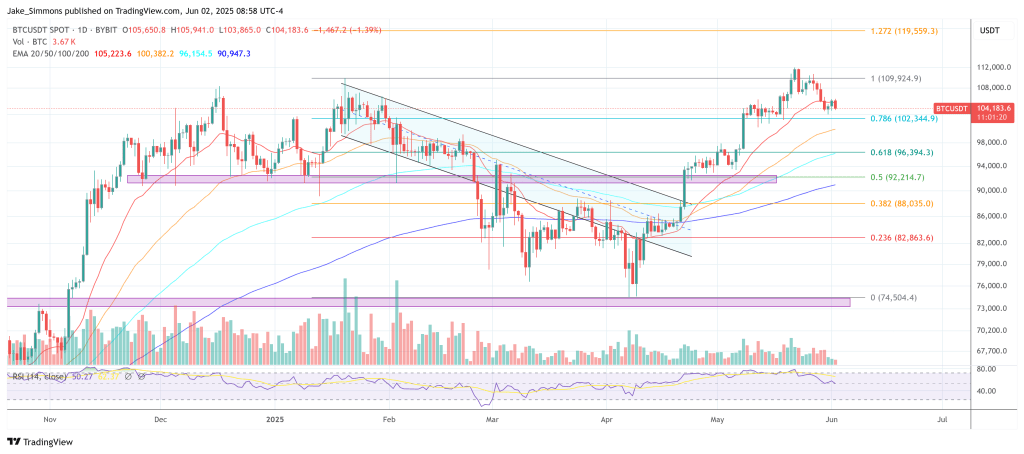
At press time, BTC traded at $104,183.

Related Posts