Прогноз: объем рынка ЦФА вырастет до 1,7 трлн рублей

cryptonews.ru2024-10-23 tarihinde yayınlandı2025-05-23 tarihinde güncellendi

Объем российского рынка цифровых финансовых активов (ЦФА) достигнет 1,7 трлн рублей, если будут соблюдены три фактора

Аналитики компании «Эйлер аналитические технологии» ожидают взрывного роста сектора ЦФА. Однако позитивный сценарий возможен только при условии сохранения текущих регуляторных условий, смягчения налоговой нагрузки и развития вторичного оборота цифровых активов. Об этом пишут «Ведомости».

Перспективы развития рынка ЦФА

Прогноз аналитиков «Эйлера» нашел поддержку среди отраслевых экспертов. Олег Ушаков, председатель комиссии по ЦФА Торгово-промышленной палаты России, отмечает, что дальнейшему росту рынка будет способствовать:

  • упрощение клиентских процедур;
  • развитие вторичного обращения;
  • расширение спектра доступных инструментов.

Гендиректор платформы «Токеон» Игорь Егоркин ожидает, что рынок ЦФА вырастет в три раза к 2028 году. Кроме того, по его мнению, вырастет также доля этого сектора в структуре корпоративного долга. Особые перспективы Егоркин видит в развитии гибридных цифровых прав, токенизации физических активов и внедрении мотивационных программ на основе ЦФА.

Ключевой вызов для отрасли — налоговая политика. Участники рынка единодушно заявляют, что налогообложение долговых ЦФА нужно уравнять с облигациями. Текущие различия в учете расходов создают неравные условия для эмитентов.

Текущее состояние сектора

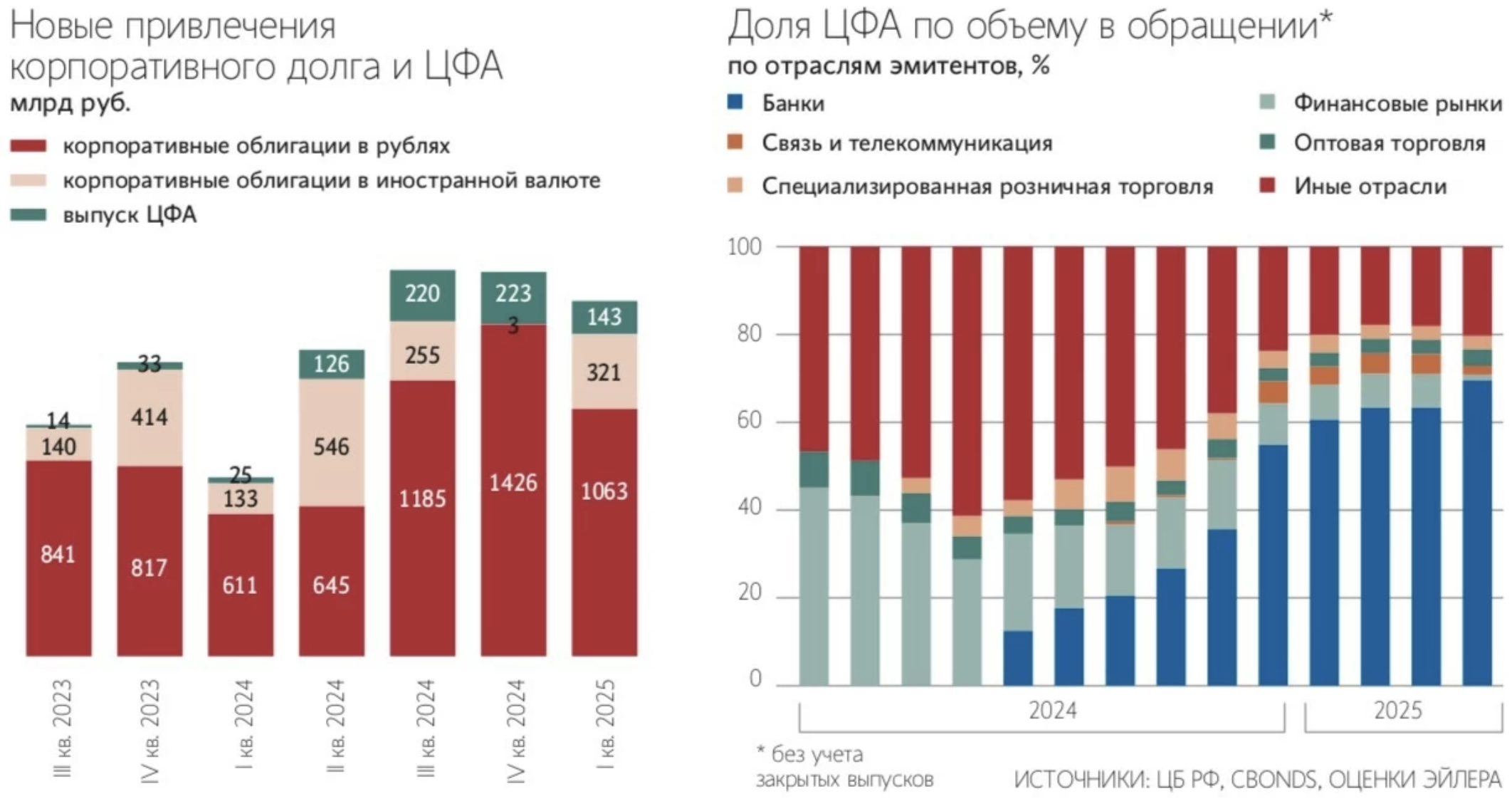
По данным на конец первого квартала 2024 года, в России обращалось 998 выпусков ЦФА и иных цифровых прав на общую сумму 293,5 млрд рублей. При этом объем новых размещений за квартал сократился на 35,9% по сравнению с аналогичным периодом прошлого года, составив 142,7 млрд рублей. Эксперты связывают это с сезонным фактором и достижением рынком определенной зрелости. Для сравнения, объем новых выпусков рублевых корпоративных облигаций за тот же период уменьшился на 25,4%, до 1,1 трлн рублей.

Доля цифровых активов в структуре корпоративного долга демонстрирует устойчивый рост. Если в первом квартале 2024 года она составляла 9,3%, то уже во втором увеличилась до 9,5%. В последующие два квартала показатель достиг 13,3% и 13,5% соответственно. Особенно активно выпускать ЦФА стали компании, у которых нет опыта размещения облигаций. В марте число этих эмитентов составляло 25.
Источник: «Ведомости»

Согласно Банку России, на конец первого квартала ЦФА владели 114 400 физических и 185 юридических лиц. Число арегистрированных пользователей платформ за квартал выросло на 20%, достигнув 334 700, а количество активных инвесторов-физлиц увеличилось на 56%, до 56 300 человек.

Около 80% выпусков ЦФА в этом году ориентированы на неквалифицированных инвесторов, для которых установлен годовой лимит вложений в размере 600 000 рублей. При этом инвестиции в цифровые активы, обеспеченные высоколиквидными инструментами (например, ОФЗ или акциями из котировальных списков), подобных ограничений не имеют.


İlgili Okumalar

MSTR Discloses Sale of 3,588 Bitcoins, Stock Price Drops Over 5% at One Point During Trading

MicroStrategy, the world's largest corporate holder of Bitcoin, has significantly shifted its business model. Between June 29 and July 5, the company sold 3,588 bitcoins for approximately $216 million to fund quarterly dividends for its preferred stock. This marks its largest-ever Bitcoin sale and signals a strategic pivot: Bitcoin is transitioning from a "buy-and-hold" reserve asset to a liquidity management tool for the company. This move follows a recent authorization allowing Bitcoin sales when equity fundraising is less attractive. The announcement contributed to a more than 5% intraday drop in MicroStrategy's stock price, while Bitcoin fell to around $61,800—below the company's average holding cost of roughly $75,700. The sale represents a major departure from MicroStrategy's long-standing "never sell" commitment, which saw its first minor breach in May with a $2.5 million sale. The latest, hundred-times-larger transaction underscores growing financial pressures. Analysts note the company faces about $1.5 billion in annual preferred dividend obligations, far exceeding cash flow from its software business. As of July 5, MicroStrategy holds 843,775 bitcoins. Its current operational logic involves buying Bitcoin during favorable financing conditions and selling portions to cover dividends when needed, creating a flexible capital management cycle amidst a challenging market environment.

华尔街日报5 saat önce

MSTR Discloses Sale of 3,588 Bitcoins, Stock Price Drops Over 5% at One Point During Trading

华尔街日报5 saat önce

Q-Day Countdown: Will Quantum Computing End Cryptocurrencies?

Quantum Computing's Threat to Cryptocurrency: A Countdown to Q-Day Quantum computing, specifically Shor's algorithm, poses a fundamental threat to the public-key cryptography (e.g., ECDSA, RSA) that secures blockchain networks like Bitcoin and Ethereum. This critical juncture, known as Q-Day, is estimated to occur potentially within the next 5-15 years. The core vulnerability stems from the public and immutable nature of blockchains. Assets in addresses where the public key is already exposed on-chain (e.g., spent outputs) are at direct risk, as a sufficiently powerful quantum computer could derive the private key. This threatens the very trust model of cryptocurrencies. The response lies in Post-Quantum Cryptography (PQC)—algorithms like lattice-based ML-DSA and hash-based SLH-DSA, which are resistant to quantum attacks. NIST has standardized key PQC algorithms (FIPS 203, 204, 205), providing a migration path. However, the primary challenge is not technical but socio-economic and involves complex governance: * **Bitcoin's** path is constrained by its conservative ethos. Migrating requires a soft-fork to new address types, facing hurdles like significantly larger signature sizes and, most critically, the divisive governance question of how to handle at-risk legacy UTXOs without violating core principles. * **Ethereum** is pursuing a "cryptographic agility" strategy, with a multi-layered roadmap. It leverages account abstraction for user accounts and is developing compressed hash-based signatures (e.g., leanXMSS) for its consensus layer, aiming for a full-stack upgrade over time. In conclusion, quantum computing does not spell an instant end for cryptocurrency but initiates a critical countdown. The industry has a limited "engineering comfort window" to orchestrate a coordinated, ecosystem-wide migration to PQC. The ultimate bottlenecks are the immense coordination efforts and governance decisions required for this foundational transition.

marsbit6 saat önce

Q-Day Countdown: Will Quantum Computing End Cryptocurrencies?

marsbit6 saat önce

Trump, the President Who Knows Best How to 'Trade Stocks'

Former US President Donald Trump reported a record-breaking $2.2 billion in personal income for 2025, the highest annual income ever disclosed by a sitting president. This figure, from a 927-page government ethics filing, represented a 3.5-fold increase from his $600 million income in 2024 and boosted his net worth to $6.5 billion. The primary drivers were cryptocurrency (64% of income, approximately $1.4 billion) and real estate (26%, approximately $575 million). His crypto earnings stemmed largely from the launch of his personal meme coin, $TRUMP, generating over $600 million in licensing fees, and substantial profits from the WLFI token and its parent company. Despite a sluggish property market, his Mar-a-Lago resort and associated golf clubs saw revenue surges of 50% and 27%, respectively, attributed to their use as venues for presidential events. Trump's financial disclosure also revealed an unprecedented level of stock market activity, with over 22,000 trades executed in 2025, averaging 87 trades per market day. Media analyses noted several instances where significant trading coincided with major policy announcements, such as proposed tariffs, raising questions about potential conflicts of interest. While the White House stated these trades were handled by a family-managed trust fund and not Trump directly, critics highlighted this as a departure from the blind trusts traditionally used by presidents post-Watergate. The report has intensified debate over the commercialization of the presidency. Supporters view it as a success story of a businessman-president, while critics argue it demonstrates an unprecedented conversion of public influence into private wealth, with policy decisions potentially linked to personal financial gains. The controversy centers on whether Trump's earnings represent innovative entrepreneurship or a fundamental conflict of interest, sparking renewed calls for stricter ethics reforms in US governance.

marsbit6 saat önce

Trump, the President Who Knows Best How to 'Trade Stocks'

marsbit6 saat önce

İşlemler

Spot
活动图片