Ethena Labs и Securitize представили дорожную карту сети «Converge»

cryptonews.ru2024-10-18 tarihinde yayınlandı2025-04-18 tarihinde güncellendi

Ethena Labs, разработчик синтетического доллара USDe (USDe), и финансовая технологическая компания Securitize опубликовали предварительную дорожную карту для своей будущей сети Converge, высокопроизводительного блокчейна, ориентированного на реальные активы и децентрализованные финансы (DeFi).

Согласно объявлению, тестовая сеть будет запущена в ближайшие недели, а основная сеть будет запущена позже в 2025 году.

Converge будет иметь собственное время блока 100 миллисекунд (мс), и планируется сократить время блока до 50 мс к четвертому кварталу 2025 года. Разработчики также планируют достичь как минимум одного гигагаза потенциальной пропускной способности в течение 2025 года. Гигагаз — это мера миллиардов единиц газа, обработанных сетью блокчейнов за одну секунду.

Ethena и Securitize запускают сеть для поддержки частных решений по токенизации реальных активов и приложений DeFi, поскольку грань между традиционными и децентрализованными финансами продолжает размываться.
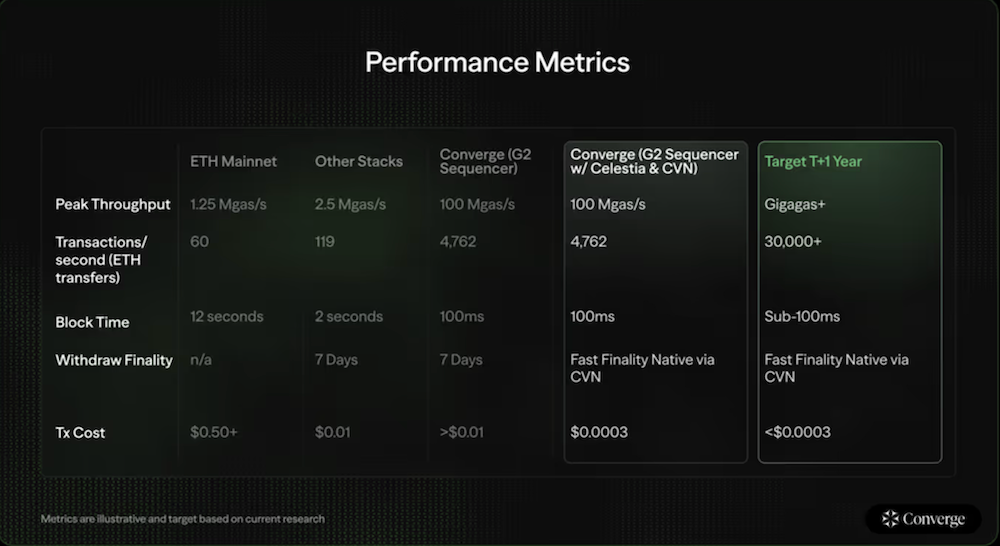

Сближение годовых показателей производительности. Источник: Converge

Традиционные финансы сближаются с миром криптовалют

Традиционные финансовые институты все чаще используют протоколы децентрализованных финансов и взаимодействуют с токенизированными реальными активами, такими как стейблкоины и токенизированные облигации.

Слияние TradFi и DeFi вызвало неоднозначную реакцию в криптосообществе: некоторые говорят, что объединение двух миров было неизбежно, а другие предупреждают об институциональном захвате.

В интервью 21 января генеральный директор Franklin Templeton Дженни Джонсон сообщила, что президент США Дональд Трамп объединит криптовалюту и традиционные финансы, установив четкие правила.

«Нам нужна некая ясность в регулировании, чтобы вы могли объединить все это, потому что, по сути, это снизит издержки, и есть большие инновации, которые открывает эта технология», — сказал Джонсон.

Шибтоши, основатель сохраняющей конфиденциальность торговой платформы SilentSwap, недавно сказал, что некоторые учреждения в настоящее время не решаются принимать децентрализованные финансовые решения.

Основатель проекта DeFi сказал, что отсутствие конфиденциальности, проблемы с юридической ответственностью и нечеткие правила заблокировали институциональное принятие, но добавил, что инструменты для решения этих проблем уже существуют.

«Институты осознали преимущества безопасной децентрализованной системы. Еще в 2021 году отчеты показали, что почти каждый третий институциональный инвестор в криптовалюту уже использовал DeFi», — сказал Шибтоши.

İlgili Okumalar

Goldman Sachs Research Report Analysis: Circle and USDC Are Moving Beyond the Crypto World, Cross-Border Payments and AI Agents Become New Battlegrounds

Goldman Sachs published a summary of its meeting with Circle Internet Group (issuer of USDC) on July 5th. The core takeaway is that stablecoins, led by USDC, are evolving from a crypto-native tool into foundational infrastructure for traditional finance and the AI economy. USDC's use cases are rapidly expanding beyond crypto trading into cross-border payments, e-commerce, capital market settlements, and notably, payments for AI agents. Circle's management emphasized that stablecoin growth is now decoupled from crypto market cycles, driven by this diversification. They outlined five key application layers and highlighted USDC's network effects, global liquidity depth, and regulatory compliance as competitive moats. Circle distinguishes USDC from bank-issued tokenized deposits, arguing the former is an open, internet-native system without bank credit risk. Strategically, Circle is building a broader fintech platform with its Arc Layer 1 blockchain, the Circle Payments Network for cross-border transfers, and an "Agentic Stack" to serve AI agent economies, where USDC already dominates. Regarding regulation, Circle views potential U.S. legislation like the CLARITY Act as a catalyst for growth rather than a constraint, expecting it to encourage broader institutional adoption and active usage. Goldman Sachs maintains a Neutral rating on Circle with a $96 price target, noting the company's shift from a pure stablecoin issuer to a financial infrastructure provider. Key risks include competition from USDT and potential earnings pressure from declining interest rates on its reserve assets.

marsbit18 dk önce

Goldman Sachs Research Report Analysis: Circle and USDC Are Moving Beyond the Crypto World, Cross-Border Payments and AI Agents Become New Battlegrounds

marsbit18 dk önce

The Robinhood Stock Tokens You Bought Are Just Debts from Jersey Island

The Robinhood stock tokens you buy are essentially debt securities issued by a shell company in Jersey, not real equity. These tokens merely track stock prices like NVIDIA or Apple but grant no shareholder rights like voting or dividends. If the underlying company fails, you have no claim on its assets. Instead, you hold a debt instrument from Robinhood Assets (Jersey) Limited, which promises returns based on stock performance. If this Jersey entity goes bankrupt, you become an unsecured creditor. This complex structure stems from Robinhood's past crisis during the 2021 GameStop short squeeze, where T+2 settlement caused liquidity issues. The blockchain-based tokens enable instant settlement, theoretically preventing such trading halts. The product is classified by the SEC as a "linked security" or structured note, carrying counterparty risk not borne by actual shareholders. It is available globally but excluded from the US, UK, and other major markets, while Robinhood offers a fully compliant, asset-backed token model in Europe under MiFID II. The system relies on oracles for pricing, which poses risks like manipulation and faulty liquidations seen in DeFi exploits. Robinhood profits from spreads and aims to become a full-chain settlement layer. Meanwhile, competitors like Ondo have launched SEC-registered, fully compliant equity tokens in the US with actual voting rights and dividends. Robinhood’s Jersey debt model appears as a transitional, regulatory-arbitrage product, aiming to capture market share ahead of future regulatory clarity.

Foresight News51 dk önce

The Robinhood Stock Tokens You Bought Are Just Debts from Jersey Island

Foresight News51 dk önce

İşlemler

Spot
活动图片