Wintermute: биткоин проявляет устойчивость на фоне падения финансовых рынков

cryptonews.ru2025-03-15 tarihinde yayınlandı2025-04-15 tarihinde güncellendi

Биткоин проявляет все большую устойчивость к макроэкономическим потрясениям по сравнению с традиционными финансовыми рынками, согласно отчету криптовалютного маркет-мейкера Wintermute от 14 апреля.

В отчете отмечается, что биткоин относительно хорошо держится во время текущего рыночного спада, даже когда S&P 500 и Nasdaq упали до самых низких уровней за год, а доходность облигаций взлетела до максимумов, которые не наблюдались с 2007 года.

«Падение биткоина было сравнительно умеренным, вернувшись к ценовым уровням, наблюдавшимся в период выборов в США», — отмечает Wintermute.

По мнению аналитиков, «Это знаменует заметный сдвиг от его исторического поведения в кризисных ситуациях». В прошлом потери биткоина были значительно больше, чем у индексов традиционных финансов. Это изменение подчеркивает «очевидную растущую устойчивость биткоина на фоне макроэкономических потрясений».

Изменение динамики рынка биткоина

За прошедшую неделю цена биткоина выросла на 7% до $83 700, а затем поднялась до $86 000. Этот рост произошел на фоне повышения индекса потребительских цен (CPI) на 2,4% в годовом исчислении, с месячным снижением на 0,1% — впервые с мая 2020 года. Это сигнализирует о том, что инфляция охлаждается.

Кроме того, индекс цен производителей (PPI) вырос на 2,7% в годовом исчислении в марте. Тот же показатель составлял 3,2% в феврале, также демонстрируя признаки снижения инфляции. Тем не менее, по мнению Wintermute, тенденция может вскоре измениться: «Несмотря на этот прогресс в направлении целевого показателя инфляции ФРС в 2%, недавняя эскалация глобальной торговой напряженности создала новые потенциальные инфляционные риски, которые еще не отражены в мартовских данных».

Ожидается больше рыночных потрясений

Аналитик Bitwise Джефф Парк (Jeff Park) недавно заявил, что торговая политика президента США Дональда Трампа создаст всемирные макроэкономические потрясения и краткосрочные финансовые кризисы, которые в конечном итоге приведут к более широкому внедрению биткоина. Он отметил, что можно ожидать роста инфляции: «Издержки тарифов, скорее всего через более высокую инфляцию, будут разделены между США и торговыми партнерами, но относительное воздействие будет гораздо тяжелее для иностранных государств. Этим странам придется найти способ справиться с проблемами слабого экономического роста».

Wintermute поясняет, что продолжающаяся торговая война повышает риск увеличения инфляции и замедления экономики. Трейдеры прогностического рынка Kalshi оценили вероятность рецессии в США в этом году в 61%, а JPMorgan видит 60%-ную вероятность.

Текущая устойчивость биткоина может оказаться временной тенденцией, поскольку в случае усиления торговой войны биткоин вернется в список рисковых активов. В этом случае инвесторы снова будут искать спасения в золоте.


İlgili Okumalar

EIP-8363 Quantitative Review: Cutting Staking 'Subsidies' – What Does Ethereum Hope to Gain?

**EIP-8363 Quantitative Review: Reducing Staking "Subsidies" – What Does Ethereum Want in Return?** EIP-8363 proposes burning an increasing portion of validator rewards as the staking rate rises, reaching 100% burn when 50% of ETH is staked. This analysis models its impact on issuance, yield, and staking equilibrium, examines whether ETH's yield explains its price, quantifies the chain economy's reliance on this yield, and presents conclusions. Key findings: 1. **EIP-1559 Burns Are Ineffective:** Post-merge, burning (via base fees) has collapsed by 98% and now offsets only 2.4% of new ETH issuance, making issuance policy Ethereum's sole remaining supply lever. 2. **EIP-8363's Real Impact:** At the current ~42.2M ETH staked, the proposal would cut issuance by ~58.6% and staking APR by ~56.4%, removing ~633k ETH ($1.55B) in annual dilution (0.53% of market cap). It's not zero issuance; that would require 43% more ETH staked. 3. **Self-Limiting Mechanism:** The design has a built-in equilibrium. At reasonable required returns (e.g., 2%), the system stabilizes at ~26% staking rate and ~0.48% annual inflation. 4. **Yield vs. Price:** No detectable statistical relationship exists between changes in staking yield and ETH price returns over 43 months. The natural 37% yield decline since 2023 did not drive price action. 5. **Chain Economy Dependence:** While LSTs like wstETH form ~34% of collateral in major lending markets, their utility as collateral remains if yield is positive. The direct revenue hit to protocols like Lido is significant (~50% of fee income) but not systemic. Staking-focused ETFs represent only 0.19% of ETH supply. 6. **Core Conflict:** The debate masks a zero-sum redistribution: cutting ~$1.55B in annual issuance transfers value from concentrated staking intermediaries (LST/LRT protocols, leverage players) to the dispersed majority of non-staking ETH holders. 7. **Outlook:** The proposal is economically sound for ETH's scarcity but politically difficult due to concentrated opposition. It is unlikely to pass in its current form.

marsbit4 dk önce

EIP-8363 Quantitative Review: Cutting Staking 'Subsidies' – What Does Ethereum Hope to Gain?

marsbit4 dk önce

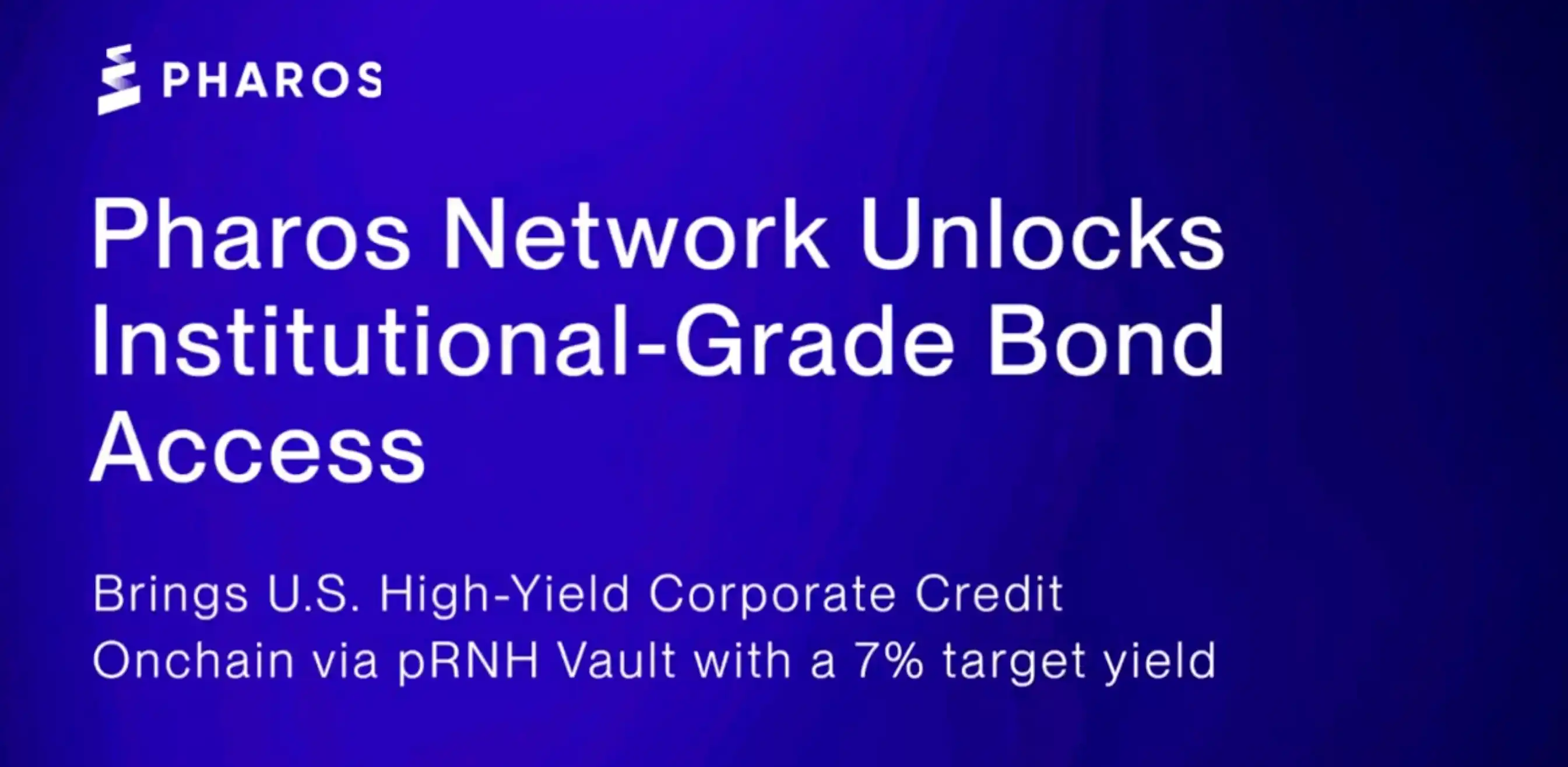
Pharos Introduces On-Chain Institutional-Grade U.S. Corporate Bond Credit, Expanding Its RealFi Asset Portfolio

Pharos Network has launched the pRNH Vault, introducing institutional-grade US corporate high-yield bond exposure to its on-chain RealFi (Real World Finance) ecosystem. Developed by the R25 protocol, the vault provides qualified users access to a tokenized portfolio of high-yield corporate debt, broadening Pharos's asset offerings beyond stablecoins and cash-equivalents. The vault's underlying asset is the NYLIM Anemoy US High Yield Corporate Bond separate account (HYB), managed by New York Life Investment Management (NYLIM) and tokenized in collaboration with Anemoy and Centrifuge. Users can deposit USDC into the vault to receive pRNH tokens, representing indirect ownership of the HYB portfolio, which targets an annualized yield of approximately 7%. The structure offers programmability and composability for on-chain financial applications. Pharos views this move as a key evolution from basic asset tokenization towards building a dynamic marketplace where institutional assets can be actively discovered, evaluated, and utilized programmatically. The pRNH Vault architecture incorporates agent-assisted functionalities for credit screening, liquidity monitoring, and on-chain operations, signaling tighter integration between real-world finance and intelligent on-chain systems. To support this vision, Pharos employs a technical stack including the SALI engine for parallel execution, modular SPNs, protocol-level compliance, ZK-KYC/AML, and native AI agent support. The network positions itself as the "value discovery layer" for the agent economy, aiming to make real-world value, smart agents, and institutional assets widely accessible. The pRNH launch adds a core credit asset to this ecosystem and serves as a practical test case for its infrastructure.

marsbit20 dk önce

Pharos Introduces On-Chain Institutional-Grade U.S. Corporate Bond Credit, Expanding Its RealFi Asset Portfolio

marsbit20 dk önce

İşlemler

Spot
活动图片