3 разлока токенов, за которыми стоит следить на этой неделе

cryptonews.ru2024-10-14 tarihinde yayınlandı2025-04-14 tarihinde güncellendi

Разлок (англ. unlock) — это разблокировка токенов, которые до этого были заморожены по условиям инвестиционных раундов или иных программ привлечения финансирования

Рассказываем, какие активы будут разблокированы на этой неделе, и как крупные разлоки токенов могут повлиять на динамику рынка.

1. TRUMP

  • Дата разблокировки: 18 апреля
  • Количество токенов для разблокировки: 40 млн TRUMP (4% от общего предложения)
  • Текущее обращение: 199 млн TRUMP

Через несколько дней состоится разблокировка 40 млн токенов OFFICIAL TRUMP (TRUMP) на сумму $338,57 млн. Этот мемкоин связан с президентом США Дональдом Трампом.

Разблокированные активы распределят среди создателей и компании CIC Digital, которая управляет «мемным» токеном Трампа.
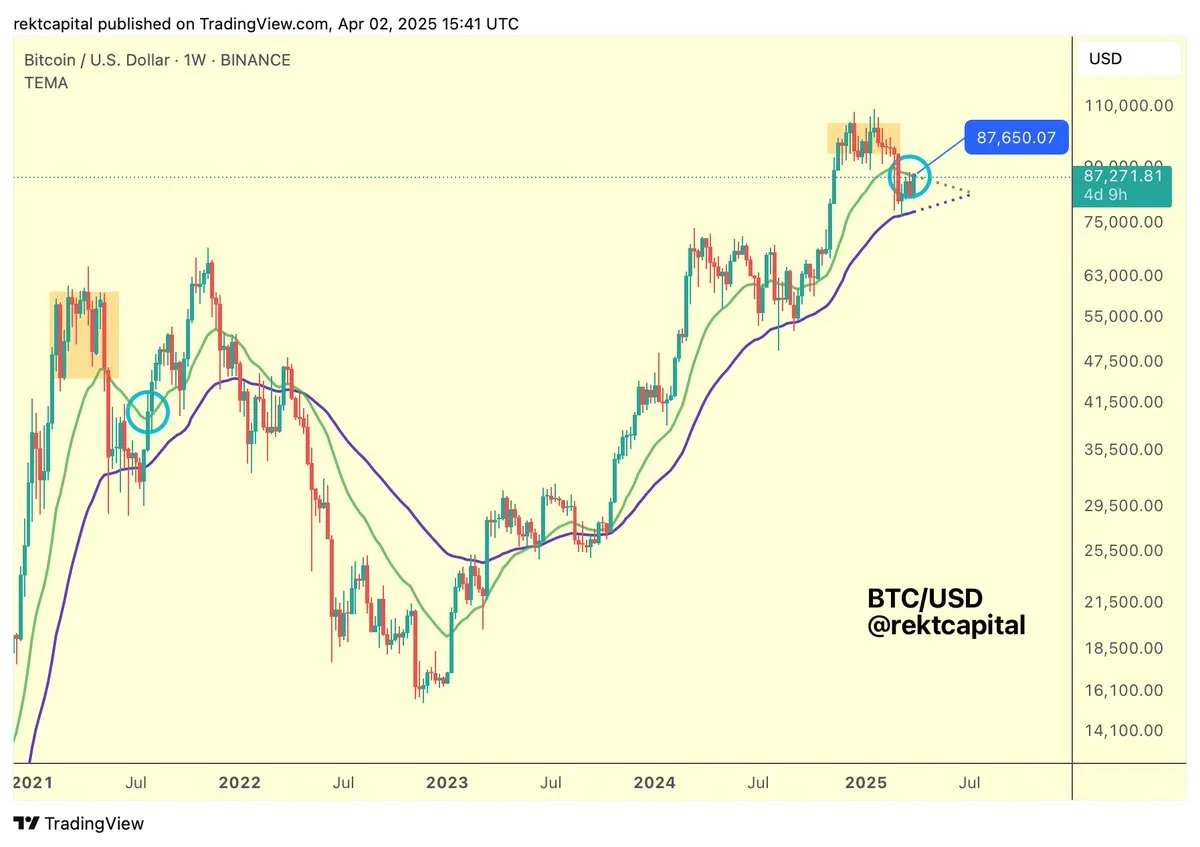
Разблокировка токенов TRUMP. Источник: Cryptorank

Разлок токенов TRUMP может усилить волатильность актива. За последний месяц цена монеты просела более чем на 30%.

2. StarkNet (STRK)

  • Дата разблокировки: 15 апреля
  • Количество токенов для разблокировки: 127,6 млн STRK (1,28% от общего предложения)
  • Текущее обращение: 2,9 млрд STRK

StarkNet — это решение для масштабирования Ethereum второго уровня (L2), использующее zk-роллапы на базе STARK-технологии. Его цель — увеличить пропускную способность сети и снизить комиссии. Нативный токен STRK используется для оплаты услуг внутри сети и участия в управлении.
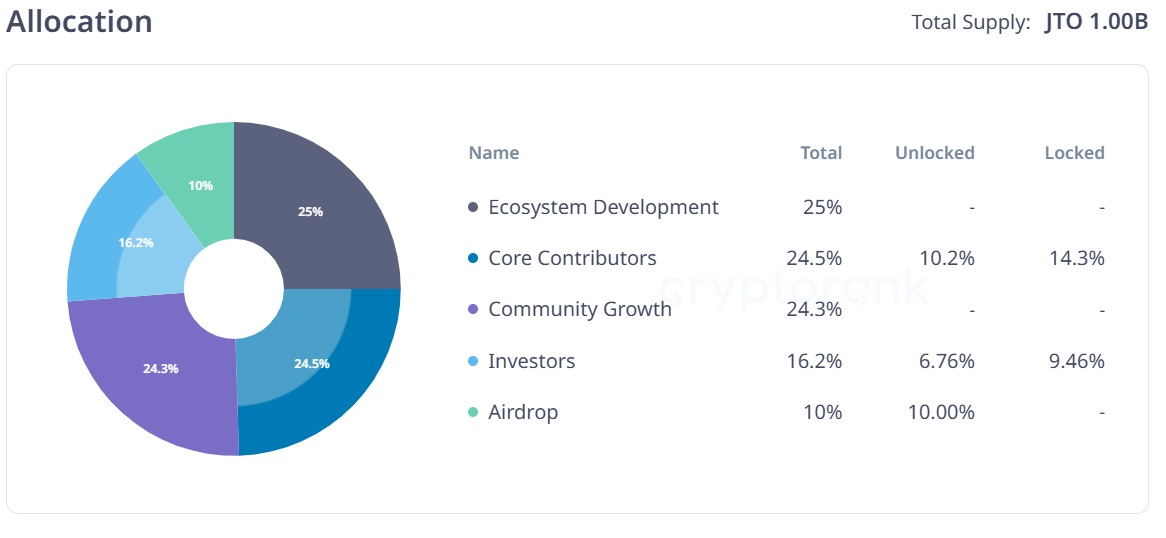
Разблокировка Jito Labs. Источник: Cryptorank

15 апреля будет разблокировано 127,60 млн токенов STRK на сумму $16,71 млн — это около 4,40% от текущей капитализации. Из них 66,92 млн монет (3,34%) предназначены ранним контрибьюторам, а 60,68 млн (3,34%) — инвесторам.

За последний месяц цена STRK упала на 26%. Сейчас актив торгуется почти на 100% ниже своего исторического максимума (ATH), достигнутого в феврале 2024 года.

3. Polyhedra Network (ZKJ)

  • Дата разблокировки: 19 апреля
  • Количество токенов для разблокировки: 15,50 млн ZKJ (1,55% от максимального предложения)
  • Общее предложение: 60 млн ZKJ

Polyhedra Network — это проект, обеспечивающий бесшовное взаимодействие между блокчейнами через технологию zkBridge.

19 апреля команда площадки разблокирует 15,50 млн ZKJ на сумму $35,16 млн — 25,7% от капитализации ZKJ. Из них 8,47 млн токенов (2,65%) пойдут на стимулирование экосистемы. В то же самое время 2,61 млн монет (1,74%) предназначены для сообщества, аирдропов и маркетинга.
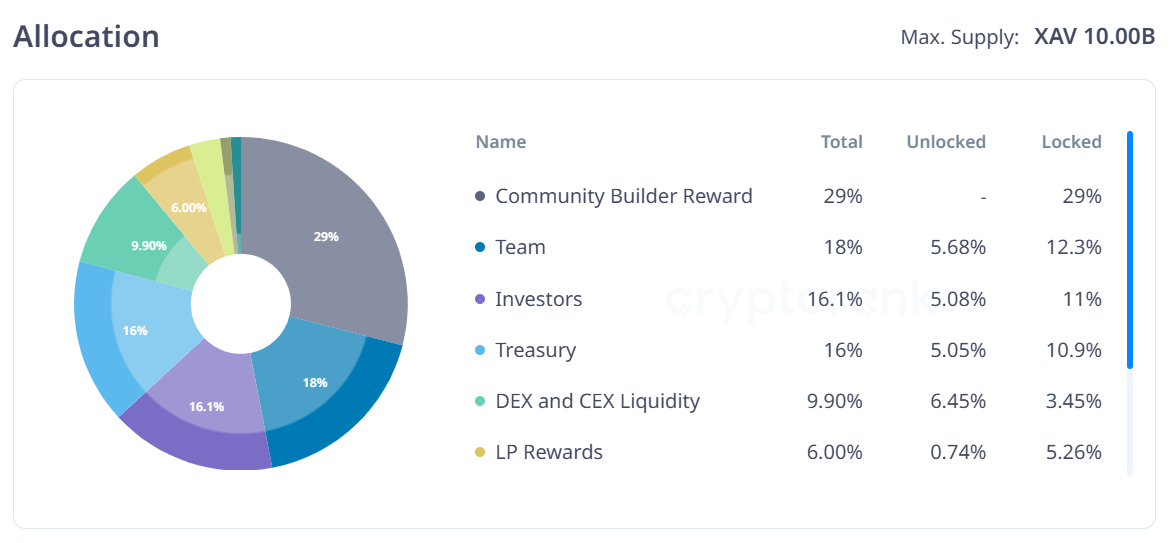
Разблокировка Xave. Источник: Cryptorank

Кроме того, 3,61 млн ZKJ пойдут в казначейство Polyhedra, а 800 тыс. активов передадут ранним инвесторам.

Общая сумма разблокированных на этой неделе токенов составит $400 млн. Некоторые криптовалюты испытать давление продаж. Трейдерам важно следить за разлоками, чтобы оценить возможные изменения в настроениях рынка и ликвидности.


İlgili Okumalar

Tiger Research: Three Strategies for Financial Institutions to Keep Up with the Tokenization Wave

Tiger Research's in-depth report analyzes the strategic choices for financial institutions entering the rapidly growing Real-World Asset (RWA) tokenization market. With the market projected to be worth $25-36 billion and a lack of complete regulatory frameworks in many jurisdictions, institutions face three options: waiting for domestic legislation, using regulatory sandboxes for limited experiments, or moving first into established overseas markets to gain a competitive edge. Tokenization is not magic; it requires meticulous preparation. Before entry, institutions must strategically plan across six core areas: choosing a jurisdiction, obtaining necessary licenses, defining the asset type, targeting the appropriate investor base, selecting settlement currencies, and designing operational requirements like custody and governance. The report outlines two main operational paths. The first is a direct jurisdictional path, establishing a legal presence in mature markets like Hong Kong, Singapore, or the U.S., often leveraging local licensed platforms to accelerate market entry. The second is a chain-native path, using platforms like Ondo or Plume that are built with regulatory compliance embedded, allowing for faster, more flexible market access without being tied to a specific jurisdiction. Ultimately, the report advises against waiting for perfect regulation. The preparation process can take 6-12 months and requires thorough legal review. Using the example of a mid-sized securities firm, it details steps from evaluating existing entities to final execution. The core message is that accumulating real-world operational experience is paramount, as the market is moving ahead and will not wait for latecomers.

Foresight News18 dk önce

Tiger Research: Three Strategies for Financial Institutions to Keep Up with the Tokenization Wave

Foresight News18 dk önce

Unitree's IPO Frenzy: The Real Mystery is How It Will Spend the 42 Billion Raised

Unitree, a Chinese robotics company, is set for a public listing after its IPO registration was approved by regulators. The company, which started with quadruped robots and has expanded into humanoids, plans to raise approximately 4.2 billion yuan through its offering. The article traces Unitree's rapid growth from its founding in 2016 to its current status. It highlights key milestones like the 2021 CCTV Spring Festival Gala performance, the 2023 launch of its affordable Go2 robot dog and the H1 humanoid robot, and a series of subsequent product launches. By 2025, the company reported revenue of 1.71 billion yuan, profitability, and sales exceeding 5,500 humanoid robots. As the first publicly-listed humanoid robot company on China's STAR Market, Unitree's main challenges are sustaining growth and deploying its newly raised capital effectively. The humanoid robot sector in China is crowded, with over 140 companies. Competitors include UBTech (focusing on industrial and consumer markets), Fourier, and international players like Tesla Optimus and 1X NEO. The article outlines three critical challenges for Unitree: establishing a strong second product line beyond its quadruped robots, maintaining its price advantage while ensuring quality, and successfully advancing its embodied AI capabilities through partnerships like the one with NVIDIA for the H2 Plus platform. Unitree's likely strategy involves a "developer tools + industry benchmarks" approach: using low-cost models like the R1 and G1 to build developer adoption and volume, leveraging high-end platforms for AI training, and securing pilot projects in sectors like logistics and manufacturing to build case studies. The company's future success hinges on converting its current momentum in shipments and pilot programs into sustainable, large-scale commercial contracts as the broader market evolves.

marsbit1 saat önce

Unitree's IPO Frenzy: The Real Mystery is How It Will Spend the 42 Billion Raised

marsbit1 saat önce

Examining the Open USD Partner Lineup: Follow Who's Joining to See Where the Money Flows

**Title: Deciphering the Open USD Partner Roster: Following the Money** The launch of Open USD is notable less for the stablecoin itself and more for its expansive list of over 140 founding partners, which reads like a "who's who" of global finance and tech. This coalition, including asset managers like BlackRock, card networks Visa and Mastercard, banks (BNY Mellon, Standard Chartered, etc.), tech giants (Google, IBM), merchants (Shopify), and crypto firms (Coinbase, Ripple, Aave, MetaMask), signals a strategic shift. The diverse membership reveals that stablecoins are increasingly viewed not as products to compete over, but as shared infrastructure too critical to be left to any single entity. Each partner category has distinct motives. Asset managers like BlackRock seek to manage the large, sticky cash reserves, a lucrative fee-generating opportunity. Merchants like Shopify aim for lower-cost settlement and potential yield on balances. Banks join defensively to retain custody and settlement roles, fearing deposit outflows to stablecoins. Tech companies bet on programmable money for future machine-to-machine commerce. Crypto firms gain mainstream legitimacy and distribution channels. Remarkably, the consortium includes direct competitors (Visa vs. Mastercard, Coinbase vs. Ripple), indicating that the fear of exclusion from this emerging financial layer outweighs competitive rivalries. However, this shared governance could also lead to slow decision-making. The roster's composition is the real message: it represents a collective bet that a widely accepted, consortium-owned stablecoin is preferable to proprietary versions or having none at all. For incumbents like Circle and Tether, this alliance poses a significant threat, as potential clients have collectively chosen to build their own alternative. The absence of major U.S. retail banks (busy with their own tokenized deposit networks) is equally telling. In essence, the partner list maps where the industry believes value and risk will flow in a tokenized dollar future, marking stablecoin's evolution from a product to a utility.

Foresight News2 saat önce

Examining the Open USD Partner Lineup: Follow Who's Joining to See Where the Money Flows

Foresight News2 saat önce

İşlemler

Spot
活动图片