Эксперты спрогнозировали изменения в секторе стейблкоинов в 2025 году

cryptonews.ru2024-10-25 tarihinde yayınlandı2024-12-25 tarihinde güncellendi

  • Издание Cointelegraph собрало мнения участников криптосферы касательно того, каким будет 2025 год для стейблкоинов.
  • Эксперты сошлись во мнении, что доминирование USDC и USDC сохранится, а TVL сектора вырастет.
  • Основной проблемой сегмента останется несоответствие правил в разных юрисдикциях.

Эксперты спрогнозировали увеличение общей заблокированной стоимости (TVL) в секторе стейблкоинов до $200 млрд, а также рост уровня принятия этих активов. Мнения ключевых игроков и аналитиков в сфере криптоактивов на этот счет собрали в издании Cointelegraph.

TVL в $300 млрд и доминирование крупнейших стейблкоинов

Напомним, в начале декабря 2024 года общая заблокированная стоимость активов в этой категории обновила исторический максимум на отметках выше $200 млрд. Это около 5% от капитализации крипторынка в целом.

Большая часть этой суммы, почти $182 млрд, приходится на два актива — USDT и USDC, согласно CoinGecko. Эксперты уверены, что доминирование этих стейблкоинов сохранится, а TVL сектора в целом преодолеет отметку в $300 млрд.
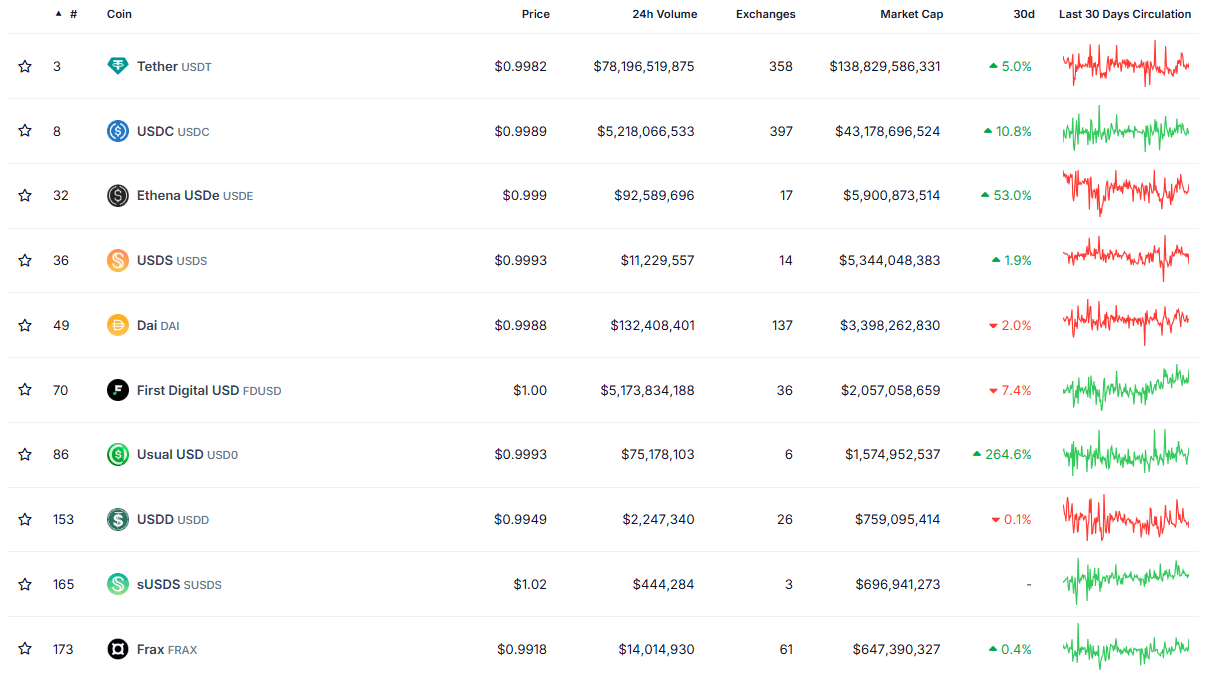
Рейтинг стейблкоинов по капитализации. Источник: CoinGecko.

«Я ожидаю, что мы преодолеем отметку в $300 млрд непогашенного долга, Tether продолжит доминировать со своим существующим отрывом, а остальной рынок будут оспаривать между собой новые финтех-компании и участники Web2 с собственными предложениями», — заявил в интервью изданию основатель протокола Ethena Гай Янг.

Директор по маркетингу Alchemy Pay Айлона Цик выразила согласие с ним. Она считает, что большая доля рынка останется за стейблкоинами, обеспеченными фиатом. Цик отметила, что внедрение этих активов как на развивающихся рынках, так в секторе децентрализованных приложений ускориться.

Спрос на карты с поддержкой стейблкоинов

По мнению главы криптовалютного направления компании Visa Кея Шеффилда, 2024 год был периодом восстановления спроса на эти активы. Вместе с тем существующие способы тратить стейблкоины остаются ограниченными, считает эксперт.

В связи с этим он ожидает, что в 2025 году существенно вырастет спрос на карты, поддерживающие стейблкоины.

По словам Шеффилда, Visa планирует расширить свои возможности с целью позволить эмитентам производить расчеты по таким картам с компанией напрямую, в стабильных монетах.

CEO компании Uphold Саймон Маклафлин уверен, что стейблкоины станут новым трендом в международных расчетах в 2025 году. Он также сослался на примеры новых активов, специализированных под трансграничные платежи. К последним относится, в частности, стейблкоин RLUSD от компании Ripple Labs.

Об этом также заявил директор по рынку BitPay Билл Зилке. По его данным, в 2024 году на стейблкоины приходится доля в 5% от всех транзакций на платформе. Вместе с тем они занимают около 25% по объему.

Зилке считает, что эта тенденция в 2025 году сохранится. По его словам, роль стейблкоинов в B2B-расчетах только вырастет.

Ключевая проблема — расхождения в регулировании

«Одной из ключевых проблем, которые мы прогнозируем для стейблкоинов в 2025 году, станет необходимость ориентироваться в меняющемся нормативном ландшафте», — заявила Цик.

Глава отдела стейблкоинов в BitGo Бен Рейнольдс развил эту мысль. По его словам, неопределенность в сфере регулирования, а также отсутствие прозрачности останутся ключевыми проблемами сектора в 2025 году.

Главным препятствием к устранению этого выступает непоследовательность подходов в разных странах, на что указал основатель проекта True Markets Вишал Гупта.

В связи с этим, как подчеркнул Гупта, юрисдикции с четкими, простыми и понятными правилами, вероятно, останутся в выигрыше, тогда как рынки со слишком сложным и обременительным регулированием проиграют. Тут эксперт имеет в виду регламент MiCA в ЕС.

Напомним, представители эмитентов стейблкоинов неоднократно заявляли о рисках, продуцируемых этой нормативной базой.

На сайте Incrypted есть несколько материалов о том, как регулируется сектор стейблкоинов в той или иной юрисдикции:

Тренды в 2025 году

Эксперты выделили три основных направления, в которых, как ожидается, развитие стейблкоинов будет наиболее бурным:

  • L2-решения;
  • доходность;
  • совместимость.

Зилке считает, что ключевым трендом будет внедрение стейблкоинов на втором уровне, например, в сетях Arbitrum, Optimism и Base. Рейнолдс указал на то, что, вероятно, сектор получит толчок в разрезе блокчейн-совместимости и консолидации.

Это позволит стейблкоинам беспрепятственно перемещаться по всей экосистеме, продуцируя новые возможности как на розничном, так и на институциональном рынках.

Главный операционный директор платформы Morph Азим Хан добавил, что, вероятно, на рынке появятся новые стейблкоины со встроенным механизмом доходности. В качестве примера он указал PYUSD от компании PayPal, держатели которого могут получать вознаграждение за непосредственно владение активом.

Появление «экзотических» стейблкоинов

«Погоня за более высокой доходностью, вероятно, приведет к созданию “экзотических” стейблкоинов, которые фактически выступают в качестве структурированных финансовых продуктов, неся в себе риски, не до конца очевидные розничным инвесторам», — уверен Гупта.

По его мнению, задача контрагентов в этом секторе обеспечить полную прозрачность, раскрытие рисков и понимание своих продуктов для потребителей. От регуляторов, в свою очередь, требуются четкие регуляторные рамки, которые обеспечили бы защиту инвесторов, вместе с тем сохраняя пространство для инноваций, считает эксперт.
İlgili Okumalar

MSTR Discloses Sale of 3,588 Bitcoins, Stock Price Drops Over 5% at One Point During Trading

MicroStrategy, the world's largest corporate holder of Bitcoin, has significantly shifted its business model. Between June 29 and July 5, the company sold 3,588 bitcoins for approximately $216 million to fund quarterly dividends for its preferred stock. This marks its largest-ever Bitcoin sale and signals a strategic pivot: Bitcoin is transitioning from a "buy-and-hold" reserve asset to a liquidity management tool for the company. This move follows a recent authorization allowing Bitcoin sales when equity fundraising is less attractive. The announcement contributed to a more than 5% intraday drop in MicroStrategy's stock price, while Bitcoin fell to around $61,800—below the company's average holding cost of roughly $75,700. The sale represents a major departure from MicroStrategy's long-standing "never sell" commitment, which saw its first minor breach in May with a $2.5 million sale. The latest, hundred-times-larger transaction underscores growing financial pressures. Analysts note the company faces about $1.5 billion in annual preferred dividend obligations, far exceeding cash flow from its software business. As of July 5, MicroStrategy holds 843,775 bitcoins. Its current operational logic involves buying Bitcoin during favorable financing conditions and selling portions to cover dividends when needed, creating a flexible capital management cycle amidst a challenging market environment.

华尔街日报4 saat önce

MSTR Discloses Sale of 3,588 Bitcoins, Stock Price Drops Over 5% at One Point During Trading

华尔街日报4 saat önce

Q-Day Countdown: Will Quantum Computing End Cryptocurrencies?

Quantum Computing's Threat to Cryptocurrency: A Countdown to Q-Day Quantum computing, specifically Shor's algorithm, poses a fundamental threat to the public-key cryptography (e.g., ECDSA, RSA) that secures blockchain networks like Bitcoin and Ethereum. This critical juncture, known as Q-Day, is estimated to occur potentially within the next 5-15 years. The core vulnerability stems from the public and immutable nature of blockchains. Assets in addresses where the public key is already exposed on-chain (e.g., spent outputs) are at direct risk, as a sufficiently powerful quantum computer could derive the private key. This threatens the very trust model of cryptocurrencies. The response lies in Post-Quantum Cryptography (PQC)—algorithms like lattice-based ML-DSA and hash-based SLH-DSA, which are resistant to quantum attacks. NIST has standardized key PQC algorithms (FIPS 203, 204, 205), providing a migration path. However, the primary challenge is not technical but socio-economic and involves complex governance: * **Bitcoin's** path is constrained by its conservative ethos. Migrating requires a soft-fork to new address types, facing hurdles like significantly larger signature sizes and, most critically, the divisive governance question of how to handle at-risk legacy UTXOs without violating core principles. * **Ethereum** is pursuing a "cryptographic agility" strategy, with a multi-layered roadmap. It leverages account abstraction for user accounts and is developing compressed hash-based signatures (e.g., leanXMSS) for its consensus layer, aiming for a full-stack upgrade over time. In conclusion, quantum computing does not spell an instant end for cryptocurrency but initiates a critical countdown. The industry has a limited "engineering comfort window" to orchestrate a coordinated, ecosystem-wide migration to PQC. The ultimate bottlenecks are the immense coordination efforts and governance decisions required for this foundational transition.

marsbit5 saat önce

Q-Day Countdown: Will Quantum Computing End Cryptocurrencies?

marsbit5 saat önce

Trump, the President Who Knows Best How to 'Trade Stocks'

Former US President Donald Trump reported a record-breaking $2.2 billion in personal income for 2025, the highest annual income ever disclosed by a sitting president. This figure, from a 927-page government ethics filing, represented a 3.5-fold increase from his $600 million income in 2024 and boosted his net worth to $6.5 billion. The primary drivers were cryptocurrency (64% of income, approximately $1.4 billion) and real estate (26%, approximately $575 million). His crypto earnings stemmed largely from the launch of his personal meme coin, $TRUMP, generating over $600 million in licensing fees, and substantial profits from the WLFI token and its parent company. Despite a sluggish property market, his Mar-a-Lago resort and associated golf clubs saw revenue surges of 50% and 27%, respectively, attributed to their use as venues for presidential events. Trump's financial disclosure also revealed an unprecedented level of stock market activity, with over 22,000 trades executed in 2025, averaging 87 trades per market day. Media analyses noted several instances where significant trading coincided with major policy announcements, such as proposed tariffs, raising questions about potential conflicts of interest. While the White House stated these trades were handled by a family-managed trust fund and not Trump directly, critics highlighted this as a departure from the blind trusts traditionally used by presidents post-Watergate. The report has intensified debate over the commercialization of the presidency. Supporters view it as a success story of a businessman-president, while critics argue it demonstrates an unprecedented conversion of public influence into private wealth, with policy decisions potentially linked to personal financial gains. The controversy centers on whether Trump's earnings represent innovative entrepreneurship or a fundamental conflict of interest, sparking renewed calls for stricter ethics reforms in US governance.

marsbit5 saat önce

Trump, the President Who Knows Best How to 'Trade Stocks'

marsbit5 saat önce

Countdown to Q-Day: Will Quantum Computing End Cryptocurrencies?

The article explores the existential threat quantum computing poses to cryptocurrencies and the urgent need for "post-quantum" migration. It outlines that quantum computers, through Shor's algorithm, could break the elliptic-curve cryptography (ECC) underlying blockchain security, potentially allowing private keys to be derived from public keys. The core challenge is not a lack of post-quantum cryptography (PQC) standards—like NIST's ML-KEM and ML-DSA—but the immense complexity of upgrading entire ecosystems before "Q-Day" (when quantum computers become capable of such attacks, estimated around 2035-2045). Key points include: * **Bitcoin's** risk is concentrated in legacy UTXOs with exposed public keys (e.g., early P2PK outputs). Migration faces massive hurdles: PQC signatures are much larger, increasing transaction size and cost, and the governance dilemma of handling un-migrated assets threatens its "code is law" ethos. * **Ethereum's** strategy focuses on "cryptographic agility," using Account Abstraction for user accounts and developing compressed hash-based signatures (like leanXMSS with SNARK aggregation) for consensus. Its migration is a complex, full-stack overhaul of execution, consensus, and data layers. * The "security debt" is enormous. The comfortable engineering window for a coordinated, ecosystem-wide upgrade is only 5-8 years. High-value infrastructure (exchanges, bridges) may face pressure before mainnet protocols. In conclusion, quantum computing is not an instant "doomsday" event but a forcing function for systemic change. Bitcoin's ultimate test is social consensus and property rights governance, while Ethereum's is technical complexity. Failure to migrate in time could lead to a fundamental re-pricing of crypto assets.

链捕手5 saat önce

Countdown to Q-Day: Will Quantum Computing End Cryptocurrencies?

链捕手5 saat önce

İşlemler

Spot
活动图片