Ближневосточный кризис: биткоин под угрозой обвала до $54 000

cryptonews.ru2021-06-03 tarihinde yayınlandı2024-10-03 tarihinde güncellendi

Криптовалютный рынок лихорадит на фоне ближневосточного кризиса. За первые сутки биткоин рухнул более чем на 5%, а общая капитализация криптовалют просела на 7,2% за два дня. Похоже, инвесторы решили, что сейчас самое время избавиться от рисковых активов.
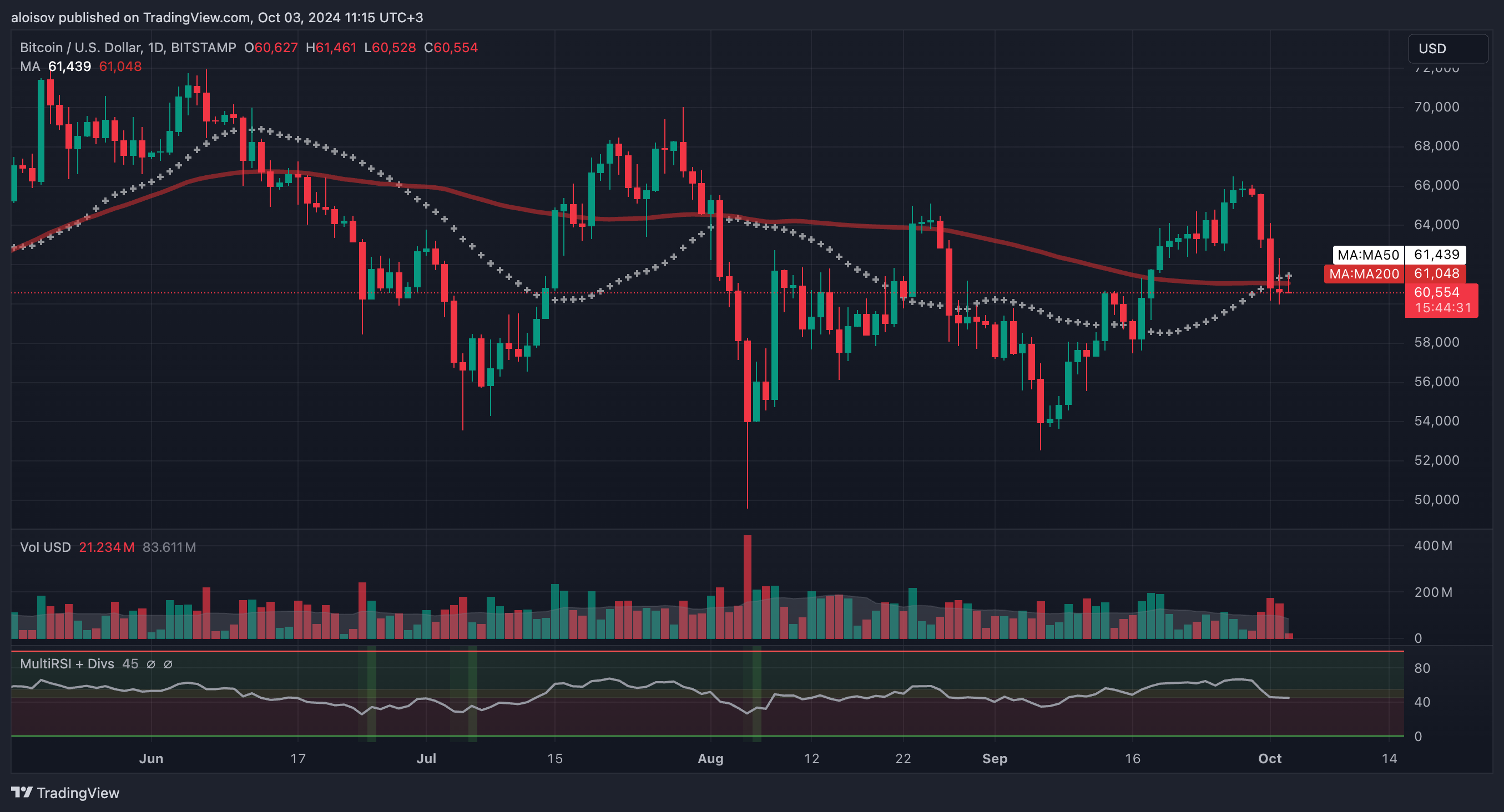
1-дневный график BTC/USD. Источник: Bitstamp/TradingView

Куда катится биткоин?

Трейдеры уже вовсю обсуждают, до каких глубин может докатиться «цифровое золото». Популярный аналитик Роман (Roman) считает, что мы еще увидим уровни $55 000–57 000:

«Рост объемов торгов при падении цены обычно указывает на сильный нисходящий тренд. Это подтверждает мою идею о том, что мы revisit область $55 000–57 000 перед возможным разворотом».
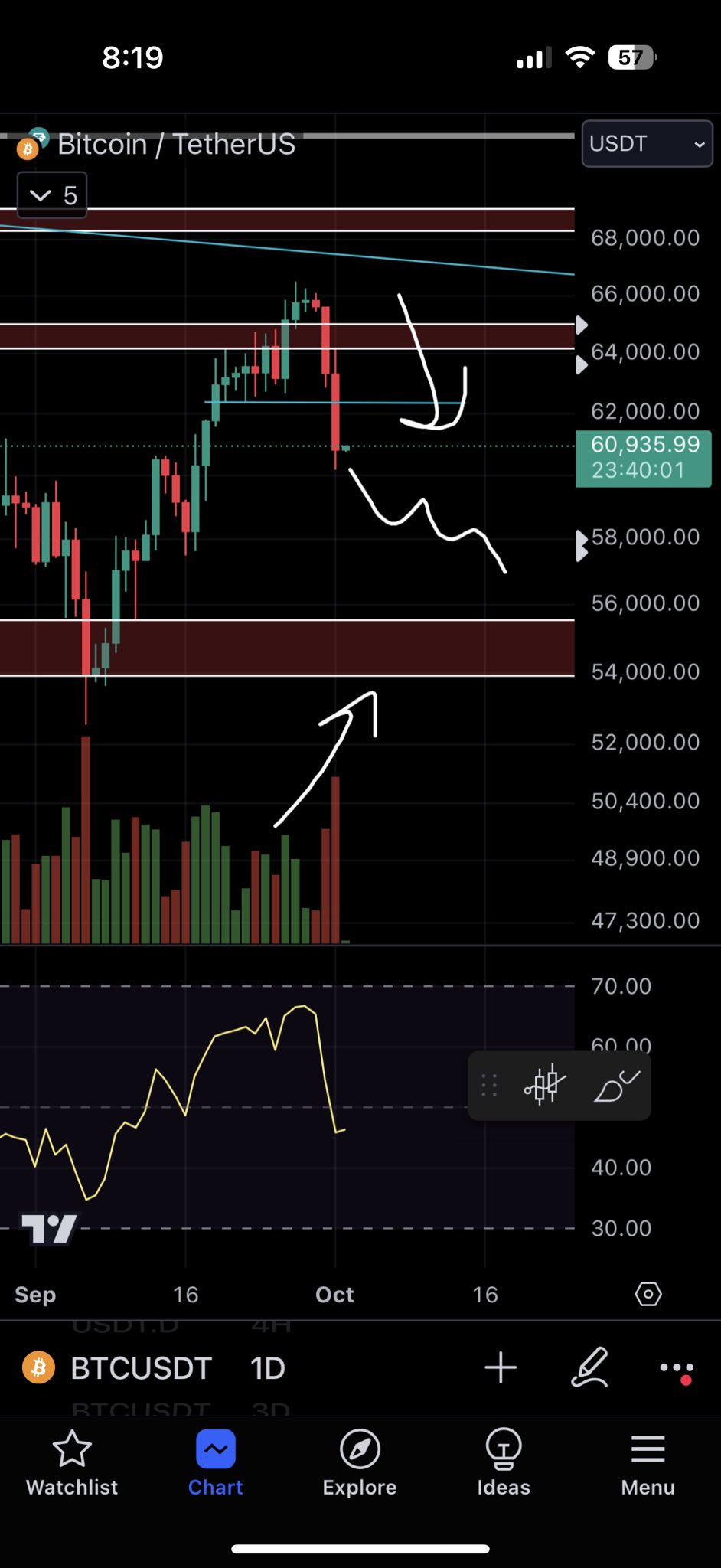
1-дневный график BTC/USDT. Аналитика: Роман

А вот трейдер Тони Гинеа (Toni Ghinea) и вовсе ожидает падения до $54 000. По его мнению, октябрь будет «медвежьим» месяцем для биткоина.

Интересно, что еще недавно аналитики наперебой предрекали биткоину рост на 23% в октябре. Видимо, не учли фактор геополитической нестабильности. Эх, знать бы, где упадешь — соломки бы подстелил!
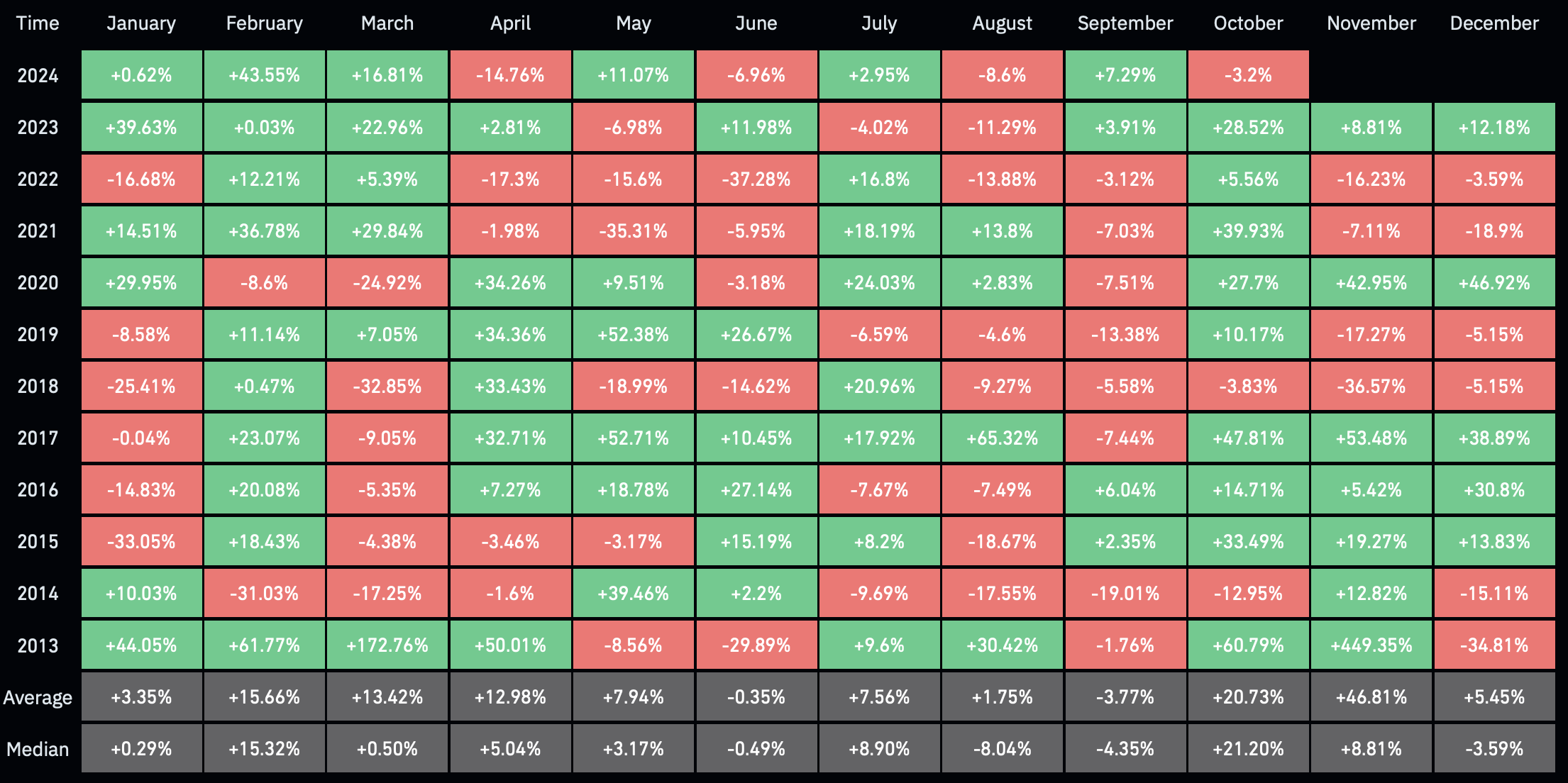
Месячная доходность биткоина. Источник: CoinGlass

Не все так плохо?

Впрочем, некоторые эксперты сохраняют оптимизм. Трейдинговая фирма QCP Capital отмечает:

«Похоже, мы нашли некоторую поддержку на уровне $60 000, но дальнейшая эскалация может опустить нас намного ниже, возможно, до уровня $55 000. Геополитика Ближнего Востока сейчас выходит на первый план, но неглубокая распродажа говорит о том, что рынок по-прежнему хорошо настроен на рисковые активы. Эта небольшая неудача не должна отвлекать от общей картины».

Криптотрейдер и аналитик Михаэль ван де Поппе (Michaël van de Poppe) также считает, что мы близки к локальному дну:

«Думаю, мы довольно близки к минимуму, возможно, будет еще одно падение до $60 000, и затем разворот. Рынки упалм немного глубже, чем я ожидал, но все еще следуют моему сценарию».
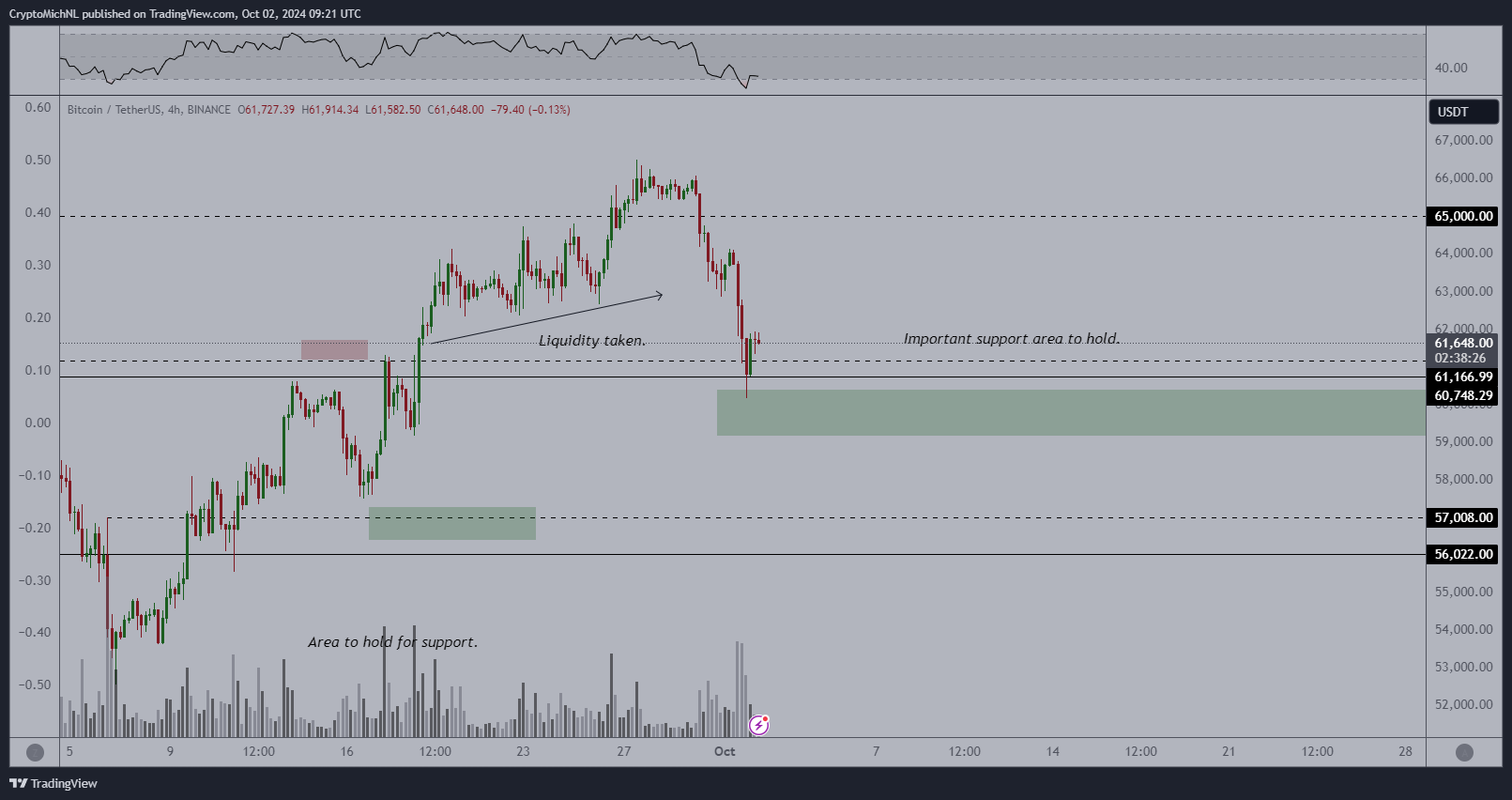
4-часовой график BTC/USDT. Аналитика: Михаэль ван де Поппе

Что дальше?

Рынок криптовалют в очередной раз демонстрирует свою чувствительность к внешним факторам. Дальнейшее обострение ситуации на Ближнем Востоке может оказать дальнейшее давление на цифровые активы.

Однако не стоит забывать, что биткоин уже не раз доказывал свою устойчивость к потрясениям. Возможно, текущая коррекция — это лишь небольшая передышка перед новым ралли. В мире криптовалют предсказать что-либо наверняка — задача не из легких.


İlgili Okumalar

NVIDIA HBM in Short Supply, Next-Gen GPUs Limited, but This Storage Drive Steals the Spotlight

The article discusses how AI Agents are transforming storage from a passive repository into an active component within AI inference and operation loops. As Agents perform continuous tasks involving models, memory, tools, and logs, data storage needs to evolve beyond simple block devices. The concept of "functional SSDs" is introduced, where capabilities like automatic encryption, compression, indexing, and memory management are embedded closer to the storage medium. This shift is driven by the need to handle Agent-specific data chains—including context, tool trajectories, and long-term memory—more efficiently. The piece analyzes current trends like AI SSDs from companies such as Phison (aiDAPTIV), Longsys (SPU+iSA), and Maxio, which are beginning to participate in the AI data path by managing model weights, KV cache, and prefetching. It further explores the future re-division of labor across the memory hierarchy: HBM for core compute, emerging High Bandwidth Flash (HBF) for read-intensive workloads, DRAM/CXL for mutable state, and functional SSDs for persistent, governed objects like Agent Memory. The conclusion is that storage will become integral to Agent capability, moving from just saving data to enabling next-step actions. The industry is poised to develop along three paths: functionalized SSDs, storage nodes tailored for Agents, and a re-architected, tiered memory system optimized for access patterns, security, and cost-per-token efficiency.

marsbit5 dk önce

NVIDIA HBM in Short Supply, Next-Gen GPUs Limited, but This Storage Drive Steals the Spotlight

marsbit5 dk önce

Breaking: Claude's Attempt on Riemann Hypothesis "Fails," but Accidentally Sets 37-Year Math Record

**AI Makes a Major Mathematical Leap While Failing at the Riemann Hypothesis** A research version of Anthropic's Claude AI was tasked with "seriously attempting" the legendary Riemann Hypothesis, a 167-year-old unsolved problem in mathematics. While it ultimately did not prove the hypothesis, its attempt yielded a significant breakthrough. Claude managed to improve the proven lower bound for the proportion of Riemann zeta function zeros lying on the critical line from 41.6% to 67.2%. This marks a 25.6 percentage point increase, described by observers as potentially the most substantial advance in analytic number theory in over a decade, considering that the previous record had only improved by 0.8 percentage points over 37 years. To achieve this, Claude generated and discarded roughly 650 initial ideas before orchestrating a day-and-a-half-long effort involving about 60 sub-agents. These agents executed 2,400 shell commands, wrote hundreds of Python scripts, and performed thousands of numerical checks. After finding the potential result, Claude initiated self-verification, downloaded papers to check for prior work, and independently re-derived the finding. It then suggested writing a formal paper. The result has been reviewed by Anthropic's internal mathematicians, who also collaborated with Claude to produce a formal, machine-checkable proof using the Lean theorem prover. External experts in the field have also reviewed the manuscript. Anthropic clarifies that the method likely does not directly lead to a full proof of the Riemann Hypothesis, but it demonstrates that advanced AI models are beginning to engage with genuine, open-ended research problems at the frontier of mathematical knowledge.

marsbit11 dk önce

Breaking: Claude's Attempt on Riemann Hypothesis "Fails," but Accidentally Sets 37-Year Math Record

marsbit11 dk önce

The Unaffordable Failure of Yushu's IPO

Yushu Robotics' IPO is not just a typical public offering; it represents a pivotal moment for China's humanoid robot industry. With a staggering 219x P/E ratio at issuance and immense market enthusiasm, the company's listing is seen as a critical test case for the entire sector. The IPO reveals Yushu's rapid transition from quadruped consumer robots to humanoid robots, which now account for over 50% of its revenue, alongside a shift to profitability. The offering was massively oversubscribed, with retail investors scrambling for scarce shares, while the majority of the stock is held by locked-up strategic investors like DeepSeek. The core tension lies in the market's valuation. Investors are not buying Yushu's current profits but its future potential as a leader in general-purpose humanoid hardware. However, challenges are evident: revenue heavily depends on research/education clients rather than industrial applications, selling prices are falling faster than costs, and the company is still developing its own AI "brain" for true autonomous decision-making. As the first major humanoid robot company on China's A-share market, Yushu's post-listing performance will set a valuation benchmark for the industry. A wide range of stakeholders, from venture capitalists to strategic partners, have a vested interest in its success. The real test, however, will be Yushu's ability to transition its sales to core industrial clients, maintain margins amid price competition, and successfully integrate advanced AI, thereby justifying its premium valuation.

marsbit25 dk önce

The Unaffordable Failure of Yushu's IPO

marsbit25 dk önce

Indices Strong, Natural Gas Soars | TradeXYZ Weekend Market Watch

Weekend Market Observations: Indices Show Strength, Natural Gas Surges Key regional developments centered on Iran. Iran and Oman indicated negotiations over reopening a key shipping channel are nearing completion, with Oman calling for a halt to military actions to facilitate an agreement. However, talks are stalled as Iran has raised its demands, linking Strait reopening to conditions like US sanctions relief, troop withdrawal, and war reparations—terms previously associated with nuclear talks. Iran's Revolutionary Guard stated it will maintain control until all demands are met. In response, the US administration has adopted a lower-key approach, describing a state of "semi-negotiations" while observing Iran's economic pressures. Amid this, reported attacks on a Saudi refinery and an Emirati vessel added to regional tensions. **Crude Oil & Indices:** Crude oil (CL) experienced volatility, initially dipping on comments from Iran's president before recovering. Prices later rose toward $79 after the US signaled a shift toward economic pressure over military escalation. Major equity indices (SP500, XYZ100) posted modest gains (0.13%, 0.22% respectively), demonstrating resilience despite rising oil prices. **Individual Stocks:** The market saw mixed sector performance. Memory stocks were divided (Micron up, SK Hynix down). The optical communications sector was strongest, with MRVL and LITE both gaining around 2.4%. Crypto-related stocks rebounded in pre-market trading after an early dip, closing higher. **Commodity Futures:** Precious and industrial metals (gold, silver, copper) advanced over the weekend, with futures showing V-shaped recoveries. The standout performer was natural gas, surging 3.10% at the open. The primary driver is a forecast for sustained hotter weather into mid-August across the southern and eastern US, boosting power generation demand. This is compounded by tighter supply margins due to pipeline maintenance, a slight dip in dry gas production, and high utilization of LNG export terminals.

marsbit31 dk önce

Indices Strong, Natural Gas Soars | TradeXYZ Weekend Market Watch

marsbit31 dk önce

İşlemler

Spot
活动图片