一周代币解锁:SAND迎来倒数第二次解锁

Odaily星球日报2024-08-11 tarihinde yayınlandı2024-08-11 tarihinde güncellendi

Özet

SAND迎来倒数第二次解锁,最后一次解锁将于25年12月进行。

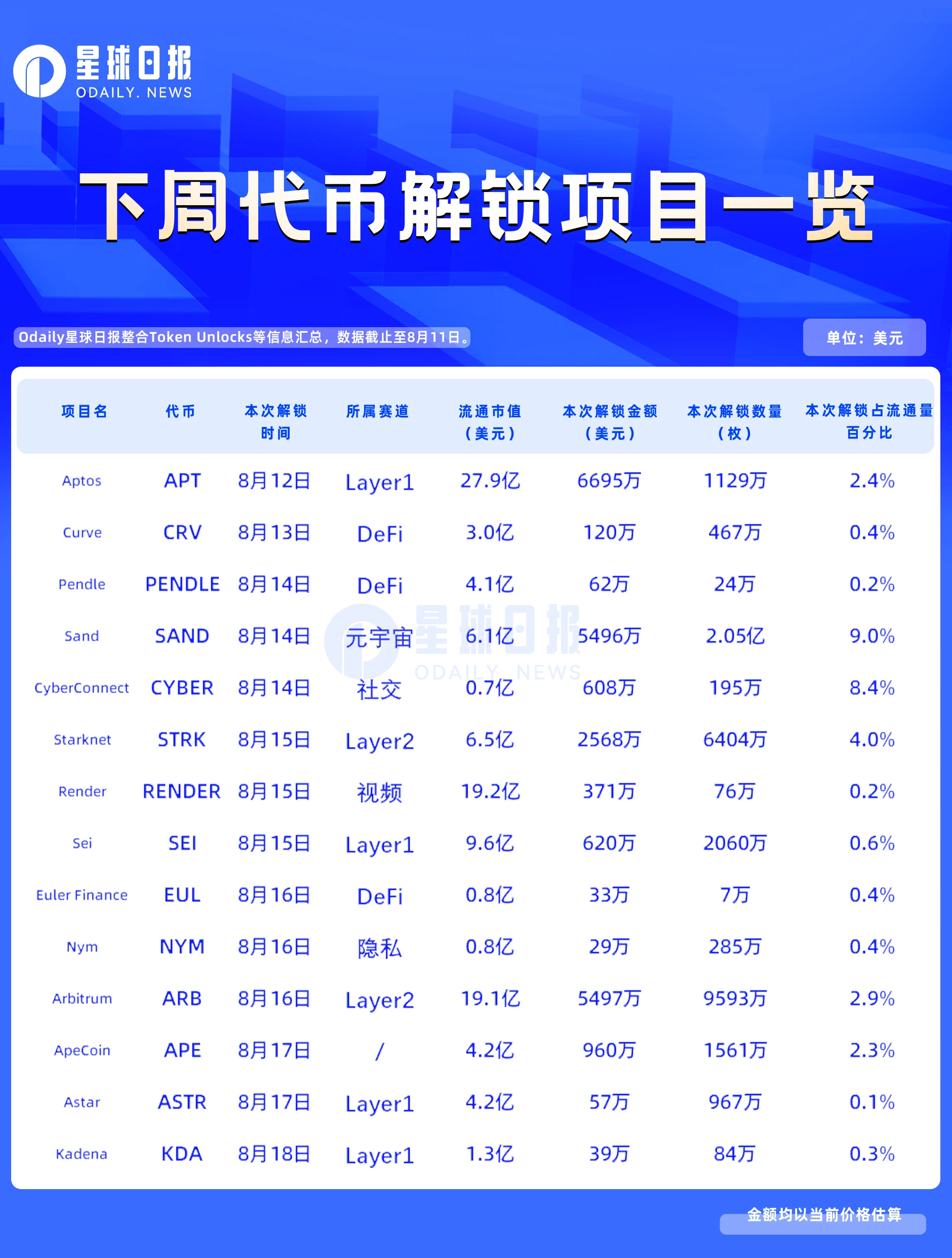
下周, 14 个项目迎来代币解锁事件。SAND、CYBER、STRK 解锁比例较高。

一周代币解锁:SAND迎来倒数第二次解锁

Sandbox

项目推特:https://twitter.com/TheSandboxGame

项目官网:https://www.sandbox.game/en/

本次解锁数量: 2.05 亿枚

本次解锁金额:约 5496 万美元

The Sandbox 是一个去中心化的、社区驱动的游戏生态系统,创造者可以在以太坊上共享体素资产和游戏体验,并将其代币化。

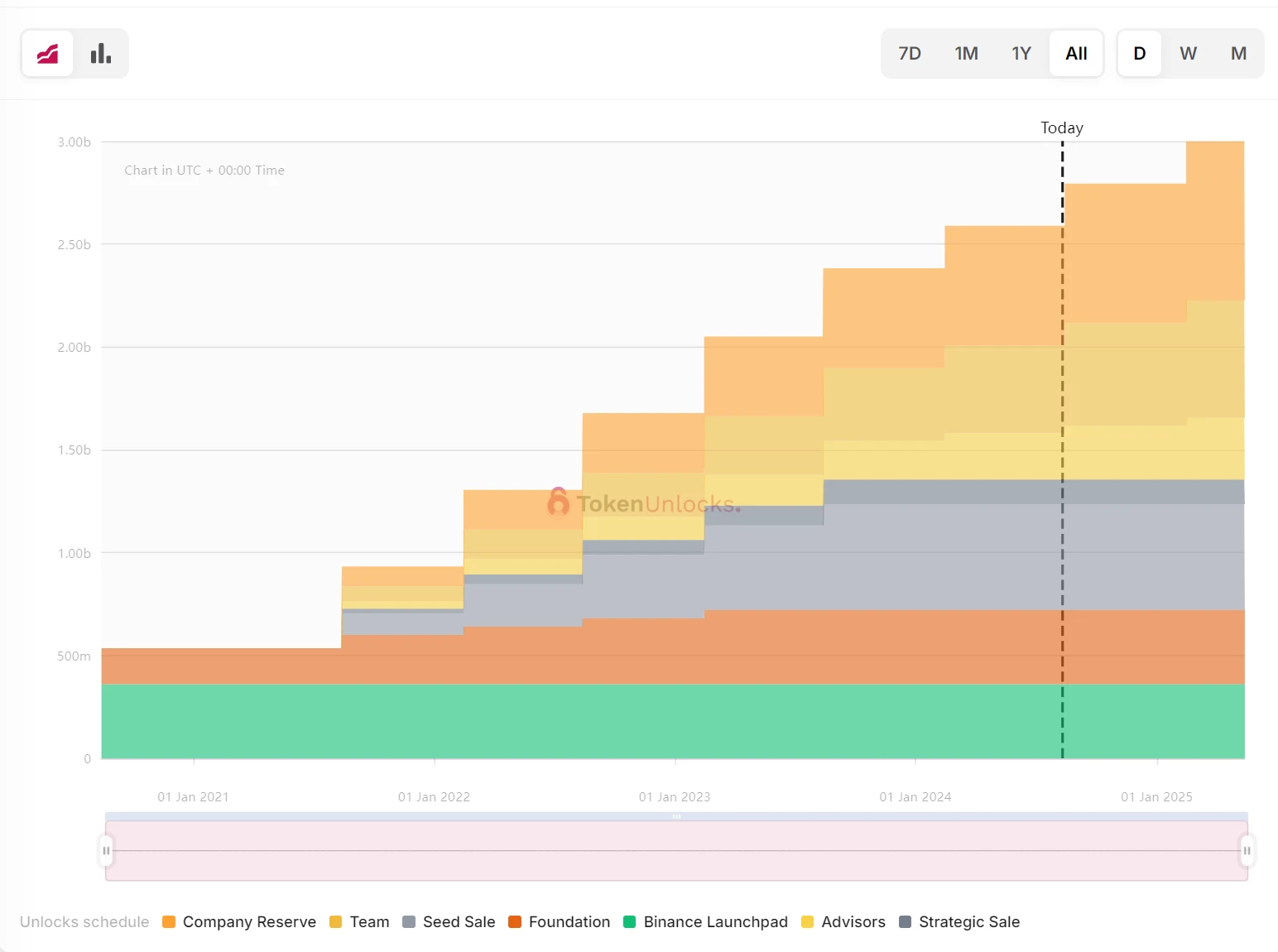
Sandbox 本轮解锁为倒数第二次 Cliff 解锁,已解锁量占总量的 86% 。本轮解锁分别为储备金库 9684 万枚(2590 万美元)、团队 7125 万枚(1905 万美元)、顾问 3750 万枚(1003 万美元)。

具体释放曲线如下:

一周代币解锁:SAND迎来倒数第二次解锁

CyberConnect

项目推特:https://twitter.com/CyberConnectHQ

项目官网:https://cyberconnect.me/

本次解锁数量: 195 万枚

本次解锁金额:约 608 万美元

CyberConnect 是一种基于区块链技术的去中心化社交图谱协议。CyberConnect 构建了一个统一的社交图谱,用户可以将自己的身份信息、社交关系等迁移到不同的网络和平台,同时这些个人数据也完全归用户所有,从而为用户创造价值。CyberConnect 协议的治理代币是 CYBER,用例包括投票治理,支付 Gas 费等。

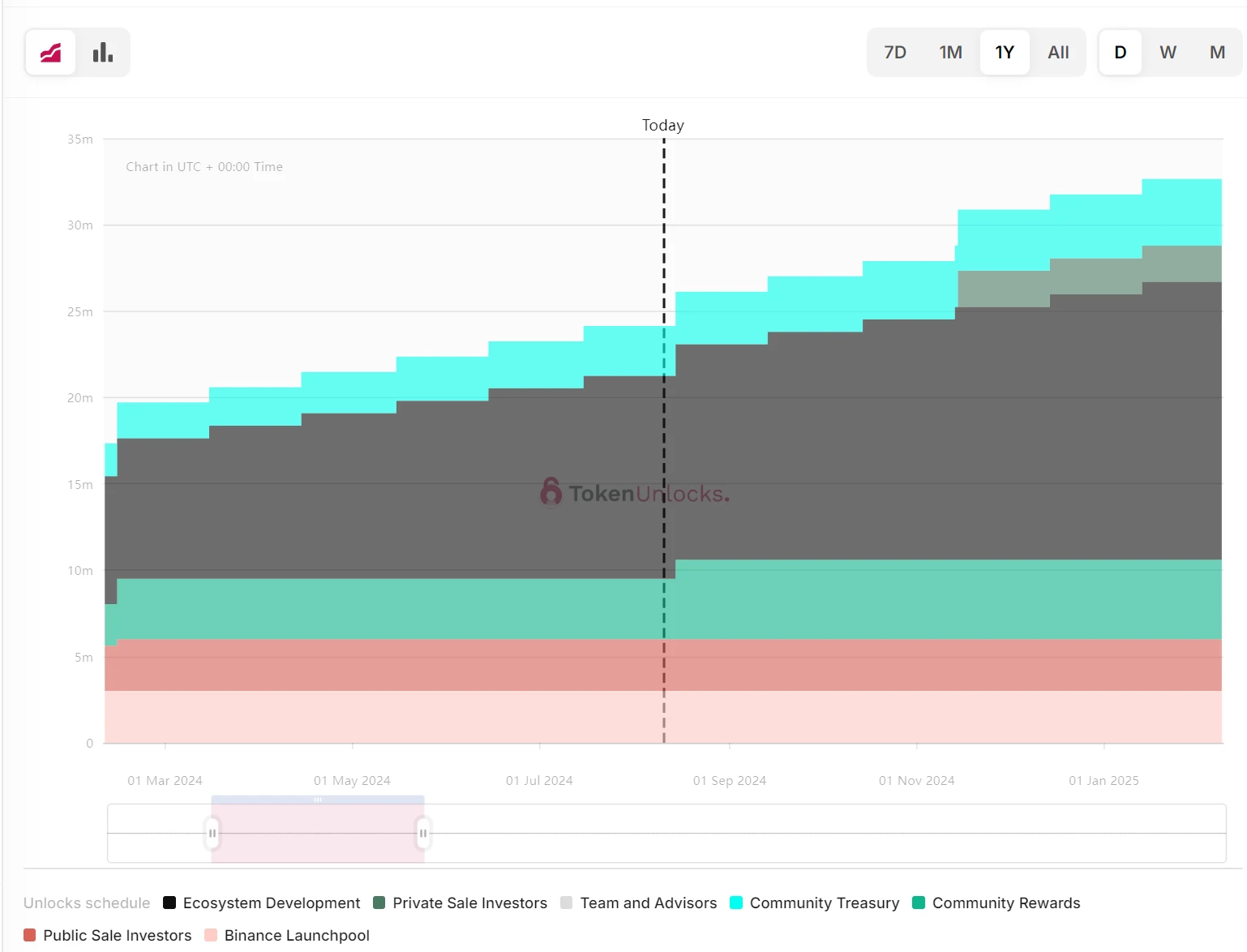
本轮解锁为常规解锁,分别面向社区奖励解锁 110 万枚(价值 336 万美元)、生态发展 72 万枚(价值约 220 万美元)、社区财库 16.3 万枚(价值 49.7 万美元)。

具体释放曲线如下:

一周代币解锁:SAND迎来倒数第二次解锁

Starknet

项目推特:https://twitter.com/Starknet

项目官网:https://starknet.io/

本次解锁数量: 6404 万枚

本次解锁金额:约 2568 万美元

Starknet 是以太坊的 Layer 2 ,利用 zk-STARKs 技术使以太坊交易更加快速且费用降低。StarekNet 的母公司 StarkWare 成立于 2018 年,总部位于以色列,旗下所研发的主要产品有 Starknet 以及 StarkEx。通过使用 STARK,Starknet 验证交易和计算,而无需所有网络节点验证每个操作。这显着减轻了计算负担并增加了区块链网络的吞吐量。

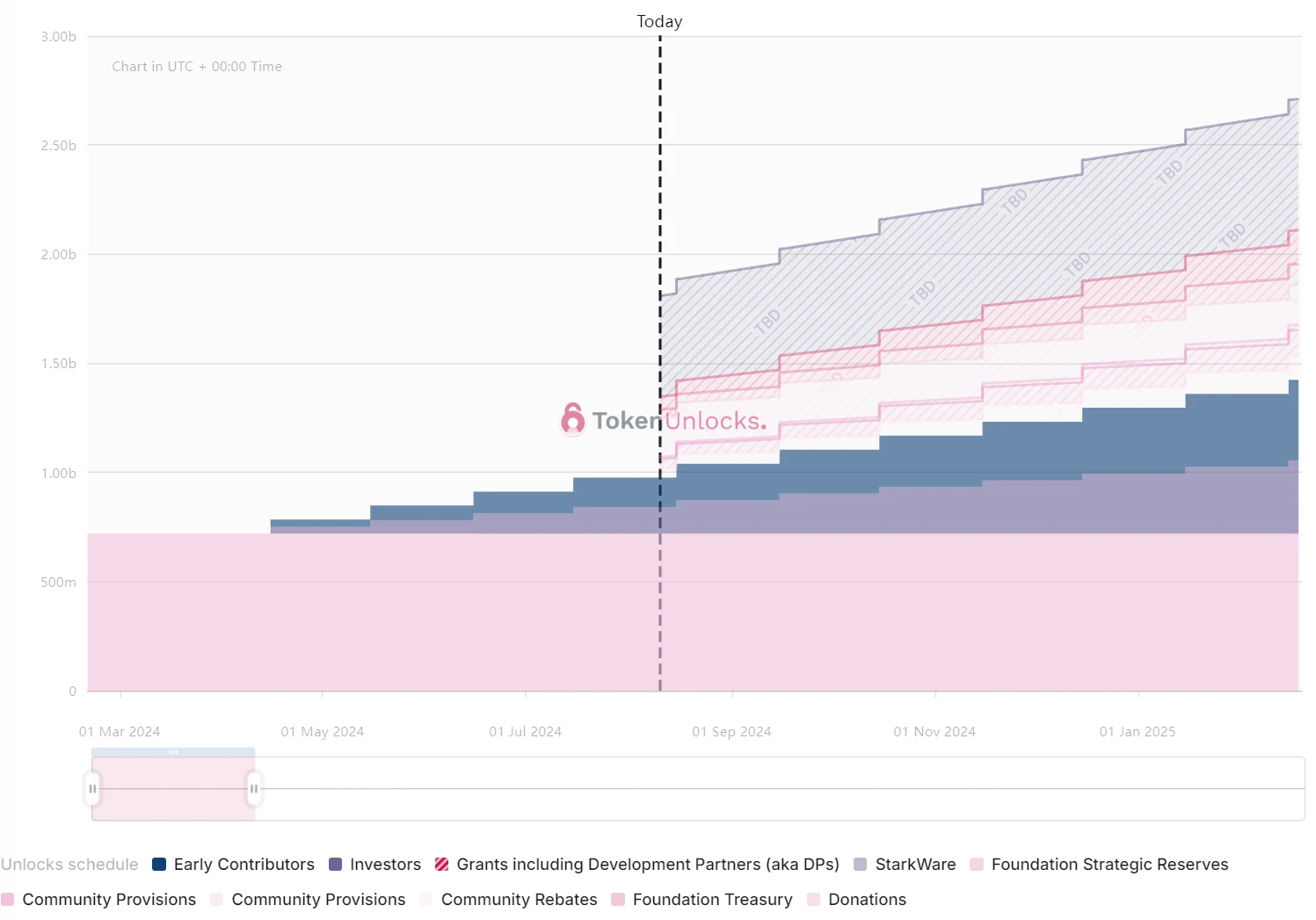
当前 STRK 仍只解锁了总量的 10% ,本轮解锁面向早期贡献者释放 3357 万枚,价值约 1333 万美元,向投资者释放 3043 万枚,价值约 1209 万美元。

具体释放曲线如下:

一周代币解锁:SAND迎来倒数第二次解锁

Trend Kriptolar

İlgili Okumalar

How Does Codex Use a Computer? Three Entry Points and Permission Boundaries

This article explains the three primary methods for Codex to interact with a computer, each with distinct use cases, permission boundaries, and trust levels. **1. Computer Use:** This offers the broadest access, allowing Codex to visually control and interact with the graphical user interface of authorized macOS/Windows apps, system settings, and even iOS simulators. It's ideal for tasks lacking APIs or structured tools, such as operating legacy software or multi-app workflows. However, it's the slowest method and has the widest permission scope, requiring careful supervision for sensitive actions. **2. Chrome Extension:** This grants Codex access to the user's logged-in Chrome browser state, including cookies, profiles, and open tabs. It's best for tasks requiring user identity across websites like Gmail, LinkedIn, Salesforce, or internal dashboards. Its key advantage is multi-tab control for complex workflows. While more powerful for browser-based tasks than Computer Use, it carries higher sensitivity as actions are performed under the user's identity. **3. In-App Browser:** This is a browser isolated within the Codex thread, separate from the user's personal browsing data. It excels in web development and debugging scenarios—previewing local servers, testing responsive layouts, or annotating designs directly on the page. Its isolation is a strength for development but a limitation for tasks requiring login sessions. The core principle is to choose the narrowest, safest, and most structured interface for the task. Use plugins or MCPs first, resort to visual control (Computer Use) only for GUI-dependent tasks, employ the Chrome extension for identity-reliant browser work, and prefer the In-App Browser for isolated development. **Appshots** are clarified as a fourth, complementary tool for *inputting* context—capturing a screenshot of a window to point Codex to something—rather than a method for Codex to *act*. Together, this layered approach highlights a key to AI agent productization: not granting unlimited permissions, but constraining them within clear boundaries for specific tasks while preserving user oversight.

marsbit1 saat önce

How Does Codex Use a Computer? Three Entry Points and Permission Boundaries

marsbit1 saat önce

The "Iron Rule" of Chip Equipment Is Being Broken

For years, the semiconductor equipment industry followed an unwritten "iron rule": suppliers offered steep discounts for new tool introductions (Design-in) and faced consistent price pressure during repeat orders, especially during market downturns. This long-standing buyer's market dynamic is now being upended. Recently, SK Hynix's primary equipment suppliers have reportedly requested a 3-4% price *increase*, a nearly unprecedented move. This shift is driven by a severe supply-demand imbalance fueled by the AI compute boom. Securing equipment has become an urgent arms race as chipmakers' expansion speed dictates their ability to fulfill massive AI chip orders. Key areas feeling the strain include: **TCB (Thermal Compression Bonding) Equipment:** Demand is exploding, driven by the simultaneous needs of HBM4 memory stacking, AI chip Chip-on-Substrate (C2S), and logic Chiplet Chip-on-Wafer (C2W) packaging. Players like Hanmi Semiconductor, Hanwha Semitech, and ASMPT are receiving major orders. While hybrid bonding is seen as the future, TCB remains the pragmatic choice for HBM4 mass production, with its lifecycle extended by relaxed specifications and ongoing technological upgrades. **Test Equipment Bottlenecks:** Ironically, AI-driven shortages are now crippling test equipment manufacturing. Critical components like FPGAs, Driver ICs, and CPUs face severe shortages and extended lead times (up to 52 weeks for FPGAs), as AI data center and server vendors prioritize supply. This creates a paradoxical cycle: AI chip shortages drive fab expansion, which requires more test equipment, whose production is delayed because its key parts are diverted to make AI chips. The industry is entering a broad, AI-powered upcycle. SEMI forecasts global semiconductor equipment sales to hit a record $156 billion by 2027, fueled by investment in advanced logic/foundry, HBM-driven DRAM, and advanced packaging (like CoWoS). Major players like TSMC, SK Hynix, and Micron are aggressively ramping capital expenditure. In conclusion, leading equipment vendors are no longer just selling tools; they are selling the critical capability to deliver AI-era capacity. Pricing power is shifting decisively to those with indispensable technology in key process nodes like advanced logic, HBM, and advanced packaging, rewriting the industry's traditional power structure.

marsbit1 saat önce

The "Iron Rule" of Chip Equipment Is Being Broken

marsbit1 saat önce

İşlemler

Spot
Futures

Popüler Makaleler

SAND Nasıl Satın Alınır

HTX.com’a hoş geldiniz! The Sandbox (SAND) satın alma işlemlerini basit ve kullanışlı bir hâle getirdik. Adım adım açıkladığımız rehberimizi takip ederek kripto yolculuğunuza başlayın. 1. Adım: HTX Hesabınızı OluşturunHTX'te ücretsiz bir hesap açmak için e-posta adresinizi veya telefon numaranızı kullanın. Sorunsuzca kaydolun ve tüm özelliklerin kilidini açın. Hesabımı Aç2. Adım: Kripto Satın Al Bölümüne Gidin ve Ödeme Yönteminizi SeçinKredi/Banka Kartı: Visa veya Mastercard'ınızı kullanarak anında The Sandbox (SAND) satın alın.Bakiye: Sorunsuz bir şekilde işlem yapmak için HTX hesap bakiyenizdeki fonları kullanın.Üçüncü Taraflar: Kullanımı kolaylaştırmak için Google Pay ve Apple Pay gibi popüler ödeme yöntemlerini ekledik.P2P: HTX'teki diğer kullanıcılarla doğrudan işlem yapın.Borsa Dışı (OTC): Yatırımcılar için kişiye özel hizmetler ve rekabetçi döviz kurları sunuyoruz.3. Adım: The Sandbox (SAND) Varlıklarınızı SaklayınThe Sandbox (SAND) satın aldıktan sonra HTX hesabınızda saklayın. Alternatif olarak, blok zinciri transferi yoluyla başka bir yere gönderebilir veya diğer kripto para birimlerini takas etmek için kullanabilirsiniz.4. Adım: The Sandbox (SAND) Varlıklarınızla İşlem YapınHTX'in spot piyasasında The Sandbox (SAND) ile kolayca işlemler yapın.Hesabınıza erişin, işlem çiftinizi seçin, işlemlerinizi gerçekleştirin ve gerçek zamanlı olarak izleyin. Hem yeni başlayanlar hem de deneyimli yatırımcılar için kullanıcı dostu bir deneyim sunuyoruz.

270 Toplam GörüntülenmeYayınlanma 2024.12.10Güncellenme 2026.06.02

SAND Nasıl Satın Alınır

Tartışmalar

HTX Topluluğuna hoş geldiniz. Burada, en son platform gelişmeleri hakkında bilgi sahibi olabilir ve profesyonel piyasa görüşlerine erişebilirsiniz. Kullanıcıların SAND (SAND) fiyatı hakkındaki görüşleri aşağıda sunulmaktadır.

活动图片