28 Indian Crypto Service Providers Have Registered With Country’s Anti-Money Laundering Unit

CoinDeskPolicy2023-12-03 tarihinde yayınlandı2023-12-04 tarihinde güncellendi

Özet

In March, India's Finance Ministry mandated that crypto businesses will have to register with the Financial Intelligence Unit (FIU).

As many as 28 Virtual Digital Assets (VDA) or crypto service providers have registered themselves with India’s Financial Intelligence Unit (FIU).

The Indian Minister of State for Finance Pankaj Chaudhary told the Parliament’s Lower House in a written reply to a question on Monday.

In March, India’s Finance Ministry mandated that crypto businesses will have to register with the Financial Intelligence Unit (FIU), the country's anti-money laundering unit, and comply with other processes under the Prevention of Money Laundering Act (PMLA). This meant crypto businesses became legally obligated to perform verification processes such as Know Your Customer (KYC).

Advertisement
Advertisement

The reply from India’s finance ministry also revealed that “the guidelines and reporting requirements are applicable to offshore crypto exchanges servicing the Indian Market” and that “appropriate action under PMLA" would be taken against non-compliant offshore platforms.

While major exchanges such as CoinDCX, WaxirX and CoinSwitch have all registered with the FIU, none of the 28 entities appear to be offshore companies.

Edited by Parikshit Mishra.

İlgili Okumalar

Monero Price Forecast for 2026-2032: Is it Worth Buying XMR Now?

**Article Summary: Monero (XMR) Price Forecast for 2026-2032 and Investment Outlook** This article analyzes the potential future price trajectory of privacy-focused cryptocurrency Monero (XMR). Based on technical analysis and market sentiment, it presents a bullish long-term forecast. **Key Price Predictions:** * By the end of 2026, XMR is projected to reach **$825.20**. * A maximum price of **$1,016.93** is forecast for late 2029. * The price could surge to **$1,753.23** by 2032. **Current Market Analysis (as of August 2026):** * The current price is approximately $430.66, having faced resistance at $450. * Market sentiment is labeled as "Bullish," though short-term volatility persists with support found around $430. * Technical indicators like moving averages suggest a mixed but generally positive outlook. **Investment Thesis:** Monero is presented as a compelling investment due to its core focus on transaction privacy and security, which drives demand. Its decentralized development model and growing utility are cited as foundations for long-term growth. However, the article cautions investors about significant risks, including regulatory scrutiny, market volatility, and the cryptocurrency's association with illicit activities, which could hinder mainstream adoption. **Conclusion:** While the forecast is optimistic, the article strongly advises investors to conduct thorough personal research and consult experts before investing in the volatile cryptocurrency market. The potential for XMR to reach $1,000 or surpass its all-time high is deemed possible under favorable conditions but remains highly dependent on regulatory developments and broader market dynamics.

cryptonews.ru29 dk önce

Monero Price Forecast for 2026-2032: Is it Worth Buying XMR Now?

cryptonews.ru29 dk önce

Livio, CEO of New Huo Group: RWA Will Become the Bridge Connecting Carbon-Based Humans and Silicon-Based AI, Crypto's Next 100 Million Users to Come from AI Agents

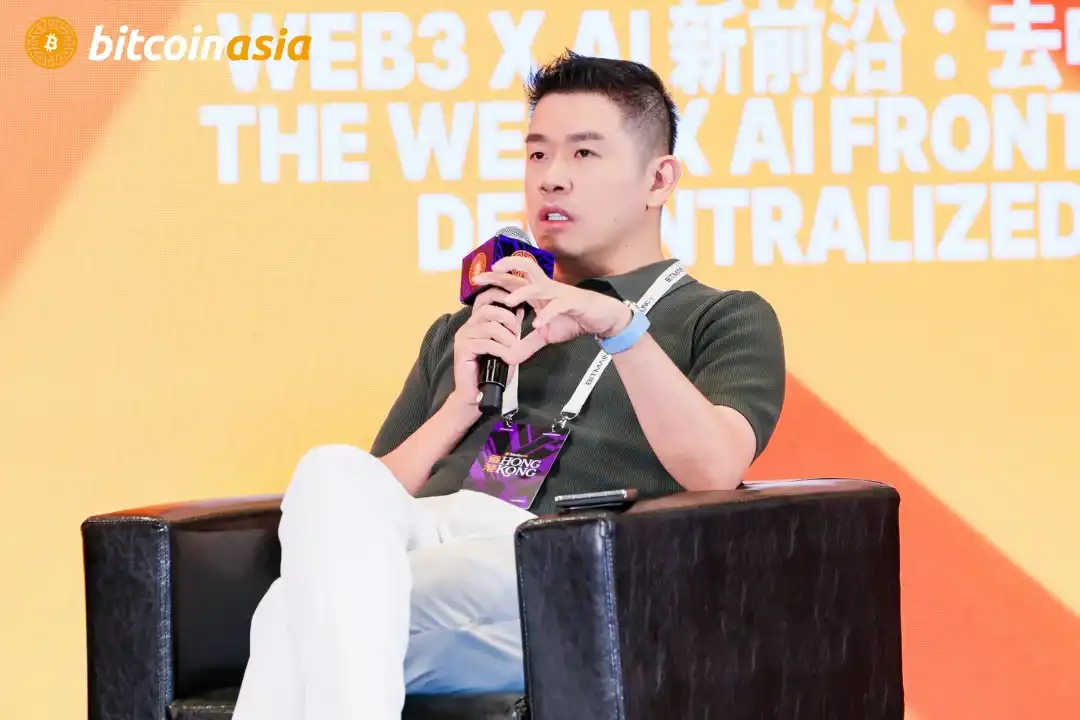
At the "Deep Integration of AI and Crypto" roundtable during the Bitcoin Asia conference, Livio Weng, CEO of Bitfire at New Huo Group, stated that the core narrative for AI and Crypto convergence in the coming years will likely focus on the "agential economy." As infrastructure for AI identity recognition, authorized wallets, and payment protocols matures, AI will progressively gain the ability to autonomously use, manage, and transact assets, deeply integrating with existing crypto sectors like trading, prediction markets, asset management, and payments. Livio believes Real World Assets (RWA) will serve as a crucial bridge connecting carbon-based humans and silicon-based AI. On one hand, RWA can tokenize traditional assets, enabling AI to use and trade assets from human society. On the other hand, "AI assets" such as computing power, data, and AI-generated services can also be made accessible to humans through RWA formats for purchase, analysis, and trading. This process will drive deeper integration between humans and AI. "The next 100 to 200 million new crypto users may not be humans, but AI Agents," Livio suggested, noting that future critical infrastructure and applications might be autonomously generated by AI rather than primarily coded by humans. As AI evolves from an information assistant to a wealth management assistant and further into an autonomous task executor, AI Agents are poised to become significant participants in the Crypto ecosystem. Livio also highlighted that deep AI-Crypto integration requires robust underlying infrastructure, including settlement layers for autonomous machine transactions, identity and authorization layers for AI independent identity and recognition, and incentive/disincentive layers to address fraud and misconduct. Protocols like X402 and EIP-8004 are exploring related applications, but challenges in security, governance, and ethics remain. In practice, New Huo is actively embracing RWA to seize opportunities from AI-Crypto convergence. The group recently launched comprehensive RWA operator services and released Hong Kong's first compliant crypto asset quantitative strategy. By incorporating RWA assets, this strategy aims to offer cross-asset allocation and risk hedging opportunities, helping investors navigate volatility across different asset classes and market cycles. Livio concluded that RWA is not only a vehicle for traditional assets to enter the on-chain world but also potential key infrastructure for AI to participate in the real economy, utilize real-world assets, and provide services to humans. As the machine economy develops, the intersection between AI and Crypto will expand, offering substantial room for innovation and growth.

marsbit36 dk önce

Livio, CEO of New Huo Group: RWA Will Become the Bridge Connecting Carbon-Based Humans and Silicon-Based AI, Crypto's Next 100 Million Users to Come from AI Agents

marsbit36 dk önce

Successes of Cheburnet: the share of free mobile internet in Central Russia decreased to 30.5%

Russia's "Sovereign Internet" project continues to advance, significantly impacting mobile internet access. In July 2026, only 30.5% of mobile data sessions in Central Russia were unrestricted, with the majority routed through a state-approved "whitelist." This represents a 31% increase in whitelist usage since January. The implementation is geographically uneven: Moscow and St. Petersburg see higher rates of free access (~49% and ~44% respectively), while border regions like Belgorod have seen unrestricted access plummet to around 12%. International forces are also contributing to digital isolation. Major certificate authority GlobalSign began revoking TLS certificates for Russian domains in June to comply with international sanctions, affecting thousands of domains, including those of major corporations like Rosneft. While its market share is small, the move aligns with the trend of separating the Russian internet segment. Domestically, authorities are preparing alternatives to maintain critical services. The government has tasked officials with ensuring the operation of key platforms like healthcare portals and payment systems during internet restrictions. The Ministry of Digital Development promotes a transition to certificates from a Russian National Certification Authority, which are natively supported by domestic browsers but may require manual installation for other devices. An AI analysis raises concerns, comparing the plan to Kazakhstan's failed 2019 attempt to mandate a state root certificate, which was blocked by major browsers as a security threat. This poses a future risk: users may eventually face a choice between foreign browsers potentially incompatible with Russian certificates or domestic software that fully trusts state-issued ones.

cryptonews.ru1 saat önce

Successes of Cheburnet: the share of free mobile internet in Central Russia decreased to 30.5%

cryptonews.ru1 saat önce

985 Professors Group Ventures into Embodied Intelligence, Raising Over ¥100 Billion in Funding This Year

In 2026, the embodied AI sector in China is witnessing a significant surge in venture capital, with individual funding rounds reaching billions of RMB. A notable trend within this boom is the rise of "academic factions," where university professors are actively founding companies. According to an IT桔子 report, over 70 embodied AI companies have founders who are or were university professors. A stricter definition identifies 18 core "academic" companies, which have collectively raised an estimated 15 billion RMB in the first eight months of 2026. These companies fall into two main categories. The first consists of firms founded by professors from top-tier universities like Tsinghua, Peking, Zhejiang, Shanghai Jiao Tong, and Fudan. Examples include Xingdong Jiyuan (陈建宇, Tsinghua), accelerating evolution (赵明国 team, Tsinghua), Galaxy Universal (王鹤, Peking University), Yunchushenchu (朱秋国, Zhejiang University), Qiongche Intelligence (卢策吾, Shanghai Jiao Tong), and Zhujidongli (张巍, Southern University of Science and Technology). The second category comprises companies incubated directly by research institutes, such as Qiuzhi Technology (from Tsinghua AIR), Delta Intelligence (from BIGAI), Xingyuan Intelligence (from Beijing智源研究院), and Zero to the Power (jointly incubated by Tsinghua). Key observations highlight Tsinghua University's dominant presence, the increasing direct investment from university-affiliated funds into these startups, and the unprecedented involvement of tenured professors. While these academic teams possess deep technical expertise in areas like robotics and control systems, they face the challenge of adapting to commercial imperatives like mass production and supply chain management. This wave represents an evolution in China's academia-to-industry model, shifting from mere patent licensing to professors leading funded ventures with institutional support, potentially accelerating the development of physical AI.

marsbit1 saat önce

985 Professors Group Ventures into Embodied Intelligence, Raising Over ¥100 Billion in Funding This Year

marsbit1 saat önce

İşlemler

Spot
活动图片