Why SingularityNET is back in the spotlight?

Mirror2023-02-22 tarihinde yayınlandı2023-02-27 tarihinde güncellendi

Özet

SingularityNET is a cutting-edge technology-based project, and the team is very experienced in the field of artificial intelligence.

Huobi launched AGIX on February 20. SingularityNET (AGIX) is considered an "old project", so why is it getting renewed attention from exchanges recently?
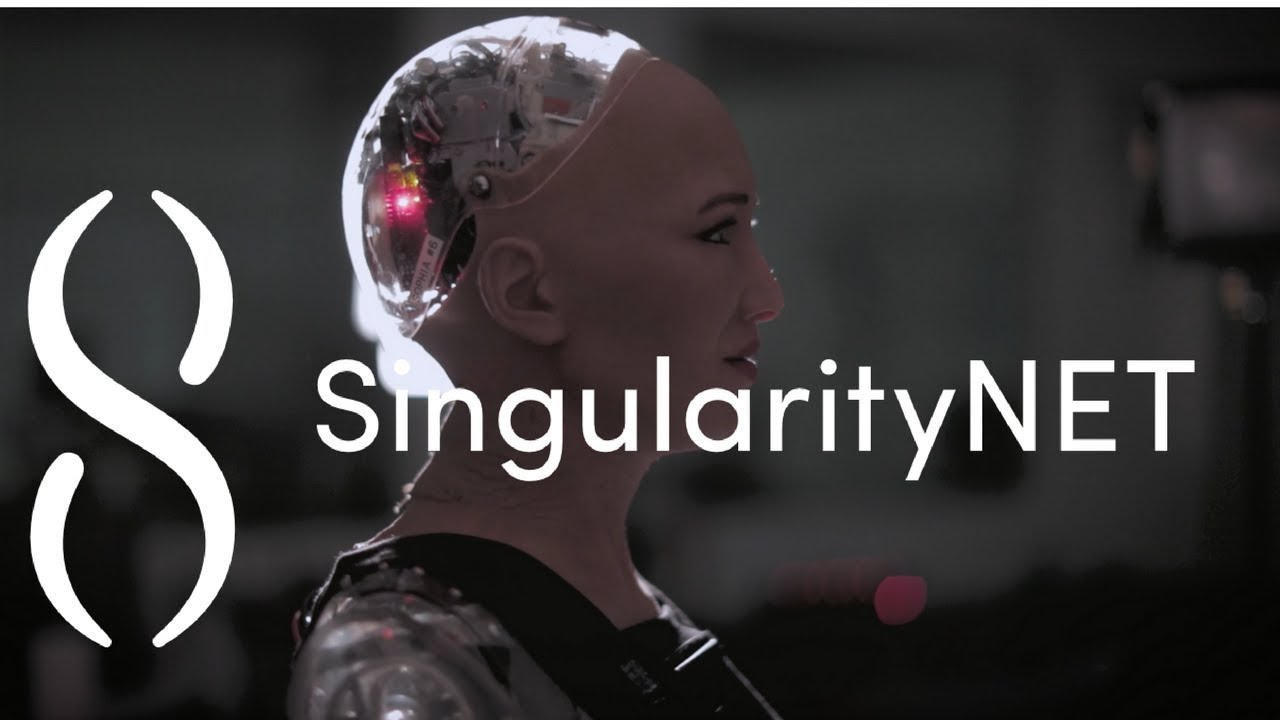
SingularityNET Introduction

SingularityNET is a project related to artificial intelligence, and it hopes to become a platform for coordinating AI in various fields to collaborate at scale. Because AI itself requires a lot of data and development support, but each field is basically working in isolation. In addition, AI technology exists only among a few people and a few companies, and is not more widely available.

Through SingularityNET, companies with AI development needs can directly retrieve data and various functions from the platform, and AI companies can also asset their development results and data, a process that will be realized through AGIX tokens. Simply put, SingularityNET wants AI technology to be shared and popularized through a decentralized approach.

·

AGIX Token Model

At the end of 2017, the team conducted its first ICO with a total of 1 billion tokens, an offering of 500 million, and a hard top raise of $36 million. The remaining 500 million tokens, 20% were used to incentivize early users and developers, 18% were allocated to core team members, 8% were held by the foundation, and 4% were used for the bounty program. The fundraising received a total of $250 million in subscription requests due to the high market recognition of the team.

In 2021, as SingularityNET migrates its network to Caldano and to promote ecological development, the team decided to issue an additional 1 billion tokens, which will be released linearly over 91 years.
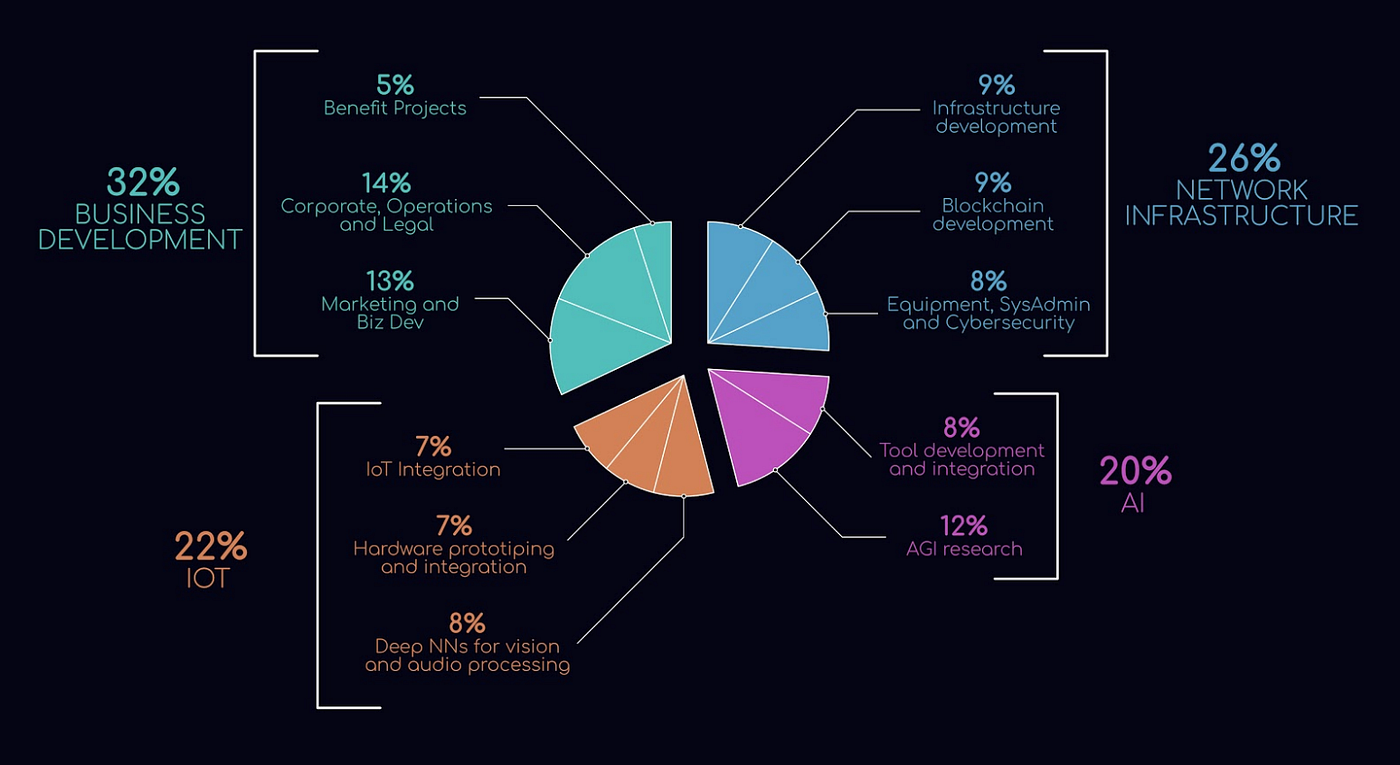
The SingularityNET token AGIX has four main functions: trading, settlement, incentive and governance. Subsequently, pledging and receiving the eco-project token airdrop were added, and all eco-projects will take out 5% token airdrop to AGIX holders, which is very beneficial to the eco-development.

·

SingularityNET Development History

SingularityNET was born in the second half of 2017, and the cooperation between the founding teams should have been earlier.

In December 2017, $36 million was raised through an AGI offering.

In June 2018, the Alpha version of SingularityNET's main network went live.

In February 2019, SingularityNET Mainnet Beta went live on the Ethernet network.

March 2019, SingularityNET White Paper 2.0 is released.

September 2019, SingularityNET mainnet Beta V2 released.

November 2019, Integration partnership with PayPal is reached.

April 2020, Token Liquidity Pledge is launched.

September 2020, SingularityNET service integrated into Android app.

November 2020, release of SingularityDAO, an AI-DeFi solution.

In January 2021, SingularityNET decides to migrate from Ethereum to Cardano and issue 1 billion new tokens, which will be released month by month over 91 years.

On 5 2021, the new token AGIX replaces AGI through a hard fork, and the new token is compatible with Ether and Caldano.

2021 7 & 7, AGIX-USDT trading pair opens on UniSwap.

In May 2022, Converter Bridge goes live.

From 2022 to 2023, SingularityNET starts to continuously fund the development of eco-projects, and no roadmap for 2023 has been announced yet.
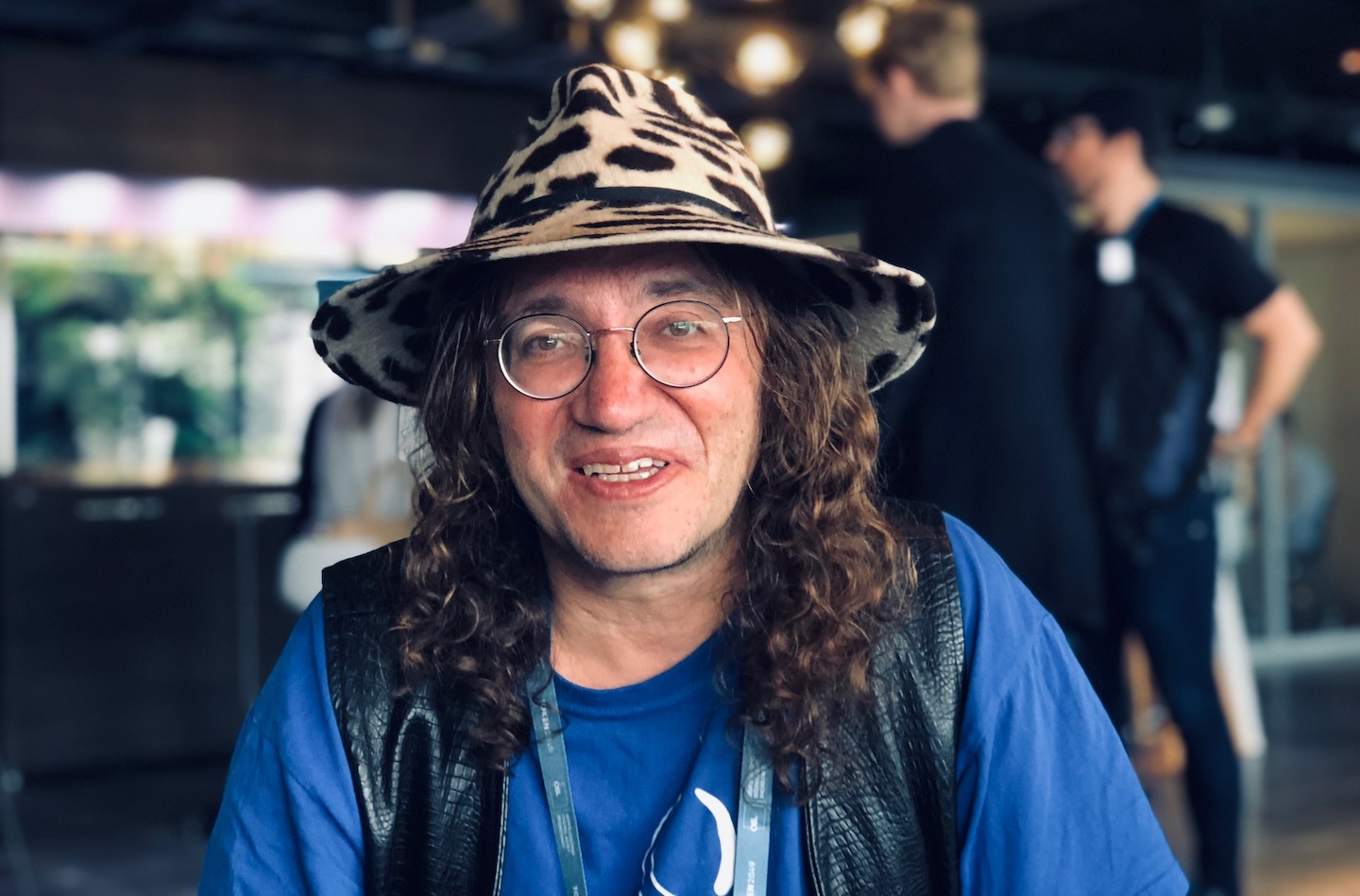
Team Background

Ben Goertzel: Founder and CEO, he is a PhD in mathematics and an expert in the field of general AI.

David Hanson: Chairman and head of robotics development at SingularityNET, where the Sophia robot was built.

Sophia the robot: developed by SingularityNET partner Hanson Robotics, is the face of the project and a core node.

SingularityNET's team has a very high-end background, with the core team all having PhD degrees and unquestionable strength in expertise. The project has not been financed by investment institutions, and only one round of ICO has been conducted.

·

Summary

SingularityNET is a cutting-edge technology-based project, and the team is very experienced in the field of artificial intelligence. The project has been continuously disclosing its progress since its inception, and its operational status is very healthy. After ChatGPT drove the AI explosion, SingularityNET logically became a hot spot sought after by the crypto market and saw a sharp rise in February.

İlgili Okumalar

When Billions Begin to Operate Everything by Voice, How Far is ‘All Assets on Chain’?

In June 2026, WeChat began a limited rollout of "Xiaowei," its native AI assistant. This move is more than an upgrade to a smarter chatbot; it signals a crucial step from "universal internet access" toward the broader vision of "full asset tokenization." Xiaowei, powered primarily by WeChat's in-house WeLM model, demonstrates four key capabilities: 1) direct voice/web chat control of app functions, 2) automated access to mini-programs for services, 3) instant comprehension and summarization of complex documents like PDFs, and 4) generating functional mini-program prototypes from simple natural language requests. This represents a fundamental shift from GUI (Graphical User Interface) to LUI (Language User Interface), eliminating friction in human-digital interaction. The rollout is pivotal because it brings AI Agents to China's massive user base with zero friction—no new app downloads or accounts needed. This "seamless access" mirrors past platform revolutions like the App Store or WeChat Mini-Programs, potentially unlocking a global AI Agent market projected to grow from $7.92 billion in 2025 to nearly $295 billion by 2035. The article argues that China's internet evolution has moved from "connecting everyone" to "putting all services online." The next phase is "tokenizing all assets"—a concept broader than just Real World Assets (RWA) like real estate. It encompasses tokenizing personal assets like social influence, attention, and credit history. RWA tokenization itself is forecast to explode from $35 billion in 2025 to over $500 billion in 2026. The convergence of ubiquitous AI Agents and rapidly tokenizing assets points to a future paradigm for wealth management. Your AI Agent could autonomously manage a globally diversified, tokenized portfolio based on your preferences. Initiatives like EXIO Group's full-stack RWA services aim to lower investment barriers, paralleling WeChat's democratization of AI access. In conclusion, the launch of Xiaowei is not merely a technical upgrade but a historic inflection point. It marks AI Agents' transition from niche tools to essential utilities and accelerates the movement toward a future where voice commands seamlessly interact with tokenized value, redefining humanity's relationship with the digital and financial worlds.

marsbit1 saat önce

When Billions Begin to Operate Everything by Voice, How Far is ‘All Assets on Chain’?

marsbit1 saat önce

SoftBank CEO Masayoshi Son's New Trillion-Dollar "Gamble"

SoftBank founder Masayoshi Son is embroiled in a new trillion-dollar "bet" on Physical AI and humanoid robotics, even as his massive wager on OpenAI faces uncertainty ahead of its potential IPO. Recent reports reveal OpenAI's steep losses—$85 billion net loss by Q1 2026 and a $38.5 billion loss in 2025—casting doubt on its path to a trillion-dollar valuation. SoftBank, OpenAI's second-largest external shareholder with a planned 13% stake, stands to gain hugely if OpenAI succeeds. Undeterred, Son is already pushing forward with his next ambitious venture: consolidating SoftBank's AI and robotics assets into a new U.S.-based company named "Roze," targeting a $100 billion IPO as early as late 2026. This move aligns with his belief that Physical AI, merging AI cognition with robotic physical execution, is the next trillion-dollar frontier. Son's confidence stems from recent AI wins; SoftBank's stock surged and he briefly regained the title of Asia's richest person, largely due to OpenAI's soaring valuation. However, his aggressive strategy has raised internal concerns about over-reliance on OpenAI and strained finances. With competitors like Anthropic advancing rapidly and OpenAI's IPO timing uncertain, Son is racing to capitalize on the AI boom. His long-term vision for Physical AI includes a decade of investments in robotics, from Boston Dynamics to recent acquisitions like ABB's robotics unit, and a planned $1 trillion investment in U.S.-based AI robotics industrial parks. Yet, challenges remain: humanoid robotics firms like Figure AI lack the clear revenue paths of AI software companies, and Roze's lofty valuation faces skepticism. For Son, these bets are also driven by an unfulfilled promise of massive returns to key investors like Saudi Arabia's PIF. Despite risks, he continues to double down, betting that the fusion of AI and physical machines will define the next technological era.

marsbit1 saat önce

SoftBank CEO Masayoshi Son's New Trillion-Dollar "Gamble"

marsbit1 saat önce

İşlemler

Spot
Futures
活动图片